In today’s global economy, private jet access is more than a luxury; it’s a calculated advantage. Whether you're a business executive closing deals across continents or a family seeking seamless, secure travel, private aviation offers unmatched speed, flexibility, and discretion. Passenger comfort and luxury remain top priorities in private jet design, ensuring an exceptional travel experience. Many private jets are designed to ensure quieter cabins for a more peaceful travel experience. Luxury private jets are known for their spacious and customizable interiors, further enhancing the exclusivity of private aviation. Additionally, some private jets are equipped with advanced entertainment systems to provide a high-quality flying experience. Passengers of luxury jets often enjoy personalized services from flight crews to enhance comfort.
Compared to commercial first class, flying private reduces travel time by 50% or more in many cases. No TSA lines. No layovers. No delays caused by airline staffing issues. Private jets can also reach smaller airports that commercial airlines cannot access, offering unparalleled convenience. This growing demand for private jets capable of accessing smaller airports highlights their adaptability. The trend in private jets includes a shift towards larger cabins for enhanced comfort during flights. Elite jets often provide productivity tools such as high-speed Wi-Fi and workspaces. And unlike ownership, Jet Card programs like BlackJet's provide on-demand, certified aircraft without the complexity of managing a fleet.
Private jets are not one-size-fits-all. From compact, efficient light jets to transcontinental aircraft that double as boardrooms in the sky, there’s a broad spectrum of private aviation solutions, each backed by leading manufacturers known for performance, safety, and innovation. Embraer's Phenom series consists of light jets, the Praetor series includes midsize to super-midsize jets, and the Lineage 1000E is based on a commercial airliner, showcasing the brand's versatility and commitment to meeting diverse client needs. The Phenom 300 from Embraer can carry 6 passengers with a range of up to 3,650 km, making it a popular choice for short to medium-haul flights. The Embraer Legacy 500 can carry up to 12 passengers and has a range of 5,790 km, offering a balance of capacity and distance. The Cessna Citation XLS+ is a medium-haul private jet that carries 12 passengers over a range of 3,889 km. The Pilatus PC12 can accommodate up to 8 passengers and has a range of 2,500 km, making it a versatile option for regional travel.
The Legacy of Private Jet Innovation
The evolution of private aviation began in 1963 with the launch of the Learjet 23. The Learjet 23 is widely recognized as the first private jet, marking the beginning of business aviation. It offered executives something new: autonomy. No longer tied to rigid airline schedules, business travelers began shaping their own itineraries, an edge that persists today. Around four decades later, Embraer, founded in 1969 and the youngest manufacturer in the private jet industry, transitioned to producing its first business jet, the Legacy, which entered service in the early 2000s. Embraer is recognized for stylish, efficient jets, with models like the Phenom 300E focusing on comfort and technology.
Fast forward to now: private aviation has grown into a $30+ billion global industry with hundreds of models available from top-tier private jet manufacturers like Gulfstream, Bombardier, Dassault, Textron, and Airbus. Gulfstream, headquartered in Savannah, USA, is among the top private jet brands, alongside Bombardier, Dassault Falcon, and Embraer. Certain brands, such as Gulfstream and Bombardier, are particularly renowned for their ultra-luxurious jets. The private jet market has expanded rapidly, with leading private jet manufacturers driving innovation and competition. Many of these jets feature custom interiors, advanced safety systems, and connectivity tech that keep you productive at 40,000 feet. There is also a growing demand for fuel-efficient private jets among consumers, reflecting a shift towards sustainability. Additionally, there is a significant increase in the use of digital technology in private jet operations, enhancing efficiency and passenger experience.
The Industry Leaders in Private Jet Manufacturing
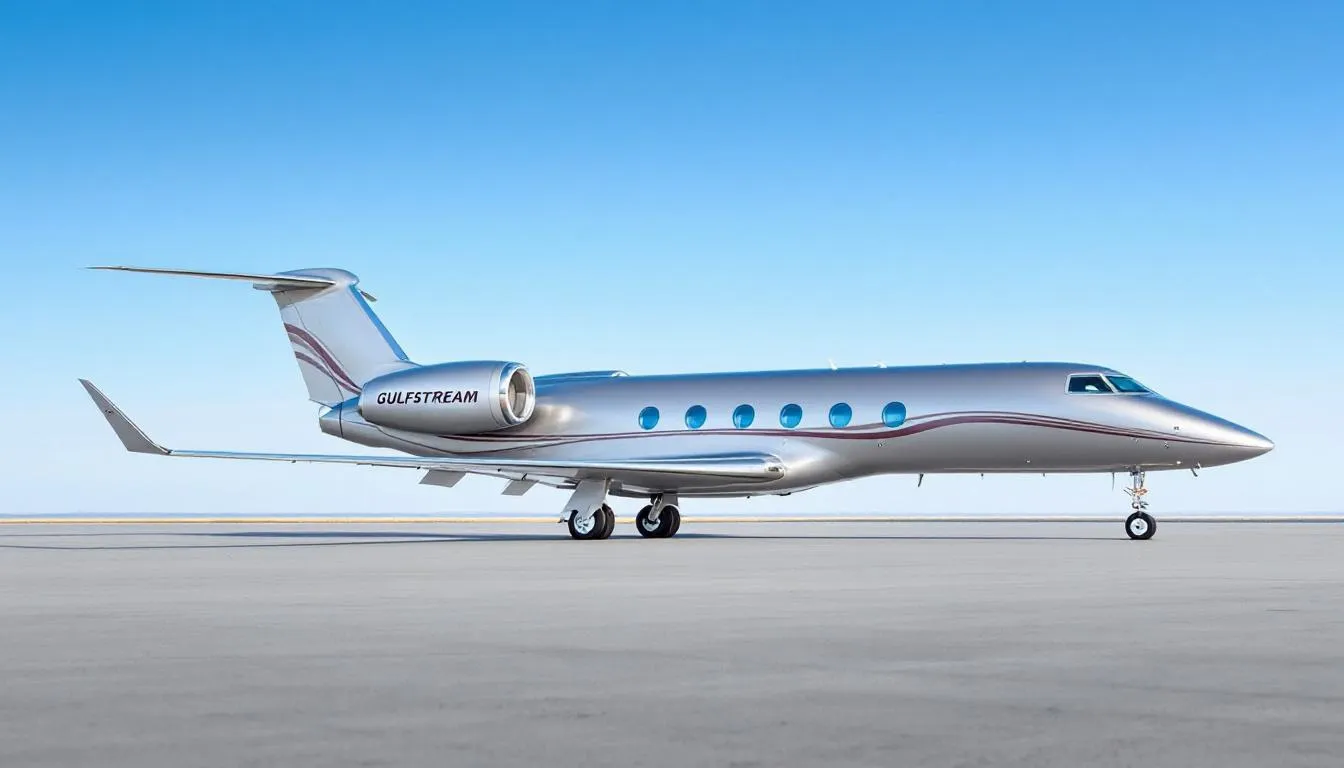
Gulfstream Aerospace
Known for prestige and performance, Gulfstream is the gold standard in long-range business jets. Gulfstream Aerospace was founded in 1957 when Grumman designed the Gulfstream I. Its flagship, the Gulfstream G650ER, can fly nonstop from New York to Dubai, over 7,500 nautical miles, with room for up to 19 passengers. Earlier, the Gulfstream II was introduced as one of the company's first long-haul private jets, marking a milestone in business aviation history. Gulfstream Aerospace is a subsidiary of General Dynamics, its parent company, which has played a significant role in shaping the brand's engineering advancements and overall performance profile. The Gulfstream G800 boasts a range of 8,200 nautical miles (15,186 km), further solidifying its reputation for long-range excellence.
Why it matters: Gulfstream’s emphasis on cabin pressurization (simulating 4,000 feet instead of 8,000) reduces jet lag and fatigue for long-haul travelers.
Tech edge: Includes fly-by-wire controls and predictive landing tech for smoother operations.
Sustainability note: Gulfstream is among the first OEMs to test and certify sustainable aviation fuel (SAF) usage.
Bombardier Aerospace
Bombardier, a leading Canadian aircraft manufacturer, is renowned for its innovation and leadership in the business aviation sector. Bombardier Aerospace was founded in 1937 by Joseph-Armand Bombardier. A leader in range and versatility, Bombardier’s Global Express, Challenger, and Learjet series dominate in both the intercontinental and midsize segments. Bombardier Global jets are especially recognized for their global express range, enabling intercontinental travel without stopovers and setting new standards in luxury and performance. The Bombardier Global 7500 has a range of 13,705 km and flies at speeds up to 1,143 km/h (Mach 0.925), making it one of the most advanced long-range business jets available.
Following a major restructuring in 2019, the Canadian manufacturer made a strategic decision to focus solely on business aviation, divesting from commercial aviation to concentrate on private jets and long-haul capabilities.
Global 7500: Holds the record for the longest-range business jet flight at over 8,200 nautical miles.
Challenger 3500: A favorite in Jet Card programs due to its operating cost efficiency and wide cabin.
Dassault Aviation
Dassault Aviation is a renowned French company with a rich history in both civilian and military aircraft manufacturing. Dassault Aviation was founded in 1929 by François Marcel Dassault. Built with fighter jet DNA, the Falcon series, also known as the Falcon line, offers performance and technology that rival military-grade precision. The Falcon range was expanded by Dassault Aviation to include the Falcon 2000. Dassault's expertise in fighter aviation is evident in its legacy of producing advanced fighter jets like the Mirage and Rafale, which have set benchmarks in the industry. The Dassault Falcon 7X has a long range of 11,000 km and can carry up to 16 passengers, showcasing its capability for long-haul luxury travel. The Falcon 8X can carry up to 19 passengers and has long-range capabilities similar to the Falcon 7X.
The Falcon range includes a variety of business jets tailored for different client needs, combining luxury, versatility, and long-distance capabilities. Popular models include:
Falcon 8X: Boasts three engines, giving pilots access to shorter runways and steeper climbs, a must for alpine or remote business retreats.
Falcon 6X: Offers a standing cabin height of 6.5 feet, one of the tallest in class.
Textron Aviation (Cessna + Beechcraft)
Textron dominates the light and midsize jet category. Its Cessna Citation line, known as the Citation family, includes everything from entry-level light jets like the Citation M2 to the robust Citation Longitude. Cessna Aircraft Company is based in Wichita, Kansas, the aeronautical capital of the United States. Cessna was bought by the Textron Group in 2014. Cessna originally specialized in light turboprop aircraft before expanding into private jets, and its light jets are recognized for their low operating costs. The Citation family is the largest fleet of private jets, with many models accommodating 8 to 15 passengers. Cessna also offers a wide range of high-performance jets, including the Citation Longitude and Citation Sovereign, which are celebrated for their range and passenger capacity. The Cessna Citation Longitude can carry up to 12 passengers over a range of 6,482 km, making it a standout in its class.
The Beechcraft brand, originating from the historic Beech Aircraft Corporation founded by Walter H. Beech and Olive Ann Beech, has a strong legacy in private aviation. Within its lineup, the King Air stands out as a versatile and reliable aircraft, widely used for both business and specialized missions. The King Air 350 from Beechcraft can carry up to 9 passengers and has a range of 2,778 km. Piaggio Aerospace was founded in 1915 and is one of the oldest private jet manufacturers. Piaggio Aerospace is known for its P180 Avanti model, introduced in 2000, which combines innovative design with efficiency.
Airbus Corporate Jets (ACJ) & Boeing Business Jets (BBJ)
For ultra-high-net-worth individuals or corporations looking to transform large commercial aircraft originally designed for commercial airlines into luxury liners, these giants offer bespoke flying experiences. Many of these private jet models, such as those from Airbus Corporate Jets and Boeing Business Jets, are based on commercial airframes and adapted for executive or VIP use. The HondaJet is known for its unique engine placement, which maximizes cabin and storage space while improving performance and reducing noise. A distinctive feature of some of these private jet models is the elongated oval shape of the windows, which adds to their recognizable and luxurious appearance. High-end private jets often feature luxurious amenities such as full galleys and private suites, ensuring an unparalleled level of comfort and exclusivity. Customization of private jets is becoming a noteworthy trend, reflecting individual consumer preferences and elevating the luxury experience.
BBJ 787 Dreamliner: Full bedrooms, conference areas, even showers, all possible.
ACJ319neo: Delivers fuel efficiency with Airbus’s signature wide-body comfort.
These are typically used by royal families, government officials, and Fortune 500 CEOs.
Jet Ownership vs. Jet Card vs. Charter
Capital Investment: Very High for Jet Ownership, None for Charter, Medium for Jet Card
Flexibility: High for Jet Ownership, Medium for Charter, Very High for Jet Card
Predictable Pricing: No for Jet Ownership and Charter, Yes for Jet Card
Consistency: Yes for Jet Ownership and Jet Card, Varies for Charter
Crew & Safety Standards: Self-managed for Jet Ownership, Varies for Charter, Standardized (e.g., BlackJet) for Jet Card

Fractional ownership is another option, allowing multiple individuals to co-own and use a private jet. This model offers a balance between cost and access, with shared expenses and personalized service. Private jet charters are often used for both business and leisure travel.
Private jet ownership offers freedom but comes with ongoing management, maintenance, and depreciation. Charter flights allow occasional use but lack pricing consistency and vetted crews. However, private jet charter offers enhanced comfort compared to commercial flights, making it an attractive option for those seeking a more luxurious travel experience without the responsibilities of ownership. The costs of chartering a private jet can vary significantly based on the aircraft type, distance, and services required.
Jet Cards like BlackJet’s offer the best of both worlds: you get guaranteed availability, transparent pricing, and certified aircraft and crew, without owning or guessing.
How BlackJet Prioritizes Safety & Certification
Every aircraft in the BlackJet Jet Card network meets or exceeds FAA Part 135 certification standards, and many also carry ARGUS Platinum or Wyvern Wingman designations, some of the highest safety benchmarks in private aviation.
Pilots: Must pass rigorous background checks, simulator training, and recurrent certifications.
Aircraft: Maintained by FAA-certified technicians with detailed record audits.
Compliance: Adheres to TSA and DOT compliance, with added luxury security features for high-profile clients.
Sustainability in Private Aviation
At BlackJet, carbon neutrality is not optional; it’s built in.
Every flight booked via Jet Card offsets 100% of emissions, using certified environmental partners.
Modern aircraft in the network use more efficient engines and lighter materials, reducing emissions by up to 30% per flight hour.
Clients can access route optimization to further cut fuel burn and reduce environmental impact.
The future of private aviation will lean into SAF (Sustainable Aviation Fuel), with manufacturers like Gulfstream and Bombardier already leading testing efforts.
Real-World Use Cases: Who Flies These Jets?
Executive on the Move
A tech CEO based in San Francisco uses the BlackJet Jet Card to attend quarterly board meetings in Zurich. Rather than losing 24+ hours to commercial flights, he uses a Gulfstream G500, arriving rested and productive after an 11-hour nonstop flight.
Family Vacation
A family of five from Miami uses a Challenger 300 to reach Jackson Hole, Wyoming, for a ski vacation. With dogs, ski gear, and kids in tow, they skip TSA and fly directly to a local airstrip, something commercial travel can’t replicate.
Corporate Deal Team
A private equity firm with three partners based in different cities uses a Cessna Citation Latitude to meet at a project site in Austin. Booked on a 24-hour notice via Jet Card, the trip saved them two full travel days and secured a $50M deal.
Pre-Flight Prep: Behind the Scenes
Whether you fly as an owner or via Jet Card, preparation is precise. Here's a look behind the curtain:
Flight briefings include route planning, crew assignments, and weather tracking.
Cabin setup includes meal preferences, entertainment options, and cabin temperature.
BlackJet’s concierge team ensures ground transportation is pre-arranged for both ends.
Aircraft are cleaned and inspected before every flight, and safety protocols exceed commercial airline standards.
FAQs About Private Jets & Jet Cards
What’s the difference between a Jet Card and a charter?
Jet Cards offer predictable pricing and access to a vetted fleet, while charter pricing can vary based on demand and quality. Working with a private jet rental company can simplify the chartering process.
Are private jets safe?
Yes, especially with providers like BlackJet that use FAA-certified operators and high-standard safety audits.
Are private jets carbon neutral?
Not by default, but BlackJet offsets every flight’s emissions at no cost to members.
Can I choose my aircraft?
Yes. Jet Card members can select cabin class, aircraft model, and departure airport, often with 24–48 hours’ notice.
How fast can I fly after booking?
Most trips can be arranged within 24 hours, depending on location and aircraft availability. The booking process for chartering a private jet generally includes obtaining a quote.
Conclusion: Choosing the Right Private Jet
The best private jet isn’t always the largest or fastest; it’s the one that fits your goals. Whether you’re after operational efficiency, long-range luxury, or regional flexibility, understanding the top manufacturers and aircraft types is key to making a smart investment.
Through BlackJet’s Jet Card program, you access an elite network of aircraft with built-in safety, sustainability, and support, no ownership hassles, just effortless travel.
Ready to Experience Seamless Private Jet Access?
Join our Jet Card program and unlock access to certified aircraft, carbon-neutral flights, and the convenience of private aviation, tailored to your life, not the other way around.
Types of Jet Engines Explained: Explore premium jet access at BlackJet.com


 Sign up with google
 Sign up with Apple