

Private aviation is a popular choice for high-net-worth individuals (HNWIs) from the worlds of business and entertainment, as it lets them travel free from the limitations of standard commercial flights. While exclusive use of a jet might seem like an obvious choice for those with significant financial resources, that doesn't mean outright ownership is the best option for everyone. With the market responding by offering jet cards and charter services, there's ample choice for those in a privileged position.
Moreover, HNWIs deciding between outright ownership and the two main alternatives must consider cost first and foremost, as any consumer would when facing a transport decision.
Drawing on proprietary market data, BlackJet, a private jet card program operator, provides this overview of these costs and what approach makes sense based on different travelers’ needs.
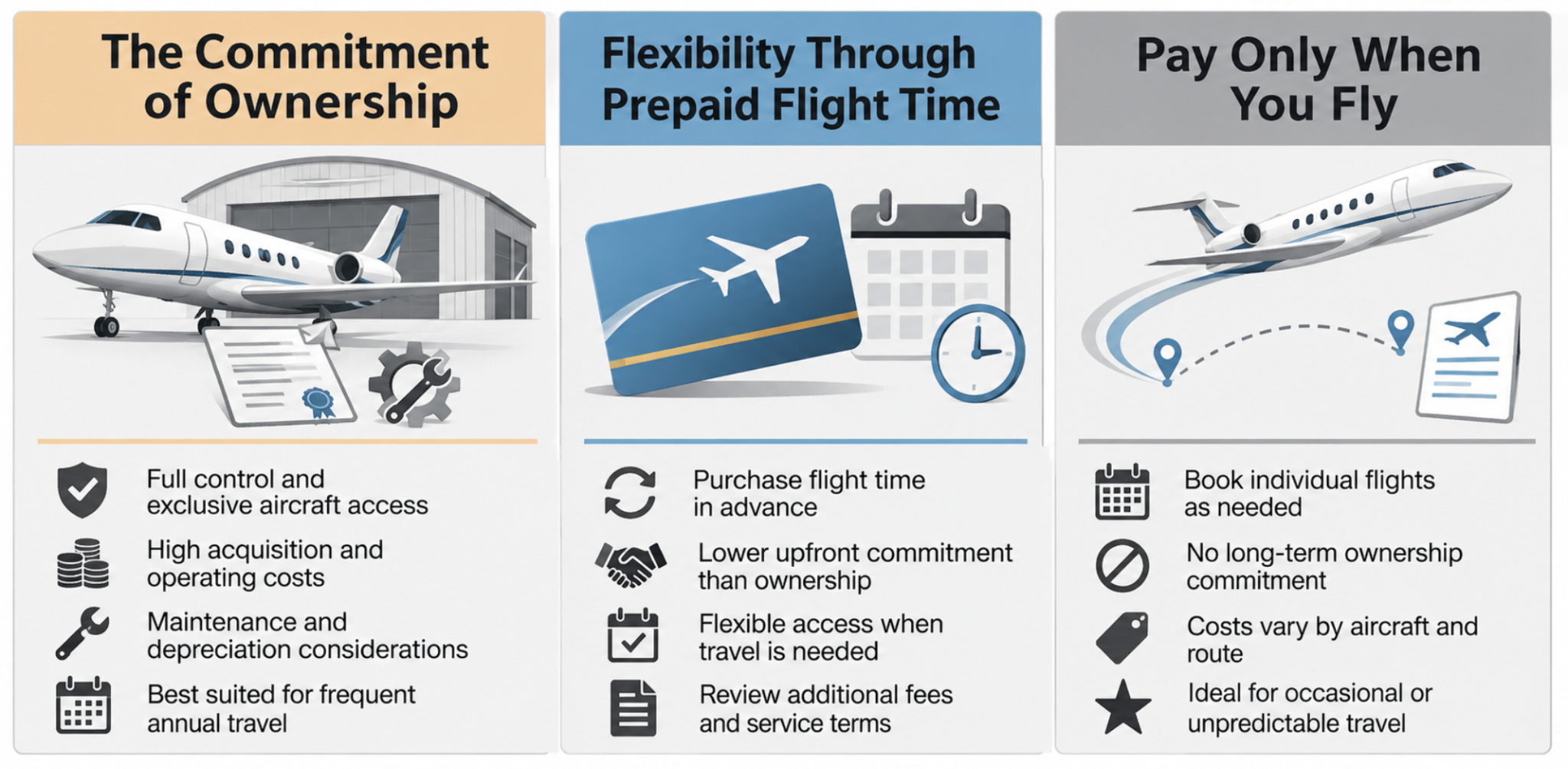
Outright Ownership
The most affordable options for buying a private jet start around the $2-million mark, while at the upper end of the market the price tag can hit $100 million or more, when customization is taken into account. These two extremes help illustrate the scale of the market. It's also worth noting that there's a large selection of models around the $10 million price bracket, with new examples such as the 2025 Embraer Phenom 300E and used examples of the Bombardier Challenger 350 coming in at this point.
The second cost consideration for outright ownership is how much you'll spend on operating and maintaining the aircraft. Estimates start at $200,000 annually and climb to as much as $4 million for the largest and most frequently used jets. Crew costs alone can make up $500,000 or more of this total, before things like benefits and training are taken into account.
In addition, any significant maintenance that's required not only increases ownership costs, but also means that the plane cannot be used for the duration of the work. Buying outright typically involves a down payment of between 20% and 40% of the purchase price, with the remainder financed, meaning ongoing repayments, including interest, have to be calculated. Coupled with the inevitable depreciation that any high-value asset like this will undergo, there's a lot to consider.
Experts recommend that outright ownership only be considered if the jet will receive more than 200 hours of use annually due to these costs, with some arguing that 400 hours is a safer minimum.
Fractional Ownership
If outright ownership doesn't make financial sense based on expected annual usage, owning a share of a jet is an alternative. According to BlackJet data, buying a 1/8 share to cover around 100 hours of travel a year costs between $700,000 and $1.2 million and includes ongoing management fees of between $6,000 and $30,000 per month, again depending on aircraft size. For a 1/16 share, acquisition costs drop to between $250,000 and $550,000, although management fees and operational hour costs can still be similar.
Fractional owners must also recognize that additional costs will add to base-level expenses, including fuel surcharges and fees for using the aircraft during peak travel periods or at short notice. And again, the specter of depreciation looms here, meaning a share is unlikely to be resold for anywhere close to what was originally paid for it.
In terms of who's best positioned to make fractional jet ownership financially justifiable, users who expect to travel between 150 and 200 hours annually, with a strong degree of certainty, will find that the math adds up.
Jet Cards
The appeal of jet cards comes from their comparatively low capital requirements and the flexibility they offer compared with outright and even fractional ownership. They function as a way of purchasing a prepaid block of flight time, which the buyer can use as and when they require it.
Pricing per hour can vary significantly, with BlackJet data showing that the market in 2026 begins at $25,000 and can exceed $330,000. Hours can be bought in blocks of 25 and 50 via most providers. It's important to look into exactly what the price covers, as some will be all-inclusive, while others will have additional expenses for the customer to cover with each flight.
Most notably, some jet card products don't include federal excise tax, while others do. So again, check the specific terms and conditions of each option before committing to avoid the wrong choice. Someone who expects to fly between 25 and 50 hours privately each year should certainly consider this type of service.
Charter
Chartering a private jet is the entry-level option in terms of commitment and a one-off approach to pricing, as you can book a flight on a particular route and pay per flight hour based on the aircraft size. For the smallest turboprops, per-flight-hour costs start at $2,000, while midsize jets cost from $5,000, and ultra-long-range jets are at least $14,000.
On top of the hourly outlay, you'll also need to factor in additional charter-related costs, including taxes and positioning fees, which can increase all-in expenses by at least 20%, and sometimes as much as 40%. So, as a one-off expense, chartering a jet can be comparatively affordable if you're taking a large group, because the hourly costs don't change based on passenger numbers. But with so much variation and fluctuation in hourly and additional costs, it's not the best option for travelers who expect to have a regular need for a private jet throughout the year.
There are many more variables involved in each private aviation option, and your own circumstances to consider in calculating whether the cost of ownership or jet card solutions make the most financial sense. Having a solid understanding of typical costs at the moment is a good starting point. The next step is making comparisons and inquiries of your own. It's also useful to know the market is flexible enough to accommodate changes in needs and circumstances over the years.
Methodology
All data is sourced from BlackJet, covering annual costs of jet ownership, jet cards, and jet charter, based on the latest available industry figures.