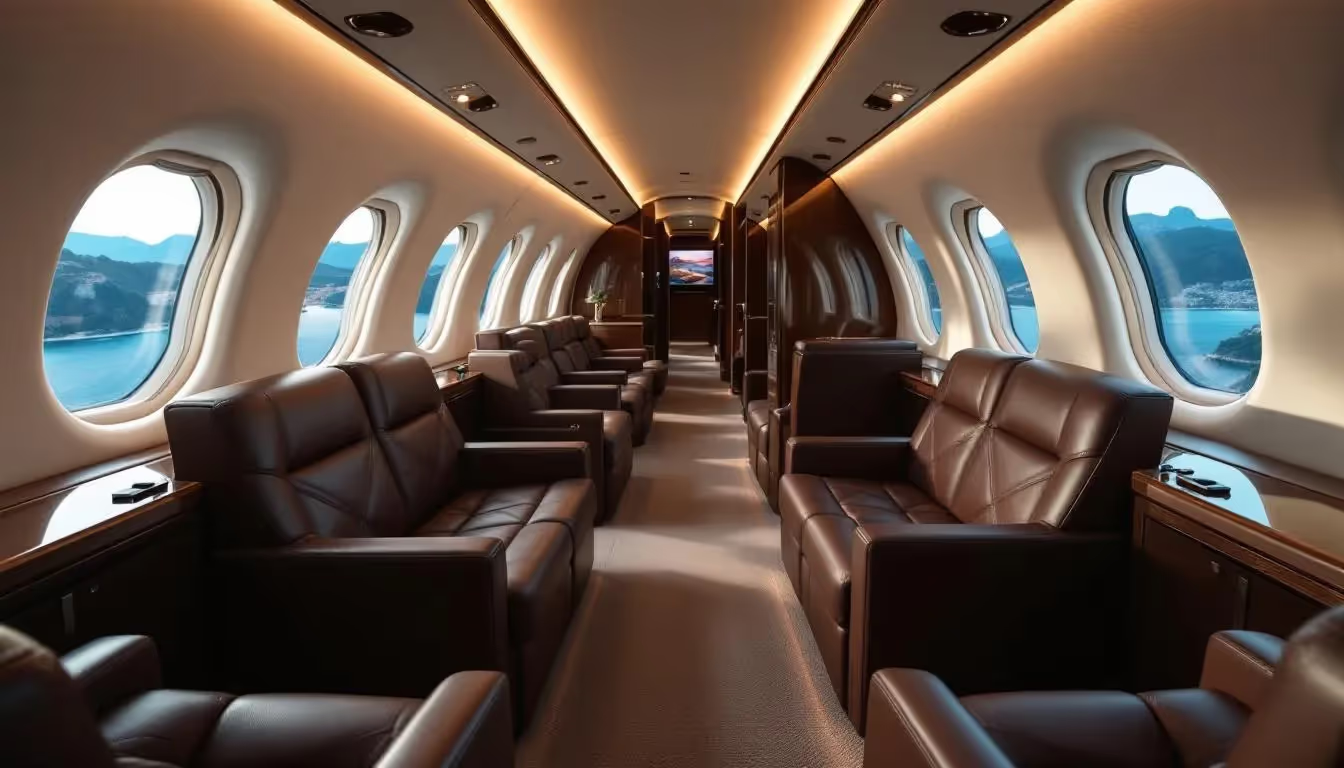
Business aviation stands at the forefront of luxury travel, offering discerning travelers the ultimate in flexibility, privacy, and efficiency. Whether for high-powered executives, celebrities, or families seeking exclusive getaways, the private jet experience is defined by its ability to cater to individual schedules and preferences. The sector has seen remarkable growth as more people recognize the value of bypassing crowded terminals and rigid commercial flight schedules in favor of direct, personalized journeys. Passenger check-in times for private flights are significantly reduced, allowing arrival just 10-15 minutes before departure, further enhancing the convenience of private aviation.
Private jets come in a variety of models, from nimble light jets ideal for short hops to ultra-long-range aircraft capable of intercontinental travel without refueling. These jets are equipped with advanced technology, ensuring high performance, safety, and comfort at every stage of the journey. Long-range private jets have changed the way we travel, allowing nonstop flights across continents in comfort. The appeal of business aviation lies not only in its luxurious amenities but also in its ability to access more airports worldwide, saving valuable time and providing unmatched convenience. Larger jets can often use smaller airports, reducing ground travel time and making them even more efficient for travelers.
Charter platforms like Jettly have further democratized access to private aviation, allowing travelers to select the perfect jet for their needs without the burden of membership fees or long-term commitments. Charter costs for an 18-passenger private jet typically range from $3,500 to $18,000 per hour, plus extra fees. With a focus on bespoke service, high performance, and cutting-edge technology, business aviation continues to redefine what it means to travel in style, making every flight a tailored experience that meets the highest standards of luxury and efficiency. Many new jets are also adopting Sustainable Aviation Fuel (SAF) to reduce carbon emissions, reflecting the industry's commitment to sustainability. New jets feature the latest technology, while used jets may have higher maintenance costs, offering options for different budgets and preferences.
Key Takeaways
18 passenger private jets include models like Gulfstream G550, G650ER, and Embraer Lineage 1000E with spacious cabin configurations featuring multiple living areas and exceptional range
These aircraft typically offer an intercontinental range of 4,600-7,500 nautical miles and cruise speeds of Mach 0.82-0.925, enabling nonstop transcontinental travel
The Gulfstream G550 can accommodate up to 18 passengers and 4 crew members
Purchase prices range from $44-62 million for new aircraft, with charter rates varying from $8,000-15,000 per flight hour depending on model and route
18 passenger jets feature multiple living areas, full galleys, and can be configured for both business meetings and overnight flights with sleeping accommodations for 6-8 passengers
Popular among corporations, governments, and ultra-high-net-worth individuals for group travel, long-haul flights, and intercontinental travel requiring ultimate luxury and maximum comfort
The Embraer Lineage 1000E can accommodate up to 19 passengers, offering flexibility for slightly larger groups.
When standard business jets feel too small for your group travel needs, the world of ultra-luxury aviation reaches new heights with 18-passenger private jets. These remarkable aircraft represent the pinnacle of business aviation, offering a spacious and luxurious cabin that bridges the gap between mid-size jets and ultra-large convertible aircraft. With their expansive cabin designs, exceptional range capabilities, and outstanding performance, these heavy jets have become the preferred choice for corporate executives, government officials, and ultra-high-net-worth individuals who refuse to compromise on comfort or capability.
Leading operators and manufacturers offer a fleet of 18-passenger private jets, providing clients with a diverse selection of aircraft tailored to different needs. Most heavy jets have enough room for two flight attendants who can serve all the onboard meals and other service needs, ensuring a seamless and luxurious experience.
The 18-passenger market segment has emerged as a sweet spot in private aviation, providing sufficient passenger accommodation for large corporate delegations or extended family trips while maintaining manageable operating costs compared to larger alternatives. These aircraft excel at international travel, offering the ultimate comfort for transcontinental and intercontinental journeys that can extend beyond 12 hours of flight time.
What Are 18 Passenger Private Jets
An 18-passenger private jet represents a specific category within the ultra-long-range business aviation market, distinguished by its capacity to accommodate exactly or approximately 18 passengers in a spacious and comfortable configuration. These aircraft fall into the large-cabin category of private aviation, offering substantially more space than light jet alternatives while maintaining the operational flexibility and exclusivity that define the private flight experience.
The distinction between maximum seating capacity and typical comfortable configurations is crucial when evaluating these aircraft. While manufacturers may advertise maximum passenger counts, the actual comfortable seating arrangements often prioritize space, luxury, and amenities over density maximization. Most 18-passenger configurations feature multiple living areas, including dedicated spaces for business meetings, dining, and relaxation, along with sleeping accommodations that can transform the aircraft into a flying luxury suite. The private cabin environment allows for confidential discussions and a peaceful travel experience, making these jets ideal for both business and leisure purposes.
Primary use cases for these aircraft span corporate travel, government transport, and private group charters. Unlike commercial aircraft that prioritize passenger density, 18-passenger private jets emphasize personalization and operational flexibility, while offering comfort as a central focus for passengers. Corporate users leverage these aircraft for executive transport, board retreats, and incentive travel programs, while government entities utilize them for diplomatic missions and secure group transport.
When compared to smaller business jets, 18-passenger aircraft offer exponentially more space and amenities, while maintaining significant advantages over commercial aircraft in terms of scheduling flexibility, airport access, and privacy. These aircraft can access more airports than commercial jets, including smaller regional airports closer to final destinations, reducing ground travel time and enhancing overall trip efficiency.
Types of Large-Capacity Private Jets
Large capacity private jets are the preferred choice for those who require both range and space, making them ideal for international travel, corporate group flights, and long-range journeys. These heavy jets, such as the renowned Gulfstream G550, are engineered to deliver exceptional performance, with the ability to fly up to 7,000 miles or provide up to 8 hours of non-stop flight time. This impressive range allows passengers to traverse continents with ease, minimizing the need for layovers and maximizing productivity or relaxation during the flight.
Inside, these aircraft offer ample room for 10-16 passengers, with spacious and luxurious cabins designed to foster comfort and facilitate conversation. Heavy jets are equipped with the latest audiovisual systems and WiFi onboard to enhance the flying experience. The flexible cabin layouts can be tailored for business meetings, dining, or restful sleep, ensuring that every passenger enjoys a premium experience. Heavy jets also provide generous luggage space, accommodating everything from business equipment to personal belongings for extended trips.
Onboard amenities are a hallmark of this class, with state-of-the-art audiovisual systems, WiFi connectivity, and advanced climate control creating an environment that rivals the finest hotels and offices. Business executives can stay connected and productive, while families and groups can unwind in style. Modern jets combine connectivity, entertainment, and sustainability features to enhance the flying experience. Advanced entertainment systems and high-speed connectivity mean every journey on a private jet is enjoyable and secure. With their combination of long range, capacity, and luxury, large capacity private jets set the standard for high-end, efficient, and comfortable air travel.
Top 18 Passenger Private Jet Models
The leading manufacturers in the 18-passenger private jet market have developed sophisticated aircraft that combine advanced technology, luxurious cabin features, and exceptional performance capabilities. Notably, the Bombardier Challenger family stands out as a prominent line of super-midsize and large-cabin jets in this category, known for their spacious interiors and impressive range. The Bombardier Challenger 850 has a cabin identical in size and luxury to the Bombardier Global 6000, offering a comparable level of comfort and sophistication. Gulfstream aircraft also offer a wide range of models in the 18-passenger segment, emphasizing advanced capabilities, aerodynamic features, and comfort. The Gulfstream G650ER, in particular, is a favorite among ultra-high-net-worth individuals due to its meticulous craftsmanship and comfort for long-haul flights. Each model brings unique strengths to the market, catering to different operational requirements and luxury preferences.
Gulfstream G550
The Gulfstream G550 stands as a proven performer in the 18-passenger category, accommodating 14-18 passengers across three separate living areas within its spacious cabin design. This aircraft delivers an exceptional range of 6,750 nautical miles, enabling nonstop routing between major global city pairs such as New York to London or Los Angeles to Dubai without refueling stops.
With a maximum speed of 885 km/h and high-speed cruise capabilities, the G550 significantly reduces flight time compared to smaller aircraft. The purchase price for a new G550 approximates $44 million, positioning it as a substantial investment in business aviation capability. The aircraft features large horizontal oval windows that enhance the sense of spaciousness while providing exceptional natural light throughout the cabin.
The G550’s cabin spans 50 feet 1 inch in length with a height of 6 feet and a width of 7 feet, creating ample room for passengers to move freely during long-haul flights. The aircraft includes a forward galley with full-service capabilities, front and rear enclosed lavatories, and entertainment systems with personal monitors at each seat. Wi fi connectivity ensures passengers remain productive during international travel, while the baggage volume of 169 cubic feet accommodates extended trip requirements. The Bombardier Global 7500, known for its leading cabin altitude, ensures passengers feel less fatigue during long flights, enhancing overall comfort and well-being. It is recognized as the new standard in ultra-long range jets, setting benchmarks for performance and luxury.
Gulfstream G650ER
The Gulfstream G650ER represents the ultimate luxury in an 18-passenger aircraft, seating up to 18 passengers with ultra-long-range capability extending to 7,500 nautical miles. This exceptional range enables the aircraft to complete some of the world’s longest routes nonstop, including New York to Hong Kong or London to Singapore, establishing it as the preferred choice for intercontinental travel. Additionally, the Gulfstream G700, another standout in this category, can accommodate up to 19 passengers, offering even greater flexibility for larger groups. The Bombardier Global 7500 can also accommodate up to 19 passengers and can fly up to 14,300 km on a single tank of fuel, further expanding options in the ultra-long-range jet market.
Cruising at Mach 0.925, the G650ER holds over 125 world speed records and has become particularly popular among business leaders and celebrities who require nonstop transcontinental travel capability. The aircraft’s cabin measures 17.35 meters in length and features premium materials with finely crafted cabin interiors that rival luxury hotel suites. The Gulfstream G700, however, surpasses this with its ability to reach Mach 0.935, making it the fastest among Gulfstream models and a top choice for those prioritizing speed and efficiency.
The G650ER’s cabin configuration typically includes rest areas with up to eight beds, including queen-size beds for extended operations. Standard amenities feature ergonomic armchairs, ottomans, and bathrooms with shower facilities, demonstrating the level of luxury amenities found in this segment. The Gulfstream G700 further elevates the experience with the largest cabin in its class, offering up to five distinct living areas, ensuring unparalleled comfort and versatility for passengers.
Embraer Lineage 1000E
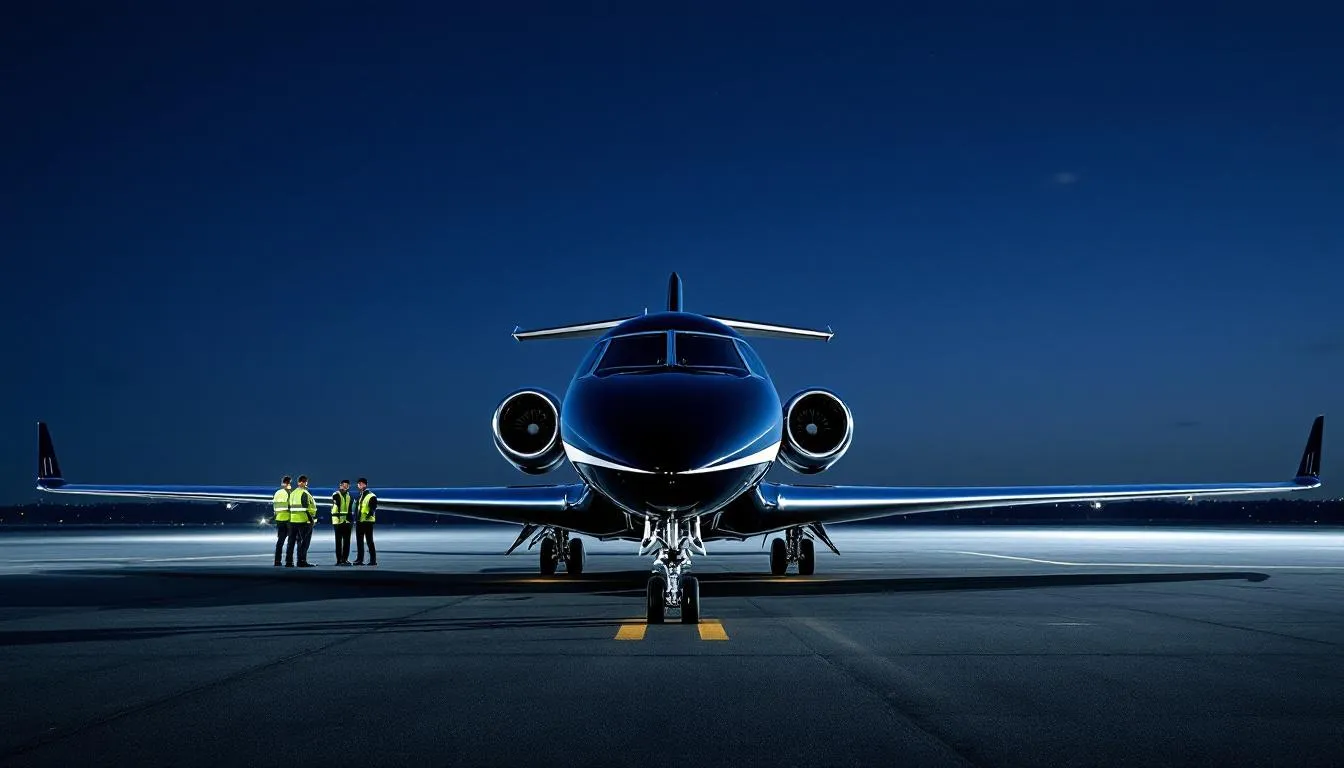
The Embraer Lineage 1000E offers a unique approach to the 18-passenger market, providing a range of 4,600 nautical miles while accommodating up to 18 passengers seated across five distinct cabin zones. This aircraft combines style, efficiency, and comfort for long-range group travel, featuring amenities typically found only in much larger aircraft. Similarly, the Bombardier Global 6000 features a spacious three-zone cabin, offering a luxurious and versatile environment for passengers.
The Lineage 1000E’s most distinctive feature is its cabin configuration, which is equipped with five separate living areas, a walk-in shower, and a full bedroom with queen-size sleeping accommodations. This modular design allows passengers to configure the space for various activities, from business meetings to relaxation and rest during extended flights.
Converted from the Embraer 190 commercial platform with enhanced luxury features, the Lineage 1000E spans 84 feet in cabin length with a height of 7 feet and a width of 9 feet, creating the largest cabin in its class. The aircraft offers exceptional baggage capacity of 443 cubic feet (12.54 cubic meters), accommodating substantial cargo requirements for extended missions or multi-week deployments.
In addition to the Lineage 1000E, Embraer also produces the Embraer Phenom series of light jets, which are suitable for short to mid-range trips and are popular for efficient business travel.
Performance and Range Capabilities
The performance specifications of 18-passenger private jets demonstrate remarkable capabilities that enable true global reach with nonstop routing flexibility. Range specifications typically span from 4,600 nautical miles for the Embraer Lineage 1000E to 7,500 nautical miles for the Gulfstream G650ER, with most aircraft in this category capable of nonstop intercontinental travel between major business centers.
Cruise speeds across the category range from Mach 0.82 to Mach 0.925, offering significant flight time reductions compared to smaller aircraft. The Gulfstream G650ER’s maximum speed capabilities enable completion of transcontinental routes 1-2 hours faster than mid-size jets, translating to substantial time savings for business travelers and enhanced operational efficiency for charter operators.
Fuel efficiency considerations become increasingly important for long-haul flights with 18 passengers aboard. Modern aircraft in this category incorporate advanced engine technologies and aerodynamic improvements that optimize fuel consumption while maintaining maximum range capabilities. The use of composite materials and supercritical wing designs contributes to improved fuel efficiency compared to earlier-generation heavy jets.
Airport accessibility represents a significant operational advantage for 18 passenger aircraft. Despite their size, most models in this category can operate from runways as short as 5,000-6,000 feet, enabling access to smaller regional airports that commercial aircraft cannot reach. Advanced landing systems, such as Predictive Landing Performance Systems, and short-field landing capabilities further enhance airport access and safety, allowing these jets to land efficiently at airports with unique constraints or challenging conditions. This capability reduces ground transportation time and provides greater routing flexibility, particularly for destinations in remote locations or regions with limited infrastructure.
Service ceilings consistently reach 41,000-51,000 feet across the category, enabling flight routing above significant weather systems and commercial traffic lanes. This capability improves flight time consistency and passenger comfort through smoother flight profiles, while reducing delays caused by air traffic control restrictions.
Cabin Features and Configurations
The cabin environment of 18-passenger private jets represents the pinnacle of luxury aviation, featuring multiple living areas designed to accommodate various activities throughout extended flights. These aircraft typically incorporate separate zones for dining, business meetings, and relaxation, with sophisticated modular configurations that can be customized for specific mission profiles.
Sleeping arrangements in these aircraft typically accommodate 6-8 passengers in lie-flat positions, with many featuring dedicated bedroom suites complete with queen-size beds. The Gulfstream G700 can sleep up to 13 passengers depending on configuration, while the G650ER includes rest areas with multiple bed options, including premium sleeping accommodations designed for maximum comfort during overnight flights. Many 18-passenger jets also feature ergonomic armchairs designed for maximum comfort during long flights.
Full galley facilities represent a standard feature across the category, enabling fine dining services during flight with commercial-grade food preparation capabilities. These galleys typically include microwave ovens, refrigeration systems, wine storage, and complete serving capabilities that rival high-end restaurants. The forward galley configuration in many aircraft positions food service areas strategically for crew efficiency while maintaining passenger privacy.
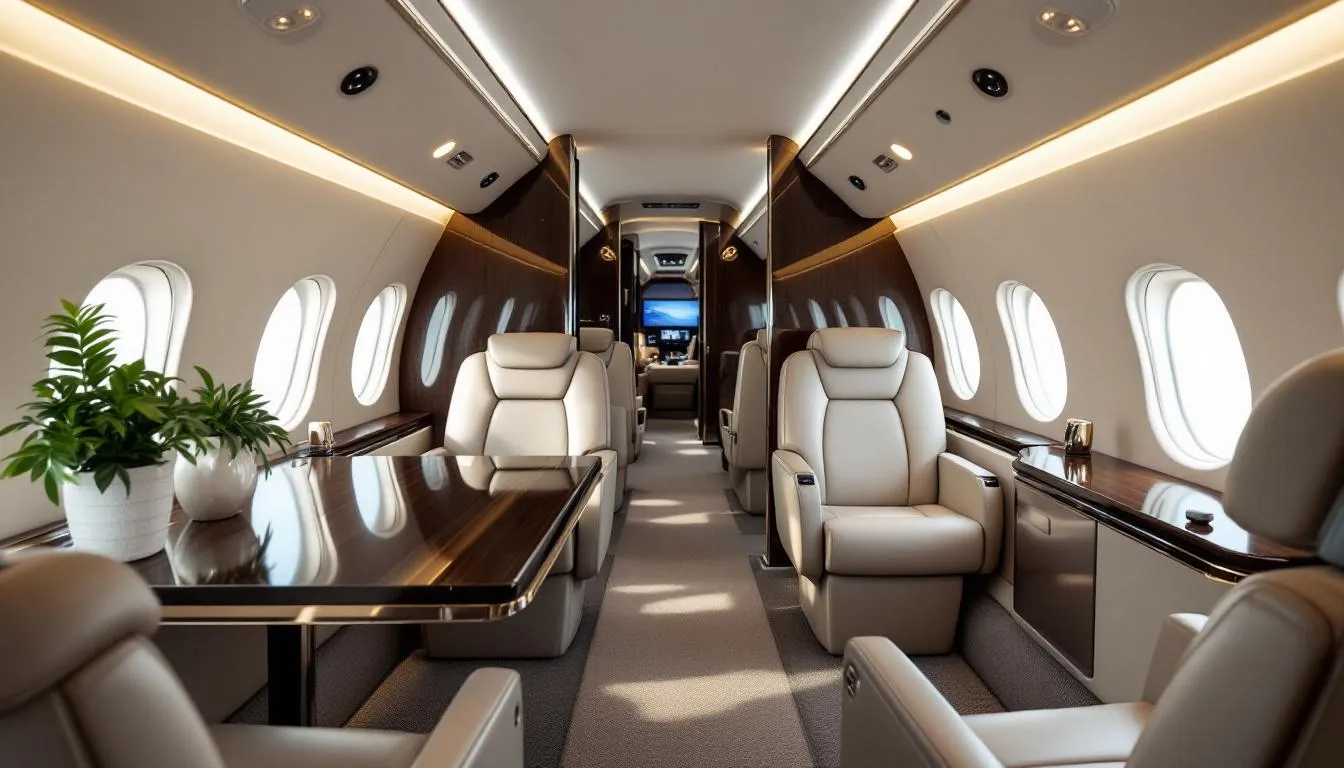
Advanced entertainment systems throughout the cabin feature personal monitors at individual seats, CD/DVD/Blu-ray players, and integrated sound systems. Modern aircraft include satellite-based wi fi connectivity that enables passengers to maintain productivity during international travel, with high-speed internet access comparable to ground-based business facilities.
The spacious cabin dimensions enable passengers to move freely throughout the aircraft, with cabin heights reaching 6 feet 2 inches or more in most models. Window design has evolved toward panoramic configurations, with the Gulfstream G700 featuring 20 panoramic oval windows that substantially increase natural light penetration and reduce the psychological impact of enclosed cabin environments during multi-hour flights.
Business meeting capabilities are enhanced through modular seating configurations that can be arranged for conference-style discussions, with tables and presentation equipment available in many aircraft. These features make 18-passenger jets ideal for corporate travel, where productive work must continue during flight time.
Customization Options
Business meeting capabilities are enhanced through modular seating configurations that can be arranged for conference-style discussions, with tables and presentation equipment available in many aircraft. Corporate delegations can conduct confidential meetings while in transit within a fully-equipped flying boardroom. These features make 18-passenger jets ideal for corporate travel, where productive work must continue during flight time.
Other models, such as the Dassault Falcon 8X, provide a range of customizable options, including advanced technology integrations and bespoke interior finishes. Passengers can select from a variety of seating arrangements, lighting schemes, and entertainment systems to create an environment that is both functional and luxurious. Whether the goal is to conduct business meetings at 40,000 feet or to relax with family and friends, these jets deliver exceptional range and maximum comfort.
The ability to tailor the flight experience extends to entertainment, with high-definition screens, surround sound, and high-speed WiFi ensuring that passengers are always connected and entertained. This level of personalization transforms the cabin into a private sanctuary, making every journey as enjoyable and productive as possible, no matter the destination.
Operating Costs and Pricing
The financial considerations for 18-passenger private jets involve substantial capital investments and ongoing operational expenses that reflect the premium positioning of these aircraft. Purchase prices for new aircraft in this category typically range from $44 million for models like the Gulfstream G550 to $62 million for the latest Gulfstream G700 with full option packages. The purchase price for pre-owned Heavy Jets ranges from $15 million to $30 million; new/used Ultra-Long-Range Jets can range from $20 million to over $75 million, providing options for various budgets and operational needs.
Charter rates for 18-passenger aircraft typically range from $8,000 to $15,000 per flight hour, depending on the specific model, route requirements, and seasonal demand factors. Peak travel seasons, including holidays and major business conferences, can drive charter rates toward the upper end of this range, while off-peak periods may offer more favorable pricing opportunities.
Annual operating costs for aircraft ownership include multiple components that scale with aircraft complexity and operational intensity. Fuel consumption represents the highest variable cost, with these aircraft consuming 4,000-5,000+ gallons per hour at cruise power settings. At current fuel prices ranging from $4-$7 per gallon, hourly fuel costs alone can reach $16,000-$35,000, depending on aircraft type and market conditions. An annual operating budget for owning a private jet ranges from $500,000 to over $2 million, covering various costs such as maintenance, insurance, and crew salaries.
Maintenance costs scale significantly with aircraft sophistication, with heavy inspection cycles occurring every 4,000-8,000 flight hours and costing $1-$2 million for large-cabin aircraft. These scheduled maintenance events, combined with routine inspections and unscheduled repairs, typically represent 15-20% of total annual operating costs for active aircraft.
Insurance costs for high-value aircraft with substantial passenger capacity typically range from 1-2% of aircraft acquisition value annually, translating to $440,000-$1.24 million in annual insurance premiums for a $44-$62 million aircraft. Crew costs, hangar fees, and regulatory compliance expenses add additional layers to the total cost of ownership equation.
Charter vs Ownership for 18 Passenger Jets
The decision between charter and ownership for 18-passenger aircraft depends heavily on annual usage patterns, operational requirements, and financial considerations. Charter benefits include elimination of capital investment, access to multiple aircraft types, and on-demand availability without long-term commitments or maintenance responsibilities.
For organizations or individuals flying fewer than 200 hours annually, charter typically provides more favorable economics compared to ownership. Charter eliminates the substantial upfront capital requirement while providing access to the latest aircraft technologies and cabin configurations. Additionally, charter operators handle all maintenance, crew training, and regulatory compliance responsibilities.
Ownership advantages become apparent for higher utilization scenarios, offering complete control over aircraft availability, custom interior configurations, and operational scheduling. Owners can ensure instant access to their aircraft without the booking lead times associated with charter services, particularly during peak travel periods when charter availability may be limited.
The break-even analysis for ownership versus charter typically occurs around 200-300 annual flight hours, though this calculation varies based on specific route patterns, aircraft utilization efficiency, and individual operational requirements. Fixed costs associated with ownership, including hangar fees, insurance, and crew salaries, must be offset by sufficient annual usage to justify the financial commitment.
Fractional ownership programs, such as those offered by NetJets and other operators, provide middle-ground solutions for 18-passenger aircraft access. These programs typically require 25-100 hours of annual commitment with shared ownership costs, offering some ownership benefits while reducing individual financial exposure. However, fractional programs may have limited availability for 18-passenger aircraft compared to smaller business jet categories.
Maintenance and Safety Standards
Safety and reliability are the cornerstones of private aviation, with rigorous maintenance and inspection protocols in place to protect passengers and crew. Every private jet is subject to regular inspections based on both flight hours and calendar intervals, ensuring that all systems are operating at peak performance. Compliance with international regulatory bodies such as the FAA and EASA is mandatory, and only aircraft that meet these stringent standards are cleared for flight.
Pilots operating private jets are highly trained professionals, holding type ratings for each specific aircraft and undergoing recurrent training every 6 to 12 months. This commitment to ongoing education ensures that crews are prepared for any situation, from routine operations to emergency procedures. Charter platforms like Jettly further enhance safety by partnering exclusively with verified operators who adhere to the highest industry standards.
Maintenance extends beyond the engines and avionics to include the advanced technology and entertainment systems that define the modern private jet experience. Regular upkeep ensures that every flight is not only safe but also comfortable and enjoyable, with all amenities functioning flawlessly. By prioritizing safety and maintenance, private jet operators provide peace of mind, allowing passengers to focus on the luxury and convenience of their journey.
Crew Training and Management
The professionalism and expertise of the crew are essential to delivering the seamless, luxurious experience that private jet travelers expect. Pilots and flight attendants undergo extensive training, covering everything from aircraft operations and advanced safety protocols to personalized customer service. This comprehensive approach ensures that every member of the crew is equipped to handle the unique demands of private aviation.
Flight attendants play a crucial role in enhancing the passenger experience, offering attentive service and catering to individual preferences throughout the flight. Their training includes emergency procedures, food and beverage service, and the ability to anticipate and respond to the needs of each guest, ensuring maximum comfort and safety from takeoff to landing.
Private jet operators invest heavily in crew management, recognizing that the quality of service on board is a key differentiator in the world of luxury aviation. Whether the journey is a short regional hop or a long-haul international flight, passengers can trust that their crew is dedicated to providing a safe, enjoyable, and truly first-class experience every time they fly.
Safety and Regulatory Requirements
Operating 18-passenger private jets requires adherence to enhanced safety protocols that reflect the increased passenger capacity and operational complexity of these aircraft. Regulatory requirements from the FAA, EASA, and international aviation authorities establish specific standards for aircraft certification, crew qualifications, and operational procedures.
Crew requirements for 18 passenger operations typically include two pilots with appropriate type ratings and, in many cases, at least one flight attendant to ensure passenger safety and service standards. Flight attendants become particularly important on extended international flights where passenger assistance, emergency procedures, and service coordination become more complex with larger passenger groups.
Regular maintenance schedules based on flight hours and calendar intervals ensure aircraft reliability and regulatory compliance. These aircraft require more frequent and comprehensive inspections compared to smaller business jets, with detailed maintenance tracking systems that monitor component life limits, airworthiness directives, and service bulletin compliance.
The complexity of systems in 18-passenger aircraft necessitates specialized maintenance facilities and technician training. Major maintenance events often require specialized tooling and equipment that may not be available at all airports, potentially impacting operational flexibility and maintenance scheduling.
Enhanced safety equipment requirements for larger passenger capacity include additional emergency exits, expanded oxygen systems, and more comprehensive fire suppression capabilities. These aircraft typically feature advanced avionics with triple-redundant systems, enhanced weather detection, and sophisticated flight management systems that reduce crew workload and improve safety margins.
Popular Routes and Use Cases
The operational capabilities of 18-passenger private jets make them ideally suited for specific route patterns and use cases that leverage their range, capacity, and luxury features. Transcontinental routes represent primary applications, with popular city pairs including New York to London, Los Angeles to Tokyo, and Dubai to New York, all achievable nonstop in appropriate aircraft configurations.
Corporate group travel represents a significant market segment, with companies utilizing these aircraft for board meetings, executive transportation, and corporate retreats. The ability to transport entire executive teams or board members in a single aircraft while maintaining privacy and productivity during flight time provides substantial value for time-sensitive business operations.
Government and diplomatic missions require secure group transport capabilities that an 18-passenger aircraft can provide effectively. These operations often involve multiple officials, security personnel, and support staff who must travel together while maintaining appropriate security protocols and communication capabilities.
Sports teams and entertainment industry professionals frequently charter these aircraft for group transportation, particularly for tournaments, concert tours, or film productions that require moving large groups with substantial equipment and personnel. The spacious cabin accommodates both passengers and specialized equipment while providing the comfort necessary for maintaining performance schedules.
Extended family travel for ultra-high-net-worth individuals represents another important use case, particularly for multi-generational family vacations or celebrations that require accommodating multiple family members, staff, and household personnel. The multiple living areas and sleeping accommodations make these aircraft suitable for family groups with varying needs and preferences.
International incentive travel programs utilize 18-passenger aircraft to reward top performers or major clients with exclusive luxury travel experiences. These charters often combine business objectives with luxury amenities, creating memorable experiences that strengthen business relationships while demonstrating corporate success and appreciation.
Environmental Impact of 18 Passenger Private Jets
The environmental impact of 18-passenger private jets is an increasingly important topic within the business aviation community. While these heavy jets are celebrated for their spacious and luxurious cabins, exceptional range, and ability to deliver ultimate luxury for international travel, they also come with a significant carbon footprint. A single private flight on a Gulfstream G550, for example, can emit up to 20 times more CO2 per passenger than a comparable commercial flight, largely due to the combination of long range, high speed, and lower occupancy rates.
The expansive cabin and advanced technology found in aircraft like the Gulfstream G550, Dassault Falcon 8X, and Embraer Lineage 1000E provide unparalleled comfort and flexibility for business meetings and private flights. However, these benefits are offset by the high fuel consumption required to achieve maximum speed and exceptional range. Heavy jets, which often operate with only a handful of passengers despite their capacity, contribute disproportionately to aviation emissions, especially on long-haul flights.
To address these concerns, the business aviation industry is investing in sustainable aviation fuel (SAF), which can reduce lifecycle emissions by up to 80% compared to traditional jet fuel. Leading manufacturers such as Gulfstream and Bombardier are also developing new aircraft with more efficient engines and aerodynamic designs, aiming to deliver high performance and ultimate comfort with a reduced environmental footprint. For instance, the Gulfstream G700 features an expansive cabin and forward galley while incorporating advanced materials and systems to improve fuel efficiency.
Shared ownership and membership programs are emerging as another strategy to reduce the number of flights and overall emissions. By allowing multiple users to access a single private jet, these programs help maximize occupancy and minimize the environmental impact per passenger. This approach is particularly relevant as demand for private aviation continues to grow, driven by the need for privacy, flexibility, and access to more airports around the globe.
Despite these advancements, even the most efficient models—such as the Embraer Lineage 1000E, with its spacious cabin and range of up to 4,600 nautical miles—still produce significant emissions. The Dassault Falcon 8X, known for its high speed and luxurious cabin, also faces scrutiny for its environmental impact, especially on ultra-long range flights.
Ultimately, reducing the environmental impact of 18-passenger private jets requires a collaborative effort from manufacturers, operators, and travelers. Continued investment in sustainable fuels, innovative aircraft design, and smarter usage models will be essential to balance the demand for luxury, speed, and space with the need for greater sustainability in business aviation. As the industry evolves, prioritizing environmental responsibility alongside ultimate luxury will ensure that private jet travel remains both desirable and conscientious for years to come.
Frequently Asked Questions
How much does it cost to charter an 18-passenger private jet for a round-trip flight from New York to Paris?
Charter costs for a round-trip New York to Paris flight in an 18-passenger private jet typically range from $240,000 to $450,000, depending on the specific aircraft model, seasonal demand, and charter operator. This estimate includes approximately 14-16 hours of flight time at hourly rates of $8,000-$15,000, plus positioning fees, international handling charges, and potential overnight crew costs. Peak travel seasons and short-notice bookings may result in higher pricing.
What is the difference between maximum seating capacity and comfortable passenger configuration on 18-seat jets?
Maximum seating capacity refers to the theoretical maximum number of passengers that can be accommodated using high-density seating arrangements, while comfortable configurations prioritize space, luxury, and amenities. Most 18-passenger aircraft actually seat 12-14 passengers comfortably in typical configurations that include multiple living areas, sleeping accommodations, and substantial legroom. The comfortable configuration provides space for movement, business activities, and relaxation during extended flights.
Can 18-passenger private jets land at smaller airports compared to commercial aircraft?
Yes, most 18-passenger private jets can access significantly more airports than commercial aircraft, typically requiring runways of only 5,000-6,000 feet compared to 8,000+ feet for commercial jets. This capability enables access to over 5,000 airports worldwide, versus approximately 500 airports accessible to commercial aviation. However, some smaller airports may lack customs facilities, fuel services, or ground handling capabilities required for international operations.
What crew requirements are needed to operate an 18-passenger business jet safely?
Operating an 18-passenger business jet requires a minimum of two fully qualified pilots with appropriate type ratings for the specific aircraft model. Additionally, regulations often mandate at least one flight attendant for passenger safety and service, particularly on international flights or extended domestic routes. Crew members must maintain current medical certificates, recurrent training, and comply with duty time regulations that may require additional crew for extended operations.
How far in advance should I book an 18-passenger private jet charter for peak travel seasons?
For peak travel seasons, including holidays, major sporting events, and conference periods, booking 18-passenger private jets should occur 4-6 weeks in advance to ensure aircraft availability and optimal pricing. However, these aircraft have more limited availability than smaller business jets, so earlier booking of 8-12 weeks provides better selection and potentially lower rates. Last-minute charter requests during peak periods may result in significantly higher costs or limited availability, particularly for specific routes or date ranges.
Final Thoughts
Choosing an 18-passenger private jet offers unparalleled luxury, space, and performance for those requiring large capacity travel without compromising comfort or efficiency. These aircraft, including renowned models from Gulfstream, Embraer, and Dassault Falcon, provide exceptional range, advanced technology, and spacious and luxurious cabins designed to accommodate business meetings, relaxation, and restful sleep during long-haul flights.
Whether for corporate travel, government missions, or exclusive group charters, 18-passenger jets deliver ultimate comfort and operational flexibility with access to more airports around the globe than commercial airliners. Platforms like BlackJet make chartering these high-performance jets easier and more accessible, offering flexible options without membership fees, so travelers can enjoy private aviation tailored to their needs.
While ownership involves significant investment and maintenance, charter options through trusted providers such as BlackJet allow for seamless access to luxury private flights. As business aviation continues to evolve, these aircraft remain at the forefront of luxury travel, combining cutting-edge innovation with timeless comfort. Selecting the right 18-passenger private jet ensures an exceptional private flight experience that meets the demands of international travel and the highest standards of privacy, safety, and convenience.


 Sign up with google
 Sign up with Apple