Owning a private jet is a dream for many, promising unmatched convenience, luxury, and the freedom to travel on your own terms. With a budget of around $2 million, you might wonder what kind of aircraft you can realistically acquire and whether it's the smartest way to access private air travel. This guide dives into the realities of purchasing a $2 million private jet in 2025, exploring the types of jets available, their capabilities, ongoing costs, and alternative options that might better suit your travel needs. Whether you're a first-time buyer or simply curious about the private aviation market, this article will provide clear insights to help you make an informed decision.
Key Takeaways
A 2 million dollar private jet typically buys a pre-owned light jet, a high-spec turboprop, or an entry-level personal jet like the Cirrus Vision Jet—not a brand-new midsize or long-range aircraft.
Most jets in the $2 million price range seat 4–5 passengers and typically have a limited range of 1,000–1,500 miles, making them ideal for regional trips rather than long-haul flights.
Ongoing operating costs (crew, hangar space, maintenance, insurance, fuel) can easily reach $400k–$800k+ per year, meaning the purchase price is often less than half of your total five-year investment.
Pre-owned jets can incur steep maintenance costs, mandated avionics upgrades to comply with evolving FAA regulations, and often require two pilots, adding to ongoing expenses.
New Very Light Jets (VLJs), such as the Cirrus Vision Jet, are notable for lower maintenance costs and modern technology compared to older jets, which may have higher operational costs.
Ensuring that an aircraft is enrolled in an engine maintenance program, like Rolls-Royce Corporate Care (RRCC), can provide financial protection against high overhaul costs and preserve resale value.
Many buyers underestimate insurance hurdles when purchasing a private jet, including pilot experience requirements and coverage complexities.
The National Business Aviation Association suggests calculating annual usage before committing to ownership to ensure the investment aligns with your flying needs.
The Cirrus Vision Jet is priced between $2 million $3.5 million and is often cited as the most affordable new jet on the market.
The Vision Jet is designed to be flown by a single pilot, often the owner, and features advanced safety and avionics systems.
Carbon-neutral flight options, verified offsets, and sustainable aviation fuel are increasingly available through premium access programs, making responsible travel more accessible than ever.
The allure of owning a private jet for around $2 million is powerful. It conjures images of bypassing airport security, boarding on your own schedule, and turning a two-day business trip into a same-day return. Picture flying from New York to Miami for a morning meeting and landing back home before dinner—no hotel, no checked bags, no wasted time.
But here’s the reality most first-time buyers discover too late: $2 million is an entry ticket, not a VIP pass. At this price point, you’re looking at a pre-owned light jet from the mid-2000s, a capable turboprop, or a new personal jet like the Cirrus Vision Jet SF50 G2+. You’re not getting a brand-new Gulfstream or a cabin where eight executives can stretch out on a transatlantic flight.
This guide breaks down exactly what $2 million buys in 2025, the hidden costs that can double your investment, and why many sophisticated travelers are choosing structured access programs over aircraft ownership.
What Kind of Private Jet Can You Realistically Get for $2 Million?
Two million dollars represents the ground floor of jet ownership, not the penthouse. In 2025’s market, this budget typically delivers one of three categories:
Common Aircraft Types at $2 Million
A pre-owned light jet from the mid-2000s to early 2010s (think Cessna Citation CJ1, CJ2, Beechcraft Premier I, or early Embraer Phenom 100)
A high-specification turboprop like a late-2000s Pilatus PC-12 NG, known for ruggedness, jet-like comfort, and short runway capability
A new or nearly-new personal jet, such as a 2019–2021 Cirrus Vision Jet SF50 G2, the world's first single-engine private jet
Understanding Aircraft Classes
$2M is not a long-range Gulfstream budget. Brand-new light jets from major manufacturers—the Citation CJ3+, Phenom 300E—start in the $7–10 million range. Midsize and super-midsize jets (Challenger 3500, Gulfstream G500) run $15–60 million or more. The flagship large jets, like the Gulfstream G800 or Bombardier Global 8000, approach $75 million.
Understanding the aircraft classes helps frame expectations:
Very Light/Personal Jets
4–7 passengers (most jets in this price range seat 4–5)
1,000–1,200 nm range (with the Vision Jet’s maximum range around 1,150 miles)
Ideal for regional hops
The Cirrus Vision Jet stands out in this category with its unique V-tail design instead of a traditional rudder, showcasing an innovative approach to both efficiency and safety. Powered by a Williams International FJ33-5A turbofan engine producing 1,800 lbs of thrust, it cruises at speeds up to 345 mph and reaches altitudes of 28,000 feet.
Light Jets
Turboprops
In current market conditions, $2 million transactions are common for 2018–2021 Cirrus Vision Jet SF50 models, 2008–2014 Pilatus PC-12 NG aircraft, and early Embraer Phenom 100/100E jets or higher-time Phenom 300s that have depreciated from their original $9–10 million price tags.
Is $2 Million Enough for a Brand-New Jet in 2025?
The direct answer: in 2025, $2 million is just enough for a new personal jet or high-end piston twin, but not for a new turbine aircraft from established manufacturers like Cessna, Embraer, Bombardier, or Gulfstream.
Cirrus Vision Jet SF50 G2+
The Cirrus Vision Jet SF50 G2+ stands as the flagship option at this price point. A fully equipped new model runs approximately $2.4–2.8 million, with pre-owned late-model G2 aircraft trading close to $2 million. Here’s what you get:
Single Williams FJ33-5A engine with cruise speeds around 300–310 knots true airspeed (345 mph max cruise)
Maximum range of approximately 1,150 nm with reserves in ideal conditions
Seating for five adults plus two children in a modular cabin with a center console workspace and a spacious cabin 4 feet tall and 5 feet wide
Garmin Perspective Touch+ avionics with synthetic vision and sidestick technology
The Cirrus airframe parachute system (CAPS)—a whole-aircraft parachute for emergency recovery
Safe Return emergency autoland, allowing even a passenger to land the plane with one button
Gogo InFlight Wi-Fi for connectivity while in the air, enhancing comfort and productivity during travel
Known for low direct operating costs, estimated at under $1,000 per flight hour, thanks to its single-engine design and modern technology
Diamond DA62
Another option in this price band is the Diamond DA62, a high-performance piston twin. The new aircraft starts in the low $1 million range, but once you add advanced avionics, de-icing equipment, and interior upgrades—plus factor in operating costs over the first few years—total investment can approach $2 million.
It’s particularly suited for short hops, family travel, and owner-operator missions, with FADEC diesel engines delivering exceptional fuel economy.
While these aircraft feature cutting-edge safety technology and modern avionics, they’re not traditional business jets suited for eight executives on a 2,000+ nm transcontinental mission. They’re personal jets—purpose-built for a different kind of flying.
Most Common Aircraft Around the $2 Million Mark
The $1.5–2.5 million band in 2025 is dominated by a small group of proven aircraft with strong support networks, solid safety records, and predictable operating costs. These aren’t obscure finds—they’re the workhorses of the pre-owned market.
Pilatus PC-12 NG
The PC-12 NG stands as the flagship single-engine turboprop in this price range. Late 2000s to early 2010s models with moderate hours regularly transact around $2 million. The executive cabin configuration often includes an aft galley, enhancing passenger comfort and convenience by providing a dedicated space for meal preparation and refreshments.
Key specifications:
Range: approximately 1,500–1,700 nm with reserves
Passenger capacity: 6–8 in executive cabin configuration
Large cargo door for oversized luggage, sporting equipment, or stretcher loads
Short-field capability under 3,000 feet in many conditions
The proven PT6A engine delivers outstanding reliability statistics. The PC-12 is widely used in charter, corporate, and medevac roles, with a global support network that keeps downtime minimal.
Ideal use case
A Swiss-based family office flying Zurich–Ibiza–Zurich in a single day, with skis and luggage, using small regional airports that jets can’t access.
Cirrus Vision Jet SF50 G2/G2+
The Vision Jet is the iconic $2 million personal jet—ideal for high-net-worth owner-pilots and small executive teams who value cutting-edge technology in a compact package. The cabin features a forward galley located at the front, enhancing passenger comfort and operational efficiency within the aircraft's interior layout.
Key specifications:
2025 pre-owned price for 2019–2021 G2: approximately $2.0–2.3M
Cruise: 300–310 knots true airspeed (345 mph max cruise)
Range: 1,000–1,200 nm in ideal conditions
Seating: 5 adults plus 2 children
Safety and technology features:
Whole-aircraft parachute and Safe Return autoland
High-speed Wi-Fi capability via Gogo
USB-C charging, mood lighting, and climate zones
Auto Radar, synthetic vision, advanced envelope protection
Ideal use case
A tech founder commuting between Los Angeles and Silicon Valley two to three times weekly, flying themselves with a managed program handling maintenance costs and dispatch support.
Piper M500 / M600
Piper’s single-engine turboprops—especially the M600—appear near the $2 million mark on the pre-owned market for mid-to-late 2010s builds, a fraction of the cost of the most expensive private jets on the market.
Key specifications:
Range: approximately 1,300–1,400 nm
Passenger capacity: 4–5 in executive configuration
Cruise altitude: FL280–FL300
Garmin G3000 avionics—jet-like interface in a turboprop
The M600 offers lower hourly fuel burn versus light jets, with autothrottle and envelope protection on newer variants. Icing certifications make it a capable all-weather platform.
Ideal use case
A regional business owner making frequent IFR flights across the Midwest or Western Europe, balancing cost per hour with reasonable speed and comfort.
Embraer Phenom 100 / 100E
The Phenom 100 is a twin-engine very light jet often priced in the $1.8–2.3M band for 2010–2014 aircraft.
Key specifications:
Cruise: approximately 380–390 knots
Range: 1,000–1,100 nm with four passengers
Cabin: 4–6 seats, flat floor, enclosed lavatory
Prodigy avionics suite (Garmin-based)
Twin-engine redundancy provides an added margin of safety over single-engine designs. Strong OEM support and widespread use in training and charter fleets ensure parts availability and maintenance expertise.
Compared to the Vision Jet
Slightly faster with twin-engine peace of mind, but higher operating costs and longer runway requirements.
Citation CJ1 / CJ2 / CJ2+
The Citation CJ-series jets are workhorses of light jet charter and corporate fleets. Early 2000s examples transact near $2 million depending on avionics upgrades and engine programs.
Key specifications:
Seating: 5–7 passengers in club configuration
Range: CJ1 around 1,000 nm; CJ2/CJ2+ up to 1,500 nm
Cruise: approximately 380–410 knots
Single-pilot certification for trained owner-operators
Upgrade paths include modern avionics (Garmin G600/700 TXi, Pro Line 21) with WAAS/LPV approaches and ADS-B. These jets benefit from decades of operational history and a proven safety record.
Ideal use case
A small regional law firm or medical group using a CJ2+ for multi-city client visits in a single day, eliminating overnights and maximizing billable hours.
The Hidden Costs Behind a $2 Million Jet
The $2 million purchase price may sound affordable compared to the price tags of larger jets, but it is often less than half the total five-year cost of owning and operating a turbine aircraft. This is where ownership economics diverges sharply from expectations.
Annual maintenance budgets often amount to 5% to 10% of the aircraft's total value, approximately $150,000 to $200,000 for a $2 million jet.
Older aircraft frequently require expensive avionics retrofits to remain compliant with evolving FAA regulations, further adding to maintenance costs.
When considering hangar space, real estate costs for hangar space can significantly impact the overall cost of owning a private jet.
The complexity of owning a private jet can overwhelm buyers who are not prepared or informed.
Fixed Annual Costs
Hangar space: $25,000–$60,000+
Insurance: $15,000–$50,000+ (often underestimated by buyers)
Crew salary & benefits: $100,000–$180,000 (single pilot)
Recurrent training: $15,000–$35,000
Management fees: $3,000–$8,000/month
Subscriptions (charts, data, tracking): $5,000–$15,000
Variable Costs (Per Flight Hour)
Bottom line: Annual fixed overhead for a light jet or PC-12 can easily run $200,000–$350,000. Total annual costs at 150–200 flight hours often fall between $400,000–$800,000+, depending on aircraft type and region.
Engine and APU maintenance programs—like Rolls Royce Corporate Care (RRCC), JSSI, or MSP Gold—are critical for preserving resale value and preventing surprise expenses. Engines enrolled in these programs transfer to buyers with predictable reserves already funded. Look for listings noting “engines enrolled” or “APU enrolled” status.
The stark comparison: Over five years, a $2M aircraft flown 150 hours per year can cost $4–5 million all-in. A disciplined Jet Card strategy can deliver similar hours with less capital locked up, no depreciation risk, and no 3 AM phone calls about unscheduled maintenance.
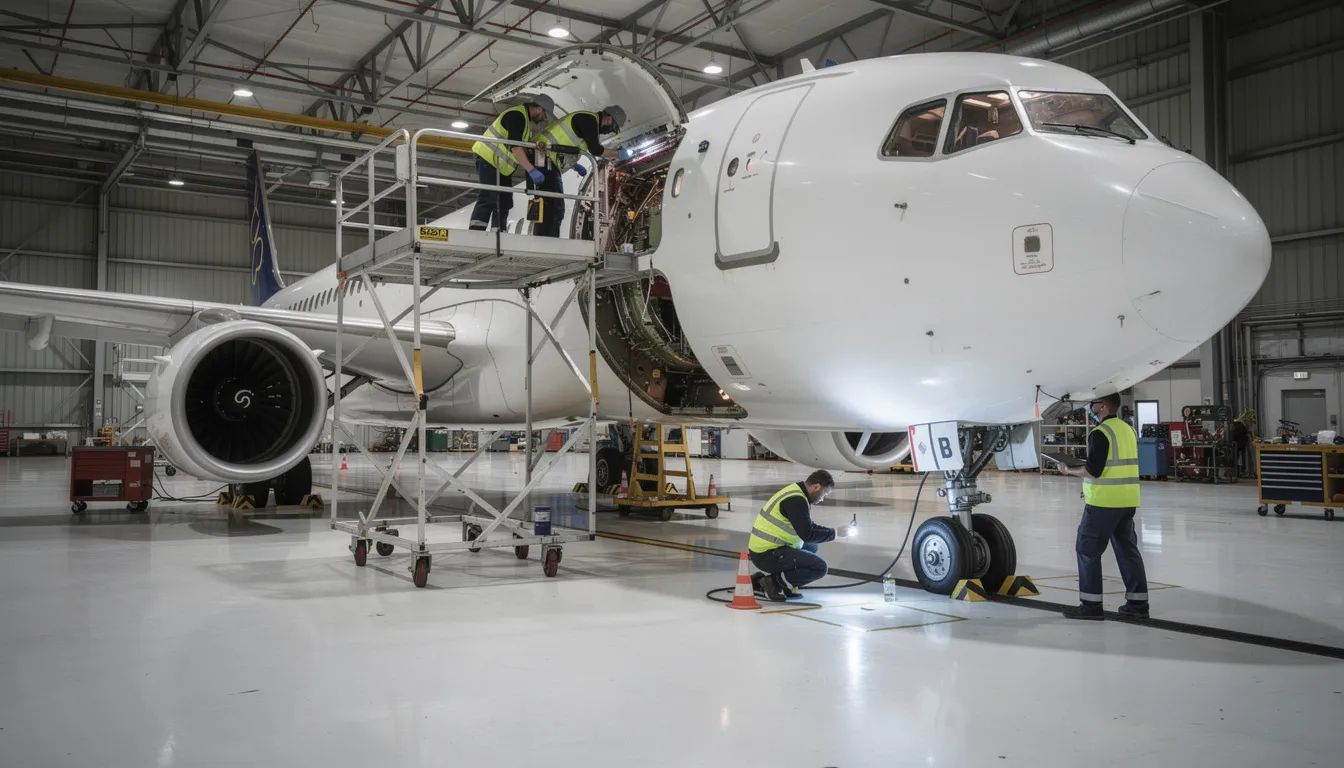
Insurance, Crew, and Where You Actually Park the Jet
Many first-time buyers underestimate three practical constraints that can derail even a well-researched purchase: insurability, crew availability, and hangar space.
Insurance Realities
Most private jets require specialized aviation insurance with hull coverage and liability protection. Insurers scrutinize:
Pilot experience: Low-time pilots or those new to turbine aircraft face premium surcharges or outright refusals
Training requirements: Type ratings, recurrent simulator time (Level D sims preferred), and minimum hours on type before solo PIC authority
Operation type: Part 91 personal use versus Part 135 commercial operations carry different risk profiles
A pilot moving from piston singles to a Vision Jet will likely need 25–50 hours of supervised flying before insurers allow solo operations—and those supervision hours aren’t free.
Crew Considerations
Most very light jets and turboprops are single-pilot certified, but many owners employ a safety pilot for challenging IFR conditions, night operations, or long duty days
Older midsize jets and some light jets require two pilots, adding $100,000–$150,000+ annually per crew member
Finding qualified pilots in today’s market can take months—the pilot shortage affects private aviation as much as airlines
Hangar and Parking
Hangar shortages at high-demand airports (Teterboro, Van Nuys, London-area fields) drive rents to $5,000–$10,000+ monthly. Options include:
Hangar co-ops or shared space arrangements
Based at secondary airports, 30–60 minutes from primary locations
Climate-controlled hangars are essential for preserving new factory paint, interior refurbishment investments, and sensitive avionics
One buyer closed on a jet in June but waited four months for suitable hangar space near their home city. The aircraft sat on a ramp at the seller’s location, accruing parking fees and weather exposure.
Ownership vs Charter vs Jet Card: Which Makes Sense at $2 Million?
The strategic question every prospective buyer should answer: Is tying up $2 million in metal the smartest way to buy private access—especially for those flying fewer than 150–200 hours per year?
Full Ownership
Full ownership delivers maximum control. You choose the crew, the interior, and the paint scheme. The aircraft is available when you want it, configured how you want it. But you also absorb high fixed costs, capital depreciation, and management complexity. Ownership typically becomes sensible at 250–300+ hours annually.
On-Demand Charter
On-demand charter offers pay-per-trip flexibility with access to thousands of aircraft worldwide. No asset risk, wide aircraft selection, and the ability to book empty leg flights at significant discounts. The trade-offs: variable pricing, limited guaranteed availability during peak periods, and less consistency in aircraft and crew.
Jet Cards and Membership Programs
Jet Cards and membership programs split the difference. Pre-paid hours or deposits secure guaranteed availability at fixed or capped hourly rates. Premium programs curate operators to rigorous safety standards—IS-BAO, ARGUS, Wyvern certifications—and often include carbon-neutral options by default.
Consider this: A $2 million budget dedicated to Jet Cards and on-demand charter can fund hundreds of hours across multiple aircraft classes over several years. Need a light jet for a quick regional hop? Done. Need to step up to a super-mid for a coast-to-coast board meeting? Also done. That flexibility doesn’t exist with a single-owned aircraft.
Modern access programs also deliver:
Safety vetting that goes beyond what individual buyers can conduct
Carbon-neutral flight options with verified offsets, sometimes at no extra cost
Access to aircraft equipped with the latest avionics, autoland systems, and high-speed Wi-Fi without owning and upgrading them yourself
Interested in innovative ways to purchase a private jet? Discover how cryptocurrency is streamlining private jet purchases.
For many first-time private aviation users, starting with a Jet Card or curated charter is the smarter path before committing to a $2 million purchase.
How to Avoid Expensive Mistakes When Buying a $2 Million Jet
For those who’ve evaluated the numbers and decided ownership fits their mission profile, a disciplined acquisition process prevents costly surprises.
Pre-Purchase Inspection Essentials
Commission an independent inspection at a reputable service center—not the seller’s preferred shop
Include borescope examination of engines, comprehensive logbook audit, and corrosion checks
Verify enrollment status on engine, APU, and avionics programs (RRCC, JSSI, MSP, etc.), and specifically check if the RRCC APU is enrolled in a maintenance plan, as this indicates the aircraft's serviced status and reliability
Review maintenance and refurbishment records, including any work performed by Gulfstream SAV, such as interior refurbishment, paint jobs, or technology upgrades like Wi-Fi systems
Review damage history, including any incidents that may not have been reported to insurers
Legal and Title Due Diligence
Conduct a title search and lien check through the FAA registry or the appropriate national authority
Review the export/import history if the aircraft has operated internationally
Engage an experienced aviation attorney for contract review, registration, and sales tax implications
Mission Analysis Before Signing
Calculate your average trip length, typical passenger count, and seasonal patterns
Assess need for international operations, de-icing certification, or high-altitude performance
Budget for Wi-Fi installation, avionics upgrades, and cabin improvements if the current configuration doesn’t meet your standards
Common Pitfall
A buyer seduced by a low sticker price on a 1990s jet that needs $1 million in new interior, MSP avionics upgrades, and engine overhauls to be compliant and comfortable. The cheapest private jet on the market is rarely the smartest purchase.
Use a professional acquisition team or management company that can handle crewing, maintenance scheduling, and future resale—not just the transaction paperwork.
Is a $2 Million Private Jet Actually Worth It?
A $2 million private jet can absolutely be worth it for the right flyer. But “right” means specific criteria, not general aspirations.
Ownership Tends to Make Sense When:
You have frequent, time-sensitive regional travel with predictable patterns
Annual utilization reaches 200–300+ hours
You want full control over schedule, crew selection, branding, and onboard experience
Your plan involves holding and operating the aircraft for years, not flipping it
Ownership Often Doesn’t Make Sense When:
You’re flying fewer than 150 hours annually
Destinations and passenger counts vary significantly, requiring different aircraft sizes
You prefer turnkey, asset-light solutions without capital tied up in depreciating metal
Long-haul flights are part of your regular travel pattern
Savvy travelers increasingly separate access from ownership. They use Jet Cards and curated charter to enjoy Gulfstreams, Globals, and Falcons when needed—then step down to light jets for shorter hops. No single $2 million aircraft can match that flexibility.
The most sophisticated private aviation users treat aircraft the way they treat real estate: own when it makes strategic sense, access when it doesn’t. For many, that means exploring premium jet access solutions—programs that combine safety vetting, carbon-neutral operations, and modern technology without requiring a $2 million commitment.

Frequently Asked Questions About $2 Million Private Jets
How much does it really cost per hour to operate a $2M private jet?
Realistic 2025 figures for all-in hourly costs (fuel, maintenance reserves, crew allocation, etc.):
Very light jet (Vision Jet, Phenom 100): $1,200–$2,000 per flight hour
Turboprop (PC-12, M600): $900–$1,600 per hour, depending on region and utilization
These figures assume owner-operated or single-pilot scenarios. Add a second crew member, and costs increase accordingly. Remember that low hours on an aircraft don’t reduce hourly operating cost—it actually increases cost per hour because fixed expenses are spread across fewer flights.
Can I offset ownership costs by putting my $2M jet on charter?
Part 135 charter can offset some costs, but it rarely turns a profit after management fees, additional crew requirements, and accelerated maintenance schedules. Charter operations mean:
Increased wear from higher utilization and diverse flight conditions
More frequent inspections and shorter maintenance intervals
Less availability for your own travel during peak charter demand periods
Consult a management company to model realistic utilization and revenue projections before assuming charter income will cover your costs.
How long will a $2M jet last before major overhauls make it uneconomical?
Well-maintained jets can safely operate for decades and tens of thousands of hours. The limiting factors are typically:
Engine overhauls: Intervals of 3,500–5,000 hours on many turbines, with costs reaching mid-to-high six figures per engine
Avionics obsolescence: ADS-B mandates, database compatibility, and cockpit modernization drive upgrade decisions
Cabin expectations: What was luxurious in 2005 may feel dated in 2025
The question isn’t whether the aircraft will fly—it’s whether continued investment makes sense versus upgrading to newer metal.
What about sustainability—can my private flights be carbon neutral?
Carbon offsets and sustainable aviation fuel (SAF) blends are increasingly available in 2025. Premium access programs often include:
Automatic carbon offsetting is built into hourly rates
SAF availability at major FBOs and growing secondary airports
Transparent emissions reporting for corporate sustainability disclosures
If environmental impact matters to you, ask explicitly for carbon-neutral or reduced-emissions options when booking. Many Jet Card programs now offer this as standard rather than an add-on.
If I’m new to private aviation, should I buy a $2M jet first or start with a Jet Card?
Start with a structured access solution—a Jet Card or curated charter program—for 12–24 months before considering ownership. This approach lets you:
Understand your real usage patterns without a capital commitment
Experience different aircraft classes on different routes
Build relationships with operators and understand service expectations
Collect data (hours flown, typical routes, passenger loads) that makes any future purchase decision rational rather than emotional
The most expensive jet is the one that sits in a hangar while you fly commercial because it’s the wrong aircraft for your actual needs.
Conclusion
Owning a $2 million private jet opens the door to personal and regional air travel with impressive technology, comfort, and safety features. However, the total cost of ownership extends far beyond the purchase price, including maintenance, crew, insurance, and hangar expenses. For many travelers flying fewer than 150–200 hours annually, alternative access options like Jet Card programs and on-demand charter provide greater flexibility, sustainability, and cost-effectiveness without the complexities of ownership. Whether you choose to own or access, understanding your mission requirements and budget will help you make the smartest decision for your private aviation needs.


 Sign up with google
 Sign up with Apple


