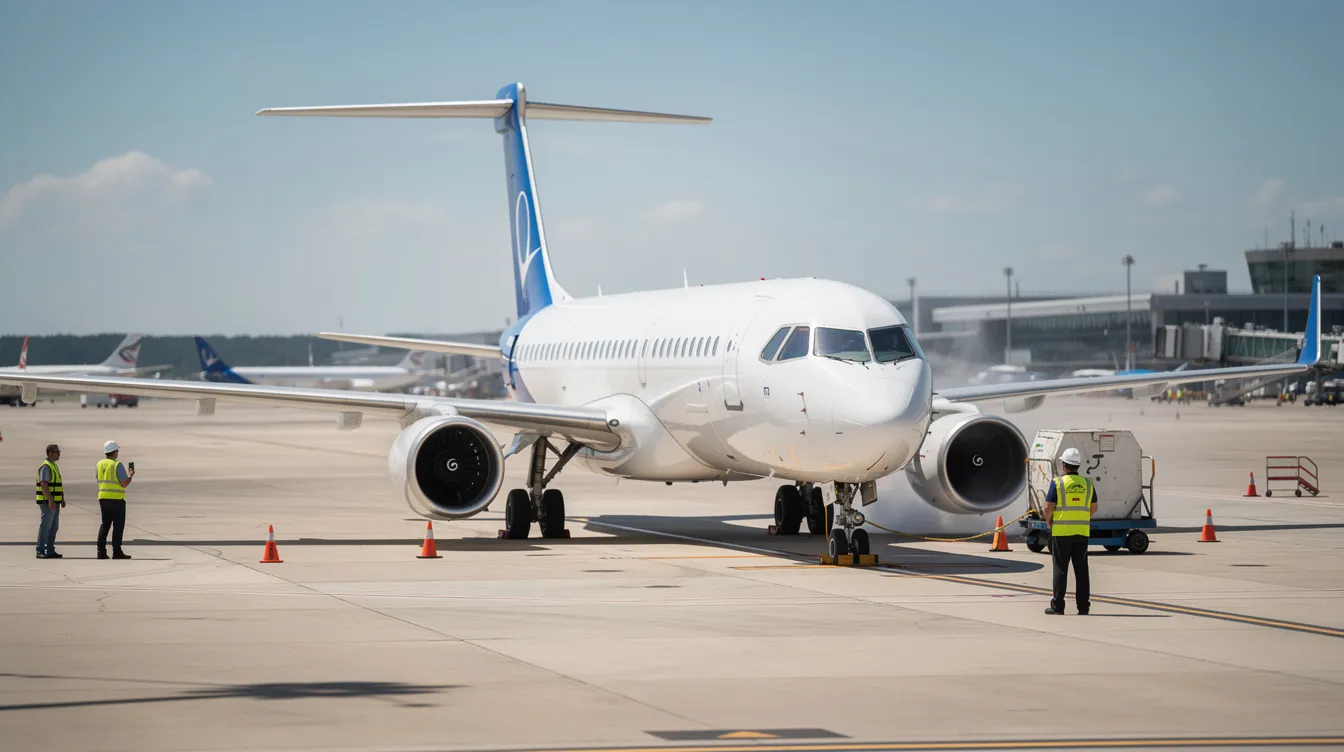
The Boeing 737 MAX 10 is the largest variant in Boeing’s latest-generation 737 MAX family, built for high-density short- and medium-haul routes with seating for up to 230 passengers, a range of about 3,300 nautical miles, and an expected commercial entry into service in 2026 once certification is complete. It sits at the intersection of commercial aviation’s biggest debates: safety reform, certification rigor, market competition, and the relentless pursuit of per-seat efficiency.
For executives, high-net-worth travelers, and frequent business flyers who track the aviation landscape as closely as their portfolios, understanding where this airplane stands—and what it means for the way you fly—is more than academic. It shapes the airline schedules, route options, and cabin experience available on dense domestic and regional trips, while also clarifying when commercial service and private aviation serve different priorities. What follows examines the MAX 10’s program status, design and engineering, certification and safety updates, cabin layouts, performance, environmental profile, airline use cases, and competitive position—including how it compares with both rival narrowbody jets and private travel alternatives.
Executive summary: Where the Boeing 737 MAX 10 stands today
The Boeing 737 MAX 10 is the largest member of the MAX family, Boeing's latest-generation single-aisle line. Designed for high-density short- and medium-haul routes, it aims to compete directly with the Airbus A321neo by offering carriers the highest seat count in the 737 lineage. Boeing expects the MAX 10 to be certified in 2026, with first deliveries and entry into commercial service following shortly after-though the program has endured years of delays rooted in post-MCAS regulatory scrutiny, new safety mandates, and technical issues like the engine anti-ice system redesign.
For premium travelers, the MAX 10's arrival means more frequencies on key domestic trunk routes, newer cabin environments, and improved economics that can translate into better schedule options. But it also underscores a fundamental question: when time, privacy, and control matter most, does a seat—even a first-class seat—on a high-capacity narrowbody deliver what you need?
Here are the essential facts at a glance:
The MAX 10 is Boeing's largest 737 variant, stretching the fuselage 66 inches beyond the MAX 9.
It typically seats 188 passengers in a standard two-class layout, scaling up to 230 in high-density single-class configurations.
Maximum range reaches approximately 3,300 nautical miles-enough for coast-to-coast U.S. flights but short of transatlantic missions.
Boeing completed the MAX 10 certification flight testing in 2026: 976 flights, over 2,060 flight hours, and roughly 1,040 hours of ground testing.
Boeing expects the MAX 10 to enter service in 2026, pending final FAA approval and regulatory sign-offs.
Boeing has accumulated 1,465 firm orders for the MAX 10 variant, with United Airlines, WestJet, and Alaska Airlines among the largest operators committed to the type.
Positioning the MAX 10 within the 737 MAX family
The 737 MAX family-comprising the MAX 7, MAX 8, MAX 9, and MAX 10, represents Boeing's answer to rising fuel costs, tightening emissions standards, and airline demand for fleet commonality. All four variants share the CFM LEAP-1B new engines, cockpit systems, and maintenance procedures. The MAX family is intended to achieve approximately 20% lower fuel usage compared to older 737 Next Generation models, a figure that translates directly into lower operating costs and reduced CO₂ per seat.
The MAX 10 is the largest member of this lineup, and its positioning is deliberate:
MAX 7: The smallest variant, optimized for shorter routes and hot-and-high airports, seating roughly 138–172 passengers with the longest range in the family.
MAX 8: The workhorse, seating around 162–210 passengers. The first MAX to enter service, it dominates the order book and serves the widest variety of routes.
MAX 9: A mid-stretch variant seating approximately 178–220 passengers, filling the gap between capacity and range.
MAX 10: The highest-capacity option, designed to carry up to about 230 passengers in a single-class layout, trading some range for maximum seat count on dense routes.
This commonality across the MAX family means pilots can transition between variants with minimal additional training, and mechanics can maintain any model using shared equipment and systems. For travelers, that translates into more consistent airline operations. For private aviation, BlackJet applies a parallel philosophy: consistent premium standards across multiple aircraft categories, so your experience remains seamless whether you're on a midsize jet or a large-cabin airplane.
Development timeline and first flight of the 737 MAX 10
Boeing launched the MAX 10 program at the 2017 Paris Air Show on June 19, 2017, announcing over 240 orders and commitments from more than ten customers on the first day. The timing was intentional: Airbus had been gaining ground with the A321neo, and Boeing needed the largest member of the MAX family to defend its position in the high-capacity narrowbody market.
Development proceeded through design reviews and supplier integration involving a wider network of aviation companies over the following years, but the global grounding of the MAX fleet in 2019 disrupted every timeline across the program. The MAX 8 had entered service on May 22, 2017, and within 18 months, two fatal accidents would reshape the certification landscape for all subsequent variants.
The first flight of the Boeing 737 MAX 10 took place on June 18, 2021, from Boeing's facility near Seattle. Test pilots flew the airplane through an initial profile evaluating handling qualities, systems integration, and the performance characteristics unique to the stretched fuselage and redesigned main landing gear. Multiple test aircraft were subsequently employed, and Boeing planned a comprehensive flight test campaign spanning nearly a thousand flights before seeking type certification-a campaign that would stretch years longer than originally expected.
Flight testing and certification campaign
Flight testing a modern airliner is a rigorous, multi-phase process. For the MAX 10, it encompassed envelope expansion (pushing speed, altitude, and load factor limits), stall and climb tests, hot-and-high performance validation, autoland checks, wet runway braking, and maximum energy rejected takeoff stops. The final certification flight in mid-2026 included audibility checks for cockpit and cabin alerting systems-an indication of how granular modern testing has become.
Post-MCAS scrutiny has made this campaign more conservative and data-intensive than for earlier MAX variants. The FAA and EASA demanded more direct oversight, more documentation, and broader test matrices covering edge cases that previous programs might have addressed analytically rather than in-flight.
Key milestones in the MAX 10 certification campaign:
976 certification flights completed, totaling over 2,060 flight hours.
Approximately 1,040 hours of ground testing, covering structural loads, systems integration, and environmental conditions.
Development Assurance Review 4 (DAR 4) was roughly 60% complete as of mid-2026 reporting, with system safety assessments and final documentation still being delivered to the FAA.
Amended type certificate: The MAX 10 is certified as a variant within the existing 737 MAX type certificate, meaning it inherits the baseline certification of the family but must independently validate every change-fuselage stretch, landing gear, systems modifications-through its own testing program.
Regulatory delays: MAX 7, MAX 10, and evolving FAA requirements
The 737 MAX 8's two fatal accidents—Lion Air Flight 610 in October 2018 and Ethiopian Airlines Flight 302 in March 2019—triggered a global grounding and a cascade of legislative and regulatory reforms. For later variants like the MAX 7 and MAX 10, these reforms created an entirely new certification environment.
Central to the delays was a congressional debate over whether the MAX 10 should be required to install a full Engine Indicating and Crew Alerting System (EICAS)—a modern standard that the 737 platform, dating back decades, had never featured. Ultimately, Congress allowed the MAX 10 to proceed without a full EICAS retrofit, but imposed strict conditions:
Installation of a third angle-of-attack sensor across MAX types, adding redundancy that was absent in the original MCAS design.
A stick shaker cutoff switc, ggivespilots the ability to silence erroneous stall warnings.
Enhanced angle-of-attack protections and clearer cockpit alert logic.
Boeing's certification process for the MAX 10 has faced multiple delays beyond the legislative timeline. The MAX 10 certification process includes resolving engine anti-ice system issues: regulators found that leaving the anti-ice system activated after icing conditions had passed could cause nacelle components to overheat, posing a structural risk. Boeing developed a redesigned thermal management system, and formal flight testing of that fix is underway.
As of 2026, the MAX 7 has gained FAA certification, while the MAX 10 remains in the approval pipeline. Major customers like United Airlines and WestJet have had to adjust fleet planning timelines, extending older aircraft like the 737-900ER and 757 beyond their originally intended retirement dates.
Design and engineering changes unique to the MAX 10
The MAX 10 is not simply a MAX 9 with extra rows of seats. Boeing engineers implemented several structural and aerodynamic modifications to accommodate the stretch while maintaining safe handling:
Fuselage stretch: The MAX 10's fuselage is approximately 66 inches (1.68 meters) longer than the MAX 9, increasing overall length, making it the longest airplane in 737 history, and affecting the center-of-gravity envelope, structural loads, and emergency evacuation dynamics.
Levered main landing gear: To prevent tail strikes during rotation and takeoff, Boeing redesigned the main landing gear with a semi-levered mechanism. A taller oleo-pneumatic strut and down-swinging lever provide additional ground clearance during high-pitch attitudes while working with the nose gear to preserve rotation geometry and ground attitude, a critical safety consideration given the longer fuselage.
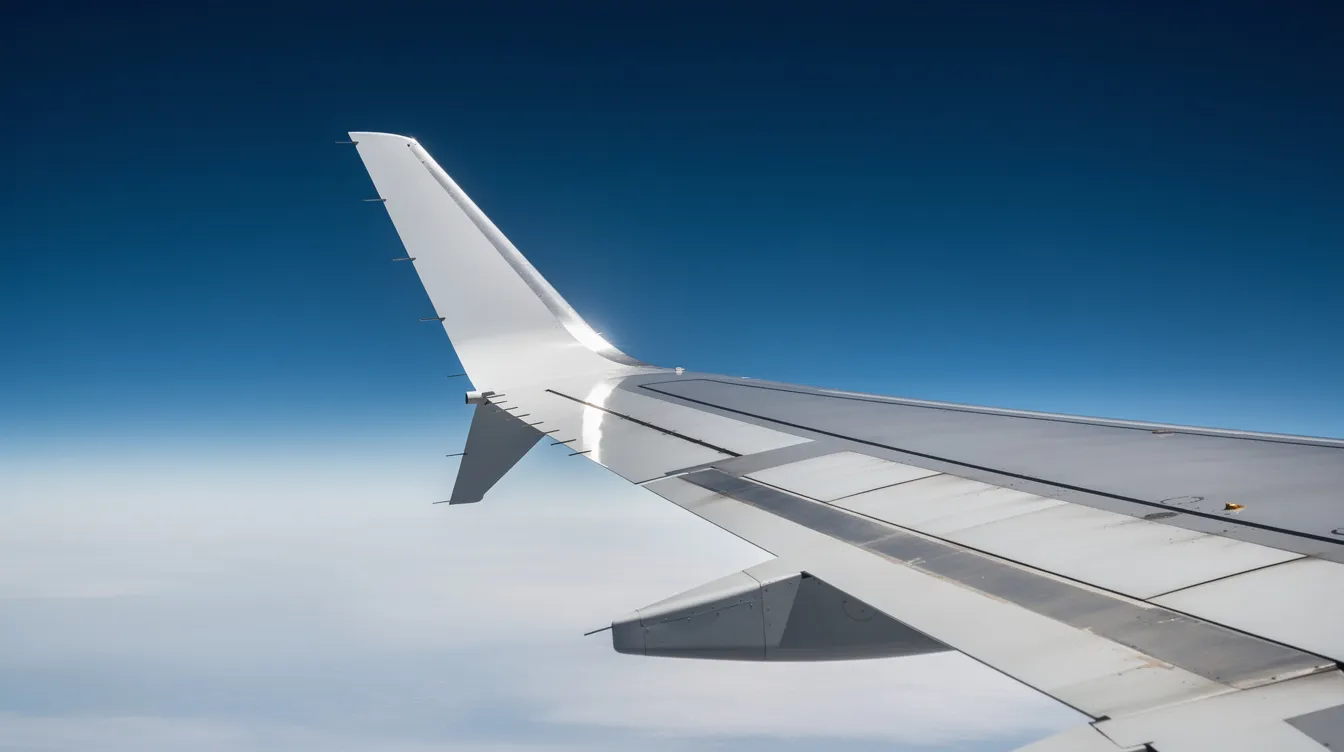
Split-tip winglets: The MAX 10 features Boeing's Advanced Technology split-tip winglets, shared across the MAX family, which reduce induced drag and contribute to the fuel burn improvements.
Reprofiled tail cone and drag reduction: Refinements to the aft fuselage geometry and selective removal of vortex generators help offset the drag penalty of a longer airframe.
The LEAP-1B engine placement forward of the wing creates pitch characteristics that led to the development of MCAS on earlier MAX variants. Software updates across the entire MAX family have since fundamentally changed how the system operates, now comparing both angle-of-attack sensors and refusing activation when they disagree by more than approximately 5.5 degrees.
The incremental weight increase over the MAX 9 required Boeing engineers to balance structural reinforcement with competitive fuel efficiency and range-a trade-off that defines the MAX 10's operational niche.
Cabin layout, passenger experience and airline configurations
Typical Seating Configurations
The aircraft has a typical two-class seating configuration of 185 to 210 passengers, depending on the carrier's chosen pitch and first-class product. In high-density single-class layouts designed for budget and leisure carriers, the MAX 10 can accommodate up to approximately 230 passengers. Specifications are subject to airline configurations, payload, and operating conditions.
Passenger Experience Features
Passenger experience features inherited from the MAX family include:
Boeing Sky Interior with sculpted sidewalls, LED mood lighting, and a sense of spaciousness despite the single-aisle fuselage.
Larger pivoting overhead bins that accommodate more carry-on luggage, reducing boarding delays.
Quieter cabin environment thanks to the LEAP-1B engine and nacelle acoustic design, which lowers interior noise levels compared to older 737 NGs.
Airline-Specific Layouts
Airlines will configure MAX 10 cabins differently based on mission:
United Airlines will likely deploy a premium two-class layout for competitive domestic trunk routes.
WestJet may optimize for higher-density leisure configurations on Canadian and sun-destination flying.
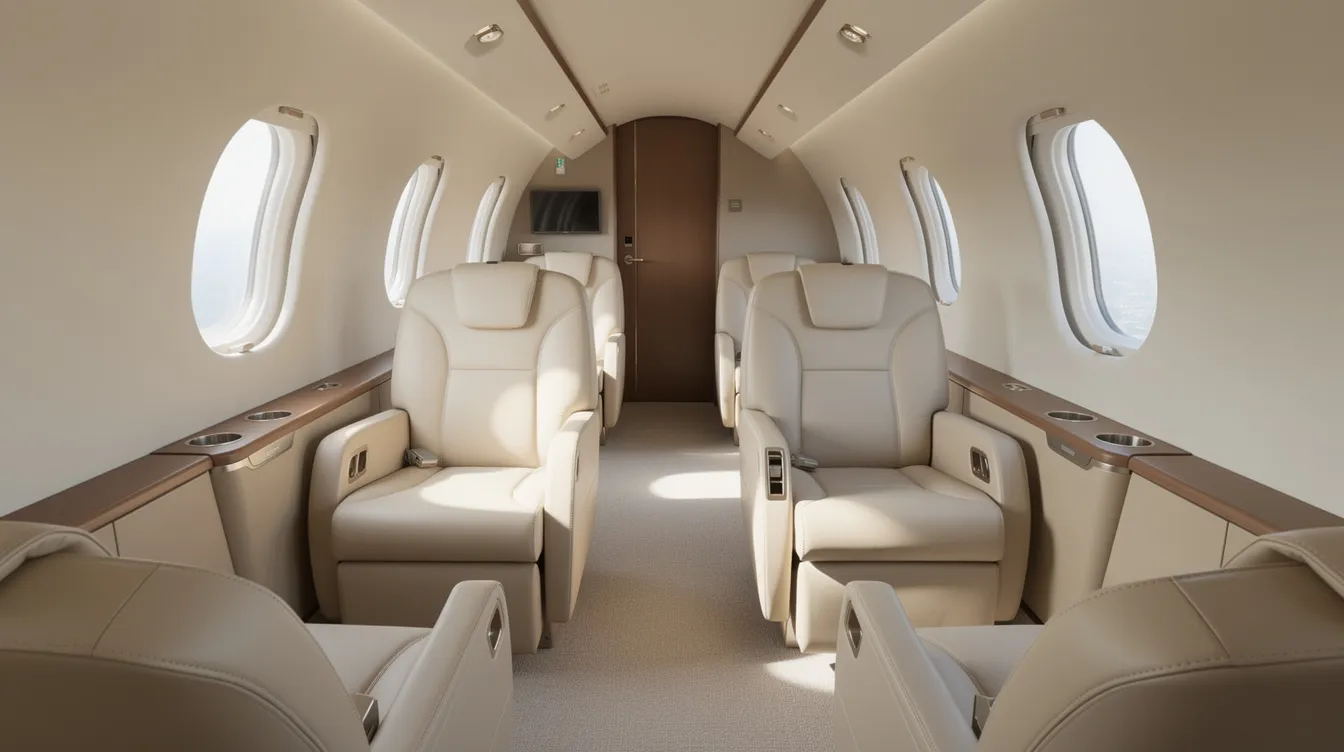
The contrast with private aviation is stark. On a BlackJet flight covering the same city pair, passengers experience club-style or lie-flat seating, a cabin shared with at most a handful of colleagues or family, and the ability to customize catering, departure times, and even the airport itself. Where a MAX 10 cabin is designed around capacity, a private jet cabin is designed around the individual.
Performance: range, payload and operating economics
Range and Payload
The Boeing 737 MAX 10 has a maximum range of 3,300 nautical miles-enough to cover routes like New York to Los Angeles, Chicago to Anchorage, or London to the Canary Islands. The aircraft features a maximum takeoff weight of 89,760 kg (197,900 lbs), and its cruise speed is approximately Mach 0.79.
Operating Economics
In terms of operating economics, the MAX 10's advantages are clear on dense routes:
Fuel burn per seat is roughly 20% lower than the 737-800 or 737-900ER it's intended to replace, driven by the LEAP-1B engines, aerodynamic refinements, and lighter composite structures.
Per-seat cost on high-frequency domestic routes drops meaningfully compared to smaller narrowbodies, making the plane attractive for carriers focused on yield management and schedule density.
The trade-off is straightforward: more seats and better economics, but less range than the MAX 8 or MAX 9 at equivalent payloads.
Comparison with Private Jets
The MAX 10's performance sits in a defined corridor. It cannot match the Airbus A321XLR's 4,700+ nautical miles, which opens thin transatlantic routes. But on domestic trunk and near-international sectors-say, Dallas to Cancún or San Francisco to Honolulu-the MAX 10 is highly capable and economically efficient.
For private jet travelers, BlackJet's super-midsize and long-range aircraft cover similar or greater distances with far fewer passengers, enabling direct point-to-point missions to secondary airports that no airline, regardless of equipment, would serve.
Market role: Is the MAX 10 a true 757 replacement?
The Boeing 757-200 carved a unique niche in aviation history: a high-capacity, high-thrust narrowbody capable of both dense domestic routes and thin transatlantic missions, with range exceeding 4,000 nautical miles. Its retirement has left a gap that no single model has fully filled.
The MAX 10 addresses part of that gap. It is primarily designed as a replacement for older 737-900ER models and can handle many of the 757's domestic missions with superior per-seat economics. But its approximately 3,300-nautical-mile range falls well short of the 757's transatlantic capability.
Major U.S. carriers plan to split the difference. United Airlines and Delta will deploy the MAX 10 on North American hub-to-hub routes and near-international sectors, while relying on widebodies or A321XLRs for the longer, thinner segments the 757 once owned. The MAX 10 is a partial 757 successor, not a clean-sheet replacement.
Private aviation fills some of the niche city pairs once served by 757s—routes like New York to small European cities or domestic sectors to airports without heavy commercial service—with bespoke itineraries rather than high-density seating.
Major customers and order book for the Boeing 737 MAX 10
The MAX 10 order book reflects strong airline confidence, despite years of certification delays. Boeing has 1,465 orders for the MAX 10 variant, and the type accounts for roughly 28% of outstanding 737 MAX orders.
United Airlines is the single largest customer. In 2017, United converted 100 MAX 9 orders into MAX 10 orders, and subsequent additions have pushed the carrier's total well above 150 firm orders. The MAX 10 is central to United's "United Next" strategy for domestic hub-to-hub capacity growth.
WestJet is the launch customer, placing an order for 60 MAX 10s in September 2022 as part of a broader 67-aircraft deal. Deliveries are expected to begin around 2027.
Alaska Airlines exercised options for 105 MAX 10s in January 2026, making it one of the largest operators committed to the type. Alaska plans to use the aircraft to grow capacity and retire aging narrowbodies.
Broader market: Boeing delivered 130 MAXs to 28 customers in one year across the MAX family, demonstrating production momentum even as the MAX 10 awaits its own certification milestone.
Certification delays have forced these carriers to extend older equipment beyond planned retirement dates, complicating fleet planning and, in some cases,s leaving premium routes on aging aircraft that lack the cabin and efficiency standards travelers increasingly expect.
Comparison with Airbus A321neo and A321XLR
The Airbus A321neo family is the Boeing competitor that most directly pressures the MAX 10. The A321neo has outsold the MAX 10 five-to-one, driven by a broader range of configurations, a wider cabin cross-section, and the A321XLR's ability to reach routes the MAX 10 simply cannot.
The core differences come down to mission:
Seating: Both the MAX 10 and A321neo accommodate roughly 180–230 passengers depending on configuration. Airbus offers a slightly wider cabin, which some carriers leverage for marginally more comfortable seating or an extra inch of aisle width.
Range: The MAX 10's approximately 3,300-nautical-mile range serves domestic and near-international routes well. The A321XLR extends to roughly 4,700+ nautical miles, opening transatlantic thin routes like New York–Athens or Boston–Dublin that the MAX 10 cannot reach.
Airline strategy: Carriers like United have split their narrowbody orders between Boeing and Airbus, using MAX 10s for high-frequency domestic flying and A321XLRs for longer international sectors-a pragmatic approach that acknowledges neither aircraft replaces the other.
The competitive dynamic is less about declaring a winner and more about understanding which airplane fits which mission. For travelers, the relevant question is whether either aircraft delivers the experience they need-or whether a private jet flight offers a fundamentally different value proposition.
Safety, MCAS legacy, and what's different for MAX 10 certification
The 737 MAX grounding that followed the Lion Air and Ethiopian Airlines accidents was a watershed moment for commercial aviation safety. The crash investigations revealed that MCAS relied on a single angle-of-attack sensor, lacked adequate pilot training documentation, and could activate without sufficient crew awareness.
The changes implemented across the MAX fleet before the return to service in 2020–2021 were extensive:
MCAS now compares data from both angle-of-attack sensors and will not activate if they disagree beyond a defined threshold.
Cockpit alerts were redesigned to clearly indicate AoA sensor disagreement.
Pilot training programs were overhauled to include simulator-based scenarios covering MCAS-related failures.
The 737 MAX has since logged over 41,000 flights in one year of resumed operations, rebuilding an operational track record.
The MAX 10 is being certified under this reformed environment. It incorporates an enhanced Angle of Attack system for flight safety. The MAX 10 certification requires installation of a third angle-of-attack sensor, adding a layer of redundancy that exceeds what the MAX 8 and MAX 9 carry. The stick shaker cutoff switch gives pilots direct control over stall warning annunciation.
BlackJet applies a parallel rigor in private aviation. Every operator in the BlackJet network must meet or exceed independent safety standards such as ARG/US and Wyvern certifications—standards that provide third-party validation of maintenance, training, and operational practices. Whether you fly on a certified commercial airliner or a vetted private jet, safety should never be a variable.
Production ramp-up, supply chain and delivery timelines
Boeing's 737 production history since 2019 reads like a stress test. The grounding halted deliveries, creating a massive inventory of stored aircraft. The pandemic then disrupted suppliers, workforce availability, and airline demand simultaneously. Increased FAA oversight added layers of inspection that slowed throughput further.
As of mid-2026, Boeing is working to maintain and gradually increase monthly 737 production rates, though the company remains below pre-crisis output levels. The MAX 10 will enter the production line once certification is secured, but initial deliveries will compete for manufacturing slots with the high-demand MAX 8.
Key delivery expectations:
First, MAX 10 deliveries are expected in 2027, with WestJet as the launch customer.
Production ramp: Boeing's suppliers and internal workforce must scale to accommodate the additional complexity of a new variant alongside ongoing MAX 8 and MAX 9 builds.
Ripple effects: Every month of delay in narrowbody deliveries forces airlines to extend older, less efficientaircraft andd can tighten capacity on premium routes, making private jet alternatives more compelling for time-sensitive travelers.
Operational use cases: How airlines will deploy the 737 MAX 10
When the MAX 10 enters service, its deployment will concentrate on routes where capacity matters more than range. Think Chicago O'Hare to Los Angeles, Denver to Miami, or Toronto to Fort Lauderdale—high-demand sectors where airlines need every seat to maintain yield on competitive routes.
At slot-constrained airports like New York LaGuardia or London Gatwick, the MAX 10's higher seat count allows carriers to grow capacity without securing additional departure slots-a strategic advantage that smaller narrowbodies cannot match.
Now consider a business traveler on one of these routes during peak season. The MAX 10 offers a newer cabin and potentially more schedule options, but it also means navigating crowded terminals, fixed departure times, and a 3–3 economy cabin that prioritizes density over comfort.
Contrast this with a BlackJet jet card scenario: a custom departure time from a private FBO, a direct routing that skips the hub entirely, and a cabin shared with your team rather than 200 strangers. The MAX 10 enhances commercial aviation's efficiency on these routes. It cannot replicate the door-to-door time savings and schedule control of a well-planned private itinerary.
Environmental performance and sustainability considerations
The MAX family's LEAP-1B engines, aerodynamic improvements, and lighter structural components deliver approximately 20% lower fuel burn and CO₂ emissions per seat compared with older 737 NG models. On a typical domestic mission, that translates to measurable reductions in carbon intensity perpassenger-mile, a significant contribution to airline ESG commitments.
Airlines deploying the MAX 10 will also experiment with sustainable aviation fuel blending and participate in carbon offset programs, though adoption remains uneven across carriers and routes.
BlackJet takes a more direct approach: every flight across its jet card programs is carbon-neutral, with automatic offsets applied at no additional cost to members. Where sustainable aviation fuel is available, it can be integrated into select missions. The result is a transparent, data-driven sustainability framework that complements-rather than competes with-the per-seat efficiency gains of modern commercial aircraft like the MAX 10.
The distinction matters for travelers who want their environmental commitments to be guaranteed, not aspirational.
MAX 10 vs private jet: Experience, flexibility and total trip time
Boarding and Schedule
A domestic first-class seat on a MAX 10 might include a wider seat, early boarding, and a meal service. But the experience is still governed by fixed schedules, hub routing, TSA security lines, and a cabin shared with nearly 200 other passengers.
A BlackJet super-midsize jet covering the same New York-to-Denver route offers a fundamentally different calculus:
Boarding: Arrive at a private FBO 15–20 minutes before departure versus 60–90 minutes early at a major commercial terminal.
Schedule: Depart when you're ready, not when the airline's schedule permits. Need to visit Denver and then continue to Phoenix the same afternoon? A jet card makes multi-leg routing routine.
Cabin Experience
Airport Access
Consider a CEO who needs to visit suppliers in two cities within a single business day. Commercial schedules on the MAX 10, or any airline equipment, make this nearly impossible without an overnight. A BlackJet jet card transforms the same day into a productive, controlled itinerary with guaranteed aircraft availability at a fixed hourly rate.
BlackJet jet cards and aircraft categories for MAX 10‑type missions
BlackJet's jet card programs-available in 25-hour and 50-hour increments-provide prepaid access to private jets across multiple cabin classes, covering the same stage lengths that the MAX 10 will serve commercially.
For missions that mirror typical MAX 10 routes:
Light jets handle short hops under 1,500 nautical miles—shuttle routes like New York to Washington or Los Angeles to San Francisco.
Midsize jets cover regional missions up to 2,500 nautical miles, such as Chicago to Miami or Dallas to Seattle.
Super-midsize and large-cabin aircraft match or exceed the MAX 10's 3,300-nautical-mile range, enabling cross-country and transcontinental flights like Los Angeles to London or New York to Reykjavik.
Jet card members receive fixed hourly rates, guaranteed availability with defined notice periods, 24/7 digital booking, and real-time support. The focus is on complementing modern commercial aviation by using private access for moments when time, privacy, or control are most critical.
Technology, booking experience and real-time support
The 737 MAX 10 features updated avionics compared to earlier models, including a modern glass cockpit, advanced flight management systems, and improved data communication. For pilots, the cockpit represents a meaningful step forward in situational awareness and workload management.
On the traveler's side, BlackJet applies a similar technology-forward philosophy, but to the booking and support experience rather than the flight deck. Members access a proprietary digital platform for instant quotes, schedule configuration, and itinerary management. Real-time flight tracking, concierge messaging for catering and ground transport, and the ability to modify plans on short notice replace the rigidity of navigating airline apps to find a single available MAX 10 departure in a crowded schedule.
The difference is control. Commercial technology optimizes the airline's operation. BlackJet's technology optimizes yours.

Frequently asked questions about the Boeing 737 MAX 10 and premium travel
When will the Boeing 737 MAX 10 enter service?
Boeing expects the MAX 10 to enter service in 2026, following completion of certification flight testing and final FAA type certificate approval. First deliveries to airlines are anticipated in 2027, with WestJet as the launch customer. Exact timelines depend on remaining regulatory sign-offs.
How does the MAX 10 differ from other 737 MAX variants?
The MAX 10 is the largest variant in the MAX family, with a 66-inch longer fuselage than the MAX 9, a redesigned levered landing gear for tail strike protection, and the highest seating capacity-up to 230 in single class. It trades some range for that additional capacity.
Is the Boeing 737 MAX 10 safe?
The MAX 10 is being certified under the most rigorous safety standards in 737 history, including mandatory installation of a third angle-of-attack sensor, enhanced cockpit alerting, and a resolved engine anti-ice system design. It benefits from all post-grounding safety improvements applied across the MAX fleet.
How does flying private compare to flying on a 737 MAX 10 for business travel?
Commercial flights on the MAX 10 offer newer cabins and improved per-seat economics, but remain bound by fixed schedules, hub routing, and shared cabin environments. Private jet access via jet cards delivers custom scheduling, private terminals, direct routing to secondary airports, and significantly reduced door-to-door travel time.
What is a jet card,d and how does it differ from chartering a private jet ad hoc?
A jet card provides prepaid access to private aviation at fixed hourly rates with guaranteed availability, eliminating the need to negotiate individual charters. Programs like BlackJet's 25-hour and 50-hour cards offer predictable pricing, 24/7 booking, and consistent service standards across multiple aircraft classes.
Can a private jet cover the same routes as a 737 MAX 10?
Yes. Super-midsize and large-cabin private jets match or exceed the MAX 10's 3,300-nautical-mile range, covering routes like New York to Los Angeles or Chicago to Cancún-with the added flexibility of accessing thousands of airports that commercial carriers do not serve.
Strategic takeaways for high-value travelers
The Boeing 737 MAX 10 represents a meaningful evolution in single-aisle commercial aviation. More seats, better fuel efficiency, and renewed competition with Airbus will improve schedule options and cabin standards on the densest domestic and regional routes. For carriers and passengers alike, that's a net positive.
But for executives and high-net-worth travelers, the calculus extends beyond per-seat economics. The MAX 10 excels when the mission is predictable, the route is high-demand, and the traveler can afford the time that commercial aviation's fixed infrastructure requires. When the mission demands flexibility-multiple cities in a day, a departure timed to your meeting rather than an airline's rotation, or a quiet cabin where strategy replaces noise-private aviation delivers a decisive advantage. BlackJet's safety standards, carbon-neutral commitment, and jet card structure align with the sophistication of modern airliners while offering a more tailored, strategic travel tool.
Explore how BlackJet jet cards can complement your commercial travel on aircraft like the 737 MAX 10, giving you premium options for every mission profile.


 Sign up with google
 Sign up with Apple