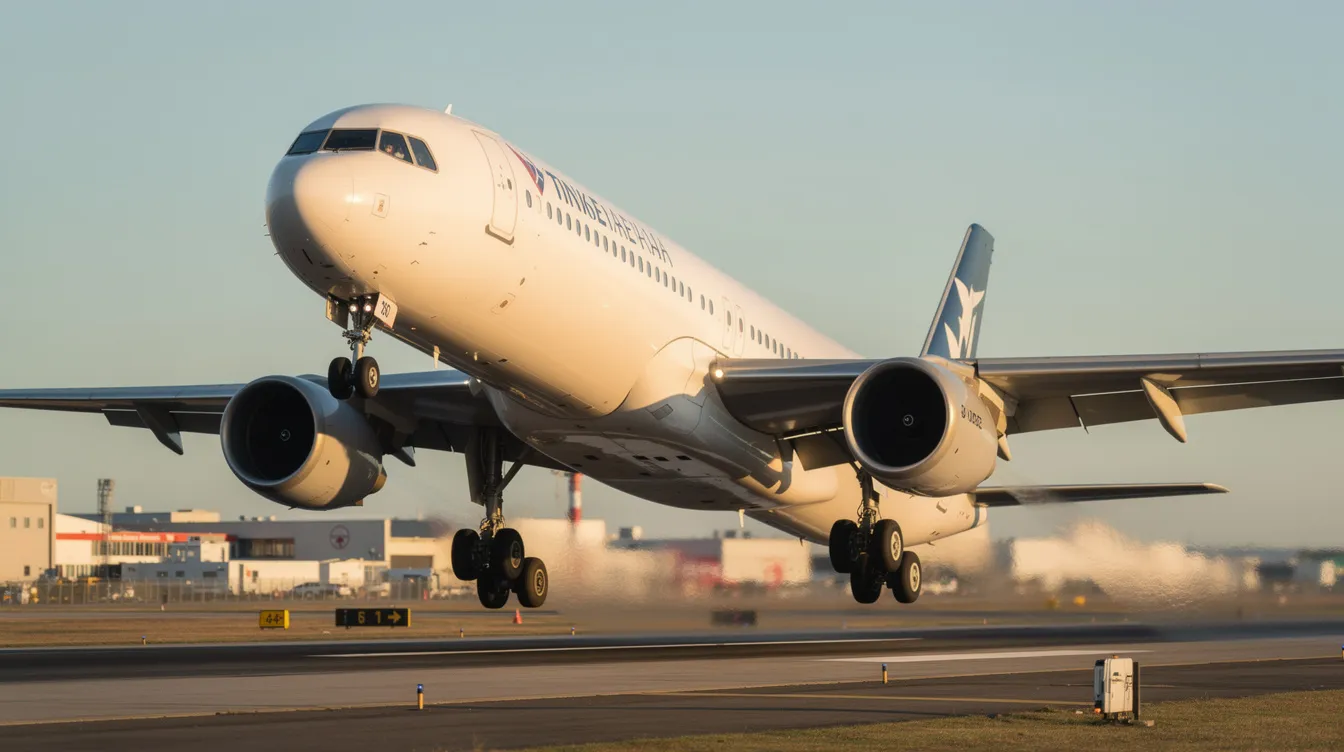
The Boeing 737 MAX 10 is the largest variant in the most popular single-aisle market family ever built. For discerning travelers who split their time between commercial and private aviation, understanding what this aircraft can and cannot do is more than an academic exercise. It is a practical lens for evaluating where commercial flights deliver adequate value and where private jet access becomes a genuine strategic advantage.
This deep-dive examines the 737 MAX 10 range, its engineering trade-offs, how airlines plan to deploy it, and what all of that means for travelers who prize time, comfort, and flexibility above all else.
Quick Answer: 737 MAX 10 Range At A Glance
The Boeing 737 MAX 10 carries an advertised design range of approximately 3,100 nautical miles (roughly 5,740 km). That figure places it below every other variant in the 737 MAX family. The MAX 8 reaches about 3,550 nautical miles, the MAX 9 roughly 3,300, and the smallest variant-the MAX 7-stretches to about 3,800 nautical miles.
The range of the 737 MAX 10 is shorter than that of the MAX 7 and MAX 8 because Boeing designed the aircraft to prioritize passenger capacity over maximum range. It is optimized for dense, medium-distance routes such as New York–Los Angeles, London–Athens, or Singapore–Tokyo, where high passenger count and seat-mile economics matter more than crossing an ocean.
Against its main Airbus rival, the A321neo LR can fly up to roughly 4,000 nautical miles with additional fuel tanks, giving it a meaningful edge on extended range missions.
Variant | Two-Class Seating | Max Capacity | Advertised Range (nmi) | Advertised Range (km) |
|---|
MAX 7 | ~138–153 | ~172 | ~3,800 | ~7,040 |
MAX 8 | 162–178 | ~210 | ~3,550 | ~6,480 |
MAX 9 | ~178–193 | ~220 | ~3,300 | ~6,110 |
MAX 10 | 188–204 | ~230 | ~3,100 | ~5,740 |
A321neo LR | ~180–206 | ~244 | ~4,000 | ~7,400 |
For BlackJet clients, the takeaway is straightforward: the MAX 10 sets a benchmark for commercial aviation on popular medium-haul corridors. Knowing its limits helps you decide when a private jet with longer range and greater flexibility makes a material difference to your schedule and quality of life.
Where The 737 MAX 10 Sits In The Boeing 737 MAX Family
The Boeing 737 is the best-selling commercial aircraft in history. Its lineage runs from the original 737 through the Classic series (737-300/-400/-500), the Next Generation family (737-600 through -900), and now the fourth-generation MAX family. Boeing Commercial Airplanes designed the MAX series around CFM International LEAP-1B engines, advanced-technology winglets, and modernized avionics-including the Boeing Sky Interior, to deliver meaningful improvements in fuel burn and cabin space.
The max family comprises four variants:
MAX 7 - the smallest MAX, aimed at thinner routes and regional operations where per-trip economics and extended range matter more than raw capacity.
MAX 8 - the mid-sized MAX workhorse. The 737 MAX 8 gained FAA certification on March 8, 2017, and the first aircraft was delivered on May 16, 2017. Over 1 million passengers now fly on a 737 MAX daily, and the 737 MAX family has accumulated over 7,000 firm orders worldwide.
MAX 9 - a stretch of the MAX 8 offering more seats with moderate range reduction.
MAX 10 - the largest variant, with the longest fuselage and highest passenger capacity but the shortest range of the mainline subtypes.
The 737 MAX series logged over 41,000 flights in its first year, underscoring growing demand across airline customers globally. Although BlackJet does not operate Boeing 737 aircraft, commercial developments in this family shape airport slot constraints, airline schedules, and connection patterns that private jet users can strategically work around.
Design Range Of The Boeing 737 MAX 10
Factors Affecting Real-World Range
"Design range" refers to the maximum distance an aircraft can fly under standard conditions-International Standard Atmosphere temperatures, representative two-class payload, required fuel reserves, and no unusual headwinds or tailwinds. For the MAX 10, Boeing publishes this figure at approximately 3,100 nautical miles.
Real-world range varies. Fuel consumption increases with headwinds during flight, and the aircraft's fuel load is affected by passenger and cargo weight. Hot days, high-altitude departure airports, and short runways can all force reductions.
Concrete city-pair examples near the practical edge of the 737 MAX 10 range envelope:
Chicago–Anchorage (~2,200 nmi): comfortably within limits at typical loads.
New York–San José, Costa Rica (~2,300 nmi): feasible under most conditions.
London–Doha (~3,200 nmi): effectively out of reach at full passenger count; would require significant payload restrictions.
The Boeing 737 MAX 10 is designed for high-density short-to-medium domestic routes-typically 1,000 to 2,500 nautical miles. Airlines that need to fly longer sectors generally choose the MAX 8, a widebody, or Airbus long-range narrowbodies instead.
Why The Largest 737 MAX Has The Shortest Range
Engineering Trade-Offs
The engineering explanation is intuitive once you see the numbers. The MAX 10 is 66 inches longer than the MAX 9—roughly 1.7 meters of additional fuselage. That stretch adds structural weight, more window cutouts, additional emergency exits, and the capacity for roughly 10–15 extra passengers. Yet the 737 MAX series shares standard wing and fuel capacity configurations across all two variants and their siblings; the wing, fuel tanks, and LEAP-1B engines with their specific fan diameter remain essentially the same.
More airframe means more drag and a higher maximum takeoff weight, which demands more structural reinforcement. The result is a range penalty of about 200 nautical miles compared with the MAX 9 in a comparable configuration.
Airlines accept this trade-off willingly. While fuel efficiency per aircraft is slightly lower, fuel efficiency per seat-mile improves because the higher passenger count spreads the fixed cost of each flight across more revenue seats. On a route like Dallas–New York, a MAX 10 at 95% load factor delivers a lower cost per passenger than a smaller MAX 8 meaningfully at the same load factor—even though the larger aircraft burns more total fuel.
Think of it this way: a longer fuselage without a proportionally larger wing is like adding more carriages to a train without upgrading the locomotive. The train still runs, carries more people, and earns more per trip—but its top speed (or in this case, range) drops slightly.
The Role Of The 737 MAX 10 In Airline Networks
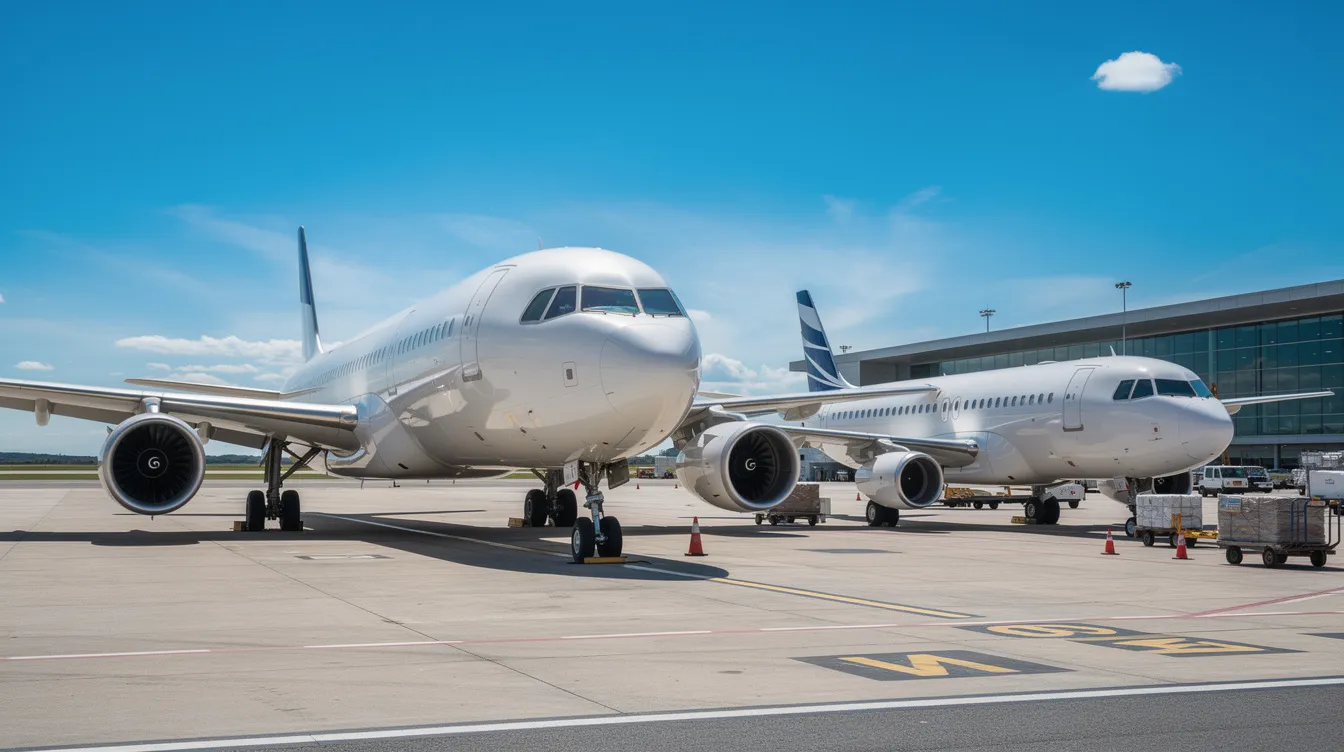
Airlines plan to deploy the MAX 10 on dense domestic and regional trunk corridors where maximizing revenue per departure matters more than reaching distant city pairs. United Airlines has committed large orders to increase capacity on U.S. transcontinental flights. Alaska Airlines placed firm orders for 105 MAX 10s-the airline's largest-ever aircraft order-to replace aging Boeing 737 Next Generation jets and support route growth out of Seattle. WestJet has announced plans to lease 13 new MAX 10s, targeting domestic Canadian and transborder routes starting around 2027.
The MAX 10 is designed to compete directly with high density Airbus A321neo configurations on busy markets. Airlines use the MAX 10 for busy routes to maximize revenue per flight, pushing seat-mile cost (CASM) down. Southwest Airlines, American Airlines, and other major airline customers see the larger MAX as a tool for growing demand corridors where frequency and capacity both matter.
For private aviation travelers, here is the subtlety worth noting: when commercial carriers push toward maximum density on MAX 10 routes, premium seating may shrink or become more crowded. That shift nudges high-net-worth travelers toward solutions like a BlackJet Jet Card for comfort, privacy, and predictability.
Payload–Range Trade-Offs On The 737 MAX 10
Operational Payload Considerations
Every commercial flight involves a balancing act between passengers, cargo, and fuel. The more passengers and cargo onboard, the heavier the aircraft at departure, and the less fuel it can carry within its maximum takeoff weight limit. That directly limits how far the Boeing 737 MAX 10 can fly on any given departure.
Typical airline compromises include:
Hot-and-high airports (Denver at 5,430 ft elevation, Mexico City at 7,380 ft, Dubai in summer at 45°C+): reduced air density means longer takeoff rolls and sometimes a lower allowable takeoff weight, forcing airlines to restrict the passenger count or offload cargo.
Short runways: runway length and conditions impact takeoff performance and payload capacity. An airline may sell fewer seats or carry less belly freight to ensure the aircraft can safely take off and climb.
Seasonal headwinds: westbound transatlantic flights in winter face jet-stream headwinds that effectively shorten usable range by hundreds of miles.
Airframes must be able to operate efficiently under various ambient temperatures, and the MAX 10's payload-range curve makes this particularly visible on longer sectors.
Contrast this with a large-cabin private jet: carrying 6–12 passengers instead of 200 means a dramatically lighter payload, allowing full fuel and therefore full advertised range. For a nonstop mission where the commercial flight would require payload restrictions-or a connection-a private jet offers a clear structural advantage.
Main Landing Gear Changes And Their Impact On Performance
The MAX 10's longer fuselage creates a geometric problem: during rotation at takeoff, the tail swings closer to the runway. Without modification, the risk of a tail strike becomes unacceptable. Boeing redesigned the main landing gear to solve this.
The MAX 10 uses a unique semi-levered landing gear design. The taller gear extends by approximately 9.5 inches during takeoff rotation, giving the tail the clearance it needs. Once airborne, a "shrink link" mechanism allows the gear to telescope back down so it still fits inside the classic 737 wheel-well envelope, maintaining compatibility with existing airport gate infrastructure and ground equipment. After extension, the gear retracts cleanly into the fuselage.
Boeing also developed what it describes as the highest-performing brakes ever fitted to a 737, with additional rotors to handle the MAX 10's higher weight and stopping energy requirements.
While the landing gear redesign adds modest weight and mechanical complexity, its direct effect on range is relatively small compared with the bigger drivers: fuselage stretch weight, increased drag from the longer airframe, and identical fuel capacity. The taller gear was essential to make the larger MAX variant feasible without requiring longer runways or changes to existing airport gate constraints.
Fuel Efficiency: 737 MAX 10 Versus Earlier Boeing 737 Generations
Across the MAX family, the combination of CFM International LEAP-1B engines, advanced-technology winglets, and aerodynamic refinements delivers roughly 14–20% better fuel burn per seat compared with Boeing 737 Next Generation predecessors. The MAX 10 inherits all of these improvements.
On dense routes with high load factors, the MAX 10's per-seat fuel efficiency can actually edge ahead of the MAX 8, because more seats share the fixed fuel cost of operating the flight. However, its absolute fuel burn and total emissions per departure are higher due to the larger airframe and greater passenger count.
Airlines leverage these gains to meet sustainability and CO₂ reduction goals. Several carriers have incorporated sustainable aviation fuel (SAF) on select flights operated by 737 MAX family aircraft, and Boeing has participated in SAF testing campaigns with the MAX platform.
BlackJet provides carbon-neutral private flights through verified offsets and SAF participation where available. For travelers weighing their environmental footprint, the comparison between a fuel-efficient commercial seat on a full MAX 10 and a shared private jet itinerary depends heavily on load, distance, and aircraft type—nuances a BlackJet advisor can help quantify.
Airports And Runway Requirements For The 737 MAX 10
The MAX 10's higher maximum takeoff weight and longer fuselage typically demand longer runways than smaller Boeing 737 MAX variants, especially at high altitude or in hot conditions. According to Eurocontrol's Aircraft Performance Database, the takeoff distance for a MAX 10 at maximum takeoff weight under standard conditions is approximately 2,700 meters (about 8,860 feet).
Major hubs like JFK, LAX, Heathrow, and Frankfurt accommodate the MAX 10 without issue. But secondary airports with shorter runways or challenging terrain-particularly those at high altitude-may impose performance limits that force airlines to reduce payload or shorten route length. That effectively narrows the operational range compared with theoretical design numbers.
This is precisely where private aviation excels. Operating from shorter, more convenient executive airports—Teterboro near New York, Farnborough near London, Le Bourget near Paris—is routine for private jets of various sizes. Point-to-point routes that a 737 MAX 10 physically or commercially cannot operate become seamlessly accessible.
Typical And Emerging 737 MAX 10 Route Profiles
Airlines have outlined several route categories for the MAX 10:
U.S. domestic transcontinental: Newark–Los Angeles, Seattle–Miami, Chicago–San Francisco. These 2,000–2,500 nmi corridors are ideal for the MAX 10's capacity sweet spot.
Intra-European trunk routes: London–Madrid, Frankfurt–Istanbul, Paris–Athens. High demand, moderate distance, strong load factors.
High-density Asia-Pacific corridors: Tokyo–Singapore, Mumbai–Bangkok. Stage lengths within the MAX 10's comfortable envelope.
Transatlantic services with the MAX 10 are far less attractive. The reduced range margin versus the MAX 8, sensitivity to winter headwinds, and competition from long-range narrowbodies like the A321LR and A321XLR make the MAX 10 a poor fit for over-water missions. Airlines generally reserve the MAX 8 or widebodies for those sectors.
Certification delays have shifted some deployment timelines. Boeing announced that MAX 10 certification was expected in the first half of 2025, but the aircraft is now entering service with early customers as regulatory approval milestones are met. Boeing estimated $6.3 billion to produce the remaining 737 MAX aircraft across all variants, reflecting the scale of the production commitment.
For context, the band where the MAX 10 will be most active—1,000 to 3,000 nautical miles—overlaps significantly with the nonstop capability of popular super-midsize and large-cabin private jets, giving private jet range a direct point of comparison.
Flight Testing, Certification And Range Validation
Boeing validates MAX performance through extensive flight testing covering fuel burn, climb performance, cruise characteristics, and operations from short and high-altitude runways. For the MAX 10, ground testing and test flight programs have specifically targeted the new braking system's energy absorption, tail-strike protection from the taller main landing gear, and performance under maximum takeoff weight scenarios.
The broader MAX family has participated in SAF testing campaigns and contrail-reduction research with NASA and other partners, helping refine real-world fuel efficiency expectations. Flight testing and subsequent airline operational data sometimes lead to minor adjustments in published range figures and performance charts, which affect how carriers schedule the MAX 10 on the longest permissible routes.
Certification delays for the MAX 10, relative to the MAX 8 and MAX 9, which entered service years earlier, mean that some performance assumptions remain theoretical, and production and program timing were also disrupted in early April during the pandemic period. As pilots and flight crews accumulate thousands of hours on type and airline customers report operational data, the published 3,100 nautical miles figure may be refined upward or downward depending on real-world conditions.
737 MAX 10 Range Versus Private Jet Range
The headline comparison: the Boeing 737 MAX 10 advertises approximately 3,100 nautical miles of range. Many popular super-midsize and large-cabin private jets—Gulfstream G500, Bombardier Global 6000, Dassault Falcon 8X—offer 3,000 to 4,500+ nautical miles nonstop with typical loads of 8–16 passengers.
While the MAX 10 can carry far more people, private jets typically offer longer nonstop reach for small groups, especially when departing from airports closer to the traveler's actual origin or destination.
Consider a concrete scenario: a business leader flying from New York to Los Angeles on a busy Monday. On a 737 MAX 10 in a two-class business cabin, the flight itself takes roughly five hours. But factor in the commute to JFK, arriving 90 minutes early, security and boarding, deplaning, and baggage claim at LAX, and the door-to-door time stretches past eight hours. On a 25-hour Jet Card flight from Teterboro on a super-midsize jet, block time is similar, but the executive departs 15 minutes before wheels-up, lands at Van Nuys, and is in a meeting in Century City within six hours of leaving a Manhattan office.
For high-net-worth individuals, the key metric is not maximum range alone but how that range combines with airport access, schedule control, and productivity. Private aviation consistently outperforms even the most efficient MAX 10 operations on those dimensions.
Safety, Certification History And Traveler Perception
The broader 737 MAX story includes two fatal crashes involving the MAX 8 in 2018 and 2019-the Lion Air and Ethiopian Airlines disasters-which led to a worldwide grounding, a redesign of the MCAS flight-control system, and sweeping regulatory overhauls. Since recertification from late 2020 onward, all MAX variants incorporate updated MCAS logic, redundant sensor architecture, and enhanced training requirements for pilots covering MCAS-related procedures. The MAX 10 must comply with this tightened regulatory environment, including additional sensor and flight deck safety requirements that were not part of the original FAA certification standards.
While safety records for the recertified MAX fleet are strong, residual public perception issues around the "737 MAX" name may influence some premium travelers' willingness to fly the MAX 10 on long or critical trips-particularly when those trips could be made on a private aircraft instead.
BlackJet addresses this dimension directly. Through stringent operator audits, third-party safety ratings such as ARGUS and IS-BAO certifications, and standardized pilot experience thresholds, BlackJet provides a level of safety transparency that goes beyond what most travelers can independently verify about a specific commercial 737 MAX 10 flight.
Sustainability: 737 MAX 10 Fuel Efficiency And Carbon Strategies
Airlines leverage the MAX 10's fuel efficiency and high seat density to reduce CO₂ emissions per passenger-kilometer compared with older Boeing 737s and Airbus narrowbodies. On a full flight, the per-seat carbon footprint is genuinely low—one of the strongest arguments for the fuel-efficient narrowbody model.
SAF plays a growing role in MAX operations. Boeing completed experimental flights using high-SAF blends on MAX family aircraft to quantify emissions and contrail impacts, contributing data that help the industry move toward decarbonization.
In private aviation, the sustainability equation is different but increasingly competitive. Optimizing routing, selecting the most fuel-efficient aircraft for the mission, and participating in carbon-offset and SAF programs can bring per-passenger emissions closer to commercial benchmarks for small groups.
BlackJet's commitment: every Jet Card and on-demand charter trip is fully carbon-neutral at no additional cost. Clients can also opt into enhanced SAF-based programs where available, framing responsible travel as a complement to, rather than a compromise on, the private flying experience.
Commercial 737 MAX 10 Versus Private Jet: Experience And Time Savings
On a MAX 10 configured in a single-class layout, up to 230 passengers share cabin space, galley areas, and lavatories. Even in a two-class configuration seating 188–204 passengers, personal space is constrained. Legroom, aisle access, noise levels, and privacy all reflect the economics of maximizing passenger capacity per departure.
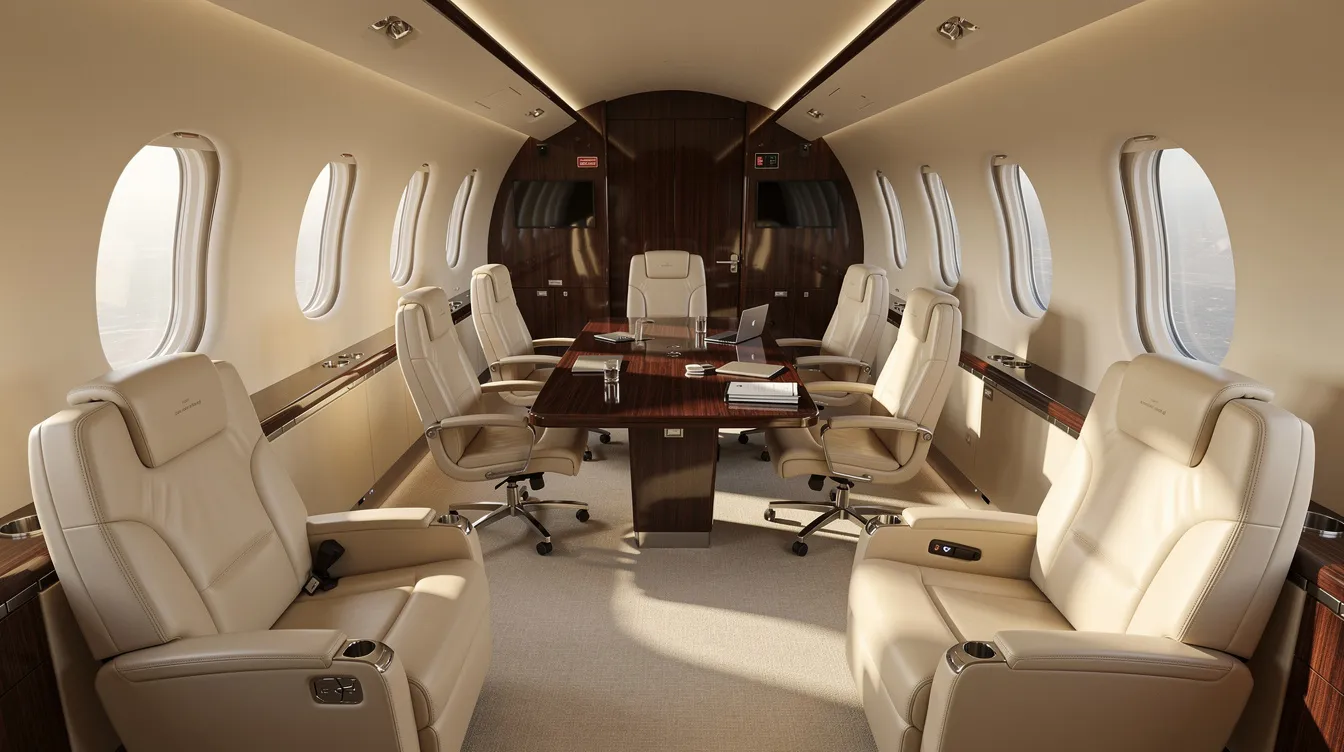
Compare that with a typical 8–14 seat private jet cabin: dedicated seating, conference capability, quiet conversation, and the ability to work or rest without interruption.
Door-to-door time differences compound the gap:
Commercial MAX 10: arrive 90 minutes early, security, boarding queue, taxiing, deplaning, baggage. Add connections if the route isn't direct.
Private jet: arrive 15 minutes before departure at a dedicated FBO, board immediately, fly direct, deplane steps from your car.
Here is a scenario BlackJet clients know well: a CEO needs to visit Houston, Dallas, and Nashville in a single day. No combination of 737 MAX 10 schedules can connect those three cities efficiently. With a BlackJet Jet Card, a multi-leg same-day mission using a super-midsize jet handles all three meetings and returns home by evening.
Understanding MAX 10 schedules and range is useful context—but the strategic advantage comes from stepping outside those constraints altogether.
How Jet Cards Complement A 737 MAX 10-Based Travel Strategy
Many frequent travelers still rely on commercial Boeing 737 MAX and other narrowbody services for routine segments. A BlackJet Jet Card functions as a flexible overlay, filling gaps when the MAX 10's schedule, route network, or cabin configuration is suboptimal.
Practical examples:
Early-morning departures before the first commercial bank of flights are critical for same-day business meetings.
Late-night returns after the last MAX family departure have pushed back—no overnight hotel needed.
Direct routes that would require connections if flown on a commercial narrowbody: think secondary city pairs like Greenville–Austin or Palm Beach–Aspen.
Key Jet Card advantages for this audience:
Prepaid hours with guaranteed availability on short notice
Access to multiple aircraft categories depending on route length, including long-range jets that outperform the MAX 10's range
24/7 digital booking and real-time support from dedicated flight crews and concierge teams
Metric | 737 MAX 10 Only | 737 MAX + BlackJet Jet Card |
|---|
Trips possible per week | Limited to published schedules | Unlimited, on your schedule |
Missed-meeting risk | Moderate (delays, connections) | Very low (direct, flexible) |
Effective hourly value | Diluted by wait/transit time | Maximized through point-to-point |
Airport access | Major hubs only | 5,000+ airports including executive fields |
Frequently Asked Questions About The 737 MAX 10 Range
Is the 737 MAX 10 capable of transatlantic flights?
In theory, some shorter transatlantic city pairs (e.g., Shannon–St. John's at ~1,900 nmi) fall within the MAX 10's envelope. But for standard transatlantic routes like London–New York (~3,000+ nmi), payload restrictions, fuel reserves, and seasonal headwinds make the MAX 10 impractical. Airlines will use the MAX 8 or widebodies for those missions.
How far can the Boeing 737 MAX 10 fly with a full passenger load?
At full two-class seating of 188–204 passengers, real-world range is likely 2,800–3,000 nautical miles under standard conditions—noticeably below the published 3,100 nmi design range, due to weight, drag, and required reserves.
How does the 737 MAX 10 compare to the MAX 8 in fuel efficiency and range?
The MAX 8 has a range of 3,550 nautical miles versus the MAX 10's approximately 3,100 nautical miles-a gap of roughly 450 nmi. The MAX 8 typically seats 162 to 178 passengers. Per-seat fuel efficiency tends to favor the MAX 10 when it is full, but absolute fuel burn per flight is higher on the larger aircraft.
Which airlines have ordered the 737 MAX 10 for long domestic or regional routes?
Alaska Airlines (105 firm orders), United Airlines (significant commitments as a launch customer for capacity growth), and American Airlines have all placed orders. WestJet plans to lease 13 MAX 10s for deployment starting around 2027. Boeing announced strong interest from airline customers across North America, Europe, and Asia-Pacific.
What are the alternatives if I want more comfort or flexibility than a 737 MAX 10?
Commercial alternatives include the Airbus A321LR or A321XLR for longer range in a premium-cabin configuration. For private travel, large-cabin jets offer 3,000–4,500+ nmi nonstop, full privacy, schedule flexibility, and access to thousands of executive airports. A BlackJet Jet Card provides prepaid access to these aircraft without the commitments of ownership.
If range, flexibility, and schedule control matter to your travel patterns, a conversation with a BlackJet advisor can help map private jet solutions to your most frequent routes.
Choosing The Right Aircraft Strategy For Your Travel
The Boeing 737 MAX 10 is a strategically sound commercial aircraft, optimized for high-density, medium-haul missions where airlines need to increase capacity and drive down seat-mile costs. Its design choices-the taller landing gear, the longer fuselage length, the trade of range for passenger count-reflect airline economics and growing demand on popular corridors, not the priorities of the individual traveler.
For BlackJet's readers, the insight is this: understanding aircraft like the 737 MAX 10 helps you benchmark what commercial aviation can realistically offer. When fixed schedules, crowded cabins, hub-only access, and range limitations start costing you time and productivity, private jet access provides outsized value. That is not a luxury distinction-it is a strategic one.
Explore how a BlackJet Jet Card can complement or replace your reliance on 737 MAX 10 and other commercial flights, with carbon-neutral, safety-certified, and technology-enabled private travel tailored to your schedule. BlackJet's team can analyze your most frequent routes-including those currently flown by 737 MAX aircraft-and propose a blended strategy that optimizes both cost and quality of life. Learn more about our Jet Card programs, discover the benefits of carbon-neutral private flights, and understand how private aviation safety standards exceed commercial norms. For those interested in aircraft capabilities, explore our insights on private jet range and how it compares to commercial aviation. Finally, see how our mobile booking platform offers seamless access to private jet travel, enhancing your overall experience.


 Sign up with google
 Sign up with Apple