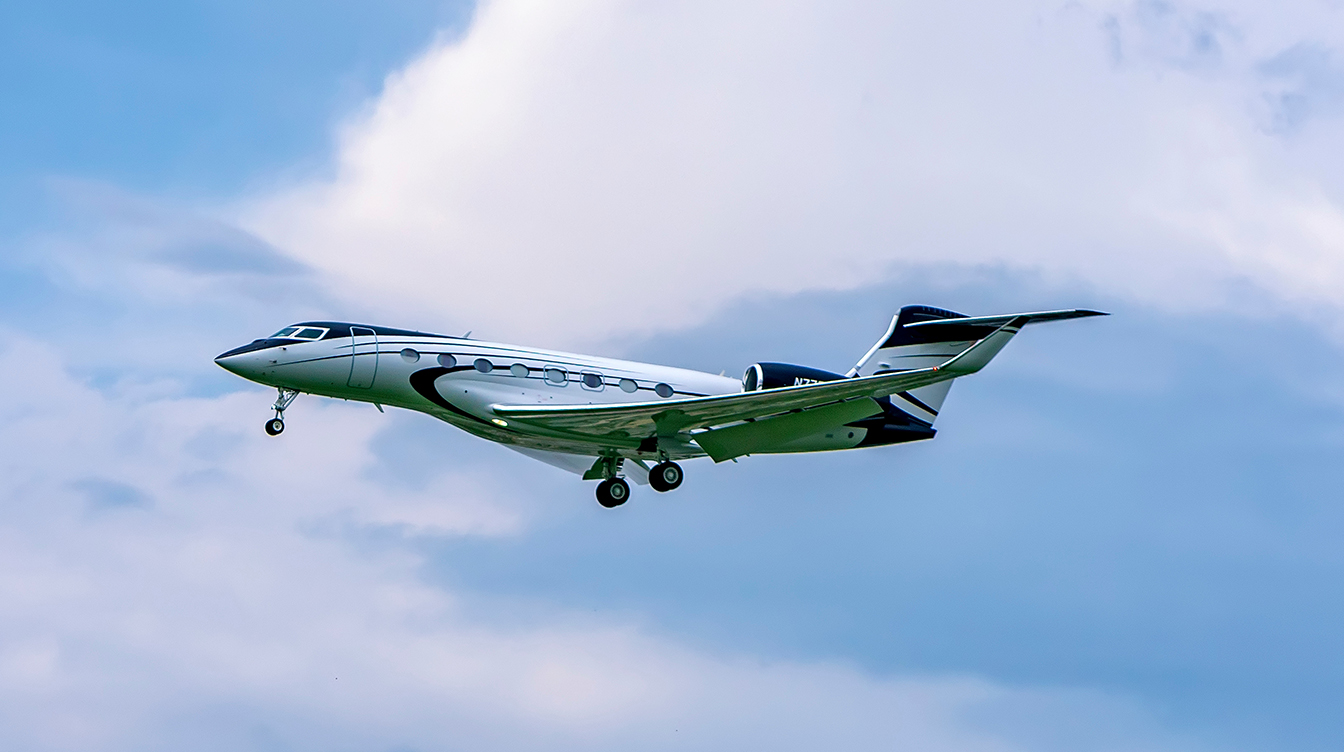
Bill Gates has been one of the world’s richest people for decades, and his business jet fleet is the envy of other high-net-worth individuals. With an all-in estimated value of $194 million, it’s reasonable for conversations to focus on the financial reality of operating such a fleet and how capital allocation and utilization thresholds factor into the Microsoft co-founder’s decision-making.
While public headlines target high-profile executives for their flight frequency, managing such a valuable aviation portfolio requires rigorous corporate structuring, asset diversification, and operational risk mitigation.
BlackJet, a private jet card program operator, examined how Bill Gates uses his fleet to increase his productivity and flexibility is an interesting case study in how high net worth individuals (HNWI) use their finances to expand their efficiency.
The Valuation and Structure of a $194M Aviation Fleet
Managing ultra-long-range business aircraft requires balancing significant capital expenditures against predictable fixed operating costs. The flagship assets in Bill Gates' aviation portfolio consist of two Gulfstream G650ER ultra-long-range jets, valued at approximately $70 million each when purchased new. These aircraft are registered with the Federal Aviation Administration (FAA) registry under tail numbers N887WM and N194WM.
To limit direct corporate liability and maintain operational privacy, these aircraft are held through special purpose vehicles like Mente LLC. This corporate structure insulates primary holding companies while standardizing maintenance schedules and flight crew management.
Accommodating Business Aircraft Depreciation and Operating Costs
Every business jet experiences predictable early-life value declines driven by market valuation behavior. Whole-aircraft ownership typically incurs a 5% to 7% annual depreciation rate. On a $70 million airframe, that translates to nearly $4 million in annual asset devaluation during early ownership cycles.
Beyond initial capital outlays, fixed annual overhead remains constant regardless of flight volume:
- Hangar leases at primary hubs like Boeing Field (BFI)
- Comprehensive hull and liability insurance policies
- Annual recurrent pilot training and dedicated crew salaries
To balance these capital outlays, corporate travel managers should compare real-time charter market rates with whole-ownership overheads. When annual utilization falls below critical operational thresholds, fixed costs amortize over too few flight hours, driving the effective hourly rate to inefficient levels.
Fractionalization and Fleet Balancing Strategy
Managing short-haul flights without wasting flight hours on heavy jets involves global enterprise leaders supplementing whole-ownership assets with fractional shares. Gates' portfolio incorporates fractional shares in super-midsize Bombardier Challenger 350 aircraft.
This hybrid approach optimizes overall operational efficiency:
- Preserves heavy jets for intercontinental legs requiring long nonstop range
- Utilizes super-midsize jets for domestic routes under 1,500 nautical miles
- Eliminates positioning costs and empty-leg repositioning charges
According to the National Business Aviation Association, wholly owned business jets typically log 400 flight hours per year. In contrast, fractional fleet aircraft accrue an average of 1,300 flight hours annually due to high multiowner rotation. Enterprise flight departments leverage fractional ownership to maintain high operational readiness without forcing primary ultra-long-range aircraft into inefficient short-haul operations.
Strategic Infrastructure Investments in Aviation Decarbonization
Managing a large flight footprint requires addressing long-term sustainability and infrastructural demands. Gates has invested directly in aviation infrastructure through equity stakes in Signature Aviation, the world's largest fixed-base operator (FBO) network.
Taking this position provides direct exposure to ground handling, hangarage, and fueling services globally. To offset the emissions from constant global travel, Gates purchases thousands of metric tons of sustainable aviation fuel (SAF) and backs the companies that make it, including a recent $43 million investment in a sustainable jet fuel startup.
According to sustainability disclosures from the International Air Transport Association, neat SAF reduces life-cycle greenhouse gas emissions by up to 80% compared to conventional jet A-1 fuel. This strategy combines direct infrastructure investment with aggressive carbon-reduction procurement, establishing a functional template for decarbonizing executive aviation.
It’s worth noting that decarbonization is not a magic bullet for making air travel completely sustainable, as evidenced by research into SAF. The development of the tech lags behind goals for reducing aviation’s carbon footprint, and moreover, it’s less efficient than traditional jet fuels, which makes it costlier. Gates is in a position to worry less about the cost of traveling sustainably, but broader SAF implementation may not deliver the same results in a reasonable timeframe without further policy changes and regulatory interventions.
Why Enterprise Leaders Should Study Gates’ Model
HNWIs and corporate flight departments will find that structuring an aviation portfolio requires aligning flight hours with the right asset tier and learning from how stalwarts like Bill Gates balance their own business jet fleets. Understanding when to transition from full ownership to fractional shares or charter models is critical to preserving capital liquidity.


 Sign up with google
 Sign up with Apple