BlackJet Jet Card pricing for 2026 and 2027 runs from $50,000 for a Pay-As-You-Fly 25-Hour Jet Card to $450,000 for a Fully-Funded 50-Hour Jet Card. This page publishes every listed price, shows what each plan includes, and gives you plain logic for two decisions that trip up most buyers: how many hours to buy, and whether to pay as you fly or fund the full block up front.
Reviewed on Nov 3, 2026. Prices and program terms here come from BlackJet's own listings and rate references, cross-checked against the program pages linked throughout. Your written quote and card agreement set the final numbers and rules for your specific routes and dates.
BlackJet Jet Card Pricing at a Glance (2026-2027)
As of Nov 3, 2026, BlackJet lists a 25-Hour Jet Card at $50,000 (Pay-As-You-Fly) or $225,000 (Fully-Funded), and a 50-Hour Jet Card at $95,000 (Pay-As-You-Fly) or $450,000 (Fully-Funded). Those four prices, as listed on BlackJet.com on Nov 3, 2026, are the entry points for private jet membership with BlackJet.
Jet card pricing is the total cost structure of a private jet card program, including the up-front program funding and how hourly flight time is billed as you fly. The program price is not the same as your effective hourly cost unless the plan is fully pre-purchased. Your real hourly number depends on cabin category, trip rules, and how hours are debited from your balance.
The table below summarizes all four options.
Plan | Funding model | Listed price | What the price represents | Best for | Rate guarantee and expiration |
|---|
25-hour jet card | Pay-As-You-Fly | $50,000 | Lower up-front entry; flight time billed as you fly | Lighter or variable flyers starting out | Hours never expire |
25-hour jet card | Fully-Funded | $225,000 | Pre-purchased block of hours | Buyers who want the whole block locked | Hours never expire |
50-hour jet card | Pay-As-You-Fly | $95,000 | Lower up-front entry; flight time billed as you fly | Frequent flyers wanting a lower entry cost | Rates fixed for 12 months; hours never expire |
50-hour jet card | Fully-Funded | $450,000 | Pre-purchased block of hours | Frequent flyers wanting maximum budget certainty | Rates fixed for 12 months; hours never expire |
This BlackJet jet card pricing snapshot is current as of the review date above. Always confirm your written quote and card agreement for your route, minimums, and any pass-through charges before you fund a card. To review the flagship program in full, see the 50 Jet Card page.
What Is a BlackJet Jet Card
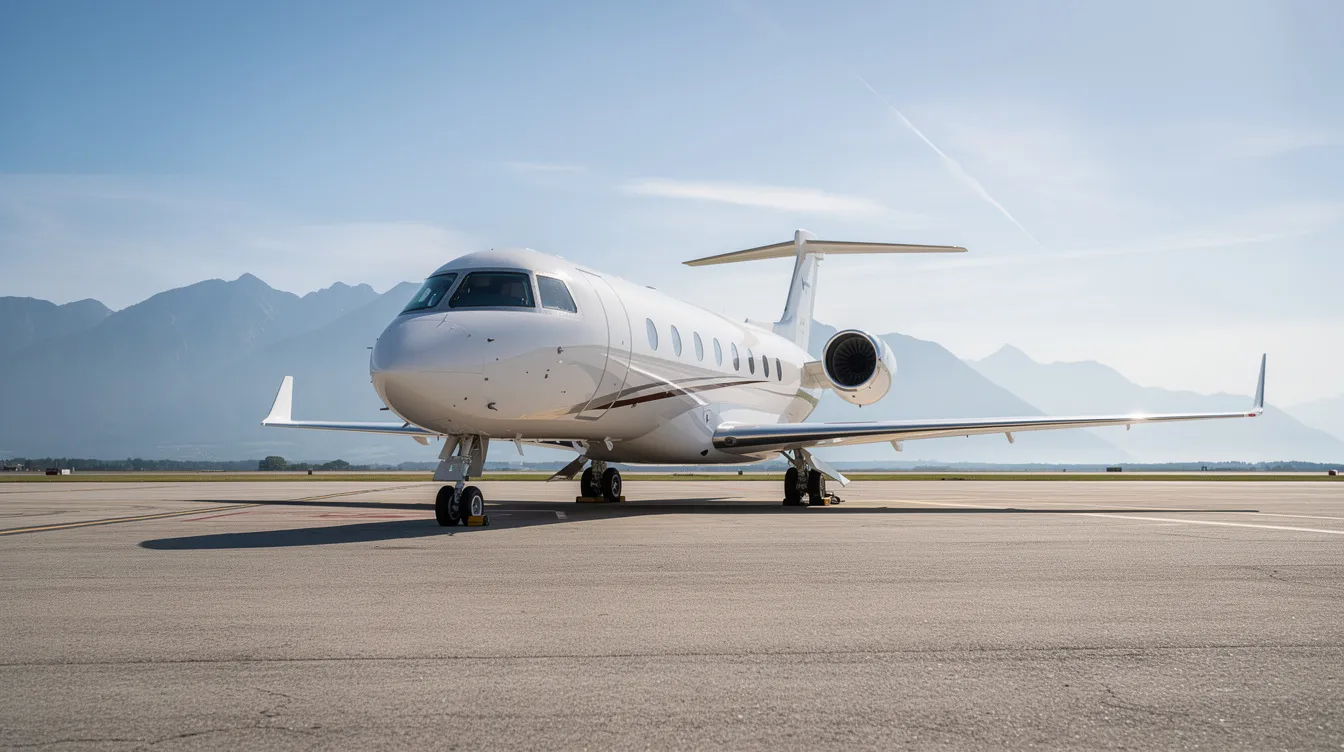
A BlackJet Jet Card is a private jet travel program that lets you purchase flight time in hour blocks and pay only for the hours you fly, with access across multiple cabin categories. BlackJet offers it in 25-hour and 50-hour blocks, each giving access to Light, Mid, Super-Mid, and Large Cabin jets.
BlackJet does not sell you an aircraft. The company coordinates your travel with vetted operators through its BlackJet Certified process, working with FAA Part 135 operators in the United States and EASA operators in Europe. BlackJet states that fewer than 30% of the more than 575 charter jet operators in the U.S. pass the certification required to serve its clients.
Pay-As-You-Fly is a jet card funding model with lower up-front entry pricing where flight time is billed as you fly at the program's published hourly rates and rules. That model sits inside a wider set of ways to fly private. Here is how a private jet card compares with the main alternatives.
| On-demand charter | Jet card | Fractional ownership | Whole ownership |
|---|
Commitment | Trip by trip | Pre-arranged block of hours | Multi-year, equity-like share | Full purchase |
Pricing predictability | Changes per trip | Fixed published rates | Contracted rates plus monthly fees | You carry every cost |
Availability | Subject to market supply | Guaranteed access terms | Guaranteed within share terms | Your aircraft, your schedule |
Who operates flights | Charter operator | Vetted certified operators | Program or operator fleet | You or a management company |
Programs from NetJets, Flexjet, and Wheels Up compete in the same space, and a private jet card suits people who want set terms and predictable access without the capital of fractional ownership. For a deeper primer on how the product works, read what a jet card is.
25-Hour vs 50-Hour Jet Card and What Actually Changes
Choose 25 hours if your flying is lighter or varies year to year and you want a smaller up-front commitment. Choose 50 hours if you fly often, want the 12-month rate lock, and prefer to keep more of your annual travel under one set of terms.
Hours come off your balance based on flight-time billing rules, and some trips can carry minimums. Confirm those rules in your agreement so your planning matches how hours actually debit. Non-expiring hours means the flight hours on the jet card do not expire over time, so unused hours remain available for future trips.
What stays the same across both cards: access to all four cabin categories per BlackJet's listings, booking through the app and member portal, 24/7 support, and the same BlackJet Certified safety program. What changes is the up-front price, how much of your yearly flying you keep under one program, and how much rate stability matters to you. The practical difference between 25 and 50 hours is your up-front commitment and how much of your annual flying you want under the same program terms; BlackJet states its hours never expire.
BlackJet states that Jet Card hours never expire, and 50-Hour Jet Card hourly rates are guaranteed for 12 months. For a closer look at the smaller block, see the breakdown of 25-hour costs.
| 25-hour jet card | 50-hour jet card |
|---|
Pay-As-You-Fly price | $50,000 | $95,000 |
Fully-Funded price | $225,000 | $450,000 |
Typical annual usage fit | Lighter or variable flying | Regular, higher-frequency flying |
Planning horizon | Shorter, flexible | Full year under one set of terms |
Pros | Lower entry cost; hours never expire | 12-month rate lock; fewer top-ups; hours never expire |
Cons | May need to re-up sooner | Higher up-front outlay |
Ask before choosing | What minimums apply? | How do cabin-switch rates work? |
Pay-As-You-Fly vs Fully-Funded Side by Side
Pay-As-You-Fly is the lower up-front option where flight time is billed as you fly at fixed published rates, while Fully-Funded pre-purchases a full block of hours up front for maximum budgeting certainty.
Think of Pay-As-You-Fly as lower up-front entry pricing with billing that follows your actual flying. A Fully-Funded jet card is a pre-purchased block of flight hours paid up front, designed to maximize cost predictability for frequent flyers. The choice comes down to cash flow and how much certainty you want.
For personal, business, or finance-team buyers, the differences are practical. Pay-As-You-Fly keeps more cash in hand and bills trips as you take them. A Fully-Funded jet card locks your spend in one payment and makes budgeting cleaner across the year. Before you sign either way, confirm refundability, transferability, cancellation terms, and any minimums in writing.
| Pay-As-You-Fly | Fully-Funded jet card |
|---|
Up-front payment timing | Lower entry payment, then billed per trip | Full block paid up front |
25-hour price | $50,000 | $225,000 |
50-hour price | $95,000 | $450,000 |
How flight time is charged | Billed as you fly at published rates | Drawn from your prepaid block |
Best for | Lower entry cost, variable schedules | Maximum budgeting certainty |
Budgeting predictability | Good; tracks real usage | Highest; one known number |
What to confirm | Refund, transfer, cancellation, minimums | Refund, transfer, cancellation, minimums |
How to compare | Total paid divided by billable hours equals your effective hourly rate |
Both 50-hour options carry BlackJet's 12-month rate guarantee. To compare effective hourly cost between the two, price the same itinerary under both models and divide total cost by billable hours. A deeper explainer on jet card pricing walks through the mechanics.
Aircraft Categories You Can Access
BlackJet groups aircraft access into four categories, Light, Midsize, Super-Midsize, and Large Cabin, so you can match the jet to your passenger count and route distance. A cabin category is a grouping of private jets by size and mission capability (seats, range, and baggage capacity), which determines which aircraft can safely and comfortably fly your route.
Light jets seat up to 7, cruise around 516 mph, and average 1,149 statute miles of range, enough for a run like New York to Atlanta. BlackJet Certified light jets include the Citation CJ2+, CJ3+, HondaJet, and Phenom 300. Midsize jets seat up to 8, cruise near 463 mph, and average 1,790 miles, covering Austin to New York, with aircraft such as the Citation XLS+, Hawker 800XP, Praetor 500, and Learjet 75.
Super-Midsize jets seat up to 8, move at about 555 mph, and average 3,950 miles, enough for Los Angeles to Boston nonstop, including the Challenger 350, Citation Longitude, and Gulfstream G280. Large Cabin jets seat up to 12, cruise around 535 mph, and average 5,100 miles, reaching New York to London, with the Gulfstream G650, Global 7500, and Falcon 8X. Cardholders can switch jet sizes larger or smaller at stable, fixed rates.
Category | Seats | Avg range | Example route | Example aircraft | Best for |
|---|
Light | Up to 7 | 1,149 mi | New York to Atlanta | Citation CJ2+, HondaJet, Phenom 300 | Short regional hops |
Midsize | Up to 8 | 1,790 mi | Austin to New York | Citation XLS+, Hawker 800XP, Learjet 75 | Longer domestic with more cabin |
Super-Midsize | Up to 8 | 3,950 mi | Los Angeles to Boston | Challenger 350, Citation Longitude, Gulfstream G280 | Coast-to-coast nonstop |
Large Cabin | Up to 12 | 5,100 mi | New York to London | Gulfstream G650, Global 7500, Falcon 8X | Transatlantic and larger groups |
Category choice drives your hourly cost, so it helps to understand private jet prices per hour before you book.
BlackJet Hourly Rates and How to Read Them
Your private jet card plan price gets you into the program; your hourly rate depends on cabin category and trip rules. BlackJet publishes base hourly rates by cabin category that are shown as inclusive of fuel surcharges and Federal Excise Tax (FET) for the listed categories; confirm your all-in quote in writing for your route and trip rules.
The published examples give you a reference point by cabin:
25 Light Jet Card: base hourly rate $5,484, shown as inclusive of fuel surcharges and Federal Excise Tax.
50 Mid Jet Card: base hourly rate $8,038, including fuel surcharge and Federal Excise Tax.
50 Super-Mid Jet Card: base hourly rate $10,384, including fuel surcharge and Federal Excise Tax.
50 Large Cabin Jet Card: base hourly rate $13,131, including fuel surcharge and Federal Excise Tax.
BlackJet states 50 Jet Card hourly rates are guaranteed fixed for 12 months, and that Jet Card hours never expire. All-in pricing means the quoted hourly rate is shown inclusive of the required components listed (for example, fuel surcharges and Federal Excise Tax) rather than adding them later. Reading these rates as all-in pricing works only when the line items match your route, so if any item varies by airport, route, or trip rule, confirm it in your written quote. Our tax guide explains how the Federal Excise Tax is treated.
Cabin category | Example base hourly rate | Stated as included | Typical mission fit |
|---|
Light (25 Card) | $5,484 | Fuel surcharge and FET | Short regional trips |
Mid (50 Card) | $8,038 | Fuel surcharge and FET | Longer domestic routes |
Super-Mid (50 Card) | $10,384 | Fuel surcharge and FET | Transcontinental nonstop |
Large Cabin (50 Card) | $13,131 | Fuel surcharge and FET | Transatlantic and larger groups |
Examples shown are published references; your quote governs.
What's Included in BlackJet Jet Card Pricing
What is included in BlackJet jet card pricing goes beyond the flight itself. Here are the top inclusions that come with a private jet card from BlackJet:
Access to BlackJet Certified Light, Mid, Super-Mid, and Large Cabin jets.
Ability to switch jet sizes at stable, fixed rates.
50 Jet Card rates locked for 12 months and hours that never expire.
Up to 15% efficiency discounts on eligible round trips.
Mobile app booking, 24/7 support, and text-to-book.
Complimentary Wi-Fi on elite aircraft.
Rate and value mechanics sit at the center of what you buy. The 50-hour jet card carries a 12-month rate lock, hours never expire, and an efficiency discount is a program benefit where eligible round-trip flying can be priced more efficiently than two separate one-way flights, depending on the card's rules and availability. You can watch your balance and activity any time, and this guide shows how to track hours across your account.
A BlackJet private jet membership also brings service and technology built in: the BlackJet app on the Apple App Store and Google Play, real-time flight updates, pre-flight access to a BlackJet Certified Safety Report, text-to-book, and a member web platform for account details. Comfort extends past the cabin through annual partner benefits at luxury resorts, private residence clubs, and retail boutiques. BlackJet also states that flights for Jet Card Owners are offset to be carbon- and emissions-neutral at no cost to clients, using an approach that reaches beyond CO2 alone.
BlackJet Jet Cards are designed for predictable private travel: published cabin-category access, app-based booking, 24/7 support, the ability to switch jet sizes at stable rates, and non-expiring hours. What is included on paper still depends on your agreement, so use the matrix below to separate the sure things from the variables.
Included | May apply (varies by trip) | Confirm in your agreement |
|---|
Access to Light, Mid, Super-Mid, Large Cabin certified jets | De-icing in winter weather | Cancellation windows and penalties |
Ability to switch jet sizes at fixed rates | Peak day surcharge on high-demand dates | Refund and transfer terms |
Fuel surcharge and FET in listed rate examples | International handling fees | Minimum billable flight time rules |
App booking, 24/7 support, text-to-book | Extended wait or standby time | Pet policies |
Complimentary Wi-Fi on elite aircraft | Catering beyond standard | Ground transport specifics |
Non-expiring hours; 12-month rate lock (50 Card) | Airport and handling fees at certain FBOs | Specific peak-date calendar |
Fees, Trip Rules, and Other Charges That May Apply
Even with jet card pricing, your total can change if trip rules trigger minimums or pass-through charges, so here is how to check. BlackJet publishes some rates as inclusive of fuel surcharges and Federal Excise Tax for the listed categories. Other trip charges can vary, and you should confirm them against your current BlackJet agreement and quote before treating any number as final.
Common variable items in private aviation include winter de-icing, airport and handling fees, international handling, extended wait or standby time, and any minimum billable time rules. A peak day surcharge can apply on the busiest travel dates. Ask whether a minimum deposit is required to open the card, and treat each variable item as "confirm in your agreement or quote" rather than assuming it is included. True trip cost is the final price you pay after applying the hourly rate plus any required taxes, minimums, and trip-specific pass-through charges shown in your quote.
Ask these eight questions before you buy:
What minimum flight time or minimum deposit applies per trip or per card?
Which dates count as peak, and what is the peak day surcharge?
What is the de-icing policy and how is it billed?
What are the cancellation windows and penalties?
What is the pet policy?
Is catering included or billed separately?
How do international trips change pricing and handling?
Is ground transport arranged, and is it included?
Reading jet card pricing correctly means separating the fixed from the variable. Compared with on-demand charter, a jet card gives you set rates, though trip-level charges still follow the same real-world rules. The fastest way to avoid surprises is to compare jet cards using true trip cost: hourly rate inclusions, minimums, taxes, and pass-through fees shown in writing before you fly. When you are ready, get an accurate quote for your routes.
Line item | Illustrative amount |
|---|
Published hourly rate (Mid, 50 Card) | $8,038 per hour |
Billable hours (illustrative) | 3.0 |
Subtotal | $24,114 |
Trip minimum adjustment (if any) | Confirm in quote |
Taxes (fuel surcharge and FET) | Shown as included in the rate |
Known pass-through items (de-icing, handling) | Confirm in quote |
Total (illustrative) | $24,114 |
Illustrative only; your written quote governs.
Safety and Vetting Behind BlackJet Certified
BlackJet Certified is BlackJet's proprietary vetting process that individually certifies the operator, aircraft, pilot, and each flight before it is approved to fly. BlackJet's safety program uses a proprietary "BlackJet Certified" process that individually vets the operator, aircraft, pilots, and each flight before departure. That four-part structure is the backbone of how the company screens every trip.
Pilots must meet standards that exceed FAR Part 135 requirements across multiple categories, and each aircraft passes an evaluation of operational history, maintenance reliability, and a detailed safety inspection before earning certified status. BlackJet states its safety program draws on more than 10 years of data and over 300 million data points covering aircraft, pilots, airports, and operations. A Safety Advisory Board of former FAA and NTSB leaders works alongside Chief Safety Officer Jake Miller.
Safety sits at the heart of a BlackJet private jet membership, and the vetting applies to every private jet in the program before any jet card flight departs. You can see much of this before takeoff. The BlackJet app gives real-time updates when an aircraft completes its safety checks and instant access to a pre-flight BlackJet Certified Safety Report. The company uses encryption and firewall technology to protect personal information and encrypts data sent over the internet.
What BlackJet vets | What you can see |
|---|
Operator certification and history | Real-time app status on safety checks |
Aircraft maintenance and condition | Pre-flight BlackJet Certified Safety Report |
Pilot qualifications beyond FAR Part 135 | 24/7 support contact in the app |
Each specific flight before departure | Flight details and booking confirmation |
For broader context on how these programs work, read this Jet Card program guide.
Emissions-Neutral Offsetting and What BlackJet States
BlackJet states it offsets Jet Card Owner flights to be both carbon and emissions neutral at no cost to clients, using an approach that goes beyond CO2-only offsetting. Emissions neutrality is an offsetting approach that aims to account for climate impacts beyond CO2 alone, based on the provider's stated methodology.
BlackJet describes a 300% offsetting approach that covers more than carbon dioxide, which the company says makes up roughly one-third of aviation's climate impact, extending to water vapor, aerosols, and nitrous oxide. The company's pages state the program start date inconsistently, citing both "since early 2020" and the beginning of 2021. We note that discrepancy rather than pick one as fact. What stays consistent is the claim itself: the offsetting program exists and applies to Jet Card Owner flights. Sustainability is part of what is included in a BlackJet private jet membership, at no extra cost to clients.
Carbon-only offset | Emissions neutrality (as described) |
|---|
Accounts for CO2 only | Accounts for CO2 plus water vapor, aerosols, and nitrous oxide |
Worked Examples for 25 vs 50 Hours and Both Funding Models
How to calculate the true cost of a jet card flight:
Start with the published hourly rate for your cabin category.
Estimate billable flight hours for the route, including any minimums.
Add any trip-specific pass-through charges your quote lists (de-icing, handling, international).
Confirm which taxes and surcharges are already included in the rate.
Divide your total paid by total billable hours to get your effective hourly rate.
The effective hourly rate is your total paid cost divided by the total billable flight hours after applying program rules, taxes, and any pass-through charges in your quote. The best way to compare jet cards is to price the same itinerary under both funding models and divide total cost by billable hours to see your effective hourly rate. This is where jet card pricing becomes concrete.
Scenario A: 25 hours of short regional trips. A 25-hour jet card in the Light category at the published $5,484 hourly rate suits several short round trips, say regional hops of one to two flight hours each way. Eligible round trips can qualify for up to 15% efficiency discounts, so understanding round-trip savings matters here. Confirm in writing: minimum billable time per leg, round-trip eligibility rules, and any peak-date pricing.
Scenario B: 50 hours of mixed flying. A 50-hour jet card covering regional and transcontinental trips might draw on Mid at $8,038 and Super-Mid at $10,384 hourly rates, with the 12-month rate lock holding those numbers steady. A larger block reduces how often you top up and keeps more flying under one set of terms. Confirm in writing: cabin-switch rates, how hours debit per leg, and peak-day rules.
Scenario C, one itinerary under both funding models. Price the same Mid-cabin route at the published $8,038 hourly rate, then compare Pay-As-You-Fly billing per trip against a Fully-Funded jet card drawn from your prepaid block. The flying cost input is the same; the difference is when you pay and how much certainty you want. Confirm in writing: refund and transfer terms, cancellation windows, and minimums.
Scenario | Cabin category | Rate reference | Stated as included | What to confirm |
|---|
A: Short regional (25-hour jet card) | Light | $5,484/hr | Fuel surcharge and FET | Minimums, round-trip eligibility |
B: Regional and transcon (50-hour jet card) | Mid and Super-Mid | $8,038 to $10,384/hr | Fuel surcharge and FET | Cabin-switch rates, peak dates |
C: One route, two models | Mid | $8,038/hr | Fuel surcharge and FET | Refund, transfer, cancellation terms |
Running both the Pay-As-You-Fly and Fully-Funded jet card math on your real routes is the clearest way to value a private jet card, and it keeps your jet card pricing comparison honest.
How to Request a Current BlackJet Quote
Your written quote and card agreement govern final pricing and rules, so the fastest path to exact numbers is to request one for your real routes. A written quote is the provider's documented trip pricing and terms for a specific itinerary, including what's included and any trip-specific pass-through charges.
Have this ready to speed up your quote:
Your typical city pairs
Passenger count
Desired cabin category
Booking lead time
Peak travel dates
Pet and ground transport needs
You can reach BlackJet through the mobile app, text-to-book, the member web platform, 24/7 live chat, phone, and email. Call 1-866-321-JETS (1-866-321-5387) or email info@blackjet.com, and manage your account at app.blackjet.com. Comparing private jet membership pricing is simplest once you hold a written quote for your own routes, and it makes BlackJet jet card pricing concrete instead of theoretical. For the most accurate jet card comparison, request a written BlackJet quote for your top two or three routes and confirm what's included before you fund a card. Start with a private jet quote.

Frequently Asked Questions
How much does a BlackJet jet card cost in 2026 and 2027?
As of Nov 3, 2026, BlackJet lists its 25-Hour Jet Card at $50,000 (Pay-As-You-Fly) or $225,000 (Fully-Funded), and its 50-Hour Jet Card at $95,000 (Pay-As-You-Fly) or $450,000 (Fully-Funded). Your final trip totals still depend on cabin category and the trip rules in your written quote and card agreement.
What's the difference between the 25-hour and 50-hour options?
The difference is the hour block you're planning to use under the program and your up-front commitment, since both options provide access across cabin categories but fit different annual flying patterns. BlackJet states Jet Card hours never expire, and the 50-Hour Jet Card carries a 12-month rate guarantee.
What's the difference between Pay-As-You-Fly and Fully-Funded?
Pay-As-You-Fly is the lower up-front option where flight time is billed as you fly at published program rates, while Fully-Funded pre-purchases a full block of hours up front for budgeting certainty. Confirm refund, transfer, and cancellation terms in your agreement before you choose.
Are BlackJet jet card rates all-in or plus-FET?
BlackJet publishes base hourly rate examples that are shown as inclusive of fuel surcharges and Federal Excise Tax for the listed cabin categories, but you should confirm your all-in quote in writing for your itinerary. See the inclusion matrix above and the tax guide for how these components are treated.
Do BlackJet Jet Card hours expire?
BlackJet states that Jet Card hours never expire. Unused hours remain available for future travel, and you can monitor your balance through the member web platform and app.
What aircraft can I access with BlackJet?
BlackJet provides access across four cabin categories, Light, Midsize, Super-Midsize, and Large Cabin, through its BlackJet Certified program. Examples include the Phenom 300 in Light and the Challenger 350 in Super-Mid, and you match the aircraft to your route and passenger count.
Can I cancel, transfer, or get a refund on a BlackJet Jet Card?
Cancellation, transfer, and refund rules are defined in your BlackJet Jet Card agreement, so the safest approach is to request the current terms in writing before funding a card. Ask these three questions: how are unused hours handled, how are unused funds handled, and what cancellation windows apply.
How far in advance should I book flights?
BlackJet bookings can be requested on-demand in the app, but the ideal lead time depends on aircraft availability, cabin category, and peak-demand dates, so confirm your booking rules in the current program terms. Share your top routes and peak dates during onboarding so the team can set realistic expectations.
The Bottom Line on BlackJet Jet Card Pricing
BlackJet jet card pricing is simple to read once you separate three things: the program entry price, the hourly rate by cabin category, and the items that vary by trip. The 25-hour and 50-hour cards both give access across Light, Mid, Super-Mid, and Large Cabin jets; hours never expire, and the 50-hour jet card locks rates for 12 months. Pick Pay-As-You-Fly for a lower entry cost or a Fully-Funded jet card for the cleanest budget, then confirm the details in writing.
For frequent private flyers who want fixed-rate stability, 24/7 support, BlackJet Certified safety, and emissions-neutral flying, a private jet card built around predictable travel earns its place. Request your current BlackJet Jet Card quote for your top routes by calling 1-866-321-JETS (1-866-321-5387) or emailing info@blackjet.com, and explore the 50 Jet Card to see the flagship option in full.
References
BlackJet 50 Jet Card - Program overview, non-expiring hours, 12-month rate guarantee, and included benefits.
The Complete Guide to the 25 Hour Jet Card - 25-hour program explanation and cost framing.
Understanding Jet Card Pricing - General jet card pricing concepts and how to compare programs.
The Jet Card Tax Guide - How taxes, including Federal Excise Tax, are treated.
Get an Accurate Quote for Private Jet Costs - Quote process and accurate trip totals.
What Is a Jet Card - Definitions and plain explanation of jet cards.


 Sign up with google
 Sign up with Apple