In today’s fast-paced world, owning a private plane has evolved from a symbol of luxury to a strategic asset for business leaders and high-net-worth individuals. Buying a private plane offers unparalleled convenience, flexibility, and time savings that can significantly enhance both professional productivity and personal lifestyle. This comprehensive guide will walk you through everything you need to know about buying a private plane—from understanding different aircraft categories and performance specifications to navigating the financial investment and acquisition process. Whether you are considering your first purchase or upgrading your fleet, this guide provides expert insights to help you make informed decisions and maximize the value of your private aviation investment.
Key Takeaways
Private aircraft ownership provides strategic advantages worth $2-4 million annually in time savings for UHNW individuals flying 200+ hours
Aircraft categories range from $3 million light jets to $75 million ultra-long-range jets, with specific models like the Gulfstream G700 offering 7,500nm range
Total ownership costs, including acquisition, operations, and depreciation, typically run 15-20% the purchase price annually
Modern jets feature advanced safety systems like Enhanced Flight Vision Systems (EFVS) and Synthetic Vision Technology (SVT), exceeding commercial standards
Sustainable aviation fuel (SAF) adoption and carbon offset programs address environmental considerations while maintaining operational excellence
Crew salaries for pilots can range from $150,000 to over $600,000 annually
For ultra-high net worth individuals and corporate executives, the decision to buy a private jet represents far more than a luxury acquisition—it’s a strategic investment in time optimization, operational flexibility, and business continuity. When flying 200+ hours annually, private aircraft ownership delivers measurable advantages worth millions in recovered productivity and enhanced deal-making capabilities. The importance of privacy and personal health is also a compelling reason for many to consider private jet ownership, as it allows for controlled environments and reduced exposure to public spaces.
The private aviation market has evolved from exclusive luxury to essential business infrastructure for global enterprises and discerning high-net-worth families. With commercial aviation’s inherent inefficiencies—including long security lines, fixed schedules, and limited destination access—private jet ownership provides unparalleled convenience and control over business travel operations.
This comprehensive guide examines the strategic, financial, and operational considerations for aircraft acquisition, offering data-driven analysis to inform sophisticated purchase decisions. From entry-level light jets to ultra-long-range aircraft capable of global operations, we’ll explore the investment framework that positions private aviation as a strategic asset rather than discretionary spending.
Strategic Advantages of Private Aircraft Ownership for High Net Worth Individuals
Private jet ownership delivers quantifiable benefits that extend far beyond luxury or status considerations. For high-net-worth individuals and corporate entities, these aircraft represent strategic tools for time optimization, business development, and operational excellence.
Additionally, private jet ownership allows travelers to fly directly to remote or hard-to-access destinations, offering greater flexibility and efficiency compared to commercial flights.
Time Arbitrage Benefits: Eliminating Commercial Aviation Inefficiencies
The most compelling advantage involves time arbitrage—recovering hours lost to commercial aviation’s inherent inefficiencies. Commercial flights require arrival 2-3 hours prior to departure for domestic routes and 3-4 hours for international travel. Combined with ground transportation, security screening, baggage claim, and connection delays, commercial aviation adds 4-6 hours to travel itineraries beyond actual flight time. Fuel costs for private planes can range from $300 to $3,500 per hour, which is a significant consideration for frequent flyers. For those flying regularly, fuel costs can easily exceed $1 million annually, underscoring the importance of budgeting for this major operational expense.
Private aviation eliminates these friction points entirely. Passengers arrive at the tarmac minutes before departure, bypass security screening, and depart on custom schedules aligned with business requirements rather than fixed commercial routes. This time savings directly translates to increased productivity for executives whose hourly value exceeds tens of thousands in deal-making and strategic decision-making capacity.
Business Continuity Advantages: Operational Control and Flexibility
Private aircraft provide unmatched operational flexibility for business development and relationship management. Corporate executives can conduct confidential meetings during flight, maintain productivity with specialized work environments, and access over 5,000 airports globally compared to roughly 500 served by major commercial carriers.
This geographic reach proves particularly valuable for executives requiring travel to secondary business centers, remote operations sites, or emerging markets with limited commercial service. For corporations in energy, real estate development, or international expansion, private aviation provides a competitive advantage in market access and relationship management that easily costs hundreds of thousands in lost opportunities when relying on commercial alternatives.
Security and Privacy Premium: Controlled Environment Operations
High-profile executives, political figures, and business leaders conducting sensitive negotiations benefit from discreet travel without public observation. Private aviation eliminates exposure to commercial terminals and associated security vulnerabilities while enabling confidential strategic discussions without intellectual property risks.
This operational discretion provides tangible competitive advantage for M&A activity, business restructuring, or sensitive market positioning where information security directly impacts transaction values and strategic positioning.

Family and Lifestyle Enhancement: Multi-Generational Travel Comfort
Beyond business applications, private aircraft ownership enhances family travel experiences through direct access to remote luxury destinations, medical emergency capability during travel, and multi-generational comfort for extended family gatherings. Owners can further enhance family comfort by investing in a new interior and other customizations, such as upgraded amenities and personalized features. This lifestyle enhancement represents significant value for families prioritizing time together and exclusive travel experiences.
Aircraft Categories and Performance Specifications
Understanding aircraft categories and performance specifications enables informed selection based on mission requirements, passenger capacity, and operational parameters. Each category offers distinct advantages for specific use cases and travel patterns.
Buyers can also consider pre-owned aircraft, which may offer cost savings and immediate availability compared to new models. Choosing a pre-owned aircraft can substantially lower your initial investment, as used jets generally cost between 20% and 50% less than brand-new models. Buying a used private jet can offer the same benefits as a new jet if it is well-maintained and in good condition. However, buying a new private jet means you will have the latest in cabin design, avionics, safety, and communications technologies. Using savings from buying a pre-owned jet, owners can upgrade the interior, avionics, and other features without significant downtime.
Light Jets: Entry-Level Luxury ($3-8 Million)
Light jets represent the entry point for private aircraft ownership, offering efficient regional travel capability with lower operating costs and simplified operations. Popular models include the Cessna Citation M2, Embraer Phenom 300E, and HondaJet Elite S.
Performance Characteristics:
Range: 1,200-2,000 nautical miles
Passenger capacity: 6-8 passengers
Cruise speed: 450-500 mph
Ideal for: Regional business travel, weekend getaways, 2-3 hour flights
Operating costs: $2,500-3,500 per flight hour
Light jets excel for frequent short-haul travel between business centers, offering fuel efficiency and operational simplicity while maintaining the time savings and convenience benefits of private aviation. These aircraft typically require single-pilot operations (though dual-pilot is recommended) and can access shorter runways unavailable to larger aircraft. They typically carry 4-8 passengers with a range of about 1,500-2,300 nautical miles, making them ideal for regional travel.
Midsize Jets: Business Workhorse ($12-25 Million)
Midsize jets provide the optimal balance of capability, comfort, and operating economics for most business aviation applications. Leading models include the Bombardier Challenger 3500, Gulfstream G280, and Dassault Falcon 2000S. Midsize jets offer more range and passenger capacity than light jets, making them suitable for longer trips.
Enhanced Capabilities:
Range: 3,000-4,500 nautical miles
Passenger capacity: 8-10 passengers
Stand-up cabin height with full galley and lavatory
Cruise speed: 500+ mph
Operating costs: $4,000-5,500 per flight hour
These aircraft offer transcontinental capability with sufficient range for coast-to-coast flights without refueling stops. The larger cabin accommodates productive work environments, conference capabilities, and comfortable sleeping arrangements for longer flights. Midsize jets represent the sweet spot for most corporate and high-net-worth family applications.
Ultra-Long-Range Jets: Global Capability ($50-75 Million)
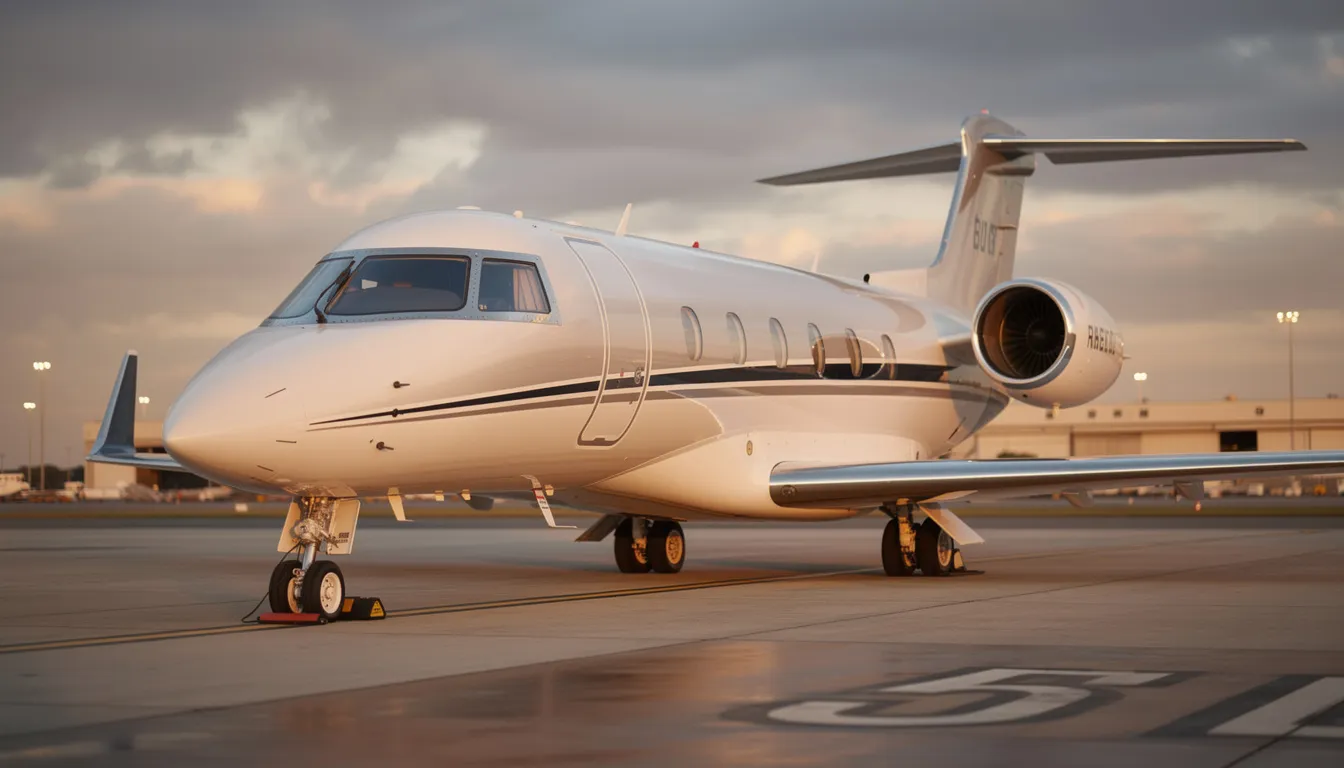
Ultra-long-range jets provide intercontinental capability with luxury amenities approaching commercial first-class standards. Premium models include the Gulfstream G700, Bombardier Global 7500, and Dassault Falcon 8X. These large jets can carry 9-19 passengers with a range of over 3,500 nautical miles, making them ideal for global business operations and long-haul travel.
Global Performance Standards:
Range: 7,000+ nautical miles
Passenger capacity: 12-19 passengers
Multiple cabin zones with bedroom suites
Full kitchens and satellite communications
Cruise speed: 0.85 Mach (approximately 650 mph)
Operating costs: $8,000-12,000 per flight hour
These aircraft enable non-stop flights from New York to Hong Kong or London to Los Angeles, making them essential for global business operations. Advanced avionics, redundant systems, and airline-level safety standards justify the premium investment for international operations requiring maximum capability and reliability.
Financial Investment Analysis and Total Cost of Ownership
Private aircraft ownership involves sophisticated financial analysis extending far beyond the initial purchase price. The significant investment required can amount to millions of dollars, covering not just acquisition but a wide range of ongoing financial commitments. Understanding the total cost of ownership enables realistic budgeting and informed decision-making regarding ownership versus alternative access models. Your annual operating budget is influenced by both fixed and variable factors, such as fuel costs and crew salaries.
Depreciation rates for private aircraft typically impact the total cost of ownership, with jets depreciating 10% to 15% in the first year and 5% to 10% annually thereafter. Annual maintenance costs for private jets typically range from 5% to 10% of the aircraft's value, making it a critical factor in long-term financial planning. Annual operating expenses for a private plane can include maintenance costs ranging from $200,000 to over $2 million. It is crucial to know how much money is needed not only for the purchase but also for ongoing operation, and to consider potential ways to offset these costs, such as chartering the aircraft when not in use. Tax optimization strategies can also play a significant role in reducing the overall cost of ownership for private aircraft.
Key components of ownership expenses include maintenance costs, which cover routine inspections, repairs, and unexpected issues. Ongoing costs such as crew salaries, insurance, and hangar fees must also be factored in, as they persist regularly over time. Operational costs—including landing fees, navigation fees, handling, catering, and continuous maintenance—represent a major recurring expense. Additionally, owners should plan for other expenses that may arise, such as legal fees, upgrades, or unexpected repairs, all of which can impact the overall budget and financial planning. Crew and pilot salaries for private jets typically range from $85,000 to $300,000 annually per individual, depending on their experience and the specific operational demands.
Acquisition Cost Framework
The initial purchase price represents only the starting point for aircraft ownership financial planning. Additional acquisition costs include:
Purchase price: $3-75 million, depending on aircraft category and specifications
Transaction fees: 2-5% of purchase price for broker services, legal, and administrative costs. An aircraft broker acts as a trusted advisor, representing the buyer's interests and providing expert guidance throughout the purchase process.
Pre-purchase inspection: $25,000-75,000 for comprehensive technical evaluation
Registration and legal costs: $10,000-50,000 for title transfer and regulatory compliance
Annual Fixed Costs Analysis
Fixed costs occur regardless of flight utilization and represent the baseline expense for aircraft ownership:
Insurance premiums: 1-3% of aircraft value annually, varying by pilot qualifications and operational profile
Hangar fees: $50,000-300,000 annually, depending on location and facility quality
Crew salaries: $200,000-600,000 for captain and first officer, including benefits and training
Annual inspections: $50,000-200,000 for mandatory safety and airworthiness evaluations
Management fees: 3-6% of aircraft value if utilizing professional management services
Variable Operating Expenses
Variable costs fluctuate based on flight utilization and operational patterns:
Fuel costs: 40-60% of direct operating expenses, ranging from $2,000 to 8,000 per flight hour
Maintenance reserves: $500-1,500 per flight hour for scheduled maintenance and component replacement
Landing fees: $100-2,000 per landing, depending on airport size and services
Crew expenses: $200-500 per trip for overnight accommodations, meals, and transportation
Catering and ground services: $100-1,000 per flight for passenger services
Aircraft maintenance needs and costs directly depend on the type of aircraft purchased, with larger or more complex jets typically incurring higher maintenance expenses.
Depreciation and Tax Optimization
Aircraft depreciation follows predictable patterns affecting long-term ownership economics:
First-year depreciation: 10-15% of purchase price for new aircraft
Annual depreciation: 5-8% thereafter, stabilizing after 15-20 years
Market conditions significantly impact depreciation rates and residual values
Tax optimization strategies can substantially improve ownership economics:
Section 179 depreciation: Up to $1.04 million immediate expensing for qualifying business aircraft
Bonus depreciation: 100% first-year depreciation through 2026, phasing down thereafter
State sales tax planning: Strategic registration can minimize state tax obligations
International registration: Offshore structures may provide tax advantages for global operations
The Aircraft Acquisition Process: Expert-Guided Purchase
Successful aircraft acquisition requires a systematic approach combining technical evaluation, financial analysis, and legal structuring. Reviewing aircraft sales listings and identifying private jets currently available for sale that match the buyer’s needs and budget is a crucial step in the process. A title and lien search is a crucial part of the due diligence process to ensure clear ownership and avoid legal complications. Assemble a professional team that includes an aviation lawyer and broker before purchasing a private plane, as their expertise can help navigate the complexities of the transaction. Qualified pilots and aircraft management companies may also need to be hired for ongoing operations and compliance, ensuring the aircraft is operated safely and efficiently.
Phase 1: Mission Profile Development
The acquisition process begins with rigorous mission analysis, defining operational requirements:
Annual flight hours: Determine break-even analysis versus alternative access models
Typical routes: Establishes range and performance requirements
Passenger requirements: Cabin configuration and amenity specifications
Budget parameters: Total cost of ownership, including acquisition and operating expenses
An honest assessment of actual versus aspirational travel patterns prevents overcapitalization while ensuring aircraft meet genuine operational needs. Many first-time buyers underestimate total ownership costs or overestimate utilization, leading to financial stress or inappropriate aircraft selection.
Phase 2: Market Analysis and Aircraft Selection
Comprehensive market research compares available aircraft across categories, evaluating performance characteristics, maintenance records, and manufacturer reputation. Key considerations include:
Pre-owned versus new aircraft comparison: Delivery timeframes range from 6-36 months for new aircraft, versus immediate availability for qualified pre-owned options. Buyers should also assess the need for upgrades to avionics, interiors, or systems to ensure compliance with current regulations and enhance aircraft value. The purchase price of a new private jet is higher than that of a pre-owned jet, and manufacturers often have backlogs, which can delay delivery of new aircraft.
Current market conditions: Supply constraints and pricing dynamics affect availability and negotiation leverage
Manufacturer support: Service network quality, parts availability, and warranty coverage impact long-term operating costs
Phase 3: Due Diligence and Technical Evaluation
Professional due diligence verifies aircraft condition and value through systematic evaluation:
Comprehensive logbook review: Documents maintenance history, operational patterns, and regulatory compliance
Pre-purchase inspection: Independent evaluation by a certified maintenance facility, identifying potential issues and deferred maintenance
Title and lien search: Verifies clear ownership and identifies any outstanding obligations. The aircraft owner is responsible for maintaining regulatory compliance, safety standards, and legal obligations associated with the aircraft.
Market value analysis: Professional appraisal confirming fair market value and negotiation position
Phase 4: Contract Negotiation and Closing Coordination
Legal structuring requires specialized aviation expertise addressing unique regulatory and operational considerations:
Purchase agreement: Defines terms, conditions, warranties, and risk allocation
Escrow management: Secure fund handling and document coordination
Insurance placement: Coverage effective at closing with appropriate liability limits
Registration transfer: Regulatory compliance and operational certification
Advanced Technology and Safety Systems
Modern private aircraft incorporate sophisticated technology and safety systems often exceeding commercial aviation standards. Understanding these capabilities informs aircraft selection and operational planning while providing confidence in safety and reliability.
Additionally, predictive maintenance technologies use real-time data to anticipate and address potential issues before they become critical, improving safety and reducing downtime.
Next-Generation Avionics Integration
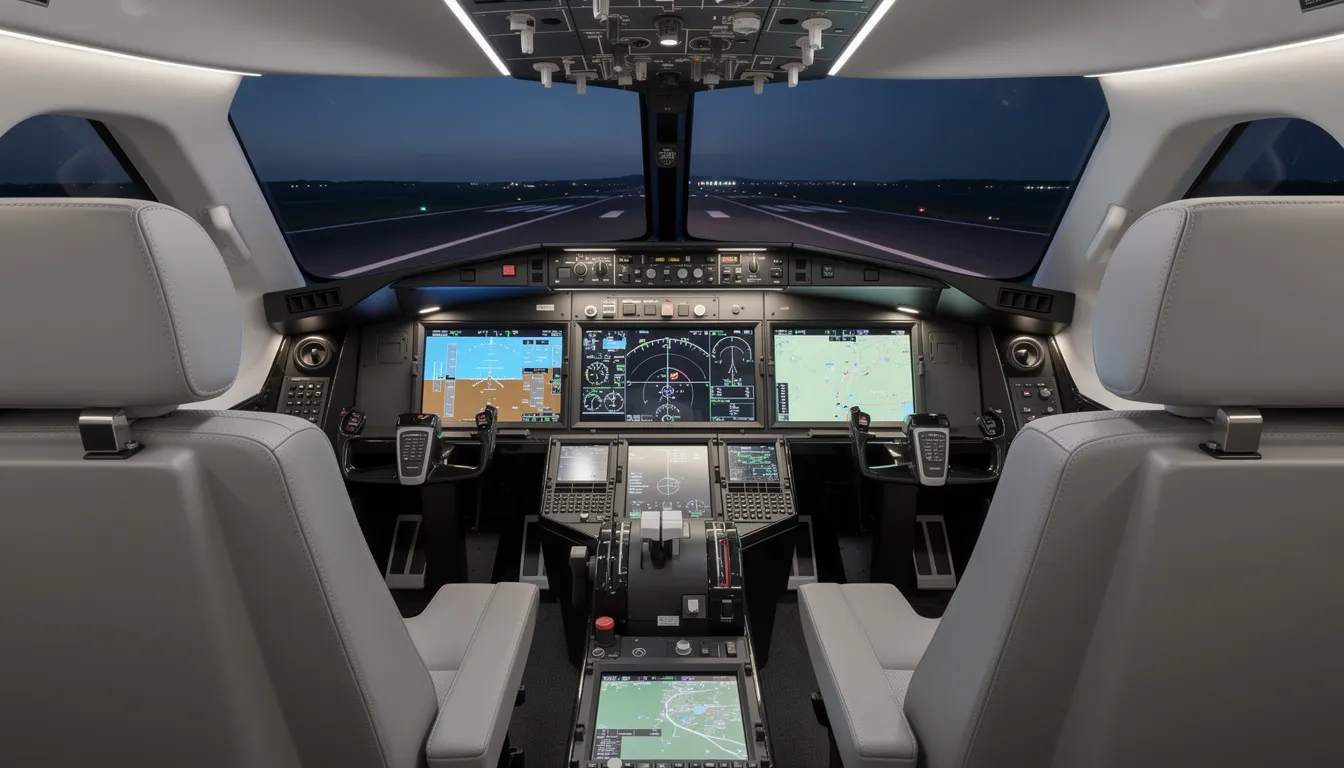
Contemporary jets feature advanced glass cockpits with integrated flight management systems, reducing pilot workload while enhancing safety and operational efficiency:
Garmin G5000/G6000: Touchscreen interfaces with synthetic vision technology and traffic awareness
Collins Pro Line Fusion: Integrated flight deck with weather radar and terrain awareness systems
Honeywell Primus Epic: Advanced autopilot capabilities with automatic emergency descent functionality
These systems provide real-time weather information, traffic conflict resolution, and terrain awareness capabilities, enhancing safety while enabling efficient flight path optimization. Touchscreen interfaces simplify pilot interaction while reducing training requirements and operational complexity.
Enhanced Safety Technologies
Private aviation safety systems often exceed commercial standards through redundant systems and advanced monitoring:
Synthetic Vision Technology (SVT): Computer-generated terrain imagery providing visual flight references in low visibility conditions
Enhanced Flight Vision Systems (EFVS): Infrared cameras displaying runway and terrain features through clouds and darkness
Automatic emergency descent: Systems that detect cabin pressurization loss and initiate automatic descent to a safe altitude
Predictive maintenance: Engine and component monitoring systems identify potential failures before they occur
These technologies contribute to private aviation’s exceptional safety record when operated by professional crews following standardized procedures.
Connectivity and Productivity Capabilities
Modern aircraft provide high-speed connectivity, enabling sustained productivity during flight:
Satellite internet: 100+ Mbps speeds supporting video conferencing and cloud applications
Global voice communications: Worldwide phone service maintaining business connectivity
Real-time weather and traffic data: Enhanced situational awareness and route optimization
Entertainment systems: High-definition displays and streaming services for passenger comfort
Certification Standards and Regulatory Compliance
Private jets undergo rigorous certification processes ensuring safety standards equivalent to or exceeding commercial aviation:
Part 25 transport category design: Stringent structural and performance requirements
Regulatory compliance: Ongoing adherence to evolving safety mandates, including ADS-B Out and CPDLC equipment
International certification: Multi-jurisdictional approval for global operations
Maintenance requirements: Scheduled inspections and component replacement, ensuring continued airworthiness
Sustainability and Environmental Responsibility
Environmental considerations increasingly influence private aviation decisions as operators seek to minimize carbon footprint while maintaining operational excellence. Sustainable practices and emerging technologies address environmental concerns without compromising performance or convenience.
Sustainable Aviation Fuel (SAF) Adoption
Sustainable aviation fuel represents the most immediate pathway to carbon footprint reduction in private aviation:
Lifecycle carbon reduction: 80% reduction compared to conventional jet fuel when accounting for production and consumption
Engine compatibility: Drop-in replacement requiring no modifications to existing aircraft
Expanding availability: Major FBOs increasingly offer SAF blends for environmentally conscious operators
Cost considerations: Premium pricing offset by carbon reduction benefits and corporate sustainability commitments
Leading operators report significant carbon reduction through SAF adoption while maintaining identical operational performance and reliability compared to conventional fuel.
Carbon Offset Programs and Direct Action
Comprehensive environmental strategies combine operational efficiency with verified carbon reduction projects:
Verified emission reduction projects: Forest conservation, renewable energy development, and direct air capture technologies
Flight optimization: Advanced flight planning software reducing fuel consumption through efficient routing and altitude management
Operational procedures: Single-engine taxi operations and continuous descent approaches, reducing fuel burn by 15%
Future Technology Development
Emerging propulsion technologies promise additional environmental improvements:
Electric propulsion: Battery and hybrid-electric systems under development for short-range aircraft
Hydrogen fuel cells: Zero-emission technology for regional aircraft applications
Advanced aerodynamics: Wing design and engine efficiency improvements continue to reduce fuel consumption
Urban air mobility: Electric vertical takeoff aircraft for short-distance transportation
Alternative Ownership Models and Comparative Analysis
Aircraft ownership represents only one access model among several alternatives, each offering distinct advantages for specific use patterns and financial preferences. For example, jet card programs may offer limited customization options, if any, compared to full ownership or private jet charter. Understanding these options enables optimal selection based on individual requirements and utilization patterns. Private jets have a larger carbon footprint per passenger than commercial flights, which is an important consideration for environmentally conscious buyers.
Fractional Ownership Programs
Fractional ownership provides aircraft access through shared ownership, reducing capital requirements while maintaining guaranteed availability and professional management.
Structure and Share Sizes:
Share options: 1/16 to 1/2 ownership corresponding to 50-400 annual flight hours
Guaranteed availability: 25-50 hours advance notice, depending on share size
Fleet access: Ability to utilize different aircraft types based on specific mission requirements
Professional management: Comprehensive services including crew, maintenance, and operational coordination
Leading Providers and Fleet Composition:
NetJets (Berkshire Hathaway): Largest fractional operator with diverse fleet from light jets to ultra-long-range aircraft
Flexjet: Premium positioning with newer fleet and luxury amenities
PlaneSense: Turboprop and light jet focus with a competitive pricing structure
Financial Analysis:
Acquisition cost: $500,000-$8 million, depending on share size and aircraft type
Monthly management fees: $10,000-50,000 covering fixed operational expenses
Hourly operating costs: $3,000-8,000 per flight hour for fuel and variable expenses
Benefits versus limitations: Reduced capital investment and professional management versus limited customization and shared usage scheduling
Jet Card and Charter Comparison
Jet Card Programs: Prepaid flight hour programs offering fixed pricing and guaranteed availability without ownership commitments:
Prepaid hours: 25-100 hour blocks with fixed hourly rates
Guaranteed availability: Aircraft access with 6-50 hours' notice, depending on program tier
Fixed pricing: Cost certainty protecting against fuel price volatility and peak demand surcharges
Account management: Dedicated service teams providing personalized travel coordination
On-Demand Charter: Per-trip basis aircraft rental offering maximum flexibility with variable pricing:
No commitment: Pay-per-use basis without prepayment or membership requirements
Broader aircraft selection: Access to a global fleet, including specialized aircraft for unique missions
Variable pricing: Market-based rates fluctuating with demand, seasonality, and aircraft availability
Service levels: Range from basic transportation to luxury white-glove service
Cost Analysis and Break-Even Utilization: Break-even analysis reveals that ownership advantages typically emerge at 50-100 annual flight hours for light jets and 25-50 hours for larger aircraft, depending on specific routes and operational patterns. Charter services provide cost advantages for occasional users while ownership becomes economically attractive at moderate to high utilization rates.
Frequently Asked Questions
What financing options are available for private aircraft purchases?
Aircraft financing typically requires a 10-20% down payment with loan terms up to 20 years at competitive interest rates ranging from 4-8% depending on creditworthiness and aircraft age. Secure financing for aircraft involves specialized loans, typically requiring a 15-20% down payment and a good credit score. Operating leases provide 100% financing with tax advantages, while secured loans against other assets offer attractive rates for qualified borrowers. Many buyers utilize manufacturer financing programs or work with specialized aviation lenders, understanding aircraft values and market dynamics.
How do insurance requirements differ between personal and business aircraft use?
Business aircraft operations require higher liability limits, typically starting at $100 million, broader coverage for international operations, and additional protections for passengers and cargo. Personal use insurance focuses on hull value protection and basic liability coverage, while commercial operations require specific endorsements covering charter revenue and crew qualification standards. Insurance costs vary significantly based on pilot experience, aircraft type, and operational profile.
What are the ongoing regulatory compliance requirements for private aircraft ownership?
Aircraft owners must maintain current airworthiness certificates through annual inspections, comply with 100-hour inspection requirements for commercial use, and ensure recurring pilot training every 6-12 months. International operations require additional certifications, customs documentation, and adherence to foreign aviation authorities’ regulations, including equipment mandates like ADS-B transponders and CPDLC communication systems.
How does professional aircraft management differ from self-operation?
Professional management companies handle all operational aspects, including crew hiring and training, maintenance coordination, regulatory compliance, and potential charter revenue generation when the aircraft is unused. Self-operation requires direct management of crew, vendors, and regulatory compliance but offers greater control and potentially lower costs for high-utilization owners. Most owners flying less than 200 hours annually benefit from professional management services.
What factors most significantly impact aircraft resale value and long-term investment returns?
Aircraft resale value depends primarily on maintenance history documentation, avionics currency with the latest technology, total flight hours and cycles relative to manufacturer specifications, and overall condition, including paint and interior. Popular aircraft models from established manufacturers like Gulfstream, Bombardier, and Cessna typically retain value better than boutique brands. Mid-life aircraft aged 10-15 years often provide optimal value propositions, balancing modern technology with reasonable depreciation rates. However, older aircraft may require more frequent repairs and component replacements compared to new jets, which can impact long-term operating costs and resale value.
Conclusion
Buying a private plane is a significant and strategic investment that offers unparalleled convenience, time savings, and operational flexibility for high-net-worth individuals and businesses. While the initial purchase price is a major consideration, understanding the full scope of ownership costs—including fixed and variable expenses, maintenance plans, regulatory compliance, and evolving regulations—is essential for making an informed decision. Whether opting for full ownership, fractional ownership, or chartering, the benefits of private aviation extend beyond luxury, providing a competitive edge in business continuity, privacy, and lifestyle enhancement. By carefully evaluating your mission profile, budget, and long-term goals, and leveraging expert advice from aircraft brokers and management professionals, such as those at BlackJet.com, you can select the best private jet that aligns with your needs and maximizes your investment value. Ultimately, owning a private jet is not just about flying—it’s about saving time, enhancing productivity, and enjoying the freedom to travel on your own terms.


 Sign up with google
 Sign up with Apple