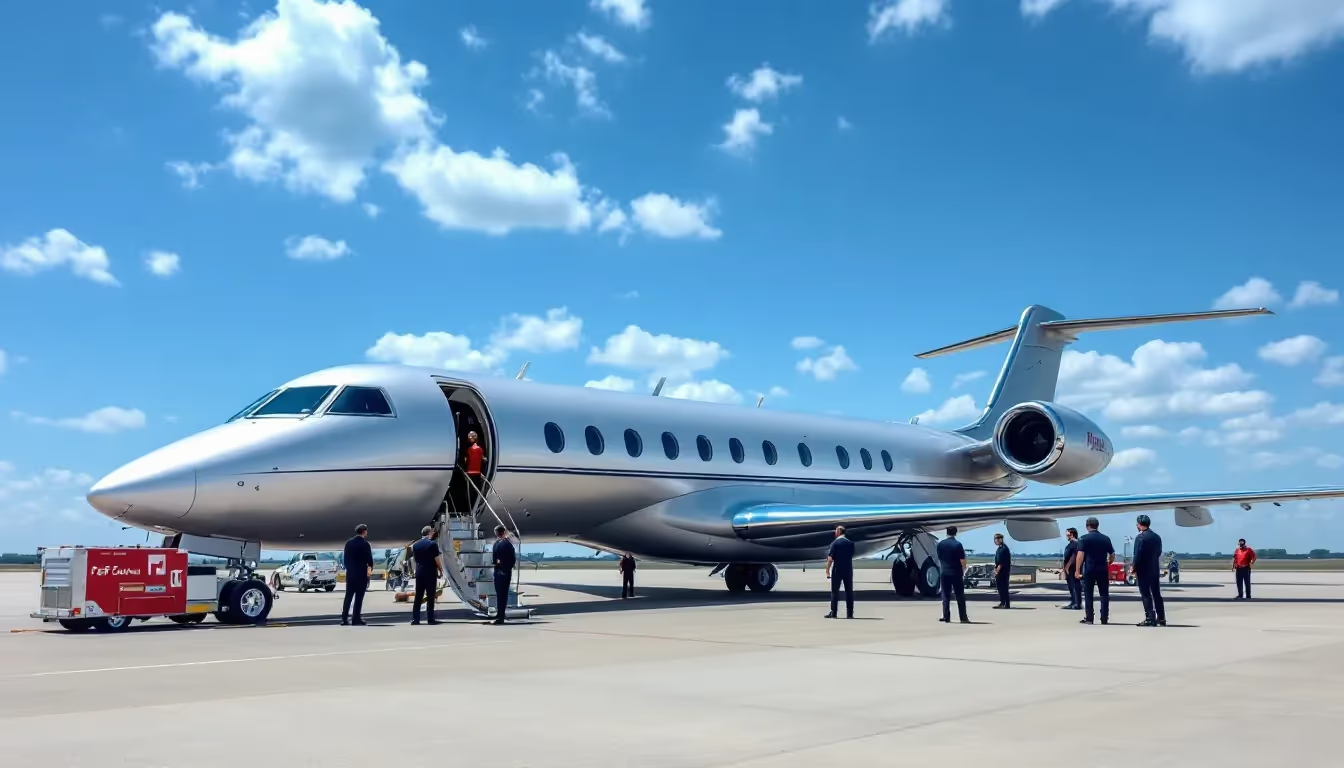
When it comes to transporting large groups in style, speed, and privacy, chartering a plane for 100 passengers offers an unmatched experience. Whether for corporate events, entertainment tours, or diplomatic missions, understanding the costs and benefits of these ultra-luxury private jets is essential. Turboprop charters, which are powered by two turbine propeller engines and typically seat six to eight passengers, start at around $2,000 an hour, while heavy jets can cost closer to $10,000 an hour, providing a range of options for different budgets and needs. For shorter day trips, Very Light Jets (VLJs) are an option, accommodating 3 to 4 passengers for about 3 hours.
If you're wondering about charter flight costs and specifically asking, "How much does it cost to charter a plane for 100 passengers?", this guide will answer your questions by breaking down the key factors that influence pricing. For 100 passengers, a large charter aircraft, such as a regional airliner, is typically required. For example, a three-hour flight on a plane that costs $15,000 per hour would have a base fare of $45,000.
This guide dives deep into what drives the pricing, the types of aircraft available, and the strategic advantages of flying private with a large group. Platforms like online booking systems can streamline the process, making it easier for clients to arrange their private jet charters. Travelers can request additional concierge services when flying privately to enhance their experience. Get ready to discover how private aviation can transform your travel from ordinary to extraordinary.
Key Takeaways
Charter planes for 100 passengers typically cost $18,000-$35,000 per flight hour, with VIP airliners like Boeing Business Jets and Airbus Corporate Jets leading the market
Total charter costs range from $180,000-$500,000 for transcontinental flights, depending on aircraft type, route distance, and premium amenities
Large group charters offer 60-80% time savings versus commercial aviation while providing complete customization, enhanced security protocols, and direct access to 5,000+ airports worldwide
Strategic advantages include confidential business meetings, team building efficiency, seamless logistics for corporate events, entertainment tours, and diplomatic missions
Potential cost savings can be achieved by booking in advance, optimizing routes, or selecting less congested airports, making large group charters more financially attractive compared to other travel options
Sustainable aviation fuel options and carbon offset programs are increasingly available for environmentally conscious organizations chartering 100-passenger aircraft
Crew overnight costs typically range from $200 to $600 per crew member per night, adding to the overall cost for extended trips
Monthly or seasonal demand peaks can influence charter prices similarly to the hotel industry.
When transporting 100 passengers requires more than commercial convenience, private aviation transforms from luxury to strategic necessity. For corporate entities managing large teams, entertainment industry professionals coordinating tours, or high net worth individuals organizing exclusive events, understanding charter plane 100 passengers cost becomes essential for informed decision-making. Standard catering is often included in charter prices, but high-end, customized catering adds significantly to the cost, offering tailored dining experiences for passengers. Private jet operators often provide customer support 24/7 to assist clients with their travel needs. An empty leg flight is a private jet flying without passengers to reposition the aircraft after dropping off its passengers, which can sometimes offer cost-saving opportunities for flexible travelers.
The economics of large group private jet travel extend far beyond simple hourly rates. While commercial flights may appear cost-effective per passenger, private jet charters for 100 passengers deliver unparalleled strategic advantages: direct access to over 5,000 airports worldwide versus 500 commercial destinations, elimination of connection delays, enhanced security protocols, and complete customization of travel experience.
Modern VIP airliners equipped with conference facilities, satellite connectivity, and luxury amenities enable productive travel that transforms flight time into strategic advantage. Whether coordinating a corporate acquisition, managing a entertainment tour, or facilitating diplomatic missions, charter flights for 100 passengers provide the privacy, flexibility, and efficiency that commercial aviation cannot match.
Understanding 100-Passenger Charter Plane Costs
The private jet charter cost for 100-passenger aircraft positions these services in the ultra-luxury VIP airliner segment, with hourly rates ranging from $18,000 to $35,000. The overall flight cost is determined by several factors, including aircraft type, flight distance, flight range, and additional services. Ultra Long-Range Jets are also designed for transporting large groups over long distances, typically accommodating 10+ people. Large Jets, which generally seat 10 or more passengers, are often used for transatlantic flights, offering comfort and efficiency for extended journeys. The age of the aircraft affects its rental rate, with newer aircraft typically costing more per hour than older ones. Billable flight time includes the total duration charged, covering both positioning and airborne time, which directly impacts the final price. The cost of a private jet is determined by the flight distance because longer flights consume more fuel. Aircraft repositioning fees may apply for a one-way trip if the operator needs to return the aircraft to its home base without passengers.
Boeing Business Jets (BBJ-737, BBJ-787) and Airbus Corporate Jets (ACJ319, ACJ320, ACJ330) dominate this market segment, offering transcontinental range with luxury configurations that rival five-star hotels. These aircraft types represent the pinnacle of private jet travel, featuring spacious cabins, meeting rooms, and amenities designed for extended flights with large groups. Flight range is a key consideration when selecting an aircraft, as it determines suitability for long-haul versus short trips and influences pricing.
Daily minimums typically require 3-4 flight hours, recognizing the substantial operational costs associated with deploying such sophisticated aircraft. Positioning costs, which cover ferry flights to reach your departure location, range from $25,000-$75,000 depending on aircraft location and routing requirements. Flight distance is a major determinant of overall cost, as longer distances increase fuel consumption and operational expenses. For example, a three-hour flight on a plane that costs $15,000 per hour would have a base fare of $45,000. Short leg fees apply to offset electrical burns during takeoff and landing due to maintenance schedules advancing with each flight.
The total cost structure extends beyond base hourly rates to include Federal Excise Tax (7.5% on domestic flights), international fees ranging from $2,000-$8,000, and mandatory crew expenses. Landing fees also apply and can vary significantly depending on the airport and aircraft size, ranging from $100 to $1,500 per flight. Fees such as landing fees, handling fees, and government taxes must also be considered when estimating private jet costs. Specific airports chosen affect fees, with larger international hubs typically having higher landing fees than smaller regional airfields. Additionally, ramp and handling fees charged by fixed-base operators can range between $100 and $500 per flight.
For organizations flying 200+ hours annually, charter costs become competitive with aircraft ownership, given aircraft purchase prices of $80-200 million plus annual operating expenses exceeding $15 million. Private jet rentals offer a flexible and cost-effective alternative to ownership, providing access to a diverse fleet and customized itineraries without the long-term commitment.
Private jet charter prices for 100-passenger operations reflect the premium nature of this service, where convenience, security, and customization justify the investment for high-stakes travel requirements.
Private Jet Rental: How It Differs from Chartering
When exploring private aviation for large groups, understanding the distinction between private jet rental and chartering is essential for making the right choice. While both options provide access to the luxury, privacy, and efficiency of private jets, they differ in structure, flexibility, and the level of control you have over your travel experience. Light Jets and Super Light Jets primarily vary in passenger capacity and size, offering options for smaller groups or shorter trips. Some private jet charter companies offer Jet Card programs for guaranteed availability, which can be particularly beneficial for frequent travelers or organizations with recurring travel needs.
Private jet rental typically refers to leasing an entire aircraft for a set period—ranging from a few hours to several days or even weeks. With private jet rental, you gain exclusive use of the jet, including the ability to customize your itinerary, select departure times, and enjoy tailored in-flight services. This option is ideal for those who need a jet for a specific trip or a series of flights, without the long-term commitment or responsibilities of ownership. Private jet rental costs are usually calculated based on the aircraft type, flight hours, and any additional services requested, such as catering or ground transportation.
Chartering a private jet, on the other hand, is a broader term that encompasses both short-term rentals and more complex arrangements. Private jet charter services are typically provided by specialized operators or brokers who manage a fleet of aircraft and offer on-demand access to a wide range of jet types. Chartering allows you to book a flight for a single journey, a round trip, or a multi-leg itinerary, with all operational details handled by the charter company. Shared charters allow multiple passengers to book seats on a single private jet flight, making private air travel more affordable. Midsize jets are designed for medium-length journeys and can carry up to 10 passengers for about 5 hours nonstop. Super Midsize Jets offer longer ranges and can typically carry up to 10 passengers as well, making them a versatile option for travelers seeking additional range and capacity.
The main differences between private jet rental and chartering come down to contractual structure and operational flexibility. Private jet rental may involve a direct lease agreement with the aircraft owner or operator, sometimes requiring more involvement in planning and logistics. Chartering, by contrast, is typically a turnkey service where the provider manages every aspect of the flight, from scheduling and crew to in-flight amenities and compliance with aviation regulations. Super Midsize jets are similar to Midsize but can travel farther and are generally allowed to carry more luggage and amenities, offering an enhanced experience for travelers with specific needs.
For large group travel—such as transporting 100 passengers—private jet charter is often the preferred solution. Charter operators have the expertise, resources, and access to larger aircraft types like VIP airliners, ensuring seamless coordination and compliance with safety standards. They also offer concierge services, flight attendants, and ground support tailored to the needs of large groups, making the experience as smooth and efficient as possible. For a one-way flight for about 50 passengers on a regional jet for 1.5 hours, the cost could range from $20,000 to $30,000. Travelers can save up to 75% on private flights if they take advantage of empty leg deals, which occur when an aircraft needs to return to its base or reposition for its next flight.
Ultimately, while both private jet rental and chartering grant you access to the world of private aviation, chartering offers greater convenience, comprehensive service, and peace of mind—especially for complex, large-scale travel requirements. By understanding these differences, you can select the private jet solution that best aligns with your travel goals, budget, and expectations for luxury and efficiency.
Aircraft Categories for 100-Passenger Charters
Boeing Business Jets: Transcontinental Luxury
Boeing Business Jets offer 737-based platforms with transcontinental range and customizable luxury configurations that redefine air charter services. The BBJ-737 provides up to 4,000 nautical mile range, enabling non-stop coast-to-coast flights with full passenger loads while maintaining fuel reserves for weather diversions.
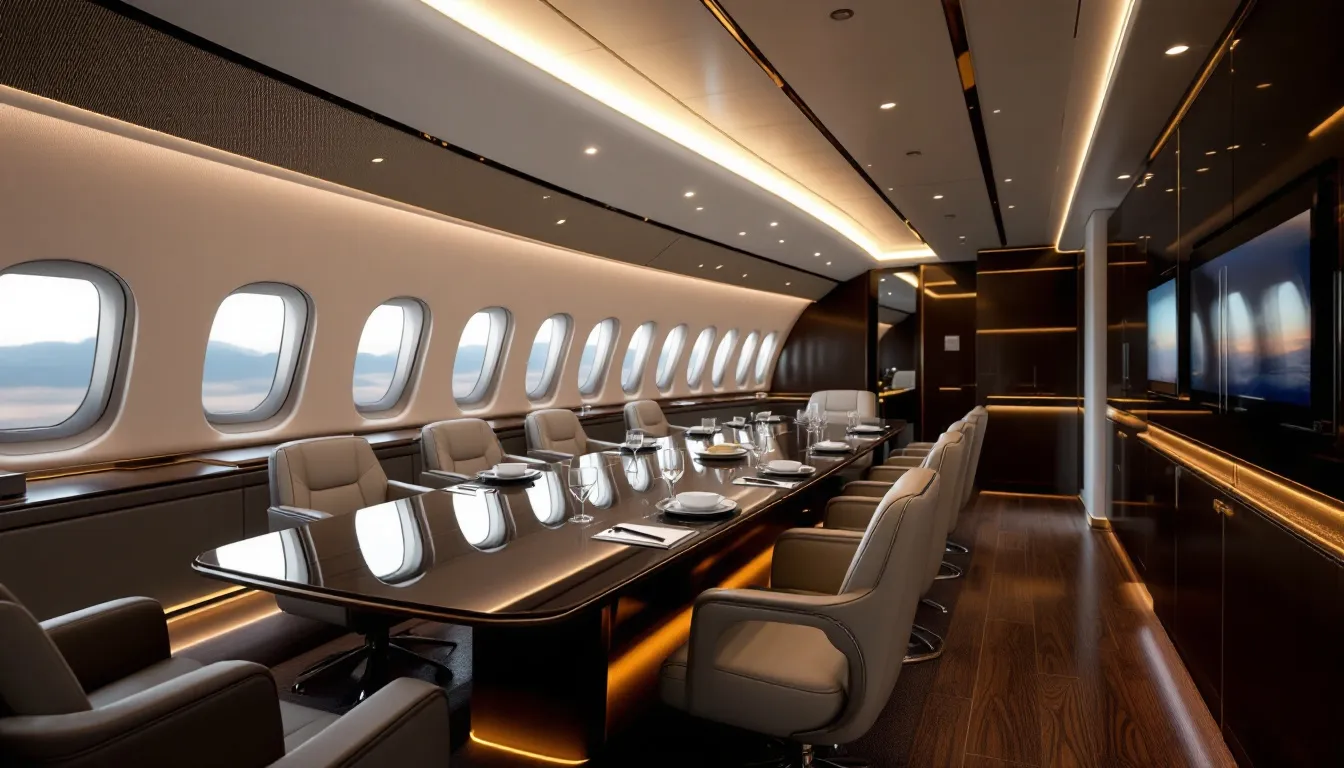
These aircraft feature spacious cabins with multiple zones including conference areas, dining rooms, and private offices. Advanced entertainment systems, satellite communications, and high-speed Wi-Fi enable productive meetings at 41,000 feet, transforming flight time into strategic advantage.
Airbus Corporate Jets: Advanced Technology Platform
Airbus Corporate Jets provide A319/A320 family aircraft with 6,000+ mile range and advanced avionics systems that represent the latest in private aviation technology. The ACJ320 offers superior fuel efficiency compared to older platforms, reducing operational costs while maintaining luxury standards.
These larger aircraft excel in ultra long range applications, with the ACJ330 capable of 13-hour non-stop flights enabling global connectivity without technical stops. Advanced cabin pressurization systems maintain sea-level comfort throughout extended flights, crucial for passenger well-being during long-distance travel.
Converted Commercial Airliners: Cost-Effective Solutions
Converted commercial airliners deliver cost-effective solutions for entertainment industry tours and large corporate events where luxury amenities take precedence over ultra-long range capability. These aircraft type modifications often feature concert-level sound systems, expanded galley facilities, and specialized cargo compartments for equipment transport.
The conversion process maintains all commercial aviation safety standards while adding private jet amenities including custom seating configurations, premium catering facilities, and enhanced ground transportation coordination capabilities.
Ultra Long Range Options: Global Connectivity
Ultra long range jets like the BBJ-787 and ACJ330 enable non-stop global connectivity for diplomatic and executive travel requiring intercontinental reach. These aircraft feature advanced fuel management systems, allowing 14+ hour flights with full passenger loads. Wi-Fi charges can range from $2 to $9 per megabyte, depending on the aircraft, providing essential connectivity for business and leisure travelers.
Each aircraft category offers distinct advantages in terms of range, cabin space, and operational capabilities for 100-passenger missions, enabling clients to select platforms optimized for specific mission requirements.
Strategic Advantages vs Commercial Aviation
Time Efficiency: Direct Global Access
Private jet travel delivers 60-80% time savings through direct flights to 5,000+ airports globally versus 500 commercial destinations, eliminating connections and delays that plague commercial aviation. Large groups can access smaller airports closer to final destinations, reducing ground transportation time and simplifying logistics.
Flight times become productive work sessions with secure communications, enabling confidential discussions impossible in commercial settings. The elimination of security lines, boarding delays, and baggage claim procedures can save 4-6 hours per round trip for large groups.
Security Protocols: Enhanced Protection
Enhanced passenger screening, confidential passenger manifests, and controlled airport access provide security advantages crucial for sensitive travel. Private aviation facilities offer discrete check-in procedures and secure aircraft parking away from commercial terminals.
Background-checked crew members and vetted ground personnel provide additional security layers, while custom routing capabilities enable avoiding high-risk airspace or politically sensitive regions during international flights.
Customization Capabilities: Tailored Experience
Bespoke cabin configurations, meeting rooms, entertainment systems, and catering tailored to group requirements transform aircraft into mobile offices or entertainment venues. In flight entertainment options are also customizable to passenger preferences, further enhancing the overall experience. Custom meal planning accommodates dietary restrictions, cultural preferences, and specific timing requirements impossible with commercial catering.
Real-time itinerary modifications, weather routing alternatives, and multi-destination capabilities within single charter contracts provide operational flexibility that commercial aviation cannot match.
Operational Flexibility: Adaptive Scheduling
Real-time schedule adjustments accommodate changing business requirements, weather conditions, or operational priorities without rebooking penalties or seat availability constraints. Multi-city tours, extended ground stops, and custom departure times align perfectly with group requirements.
Privacy advantages enable confidential business discussions, team building activities, and proprietary information protection throughout flight operations, creating secure environments for sensitive corporate activities.
Comprehensive Cost Breakdown for 100-Passenger Charters
Base Charter Rates
VIP Airliner hourly rates range from $18,000-$25,000 for converted commercial aircraft featuring standard luxury amenities including premium seating, enhanced galleys, and entertainment systems. These rates are typically charged per billable flight hour, which includes all time the aircraft is in use for the client. These aircraft provide excellent value for groups prioritizing capacity over ultra-luxury configurations.
Boeing Business Jet rates command $22,000-$30,000 per hour, reflecting custom executive interiors, extended range capabilities, and advanced avionics systems. The premium pricing reflects sophisticated cabin management systems, satellite communications, and luxury amenities rivaling high-end hotels.
Airbus Corporate Jet rates range $25,000-$35,000 per hour, representing the pinnacle of private aviation with latest technology, superior fuel efficiency, and ultra-luxury configurations. These aircraft feature the most advanced environmental systems, entertainment platforms, and connectivity options available.
Seasonal pricing fluctuations during peak periods including December holidays and summer corporate events can increase private jet rental cost by 15-25%, reflecting increased demand and limited aircraft availability during high-traffic periods.
Mandatory Fees and Taxes
Federal Excise Tax applies 7.5% to all domestic US flight segments, adding $15,000-$25,000 to typical cross-country charters. This tax calculation applies to the base charter amount, making it a significant cost component for domestic travel.
International fees encompass $2,000-$8,000 covering landing permits, overflight permissions, customs clearance, and immigration processing. These fees vary significantly by destination, with some countries requiring substantial advance deposits for permit processing.
Segment fees total $4.50 per passenger per flight leg, adding $450 for domestic segments and $900 for round-trip journeys. While modest compared to total charter costs, these fees apply regardless of aircraft size or luxury level. For example, flights departing from or arriving in San Francisco may incur higher landing fees due to the airport's high-density status, which can further impact the total cost of a private jet charter.
Crew overnight expenses range $400-$800 per crew member per night for extended trips requiring hotel accommodations, meals, and ground transportation during layovers exceeding duty time limitations.
Operational Surcharges
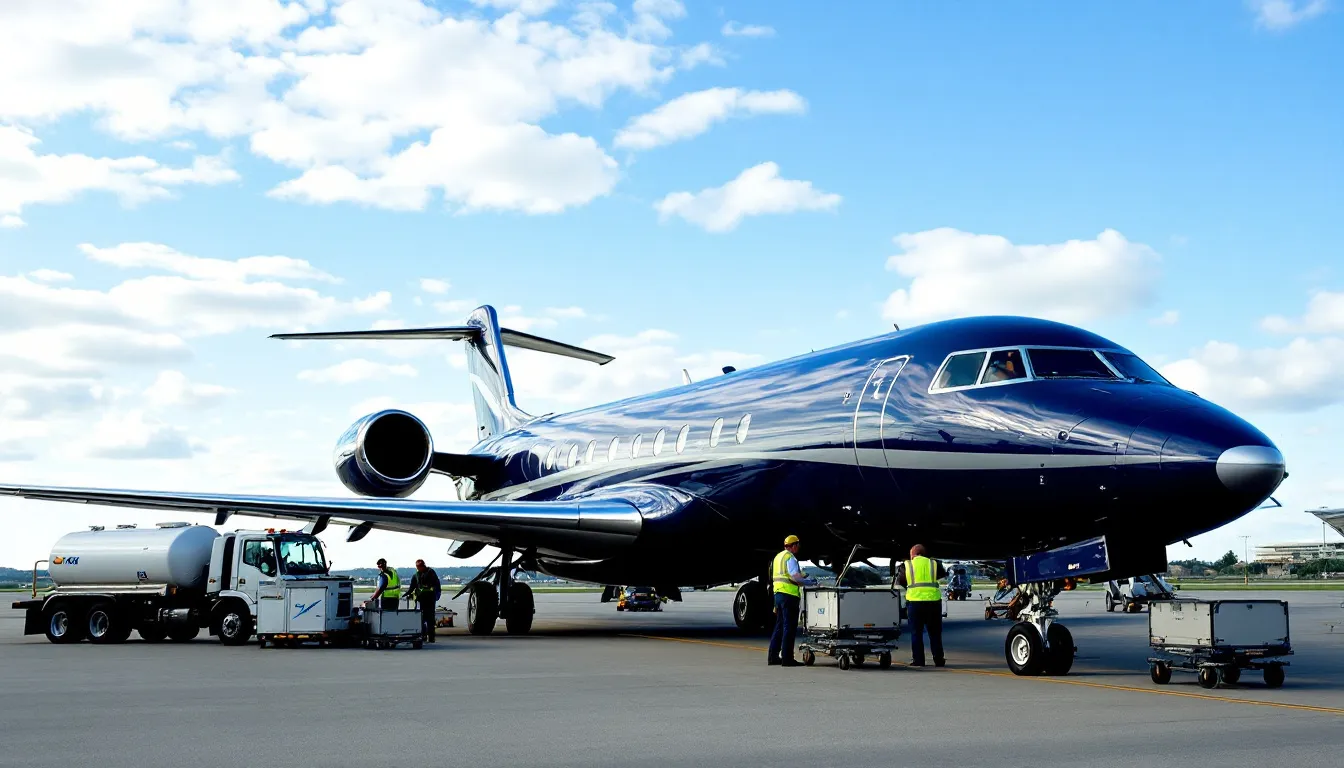
Fuel surcharges add $2,000-$4,000 per hour during periods of elevated jet fuel prices above baseline costs established in charter contracts. These surcharges protect operators from fuel price volatility while ensuring transparent pricing for clients.
Hangar fees range $2,000-$5,000 per day for weather protection in winter climates, preventing ice accumulation on aircraft surfaces that could delay departures or require expensive deicing procedures. Premium hangars offer heated facilities and maintenance support.
Deicing charges vary $8,000-$25,000 per application depending on aircraft size and weather severity conditions. Deicing is necessary to remove ice and snow from aircraft surfaces to ensure safe operations. Large aircraft require substantial deicing fluid quantities and specialized equipment, making winter operations costly.
Short leg fees apply when flight times fall below 3-hour daily minimums, recognizing the substantial costs of deploying large aircraft for brief flights. These airport fees ensure operators recover fixed costs regardless of actual flight duration.
Premium Services and Customization Options
Executive Catering and Hospitality
Gourmet catering services range $8,000-$15,000 for multi-course dining experiences serving 100 passengers, often featuring celebrity chef coordination and restaurant-quality meal preparation. Custom menu development accommodates cultural preferences, dietary restrictions, and special occasion requirements.
Premium beverage programs cost $2,000-$5,000, including champagne service, premium spirits, and specialized wine selections curated by professional sommeliers. These programs often feature rare vintages and limited-edition spirits unavailable through commercial channels.
Custom dietary accommodations ensure kosher, halal, vegan, and allergen-free meal preparation through certified catering partners meeting religious and medical requirements. Specialized preparation facilities and certified ingredients ensure compliance with strict dietary laws.
Live entertainment coordination ranges $10,000-$50,000 for professional performers, musicians, or speakers during flight segments, transforming aircraft into concert venues or conference centers at altitude.
Technology and Connectivity
High-speed Wi-Fi systems cost $3,000-$8,000 for unlimited broadband connectivity enabling video conferencing, streaming services, and real-time business communications throughout flights. Advanced satellite systems provide global coverage including oceanic routes.
Advanced entertainment systems range $5,000-$12,000 for individual seat screens, gaming systems, and premium audio equipment rivaling home theater installations. Custom programming and content libraries cater to passenger preferences and age groups.
Communication platforms include satellite phone services, secure messaging systems, and encrypted data transmission capabilities ensuring confidential business communications remain protected throughout international flights.
Presentation equipment encompasses conference room setups with projection systems, sound equipment, and lighting control enabling business meetings, training sessions, and presentations during flight operations.
Sample Charter Scenarios and Pricing
Corporate Annual Meeting Scenario
A multinational corporation chartering an ACJ320 from New York to London for their annual board meeting demonstrates typical corporate private jet charter costs. The 8-hour flight at $28,000 per hour totals $224,000, plus $12,000 in international fees for permits, customs, and immigration processing.
Additional services including secure communications, conference room setup, and executive catering add $25,000, bringing the total charter cost to $261,000. This investment enables confidential strategic discussions, eliminates commercial aviation delays, and positions the aircraft for immediate departure flexibility.
Entertainment Tour Charter
A major recording artist’s tour requires Los Angeles to Miami to Nashville routing using a BBJ-737 for the touring entourage. The multi-city tour spans 12 flight hours at $25,000 per hour, plus positioning costs and specialized equipment transport totaling $380,000.
Custom entertainment systems, enhanced catering for dietary requirements, and equipment cargo modifications justify the premium pricing while ensuring tour schedule reliability impossible with commercial aviation constraints.
Sports Team Charter
A professional sports team chartering from Chicago to Phoenix demonstrates cost-effective large group transport. The 4-hour flight on a converted airliner at $20,000 per hour, plus $8,000 for team meal catering, totals $88,000 for efficient playoff travel.
The charter eliminates commercial aviation scheduling constraints, provides recovery space for athletes, and ensures arrival timing optimal for competition preparation.
Diplomatic Mission Charter
A government delegation requiring Washington DC to Geneva transport via ACJ330 ultra long range demonstrates international charter complexity. The 8-hour flight at $32,000 per hour totals $256,000 plus enhanced security protocols and diplomatic clearances. For comparison, a group charter flight from Geneva to New York was quoted at €180,000 (roughly $190,000). The non-stop routing enables confidential diplomatic discussions while avoiding commercial aviation security concerns and scheduling limitations that could compromise sensitive negotiations.
The non-stop routing enables confidential diplomatic discussions while avoiding commercial aviation security concerns and scheduling limitations that could compromise sensitive negotiations.

Charter vs Ownership Economics
Aircraft Acquisition Analysis
Aircraft acquisition costs range $80-200 million for new VIP airliners, plus $15-25 million annual operating expenses including crew salaries, hangar fees, insurance, and maintenance programs. These fixed and variable expenses create substantial financial commitments regardless of utilization levels.
Private jet ownership costs include depreciation averaging 10-15% annually, plus regulatory compliance, certification maintenance, and crew training requirements that add millions in annual expenses before any flights occur.
Break-Even Calculations
Break-even analysis indicates ownership becomes cost-effective above 200 annual flight hours for large group transportation needs. Below this threshold, charter services provide access to identical aircraft without capital investment or operational complexity.
Utilization below 150 hours annually makes charter arrangements significantly more cost-effective, eliminating hangar fees, crew salaries, insurance premiums, and maintenance reserves required for aircraft ownership.
Fractional Ownership Programs
Fractional ownership programs offer 1/16 shares starting at $8-12 million, providing 50 annual flight hours with guaranteed availability and professional management. These programs eliminate operational complexity while ensuring aircraft access for regular large group requirements.
Jet Card Alternatives
Large group jet card programs offer fixed hourly rates and 48-hour booking guarantees for frequent charter users, providing cost predictability and simplified booking procedures. These programs often include fuel surcharge protection and guaranteed aircraft availability during peak periods.
The economic comparison between charter and ownership depends heavily on annual utilization, with charter providing superior flexibility for variable usage patterns while ownership suits organizations with predictable, high-volume requirements.
Safety Certification and Compliance Standards
Part 135 Certification Requirements
All legitimate charter operators must maintain Part 135 certification, ensuring rigorous FAA safety standards and regular auditing procedures. This certification requires comprehensive pilot training, aircraft maintenance programs, and operational procedures exceeding commercial aviation standards.
Part 135 operators undergo unannounced inspections, detailed record reviews, and performance monitoring ensuring consistent safety compliance. The certification process typically requires 18-24 months and substantial financial investment in training and equipment.
International Compliance Standards
International operations require compliance with ICAO standards, EASA regulations, and country-specific aviation authorities for global operations. Each destination country maintains unique requirements for permits, crew qualifications, and aircraft certifications.
Operators must maintain current certifications with multiple aviation authorities, requiring substantial administrative overhead and regulatory expertise to ensure compliance across diverse international requirements.
Enhanced Security Protocols
Enhanced security protocols include TSA compliance, background checks, and specialized screening procedures for large group charters. Crew members undergo regular background investigations and security training beyond standard commercial aviation requirements.
Security procedures encompass passenger manifest verification, luggage screening, and aircraft inspection protocols ensuring comprehensive protection throughout charter operations.
Maintenance and Training Standards
Maintenance programs exceed manufacturer recommendations with certified technicians and documented inspection schedules ensuring aircraft reliability. Progressive maintenance intervals and component replacement schedules maintain aircraft in peak operational condition.
Crew training standards require type-specific certification, recurrent training, and emergency procedure proficiency for 100-passenger operations. Training programs include simulator sessions, emergency response scenarios, and customer service protocols specific to luxury aviation.
Sustainability in Large Group Private Aviation
Sustainable Aviation Fuel Implementation
Sustainable Aviation Fuel (SAF) availability enables 70-80% carbon emission reductions compared to conventional jet fuel options. SAF production from renewable feedstocks including agricultural waste and algae provides immediate environmental benefits without aircraft modifications.
Leading airports now offer SAF availability for charter operations, though limited production capacity creates premium pricing of $12,000-$25,000 additional cost for transcontinental flights. This investment demonstrates environmental responsibility while supporting SAF industry development.
Carbon Offset Programs
Comprehensive carbon offset programs cost $8,000-$15,000 for typical transcontinental 100-passenger flights through verified environmental projects including reforestation, renewable energy development, and methane capture initiatives.
Third-party verification ensures offset programs deliver genuine environmental benefits, with detailed reporting demonstrating specific emission reductions achieved through charter-supported environmental projects.
Fuel Efficiency Improvements
Next-generation engines and aerodynamic enhancements reduce fuel consumption by 15-20% versus older aircraft platforms. Modern engine technology incorporates advanced materials and combustion systems optimizing efficiency across diverse flight profiles.
Route optimization technology minimizes flight distances and reduces environmental impact through advanced flight planning systems considering weather, air traffic, and fuel efficiency factors throughout flight planning processes.
Green Airport Initiatives
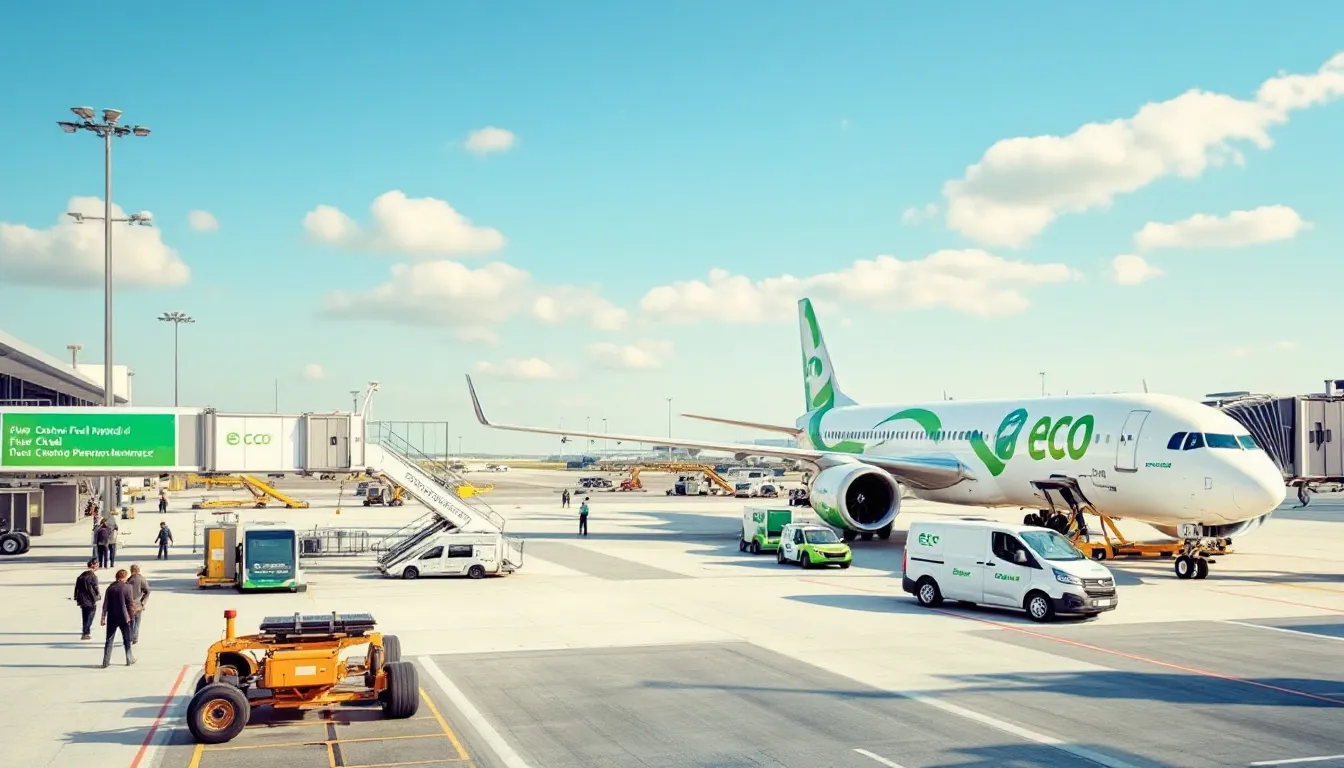
Sustainable ground operations support renewable energy usage and emission reduction programs at departure facilities. Modern FBOs invest in solar power, electric ground support equipment, and sustainable facility operations reducing charter operation environmental impact.
These initiatives encompass everything from electric aircraft tugs to renewable energy charging stations, creating comprehensive sustainability programs supporting environmentally conscious charter operations.
Booking Process and Lead Time Requirements
Advanced Booking Recommendations
Optimal aircraft availability and competitive private jet charter prices require 14-30 days advance booking for 100-passenger charters. This timeframe enables operators to position aircraft efficiently and coordinate crew scheduling while providing clients with comprehensive aircraft options.
Early booking also facilitates custom catering coordination, special accommodation arrangements, and international permit processing that require substantial lead times for optimal execution.
Quote Generation Process
Comprehensive proposals require 2-6 hours for generation, including aircraft options, routing alternatives, and service customization details. Professional charter brokers evaluate multiple aircraft options, compare routing efficiency, and coordinate with operators for accurate pricing.
Quote comparisons should include total costs, aircraft specifications, crew qualifications, and service inclusions enabling informed decision-making beyond simple hourly rate comparisons.
Contract Execution Timeline
Legal review and contract execution typically require 24-48 hours for deposit processing and final confirmation of charter arrangements. Professional review ensures contract terms protect client interests while establishing clear service expectations and cancellation policies.
Wire transfer processing and insurance verification add additional time requirements, making prompt contract execution crucial for securing desired aircraft and departure schedules.
Pre-Flight Coordination
Comprehensive pre-flight coordination requires 72 hours for passenger manifests, catering orders, ground transportation arrangements, and special accommodation requirements. International flights require additional time for permit processing and customs coordination.
Detailed passenger information, dietary requirements, and special requests enable operators to provide seamless service execution meeting exacting standards expected in luxury private aviation.
Last-Minute Availability
Emergency charter arrangements within 6-24 hours remain possible with premium pricing and limited aircraft selection for urgent requirements. Last-minute availability depends on aircraft positioning, crew duty time availability, and airport slot accessibility.
Premium rates for immediate availability often exceed standard charter costs by 25-50%, reflecting the operational complexity of rapid aircraft deployment and crew coordination.
FAQ
What factors most significantly impact charter plane costs for 100 passengers beyond the base hourly rate?
The most significant cost factors include positioning fees ($25,000-$75,000), international permits and customs fees ($2,000-$8,000), Federal Excise Tax (7.5% of charter cost), and seasonal demand surcharges (15-25% during peak periods). Fuel surcharges during high oil price periods can add $2,000-$4,000 per flight hour, while premium services like gourmet catering and high-speed Wi-Fi can add $15,000-$30,000 to total charter costs.
How do VIP airliners differ from traditional private jets in terms of capabilities and operational requirements?
VIP airliners feature substantially larger cabins with multiple zones including conference rooms, dining areas, and private offices, compared to traditional private jets designed for 8-19 passengers. They require specialized airports with longer runways (typically 7,000+ feet), certified crew with airliner type ratings, and enhanced maintenance facilities. Operational costs are proportionally higher due to fuel consumption, airport fees, and crew requirements, but they provide unique capabilities for large group transport that smaller aircraft cannot match.
What are the key differences between Boeing Business Jets and Airbus Corporate Jets for 100-passenger operations?
Boeing Business Jets typically offer proven 737 platform reliability with extensive customization options and global service network support, while Airbus Corporate Jets feature newer technology, superior fuel efficiency, and advanced cabin management systems. ACJ aircraft generally provide longer range capabilities (6,000+ nautical miles vs 4,000 for BBJ-737) and more spacious cabin cross-sections. Both platforms maintain identical safety standards, but differ in operational characteristics, range capabilities, and interior configuration flexibility. A large Boeing 747-400 could cost significantly more than a Boeing 737, reflecting its increased capacity and operational requirements.
How do charter operators ensure safety and compliance for 100-passenger operations?
Charter operators maintain Part 135 certification requiring rigorous FAA oversight, unannounced inspections, and comprehensive safety management systems. Pilots must hold airline transport pilot licenses with type ratings specific to large aircraft, plus recurrent training every six months. Aircraft undergo progressive maintenance inspections exceeding manufacturer requirements, with detailed logbook documentation and certified mechanic signatures. International operations require additional certifications from destination country aviation authorities and compliance with ICAO safety standards.
What sustainable aviation options are available for environmentally conscious organizations chartering 100-passenger aircraft?
Sustainable Aviation Fuel (SAF) is increasingly available at major airports, reducing carbon emissions by 70-80% with typical cost premiums of $12,000-$25,000 for transcontinental flights. Verified carbon offset programs cost $8,000-$15,000 per transcontinental flight, supporting reforestation, renewable energy, and methane capture projects. Modern aircraft feature 15-20% improved fuel efficiency compared to older platforms, while route optimization technology minimizes flight distances. Some operators offer comprehensive sustainability packages combining SAF, offsets, and efficient operational procedures for maximum environmental responsibility.
Conclusion
Chartering a plane for 100 passengers offers unparalleled luxury, efficiency, and customization that far surpass commercial flying, making it an ideal choice for large groups requiring privacy, flexibility, and time savings. While the charter plane 100 passengers cost may seem significant, the strategic benefits—including access to thousands of airports, enhanced security protocols, and bespoke services—justify the investment for corporate events, entertainment tours, and diplomatic missions. Additionally, options such as sustainable aviation fuel and carbon offset programs allow travelers to reduce their environmental impact while enjoying premium private air travel. Different categories of private jets range from Very Light Jets to Executive Airliners, with each category accommodating different passenger capacities and distances.
For those seeking reliable and transparent private jet charter service tailored to large group travel, BlackJet stands out as a trusted provider. With its extensive fleet of ultra long range jets, expert concierge services, and commitment to safety and customer satisfaction, BlackJet offers seamless booking experiences and competitive private jet rental prices. Whether chartering a private jet for business or leisure, BlackJet ensures every flight delivers comfort, efficiency, and exclusivity for 100-passenger charters and beyond.
Choosing to charter with BlackJet means partnering with one of the leading private jet companies in the industry, offering comprehensive support from initial inquiry to touchdown. Experience the advantages of flying privately with BlackJet and elevate your large group travel to new heights.


 Sign up with google
 Sign up with Apple