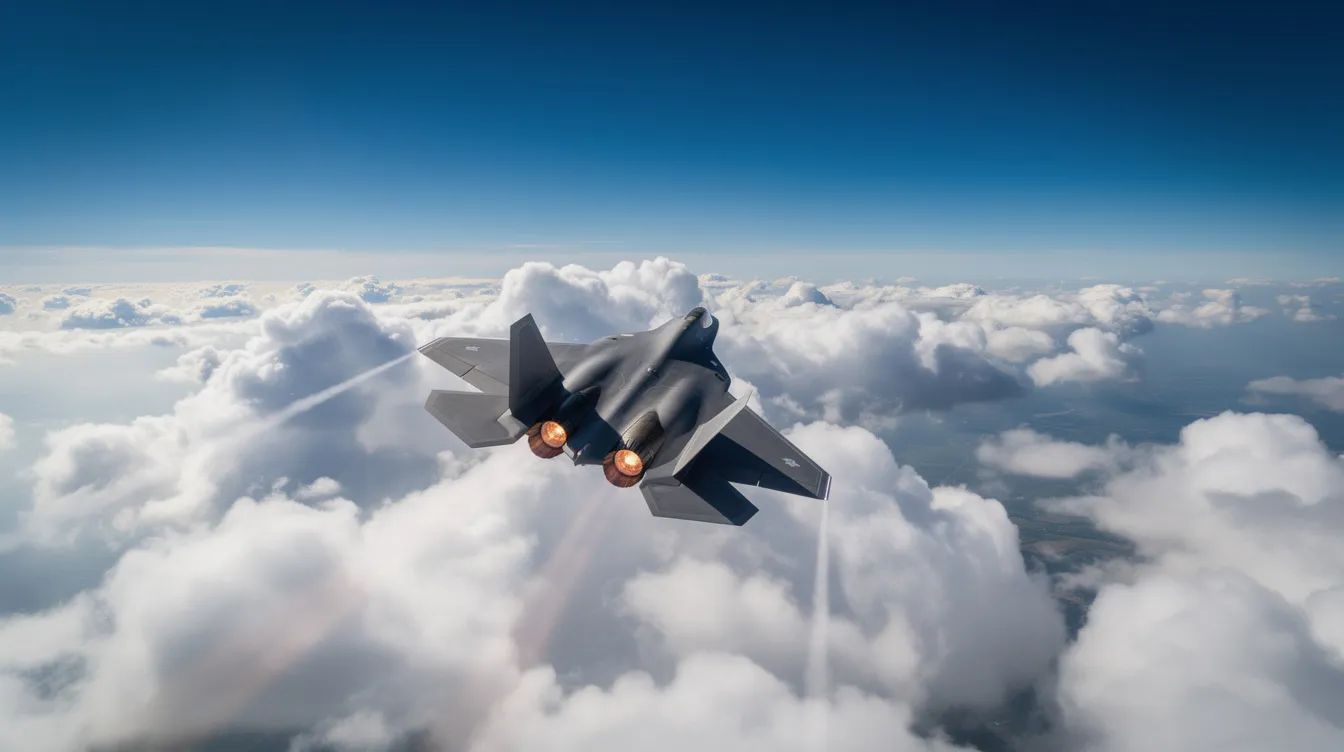
The fighter jets world in 2026 is defined by advanced stealth multirole aircraft such as the F-35 Lightning II, F-22 Raptor, China’s J-20, and Russia’s Su-57—platforms that anchor air superiority, influence global military strategy, and help keep international airspace stable for commerce and travel. For frequent international travelers, executives, and high-net-worth flyers who care about safety, flexibility, and aviation innovation, that military edge is not abstract: the same secure skies that support allied operations also strengthen the reliability of global private aviation. This look examines the leading fighter jet models, the stealth, sensor fusion, and combat systems that set them apart, the shift toward sixth-generation aircraft, and the ways military aerospace advances carry into business aviation—including how BlackJet’s Jet Card programs fit into a safer, more efficient private travel experience.
Why Fighter Jets Matter in Today's World (and Why Our Clients Care)
Fighter jets are vital for global military strategy and often shape the geopolitical balance of power. In 2026, the evidence is stark: China's PLAAF now fields an estimated 500 J-20 stealth fighters, Russia has delivered over 40 Su-57 "Felon" airframes into operational service, and the United States Air Force holds roughly 500 F-35A aircraft in its active inventory. The deployment of advanced fighter wings serves as a strategic signaling tool for deterrence—only a handful of nations can project this kind of capability.
Fighter jets combine speed, range, flexibility, and human judgment for rapid response to threats. Their missions are measured in minutes, their reach spans thousands of kilometers, and their ability to operate without dependence on commercial air routes makes them the backbone of airspace control. Stealth reduces an aircraft's detectability but does not make it impossible to detect—which is why engineering continues to push low observability further with every new aircraft generation.
Over 1,200 F-35s are expected to be delivered by mid-2026-making it the most widely fielded stealth aircraft in history.
For BlackJet's clientele—executives and high-net-worth travelers who operate internationally—this matters directly. The air dominance maintained by advanced air forces keeps the skies predictable and safe, enabling the private aviation infrastructure that underpins seamless global travel. Throughout this article, we explore fifth-generation fighter aircraft, sensor fusion, electronic warfare, and the emerging sixth-generation fighters reshaping the world of air combat.
How Modern Air Forces Achieve Air Superiority
Air superiority means dominance over adversarial air forces so that friendly ground and air operations can proceed. Air superiority ensures ground forces are not vulnerable to enemy bombardment—a lesson reinforced from the US Air Force achieving air supremacy in Desert Storm (1991) to the hard-fought, contested skies over Ukraine from 2022 onward.
Modern air combat involves integrated systems rather than just one fighter against another. A modern fighter's effectiveness depends on information from integrated systems like satellites, radars, and AWACS platforms. Advanced fighters gather battlefield intelligence and share it through networked data links, making every aircraft a node in a larger kill web. Modern fighter jets serve as high-speed, networked nodes in multi-domain military operations, connecting air, ground, sea, and space.
The United States leads frontline fighter numbers with approximately 1,791 fixed-wing fighters, followed by China (~1,443) and Russia (~861). Modern fighters are multi-role systems integrated into larger networks of sensors and shooters; multirole platforms, strike aircraft, and SEAD/DEAD specialists each fill specific roles within this architecture. Modern fighters function as networked information nodes contributing to air superiority, whether they fly from carriers, dispersed runways, or major air bases.
Side note: In contested airspace where adversary radars and missiles are networked, legacy 4th-generation jets relying on external weapons and older sensors are far more vulnerable. Fifth-generation stealth aircraft with internal bays and advanced avionics survive longer and strike first.
The Best Fighter Jets in the World in 2026
Rankings depend on mission requirements—air superiority, multirole flexibility, or cost-effectiveness—but the F-35 Lightning II is the best military jet in 2026 by most categories. It is designed for multirole capabilities, including air superiority, with a radar cross-section equivalent to a golf ball, making it extraordinarily difficult to track. The F-35 entered service with the USMC in July 2015 and now flies with over 20 air forces. It can reach a top speed of Mach 1.6 and carries a formidable weapons payload internally.
The F-22 Raptor remains the world's premier air superiority platform, with a radar cross-section comparable to a marble, a top speed of Mach 2.25, and exceptional agility through thrust-vectoring. Only about 184 remain in active USAF service—it was never exported. The Chengdu J-20 has an estimated 250 units in active service with a combat radius of approximately 1,200 km, giving China a combat-proven stealth capability intended to challenge Western air dominance across the Pacific.
Russia's Su-57 Felon combines advanced stealth, supercruise at roughly Mach 1.3, and thrust vectoring; around 40–45 airframes have been delivered since it entered service in December 2020. Stealth fighters are designed to penetrate contested airspace with reduced radar signatures, and these four platforms represent the cutting edge.
Among 4.5-generation advanced fighters, the Eurofighter Typhoon offers supercruise, the Dassault Rafale brings the SPECTRA electronic warfare suite, and the Saab Gripen E/F provides affordability and dispersed operation capability. The F-15EX Eagle II and upgraded F-16V remain highly capable, with the F-15EX able to carry almost 30,000 lbs of weapons. Fighter jets can execute precision strike missions using advanced targeting technology, and the F/A-18E/F Super Hornet rounds out the top tier for carrier operations.
Scoring logic mirrors what defense analysts worldwide use: stealth, weapons payload, sensor sophistication, operational use, and export footprint. Israel, South Korea, Japan, and many allied nations operate these platforms, and the country that fields the most advanced fighters with robust training and logistics holds a decisive edge.
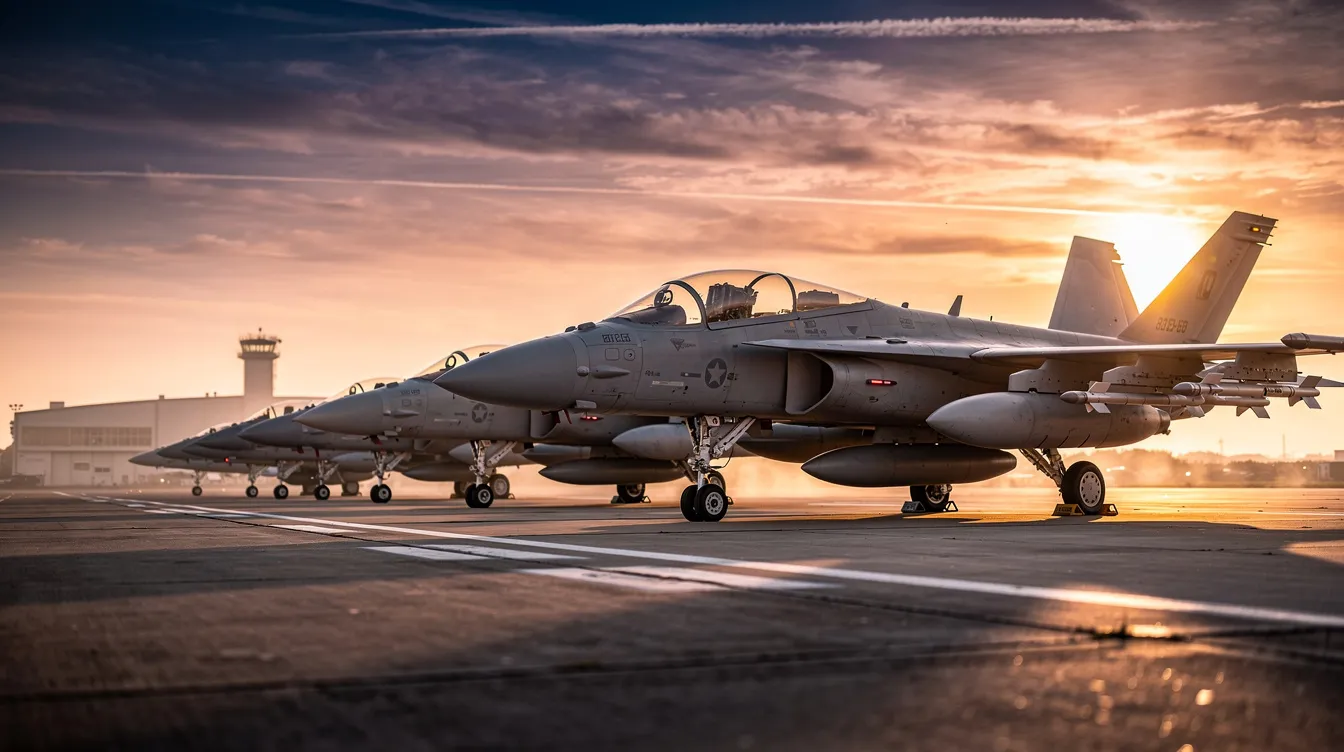
Inside the F-35 Lightning II: Sensor Fusion and Networked Warfare
What sets the F-35 Lightning II apart is its fusion of every sensor into a single tactical picture. The F-35's AN/APG-81 radar provides long-range detection capabilities, while the Distributed Aperture System (DAS) offers 360-degree infrared coverage and missile warning. Sensor fusion and electronic warfare capabilities are critical in modern air power dynamics, and the F-35 exemplifies this by combining radar, infrared, electronic warfare suites, and datalink inputs so the pilot sees one unified battlespace—not separate readouts.
The aircraft's electronic warfare suites suppress and jam enemy systems. Advanced fighters improve operational capabilities through sophisticated radar and electronic systems, and the F-35's ability to function as both a sensor platform and a shooter gives it unmatched versatility. The F-35 Block 4 upgrades enhance its combat capabilities significantly, expanding long-range weapons integration, processing power, and electronic attack throughput.
Three variants serve different operational profiles: the F-35A (conventional takeoff for air force use), F-35B (short-takeoff/vertical-landing for Marines and allied navies), and F-35C (carrier variant with larger wings for naval operation). In NATO exercises over the North Sea, F-35s have repeatedly detected threat aircraft and missile launches beyond the horizon—minutes before any visual contact-demonstrating the "see first, shoot first" advantage that defines modern air combat.
F-35 production is expected to reach 1,200 aircraft by 2026, and the software-defined avionics architecture pioneered in this jet directly influences fly-by-wire systems, advanced diagnostics, and safety redundancy in modern business jets—including those in BlackJet's network.
Other Iconic Fighter Jets: Eurofighter Typhoon, Rafale, Gripen and More
The Eurofighter Typhoon emerged from 1990s European collaboration as an air superiority fighter that has evolved into a true swing-role platform. It can supercruise at Mach 1.5 fully loaded—without afterburner—and continuous upgrades, including the ECRS Mk2 AESA radar and enhanced electronic warfare,e keep it relevant against emerging threats. Operators span the UK, Germany, Italy, Spain, Saudi Arabia, Kuwait, and Qatar.
The Dassault Rafale is France's omnirole answer, with the SPECTRA suite providing integrated detection of radar, infrared, and laser threats plus embedded jamming. Combat history in Libya (2011), the Sahel, and the Middle East makes it thoroughlcombat-provenen. Export customers include India, Egypt, and Indonesia. Electronic warfare fighters like the Rafale jam enemy radar and disrupt communications for defense operations, and its reconnaissance and strike versatility make it a pilot favorite.
The Saab Gripen E/F prioritizes affordability and dispersed basing—capable of operating from short highway strips with minimal ground support. Its modern AESA radar and electronic warfare suite appeal to smaller nations seeking high-speed performance without prohibitive unit cost. Meanwhile, the F-15EX Eagle II carries a history of air-to-air dominance into a modernized airframe with enormous payload capacity and high sortie rates. The upgraded F-16V Block 70 adds AESA radar and advanced avionics to a proven design, keeping this multirole fighter relevant well into the 2030s.
Fifth-Generation vs Sixth-Generation Fighters
Fifth-generation fighter jets use stealth shapes and special skin materials to hide from enemy radar. They prioritize stealth and sensor fusion technology, featuring internal weapons bays, advanced electronic warfare, and in some cases supercruise. The F-35, F-22, J-20, and Su-57 define this generation. Fifth-generation fighters utilize advanced sensor fusion to aggregate battlefield data, turning each airframe into a node that feeds and draws from a shared tactical network.
Sixth generation fighters remain developmental but are advancing rapidly. The UK-Italy-Japan GCAP program received a £4.6 billion contract in July 2026 for its concept phase, targeting entry around 2035. The European FCAS program (France-Germany-Spain) has faced governance delays and partial reorientation, while the US NGAD program continues funding under classification. Expected features include adaptive cycle engines, AI-assisted cockpits, loyal wingman drones, and directed energy weapons.
These development programs signal where air combat is heading—and the materials science, modular software, and propulsion engineering they pioneer will gradually enter service in civilian aircraft, from lighter composites to more efficient engines.
Experimental Aircraft, Prototypes, and Testbeds
Experimental aircraft have always pushed the envelope—from the X-planes that broke the sound barrier to today's classified demonstrators tied to NGAD and GCAP. China has reportedly flown prototype new aircraft designated J-36 and J-50, and the United States has tested prototype loyal wingman drones alongside crewed fighters. These testbeds validate sensor fusion algorithms, adaptive engine cycles, and manned-unmanned teaming concepts that will define future air superiority doctrines.
In the business aviation world, prototypes similarly validate laminar flow wings, quieter engines, and sustainable fuels before they fly passengers-a parallel that benefits every jet in BlackJet's curated network.
From Fighter Jet Tech to Private Jet Comfort and Safety
Composites that reduce a military aircraft's radar cross section also make business jets lighter and more fuel-efficient. Fly-by-wire control systems, first developed for fighter jets, now provide envelope protection and turbulence damping in modern Gulfstream, Bombardier, and other long-range private charter jets. Advanced navigation suites descended from fighter cockpits power synthetic vision and enhanced collision avoidance on private aircraft.
Sensor-driven predictive maintenance monitors engine health in real time, flagging components before failure—echoes how fighter fleets maintain readiness. For BlackJet members, this translates into fewer delays, higher reliability, and the confidence that every flight benefits from decades of military-grade development.
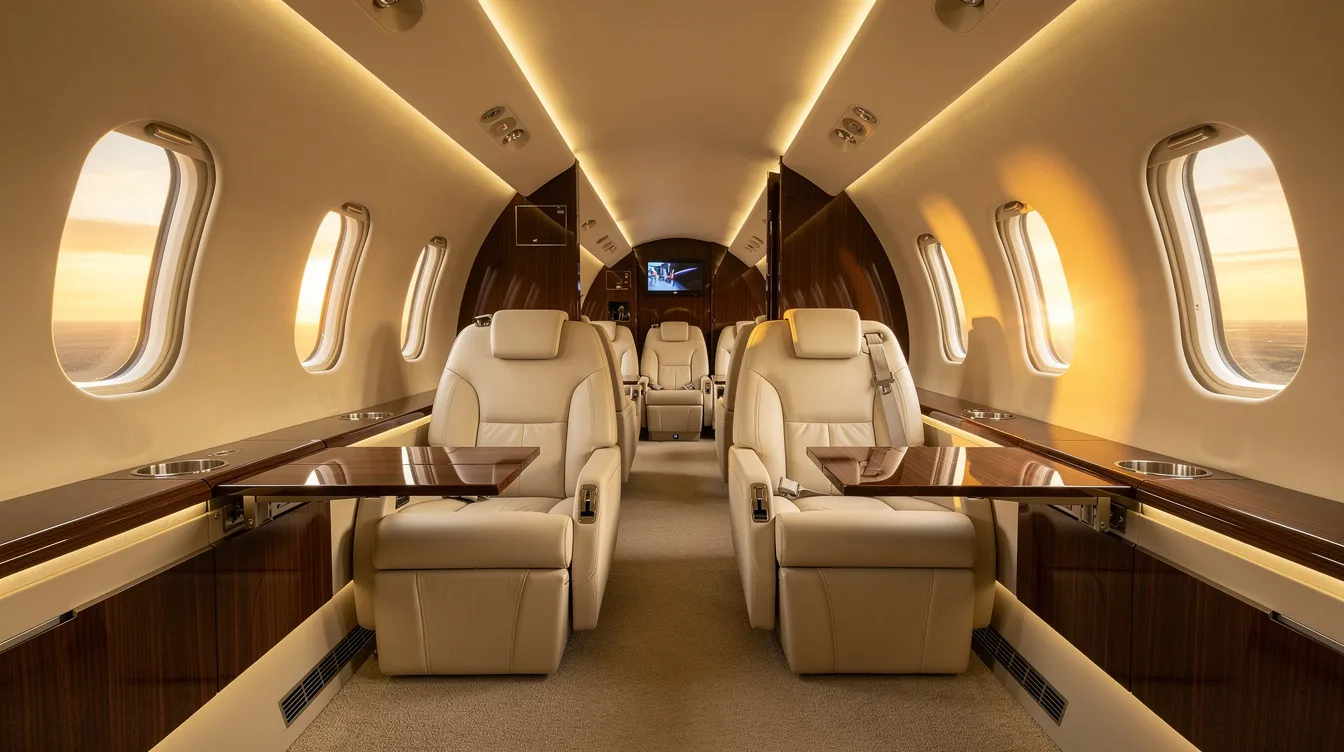
How BlackJet's Jet Card Programs Differ from Owning a Jet or Ad-Hoc Charter
Both fighter squadrons and private jet programs depend on precision, readiness, and safety—but they serve very different needs. A Jet Card from BlackJet gives you prepaid access to specific aircraft categories in 25-hour or 50-hour blocks, with fixed or capped hourly rates and priority availability.
Compared to full ownership (capital-intensive, management overhead) or one-off charter (variable pricing, uncertain availability), BlackJet's membership model offers a strategic middle ground: predictable cost, premium service, and a digital booking platform with 24/7 real-time flight support-analogous to how an air force operations center manages fighter sorties with precision scheduling.
Scenario: An executive flying New York to London to Riyadh in a single week can draw from a 50-hour Jet Card across large-cabin categories, adjusting aircraft type to route length—much like a military planner matching the right airframe to mission requirements.
Safety, Certification, and Electronic "Guardians" in Private Aviation
The disciplined safety culture of a modern air force fighter squadron finds its civilian counterpart in BlackJet's approach to operator vetting. Every operator in the network meets rigorous third-party standards-ARG/US and Wyvern-level audits—covering pilot training, maintenance protocols, and safety management systems.
Modern private jets carry electronic guardians: TCAS for traffic collision avoidance, Terrain Awareness Warning Systems, weather radar, and ADS-B-civilian cousins of the sensor fusion and electronic warfare suites on fighter jets. Under strong safety programs, private aviation maintains accident rates well below general aviation, making it a rational, controlled risk backed by proactive technology.
Sustainability: From Military R&D to Carbon-Neutral Private Flights
Military research into fuel-efficient engines, lighter airframes, and advanced aerodynamics eventually flows into civil aviation, reducing emissions per mile flown. While afterburning fighter jets consume fuel at extraordinary rates, the engineering breakthroughs they produce—adaptive engines, advanced composites—help make green private jets a reality.
BlackJet ensures every flight is carbon neutral through verified offset programs and investment in sustainable aviation fuel where available. The tons of CO₂ from a transatlantic private flight are calculated and neutralized through reforestation and renewable energy projects—built in as a standard, not an add-on.
FAQ: Fighter Jets vs Private Jets – What High-Net-Worth Travelers Ask
What is the best fighter jet in the world right now? Most experts in 2026 rank the F-35 Lightning II as the most capable overall, combining stealth, sensor fusion, and global reach. For pure air superiority, the F-22 Raptor remains unmatched in maneuverability and low observability.
Can civilians ever fly in frontline fighter jets? Operational fighter aircraft like the F-35, Rafale, and Eurofighter Typhoon are restricted to military pilot use. Civilians can fly in demilitarized trainers or ex-military aircraft under strict regulation.
How does flying in a fighter jet compare to a private jet cabin? Fighter cockpits are cramped, designed for high-G maneuvers with limited endurance and no amenities. Private jets offer pressurized, quiet cabins with spacious seating and tailored service.
Does fighter jet technology really make my private flights safer? Yes. Fly-by-wire controls, redundant avionics, composite materials, and predictive maintenance philosophies all originated in military aircraft and now underpin modern business jet safety.
How does a BlackJet Jet Card work day-to-day? You purchase a block of flight hours, select your aircraft category, and book via a digital platform with 24/7 support. Hours are used throughout the year with priority availability and predictable pricing.
Conclusion: Command of the Skies, Command of Your Time
Fighter jets secure air superiority through stealth, sensor fusion, and electronic warfare. The open, stable skies they maintain become a strategic advantage for individuals and businesses who travel privately. In 2026, the F-35 Lightning II embodies the cutting edge of combat aviation while sixth-generation fighters on the horizon continue driving innovation that benefits every aircraft in private fleets.
BlackJet's Jet Card programs channel that same philosophy—precision, readiness, and safety-into comfort, privacy, and efficiency for every journey. Explore how BlackJet can reshape your travel at blackjet.com.


 Sign up with google
 Sign up with Apple