How Proximity to Private Airports Influences Luxury Property Values
May 21, 2026
Daily private jet departures number in the tens of thousands worldwide, driving a trend where the ultrawealthy increasingly decouple their travel from commercial hubs and use bespoke aviation for their travel needs. Since high-net-worth individuals (HNWI) know that time is the only nonrenewable resource, proximity to a private runway is the ultimate tool for reclaiming it.
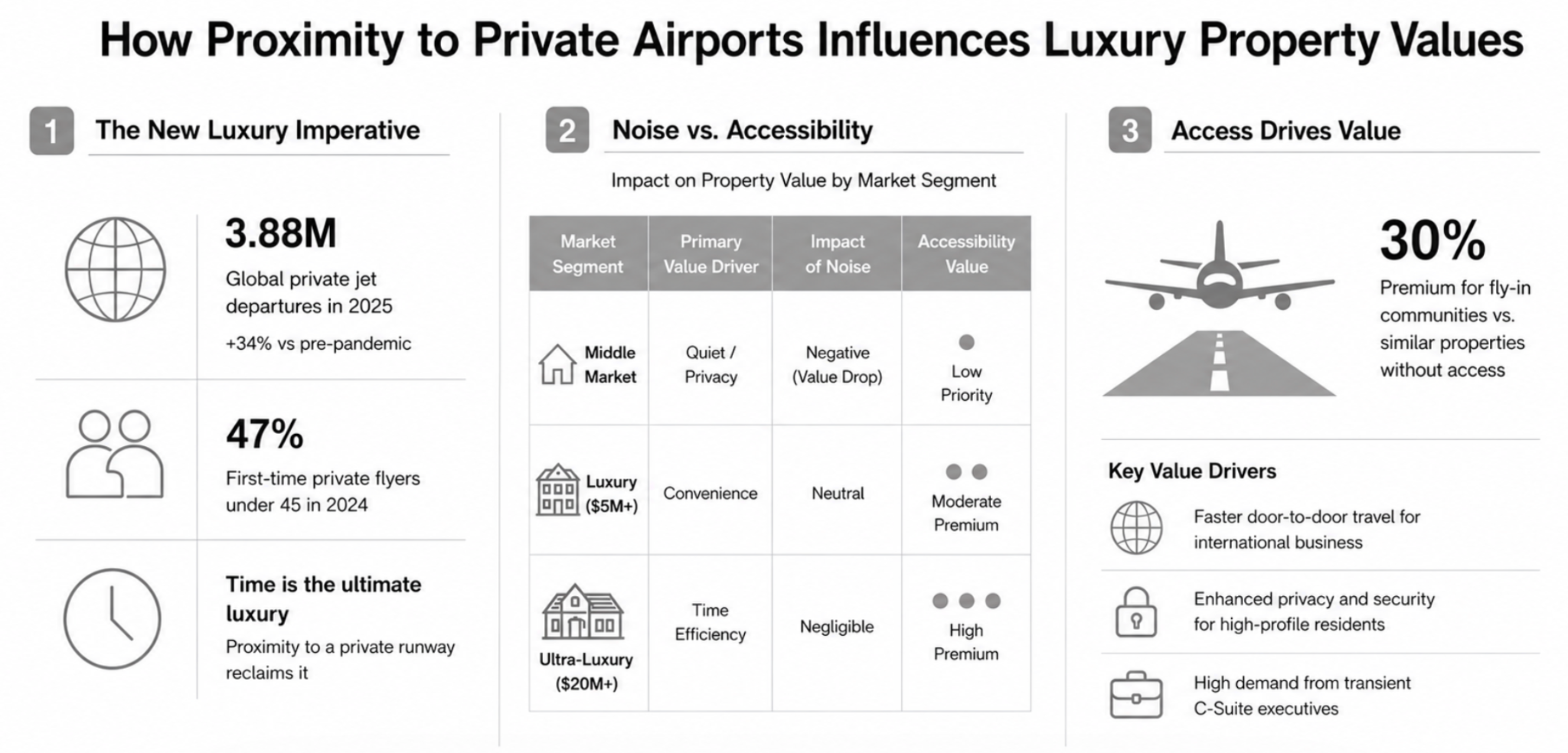
In this context, it should be no surprise that recent market data suggests that the presence of a private airport is a primary catalyst for property appreciation in elite enclaves. According to the Knight Frank Wealth Report, the ability to land a private jet near a residence is now a top-tier requirement for UHNWIs when selecting their third or fourth homes. Moreover, 47% of people who flew privately for the first time in the first quarter of 2026 were under 45 years old, representing a downshift in the age profile of the primary demographic for this form of transport.
Such a significant change in buyer preference has altered what was once considered a noise nuisance into a multimodal accessibility premium that defines the world's most exclusive ZIP codes.
BlackJet, a private jet card program operator, examines how access to private airports may influence luxury property demand and home values in high-end markets.
Analyzing the Impact of Access on Asset Valuation
While traditional real estate logic suggests that airport noise depresses home values, the luxury segment operates on distinct economic dynamics. In a 2025 National Bureau of Economic Research working paper, MIT researchers found that while standard residential markets may see a slight dip of 0.6% to 1% due to decibel levels, high-income buyers consistently prioritize the efficiency of a five-minute commute to their hangar over absolute silence.
This trend is particularly evident in gateway cities where business jet activity has surged. In 2025, global departures hit a record 3.88 million, per an analysis by WingX, representing a 34% increase over pre-COVID 19 pandemic levels.
The financial trade-off between noise and convenience has reached a tipping point. Research from MDPI Sustainability highlights that the accessibility offered by smaller, private airports often creates a price premium that far outweighs the perceived disamenity of aircraft noise. For a property in the $10 million plus category, being situated within the noise shadow of an executive airport is often less of a deterrent than being located an hour away from the nearest tarmac.
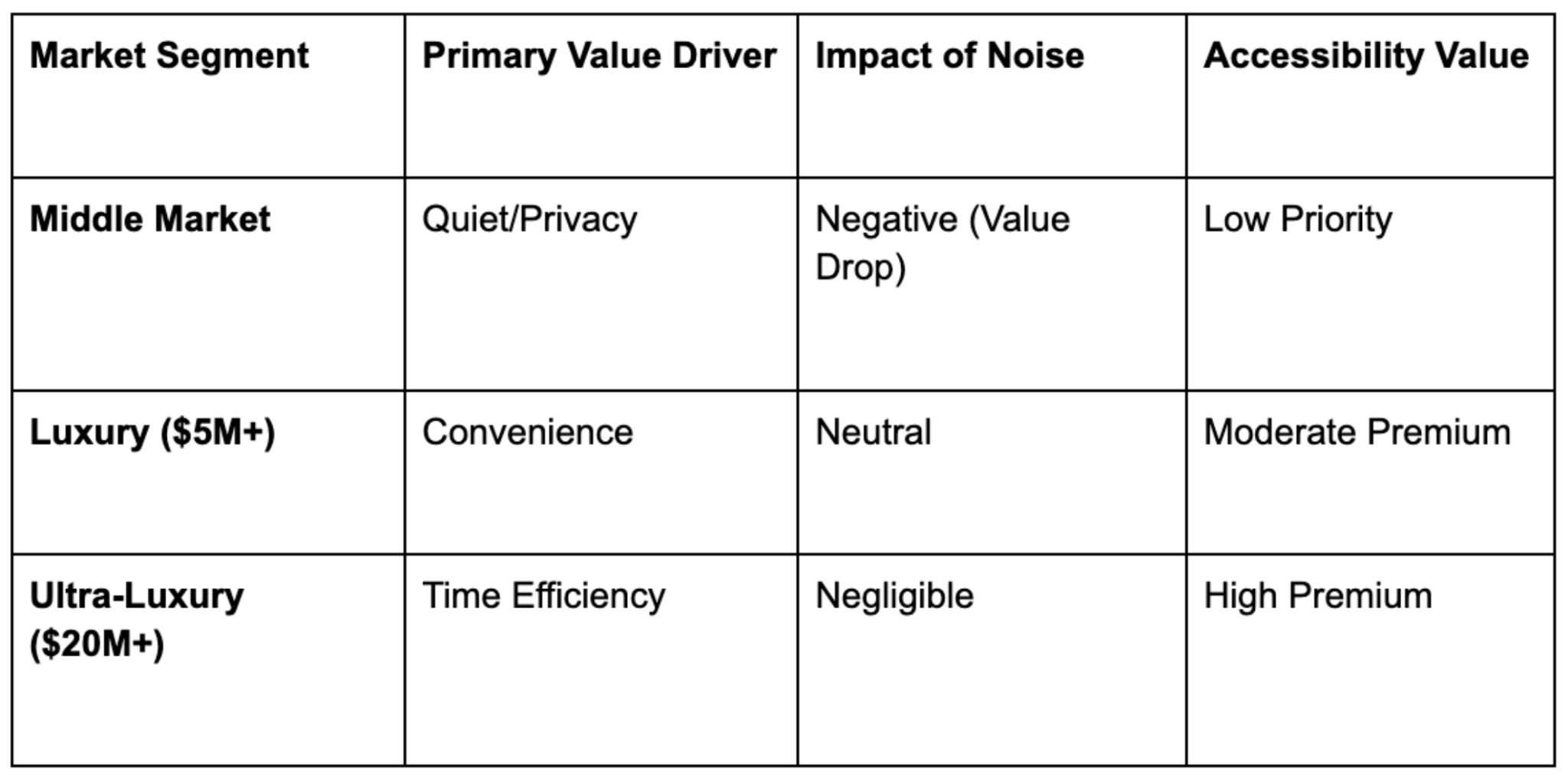
Comparing Noise Impact vs. Accessibility Premiums
The following table illustrates how proximity to private aviation infrastructure influences property sentiment and valuation across different wealth brackets.
Strategic Location and the PIRI 100 Index
The correlation between aviation hubs and real estate growth is most pronounced in Knight Frank’s Prime International Residential Index (PIRI 100). This index tracks the top luxury markets globally, and many of the highest performers have robust private aviation infrastructure.
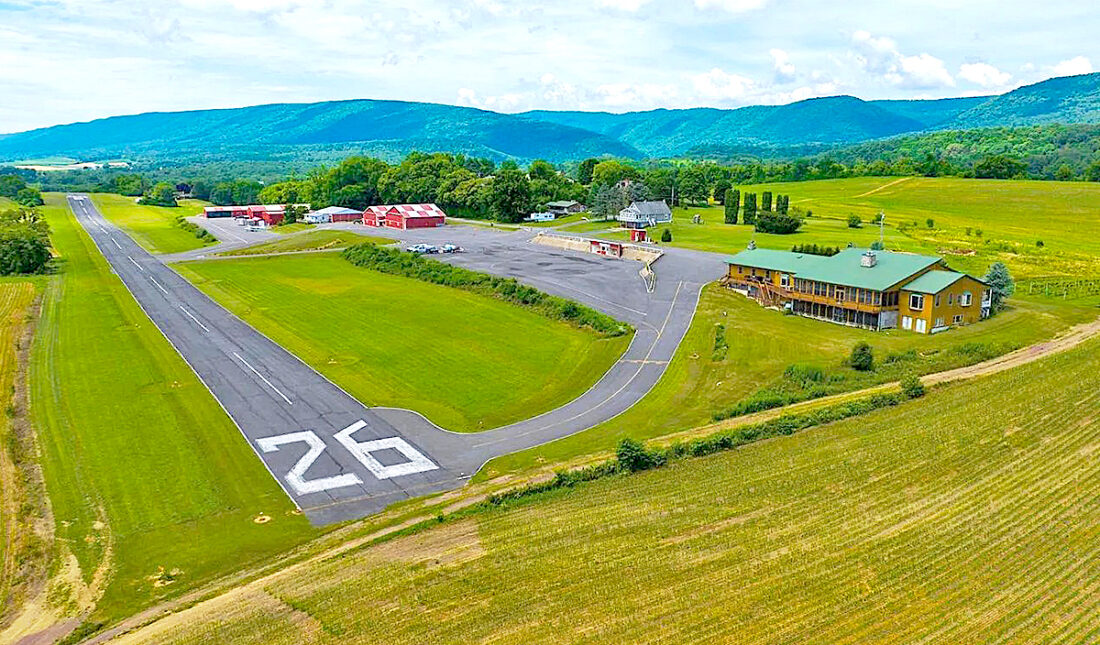
Investors and homeowners in these regions view the airport not as infrastructure, but as a gateway to liquidity and global connectivity. According to an analysis by Realtor.com, properties in fly-in communities are often priced at a 30% premium compared to similar homes in the same region without such access.
This valuation boost is driven by several factors:
Decreased "door-to-door" travel time for international business operations.
Enhanced privacy for high-profile residents, avoiding major commercial hubs.
Increased demand for short-term luxury rentals by transient C-Suite executives.
Future Outlook for Aviation Enclaves
As the business jet fleet continues to expand, the demand for residential proximity to runways will likely intensify. The access economy is fundamentally reshaping how luxury real estate is priced, moving away from simple aesthetic appeal toward functional utility for the global elite.
Sustainability concerns are also beginning to play a role in this valuation. Shared fleets and fractional ownership programs mean that aircraft are flying more hours than ever before. This high utilization rate ensures that the infrastructure surrounding these airports remains well-funded and modernized, further cementing the long-term value of the surrounding residential assets.
For the modern investor, the sound of a departing Gulfstream is no longer an annoyance. In the world's most exclusive ZIP codes, it is the sound of capital in motion.


 Sign up with google
 Sign up with Apple