The flight attendant career is one of the most sought-after roles in travel, blending safety expertise, hospitality precision, and the rare privilege of calling the sky your office. But earning those wings takes far more than enthusiasm. This guide walks you through every step required to become a flight attendant, whether your goal is a seat on a major U.S. airline or an elevated role aboard a private jet serving discerning travelers.
What "Flight Attendant" Means in 2026
In 2026, what it means to be a flight attendant has evolved well beyond beverage carts and boarding announcements. Today's cabin professionals are safety specialists first: trained to manage emergency procedures, operate emergency equipment, administer first aid, execute evacuations, and keep passengers safe at 35,000 feet. Service, while essential, comes second to that foundational responsibility. Flight attendants ensure passenger safety during flights, manage in-flight safety procedures and emergencies, and create memorable experiences for every person on board.
This article focuses primarily on how to become a flight attendant at major U.S. airlines, then contrasts that path with premium roles in private aviation-including positions on BlackJet-partner aircraft, where cabin crew serves jet card members who expect world-class discretion and hospitality.
The numbers confirm this is a career worth pursuing. The median annual wage for flight attendants was approximately $63,580 as of May 2025, with employment projected to grow 9% from 2025 to 2035-much faster than average-and roughly 18,500 openings expected each year. But competition is fierce. Becoming a flight attendant means navigating a rigorous flight attendant hiring process, completing intensive flight attendant training, and earning an FAA Certificate of Demonstrated Proficiency before you can carry a single passenger. Airlines and private operators alike look for three pillars: safety, professionalism, and service.
Step 1: Decide What Kind of Flight Attendant You Want to Become
Before you apply anywhere, plan and decide which environment suits your temperament and goals. The flight attendant position looks very different depending on where you fly.
Large U.S. carriers (American, Delta, United, Southwest, Alaska, Hawaiian): Structured hiring windows, formalized training centers, union governance, seniority-based scheduling, and domestic plus international flights across large teams of cabin crew.
Regional airlines (Horizon, Envoy, SkyWest): Often a feeder path into mainline carriers. Lower starting pay, shorter routes, but faster entry for some candidates.
Private aviation operators and jet card providers (e.g., BlackJet's partner fleet): The flight attendant role here includes elevated culinary skills, VIP service protocols, and the discretion required for high-net-worth travelers. Fewer passengers, but each one expects a bespoke, premier in-flight experience.
At a commercial airline, employment typically means union membership and a collective bargaining agreement that governs pay, scheduling, base assignment, and benefits. In private aviation, the emphasis shifts to personalized service, privacy, and flexibility-smaller cabins, more autonomy, and a closer connection to luxury travel like that of BlackJet's clientele.
Decide early: do you want high-volume passenger interaction and seniority-based routes, or a fast-paced environment with fewer guests and higher service expectations?
Step 2: Meet the Core Eligibility Requirements
Every airline publishes specific eligibility criteria. Here are the standards you should expect when applying during 2025–2027 hiring windows:
Age: To become a flight attendant, candidates must meet age and education requirements. Most U.S. majors require at least 21 years old by the start of training. Some regional airlines accept 18.
Education: Flight attendants typically require a high school diploma or GED. College coursework in hospitality, communications, or foreign languages gives a competitive edge.
Passport: Candidates must hold a valid passport with at least 12 months' validity and two consecutive blank pages at the time of application. A passport "in process" does not satisfy this requirement. Alaska Airlines, for example, requires crew to fly unrestricted in and out of all countries the airline serves.
Height and reach: Physical standards for flight attendants often include height and reach requirements. A common benchmark is a 76-inch vertical reach and a 43.5-inch horizontal reach without shoes. Flight attendants must be able to lift heavy objects-typically 50 pounds-into overhead bins. There is usually no strict weight requirement, though candidates must fit the jump seat harness safely.
Appearance and tattoos: Airlines enforce a tattoo policy. Visible tattoos must be smaller than a United badge, and tattoos on the face, neck, or hands are generally prohibited. A professional appearance and compliance with grooming standards are expected.
Language: Candidates usually need customer service experience, and multilingual skills can enhance career opportunities significantly. Speaking French, Japanese, Spanish, or Mandarin can qualify you for specialized "Language of Destination" positions on international flights.
Legal eligibility: You must be authorized to work in the U.S. and admissible to every country on the airline's route network. Any travel bans or criminal history blocking entry to the EU, UK, or Canada, for example, would disqualify a candidate. You must also pass a background check and drug screening.

Step 3: Understand the Flight Attendant Hiring Process
The hiring process from first application to base assignment can take months at large carriers. Airlines recruit flight attendants through direct applications rather than requiring prior flight attendant school-meaning you apply directly through an airline's portal, not through an independent academy.
Here is the typical sequence:
Online application and resume submission: Applications can take 1–2 hours to complete. Double-check every field, as most systems do not allow edits after you submit.
Online assessment: Situational judgment tests and customer service scenarios designed to evaluate how you think under pressure.
Recorded video interview: A "Meet Me" style recording, typically due within 72 hours.
Virtual group interview: Conducted within-flight leadership or recruiter panels
In-person interview / "Event Day": Held at the airline's training center. Expect reach tests, jump-seat demonstrations, group exercises, and scenario role-plays.
Leading airlines now use AI-supported screening in early stages, but final decisions rest with human recruiters and in-flight leaders. Candidates must clear a drug test, background check, and employment verification before receiving a conditional job offer. Candidates selected in current windows will begin training in 2027.
Set realistic expectations: the flight attendant position is in high demand, with thousands of applications per posting. Many airlines allow re-application only after 6–12 months. For private aviation and BlackJet-style operations, the process may be more direct-culinary tests, service roleplay, VIP-scenario evaluations-but equally rigorous on safety and background standards.
Step 4: Prepare a Standout Application
Airlines provide their own training programs for flight attendants once hired, so your application needs to prove you're worth that investment. Here's how to stand out during the application process:
Tailor your resume to the flight attendant job: highlight customer service, emergency response, hospitality, language skills, and any prior aviation or travel work. Candidates usually need customer service experience when applying.
Strong pre-aviation backgrounds include hotel front-desk management, luxury retail, cruise ship service, EMT certification, fine-dining leadership, or VIP concierge roles.
Best practices: Use a professional email and phone number. Answer questions about relocation, base flexibility, and schedule availability honestly. Keep your candidate profile updated.
Timing matters: Large carriers often open applications for limited windows-for example, a 2026 application window may open on a specific date for a 2027 training class. Apply as soon as the job is posted because the position may close once enough qualified candidates are in the pipeline.
Private jet roles: For private plane stewardess jobs and BlackJet partner positions, emphasize elevated service experience, familiarity with luxury brands, and comfort serving executives in small cabin settings.
Step 5: Ace the Interviews and Assessments
Airlines use the interview process to test how you think, communicate, and uphold safety and service values under pressure. Successful candidates demonstrate composure, empathy, and genuine motivation to become a flight attendant-not just a desire to fly for free.
Virtual interviews:
Treat video assessments like in-person training sessions: professional attire, neutral background, good lighting.
Answer questions using concrete examples-handling an upset customer, responding to a medical event, resolving a conflict with a coworker.
In-person "Event Day":
Expect reach tests, jump-seat demonstrations, group exercises, and scenario role-plays simulating real flights.
You'll be evaluated on teamwork, composure, communication, and professional appearance.
Language assessments: Some airlines test proficiency through on-the-spot conversation for bilingual or Language of Destination roles.
Private aviation assessments (including BlackJet-type environments):
Plan a sample in-flight menu for a jet card member traveling from New York to London.
Describe how you would personalize service, secure confidential materials, and anticipate client preferences.
Demonstrate understanding of confidentiality and discretion.
To handle nerves: practice mock interviews, record yourself to observe body language, and research each airline's culture and values. Show that your journey toward this career is intentional.
Step 6: Complete Flight Attendant Training and Demonstrate Proficiency
Flight attendant training is intensive. Training lasts 6 to 8 weeks for flight attendants-7 weeks at American Airlines, for instance-and covers everything you need to keep people alive at altitude.
Structure of initial training:
Classroom learning on FAA flight regulations, aircraft systems, and emergency procedures.
Hands-on drills for evacuations, firefighting, decompression, and medical events.
Water survival training in a pool with a life vest under lifeguard supervision.
Candidates must complete orientation on each specific aircraft type.
Training includes emergency procedures and safety protocols alongside service standards. Many airlines run training at dedicated campuses and provide housing and meals, though training is typically unpaid. Each training class starts with the understanding that this is all-or-nothing: failing required exams or professionalism standards can mean dismissal.
After successful completion, flight attendants receive a Certificate of Demonstrated Proficiency from the FAA after passing written tests, practical evaluations, and safety drills-the credential required to work on aircraft with 20+ seats. Before operating independently, trainees also spend time in practical, line-oriented flying alongside working crew. To learn more about this credential, see our guide on how to become a certified flight attendant.
For private jet and BlackJet partner flight attendants, training often includes additional courses in wine service, high-end cuisine handling, and personalized guest experience. Operator-specific safety training meets or exceeds commercial standards under Part 135 regulations, with recurrent training every 12–24 months.
Step 7: Base Assignment, Probation, and Life on Reserve
Base assignment is the first major lifestyle shift after training. At most U.S. airlines, new hires receive an assigned base during the third week of training-well before graduation day.
How it works:
Each new hire is given an assigned base that becomes the starting point for trips: Atlanta, Dallas–Fort Worth, Chicago, Las Vegas, Honolulu, or another hub, until seniority allows more flexibility.
Assignments depend on operational needs and class seniority. New hire flight attendants must be ready to relocate or commute, sometimes on short notice.
Reserve life:
Many new flight attendants begin on reserve-on call for same-day or next-day trips. Schedules are unpredictable, spanning evenings, weekends, and holidays. Flight attendants spend long periods away from home early in their career.
As crew members gain more seniority, they can bid for stable schedules and preferred routes. Transfer requests and base changes are awarded based on seniority under the collective bargaining agreement.
Probationary period:
New hires must complete a 6-month probation period. During this probationary period, attendance, performance, and professionalism are closely monitored. Tardiness or policy violations can result in dismissal.
In private aviation, cabin crew often have a domicile city but may operate globally. Schedules are built around longer-range trips for corporate and jet card clients, sometimes with more advance notice but consistently higher service expectations.
Step 8: Pay, Benefits, and Lifestyle Realities
The flight attendant career blends unique perks with demanding schedules and serious safety responsibilities. Here's what to expect.
Pay:
The median annual wage sits around $63,580, with the bottom 10% earning approximately $35,110 and the top 10% exceeding $136,430. For a deeper breakdown, see how much airline attendants get paid.
Pay grows with seniority, flight hours, and premium trips. Additional compensation includes per diem, holiday pay, international premiums, and override pay for language-qualified or lead roles.
Benefits:
Flight attendants enjoy free standby travel benefits-often standby travel for themselves and eligible dependents to dozens of countries. These travel privileges are among the most coveted perks in any industry.
Flight attendants can access competitive health insurance from day one.
Flight attendants can participate in a 401(k) retirement plan with company match.
Flight attendants can earn profit-sharing contributions based on company profits.
Lifestyle:
Flight attendants are responsible for serving food and beverages, managing safety, and de-escalating conflicts-all under time pressure. Irregular hours, hotel accommodation on overnight trips, and being away from home several nights per week are standard.
Early career means more short flights and reserve days. Later, seniority may unlock long-haul international layovers in London, Tokyo, or São Paulo. Flight attendants have opportunities for global travel and layovers throughout their career.
Private jet / BlackJet environment:
Fewer passengers but higher expectations around privacy and customization. Opportunities to serve jet card clients who travel frequently for business and leisure, often with more predictable, pre-arranged itineraries. For salary specifics in this sector, explore private jet stewardess salary insights.
Becoming a flight attendant is not just about glamorous travel. It means managing emergencies, ensuring compliance with flight regulations, and consistently delivering service regardless of sexual orientation, background, or personal circumstance-professionalism is non-negotiable.
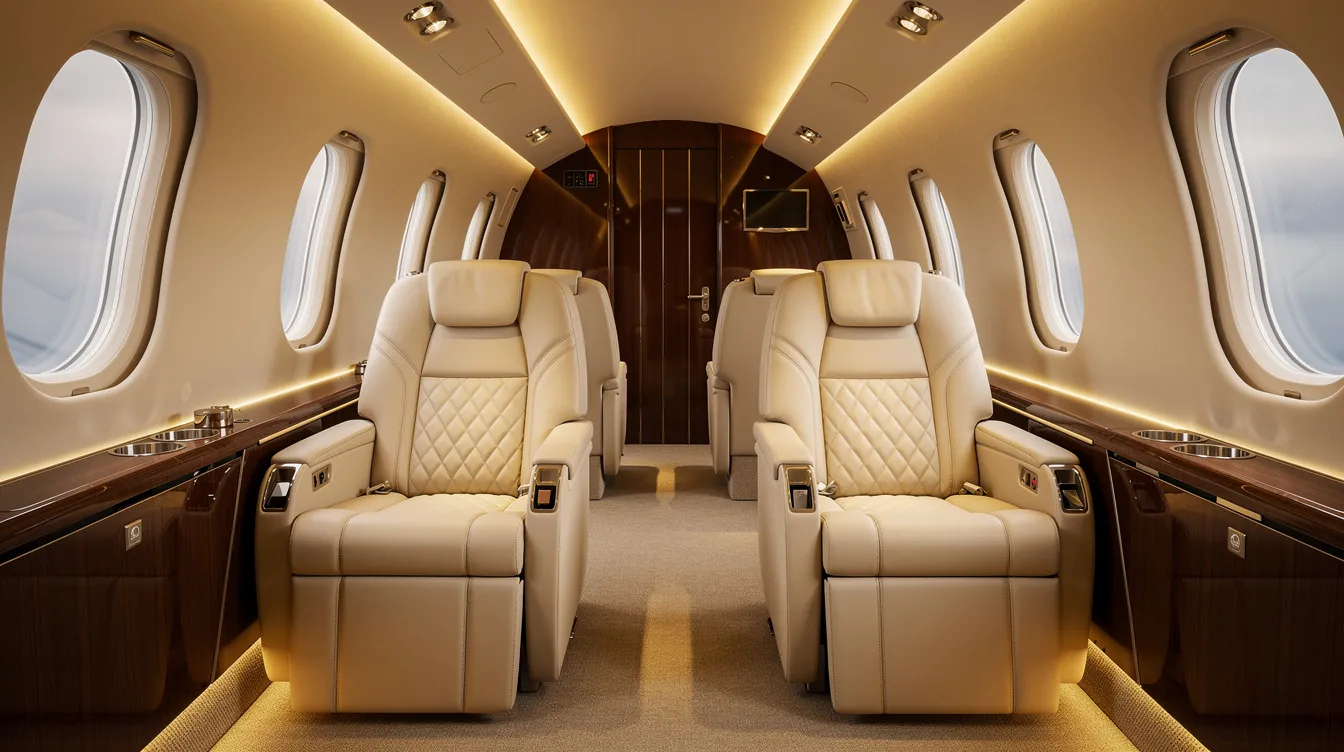
Commercial Airlines vs. Private Jets: Which Flight Path Fits You?
The same core skills can lead you to either commercial cabins or private jets, including roles on aircraft serving BlackJet jet card members.
Commercial airline focus:
Larger crews, standardized service routines, and clear union rules under a collective bargaining agreement. Career growth follows seniority into lead flight attendant, purser, trainer, or ground management roles.
Private jet focus:
Small or solo-attendant cabins where you handle everything from safety briefings to gourmet plating. Closer relationships with frequent travelers-families, executives, and jet card members-where anticipating preferences is crucial.
Safety and certification:
Sustainability and technology:
Leading private aviation brands, including BlackJet's sustainability program, now commit to carbon-neutral flights and use advanced booking platforms and real-time support tools. Technology also shapes airline work through digital manuals, mobile service devices, and electronic safety briefings.
Which path fits you? Consider whether you prefer structured, seniority-based career progression or a more entrepreneurial, service-intensive role where every flight is a bespoke production.
Long-Term Growth: From New Hire to Expert Cabin Professional
A flight attendant career can evolve dramatically over 5, 10, or 20 years. The first week feels overwhelming; a decade in, you may be leading entire cabin teams or shaping the next generation of crew.
Growth within airlines:
Progression from reserve to lineholder with real schedule control. Opportunities to become a purser or lead flight attendant, in-flight instructor, or base manager. Learn more about senior cabin roles and flight purser salary expectations.
Skills transfer:
Safety, first aid, de-escalation, and premium service experience make airline flight attendants strong candidates for private jet roles-and vice versa. Many private operators, including BlackJet's partners, seek cabin professionals with approximately three years of premium commercial cabin experience.
Re-application and resilience:
Many airlines allow candidates who were not selected to reapply after 6–12 months. Additional language skills, hospitality certifications, or service experience can improve outcomes for the next round.
How BlackJet fits the long-term picture:
Experienced cabin crew can transition into premium private aviation, serving BlackJet jet card members who expect top-tier safety, discretion, and hospitality. These roles reward the same discipline commercial airlines demand, layered with the autonomy and refinement that only private jet travel can offer.
Whether you're drawn to the structured progression of a commercial airline or the bespoke world of private aviation, the journey starts with one deliberate step. Successfully complete the process, and you'll join a profession that rewards persistence, precision, and genuine care for every person who steps aboard.
Elevate your travel-effortlessly. With BlackJet, private flight isn't reserved for a few. It's accessible on your terms through our Jet Card programs, complete with rigorous safety, carbon-neutral performance, and unmatched flexibility. Explore our offerings and discover how refined, meaningful travel becomes your new standard.


 Sign up with google
 Sign up with Apple