The Jetson ONE range is 11.02 miles (17.74 km) on a single charge in tested conditions, with about 20 minutes of flight time under optimal conditions. For anyone considering a personal eVTOL for short recreational flights—or simply comparing it with more traditional private aircraft—that number is the starting point for understanding what this machine can and cannot do.
The Jetson ONE has turned what once felt like science fiction into a real product you can buy, charge, and fly from your own property. But before you picture yourself cruising across state lines in a personal flying car, there is one number you need to understand: range. Here is exactly how far this pioneering eVTOL company's flagship machine can travel, what shapes that number in practice—from pilot weight and weather to charging, regulations, and onboard safety systems—and how its real-world use cases and technical specs compare with other personal aircraft and fit serious private aviation alongside.
Jetson ONE Range at a Glance
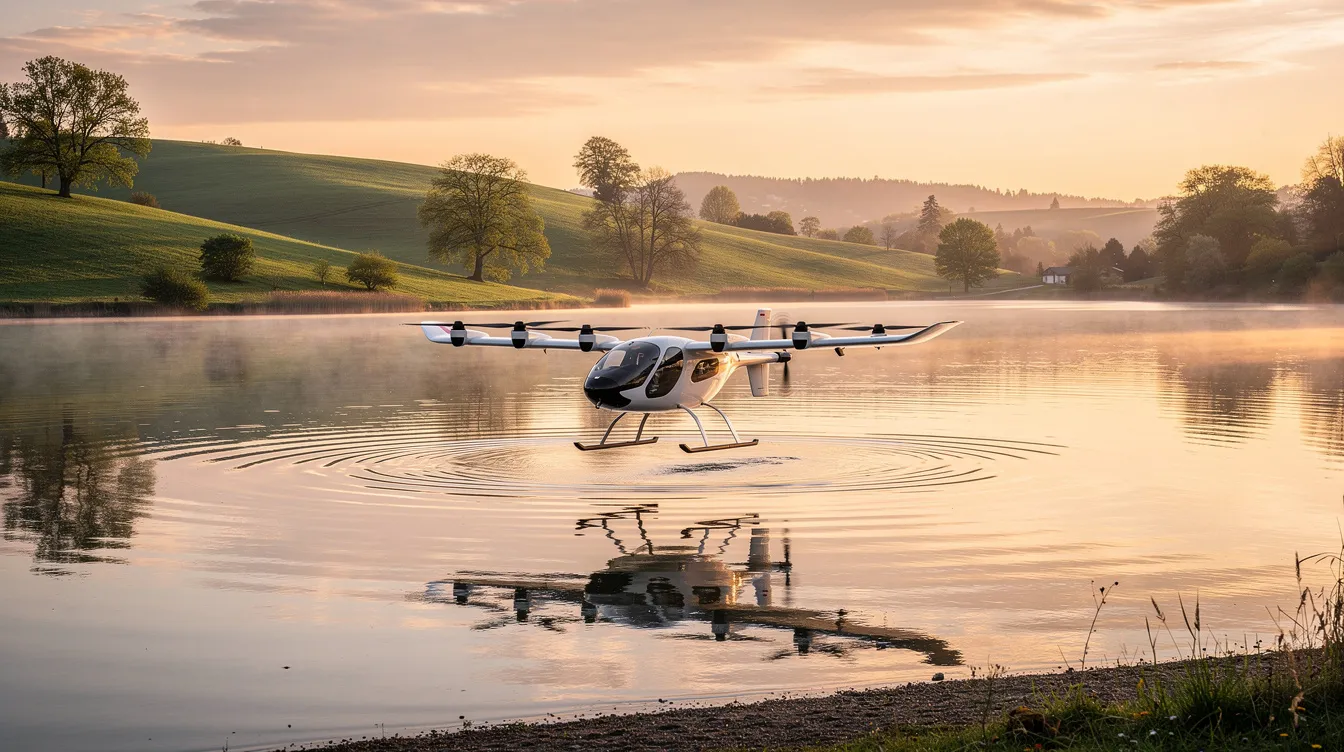
So how far can a Jetson ONE actually fly? In a dedicated range test, the aircraft covered 17.74 km (11.02 miles) on a single charge. That flight was conducted at a cruise speed of roughly 60 km h, at an altitude of approximately 730 ft above mean sea level, in calm weather with a pilot on board and safety reserves intact.
Here are the numbers that matter most:
Tested range: 11.02 miles (17.74 km) in optimal conditions
Flight time: approximately 20 minutes under ideal parameters
Test cruise speed: ~60 km h (37 mph)
Top speed: software-limited to 102 km h (roughly 63 mph)
Test altitude: ~730 ft MSL, out of ground effect
The Jetson ONE is designed to be fun and easy to fly—short, thrilling hops over private land, lakes, or coastline. Unlike a long-range private jet capable of covering thousands of miles nonstop, this single-seat ultralight exists for pure personal flight experiences measured in minutes, not hours.
What Determines Jetson ONE Range in the Real World?
Range on any electric personal aircraft is never a fixed number. It shifts with every variable in the environment and the cockpit. Understanding these factors is the difference between a confident flight and an anxious one.
Battery capacity vs. power draw: Vertical takeoff, hover, and aggressive acceleration consume far more energy than gentle, level cruise. A flight that is mostly cruise will stretch closer to the 11-mile mark; one with repeated hovering and climbing will not.
Pilot weight: The Jetson ONE has a maximum pilot weight of 95 kg (210 lbs). A lighter person piloting the aircraft uses less energy per minute of flight than someone at the limit. The Jetson ONE mass, including batteries, is 115 kg, so the total all-up weight scales directly with pilot mass.
Safety reserves: Prudent operators and many local regulations require landing with reserve power. Expect to use roughly 60–70% of the total battery energy for the actual mission.
Wind and temperature: Headwinds increase power draw dramatically. Extreme cold or heat reduces battery efficiency. Flying in California coastal conditions differs meaningfully from a high-altitude valley in the mountains.
Altitude: Higher density altitude means thinner air, which demands more power to maintain lift.
Consider two quick scenarios:
Calm summer evening, 80 kg pilot, moderate temperature: expect a real-world range of roughly 8–9 miles before mandatory reserves.
Windy afternoon with headwinds or high-altitude terrain: effective range may drop to 6–7 miles, especially if hover time is involved.
Plan conservatively. The tested 11.02-mile figure is a best-case benchmark, not a daily guarantee.
Jetson ONE Technical Specs That Influence Range
Jetson ONE range is a direct product of its electric powertrain and ultralight construction. Every gram and every watt matter when you are flying on batteries alone.
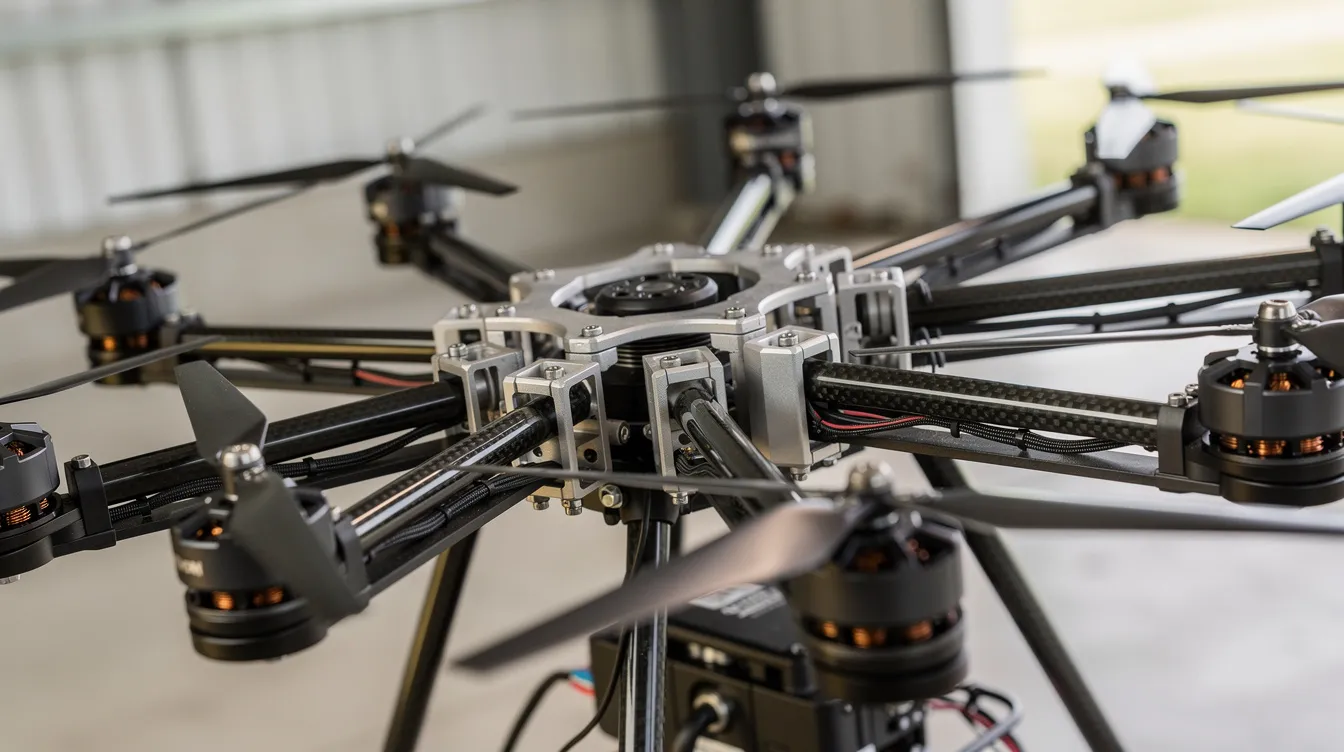
Propulsion: Eight electric motors driving eight propellers, with individual motors powering independent arms for redundancy
Frame: A lightweight aluminium and carbon fiber design built on an all-aluminium space airframe, keeping the empty mass to approximately 55 kg (121 lbs)
Loaded mass: Jetson ONE mass including batteries is 115 kg (253 lbs)
Dimensions: 2700 x 1600 x 1120 mm—roughly the footprint of a small apartment hallway, compact enough to store in a garage
Top speed: Limited to 102 km h (63 mph)
Flight time: Approximately 20 minutes under ideal conditions
Altitude ceiling: Up to 1,500 ft AGL; up to 10,000 ft MSL claimed
The carbon fiber safety cell and aluminium spaceframe keep structural weight minimal, so more of the battery's energy goes toward keeping you airborne rather than hauling the machine itself. But as a personal ultralight that must resemble drones in weight class under certain regulatory frameworks, battery size is constrained, and that constraint defines the ceiling on range.
Range, Use Cases, and Where the Jetson ONE Really Shines
An 11-mile range and 20-minute flight time sound modest until you match them to the right missions. The Jetson ONE was never meant to compete with a plane or helicopter for cross-country travel. It was built for fun, immediacy, and the visceral thrill of personal flight.
Ideal use cases include:
Recreational sorties: a 10–15 minute round-trip cruise over a ranch, vineyard, or lakeside estate
Training circuits: practicing takeoff, hover, and landing to build pilot competency
Scenic hops: low-altitude coastal rides or ridge-line tours where the experience matters more than the distance
Property inspection: visually checking fences, shorelines, or terrain without firing up a helicopter
Now compare that to a typical private jet range mission. A BlackJet charter from New York to Miami covers roughly 1,100 miles in under three hours. The Jetson ONE covers that same distance in approximately zero percent of one flight. These are entirely different machines for entirely different purposes-and that is precisely the point. Private jet travel is preferred for regional and international trips. The Jetson ONE is for the moments in between: pure, unfiltered personal flight.
Jetson ONE Range vs. Other Personal eVTOL and Personal Aircraft
As one of the first affordable eVTOL aircraft to reach serial production, the Jetson ONE occupies a unique position in the market. The company began manufacturing and delivering units while many competitors remain in prototype or concept stages.
Other eVTOL concepts claim 60–100+ miles of range, but most are unproven in real-world use and lack production certification. In an AAM industry white paper, the Jetson ONE is listed with an operational range with reserves of roughly 10 miles, honest and validated.
Battery-electric fixed-wing trainers achieve 60–90 minutes of endurance because wings generate lift efficiently. Vertical takeoff and hover-core to any aircraft that must ultralight resemble drones in operation—consume energy that fixed-wings simply do not.
Combustion-powered personal aircraft like a Cessna 172 can fly 200–600+ miles, but they require runways, fuel infrastructure, maintenance overhead, and special training to operate.
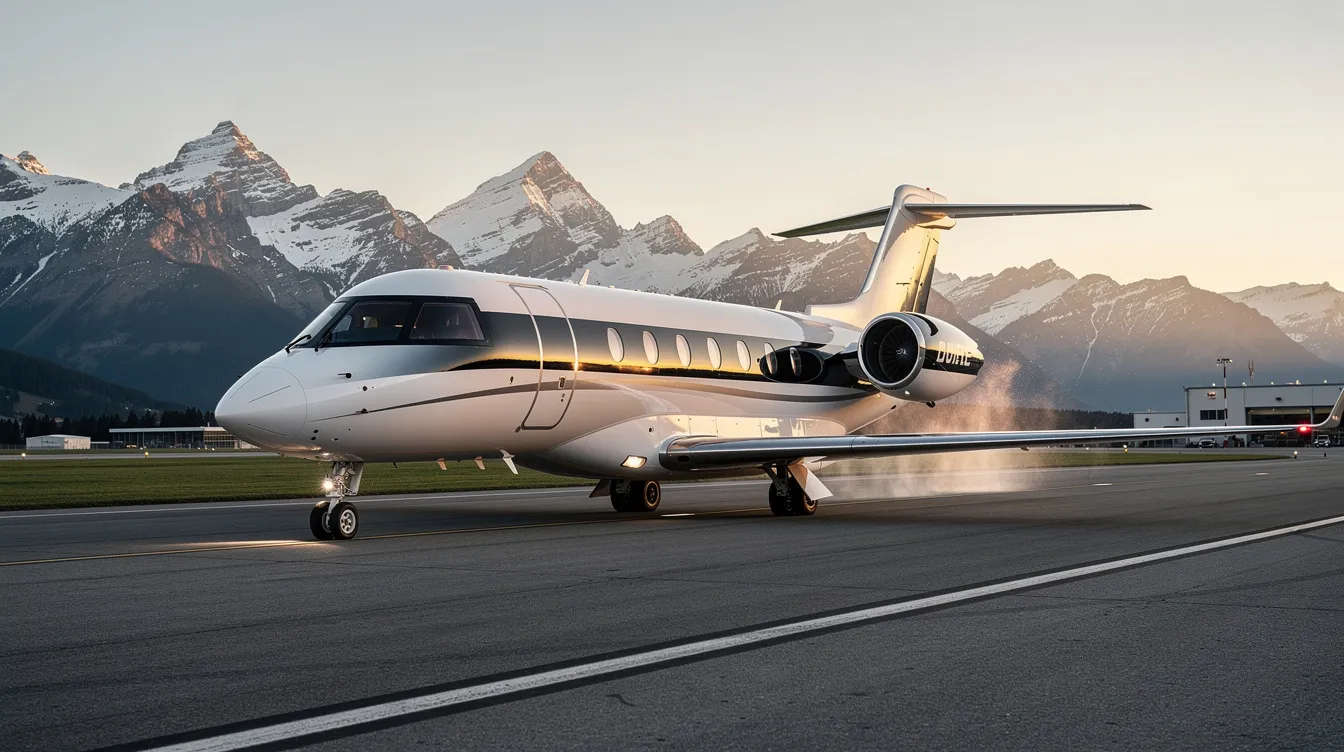
The Jetson ONE EVTOL trades raw range for simplicity, low noise, and the ability to take off from a driveway. For thrill seekers who want the experience of flight without the complexity of traditional aviation, that trade-off is the entire value proposition. For longer missions, aircraft types in a private fleet remain the definitive tool.
Pilot's License, Regulations, and How They Affect Practical Range
In the USA and Australia, the Jetson ONE is designed to fit ultralight rules—meaning no full pilot's licence is required in certain jurisdictions. Jetson Aero, founded by Tomasz Patan in Italy (the company later expanded operations between Poland, Italy, and California), engineered the aircraft specifically to meet these classifications. Patan invented, and Patan designed the airframe to stay under ultralight weight limits, which is one reason no pilot's license required framework applies.
But "no license" does not mean "no preparation." Operators should complete familiarization flights, practice emergency procedures, and understand airspace rules-especially near controlled zones and populated areas. The Jetson prototype was tested extensively before deliveries began, and the company offered guidance on flight readiness for every buyer.
Regulatory constraints that affect practical range include:
Altitude restrictions near airports or controlled airspace
Line-of-sight requirements for ultralight operations
Prohibitions on flying over populated areas
Mandatory battery reserves for safe return
In practice, many owners will fly tight patterns over private land or near private airfields, keeping their effective radius to 5–8 miles—well within the aircraft's maximum. For longer, regulated missions that cross controlled airspace or international borders, a conventional pilot licence and certified aircraft-like those accessed through BlackJet's Jet Card programs, remain essential.
Battery Management, Charging, and Turnaround Between Flights
Smart battery management matters as much as raw range numbers. How quickly you can recharge determines whether you get one flight per afternoon or several.
Charging at 230–240 V (common in Europe): approximately one hour to full charge (Autoweek)
Charging at 110 V (standard US household): roughly two hours
Battery swap capability is referenced in early specifications, which could reduce turnaround to less than five minutes if spare packs are available
Conservative operators will rarely drain batteries below 20–30% remaining charge. That discipline slightly reduces practical range but dramatically increases safety margins. Post-flight procedure includes cooldown, visual inspection of propellers and systems, and a charging cycle before the next ride.
This limited endurance and recharging cycle is exactly why personal electric eVTOL aircraft excel at short, thrilling flights while long-distance, time-sensitive trips still favor turbine or jet-powered aircraft. Private aviation often includes real-time flight support and safety certification that ensures every leg of a serious journey is covered-something a 20-minute machine simply cannot replicate.
Safety, Redundancy, and Why You Shouldn't Fly to Empty
Safe pilots never stretch the range to the last percent of battery charge. In any aircraft-whether a personal ultralight or a midsize business jet-reserves exist for a reason.
The Jetson ONE's safety architecture is engineered with this philosophy:
Eight-motor redundancy: the aircraft can sustain continuous flight with the loss of one motor, meaning a single failed motor does not force an immediate landing
Race car-inspired safety cell: a rigid carbon fiber and aluminium cage protects the person piloting the aircraft in case of hard contact with terrain
Ballistic parachute: developed in collaboration with ParaZero, featuring rapid deployment time for whole-aircraft recovery in emergencies
Hands-free hover and emergency functions: if the pilot releases the throttle lever, the aircraft stabilizes autonomously
Radar sensor-driven auto landing system: terrain tracking and obstacle avoidance guide the aircraft down if the pilot becomes incapacitated
Prudent operators plan flights that use no more than 60–70% of usable energy, ensuring a solid reserve for contingencies like unexpected wind shifts, go-arounds, or a change in direction back to base. Even though the Jetson ONE is marketed as intuitive-no passengers to worry about, just one seat—it should be flown with the same safety-first mindset that defines professional private aviation.
From Driveway Flights to Door-to-Door Journeys: Jetson ONE and Private Jets Together
Picture this: a Saturday morning on a coastal estate. You walk past the Jetson logo on your personal aircraft, settle into the open cockpit, push the throttle lever forward, and lift off for a 12-minute scenic flight over the cliffs. You land, charge the batteries, and an hour later you are boarding a BlackJet charter at a nearby private strip for a three-hour flight to close a deal in another city.
This is the new chapter in air mobility—not one machine replacing another, but layers of personal flight working together. The Jetson ONE embodies hyper-local, emotional, experiential flying. A new model of mobility called "first mile, last mile" in industry terms. Private jets deliver strategic, time-saving intercity and transcontinental travel.
The range contrast is stark: ~11 miles versus 1,500–3,000+ miles for typical light and midsize jets in BlackJet's network. Frequent business travelers value flexibility and privacy in private aviation, and Jet Card programs provide access to multiple cabin types of private jets-from light cabins for short hops to heavy jets for global travel. Carbon-neutral flights in private aviation contribute to sustainable aviation efforts, adding another layer of sophistication. Meanwhile, mobile booking platforms are a key feature in private aviation services, letting you avoid waiting and book your next leg from the same phone you used to log your Jetson flight data.
Is Jetson ONE Range Enough for You? Choosing the Right Aircraft for Each Mission
The Jetson ONE delivers an 11.02-mile tested range, approximately 20 minutes of endurance, and the distinction of being the first affordable eVTOL in production-a model called "ONE" that Tomasz Patan and his team brought from concept to market. It uses drone technology and electric motors powered by lithium-ion batteries in a machine small enough to store alongside your car.
Match the mission to the aircraft:
Sunday lakeside hover (5–7 miles round trip): Jetson ONE-pure fun, no other fees or infrastructure required beyond a flat surface and a power outlet
Same-day NYC-to-Miami client meeting (~1,100 miles): a BlackJet Jet Card charter, offering speed, comfort, and production-grade reliability
Morning property fly-over followed by afternoon cross-country business flight: both, in sequence-the future of personal air mobility in a single day
The Jetson ONE opens a new chapter in what it means to fly safely at low altitude for pure enjoyment. Private aviation companies offer Jet Card programs for prepaid access to private jets, handling the serious distance with other fees transparently managed. Together, these layers create a seamless ecosystem for discerning travelers who refuse to compromise on either fun or efficiency.
Explore how a BlackJet Jet Card can reshape your travel and leave the short hops to your Jetson.


 Sign up with google
 Sign up with Apple