For high-net-worth individuals, elite executives, and discerning travelers, private aviation is more than just convenience—it’s a strategic advantage. Today, programs like Jet Cards provide seamless, on-demand access to flights with built-in flexibility and exclusivity. But decades ago, a major airline tried a very different approach: lifetime, unlimited first-class travel for a one-time fee.
It was bold. It was luxurious. And it nearly broke the airline.
This is the story of the AAirpass, a membership-based discount program that American Airlines offered as an audacious experiment in loyalty taken to the extreme. AAirpass was a membership-based discount program offered by American Airlines to frequent flyers, launched in 1981. At the time, American Airlines was struggling financially, which motivated the creation of the AAirpass as a way to quickly raise capital. This program promised the skies but came crashing down under its own weight.
In understanding its rise and fall, we uncover lessons that shaped the evolution of premium travel access, and why programs like BlackJet’s Jet Card represent a more sustainable and intelligent future.
The Lifetime Pass: A Revolutionary Idea with Fatal Flaws
Back in 1981, American Airlines introduced a visionary concept: a lifetime membership-based pass granting unlimited access to first-class travel. This program, known as the AAirpass, positioned American Airlines as a 'lifetime ticket airline' by offering customers the unprecedented opportunity to secure a lifetime of flights for a one-time fee. For $250,000, customers can board any flight, any time, with no blackout dates, fees, or restrictions. The pass granted unlimited, unrestricted first-class travel on that airline for the rest of the buyer's life.
The price of this pass made the purchase a significant AAirpass investment, appealing to high-net-worth individuals seeking long-term value and exclusive travel benefits. Between 1981 and 1988, American Airlines generated approximately $16.5 million in cash from the sale of 66 AAirpasses. Mark Cuban, for instance, purchased his AAirpass for $125,000 while celebrating the sale of his first company, later upgrading it to include more benefits.
This wasn’t a marketing gimmick—it was a serious loyalty play during a time of financial turbulence in the airline industry. Executives hoped that an influx of upfront capital would stabilize cash flow and cultivate loyalty among the elite. American Airlines thought that the unlimited first-class lifetime AAirpass would be a quick-win money-making scheme to help it avoid bankruptcy.
The pass included perks like:
The appeal was undeniable—the ultimate VIP access to global travel for life. But as we’ll see, it was also too generous to survive.
The AAirpass Program: A Closer Look
The AAirpass attracted elite clientele—from wealthy entrepreneurs to globe-trotting consultants. Passholders could easily search for and book flights, including international travel, often accessing any plane in the American Airlines fleet with remarkable convenience. Additionally, AAirpass holders were able to accumulate frequent flyer miles on every flight, further impacting American Airlines' revenue.
Notable pass holders included:
Mark Cuban, who said it paid for itself in less than 3 years
Steven Rothstein, who flew over 10,000 flights
Jacques Vroom, known for booking multiple flights daily
Pass holders enjoyed perks rivaling modern private jet charters—except with no variable costs per flight. From transatlantic trips to quick domestic hops, these travelers booked with abandon, often taking hundreds of flights per year.
Unlike today’s private jet access solutions, there was no dynamic pricing, carbon offset structure, or usage caps. That design flaw eventually led to chaos behind the scenes.
The Pass Holder Experience: Life with a Golden Ticket
For the select few who secured an unlimited AAirpass from American Airlines, air travel was transformed from a routine necessity into a lifestyle of unparalleled privilege. Imagine the freedom to book flights to any destination—London, Paris, or anywhere in the world—at a moment’s notice, always in first class, and never worrying about blackout dates, ticket availability, or extra fees. This was the reality for pass holders like Mark Cuban, Steven Rothstein, and Jacques Vroom, who became legends in the airline industry for their globe-trotting exploits.
The AAirpass was more than just a ticket; it was a membership-based discount program that conferred elite status, frequent flier miles, and the coveted companion pass. Lifetime membership was priced at $250,000, with the option to purchase a companion pass for an additional $150,000. For business leaders and entrepreneurs, this meant the ability to bring colleagues, clients, or loved ones along for the ride—turning every trip into an opportunity for connection or collaboration. Dallas-based marketing executive Jacques Vroom, for example, used his pass to travel extensively for both work and leisure, often accompanied by friends or family. The flexibility to book flights on a whim and unlimited access to first-class travel set a new standard for luxury in the airline industry.
Yet, this golden ticket came at a steep price for American Airlines. As reported by the Los Angeles Times, the company soon realized that the unlimited AAirpass was costing millions in lost ticket sales each year. A total of 66 AAirpasses are reported to have been sold under the unlimited travel conditions. The airline's investigators concluded that two AAirpass holders, Steven Rothstein and Jacques Vroom, were costing the airline more than $1 million annually. Pass holders, unencumbered by blackout dates or restrictions, maximized every benefit—sometimes booking multiple flights in a single day or leveraging the companion pass to its fullest extent. The airline’s CEO, Robert Crandall, acknowledged in a personal letter to Steven Rothstein the company’s commitment to honoring the program, even as the financial impact mounted.
The experience wasn’t without controversy. Allegations of fraudulent activity, such as misuse of the companion pass or booking flights for non-existent travelers, led to the revocation of several passes. ABC News and other outlets chronicled the fallout, with high-profile cases like Vroom’s highlighting the challenges American Airlines faced in policing the program. Existing lifetime passes are often subject to scrutiny or cancellation for minor contract violations. Jacques Vroom was also accused of fraudulent activity by American Airlines, which led to the termination of his AAirpass. United Airlines frequent flier Tom Stuker famously called the AAirpass a “huge disaster” for the company, underscoring just how costly unlimited access could be.
Despite these challenges, the AAirpass remains a fascinating chapter in the history of air travel. For those who held the pass, it was a once-in-a-lifetime opportunity to experience the world in first class, with a level of flexibility and luxury never matched. As Mark Cuban reflected, it was “one of the best purchases I’ve ever made,” highlighting its value for frequent travel. This sentiment captures both the allure and the cautionary lessons of American Airlines’ bold experiment. For the airline industry, the legacy of the unlimited AAirpass is a reminder that even the most enticing loyalty programs must be carefully balanced against the realities of ticket sales, customer behavior, and long-term sustainability.
Air Travel and the AAirpass: How the Pass Changed the Skies
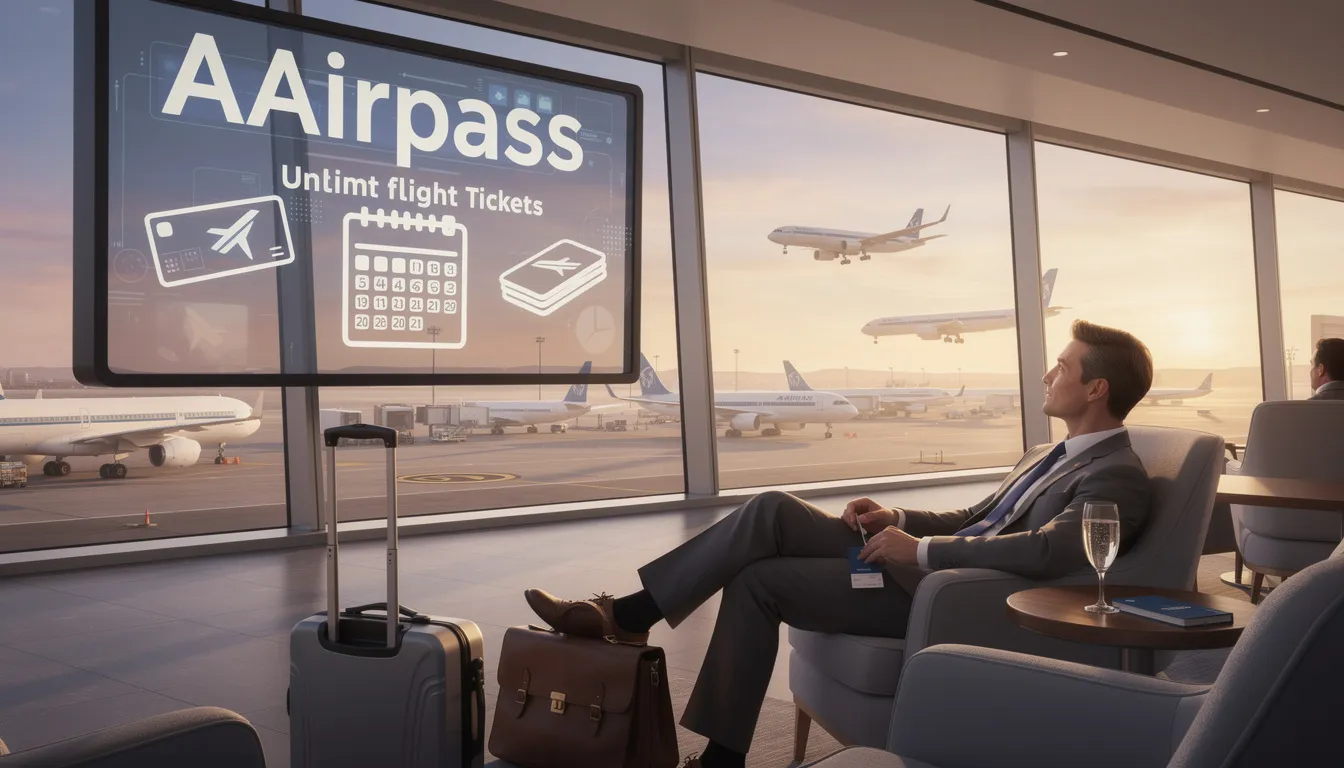
When American Airlines launched the AAirpass in the early 1980s, it sent shockwaves through the world of air travel. For a one-time fee, select customers were granted a lifetime membership to a program that promised unlimited access to first-class seats, priority services, and the coveted Admirals Club lounges. The membership-based discount program was a game-changer, especially for high-flying executives and entrepreneurs who valued both convenience and status. The program offered pass holders free flights and unlimited access to Admirals Club locations for either five years or life.
Pass holders like Mark Cuban, Steven Rothstein, and Jacques Vroom quickly became legends in the airline industry, racking up millions of frequent flier miles and enjoying elite status that most travelers could only dream of. With the companion pass option, some even extended these privileges to friends, family, or business associates, making the most of every opportunity to fly in style. The ability to book unlimited first-class flights without worrying about ticket sales, blackout dates, or extra fees transformed the way these customers experienced air travel.
However, the very generosity that made the AAirpass so attractive also proved to be its undoing. As more pass holders took full advantage of their lifetime membership, American Airlines began to feel the sting of lost ticket sales and mounting costs. The program, which was initially seen as a bold aairpass investment, soon became a financial albatross, costing the airline millions of dollars each year. The sheer volume of flights booked by a handful of customers far exceeded the airline's expectations, exposing the risks of offering unlimited access without adequate safeguards.
By 1994, the writing was on the wall. American Airlines discontinued the AAirpass, closing the door on new lifetime memberships and signaling a shift in how the airline—and the industry as a whole—approached loyalty programs. The AAirpass program was discontinued in 1994 after American Airlines realized it was not generating the anticipated revenue. In the years that followed, American Airlines introduced a more controlled version called AirPass, designed to offer premium benefits without the open-ended liabilities of its predecessor. The AAirpass remains a fascinating chapter in the history of air travel, a testament to both the allure and the dangers of unlimited luxury in the skies.
A Strategic Tool Turned Liability
At its peak, the AAirpass symbolized exclusivity and freedom. The allure of ‘free’ first-class flights made the program extremely popular, but also led to widespread abuse and overuse by some pass holders. American Airlines initially assured customers that the company was "company solid" and would honor its commitments to AAirpass members, emphasizing its financial stability and long-term dedication to the program. However, over time, the program became a cautionary tale in unregulated demand and unchecked generosity, ultimately costing the airline far more than anticipated.
Some pass holders began to exploit loopholes:
Booking multiple seats and canceling at the last minute
Re-selling companion tickets
Misusing the companion seat, such as selling or transferring it to others in violation of airline rules
Taking advantage of extra carry-on luggage allowances as part of their travel routines
Treating the program like a personal shuttle service
The financial impact?
American Airlines estimated that a single AAirpass user could cost them $1–2 million annually in lost revenue, with taxes and fees on each flight further complicating the airline's cost calculations. Multiply that across dozens of frequent users, and the business model quickly unraveled.
Even attempts to add restrictions retroactively—such as blackout dates or penalties—sparked legal backlash from members who argued that the program promised lifetime, unrestricted access.
Program Abuse and Blackout Dates: The Unintended Consequences
The promise of unlimited travel with the AAirpass was irresistible, but it also opened the door to widespread program abuse, forcing American Airlines to confront challenges it hadn’t anticipated. As pass holders pushed the boundaries of what was allowed, stories of fraudulent activity began to surface. Some, like Steven Rothstein and Jacques Vroom, were accused of booking flights for non-existent passengers or selling their companion seats—actions that went directly against the spirit, if not always the letter, of the program’s rules.
American Airlines CEO Robert Crandall later acknowledged that the airline had underestimated just how far some customers would go to maximize their benefits. In interviews and internal communications, he described certain pass holders as “cheaters” who had taken advantage of the airline’s generosity, ultimately costing the company millions. The Los Angeles Times and other outlets reported extensively on the controversy, highlighting the struggles American Airlines faced in trying to rein in the program without alienating its most loyal—and litigious—customers. American Airlines categorized Rothstein's booking practices as fraudulent, despite them not being explicitly prohibited in the original contract.
In a bid to stem losses, American Airlines introduced blackout dates and new booking restrictions, hoping to limit the most egregious abuses. Yet these measures often proved ineffective, as determined pass holders found new ways to work around the rules. The airline’s efforts to enforce the terms of the AAirpass led to high-profile legal battles and further negative publicity, underscoring the risks of offering unlimited perks without robust oversight.
The final chapter of the AAirpass saga came in 2004, when American Airlines offered a last chance to purchase the pass through the Neiman Marcus Christmas catalog. Despite the fanfare, not a single pass was sold—a clear sign that the era of unlimited, lifetime air travel had come to an end. The airline ended sales of the unlimited passes in 1994, except for a one-time offer in the 2004 Neiman Marcus Christmas catalog at a price of $3 million. Today, the legacy of the AAirpass serves as a cautionary tale for the airline industry, illustrating the complexities and potential pitfalls of designing loyalty programs that promise more than they can sustainably deliver.
When Access Backfires: The Legal Conflicts
To plug the hemorrhaging, American Airlines began investigating top users. Two high-profile cases emerged: the airline sued Vroom over alleged misuse of the pass, bringing legal attention to the issue. It is reasonable to assume that the airline believed certain behaviors by AAirpass holders, including Vroom, were fraudulent, which led to the legal action. American Airlines launched a revenue integrity unit in 2007 to investigate AAirpass holders due to financial instability.
1. Steven Rothstein
Based in Chicago, he reportedly booked thousands of flights, many of which were canceled just before takeoff. The pivotal moment came when Rothstein arrived at the airport to check in for his flight to London; it was there, at the airport, that he was informed his AAirpass had been revoked. The airline accused him of abusive behavior and ultimately revoked his pass, leading to a lengthy legal battle. Steven Rothstein purchased his lifetime AAirpass for $233,509.93 in 1987 and later added a companion pass for $150,000. Rothstein was reported to have cost American Airlines an estimated $21 million in lost revenue due to his extensive use of the AAirpass.
2. Jacques Vroom
Also accused of gaming the system, Jacques Vroom Jr, a Dallas-based marketing executive, was alleged to have exploited the companion pass feature to fly acquaintances or sell second-seat access. In July, Vroom was handed a termination letter at London Heathrow Airport. Vroom frequently traveled to destinations like London and Paris, accumulating a large number of frequent flier miles through his extensive use of the AAirpass. Jacques Vroom purchased his AAirpass and companion pass for $356,000 in 1989 and traveled nearly 38 million miles. American Airlines filed a lawsuit against Vroom in 2011, accusing him of selling his companion seat, which he countered by claiming the rules were not in effect at the time of his purchase.
Both men insisted they had not violated any written terms. The lawsuits were high-profile and damaged the airline’s reputation among elite travelers, even as they tried to claw back losses. Both Rothstein's and Vroom's legal battles with American Airlines were complicated by the airline's Chapter 11 bankruptcy filing in 2011.
Settlement and Program Changes: The Aftermath of Legal Battles
The legal showdown between American Airlines and Steven Rothstein, one of the most prolific unlimited AAirpass holders, became a defining moment in the history of the airline’s ambitious loyalty experiment. As reported by the Los Angeles Times, Rothstein’s relentless use of his pass—amassing over 30 million miles in first class travel—highlighted just how costly unlimited access could be for the airline. The confidential settlement that followed, which saw Rothstein relinquish his prized pass, signaled the end of an era and forced American Airlines to confront the financial realities of its own creation. Rothstein sued American Airlines for breach of contract after his AAirpass was revoked, claiming the airline had waived its rights to enforce the contract. The litigation between Rothstein and American Airlines was eventually settled out of court in late 2012, with details remaining undisclosed.
In the wake of this high-profile dispute, American Airlines took decisive action to safeguard its bottom line and restore balance to the AAirpass program. The airline introduced a series of new rules designed to curb the kind of excessive usage and loophole exploitation that had led to millions in lost ticket sales. Pass holders now faced stricter limits on companion seats, tighter controls on booking flights, and enhanced scrutiny to prevent fraudulent activity—such as reserving seats for non-existent travelers or reselling companion access. These changes marked a clear shift from the program’s original promise of truly unlimited flights, reflecting a new focus on sustainability and accountability.
The transformation of the AAirpass program mirrored broader changes sweeping through the airline industry. As American Airlines CEO Robert Crandall acknowledged in a personal letter to Rothstein, the company had underestimated the potential for elite status pass holders to push the boundaries of unlimited access. The costly lesson prompted not just American Airlines, but the entire industry, to rethink the design and management of loyalty programs. Revenue management, data analytics, and yield optimization became the new watchwords, replacing the open-handed generosity of decades past.
Despite these reforms, the AAirpass program retained its allure for a select few. Today, it remains an exclusive offering, with only a handful of original pass holders—such as Mark Cuban and Tom Stuker—still enjoying the benefits of lifetime first class travel. The program’s evolution stands as a testament to the airline’s ability to adapt, balancing the needs of its most loyal customers with the financial realities of modern air travel.
Ultimately, the saga of the unlimited AAirpass serves as a cautionary tale for airlines everywhere. It underscores the importance of thoughtful program design, vigilant management, and the willingness to evolve in response to changing market dynamics. As loyalty programs continue to shape the future of air travel, the lessons learned from American Airlines’ bold experiment remain as relevant as ever—reminding the industry that even the most enticing perks must be grounded in sound business strategy.
The Demise of the Lifetime Pass Model
By 1994, American Airlines permanently discontinued the AAirpass program. No new lifetime passes were offered, and legal settlements continued into the 2000s. Investigative journalist Ken Bensinger was the first to bring to public attention the details of the AAirpass program and its controversial demise. The airline intended to fully unwind the AirPass program by March 31, 2024, marking the end of an era for even its simplified successor.
American Airlines stopped accepting new AirPass membership applications on November 30, 2022. The legal battles surrounding the AAirpass program resulted in high legal costs for American Airlines during its bankruptcy proceedings.
What began as an attempt to court ultra-wealthy travelers had become an unsustainable burden. Analysts at the time pointed to poor forecasting, lack of behavioral modeling, and an absence of fine-tuned usage caps as key issues. Many airlines have since discontinued their original unlimited programs due to the financial burden they presented.
The final verdict?
The concept was ahead of its time—but poorly executed. Airline mergers can jeopardize or devalue existing loyalty programs, including lifetime passes. Modern airline programs branded as "passes" often offer services with limits or structures different from the original lifetime tickets.
What the Airline Industry Learned
The AAirpass experiment gave the aviation industry several hard-earned lessons:
1. Unlimited Doesn’t Mean Untouchable
Even premium customers need clearly defined boundaries. Programs with no usage caps or blackout dates are vulnerable to abuse.
2. Forecasting Is Critical
High-net-worth travelers fly often, and they value convenience. Without predictive models, lifetime usage can quickly exceed initial revenue.
3. Luxury Must Be Sustainable
Elite experiences need to balance indulgence with cost-efficiency. This includes capacity planning, behavioral controls, and variable pricing models.
4. Loyalty Should Be Earned, Not Exploited
Modern loyalty programs now use tiers, dynamic rewards, and carbon-conscious incentives to align traveler behavior with brand sustainability goals.
How Private Aviation Solved the Puzzle
Fast forward to today. Private aviation providers like BlackJet have applied these lessons to build more innovative, scalable access models.
Instead of lifetime passes, we offer Jet Card programs that deliver:
Guaranteed aircraft access with flexible scheduling
Transparent, per-hour pricing
No hidden fees
Carbon-neutral flight operations
Premium concierge service
Safety-first operations vetted with proprietary certification standards
This model ensures a sustainable revenue stream for the provider, while preserving the luxury, flexibility, and exclusivity expected by our clientele.
Why Jet Cards Work Where Lifetime Passes Failed
Let’s break down the difference:
Upfront Cost: One-time fee for AAirpass vs. pay-as-you-go or pre-paid block for BlackJet Jet Card
Usage Limits: Unlimited flights with AAirpass vs. structured hours or tiered access with BlackJet Jet Card
Abuse Control: Minimal controls in AAirpass compared to strict scheduling and booking rules in BlackJet Jet Card
Flexibility: Total flexibility offered by AAirpass vs. high flexibility with guardrails in BlackJet Jet Card
Sustainability: No sustainability features in AAirpass vs. carbon-neutral flights included in BlackJet Jet Card
Legal Clarity: Vague terms and conditions in AAirpass vs. transparent membership terms in BlackJet Jet Card
Scalability: Low scalability of AAirpass vs. high scalability of BlackJet Jet Card
The Jet Card model offers the same strategic advantages—without the financial unpredictability.
Real-World Application: Strategic Travel with BlackJet
Consider this modern use case:
A venture capitalist based in San Francisco uses BlackJet to take advantage of innovative services such as purchasing private jets with cryptocurrency:
Travel monthly to New York, Miami, and Austin for meetings
Schedule last-minute flights with 24–48 hr flexibility
Bring associates using the included companion hours
Ensure every flight is carbon offset
Access the same aircraft class each time, without ownership hassle
Instead of a lifetime commitment, this client enjoys tailored flight hours, on-demand aircraft, and no guesswork.
Frequently Asked Questions: Jet Card Programs & Modern Private Access
What is a Jet Card?
A Jet Card is a prepaid or subscription-based private aviation program that offers guaranteed access to specific aircraft categories under a structured hourly rate.
Is BlackJet’s Jet Card carbon neutral?
Yes. Every flight is automatically offset, at no extra cost.
Can I fly at the last minute?
Yes, BlackJet allows rapid scheduling, depending on card tier and availability.
How does safety compare to commercial aviation?
BlackJet partners only with ARGUS-rated or equivalent operators and maintains proprietary certification standards exceeding commercial norms.
Can Jet Cards be shared?
Some Jet Card options offer companion flying hours, shared usage, or family access.
Conclusion: The Future of Luxury Travel Is Intelligent Access
The AAirpass was a bold experiment—but ultimately unsustainable. Its story reminds us that access without structure leads to failure, even at the highest tiers of luxury.
BlackJet’s Jet Card approach reflects what elite travelers truly want today:
Explore Premium Jet Access
Looking to travel smarter—not harder? Discover how BlackJet can reshape your travel experience, with a Jet Card tailored to your lifestyle.
Explore Jet Card Membership


 Sign up with google
 Sign up with Apple