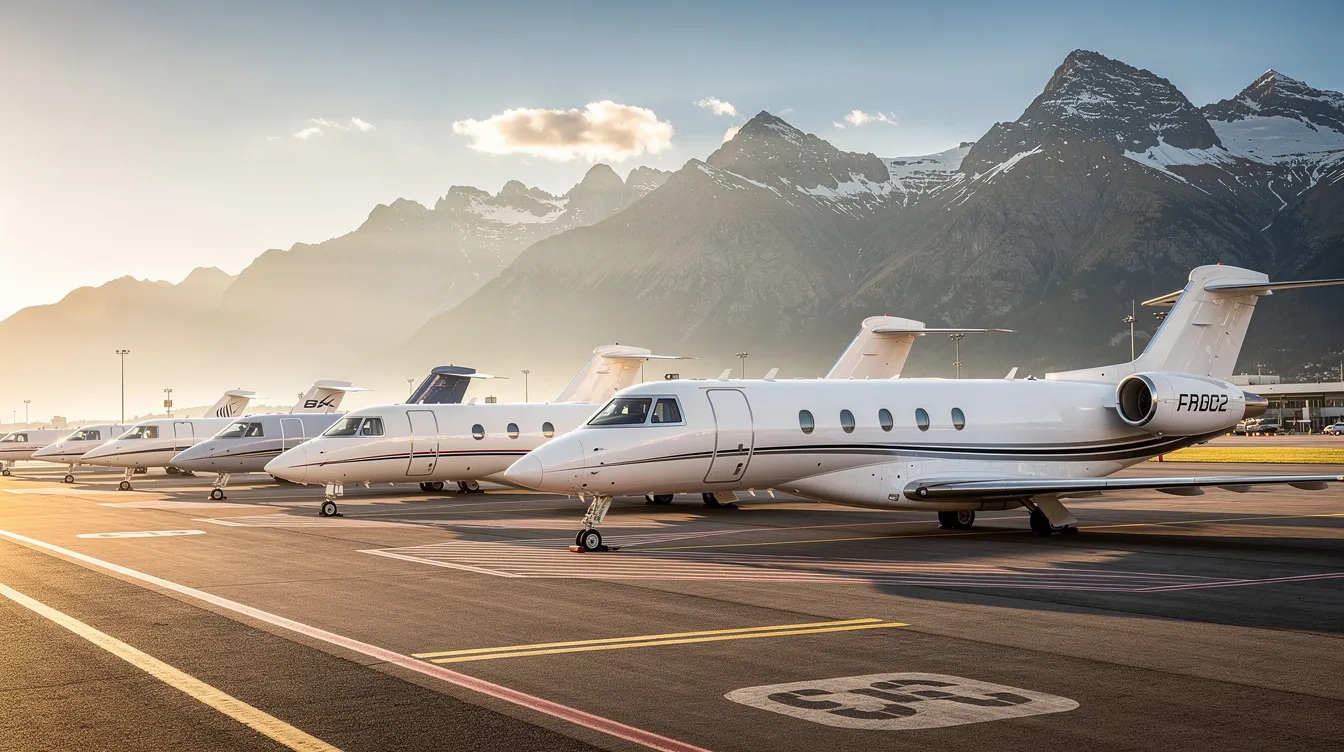
For the discerning traveler, access to a curated private jet fleet is more than a luxury. It is a strategic advantage. While commercial first class still means shared terminals, fixed schedules, and limited destinations, private aviation delivers direct routing to over 5,000 airports globally, hours saved per trip, and complete privacy from door to door.
Overview of the NetJets Private Jet Fleet Today
NetJets, owned by Berkshire Hathaway, operates one of the largest private jet fleets in the world. As of 2026, the company flies over 800 business jets across the United States and NetJets Europe, covering more than ten aircraft types from three major manufacturers: Embraer, Cessna Citation (Textron Aviation), and Bombardier.
The NetJets fleet is categorized into five classes: light jets, midsize, super-midsize, heavy, and ultra-long-range aircraft. This structure covers categories suitable for short regional flights and long-haul international journeys alike. NetJets provides structured programs built around access to a managed fleet, emphasizing operational reliability and guaranteed access that meet the demand of frequent travelers. The company has also integrated Starlink high-speed internet across a major portion of its fleet for seamless in-flight connectivity.
How does this compare to a Jet Card model? While NetJets owners purchase fractional shares tied to specific aircraft, BlackJet's Jet Card programs offer comparable cabin access through prepaid flight hours - no ownership commitment, no long-term contracts, and the flexibility to fly across multiple aircraft classes based on each mission's needs.
Light jets - short-haul, high-frequency travel
Midsize jets - regional and coast-to-coast
Super-midsize jets - transcontinental with larger cabins
Heavy jets - long-range with lie-flat seating
Ultra-long-range jets - nonstop transoceanic missions
Ultra-Long-Range Business Jets in the NetJets Fleet
NetJets operates ultra-long-range Bombardier Global jets designed for nonstop transoceanic missions - think New York to London, Los Angeles to Tokyo, or a board meeting en route to Hong Kong.
The Bombardier Global 6000 seats up to approximately 14 passengers across three cabin zones: a forward club, a conference area, and a private stateroom with a convertible divan. It features upgraded Rockwell Collins Pro Line Fusion avionics, a range of roughly 6,000 nautical miles, and a high-speed cruise around Mach 0.85 - capable of serving virtually any transatlantic city pair.
The Bombardier Global 7500 is the largest purpose-built business jet in NetJets' fleet. With four distinct living zones - executive club, dining area, entertainment suite, and a full private stateroom - the Global 7500 can carry up to 14 passengers in day configuration. Its range of approximately 7,700 nautical miles and max operating speed near Mach 0.925 make it fit for missions like San Francisco to China or overnight family flights from Los Angeles to Paris. NetJets has expanded this lineup with delivery of its first Global 8000 in March 2026.
For BlackJet Jet Card holders, ultra-long-range cabin access provides the same mission capability - nonstop intercontinental travel, multi-zone cabins, lie-flat sleeping - without the capital requirements of fractional ownership.
Global 6000: ~6,000 nm range, 3 zones, cruise ~Mach 0.85
Global 7500: ~7,700 nm range, 4 zones, cruise ~Mach 0.925, service ceiling ~51,000 ft
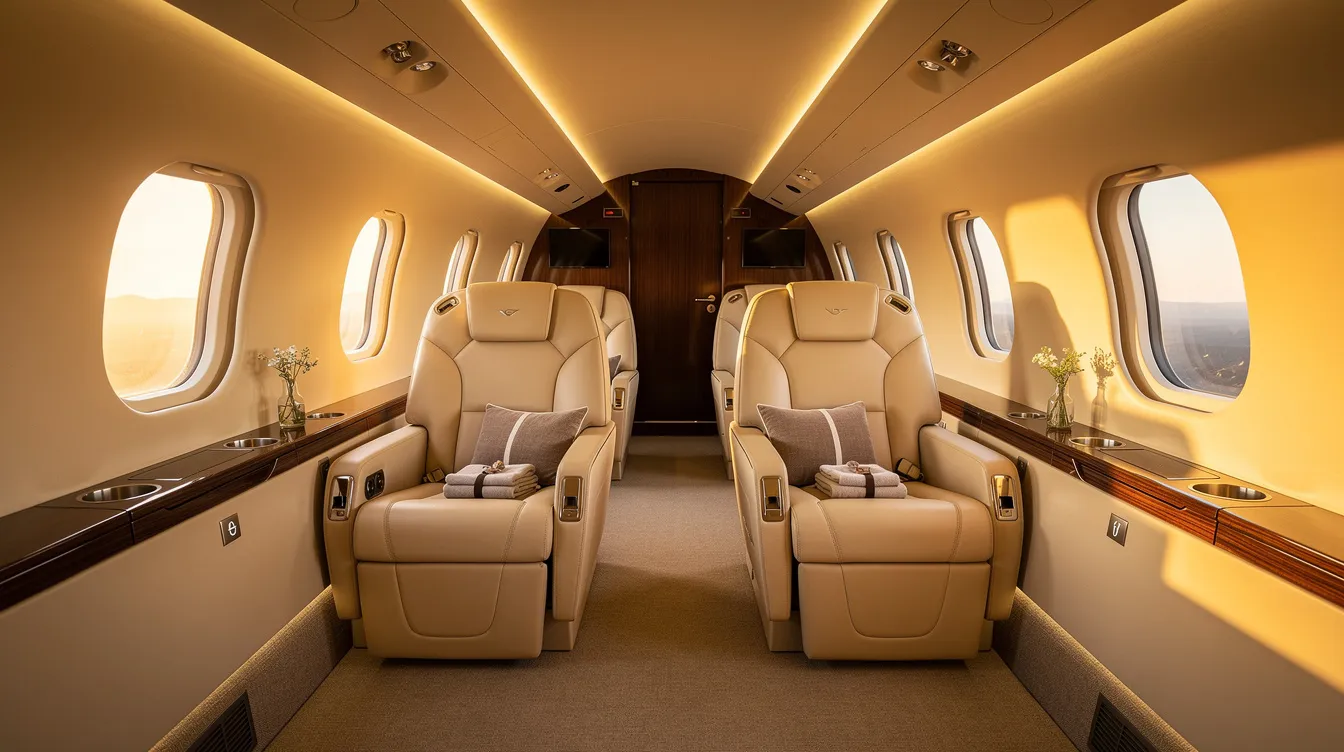
Heavy and Super-Midsize Business Jets: Challenger and Citation Longitude
Heavy and super-midsize jets represent the sweet spot for transcontinental US flights and shorter transatlantic hops. They balance cabin volume, range, and hourly cost - making larger jets unnecessary for many missions while still offering stand-up cabins and serious work or rest space.
NetJets' heavy jet is the Bombardier Challenger 650. The Challenger 650 can hold up to eleven passengers, with a range of 4,000 nautical miles, lie-flat seating configurations, and Rockwell Collins Pro Line avionics. It is built for coast-to-coast legs or routes like London to destinations across Europe and the Middle East.
In the super-midsize tier, the Bombardier Challenger 350 (and its successor, the Challenger 3500) entered service in June 2014. The Challenger 350 has a range of 3,200 nautical miles with redesigned wings and efficient engines. The newer 3500 offers a lower cabin altitude, updated interiors, and improved fuel efficiency - a key part of how NetJets has grown its modernization effort.
The Cessna Citation Longitude rounds out this category. NetJets has 91 Bombardier Longitude jets in its fleet, each offering around 3,500 nautical miles of range, cruise speeds above 480 knots, and a flat-floor cabin. It is a popular choice for coast-to-coast US routes where a heavy jet would be overkill.
Sample scenario: A CEO flying New York to Los Angeles might choose a Challenger 650 for extra cabin space and luggage capacity. For London to Dubai, the mission fits a Global. BlackJet's Jet Card members select heavy or super-midsize categories for these same profiles - without buying into a fractional program.
Midsize Business Jets: Praetor 500 and Cessna Citation Latitude
Midsize business jets are the workhorses for frequent regional and North American trips, where efficiency and comfort must find a balance. They access shorter runways, cost less per hour than heavy jets, and still offer full standing cabins with enclosed lavatories.
The Embraer Praetor 500 - an upgraded Legacy 450 variant - flies with Honeywell HTF7500E engines, cruises near 466 knots, and covers approximately 3,340 nautical miles, comfortably handling US coast-to-coast routes with seven to eight passengers on board.
The Citation Latitude has served as NetJets' primary midsize aircraft, replacing many Sovereign missions. With a flat-floor cabin, generous headroom, and a range near 2,700 nautical miles, it offers a compelling package for the executive team of four to six. Additionally, NetJets is phasing out older types like the Citation Sovereign and XLS in favor of the Latitude and the incoming Citation Ascend.
Typical midsize itineraries include:
Chicago to Aspen
Dallas to Nassau
London to Marrakesh
Light Jets: The Embraer Phenom 300 Workhorse
Light private jets excel at short-haul, high-frequency travel under approximately 2,000 nautical miles - where speed and airport flexibility matter more than cabin size.
NetJets operates 162 Embraer light jets, with the Embraer Phenom 300 as its primary light business jet. The Phenom 300 can accommodate up to six passengers, with a maximum takeoff weight around 18,551 lb, cruise near 453 knots, a service ceiling of 45,000 ft, and a range of about 2,010 nautical miles. It has been among the most-delivered private jets in the world in recent years, making it a benchmark in its category.
Though single-pilot certified, NetJets typically assigns two pilots for redundancy and safety. Baggage capacity handles ski gear or golf bags with ease, and modern avionics keep the hourly cost per seat among the lowest in the private jet fleet. Ideal trips include New York to Palm Beach, London to Geneva, or Los Angeles to Sun Valley - all using smaller runway airports that commercial carriers cannot reach.
Many BlackJet Jet Card users choose a light jet category for recurring short business hops or weekend leisure escapes, gaining similar flexibility without lengthy contracts.
Fleet Growth and Deliveries by Manufacturer
NetJets continually refreshes its private jet fleet through large orders with OEMs. The company expects to receive more than 80 new aircraft during 2026, with Embraer, Textron Aviation, and Bombardier as key contributors.
Textron Aviation's Cessna jets represent just over half the total NetJets fleet, with more than 400 aircraft. Bombardier contributes nearly 240 jets - including Challenger 3500s, Challenger 650s, and Global family aircraft. Embraer has provided over 175 jets, led by the Phenom 300 and Praetor 500. Nearly half of the NetJets fleet is less than five years old, featuring advanced technology and modernization across cabins and cockpits.
Key milestones in fleet growth:
Early 2010s: Global 6000 and Challenger 350 enter NetJets service; Citation Latitude and Sovereign expand midsize network
2018–2019: Praetor 500 certified; Global 7500 enters service
2025–2026: First Global 8000 delivery in March; first Citation Ascend aircraft in May; fleet surpasses 850 jets
Retirements and Future Aircraft: From Excel/XLS to Citation Ascend
Maintaining a premier private jet fleet means both adding and retiring aircraft as technology and passenger expectations evolve. The Citation Excel/XLS fleet has been retired down to approximately 51 jets, with Jet Card sales on that type discontinued. In recent months, the company began accelerating replacements.
NetJets has orders for the Cessna Citation Ascend, designed to replace many Excel/XLS missions with a flat-floor cabin, larger windows, an updated cockpit, and more efficient engines. First delivery occurred in mid-2026. The Citation Sovereign tail count has also dropped as the Latitude and Ascend take over. In Europe, a handful of Dassault Falcon 2000s remain relatively stable.
Fleet modernization directly supports sustainability goals in private aviation: newer engines reduce fuel burn and emissions per seat-mile, while quieter noise signatures improve community impact.
For BlackJet members, this evolution is seamless. Category-based Jet Card access means you automatically fly on newer aircraft as the partner fleet evolves - no need to sell or trade out of a specific airframe.
Safety, Incidents, and Operational Standards Across a Large Fleet
Scale alone does not guarantee safety. Rigorous operating standards, pilot training, and technology do. NetJets maintains its own in-house maintenance and rigorous safety standards exceeding FAA requirements. The company's operational model includes trip recovery options to manage aircraft availability during maintenance issues, ensuring that guaranteed access remains intact even under pressure.
Incidents in the broader aviation ecosystem - including cases where operators deactivated transponders - underscore the importance of continuous tracking. Across the NetJets fleet, TCAS collision avoidance, ADS-B tracking, and modern avionics provide constant ATC visibility. NetJets guarantees availability of specific aircraft types depending on customer contracts, with dual-pilot operations standard across all categories.
BlackJet mirrors this commitment: only partnering with operators holding top-tier safety certifications, mandatory dual-pilot flights, and real-time operational support for every mission. For discerning travelers, safety is non-negotiable.
Sustainability, Technology, and How Jet Cards Compare to Fractional Ownership in Private Aviation
Both established operators and new-generation providers like BlackJet must address sustainability, digital convenience, and flexible access to meet modern expectations.
Fleet-level sustainability levers include newer engines on aircraft like the Challenger 3500 and Citation Ascend, optimized flight planning, and growing adoption of sustainable aviation fuel. NetJets offers carbon-neutral flights for its customers, participates in carbon offset initiatives to mitigate emissions, and aims to reduce its carbon footprint significantly over the coming year. Large fleets can also leverage shared positioning to reduce empty legs and total carbon output per passenger.
BlackJet's carbon-neutral promise goes further: every Jet Card flight is offset automatically, at no extra cost, through verified carbon offset projects. NetJets offers predictable pricing structures without hidden fees for repositioning flights - but a Jet Card provides even greater flexibility:
Fractional ownership: higher upfront purchase, long-term contracts, tied to one aircraft type
Jet Cards: prepaid hours, category-based access across multiple sizes, lower commitment, dynamic scheduling
BlackJet's 24/7 digital booking tools and real-time flight support provide seamless mobile access for busy executives - a feature that today's travelers increasingly expect over traditional broker-driven workflows.
Frequently Asked Questions About the NetJets Fleet and Jet Card Access
Q1: What types of aircraft are included in the NetJets fleet?NetJets operates a diverse fleet categorized into five classes: light jets, midsize, super-midsize, heavy, and ultra-long-range aircraft. This includes models from Embraer, Cessna Citation (Textron Aviation), and Bombardier, such as the Embraer Phenom 300, Bombardier Challenger 650, and the Global 7500.
Q2: How does NetJets ensure safety across its large fleet?NetJets maintains rigorous safety standards exceeding FAA requirements, with in-house maintenance, dual-pilot operations, advanced avionics, and operational trip recovery options to guarantee aircraft availability and safety.
Q3: What are the advantages of a Jet Card compared to fractional ownership like NetJets?Jet Cards offer prepaid flight hours with flexible access across multiple aircraft classes without the capital investment or long-term contracts required by fractional ownership. They provide convenience and variety for travelers with varied trip needs.
Q4: Does NetJets offer sustainable or carbon-neutral flight options? Yes, NetJets participates in carbon offset initiatives and offers carbon-neutral flights, aiming to reduce its carbon footprint significantly. BlackJet also provides automatic carbon offsets at no extra cost for Jet Card members.
Q5: How often does NetJets update or grow its fleet?NetJets continually refreshes its fleet with over 80 new aircraft expected in 2026, including new models like the Citation Ascend and Global 8000, while retiring older jets such as the Citation Excel/XLS.
Q6: Can Jet Card members access the same aircraft types as NetJets fractional owners? Yes, Jet Card members have access to comparable cabin classes and aircraft types, including light jets, midsize, heavy, and ultra-long-range jets, offering similar mission capabilities without ownership.
Q7: What is the typical passenger capacity for NetJets aircraft? Passenger capacity varies by aircraft class, from six passengers in the Embraer Phenom 300 light jet to up to 14 passengers in the ultra-long-range Bombardier Global 7500.
Q8: How does technology enhance the travel experience on NetJets and Jet Card flights?NetJets integrates Starlink high-speed internet across much of its fleet, and BlackJet offers 24/7 digital booking and real-time flight support, ensuring seamless connectivity and convenience.
Q9: What destinations can NetJets and Jet Card users access?Both offer access to over 5,000 airports worldwide, including smaller regional airports that commercial airlines do not serve, enabling direct and flexible routing.
Q10: How do Jet Cards support travel flexibility? Jet Cards allow travelers to select from multiple aircraft categories based on each trip's needs, with no long-term commitments or ownership ties, ideal for varied and frequent travel patterns.
Choosing the Right Access Model: NetJets Fleet vs. BlackJet Jet Card
You may admire the scale of the NetJets fleet - but the real question is how you want to access private jets based on your travel patterns.
When fractional ownership fits: you fly 200+ hours per year on a narrow set of routes and want control over a specific tail number.
When a Jet Card is more efficient: you fly 10 to 50 trips per year with varied destinations, mixing light, midsize, and long-range requirements. Consider these scenarios:
A founder flying monthly between NYC and Miami on a light jet - a 25-hour Jet Card covers this with room to spare
A European family doing seasonal trips across Europe and transatlantic - midsize for the continent, heavy or ultra-long-range for the crossing, all from one Jet Card balance
A corporate team mixing US and European legs without the house burden of owning any single jet.
BlackJet delivers safety-certified operators, carbon-neutral flights, a digital-first experience, and multiple cabin classes - all through a simple Jet Card program on your terms.
Elevate your travel - effortlessly. Explore BlackJet's Jet Card programs and discover how flexible, carbon-neutral private jet access can complement or replace fractional ownership in your travel strategy.


 Sign up with google
 Sign up with Apple