Private aviation redefines the travel experience, offering unmatched flexibility, comfort, and exclusivity compared to commercial air travel. By chartering a private jet, travelers bypass long security lines, crowded terminals, and rigid flight schedules, gaining direct access to thousands of airports worldwide. Most private jet flights are billed by the hour, multiplying flight hours by the hourly rate. Private jet charters serve both individuals and businesses, providing tailored solutions for quick domestic hops to long-haul international journeys. Whether seeking privacy for business negotiations or a relaxing environment for leisure, private jet travel delivers a personalized, luxurious experience with attentive service, gourmet dining, and spacious cabins, transforming every journey into a seamless and enjoyable event.
Key Takeaways
Plane charter costs range from $2,500/hour for turboprops to $15,000/hour for ultra-long-range jets, with total trip costs varying based on distance, aircraft type, and additional services.
Hourly rates vary by aircraft type: light jets cost $3,000-$6,000, midsize jets $5,000-$8,000, and heavy jets $8,500-$15,000 per hour.
Private aviation offers strategic time savings, enabling executives to access 5,000+ airports compared to 500 commercial hubs, saving 3-4 hours per trip.
Additional fees, including positioning ($5,000-$15,000), landing charges ($150-$2,500), and seasonal surcharges, can add 20-40% to base charter rates.
Cost optimization strategies such as empty leg flights and jet card programs can reduce expenses by 25-50% for flexible travelers.
Modern charter operations prioritize safety with ARGUS/Wyvern certifications, sustainable aviation fuel options, and real-time flight tracking technology.
The private aviation market has evolved from serving only celebrities and the ultra-wealthy to catering to time-conscious professionals who value efficiency and comfort. Smaller aircraft generally have lower hourly rates, and with executives valuing their time highly, private jet travel often presents a favorable cost-benefit analysis over commercial flights.
Understanding plane charter cost structures involves more than hourly rates. Total investment includes positioning fees, seasonal surcharges, Federal Excise Tax (FET), airport landing and ramp fees, and crew accommodation. Chartering a private plane incurs an hourly flight rate that varies by aircraft, covering fuel, crew, and insurance, plus additional costs like Federal Excise Tax (FET), airport landing and ramp fees, and crew accommodation. This guide provides a comprehensive overview of every cost component, optimization strategy, and strategic consideration essential for modern private jet charter decisions.
Understanding Plane Charter Cost Structure
The foundation of every charter flight begins with base hourly rates, which cover aircraft operation, crew salaries, insurance, and standard services. Average hourly rates for turboprops are between $1,500 and $3,000, while light jets range from approximately $4,000 to $6,000. Understanding the private jet charter cost and the overall private jet cost is essential for making informed decisions and ensuring transparency. Unlike commercial air travel, where you purchase individual seats, private jet charters rent the entire aircraft, making cost-per-passenger calculations essential for group travel scenarios.
Flight time calculations use “block time”—the period from aircraft pushback at departure until arrival at the gate—rather than actual air time. This methodology ensures charter operators account for taxi time, air traffic delays, and ground operations. Most charter services implement minimum daily charges, typically 2-3 flight hours, preventing short-hop inefficiencies that would otherwise inflate operational costs. Check-in times for private flights can be much closer to departure than commercial airlines, sometimes as little as 15 minutes before take-off. For longer flights requiring overnight stays, you must cover the crew's expenses, including accommodation and meals.

The ROI analysis for business applications becomes compelling when comparing time investments. A New York to Chicago round trip on commercial flights requires 8-10 hours, including airport processing, connections, and ground transportation. The same journey via private jet charter completes in 4-5 hours total, delivering 4-5 hours of reclaimed productivity. Empty leg flights are discounted one-way flights that occur when a private jet is returning to its base or repositioning for its next charter. For senior executives, this time savings alone justifies private jet charter costs on high-stakes business trips.
Cost comparison frameworks must consider passenger counts and route efficiency. Private jets become increasingly cost-effective as group sizes approach aircraft capacity. Chartering a 12-seater private jet can cost between $5,000 and $9,000 per hour. A midsize jet accommodating 8 passengers on a transcontinental route often delivers per-person costs competitive with first-class commercial tickets, while providing superior scheduling flexibility and productivity advantages.
Aircraft Categories and Hourly Rates
Turboprops and Very Light Jets
Entry-level private aviation begins with turboprops ranging from $2,500-$4,000 per hour, including popular models like the King Air 350, Pilatus PC-12, and TBM series. These aircraft excel in short to medium-range missions spanning 300-800 nautical miles while accommodating 2-6 passengers in comfortable cabin environments.
Very light jets command $3,000-$5,000 hourly rates, with the HondaJet, Cessna Citation Mustang, and Phenom 100 representing this efficient category. VLJs offer jet-speed advantages over turboprops while maintaining access to smaller airports that commercial airlines cannot serve. These compact aircraft are designed for shorter trips and typically accommodate four to seven passengers. Compared to very light jets, a light jet is also a popular choice for short and regional flights, offering cost-effective, quick, and convenient travel for small groups or business trips within domestic routes.
The strategic advantage of turboprops and very light jets lies in airport accessibility. These aircraft operate from over 5,000 facilities across North America, including private airstrips and municipal airports within minutes of final destinations. This accessibility eliminates lengthy ground transportation and connects remote locations impossible to reach efficiently via commercial flying.
Light and Midsize Jets
Light jets establish the sweet spot for many charter applications, with hourly rates from $4,500-$7,000 covering aircraft like the Citation CJ series, Phenom 300, and Learjet 45. These dependable aircraft deliver 1,200-1,500 nautical mile range capabilities while accommodating 6-8 passengers with full baggage capacity. Light jets can accommodate six to nine passengers and provide increased comfort and amenities for business travel.
Midsize jets, priced at $6,000-$9,000 per hour, include workhorses like the Hawker 800XP, Citation Sovereign, and Learjet 60. With range capabilities extending to 2,500 nautical miles, midsize jets handle coast-to-coast domestic travel and short international flights while providing spacious cabin environments for productive business travel. These jets offer greater interior comfort and can seat seven to nine passengers, making them suitable for longer flights.
Speed advantages become pronounced in this category, with cruise speeds reaching 450-500 mph compared to commercial routing inefficiencies. Direct point-to-point travel eliminates connection delays and hub-routing detours that add hours to commercial air travel itineraries.
Super Midsize and Heavy Jets
Super midsize jets command $8,000-$12,000 hourly rates for aircraft like the Challenger 300, Citation X, and Gulfstream G280. These sophisticated aircraft bridge domestic and international travel requirements with advanced avionics, synthetic vision systems, and enhanced weather radar capabilities. Super midsize jets provide enhanced range and larger cabin space, accommodating eight to ten passengers comfortably.
Heavy jets represent the pinnacle of charter aviation, with hourly rates from $10,000-$15,000 covering ultra-long-range aircraft like the Gulfstream G550, Global 6000, and Challenger 650. These larger aircraft provide transcontinental and international capabilities with luxurious amenities, high-speed connectivity, and conference-capable cabin configurations. Executive airliners are designed for larger groups, providing spacious interiors and are suitable for corporate travel needs. Large cabin jets are designed for long-range travel and can seat nine to sixteen passengers with luxurious interiors.
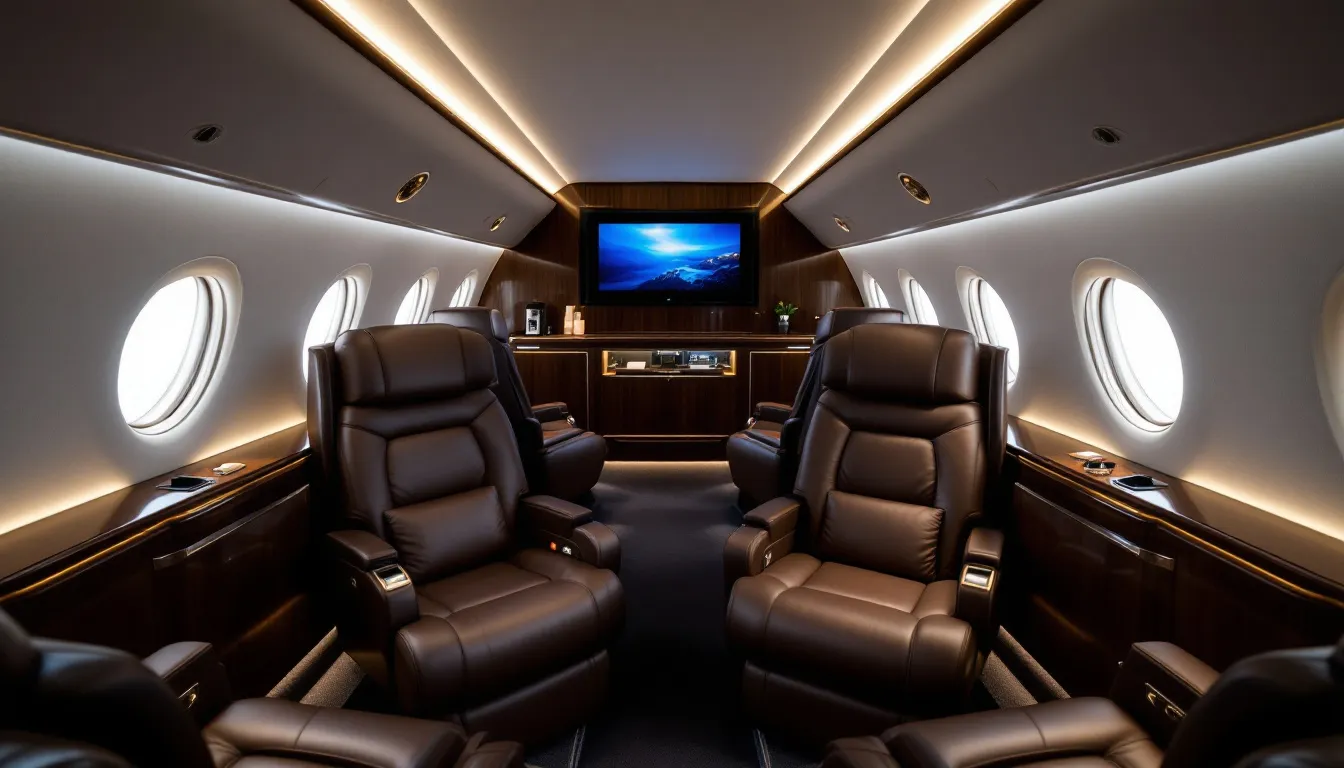
Ultra-long-range jets excel in international travel, connecting continents nonstop while providing bedroom suites, full galleys, and dedicated crew rest areas for extended flights. The private jet charter rates reflect sophisticated systems and operational capabilities that rival commercial aircraft in everything except passenger capacity. Long-range business jets typically have spacious cabins and are capable of nonstop travel on intercontinental routes, seating ten to sixteen passengers.
Long Range and Ultra Long Range Jets
For travelers who demand the ability to cross continents or oceans without compromise, long-range and ultra-long-range jets represent the pinnacle of private jet travel. These aircraft are engineered for exceptional performance, offering non-stop flight capabilities between major global cities and remote destinations alike. Ultra-long-range jets such as the Gulfstream G650, Bombardier Global 7500, and Dassault Falcon 8X set the standard with their impressive range, speed, and state-of-the-art amenities. Passengers enjoy spacious cabins, private suites, advanced entertainment systems, and the latest in-flight technology, ensuring comfort and productivity on even the longest journeys. Ultra-long-range jets offer luxurious amenities and can carry passengers on nonstop flights over vast distances, accommodating ten to nineteen passengers. Whether for high-stakes business meetings or luxurious leisure escapes, long-range and ultra-long-range jets provide the ultimate in convenience, privacy, and sophistication for international travel.
Chartering and Rental Options
Chartering a private jet offers a cost-effective alternative to ownership, providing all the benefits of private aviation without the long-term financial commitment. With a diverse fleet available, travelers can select from light jets for short trips, midsize jets for regional journeys, super midsize jets for cross-country flights, and heavy jets for larger groups or longer distances. The process of booking a private jet charter typically involves contacting a charter broker or operator to discuss specific needs. When booking a private jet, travelers are assigned a personal charter specialist who sends quotes and flight details. Private jet rental costs are influenced by factors such as aircraft type, flight distance, and any additional services required, allowing clients to tailor each trip to their specific needs and budget. Additional costs for charter flights may include international handling, Wi-Fi, ground transportation, cleaning fees, and fuel surcharges during volatile fuel prices. Charter operators also offer flexible solutions like empty leg flights and one-way charters, which can deliver significant cost savings for those with flexible schedules. By working with an experienced charter operator, clients gain access to a wide range of aircraft and services, ensuring a seamless, luxurious, and efficient travel experience every time.
Comprehensive Fee Structure Analysis
Mandatory Operational Charges
Beyond base hourly rates, every charter flight incurs mandatory operational charges that vary significantly by airport and aircraft type. Landing fees range from $150 at smaller municipal airports to $2,500 at major international facilities, calculated based on aircraft weight and airport fee schedules. Landing fees at larger international airports are typically higher than at smaller regional airports, reflecting the increased infrastructure and operational costs associated with these facilities.
Handling and ramp fees add $200-$800 per stop, covering ground services, aircraft positioning, and facility usage. Many fixed-base operators waive handling fees when purchasing minimum fuel quantities, creating opportunities for cost savings on longer flights requiring fuel stops.
Federal excise tax applies to domestic flights at 7.5% of the total charter cost, while segment fees of $4.50 per passenger per flight segment add minimal but mandatory charges. International flights face additional complications with permit fees, customs processing, and immigration charges ranging from $500-$5,000+, depending on destinations and aircraft size.
Variable and Seasonal Costs
Fuel prices directly impact private jet charter costs through surcharges of $300-$800 per flight hour during market volatility periods. Charter operators typically adjust these surcharges monthly based on regional fuel price indices, making longer flights more susceptible to fuel cost fluctuations. Flight distance is a significant factor; longer flights require more fuel and hence increase costs.
Winter operations introduce deicing charges ranging from $1,500-$15,000 based on aircraft size and weather conditions. These charges reflect the cost of specialized deicing fluids and extended ground operations required for safe winter departures.
Peak demand periods—including holidays, major sporting events, and global conferences—trigger surcharges that can double base charter rates. Peak travel times can increase luxury private jet costs due to higher demand. Smart charter customers plan around these peak periods or secure guaranteed availability through jet card programs to avoid premium pricing.
Positioning and Deadhead Costs
Aircraft positioning represents one of the largest variable costs in private jet charters. When your desired aircraft must reposition from another location, those deadhead costs transfer to your charter bill, potentially adding $5,000-$15,000 to trip costs depending on distance and aircraft type.
Geographic considerations significantly impact positioning costs. Chartering from major aviation hubs like New York, Los Angeles, or Miami typically offers better aircraft availability and reduced positioning fees compared to remote destinations requiring extensive aircraft repositioning.
Strategic scheduling helps minimize repositioning expenses by coordinating departure locations with operator fleet positions. Experienced charter brokers maintain real-time aircraft tracking to identify optimally positioned aircraft for specific routes.
International Fees and Taxes
When chartering a private jet for international travel, it’s important to account for the additional fees and taxes that come with crossing borders. These can include landing fees at international airports, customs and immigration charges, and federal excise taxes, all of which can impact the total charter cost. A reputable charter operator will manage these complexities on your behalf, ensuring all necessary documentation, permits, and payments are handled efficiently. From arranging ground transportation at your destination to coordinating with customs officials, your charter operator takes care of every detail, allowing you to focus on your journey. By relying on expert support, travelers can enjoy a smooth, stress-free international private jet experience, free from unexpected additional fees or logistical headaches.
Cost Optimization Strategies
Empty Leg Opportunities
Empty leg flights occur when charter aircraft must reposition without passengers, creating opportunities for 25-50% savings over standard charter rates. These repositioning flights offer the same aircraft, crew, and service standards at significantly reduced costs for flexible travelers.
The private aviation market has developed sophisticated platforms connecting empty leg availability with interested passengers. However, empty leg opportunities require schedule flexibility, as departure times and routes remain fixed to the operator’s positioning needs.
Regional availability patterns make empty leg flights more common on popular routes like New York-Florida or Los Angeles-Las Vegas, where consistent charter demand creates predictable repositioning cycles. Technology platforms now provide real-time empty leg notifications, enabling strategic travelers to capitalize on these opportunities.
Jet Card Programs vs. On-Demand Charter
Jet card programs provide fixed hourly rates with guaranteed aircraft availability in exchange for substantial deposits typically ranging from $100,000-$500,000. These programs eliminate positioning fees, reduce variable costs, and provide predictable charter rates even during peak demand periods.
Peak day restrictions and blackout periods limit jet card usage during high-demand periods like Super Bowl weekend or Art Basel. However, jet card holders enjoy priority access and fixed pricing that shields them from market rate fluctuations affecting on-demand charter customers.
Interchange programs allow jet card holders to access different aircraft categories within their program, providing flexibility to match aircraft size to passenger counts and mission requirements. Cost comparison analysis shows jet card programs become cost-effective for travelers flying 25+ hours annually.
Block Charter and Fractional Alternatives
Block charter arrangements offer volume discounts for customers committing to multiple trips or significant flight hours over defined periods. These agreements can reduce hourly rates by 10-20% while providing scheduling priority and consistent aircraft access.
Fractional ownership programs require annual flight commitments exceeding 50 hours to reach break-even points compared to charter alternatives. Fractional owners purchase shares in specific aircraft, gaining access to fleet-wide aircraft while bearing proportional ownership costs, including management fees, insurance, and maintenance reserves.

Exit strategies for fractional programs vary significantly between providers, with some requiring multi-year commitments and others offering more flexible contract terms. Contract flexibility considerations include peak day access, interchange fees, and additional hourly charges beyond basic ownership costs.
Regional Cost Variations and Popular Routes
High-density corridors like New York-Florida command premium pricing due to consistent demand and limited aircraft availability during peak seasons. These routes often experience 30-50% rate increases during winter months when snowbirds migrate south and business travel intensifies. Booking a one-way flight, often referred to as an 'empty leg' flight, can offer flexibility and significant cost savings, especially for long-range or luxury jet travel on these popular routes.
International route premiums reflect additional regulatory requirements, crew qualifications, and operational complexities. Transatlantic flights on ultra-long-range jets typically cost $80,000-$150,000+ round-trip, including international handling fees, extended crew requirements, and customs processing charges. The primary factors influencing private jet charter costs are aircraft type and size, flight distance, duration, airport fees, peak travel times, catering, and special requests.
Remote destination accessibility creates significant cost implications when charter aircraft must position at airports with limited services or challenging operating conditions. Mountain airports, island destinations, and remote business locations often require specialized crew training and insurance coverage that increases charter costs.
Seasonal pricing variations become pronounced in resort and ski destinations where demand peaks during vacation seasons. Aspen, Nantucket, and Jackson Hole experience charter rate increases of 50-100% during peak seasons due to limited aircraft availability and high demand.
European private aviation markets typically command higher hourly rates than domestic US operations due to increased regulatory requirements, higher operating costs, and limited competition in some regions. However, the extensive European airport network provides exceptional destination accessibility for business and leisure travel.
Technology and Safety Cost Factors
ARGUS and Wyvern safety auditing standards represent industry-leading safety certifications that distinguish premium charter operators from basic service providers. These third-party audits verify pilot training, maintenance standards, and operational procedures, with certified operators typically commanding 10-20% premium pricing reflecting their enhanced safety protocols.
Advanced avionics requirements include synthetic vision systems, enhanced weather radar, and traffic collision avoidance systems that improve safety margins while enabling operations in challenging weather conditions. These systems represent significant aircraft investments that influence charter rates while providing operational advantages.
Real-time flight tracking and communication capabilities allow passengers and ground teams to monitor flight progress, weather conditions, and arrival estimates. Modern charter operations provide mobile apps with live flight tracking, crew communication, and itinerary management features.
Sustainable aviation fuel options now available through leading charter operators typically add 10-15% to fuel costs while reducing carbon emissions by up to 80% compared to traditional jet fuel. Environmental consciousness among charter customers is driving the adoption of SAF programs despite premium pricing.
Enhanced cleaning protocols and air filtration systems developed during COVID-19 have become standard operating procedures for premium charter operators. These protocols add operational time and costs while providing health protection benefits valued by discerning passengers.
Additional Services and Luxury Amenities
Catering packages range from $500 for basic refreshments to $3,000+ for multi-course meals prepared by renowned chefs and delivered aircraft-side. Premium catering often includes wine pairings, special dietary accommodations, and presentation standards matching high-end restaurants. Catering services beyond standard offerings incur additional charges during private jet charters.
Ground transportation coordination eliminates the complexity of arranging luxury vehicles, hotel transfers, and multi-city logistics. Concierge services typically charge $200-$1,500 per transfer while ensuring seamless connections between aircraft and final destinations.
Comprehensive concierge services extend beyond transportation to include hotel reservations, restaurant bookings, event tickets, and destination activities. These services typically cost 1.5% of total flight costs while providing significant convenience benefits for time-pressed travelers.
In-flight connectivity options now include high-speed satellite internet, international roaming capabilities, and video conferencing systems that maintain productivity during flight time. Connectivity charges vary by data usage and flight duration, with some operators including basic internet access in charter rates.
Pet accommodation policies vary significantly between operators, with some aircraft specially configured for pet transport, including climate-controlled cargo areas and cabin modifications. Pet transportation often requires additional insurance coverage and may incur $500-$2,000 in additional fees depending on aircraft size and trip duration. For overnight trips, accommodation and per diem allowances for crew members may also be required, adding to the total trip cost.
Client Services and Support
Exceptional client service is the cornerstone of every successful private jet charter. From your initial inquiry to the moment you arrive at your destination, a dedicated team of professionals is committed to making your journey as smooth and enjoyable as possible. Leading charter operators offer comprehensive concierge services, handling everything from ground transportation and hotel bookings to in-flight catering and special requests. A dedicated account manager is available throughout the booking process to answer questions and assist with any requests. Whether you need assistance with flight planning, last-minute itinerary changes, or arranging additional services, your charter operator provides expert guidance and support every step of the way. With a focus on safety, comfort, and personalized attention, client services ensure that every aspect of your private jet charter is tailored to your unique needs, delivering a truly exceptional travel experience.
Cost Comparison: Charter vs. Commercial Aviation
Break-even analysis for different passenger counts reveals that private jets become increasingly competitive as group sizes approach aircraft capacity. A midsize jet carrying 8 passengers on a transcontinental route often delivers per-person costs comparable to commercial first-class tickets while providing superior convenience and time savings.
Time value calculations must include airport processing inefficiencies that add 2-3 hours to commercial travel itineraries. Private terminals eliminate security delays, boarding procedures, and connection requirements that consume valuable executive time during business travel.
Productivity metrics during flight time favor private aviation significantly, with spacious cabin environments enabling confidential meetings, document review, and strategic planning that are impossible in commercial aircraft. Many executives report recouping flight costs through productive work accomplished during charter flights.
Last-minute booking flexibility provides strategic advantages for urgent business requirements, though premium pricing can double standard charter rates for immediate departure needs. Commercial flights often lack available seats during peak periods or charge comparable premiums for same-day first-class bookings.
Group travel scenarios demonstrate compelling cost advantages for private jets when traveling parties exceed 4-6 passengers on longer routes. Charter costs are divided among passengers while providing superior scheduling control and destination accessibility compared to commercial alternatives. Private flights offer exclusive, flexible, and efficient travel solutions for both leisure and business travelers, with customizable services and a range of aircraft options that set them apart from commercial airlines.
Frequently Asked Questions
What is the minimum cost to charter a private jet for a short domestic flight?
The minimum cost for domestic private jet charters typically ranges from $5,000-$8,000 for very light jets on short routes under 500 miles. Renting a private plane for short trips can be an affordable and flexible option compared to other private aviation choices. This reflects minimum daily charges of 2-3 hours even for shorter flight times, plus mandatory fees for landing, handling, and federal taxes. Turboprops can reduce minimum costs to $4,000-$6,000 for similar routes while providing similar time savings compared to commercial flights.
How far in advance should I book to secure the best charter rates?
Booking 2-4 weeks in advance typically provides the best selection of aircraft and the most competitive rates for your private jet flight. Last-minute bookings within 48 hours often carry 50-100% surcharges due to limited aircraft availability and positioning requirements. However, empty leg opportunities can provide significant savings for flexible travelers willing to adjust schedules to match available aircraft repositioning.
What hidden fees should I watch for when comparing charter quotes?
Common hidden costs include positioning fees ($5,000-$15,000), crew overnight expenses ($300-$600 per crew member), international handling charges ($1,500-$5,000), deicing fees ($1,500-$15,000), and fuel surcharges during market volatility. These additional fees can significantly impact your private jet rental cost. Private jet operators typically provide clear breakdowns of costs, including any potential extra charges, during the booking process. Always request comprehensive quotes including all potential additional fees, and clarify cancellation policies, minimum flight time charges, and any peak period surcharges that may apply.
Can charter costs be reduced by flying on certain days of the week?
Yes, flying Tuesday through Thursday typically offers the lowest charter rates as business demand peaks on Monday and Friday, while leisure travel concentrates on weekends. Additionally, avoiding major holidays, sporting events, and conference periods can reduce costs by 20-40%. Some operators offer specific off-peak pricing programs for flexible travelers willing to fly during lower-demand periods, providing access to more airports and destinations that may not be available during peak times.
How do fuel prices affect charter costs, and when are surcharges applied?
Fuel represents 30-40% of operating costs for charter flights, making fuel price volatility a significant factor in pricing. Most operators apply fuel surcharges when jet fuel prices exceed predetermined thresholds, typically adding $300-$800 per flight hour during periods of high fuel costs. These surcharges are usually adjusted monthly and clearly disclosed in charter agreements, with longer flights being more susceptible to fuel cost fluctuations. Choosing a one-way or return flight can also impact the total fuel surcharges, as round-trip bookings may offer more predictable pricing.
Conclusion
Chartering a private jet offers unparalleled convenience, flexibility, and luxury, transforming the travel experience for both business and leisure travelers. Understanding the detailed plane charter cost structure—from hourly rates based on aircraft type and flight distance to additional fees such as landing charges, crew accommodations, and fuel surcharges—is essential for making informed decisions and optimizing your travel budget. Whether opting for turboprops for short regional hops or ultra-long-range jets for international journeys, private aviation provides a cost-effective alternative to ownership and a superior alternative to commercial flying.
For those seeking expert guidance and access to a wide range of dependable aircraft, BlackJet stands out as a trusted private jet charter service, offering personalized support, transparent pricing, and seamless booking experiences. By leveraging cost-saving strategies like empty leg flights and jet card programs, travelers can enjoy the benefits of flying privately without compromise.
Explore the world on your terms with BlackJet—where luxury meets efficiency and every flight is tailored to your unique needs.


 Sign up with google
 Sign up with Apple