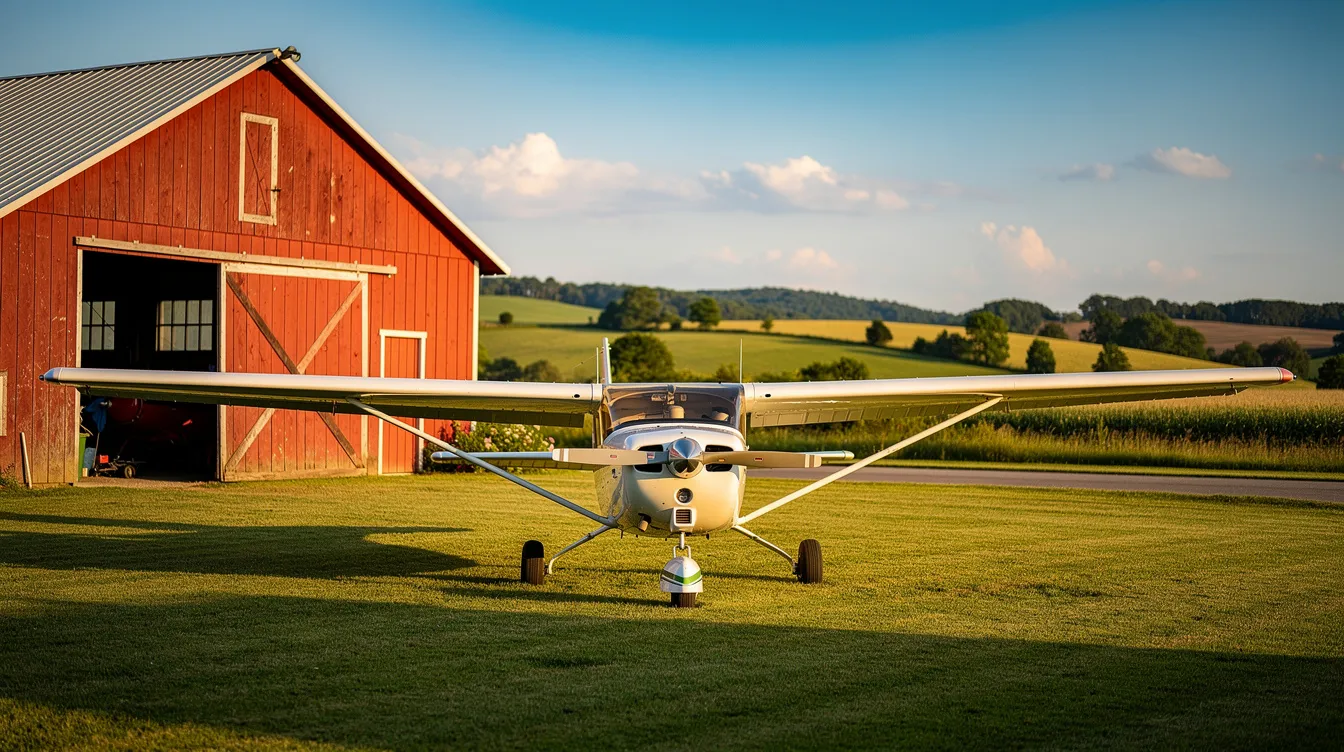
The term portable plane covers a surprisingly wide spectrum - from fold-wing ultralights that trailer behind your SUV to pressurized turboprops that slip into 2,500-foot mountain strips commercial airlines will never touch. What unites every aircraft in this category is a single idea: go where you want, when you want, without surrendering hours of your life to hub airports, security lines, and connecting flights.
This guide is for business travelers, aviation enthusiasts, and anyone interested in the future of personal and private air travel.
This guide breaks down every class of portable plane, the technology and safety systems behind them, realistic costs, and how access models like BlackJet's Jet Card programs let you enjoy these aircraft without the burden of ownership.
Why "Portable Planes" Matter In 2026: Freedom, Time, And Strategic Advantage
Consider a same-day business loop from New York to Nantucket. On a commercial itinerary, you face a drive to JFK, check-in, a connection through Boston, a Cape Air prop hop, and a return trip that mirrors the ordeal - roughly 10 to 12 hours consumed for a meeting that lasts two. A light jet departing Teterboro eliminates every friction point. Door-to-door, you recover three to six hours per round trip.
Multiply that across 20 regional trips a year and the math becomes strategic, not indulgent. A Los Angeles executive flying to Lake Tahoe in a small plane like the PC-12 NGX lands at a mountain airstrip minutes from the resort, skipping the two-hour ground shuttle from Reno.
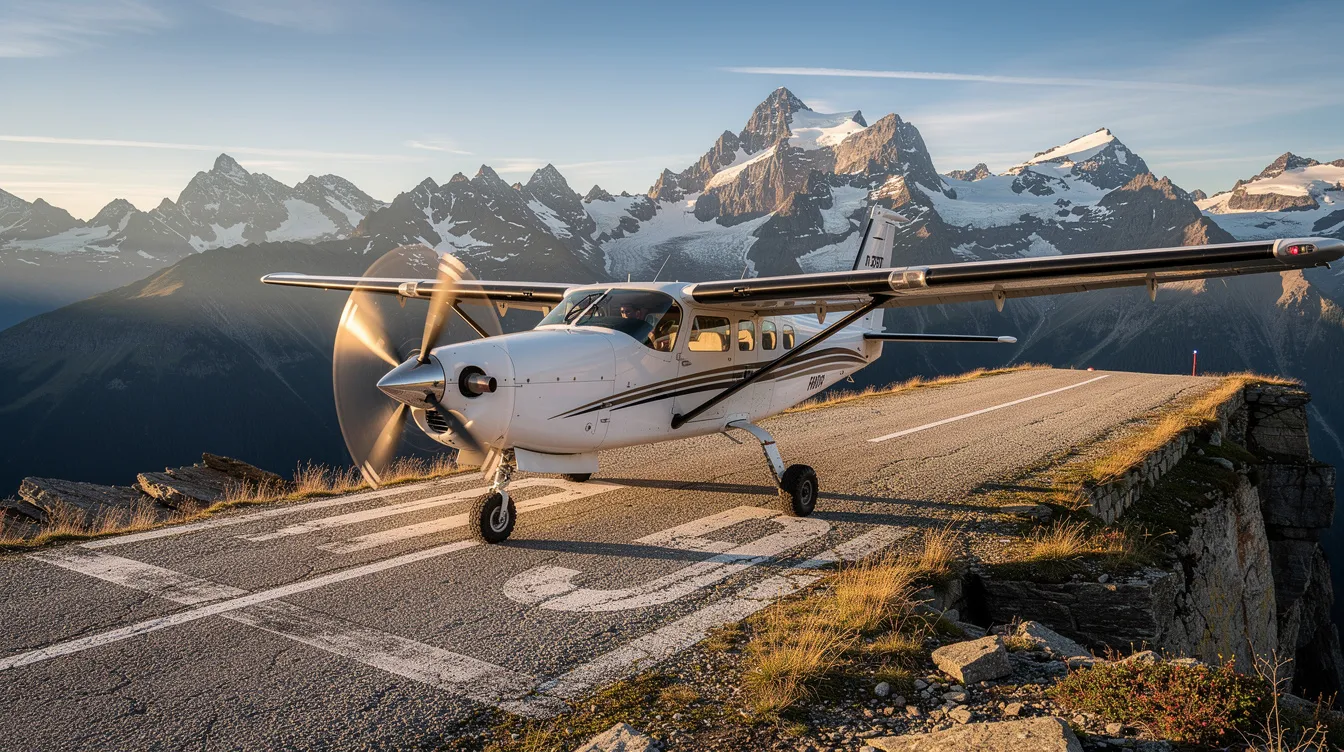
The portable plane advantage comes down to:
Airport access. Over 5,000 public-use airports in the U.S. vs roughly 500 served by scheduled airlines.
Time recovery. No security theater, no connections, no baggage carousel.
Privacy and productivity. A quiet cabin replaces a crowded terminal.
Flexibility. Depart on your schedule, not an airline's.
BlackJet positions itself as the premier path for high-net-worth travelers to tap into these advantages - accessing compact, modern jets and turboprops via prepaid Jet Card hours rather than tying capital to an airframe sitting in a hangar.
What Makes A Plane "Portable"? Key Characteristics And Use Cases
A portable plane is an aircraft designed for operational flexibility, allowing access to smaller airports and shorter runways, and often featuring a compact physical footprint.
A portable plane is defined less by absolute size and more by operational flexibility. Core traits include:
A small physical footprint - wingspans typically under 50 feet
The capability to use short runways of 2,000 to 3,000 feet
Simpler ground handling with faster turnaround times
In some cases, trailerable or fold-wing designs that eliminate the need for permanent hangar space
Portability tiers range across four practical levels:
Ultralight and light sport - minimal ground infrastructure, sometimes trailerable (e.g., ICON A5 with folding wings).
Four-seat light aircraft - Cessna 172, Diamond DA40; standard prop planes used for training and short trips.
High-performance pistons - Cirrus SR22T, Beechcraft Bonanza G36; faster, longer-legged, owner-piloted.
Compact turboprops and light jets - Pilatus PC-12 NGX, Daher TBM 960, HondaJet Elite II; pressurized, professionally crewed, Jet Card accessible.
Much like how portable planes excel at working in tight spaces where larger machines are impractical, compact aircraft thrive at smaller airports that big airliners simply cannot reach. The PC-12 NGX takes off in approximately 2,485 feet and lands in around 2,170 feet. The TBM 960 needs roughly 2,535 feet for takeoff and 2,430 feet for landing. These numbers open thousands of runways that a Boeing 737 will never see.
True portability is not always about choosing the smallest airplane. It is about matching the aircraft to your most frequent mission - range, passenger count, runway length, and speed all factor in.
From Ultralight To Light Jet: Classes Of Portable Planes Explained
Understanding the classes helps you determine which portable plane fits your life. Single-engine aircraft dominate the trainer and personal segments, while turboprops and jets serve business and longer-range travel.
Ultralight and LSA. Under FAR Part 103, powered ultralights have a maximum empty weight of 254 pounds, a top speed of 55 knots, and require no pilot certificate or medical. The ICON A5 is a two-seat amphibious light sport aircraft with foldable wings, a range of about 427 nautical miles, and a purchase price near $389,000. It represents grassroots aviation at its most accessible.
Two- and four-seat trainers. The Cessna 172 Skyhawk - with over 44,000 built - remains the world's most recognized training airplane and a reliable personal aircraft for short hops. The Piper PA-28 Cherokee family fills a similar role. Neither is pressurized, but both are affordable options for building hours and exploring general aviation.
High-performance pistons. The Cirrus SR22T cruises at approximately 213 KTAS with a service ceiling of 25,000 feet and a range with reserves of 1,000 to 1,200 nautical miles. High-performance personal pistons typically cruise at 170 to 210 KTAS. The Beechcraft Bonanza G36 offers a premium cross-country experience tracing its lineage back to 1947.
Single-engine turboprops. The TBM 960 reaches a maximum cruise speed of roughly 330 KTAS with a range of about 1,730 nautical miles. Single-engine turboprops offer cruise speeds of 260 to 330 KTAS - a significant step up in efficient performance over pistons.
Very light jets. Models like the HondaJet Elite II and Cirrus Vision Jet fill the gap between turboprops and traditional business jets. Very light jets typically cruise at 300 to 420 KTAS. Light jets have ranges of approximately 1,100 to 1,600 nautical miles, making them ideal for regional and short-haul missions.
Regulatory requirements scale with complexity: ultralights need no certificate, LSAs require a Sport Pilot certificate, standard-category general aviation aircraft need a Private Pilot license with a medical, and turboprops and jets demand instrument ratings and often type-specific training. BlackJet Jet Card members bypass these requirements entirely - every flight is crewed by professional pilots.
Portable Planes For Aviation Enthusiasts: Flight Training, Ownership, And DIY Kits
For aviation enthusiasts who dream of flying aircraft they built or own, the portable plane world starts on the ground - often in a garage.
Common flight training paths in 2026 begin in a Cessna 172 or Diamond DA40, working with a flight instructor to earn a Private Pilot certificate. These light aircraft are the backbone of general aviation, and rental rates currently run $150 to $250 per hour wet (fuel included). Most students complete training in 60 to 80 hours, putting the total cost between $12,000 and $20,000 depending on location and pace.
Kit-built ultralights and experimentals lower the barrier further. Designs from builders like Mini-Max and Badland Aircraft offer wood-and-fabric or metal kits with purchase price ranges from $15,000 to $45,000. Build times vary - expect 500 to 1,500 hours over one to three years. Many of these aircraft feature wingspans under 30 feet, making home or farm storage realistic without a dedicated hangar.
The appeal is visceral: an own airplane parked behind the barn, ready for a weekend adventure over open skies. Insurance for a small plane in the ultralight or experimental category typically runs $800 to $2,500 annually, depending on pilot experience and skill levels.
Yet there is a clear dividing line. Enthusiasts who build and fly for personal use operate in a different world from executives who need pressurized comfort, all-weather capability, and a professional crew. For the latter, BlackJet provides access to turboprops and light jets without the complexity of ownership, maintenance, or FAA certification paperwork.
Portable Planes For Business: Compact Turboprops And Light Jets
For executives, a portable plane is not a hobby - it is a productivity tool. The right aircraft turns a two-day trip into a same-day mission and reaches airports that shave an hour or more off ground transport.
Four aircraft define the compact business segment accessible through BlackJet:
Pilatus PC-12 NGX. A turboprop private jet seating up to nine passengers with a range of approximately 1,800 nautical miles and cruise speed near 290 KTAS. Its large cargo door handles oversized luggage, ski equipment, and even portable electric planers or bulky jobsite tools that executives in construction or design may need to transport - the kind of equipment that simply will not fit in a commercial overhead bin.
Daher TBM 960. The fastest single-engine turboprop in production, cruising at roughly 330 KTAS with a range of about 1,730 nautical miles.
HondaJet Elite II. A quiet very light jet with distinctive over-the-wing engines, offering stand-up cabin height and natural-light windows.
Embraer Phenom 100EV. An entry-level business jet with a flat-floor cabin, a range exceeding 1,100 nautical miles, and short-field capability.
2026 business-trip example: A finance team departs New York Teterboro at 7:00 AM aboard a HondaJet Elite II, lands in Indianapolis at 9:15 AM local time, completes meetings by 3:00 PM, and returns by 6:30 PM - one day, no hotel, no airline schedule. Commercial alternatives require an overnight stay or a 5:00 AM departure with a connection through Charlotte or Detroit.
BlackJet Jet Card members select an aircraft category - light jet, turboprop, or midsize - rather than a specific tail number. This ensures guaranteed aircraft class access and availability while still delivering the speed, privacy, and cost predictability that corporate travelers demand.
Light General Aviation Aircraft Icons: Cessna, Piper, Cirrus, Diamond, And Beechcraft Bonanza
Certain model names define the flying experience for millions of pilots worldwide. Here are the best small airplanes that shaped - and continue to shape - general aviation.
Cessna 172 Skyhawk. The world's most-produced airplane, still in production in 2026. Four seats, cruise speed around 124 KTAS, and the aircraft where most pilots earn their wings. It is the quintessential small plane.
Piper PA-28 Cherokee family. The Archer and Warrior variants remain popular trainers. The Arrow adds retractable gear for complex endorsement training. Used examples start under $80,000.
Cirrus SR22 and SR22T. A next-generation high-performance piston equipped with the Cirrus Airframe Parachute System, Garmin Perspective+ avionics, and cruise speeds up to 213 KTAS. Cirrus aircraft have redefined what a personal aircraft can deliver.
Diamond DA40 NG and DA50 RG. Composite airframes with Jet-A diesel engines offer fuel-efficient operation and low operating costs. The DA40 is a favorite among flight schools for its forgiving handling.
Beechcraft Bonanza G36. A premium cross-country piston with a lineage dating to 1947. Six seats, retractable gear, and a loyal following among pilots who value reliability and speed.
Some of these models - particularly the SR22T and Diamond DA62 - appear in high-end personal air taxi services. However, BlackJet's Jet Card fleet focuses on turboprops and jets, where pressurized cabins and professional crews deliver a complete business-travel experience.
Pressurized Portable Planes: Comfort And Safety Above The Weather
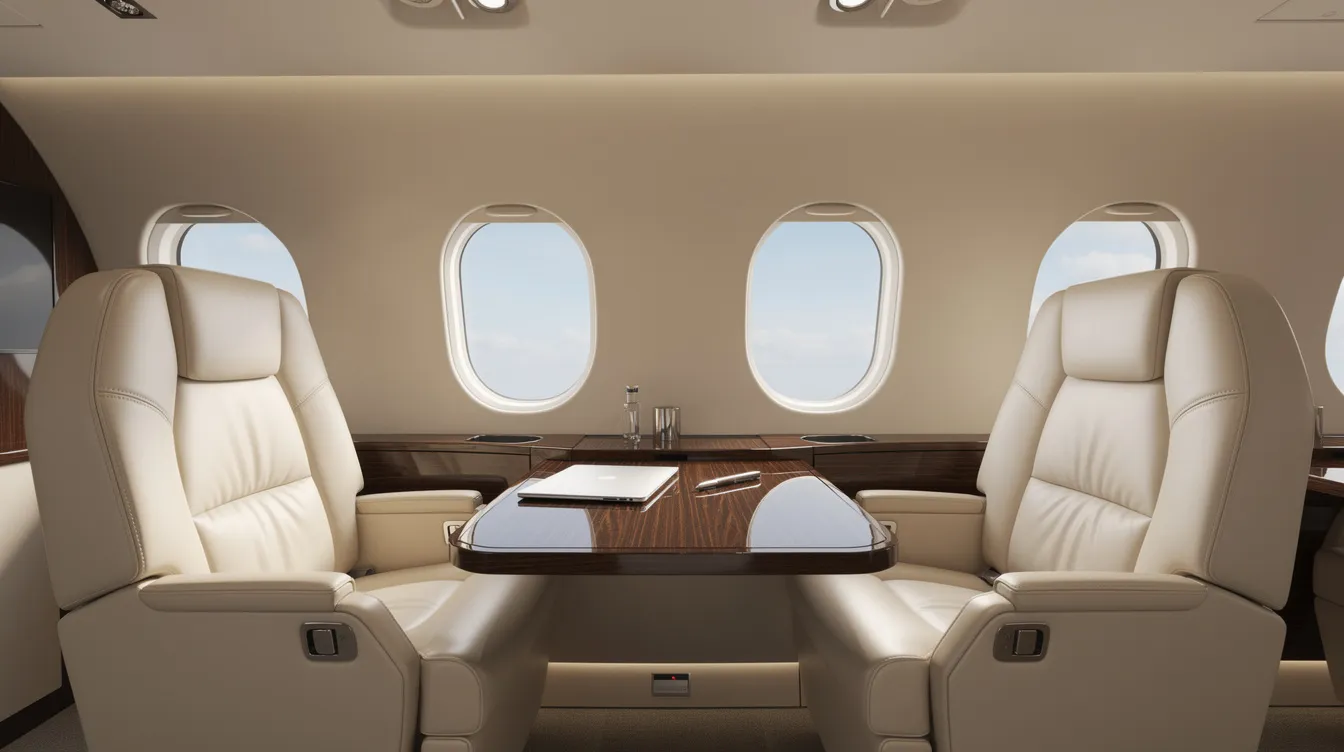
A pressurized aircraft maintains a comfortable cabin altitude - typically 6,000 to 8,000 feet - even while cruising at 28,000 to 31,000 feet. This matters more than most travelers realize. Reduced cabin altitude means less fatigue, better hydration, and sharper thinking on two- to four-hour legs.
Key pressurized portable planes include:
Piper M350 "Malibu Mirage." A pressurized piston single that bridges the gap between standard light aircraft and turboprops. Ideal for owner-pilots seeking pressurized comfort without turbine costs.
Pilatus PC-12 NGX and Daher TBM 960. Both single-engine turboprops with pressurized cabins, capable of cruising above most weather. The TBM 960 offers faster speed; the PC-12 NGX aircraft offers more cabin volume and cargo capability.
HondaJet Elite II and Phenom 100EV. Stand-up or near-stand-up cabins with jet-level pressurization and performance.
Case example: A 2026 executive team flies Munich to Oslo in a PC-12 NGX - roughly 900 nautical miles. Cruising at FL280, the cabin altitude stays near 7,500 feet. The team arrives refreshed after two and a half hours in the air, stepping off at Oslo's Gardermoen or the closer Kjeller airfield. A commercial journey through a connection hub would have consumed five to six hours minimum.
BlackJet curates a predominantly pressurized fleet for Jet Card members. Every operator in the network meets or exceeds ARGUS safety ratings, Wyvern Wingman, and IS-BAO standards - ensuring a consistent, safe cabin experience regardless of which aircraft type serves your mission.
Cost, Ownership Models, And "Portable Access" Through Jet Cards
The dream of a portable plane becomes tangible once you understand the numbers.
2026 purchase price ranges:
Category | New Price | Pre-Owned (5-10 yr) |
|---|
Used Cessna 150/152 | - | Under $60,000 |
New Cessna 172 / DA40 | $450,000–$650,000 | $180,000–$350,000 |
High-performance piston (SR22T) | ~$900,000–$1,050,000 | $400,000–$700,000 |
TBM 960 | ~$4,500,000 | ~$4,100,000 |
PC-12 NGX | ~$6,800,000 | $4,000,000–$5,500,000 |
Very light jet (HondaJet) | $3,500,000–$6,000,000 | $2,000,000–$4,500,000 |
Total cost of ownership extends far beyond the sticker. Hangar fees, insurance, maintenance reserves, crew salaries (if required), recurrent training, and capital depreciation add up. For light jets, fixed annual costs range from $620,000 to $850,000 with variable costs of $1,900 to $2,600 per hour.
Three access models compared:
Ad-hoc charter - best for fewer than 50 to 75 hours per year; pay per flight but rates fluctuate, and repositioning fees add cost.
Jet Card programs - jet cards provide prepaid access to private jets. BlackJet offers 25-hour and 50-hour jet card programs with fixed hourly rates and guaranteed availability. A 25-hour light-jet card typically costs $150,000 to $250,000. Real-time support is included in BlackJet's Jet Card programs.
Full ownership - cost-effective only when flying 200 to 400 hours annually with a stable mission profile.
A Jet Card converts the complexity of owning a portable plane into owning portable access: prepaid hours, no residual-value risk, no crew management, and no hangar lease. Jet Card programs guarantee aircraft class access within 12 to 24 hours. For a client flying 80 to 120 hours annually on regional routes like Miami to Nassau or LA to Aspen, the financial and lifestyle advantage over ownership is decisive.
Safety, Technology, And Training In Modern Portable Planes
Modern avionics have fundamentally reshaped what it means to fly a small plane. Glass cockpits like the Garmin G1000 and Garmin G3000 avionics provide advanced safety features in jets and turboprops - including synthetic vision, terrain warning, and envelope protection that keeps pilots within safe flight parameters.
The Cirrus Airframe Parachute System has saved over 100 lives, deploying a whole-airframe parachute that lowers the entire airplane to the ground in an emergency. Modern small jets meet rigorous safety standards and regulations, and features once reserved for airliners now appear in aircraft costing a fraction of a 737.
Key safety technologies in 2026 portable planes:
Synthetic vision - a 3D terrain display on the cockpit screen that shows the world even in zero visibility.
Envelope protection - software that prevents stalls, unusual attitudes, and excessive bank angles.
Emergency autoland - the HomeSafe autoland system reduces pilot workload on the TBM 960 and similar platforms by landing the aircraft autonomously if the pilot becomes incapacitated.
CAPS - whole-airframe parachute standard on all Cirrus aircraft and the Vision Jet.
Pilot training paths scale with aircraft complexity. A Private Pilot License earned in a Cessna 172 is the starting point. Instrument ratings, high-performance endorsements, and type-specific training for aircraft like the SR22T or TBM 960 follow, with recurrent training every 12 to 24 months maintaining proficiency.
ARGUS and Wyvern certifications ensure high safety standards across charter and Jet Card operators. BlackJet partners exclusively with operators meeting ARGUS Gold or Platinum and Wyvern Wingman benchmarks. Every BlackJet flight is crewed by professional pilots with structured standard operating procedures mirroring airline-level discipline - so members enjoy the benefits of a portable plane without needing a certificate themselves.
Sustainability: How Portable Planes Fit Into Carbon-Neutral Private Aviation
Modern portable planes are more fuel efficient than their predecessors. Composite airframes from Diamond, Jet-A diesel engines on the DA40 NG, and optimized turboprops like the PC-12 NGX and TBM 960 deliver meaningful per-seat-mile efficiency gains over older designs.
Sustainable aviation fuels can significantly reduce carbon footprints - and modern aircraft are designed to use sustainable aviation fuels without modification. By 2026, SAF is increasingly available at major business aviation hubs including Teterboro, Van Nuys, London Farnborough, and Paris Le Bourget. Carbon offset programs are standard in private aviation, and reputable providers verify every credit against recognized standards.
BlackJet's commitment is straightforward: every flight with BlackJet's Jet Card is carbon-neutral. BlackJet ensures all flights are carbon-neutral through verified offsets, combining SAF uplift where available with third-party-verified offset programs - at no extra cost to members.
High-utilization Jet Card fleets lower per-flight emissions compared with lightly used privately owned aircraft that sit idle yet still consume resources for hangar space, maintenance cycles, and repositioning flights. A professionally managed fleet maximizes efficiency per air mile flown.
Emerging trends include early-stage electric and hybrid-electric trainers and light sport aircraft entering the market in 2025 and 2026. These will complement - not replace - long-range turboprops and jets in the coming decade, but they signal a meaningful direction for the industry.
How To Choose The Right Portable Plane (Or Access Model) For Your Needs
Choosing the right portable plane starts with your mission, not a brochure.
Mission profile:
100 to 300 nautical mile weekend trips to lake houses or ski towns - a Cessna 172 or Cirrus SR22T handles this well for owner-pilots; BlackJet turboprops serve families who want pressurized comfort.
400 to 800 nautical mile business city pairs (Chicago to Atlanta, Frankfurt to Barcelona) - high-performance pistons or turboprops/light jets are the right tool. Jet Card access makes this cost-effective without ownership.
Specialty missions to short or rough fields - the PC-12 NGX excels with its short-field capability and cargo door.
Decision matrix in words:
Aviation enthusiast or student pilot - start with flight training in a Cessna or Piper, build toward an SR22T or DA40 for personal use. Ownership makes sense at lower annual hours.
First-time business flyer - charter a plane on demand to discover which cabin class fits your needs.
Frequent executive (5 to 15 trips/year) - a BlackJet Jet Card provides guaranteed access, fixed rates, and zero ownership headaches.
Family traveler - midsize turboprops like the PC-12 NGX offer cabin space for four to six passengers plus luggage, with the range and runway flexibility to reach vacation destinations directly.
The key takeaway: pick an aircraft class and mission first, then choose an access method - own, charter, or Jet Card. Chasing a single "best plane" without defining your journey leads to expensive mismatches.
Real-World Trip Scenarios: Portable Planes In Action
Scenario 1: Dallas to Santa Fe (250 nm weekend escape). An owner-pilot departs Addison Airport in a Cirrus SR22T at 8:00 AM, lands at Santa Fe Municipal by 9:45 AM. Two passengers, weekend bags, ski gear in the cargo area. Commercial alternative: a connecting flight through Denver, arriving mid-afternoon. Time saved: four hours.
Scenario 2: New York to Chicago executive day trip (620 nm). A BlackJet Jet Card member books a HondaJet Elite II via the mobile booking platform - offering 24/7 digital access to flights. Mobile platforms enable same-day bookings for urgent meetings. Depart Teterboro at 6:30 AM, land Midway at 8:15 AM Central. Meetings wrap by 2:00 PM; wheels up at 3:00 PM; home for dinner. BlackJet offers 24/7 real-time flight support, and real-time support enhances flexibility for private jet travelers throughout the journey. Mobile booking simplifies access to private jets without ownership.
Scenario 3: Idaho backcountry (leisure mission). A PC-12 NGX lands on a 2,800-foot gravel strip near the Middle Fork of the Salmon River - a runway no commercial airline or large jet could attempt. Six passengers, fly-fishing gear, and provisions for a week. Portable electric planers and other bulky equipment for a remote cabin renovation fit easily through the PC-12's oversized cargo door - portable electric planers can handle oversized installations away from stationary equipment, and this aircraft offers the cargo flexibility to carry them.
Scenario 4: Los Angeles to Austin (1,100 nm non-stop). A TBM 960 departs Van Nuys at 7:00 AM, arrives Austin-Bergstrom Executive by 11:30 AM Central - no fuel stop required. Door-to-door time: five hours. The commercial alternative through a connecting hub: seven to eight hours minimum.
Frequently Asked Questions About Portable Planes And Private Access
Are portable planes safe compared with airlines?
Modern small jets and turboprops meet rigorous FAA certification and safety standards. Aircraft like the TBM 960 feature Garmin G3000 with synthetic vision and emergency autoland, while Cirrus models carry a whole-airframe parachute. BlackJet partners only with operators holding ARGUS and Wyvern certifications.
Do I need a pilot's license to enjoy small planes?
Not if you fly as a passenger. BlackJet flights are always crewed by professional pilots. If you want to fly yourself, you will need at minimum a Private Pilot certificate and a medical - or a Sport Pilot certificate for LSA-category aircraft.
What is the difference between a light aircraft and a light jet?
A light aircraft typically refers to piston-engine general aviation aircraft like the Cessna 172 or Cirrus SR22T. A light jet is a turbine-powered, pressurized airplane - faster, higher-flying, and usually professionally crewed. Two aircraft categories, very different capability profiles.
Can portable planes cross mountains or fly in winter?
Pressurized turboprops and light jets routinely fly above weather at 25,000 to 31,000 feet. Unpressurized pistons face more limitations in icing and high terrain, though modern avionics and equipment help manage risk.
How quickly can BlackJet arrange a light jet or turboprop? Jet Card members can access guaranteed aircraft within 12 to 24 hours. For urgent needs, BlackJet's 24/7 support team and mobile booking tools can often accommodate same-day requests.
How does a Jet Card differ from charter or fractional ownership? Jet cards provide prepaid access at fixed hourly rates with guaranteed availability. Charter is pay-per-flight with fluctuating pricing. Fractional ownership means buying a share of an aircraft - with ongoing management fees and asset risk. Jet cards include 24/7 digital booking tools for convenience and eliminate ownership complexity.
Is private flying sustainable? BlackJet ensures carbon-neutral flights through verified offsets and sustainable aviation fuel where available. High-utilization fleets generate lower per-flight emissions than lightly used private aircraft.
Conclusion: The Smartest Way To Enjoy Portable Planes In 2026
The portable plane is no longer a niche concept. It is a practical framework for reclaiming time, reaching more destinations, and matching the aircraft precisely to the mission - whether that mission is a weekend flight to a lake house, a same-day executive round trip, or a backcountry adventure that commercial airlines cannot serve.
Different aircraft serve different needs. Ultralights and LSAs fuel the dream of grassroots aviation and pure hobby flying. General aviation aircraft like the Cessna 172 and Diamond DA40 build the skills and hours that open the skies to pilots at every level. Pressurized turboprops and light jets - the PC-12 NGX, TBM 960, HondaJet Elite II - deliver the speed, range, and cabin experience that discerning travelers and executives expect.
BlackJet exists at the intersection of these worlds. Members gain on-demand access to a curated fleet of modern, safety-certified, carbon-neutral aircraft - without navigating the complexity of ownership, maintenance schedules, or crew management. Every journey is backed by professional pilots, real-time support, and the confidence that comes from ARGUS- and Wyvern-certified operations.
Discover how a BlackJet Jet Card could redefine your 2026 travel. Speak with an advisor, explore the best jet card programs for your typical routes, and experience what portable, private aviation was designed to deliver.


 Sign up with google
 Sign up with Apple