In today’s fast-paced business world, every minute counts. Imagine turning travel time into productive hours while enjoying unmatched comfort and privacy. Whether you're a seasoned executive or a first-time charter client, understanding private airplane rental costs is key to making smart, strategic decisions that elevate your travel experience without breaking the bank. This guide unpacks everything you need to know to navigate the premium world of private aviation with confidence and clarity.
Key Takeaways
Private airplane rental costs range from $2,500 to $15,000+ per hour, delivering time savings worth 300-500% more than commercial flights for business executives
Strategic aircraft selection based on mission profile can reduce costs by 40-60% while maintaining luxury and efficiency standards
Hidden fees and positioning costs can add 20-35% to base hourly rates, making transparent pricing partnerships essential
Empty leg opportunities and jet card programs offer 25-50% cost savings for flexible high-net-worth travelers
Advanced safety certifications, sustainable aviation fuel options, and cutting-edge technology justify premium pricing over commercial alternatives
Private jet rental rates start at approximately $1,500 to $20,000 per hour, depending on aircraft type and mission requirements.
The Strategic Advantage: Why Private Aviation Transcends Luxury
For today’s executive leadership, private jet travel represents far more than prestige—it’s a strategic business tool that transforms time into competitive advantage. While commercial flying consumes 4-6 hours per trip through security lines, boarding delays, and connection inefficiencies, private aviation delivers door-to-door efficiency that can generate $50,000+ in revenue per flight hour through uninterrupted productivity. In private aviation, flight time is a key metric that directly impacts both cost calculation and scheduling, making it essential for executives to understand when planning trips.
The numbers speak volumes: private jets access over 5,000 airports worldwide compared to the 500 destinations served by commercial airlines. This expanded reach means business leaders can conduct same-day multi-city meetings, reach remote manufacturing facilities, or access exclusive venues without the constraints of airline schedules. A Fortune 500 CEO recently shared how private jet charter enabled him to visit three manufacturing sites across different states in a single day—a feat impossible with commercial flights that would have required three separate overnight trips.
Beyond accessibility, private aviation serves as a mobile boardroom where confidential discussions can occur without risk of competitor surveillance. The privacy advantage proves invaluable during merger negotiations, strategic planning sessions, or crisis management situations where information security determines business outcomes. Private jets offer better privacy and flexibility compared to first-class commercial flights, making them a preferred choice for high-stakes business travel. Additionally, private jet travel offers a high level of personalized service that often surpasses even the most luxurious first-class offerings.
For executives managing international operations, private jets eliminate the productivity loss associated with long security lines and crowded terminals. Instead of arriving at airports two hours early for commercial flights, private jet passengers typically arrive 15 minutes before departure, immediately boarding their aircraft without queues or delays.
Private Jet Rental Cost Structure: Transparency in Premium Pricing
Understanding private airplane rental cost requires examining the billable flight hour methodology—the industry standard that encompasses aircraft, crew, fuel, insurance, and operational expenses from wheels-up to wheels-down. This transparent approach eliminates surprises while providing predictable budgeting for corporate travel departments. Trip length and distance impact costs as longer flights require more fuel and crew time, making these factors critical in cost calculations. The hourly rental rate of a newer aircraft is typically higher than that of older planes, reflecting the premium for advanced technology and enhanced features.
Private jet rental cost, private jet rental prices, jet rental cost, and private jet charter cost are determined by several key factors, including aircraft type, aircraft size, hourly rate, total flight hours, and the overall flight cost. The cost to rent a private jet ranges from $2,000 to $14,000 per billable flight hour, influenced by various factors.
Most operators enforce daily minimum requirements of 2-3 hours for midsize to heavy jets, ensuring aircraft utilization efficiency. A typical transcontinental mission from New York to Miami illustrates the cost variance: a Citation CJ3+ light jet runs approximately $18,000-$25,000 one way, while a Gulfstream G550 heavy jet costs $45,000-$65,000 for the same route, but accommodates larger groups and provides international range capabilities. Private jet charter rates for these flights are influenced by the specific aircraft type selected and the corresponding hourly rate. Additionally, short-leg fees often apply to larger aircraft, such as Super Midsize Jets, for flights under a specified duration, typically two hours.
Aircraft Categories and Strategic Positioning
Strategic aircraft selection directly impacts both private jet rental costs and mission effectiveness. Each category serves distinct operational requirements:
Turboprops ($2,500-$4,000/hour) excel in regional missions covering 150-800 nautical miles. These aircraft access smaller airports that jets cannot reach, making them ideal for accessing remote business locations or vacation properties. Popular models include the King Air 350 and TBM series, offering 4-6 passenger capacity with moderate luxury amenities. Turboprop aircraft rental rates vary from $1,000-$3,000 per hour, making them a cost-effective choice for short regional flights. The most economical private jets cost around $2,000 to $4,000 per flight hour, making turboprops a competitive option for budget-conscious travelers. Multi-engine piston aircraft, another economical option, typically range from $200-$500 per hour, catering to shorter and less demanding missions. Single-engine piston aircraft, on the other hand, can cost between $120-$200 per hour, offering an even more affordable solution for short-distance travel.
Very light jets are a distinct category ideal for short regional trips. These jets are highly efficient, cost-effective, and can operate from shorter runways, making them perfect for quick business travel with small groups. Very Light Jets (VLJs) are ideal for short regional trips and accommodate four to seven passengers, offering a balance of efficiency and comfort. The cost to charter very light jets typically starts from $2,000 to $3,000 per hour, making them an attractive option for budget-conscious travelers seeking efficiency and convenience.
Light jets ($3,500-$6,000/hour) provide transcontinental capability with 4-7 passenger capacity. The Citation CJ series and Phenom 300 dominate this category, delivering coast-to-coast range with efficient operating costs. These aircraft suit small executive teams requiring speed and flexibility without heavy jet expenses. Light jets generally cost around $4,000 per hour for charter, offering a balance of affordability and performance for business travelers.
Midsize jets ($5,000-$8,500/hour) represent the sweet spot for most corporate travel, offering coast-to-coast range with enhanced cabin comfort. Aircraft like the Citation Latitude and Hawker 4000 accommodate 7-9 passengers with stand-up cabins and full lavatory facilities, ideal for productive work environments during longer flights. Light Jets can accommodate six to nine passengers and are suitable for both short and medium-haul flights. Super Midsize Jets have increased cabin space and capacity, accommodating eight to ten passengers, making them a versatile choice for business travelers. Midsize Jets, in particular, typically seat seven to nine passengers and provide greater passenger comfort, making them a popular choice for corporate travel.
Super midsize jets bridge the gap between midsize and heavy jets, offering enhanced range, larger cabin size, and increased passenger capacity. Models such as the Praetor 500 and Challenger 3500 are popular in the super midsize jet segment, providing comfort and extended travel options.
Heavy jets ($8,000-$12,000/hour) provide international capabilities with spacious cabins accommodating 8-14 passengers. As larger aircraft, the Gulfstream G450 and Bombardier Global 6000 offer intercontinental range, full galley services, and sleep-capable seating arrangements, delivering superior capacity, range, and luxury amenities. Large Cabin Jets can cost from $8,000 to $14,000 per hour when chartered, reflecting their premium features and capabilities. These jets also offer spacious interiors for long-range travel, seating nine to sixteen passengers comfortably. Ultra Long Range Jets, which also fall within this pricing range, are ideal for extended intercontinental flights. Within the US, Large and Ultra Long Range Jets cost between $8,000 and $14,000 per hour, making them a significant investment for domestic and international travel alike.
Ultra-long-range jets ($12,000-$18,000/hour) enable nonstop intercontinental flights with supreme luxury. These larger aircraft, such as the Gulfstream G650 and Bombardier Global 7500, represent the pinnacle of private aviation, featuring bedroom suites, shower facilities, and advanced entertainment systems for 12-19 passengers. Ultra-luxury VIP Airliners command rates ranging from $16,000 to $23,000 per billable flight hour, delivering exceptional exclusivity and comfort for the most discerning travelers.
Technology and Safety Premium Justification
Modern private jets justify their premium pricing through cutting-edge technology that enhances both safety and efficiency. Latest avionics systems, including Garmin G5000 and G6000 technology, provide pilots with synthetic vision, advanced weather detection, and automatic emergency descent capabilities that exceed commercial aviation standards.
IS-BAO Stage 3 certification requirements, the gold standard for private aviation safety management, add operational costs but ensure systematic safety protocols that protect high-value passengers. These certifications require continuous training, standardized procedures, and third-party auditing that justifies premium pricing for discerning clients.
Sustainable Aviation Fuel (SAF) options, while carrying a 15-20% cost premium, demonstrate corporate environmental responsibility and forward-thinking sustainability practices. Advanced weather radar and turbulence detection systems like the Honeywell IntuVue enhance passenger comfort while maintaining schedule reliability.
The Hidden Cost Matrix: Beyond Base Hourly Rates
Private jet charter costs extend beyond base hourly rates through a complex matrix of fees that can impact total trip expenses by 20-35%. In addition to these, there are additional costs such as airport fees, fuel surcharge, crew salaries, and other fixed and variable expenses that can significantly affect the total price. Landing fees, which vary by airport, are additional costs incurred by all private jet rentals. There are various fees associated with private jet charters, including ramp fees, de-icing fees, and fuel surcharges. Understanding these charges enables strategic positioning to minimize unnecessary expenses while maintaining service excellence.
A comprehensive analysis of a Fortune 500 CEO’s quarterly travel revealed that positioning fees averaged 18% of total private jet rental costs, while seasonal demand surcharges during peak periods added another 12% to standard rates. Strategic advance booking and flexible routing reduced these premiums significantly.
Mandatory Fees and Government Charges
Federal regulations impose unavoidable charges on all private flights. The Federal Excise Tax applies 7.5% to all domestic flights, while segment fees add $4.50 per passenger per leg. International travel incurs head taxes of $22.20 per passenger plus customs and immigration fees varying by destination. Ramp and handling fees are charged by fixed-base operators for handling and parking the aircraft, adding another layer of cost to private jet charters.
Landing and handling fees range from $200 at small regional airports to $1,500+ at major international hubs like Teterboro or Van Nuys. Some exclusive destinations impose additional fees—Nantucket Memorial Airport charges $500+ for aircraft over 12,500 pounds during peak summer months. Ramp and handling fees are charged by the operator and can range from $100 to $500 per visit, further contributing to the overall cost of private jet travel.
Variable Operational Costs
Crew overnight expenses become significant for multi-day trips, with overnight costs ranging $300-$600 per crew member in major cities. International trips requiring crew rest can add $1,200-$2,400 per night to total costs. Deicing can cost from $1,500 for smaller aircraft to $10,000 for larger aircraft, depending on the size and specific requirements of the operation, ensuring safety during winter conditions. Additionally, per diem fees for crew members further contribute to the overall cost, covering meals and incidental expenses during extended trips. These additional costs, including crew overnights and per diem fees, are an important consideration for travelers planning multi-day or international itineraries, as they can significantly impact the total rental cost. Crew overnights and per diem fees contribute to additional costs in private jet rentals when crews need accommodation, further emphasizing the importance of comprehensive trip planning.
Fuel surcharges fluctuate with market volatility, potentially adding $500-$1,200 per flight hour during periods of high jet fuel prices. Deicing operations during winter months range from $2,000 for light jets to $15,000 for large aircraft, as protecting aircraft surfaces from snow, ice, and frost accumulation is necessary to ensure safety and avoid additional costs. Fuel surcharges can add between $600 to $900 per hour based on market trends, making it essential to monitor fuel price fluctuations when budgeting for private jet travel. These surcharges are particularly impactful during periods of significant fuel price surges, directly affecting the overall rental cost.
International permits and overflight fees add complexity to global travel, with costs ranging $1,000-$8,000 per international leg, depending on routing and destination countries. Russia overflight permits alone can cost $3,000+ per flight, making route planning crucial for cost control.
Smart Cost Optimization Strategies for Discerning Travelers
Sophisticated private aviation users employ multiple strategies to optimize private airplane rental cost while maintaining luxury and convenience standards. Private jet rentals offer luxury, flexibility, and tailored services to meet individual travel needs, while private jet offers and private jet rental prices can be optimized through cost-saving strategies such as empty leg flights and special promotions. Empty leg opportunities represent the most significant savings potential, offering 40-60% discounts for travelers with flexible scheduling. Travelers can further maximize savings by comparing quotes from multiple private jet charter providers to identify the most competitive rates.
For those looking to further reduce costs, charter flights, charter a private jet, and rent a private jet provide attractive alternatives to ownership, allowing access to premium services without long-term commitments. Travelers with flexible travel dates can take advantage of the best private jet charter prices and private jet charter rates, maximizing value and convenience. Empty leg flights are one-way trips on private jets that would otherwise return without passengers, offering discounts to travelers who can adapt their schedules.
Empty Leg Excellence: The Insider’s Advantage
Empty leg flights occur when aircraft reposition for their next charter or return to home base after one-way trips. These leg flights are discounted repositioning flights, often available at significant savings for travelers who are flexible with their timing and routing. For example, a $15,000 charter from Miami to New York might be available as an empty leg flight for $6,000, representing substantial savings for opportunistic travelers.
Advanced booking platforms now provide mobile alerts for empty leg opportunities, with some operators offering 48-72 hour advance notice. The key lies in maintaining backup plans for time-sensitive travel, as empty leg flights cannot guarantee schedule reliability for critical business meetings.
Savvy executives maintain relationships with multiple operators to increase empty leg opportunities while ensuring backup options for essential travel. Some private aviation companies offer guaranteed backup aircraft within specific timeframes, providing confidence for empty leg bookings.
Jet Card Programs: Fixed-Rate Predictability
Jet card programs provide fixed hourly rates for 25-hour minimum purchases, typically starting at $125,000 for light jet access. These programs offer rate protection during fuel price volatility while providing priority aircraft access during peak demand periods.
However, peak day restrictions and blackout periods during holidays like Thanksgiving and New Year’s can limit availability when travelers need it most. Premium jet card programs charge 25-50% surcharges during peak periods but guarantee aircraft availability.
Interchange benefits allow jet card holders to access different aircraft categories within their program, providing flexibility for varying mission requirements. A midsize jet card holder might access light jets for short trips or upgrade to heavy jets for international travel at predetermined rates.
Route-Specific Cost Intelligence: Strategic Market Analysis
Understanding market dynamics for frequently traveled routes enables strategic planning and cost optimization. Flight distance, flight duration, and flight range are key factors in determining the appropriate aircraft and overall cost for each route, as they directly influence fuel consumption, aircraft selection, and travel time. High-frequency business corridors offer competitive pricing through operator specialization, while unique destinations command premium rates due to positioning requirements. While private jets are usually more expensive, they can be cost-competitive for large groups or for those who value their time, offering unmatched convenience and efficiency.
Transcontinental Business Corridors
The New York to Los Angeles corridor represents one of the most competitive private aviation markets, with midsize jet pricing ranging $35,000-$45,000 and heavy jets commanding $55,000-$65,000. Multiple operators compete on this route, providing leverage for regular travelers to negotiate preferred rates.
Chicago to Miami routes typically cost $18,000-$25,000 on midsize jets, with pricing influenced by seasonal demand during winter months when Miami experiences peak traffic. Smart travelers book return trips during off-peak periods to minimize total costs.
Boston to Seattle represents a longer transcontinental route with limited nonstop commercial options, making private aviation particularly attractive. Costs range $38,000-$50,000 on midsize jets and $60,000-$70,000 on heavy jets, with fuel and positioning considerations affecting final pricing.
International Executive Routes
International private jet travel commands premium pricing due to complex routing, permits, and operational requirements. The New York to London route on ultra-long-range aircraft ranges $85,000-$120,000, including permits, handling, and customs fees.
Los Angeles to Tokyo represents one of the longest private aviation routes, requiring ultra-long range jets with costs ranging $120,000-$180,000. Permit fees, overflight charges, and crew positioning contribute significantly to total expenses.
Miami to São Paulo provides access to Latin American business centers with costs ranging $95,000-$140,000 on appropriate ultra-long-range aircraft. Multiple permit requirements and complex routing through various airspace jurisdictions add operational complexity and expense.
Private Airports and Facilities: The Infrastructure Edge
The infrastructure supporting private jet travel is a critical, yet often overlooked, factor in maximizing the value of your private aviation investment. Private airports and dedicated facilities are designed to streamline every aspect of the journey, offering a level of efficiency, privacy, and luxury that commercial flights simply cannot match.
When chartering a private jet, the choice of airport can have a significant impact on both the overall experience and the bottom line. Private airports—also known as Fixed Base Operators (FBOs)—feature exclusive terminals, secure hangars, and on-site maintenance, all tailored to the unique needs of private jet passengers and aircraft operators. These facilities are engineered to minimize time on the ground, eliminate long security lines, and provide direct access to your aircraft, allowing you to arrive just minutes before departure.
Leading private jet charter companies, such as Jettly and Stratos Jet Charters, leverage their global networks to secure access to premier private airports and facilities. This ensures that clients benefit from reduced congestion, expedited customs and immigration processing, and a host of additional services that enhance the travel experience. From gourmet catering and luxury lounges to seamless ground transportation coordination, every detail is managed to deliver a truly bespoke journey.
For executives and high-net-worth individuals, the advantages extend beyond comfort. Private airports often have lower landing fees and more flexible scheduling, which can translate into significant cost savings—especially for frequent flyers or those with complex itineraries. Efficient ground handling and proximity to city centers further reduce travel time and associated expenses, making private jet charter costs more predictable and manageable.
Aircraft operators also benefit from the advanced infrastructure at private airports, including state-of-the-art fueling, maintenance, and hangar storage. These services are essential for maintaining safety, reliability, and operational readiness, ensuring that every private jet flight meets the highest standards.
The private aviation market is experiencing rapid growth, with more travelers seeking alternatives to commercial air travel. As demand rises, the importance of selecting the right private airport becomes even more pronounced. Whether your journey begins in the heart of Los Angeles or the tech corridors of San Francisco, choosing a well-equipped private airport can make all the difference in your travel experience.
Some of the most sought-after private airports and facilities in the United States include:
Van Nuys Airport (VNY), Los Angeles, California: A premier hub for private jet travel, offering multiple FBOs, luxury lounges, and direct access to Hollywood and downtown LA.
San Francisco International Airport (SFO), San Francisco, California: Features dedicated private aviation terminals and world-class amenities for seamless West Coast travel.
Teterboro Airport (TEB), Teterboro, New Jersey: The gateway to New York City for private jet passengers, renowned for its efficiency and exclusive services.
Miami-Opa Locka Executive Airport (OPF), Miami, Florida: A favorite for business and leisure travelers alike, with modern facilities and quick access to Miami’s business districts and resorts.
McCarran International Airport (LAS), Las Vegas, Nevada: Offers private terminals and VIP services for those flying into the entertainment capital.
By prioritizing private airports and facilities when planning your next charter flight, you not only enhance the luxury and efficiency of your journey but also gain a strategic edge in cost management and operational flexibility. Whether for business or leisure, leveraging the infrastructure of private aviation ensures that every aspect of your travel is optimized for success.
Luxury Amenities and Customization: The Total Experience Value
Private aviation’s value proposition extends beyond transportation through comprehensive luxury services that enhance the total travel experience. In addition to gourmet catering services—which range from $500 for simple meals to $2,500+ for elaborate multi-course dining experiences prepared by renowned chefs—private jets are equipped with luxurious amenities such as advanced entertainment systems, bespoke interiors, and personalized services that set a new standard for comfort and exclusivity. Additional concierge services offered during a flight can increase the total rental price, further elevating the experience for discerning travelers.
Ground transportation coordination ensures seamless door-to-door service, with costs ranging $200-$1,500 per destination depending on vehicle selection and routing requirements. Premium operators maintain relationships with luxury car services, helicopter operators, and yacht charters to provide integrated travel solutions. Ground transportation can cost from $100 to $1,000 per reservation, depending on specific needs, offering flexibility for travelers seeking tailored services.
In-flight connectivity has evolved dramatically, with Starlink satellite internet providing high-speed global coverage. This technology enables video conferencing, real-time market monitoring, and uninterrupted productivity during flight, justifying premium pricing for business travelers. Wi-Fi fees can add to the rental cost, varying based on the aircraft and region, but the benefits of staying connected during travel often outweigh these additional expenses.
Cabin configuration options allow customization for specific mission requirements. Conference layouts facilitate business meetings, while bedroom configurations support rest during long international flights. Some aircraft offer convertible seating that transforms from meeting space to sleeping quarters.
Sustainability Initiatives: The Future of Responsible Aviation
Forward-thinking executives increasingly prioritize environmental responsibility in private aviation decisions. Sustainable Aviation Fuel adoption currently carries a 15-20% cost premium but demonstrates corporate commitment to environmental stewardship.
Carbon offset programs add $500-$1,500 per flight hour but provide measurable environmental impact reduction. Leading operators partner with verified offset providers to ensure legitimate environmental benefits rather than symbolic gestures.
Next-generation aircraft like the Gulfstream G700 and Bombardier Global 8000 offer improved fuel efficiency and reduced emissions compared to older models. While these aircraft command premium charter rates, their environmental benefits align with corporate sustainability goals.
Corporate sustainability reporting increasingly includes aviation carbon footprint management. Private aviation operators now provide detailed emissions reporting that enables accurate environmental impact assessment for corporate responsibility programs.
Private Aviation versus Commercial First Class: The Value Equation
Quantifying private aviation value requires a comprehensive analysis beyond simple cost comparison. Time savings represent the most significant advantage—private jets eliminate 4-6 hours per round trip through efficient terminal operations and direct routing.
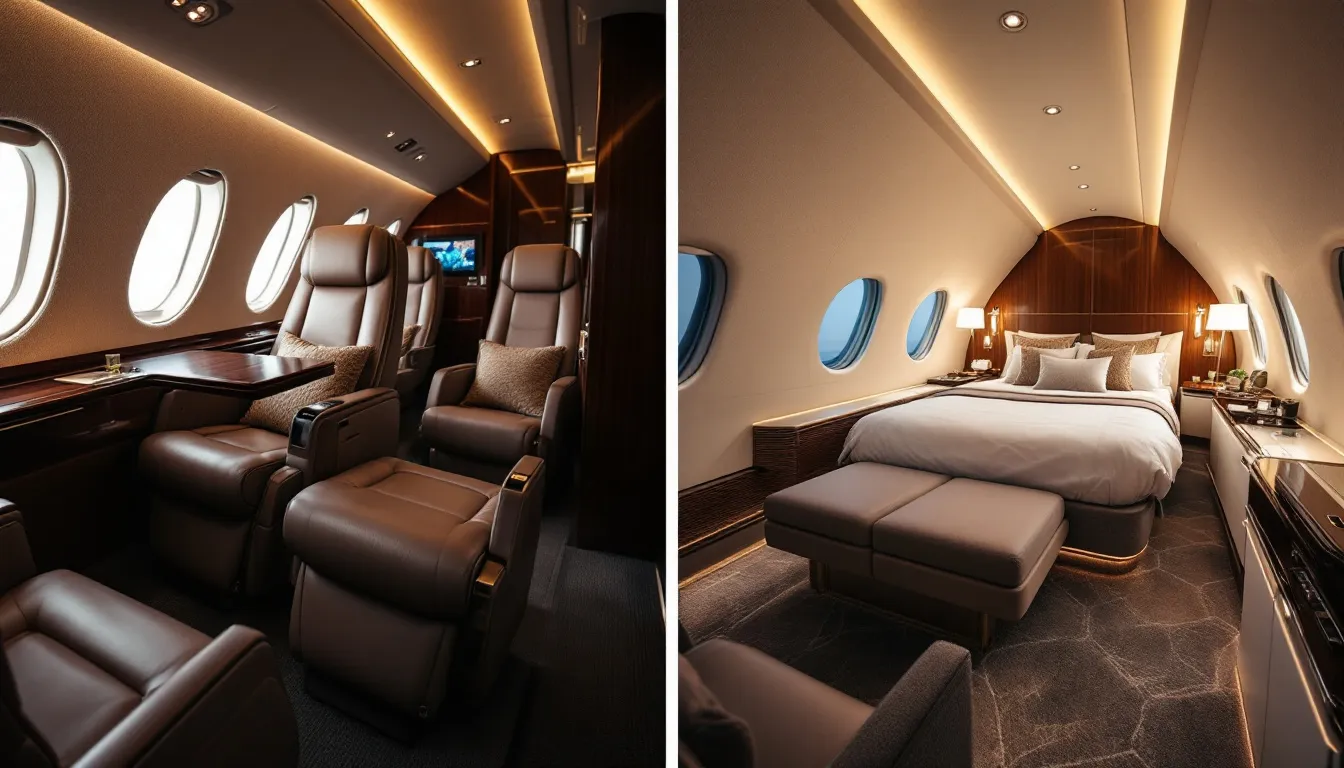
For groups of 2-4 passengers, private jet costs often approach commercial first-class pricing when considering total travel time and productivity advantages. A New York to London round trip for four executives costs approximately $8,000-$12,000 per person in commercial first class, while private jet charter costs $20,000-$30,000 per person but saves 8-10 hours total travel time. It's important to note that private jet ownership costs include not only the initial purchase price but also significant ongoing expenses such as maintenance, fuel, crew salaries, and hangar fees. Becoming an aircraft owner involves a substantial financial commitment, with total costs often far exceeding those of chartering for most executives.
Schedule flexibility proves invaluable for business travelers requiring last-minute changes or multi-destination itineraries. Commercial flights impose change fees and limited availability, while private jets adapt to evolving business requirements without penalties.
Privacy and confidentiality advantages cannot be quantified financially but provide essential value for sensitive business discussions. M&A negotiations, strategic planning, and crisis management require secure environments that only private aviation provides.
Selecting Your Aviation Partner: Due Diligence Excellence
Choosing the right private aviation partner requires rigorous due diligence focusing on safety, transparency, and service excellence. ARGUS Platinum and Wyvern Wingman certifications represent industry gold standards for safety management and operational excellence. For example, Monarch Air Group is a reputable private jet broker known for its extensive fleet and personalized service, offering tailored aircraft solutions for luxury and business travel. Selecting a reputable charter operator also ensures transparency in pricing, helping travelers avoid hidden fees and unexpected charges.
Transparent pricing models with comprehensive fee disclosure prevent surprise charges that can inflate costs by 20-30%. Premium operators provide detailed cost breakdowns, including all fees, taxes, and potential surcharges, before booking confirmation.
24/7 trip support and crisis management capabilities ensure seamless travel experiences regardless of weather, mechanical issues, or routing challenges. Elite operators maintain relationships with hotels, ground transportation, and alternative aircraft operators to provide complete solutions.
Fleet diversity and backup aircraft availability protect against schedule disruptions. Leading operators maintain reserve aircraft or partnerships that guarantee alternative transportation within specified timeframes, protecting critical business travel.
Technology platforms for real-time flight tracking, communication, and itinerary management enhance the travel experience while providing transparency. Mobile applications enable instant communication with flight crews and operations centers for dynamic trip management.
Frequently Asked Questions
What is the true cost difference between chartering and owning a private jet for executives flying 50-100 hours annually?
If you are wondering how much it costs to charter or rent a private jet, the answer depends on multiple factors such as aircraft selection, flight duration, and additional services. For executives flying 50-100 hours annually, charter costs typically range $300,000-$800,000, depending on aircraft selection, while ownership involves $2-4 million initial investment plus $500,000-$1.2 million annual operating expenses. Charter eliminates depreciation risk, maintenance responsibility, and crew management while providing access to different aircraft types for varying mission requirements.
How do positioning fees affect total trip costs, and what strategies minimize these expenses?
Positioning fees can add 15-40% to base charter costs when aircraft must reposition for pickup or return to base. Strategies to minimize these include booking round-trip flights, utilizing empty-leg opportunities, selecting operators with aircraft based near departure airports, and maintaining flexible scheduling to take advantage of favorable positioning.
What safety certifications should high-net-worth travelers demand from charter operators?
Discerning travelers should require FAA Part 135 certification as a minimum, with ARGUS Platinum or Wyvern Wingman representing gold standards. IS-BAO Stage 2 or 3 certification demonstrates systematic safety management, while third-party audit compliance ensures ongoing operational excellence beyond regulatory minimums.
How do sustainable aviation fuel options impact both costs and corporate environmental responsibility?
Sustainable Aviation Fuel typically adds 15-25% to fuel costs but can reduce lifecycle carbon emissions by 50-80%. Corporate customers increasingly request SAF options for environmental reporting purposes, with some operators offering carbon-neutral flights through SAF and verified offset combinations.
What backup protocols do elite charter operators maintain for weather delays or mechanical issues?
Premier operators maintain 24/7 operations centers with alternative aircraft access through partnerships or fleet reserves. Typical backup protocols include alternative aircraft within 2-4 hours for mechanical issues and comprehensive weather monitoring with proactive rebooking for severe weather. Some operators guarantee backup aircraft or provide commercial first-class tickets plus compensation for service failures.
Conclusion: Elevate Your Travel Experience with Strategic Private Airplane Rental
Navigating the world of private airplane rental cost can seem complex, but with the right knowledge and strategic planning, it becomes a powerful tool to enhance your travel efficiency, privacy, and comfort. From understanding the nuances of aircraft categories and cost structures to leveraging smart savings opportunities like empty leg flights and jet card programs, executives and discerning travelers can optimize their private aviation investments.
Partnering with experienced and reputable providers such as BlackJet ensures access to a diverse fleet, transparent pricing, and exceptional service tailored to your unique needs. BlackJet’s commitment to safety, flexibility, and personalized attention makes it an ideal choice for those seeking to fly privately with confidence and style. Whether for business or leisure, flying privately with BlackJet transforms your journey into a seamless, productive, and luxurious experience.
By embracing private airplane rental, you unlock unmatched convenience, avoid long security lines, and gain the freedom to set your own schedule—all while enjoying the highest standards of safety and luxury. Make your next trip a strategic investment in time, comfort, and success with BlackJet and the world of private aviation.


 Sign up with google
 Sign up with Apple


