Imagine stepping onto an aircraft where the usual airport hassles vanish—no long security lines, no crowded terminals, just seamless, personalized travel tailored to your schedule. Whether you're a busy executive, a family seeking leisure, or someone who values time and comfort above all, private jet travel offers an unmatched experience that transforms the way you fly. In this guide, discover how private jets have evolved into strategic tools for efficient, flexible, and luxurious journeys, and learn how to navigate the options that best fit your lifestyle and travel needs.
Key Takeaways
Private jet access delivers a strategic advantage over commercial first and business class—saving 2-4 hours per trip through direct routing, private terminals, and flexible departure times that align with your schedule rather than airline timetables.
The main ways to fly private in 2025 include on-demand charter (5-30 hours/year), jet cards and memberships (25-100+ hours/year), fractional ownership (50-200 hours/year), and full ownership (300+ hours/year)—each with distinct cost structures and commitment levels.
Safety certifications (ARGUS, Wyvern, IS-BAO), sustainability initiatives (SAF blends, carbon-neutral programs), and technology (instant pricing apps, global networks) are now core pillars of premium private aviation, not optional add-ons.
Aircraft selection determines everything from range to cost: light jets handle regional hops like New York to Miami, while ultra-long-range jets connect Los Angeles to Tokyo nonstop—choosing the right aircraft for your route profile is essential.
A curated jet card solution offers the flexibility of charter with predictable pricing, guaranteed availability, and built-in carbon offsets—making it the most practical entry point for travelers flying 25-100 hours annually.
There’s a fundamental shift happening in how successful executives, founders, and families approach air travel. While commercial airlines continue to pack more passengers into tighter configurations and extend connection times, private aviation has evolved into something far more sophisticated than simple luxury—it’s become a strategic tool for those who measure success in outcomes rather than seat upgrades.
Consider the difference between landing at a congested hub airport after a five-hour commercial journey versus stepping directly onto your aircraft at a private terminal, departing within minutes, and arriving at an airport steps from your final destination. That gap represents more than comfort. It represents reclaimed hours, preserved focus, and the freedom to operate on your terms.
This guide breaks down exactly how private jet access works in 2025—from on-demand charter to jet cards to ownership—and helps you identify which model fits your travel profile, risk appetite, and budget.
What a Private Jet Really Offers in 2025
Picture a Monday morning flight from JFK to LAX. On a commercial carrier, even in first class, you’re looking at arriving two hours early, navigating long security lines, waiting at the gate, boarding with 200+ passengers, and then sitting on the tarmac before a five-and-a-half-hour flight. Door-to-door: easily six hours or more.
Now consider the same trip on a private jet. You arrive at a private terminal fifteen minutes before departure. Your aircraft is ready. You board, take off within minutes of your scheduled time, and land at Van Nuys or Santa Monica—closer to most LA business destinations than LAX. Total journey time: approximately three hours.
That difference compounds across dozens of annual flights. Here’s what private jet travel actually delivers:
Time recaptured: A typical commercial coast-to-coast trip consumes 5-6 hours door-to-door; the same route on a private jet takes 3-3.5 hours, including ground transfer and boarding
Uninterrupted productivity: Executives conduct confidential calls, prepare for meetings, and work with full concentration—no middle seats, no announcements, no interruptions
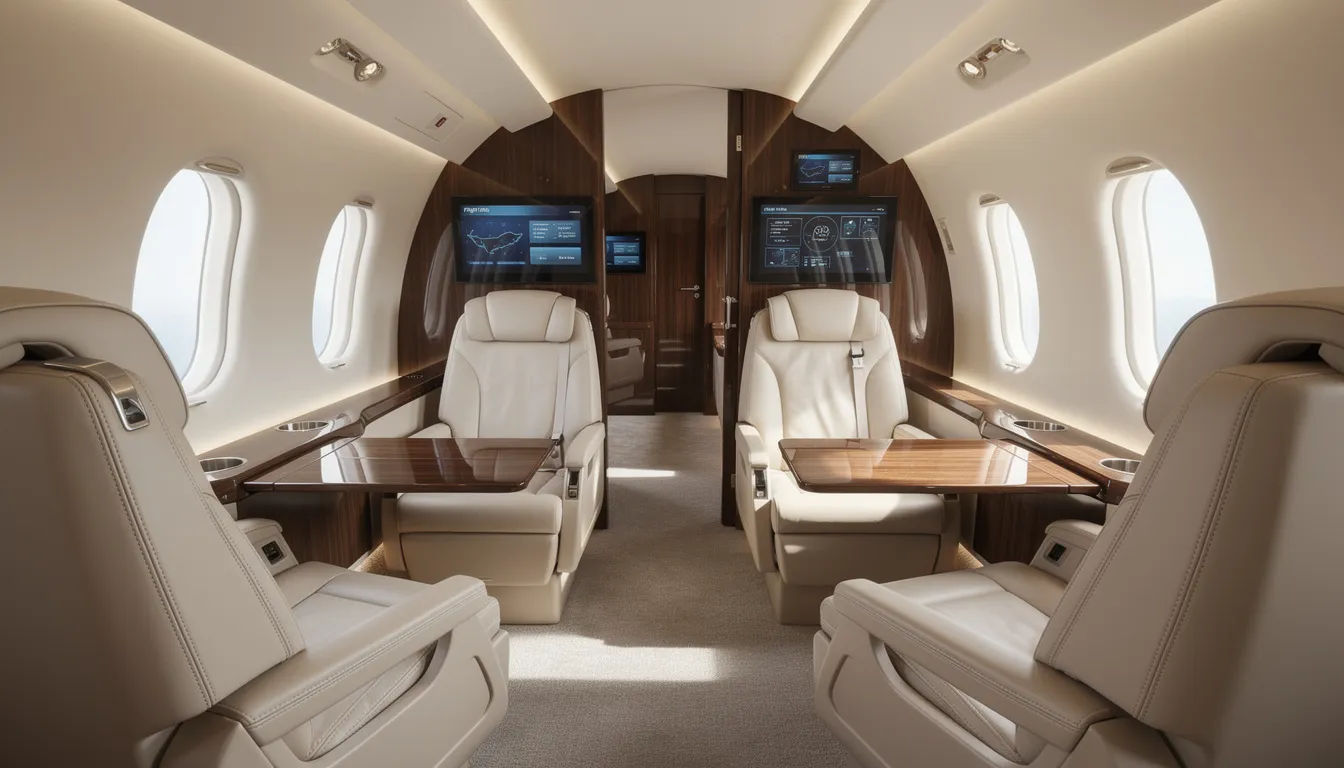
Onboard connectivity: Mid-cabin and large-cabin jets offer high-speed Wi-Fi, secure VPN access, and meeting-optimized seating configurations
Personalized comfort: Flat-bed seating, bespoke in-flight catering (from Nobu-style sushi out of Van Nuys to plant-based menus from London Biggin Hill), and cabin environments tailored to your preferences
Flexibility on departure and destination: Leave when your schedule demands, not when the airline permits—and access 5,000+ airports versus the 500 served by commercial airlines
Typical use cases span CEO roadshows covering five cities in three days, UHNW family holidays requiring complex logistics, last-minute changes for urgent board meetings, professional sports teams moving between games, and VIP event attendance at gatherings like Davos, Formula 1 races, or the Cannes Film Festival.
The private jet experience isn’t about avoiding the public. It’s about eliminating friction from travel so you can focus on what actually matters.
How Private Jet Charter Works for Business
For corporate travel and founder schedules, commercial air travel often creates more problems than it solves. When a private equity partner needs to visit portfolio companies in New York, Chicago, and Dallas within 48 hours, or when a tech founder must close deals in San Francisco and Austin before a board meeting in New York, the airline network simply cannot accommodate the velocity required.
This is where aircraft charter becomes a strategic advantage—offering not just convenience and flexibility but also greater safety compared to other modes of air travel, rather than an expense.
On-demand charter allows a company to request a flight with as little as a few hours’ notice. Instead of JFK, you depart from Teterboro—twelve miles from Manhattan with no commercial traffic. Instead of working around airline schedules, the aircraft departs when your meeting ends. Instead of connecting through hubs, you fly direct.
Aircraft Matching for Corporate Missions
Charter operators match your mission profile to the right aircraft:
Light jets (Citation CJ4, Phenom 300E) handle regional hops—New York to Washington, London to Paris, Los Angeles to Phoenix—with 6-8 passengers and a range of around 1,500 miles
Super midsize jets (Praetor 500, Challenger 3500, Citation Longitude) serve transcontinental flights with stand-up cabins, 8-10 passengers, and ranges reaching 3,500 miles
Heavy jets (Gulfstream G500, Falcon 7X) manage coast-to-coast flights and transoceanic routes with full sleeping capability and 12+ passengers
The Efficiency Case
The business case for charter flights extends beyond comfort:
Conduct in-flight meetings and sign documents en route
Visit two manufacturing plants in a single day rather than splitting across two travel days
Eliminate hotel costs, ground transportation delays, and overnight stays
Keep deal teams together throughout a transaction rather than scattering across commercial itineraries
Case Example: A six-person investor roadshow covering London, Zurich, and Milan. Commercially, this requires at least two days—early morning departures, connections, airport transfers, and compressed meeting windows. Via private jet charter, the same itinerary completes in a single day: breakfast meeting in London, lunch in Zurich, dinner in Milan, and return to London by midnight.
Charter operators serving corporate clients maintain strict safety standards. Reputable providers only work with operators holding ARGUS Platinum or Wyvern Wingman ratings, deploy two-pilot crews on all flights, and enforce duty-time limits that exceed regulatory minimums.
Private Jet Travel for Leisure & Lifestyle
When private flights are positioned solely as business tools, the leisure dimension gets overlooked. Yet some of the most compelling applications of private aviation involve family travel, vacation logistics, and experiences where the journey itself becomes part of the destination.
Consider departing Los Angeles at 8 AM on a Friday, landing in Aspen by 10:30 AM, and hitting the slopes before lunch. Or leaving London after your children’s school dismisses, arriving in Olbia for a Costa Smeralda weekend, and bypassing the crowds at Gatwick or Heathrow entirely. These aren’t hypothetical scenarios—they’re standard applications of light jets and midsize aircraft in the leisure travel segment.

Why Private Makes Sense for Holidays
The advantages over commercial carriers compound for leisure travelers:
Skip security entirely: Arrive 15 minutes before departure at a private terminal rather than navigating 90-minute queues at peak summer airports
Travel with pets: Most private jets welcome dogs and cats in the cabin—no cargo holds, no sedation, no stress (subject to destination regulations, health certificates, and advance notification)
Bring specialized luggage: Golf bags, skis, fishing equipment, surfboards, and prams stow easily with advance planning—no oversize fees, no damage from baggage handlers
Access smaller airports: Fly directly into St. Barths, Aspen, Nice, Mykonos, or hundreds of resort destinations that commercial carriers either don’t serve or require connections to reach
Bespoke Onboard Experiences
The private jet experience for leisure extends to what happens in the cabin. Operators arrange child-friendly menus, caviar and champagne service, vintage wine selections, and curated playlists. For multi-generation family trips—grandparents, parents, and children traveling together—cabins can be configured to create zones for rest and socializing simultaneously.
Carbon-Conscious Leisure Flying
Families increasingly ask about the environmental impact of private flights. The answer isn’t to pretend emissions don’t exist—private jets consume more fuel per passenger than commercial aircraft. The solution involves Sustainable Aviation Fuel (SAF) blends, reducing lifecycle emissions by up to 80%, combined with verified carbon offset programs that fund reforestation, renewable energy, or permanent carbon removal technologies.
Premium providers now offer carbon-neutral leisure journeys at no additional cost, weaving sustainability into the travel experience without sacrificing comfort or convenience.
Charter vs Jet Card vs Ownership: Ways to Access a Private Jet
“Private jet” describes an outcome—flying privately—not a single access model. Understanding the spectrum of options helps you match your travel profile to the most efficient structure.
On-Demand Charter
Ideal for travelers flying 5-30 hours annually who need flexibility without commitment.
Pay per flight with no upfront capital requirement
Full flexibility on aircraft type, route, and timing
Variable pricing based on aircraft availability, seasonality, and repositioning costs
Best for: Occasional travelers, one-off trips, testing private aviation before committing to programs
Jet Cards and Memberships
Suited for travelers flying 25-100+ hours annually who want predictability and guaranteed access.
Prepaid programs (typically 25-hour or 50-hour blocks) at fixed hourly rates
Guaranteed availability with 24-72 hours’ notice, even during peak periods
Many programs include safety guarantees (ARGUS/Wyvern-audited operators only) and carbon-neutral flights at no extra cost
Best for: Regular business travelers, families with predictable vacation patterns, executives who value consistency
A 25-hour jet card provides access to midsize aircraft for a full year’s worth of typical executive travel—enough for monthly round-trips between major city pairs or quarterly transcontinental flights with family.
Fractional Ownership
Designed for 50-200 flight hours annually with interest in equity participation.
Purchase a fractional share (1/16th to 1/2) of a specific aircraft type—Phenom 300, Challenger 3500, or similar
Monthly management fees plus hourly occupied rates
Access to a fleet of identical aircraft through the fractional provider’s network
Best for: Travelers who want consistency in aircraft type and don’t mind long-term contractual commitments
Full Ownership
Appropriate for 300+ hours annually or those with specific branding, customization, or operational requirements.
Acquisition costs range from $6-10 million for light jets to $60+ million for ultra-long range jets like the Gulfstream G650ER
Annual operating costs ($500K-$2M+) include crew salaries, hangar fees, maintenance services, insurance, and training
Owners may offset costs by chartering their aircraft when not in personal use
Best for: Corporations, aircraft owners with tax optimization strategies, individuals requiring maximum customization and control
For most travelers, a jet card offers the sweet spot: charter-like flexibility, ownership-like consistency, and none of the capital lock-up, depreciation risk, or flight department management that come with owning an asset.
Understanding Private Jet Types and Performance
Aircraft class determines your speed, range, cabin comfort, and cost per hour. Matching the right aircraft to your typical routes prevents both overspending on unnecessary capability and underestimating range requirements. The private aviation market continually evolves with new aircraft models, offering enhanced efficiency, comfort, and performance to meet diverse client needs.
Most business jets use two jet engines, providing a balance between operating economy and safety in case of engine failure.
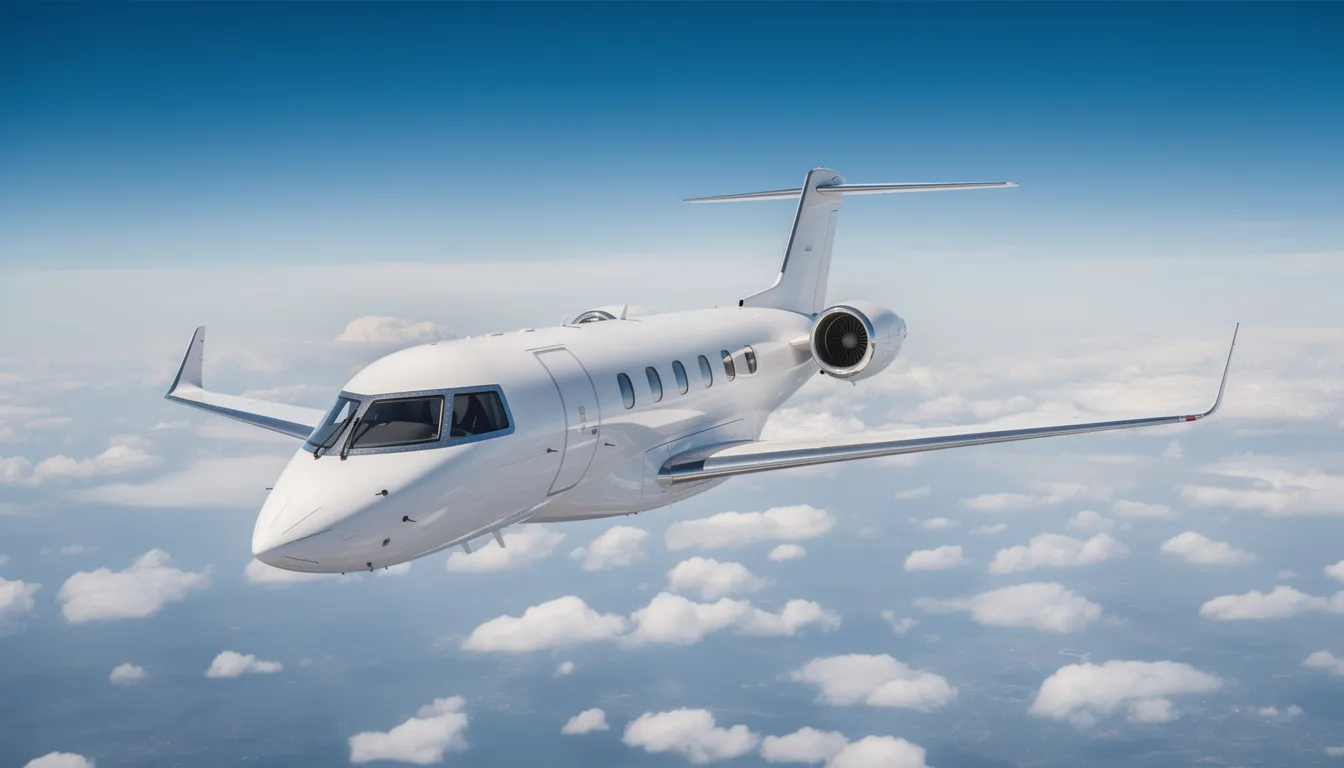
Light Jets
Capacity: 6-8 passengers
Range: 1,200-1,500 miles (New York–Miami, London–Geneva, Los Angeles–Denver)
Cruise speed: 400-480 mph
Examples: Citation CJ3+, Phenom 300E, Citation M2
Best for: Regional flights under 2.5 hours, smaller travel parties, cost-efficient positioning
Midsize and Super Midsize Jets
Capacity: 8-10 passengers
Range: 2,500-3,500 miles (New York–Los Angeles, London–Dubai with tech stop, Miami–Mexico City)
Cruise speed: 470-530 mph
Examples: Praetor 500, Challenger 3500, Citation Longitude
Best for: Transcontinental flights, stand-up cabin comfort, productive work environments
Heavy Jets and Ultra Long Range Jets
Capacity: 10-16 passengers
Range: Up to 6,000-7,500+ miles nonstop (New York–London, Los Angeles–Tokyo, Dubai–Singapore)
Cruise speed: 500-590 mph
Examples: Gulfstream G600, Global 6500, Falcon 8X
Best for: Intercontinental travel, large delegations, maximum cabin space and amenities
Turboprops
Capacity: 6-9 passengers
Range: 600-1,000 miles
Examples: Pilatus PC-12, King Air 350
Best for: Short-runway access (island strips, mountain airports), cost-efficient regional travel, slower but economical flights
The small plane or turboprop handles the final hop to St. Barths after positioning on a midsize jet to San Juan. The heavy jets cross oceans nonstop. Light jets shuttle between major regional city pairs. Understanding aircraft types means you’re never paying for capability you don’t need—or stranded without the range you require.
Safety, Certification & the Private Jet Charter Process
Safety isn’t a feature to highlight in marketing—it’s the foundation that makes everything else possible. For corporate risk managers, family offices, and discerning clients, understanding how charter operators are vetted determines whether private aviation represents a prudent choice or an unacceptable risk.
Safety Audits and Certifications
The general aviation industry operates under different regulatory frameworks than commercial airlines, which makes third-party safety auditing essential. The standards that matter:
ARGUS: Rates operators as Registered, Gold, or Platinum based on safety history, pilot experience, and operational standards
Wyvern: Wingman and Wyvern Certified ratings assess similar criteria, with emphasis on safety management systems
IS-BAO: International Standard for Business Aircraft Operations certification demonstrates commitment to global best practices
Premium charter providers and jet card programs work exclusively with operators meeting or exceeding these standards—typically ARGUS Platinum or Wyvern Wingman as minimum requirements.
Crew and Maintenance Standards
Beyond operator certification, specific crew and maintenance protocols apply:
Two-pilot requirement on virtually all business jets
Recurrent simulator training (typically every 6-12 months) for all crew members
Manufacturer-approved maintenance schedules with real-time tracking
Crew duty-time limits that often exceed FAA Part 135 requirements
The Charter Process Step-by-Step
Working with a reputable air charter service follows a predictable sequence:
Inquiry: You provide route, dates, passenger count, and any special requirements (pets, oversized luggage, specific airport preferences)
Aircraft options: The provider presents curated options matching your mission profile—you see aircraft types, operator ratings, and pricing
Confirmation: Once you select, contracts are executed and deposits collected
Flight brief: You receive FBO (fixed-base operator) details, crew information, and ground transportation arrangements
24/7 support: Operations teams monitor your flight and handle any real-time adjustments
Example timeline: An executive in London needs to reach Geneva for an afternoon meeting with 12 hours’ notice. By morning, she has confirmed aircraft, crew credentials, departure time from Farnborough, arrival details at Geneva private terminal, and car-to-aircraft transfer instructions—all coordinated without a single phone call if preferred.
Discrete Security at Private Terminals
Private flights operate through FBOs—private terminals separate from commercial facilities. This means:
Minimal public exposure during boarding and arrival
Secure, expedited baggage handling
Dedicated customs and immigration processing for international flights
Tailored security protocols for high-profile individuals and VIP airliners
Pricing, Cost Drivers & When Private Jets Make Financial Sense
Private jet costs vary widely, and anyone quoting a single number without context is oversimplifying. Transparency about what drives pricing helps you budget accurately and identify opportunities to optimize spend.
Key Cost Drivers
Several factors determine what you’ll pay for any given flight:
Aircraft category: A turboprop costs a fraction of an ultra-long-range jet per hour
Flight length: Longer flights spread fixed costs across more hours, improving per-mile economics
Repositioning: If the aircraft must fly empty legs to reach your departure airport, that leg may be priced into your trip
Airport and handling fees: Some airports (Teterboro, Las Vegas, Nice) have higher fees than others
Seasonal factors: De-icing at winter hubs like Zurich, Aspen, or Gstaad adds cost; peak demand periods (Christmas, major events) affect availability and pricing
Ballpark Pricing Ranges
Without over-detailing, expect these general ranges per flight hour:
Turboprops: A few thousand USD per hour
Light jets: $4,000-$7,000 per hour
Midsize jets: $6,000-$9,000 per hour
Super midsize: $7,500-$11,000 per hour
Heavy jets and ultra-long range jets: $10,000-$18,000+ per hour
A short 40-minute hop on a light jet from Nice to Olbia in summer might run $6,000-$8,000 total. A three-hour New York–Miami flight on the same aircraft class: $15,000-$22,000. A seven-hour New York–London crossing on a heavy jet: $70,000-$100,000+.
When Private Becomes Cost-Efficient
The financial case for private aviation strengthens in specific scenarios:
Team travel: Splitting a charter among 6-8 executives often costs less per person than business class while delivering far more value
Multi-city efficiency: Two or three city visits in a single day—eliminating hotels, separate tickets, and lost days—can offset the flight cost entirely
Opportunity cost: When an hour of executive time is worth thousands of dollars, recapturing 4-6 hours per trip creates measurable ROI
Last-minute flexibility: Avoiding penalties for last-minute changes on commercial tickets and adjusting schedules in real-time
Modern charter brokers offer instant pricing tools that show real-time aircraft availability, estimated costs, and flight details—replacing the opacity that historically characterized the private aviation market.
Sustainability in Private Aviation
Private jets face legitimate environmental scrutiny. Per-passenger emissions significantly exceed commercial flights, and the industry has historically been slow to address this reality. That’s changing—driven by client demand, regulatory pressure, and genuine innovation.
Sustainable Aviation Fuel (SAF)
SAF represents the most impactful near-term solution. Produced from sustainable feedstocks (used cooking oil, agricultural waste, synthetic processes), SAF blends can reduce lifecycle CO₂ emissions by up to 80% compared to traditional Jet A fuel.
Major FBOs already offer SAF:
Clients can request SAF for specific flights or subscribe to programs that purchase SAF credits equivalent to their annual consumption.
Carbon Offset and Inset Programs
When SAF isn’t available or sufficient, verified carbon programs fill the gap:
Offsets: Funding reforestation, renewable energy, or methane capture projects certified by Gold Standard or Verra
Insets: Investing directly in aviation decarbonization projects within the operator’s supply chain
Permanent removal: Emerging technologies like direct air capture that remove CO₂ from the atmosphere permanently
Premium providers now offer carbon-neutral private jet journeys at no additional fees, calculating emissions per trip and automatically funding appropriate offsets.
Fleet and Operations Optimization
Beyond fuel and offsets, operational efficiency reduces environmental impact:
Right-sizing aircraft to avoid flying heavy jets on routes where super midsize or light jets suffice
Deploying modern, fuel-efficient models (Praetor 500 sips 15-20% less fuel than previous-generation aircraft)
Reducing empty legs through smart scheduling algorithms that match available aircraft to demand
Continuous route optimization and climb/descent profiles that minimize fuel burn
The industry posture is shifting from defensive to proactive. Rather than greenwashing or minimizing concerns, responsible operators provide transparent emissions data per trip and invest actively in cleaner technologies.
Technology & the Modern Private Jet Experience
Private aviation has transformed from a phone-and-fax industry to a digitally enabled global network. Technology now touches every aspect of the experience—from initial search to post-flight feedback.
Instant Search and Booking
Modern platforms allow you to:
See real-time aircraft availability across thousands of jets worldwide
Filter by date, route, passenger count, and aircraft class
Receive instant pricing estimates within seconds
Compare options side-by-side before committing
This instant pricing capability replaces the multi-day quote process that historically frustrated potential clients. Aviation experts still add value in complex itineraries, but simple point-to-point bookings now happen in minutes.
Personal Apps and Portals
Once booked, technology keeps you informed and in control:
Itinerary changes via app rather than phone calls
Catering requests and special requirements are submitted digitally
Passenger manifests updated in real-time
Flight tracking and ETA notifications pushed directly to your device
The experience mirrors commercial airline apps but with far greater flexibility and responsiveness.
Operational Technology
Behind the scenes, operators deploy sophisticated systems:
Advanced flight-planning software optimizing routes, altitudes, and fuel loads
Real-time weather integration adjusting for turbulence, headwinds, and diversions
Predictive maintenance using IoT sensors to identify issues before they cause delays
Crew scheduling systems ensure compliance with duty-time limits
These technologies enhance safety, punctuality, and fuel efficiency simultaneously.
Onboard Connectivity
Passengers expect connectivity that matches ground-based offices:
High-speed Wi-Fi on mid-cabin and large-cabin jets (KA-band satellite on newer aircraft)
Secure VPN access for confidential business communications
Streaming capability for entertainment during leisure travel
Voice calling and video conferencing (depending on aircraft and route)
Note that connectivity quality varies by aircraft age, satellite coverage, and route. Oceanic flights may have limited bandwidth. Confirming connectivity specifications when booking ensures no surprises.
How to Choose the Right Private Jet Solution for You
With charter, jet cards, fractional ownership, and full ownership all available, selecting the right model requires an honest assessment of your travel patterns, preferences, and priorities.
Flight Hours Per Year
Your annual flight volume provides the primary filter:
0-25 hours: Ad-hoc charter makes most sense—pay only when you fly, no commitment
25-75 hours: Jet cards or memberships deliver better per-hour rates and guaranteed availability
75-200 hours: Heavy jet card usage or fractional ownership, depending on capital preferences
200+ hours: Full ownership may become economical, especially if you can charter the aircraft during downtime
Travel Profile Considerations
Beyond hours, examine your typical mission profile:
Route patterns: Short regional hops favor light jets; intercontinental travel demands heavy or ultra-long-range jets
Passenger count: Solo executive travel differs from family trips with grandparents and children
Special requirements: Regular travel with pets, golf equipment, or mobility accommodations may influence aircraft selection
Airport preferences: Preference for specific departure airports (Teterboro, San Antonio, Las Vegas executive terminals) affects operator availability
Risk and Responsibility Appetite
Some travelers prefer clean separation from asset ownership:
No depreciation risk on aircraft values
No crew hiring, training, or management responsibility
No maintenance oversight or hangar negotiations
No insurance, registration, or regulatory compliance burden
Others value the control and customization that ownership provides—branded interiors, specific configurations, guaranteed access to a particular aircraft.
Engage an Aviation Advisor
For travelers between the clear extremes, engaging experienced aviation experts pays dividends. A good advisor can:
Model total costs across scenarios over 3-5 years
Account for tax implications, depreciation, and residual value assumptions
Compare jet card economics against charter, fractional, and ownership alternatives
Structure access around your specific routes, timing, and preferences
For most profiles, a curated jet card solution delivers the optimal combination: guaranteed safety standards from vetted charter operators, carbon-neutral performance, predictable pricing without capital lock-up, and flexibility to adjust as travel patterns evolve.
Frequently Asked Questions About Private Jets
How far in advance do I need to book a private jet?
Same-day flights are often possible, sometimes with as little as 2-4 hours’ notice from major hubs like Teterboro, Van Nuys, or London Luton. However, best availability and pricing typically come with 24-72 hours’ advance booking. During peak periods—Christmas through New Year, Davos week, Art Basel, major sporting events—booking several days or weeks ahead ensures access to preferred aircraft categories and avoids premium pricing.
Can I fly with my pet on a private jet?
Most private jets welcome pets in the cabin, making private flights particularly attractive for pet owners. Your dog or cat travels with you—no cargo hold, no sedation, no stress. Requirements include valid health certificates, up-to-date vaccinations, and microchipping where destination countries require it. Notify your operator in advance so they can arrange appropriate cleaning before your flight, confirm seating arrangements, and ensure any pet-specific comfort needs are addressed.
Do private jets have Wi-Fi and phone connectivity?
Wi-Fi is standard on most midsize, super midsize, and large-cabin jets operating in North America and Europe. Modern aircraft equipped with KA-band satellite systems offer speeds suitable for video conferencing and large file transfers. Some smaller aircraft and certain oceanic routes may have limited or more expensive connectivity. Always confirm connectivity specifications when booking if staying connected during your flight is essential.
What identification and security checks are required?
All passengers need valid passports for international flights and, where applicable, appropriate visas. Private flights don’t exempt you from immigration requirements—they simply streamline the process. Security screening and customs clearance occur at private terminals (FBOs) with expedited, discrete processing rather than public commercial terminal queues. All flight details, including passenger manifests, are submitted to relevant authorities before departure.
Are private jet flights accessible for passengers with reduced mobility?
Many charter operators regularly assist passengers with limited mobility. Depending on the airport and aircraft type, ramp access, ambulifts, or alternative boarding arrangements can be coordinated. Certain aircraft layouts accommodate wheelchairs or mobility aids more easily than others—discussing specific needs with your operator before booking ensures they recommend suitable aircraft and airports. Medical equipment requiring power or specific handling can typically be accommodated with advance planning.
Final Thoughts
Private jet travel in 2025 is no longer just a symbol of luxury—it’s a practical, efficient, and flexible solution tailored to diverse travel needs. Whether you opt for on-demand charter, jet cards, fractional ownership, or full ownership, each pathway offers unique benefits that can transform your travel experience. The ability to choose the perfect plane for your journey, enjoy personalized service, and access thousands of airports worldwide ensures unmatched convenience and comfort.
As the private aviation market continues to evolve, sustainability and technology are becoming integral to the private jet experience, allowing customers to fly responsibly without compromising on quality. With instant pricing tools, expert aviation advisors, and comprehensive safety standards, private jet travel is more accessible and transparent than ever before.
Ultimately, private aviation empowers you to reclaim your time, enhance productivity, and elevate your journey—wherever your destination may be.
Elevate your travel—effortlessly. Private flight represents more than luxury; it’s a strategic tool for those who value time, privacy, and seamless access to the world. Whether you’re exploring your first charter, considering a jet card for predictable access, or evaluating ownership alternatives, the right solution exists for your profile.
Discover how a curated Jet Card program—with rigorous safety standards, carbon-neutral performance, and unmatched flexibility—can reshape how you move through the world. Explore premium private jet access designed around your priorities, not airline schedules.
The evolution of private jets began with the first flight of the Morane-Saulnier MS.760 Paris, the first small jet-powered civilian aircraft, developed in the early 1950s. The development of business jets was further accelerated by military requirements, leading to the creation of iconic models such as the Lockheed JetStar and the North American Sabreliner.


 Sign up with google
 Sign up with Apple