Dreaming of soaring above the clouds in your own private jet? The allure of private aviation combines luxury, convenience, and unmatched freedom—but it comes with a significant price tag. Whether you're contemplating your first purchase or exploring upgrade options, understanding the full scope of private jet cost buy is essential. This comprehensive guide breaks down everything you need to know about the investment, ongoing expenses, and strategic considerations to help you make an informed decision and elevate your travel experience to new heights.
Key Takeaways
New private jets range from $2 million for entry-level light jets to over $100 million for ultra-long-range aircraft, while used jets start around $200,000
Annual operating costs typically run $500,000 to $1.5 million, including maintenance, insurance, crew salaries, and hangar fees
The total cost of ownership over 10 years often doubles or triples the initial purchase price
It's essential to understand the true cost of private jet ownership, factoring in all expenses beyond the initial purchase price to make informed decisions
Breaking even on ownership versus chartering requires flying approximately 150+ hours annually
Strategic alternatives like fractional ownership, jet cards, and management programs can reduce financial exposure while maintaining private aviation benefits
Understanding Private Jet Purchase Costs: Strategic Investment Considerations
For ultra-high-net-worth individuals, private aviation represents far more than luxury transportation—it’s a strategic time arbitrage investment that can generate unprecedented productivity gains. While commercial flying restricts executives to rigid schedules and crowded terminals, private jet ownership delivers complete schedule sovereignty and access to destinations unreachable by commercial airlines. In contrast to commercial flights, private jets offer greater convenience, privacy, and flexibility, allowing travelers to avoid long security lines and crowded cabins.
The fundamental value proposition centers on time optimization. Frequent private jet travel can save 40-60 hours monthly compared to commercial aviation, translating to potential productivity gains worth millions annually for top executives. Frequent travelers benefit most from these time savings and personalized service, as they require efficiency and tailored solutions for their regular journeys. Consider the strategic advantage: private jets access over 5,000 airports worldwide versus just 500 served by commercial airlines, enabling point-to-point travel that eliminates layovers and reduces door-to-door transit time by 50-70%.
Privacy and security advantages prove equally compelling for corporate executives handling sensitive business matters, high-profile families seeking discretion, and entrepreneurs requiring confidential meeting environments. Private travel offers enhanced discretion, flexibility, and a premium experience for both business and leisure purposes. Current market conditions favor serious buyers, with new aircraft delivery delays extending 2+ years, creating potential appreciation opportunities for well-positioned pre-owned acquisitions.
The private jet cost buy decision requires sophisticated analysis beyond simple purchase price comparisons. The total cost and requirements of a private jet depend on factors such as flight distance, aircraft type, and usage patterns. True ownership economics encompass acquisition costs, ongoing operational expenses, tax optimization strategies, and strategic value creation through enhanced productivity and business development capabilities.
New Private Jet Purchase Price Categories
Private jet acquisition costs vary widely based on the aircraft's size, range capabilities, and luxury appointments. Understanding each category’s value proposition enables informed investment decisions aligned with specific mission requirements and budget parameters.
Very Light Jets (4-7 passengers): $2-6 million
Entry-level private jets like the HondaJet Elite S ($5.4 million) and Cirrus Vision Jet SF50 ($3.2 million) offer a cost-effective introduction to private aviation. These very light jets excel for regional business travel up to 1,200 nautical miles, accommodating small teams with operational costs around $2,500 per flight hour. Limited baggage capacity and reduced cabin height represent trade-offs for lower acquisition and operating costs.
Light Jets (6-8 passengers): $6-15 million
The light jet category, including the Phenom 300E ($9.9 million) and Citation CJ4 Gen2 ($11.2 million), provides an optimal balance of cost and capability for most business applications. These aircraft cruise at 450+ knots with 2,000+ nautical miles range, enabling coast-to-coast travel with single fuel stops. Operating costs average $3,500-4,000 per hour, making them attractive for corporations flying 100-200 hours annually.
Midsize Jets (7-9 passengers): $15-30 million
Midsize jets like the Praetor 500 ($21 million) and Citation Longitude ($28 million) offer transcontinental range without fuel stops, plus stand-up cabin height and larger baggage compartments. These aircraft represent the sweet spot for many corporate flight departments, combining 4,000+ nautical mile range with reasonable operating costs of $4,500-5,500 per hour.
Super Midsize Jets (8-12 passengers): $30-50 million
The super midsize category, featuring aircraft like the Challenger 350 ($27 million) and Gulfstream G280 ($25 million), provides intercontinental capability with enhanced passenger comfort. These jets accommodate up to eight passengers in true luxury, with operating costs ranging $6,000 to $7,500 per hour. Flight range extends to 4,500+ nautical miles, enabling non-stop flights from New York to most European destinations.
Heavy Jets (10-16 passengers): $50-80 million
Large jets including the Global 6500 ($62 million) and Falcon 7X ($54 million) deliver ultra-long range capability exceeding 7,000 nautical miles. These aircraft feature multiple cabin zones, full galleys, and crew rest areas for extended international flights. Operating costs reach $8,000-12,000 per hour, justified by unmatched range and luxury appointments suitable for global business operations.
Ultra-Long Range (12-19 passengers): $80-100+ million
Flagship aircraft like the ultra-long range models Gulfstream G700 ($78 million) and Global 7500 ($75 million) represent the pinnacle of private aviation technology and luxury. These ultra-long-range jets connect any two points globally with single fuel stops, featuring bedroom suites, full showers, and conference facilities. Operating costs exceed $10,000-15,000 per hour, positioning them for ultra-high-net-worth individuals and Fortune 500 corporations requiring maximum capability and prestige.
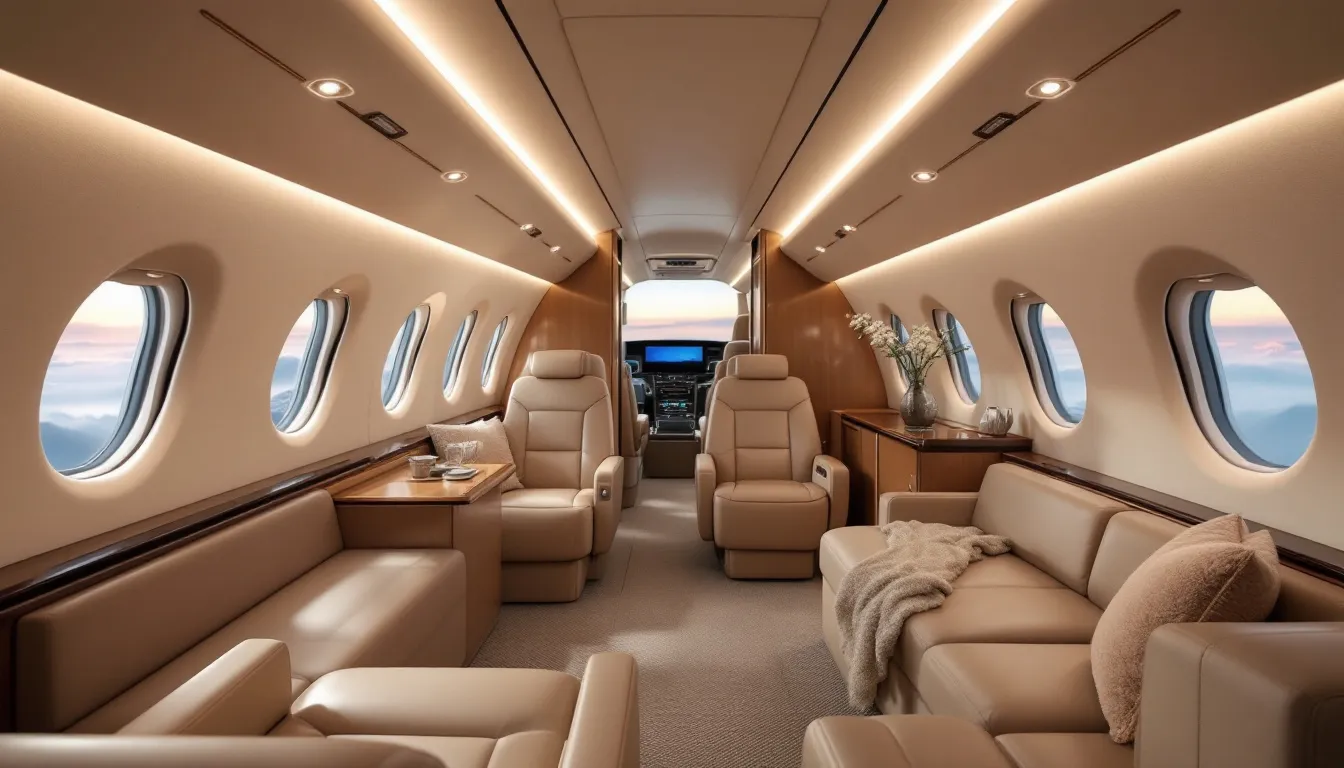
Pre-Owned Aircraft Market Dynamics
The pre-owned aircraft market offers compelling value propositions for sophisticated buyers, especially those seeking a pre-owned jet that balances cost savings with reliable performance. Used jets typically price 20-50% below new equivalents, with 2018-2020 models offering optimal combinations of modern technology and attractive pricing. However, pre-purchase inspections costing $25,000-75,000 prove essential for identifying potential issues that could require $500,000+ in unexpected maintenance.
Avionics upgrade requirements represent significant considerations for older aircraft. In addition to avionics, equipment upgrades—including interior makeovers and major maintenance updates—should be factored into the overall evaluation. Modern glass cockpits and navigation systems can cost $200,000-2 million for comprehensive upgrades, though these investments often prove necessary for optimal safety margins and airspace access. Current market conditions favor buyers in 2024, with increased inventory and price stabilization following pandemic-driven demand spikes.
Aircraft sales professionals play a crucial role in facilitating pre-owned transactions, offering expert guidance and solutions throughout the buying process.
Complete Operating Cost Breakdown
Private jet ownership costs extend far beyond initial purchase price, with annual operating expenses typically representing 10-15% of aircraft value regardless of usage patterns. In addition to the initial investment, owners must account for ongoing costs such as maintenance, fuel, and regulatory compliance. Understanding these comprehensive ownership costs enables realistic budgeting and informed comparison with alternative aviation solutions.
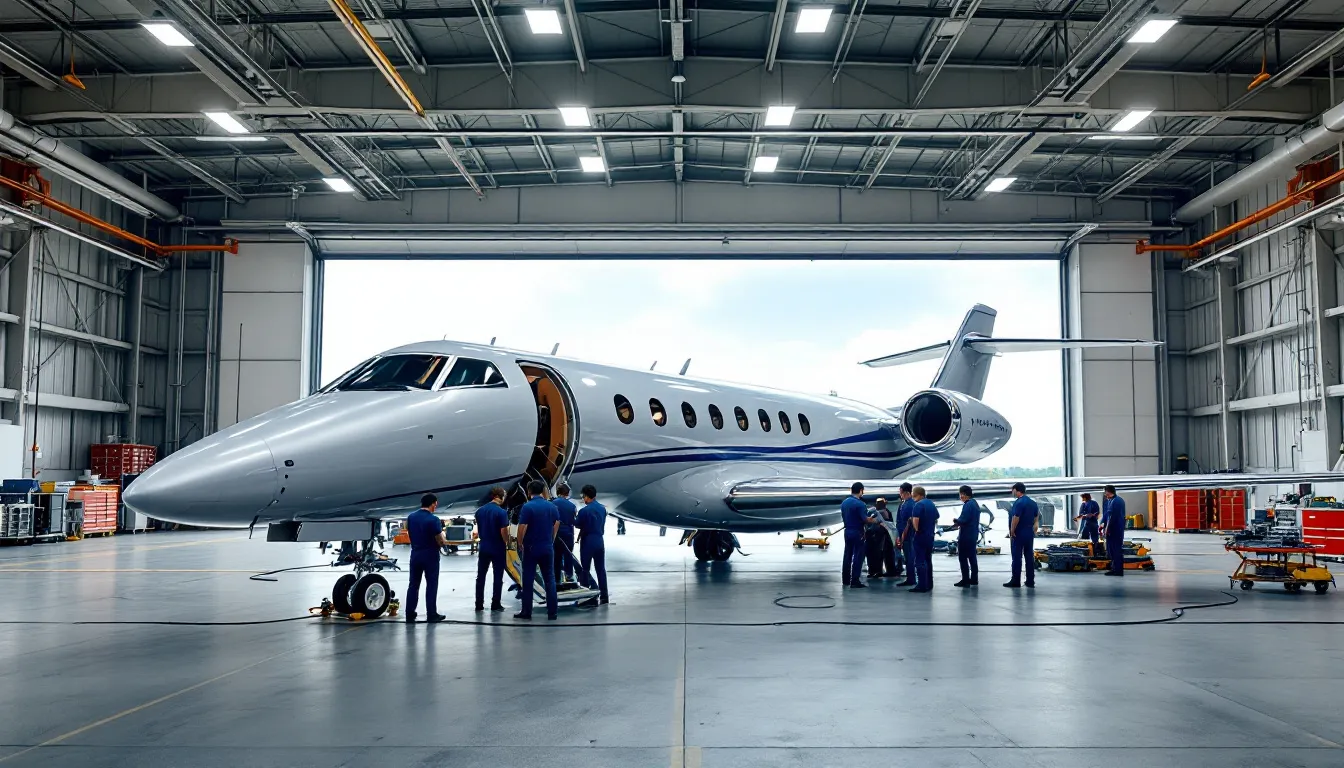
Annual fixed costs represent unavoidable expenses incurred regardless of flight activity, while variable costs scale directly with usage patterns. Crew costs, including salaries and staffing, are a significant component of these expenses. For perspective, a Citation Longitude owner flying 200 hours annually faces approximately $1.2 million in total operating costs, demonstrating the substantial ongoing financial commitment required for aircraft ownership.
Real-world examples illustrate comprehensive cost structures. A Gulfstream G450 operating 423 hours annually incurs roughly $4 million in operating costs, with crew salaries, maintenance reserves, and fuel representing the largest expense categories. Larger or more complex aircraft typically have higher operating costs compared to smaller jets. These figures exclude insurance and hangar fees, which can add another $400,000-800,000 annually, depending on aircraft value and location. When considering variable costs, flight distance directly impacts fuel consumption and total expenses, making route planning and aircraft selection critical factors in managing overall costs.
Fixed Annual Expenses
Aircraft insurance typically costs 1-3% of hull value annually, translating to $200,000-600,000 for a $20 million jet. Coverage encompasses hull damage, liability protection, and specialized aviation risks. Insurance rates vary based on pilot experience, aircraft type, and operational profile, with international flying and challenging airports commanding premium pricing. These insurance expenses can easily reach several thousand dollars annually, depending on the aircraft and coverage.
Hangar fees range from $30,000-200,000+ annually, depending on location and facility quality. In many cases, hangar fees amount to several thousand dollars annually, especially at premium locations like Teterboro, Van Nuys, and European capitals, which command the highest rates, while secondary airports offer cost savings with potential convenience trade-offs. Heated hangars prove essential in northern climates, adding 20-30% to basic storage costs.
Crew salaries and benefits represent major fixed expenses, with qualified captain/first officer teams commanding $170,000-600,000 annually. Type-rated pilots for larger jets earn premium compensation, while recurrent training, medical examinations, and benefit packages add 25-35% to base salary costs. Professional crew scheduling services help optimize utilization while maintaining regulatory compliance.
Scheduled maintenance reserves ensure adequate funding for required inspections and component overhauls. These reserves typically range $300,000 to $800,000 annually for heavy jets, calculated based on flight hours and calendar time. Enrolled maintenance programs from manufacturers provide cost predictability but require substantial upfront commitments.
Management fees average 10-15% of total operating costs when utilizing professional aircraft management services. These fees cover regulatory compliance, crew management, maintenance coordination, and operational support. For many owners, management fees represent several thousand dollars annually, as quality management companies leverage economies of scale to reduce overall ownership costs while handling complex administrative requirements.
Variable Operating Costs
Fuel consumption represents the largest variable expense, with aircraft burning 150-450 gallons per hour, depending on size and efficiency. At current fuel prices averaging $5-7 per gallon, hourly fuel costs range $750-3,150. Longer flights and larger aircraft require more fuel, which increases overall costs. Fuel efficiency varies significantly between aircraft types, with newer engines offering 15-20% improvements over previous generations.
Landing and handling fees vary dramatically by airport location and services required. Domestic airports typically charge $500-1,500 per landing, while international destinations can exceed $3,000 for larger jets. Signature Flight Support, Atlantic Aviation, and other premium FBOs command higher fees but offer superior service levels and amenities.
Catering and ground transportation costs depend heavily on passenger preferences and trip complexity. Basic catering averages $100-300 per passenger, while gourmet meals and premium beverages can exceed $500 per person. Ground transportation coordination adds $200-1,000 per trip, depending on destination and service levels.
When estimating total costs, flight duration is a key variable to consider along with aircraft type and route.
International flights incur additional permits, taxes, and handling fees ranging $2,000 to $15,000 per trip. Overflight permits, customs clearance, and foreign airport taxes accumulate quickly for global operations. In the US, the federal excise tax may also apply to private jet flights, impacting the total cost. Professional flight planning services prove essential for managing these complex requirements and associated costs.
Always ask about additional fees such as surcharges, airport fees, and service charges that may not be included in the initial quote to avoid unexpected expenses.
Financing and Tax Considerations
Private jet financing structures enable strategic capital allocation while preserving liquidity for other investments. Qualified buyers typically secure aircraft loans requiring 10-20% down payments with interest rates ranging 6-8% based on creditworthiness and aircraft characteristics. Loan amounts and acquisition costs often reach into the million-dollar or even several-million-dollar range, especially for larger or newer jets. Twenty-year amortization schedules are available for newer aircraft, while older jets may require shorter terms.

Section 179 depreciation provisions allow up to $1.16 million in first-year deductions for business use, providing immediate tax benefits for qualifying purchases. Bonus depreciation potentially covers 100% of the business-use percentage in year one, creating substantial tax advantages for corporate aircraft purchases. However, personal use limitations and recapture provisions require careful structuring and documentation. For those seeking flexibility without the long-term financial commitment of ownership, private jet chartering offers a cost-effective alternative.
Tax Optimization Strategies
Delaware trust structures offer tax-efficient ownership frameworks for high-net-worth individuals, potentially eliminating state sales taxes and providing privacy benefits. These trusts require careful legal structuring but can generate significant savings—often in the tens of thousands—on multi-million-dollar aircraft purchases.
Charter revenue generation provides opportunities to offset ownership costs while maintaining primary use availability. Professional management companies can generate $200,000-800,000 annually through strategic charter placement, though this income requires careful tax planning and operational considerations.
Business use documentation proves essential for maximizing tax benefits. The IRS requires detailed logs demonstrating business purpose, passenger manifests, and trip justifications. Proper documentation enables depreciation deductions, operating expense write-offs, and other tax advantages available to business aircraft operations.
State sales tax mitigation through proper registration strategies can save hundreds of thousands—or even tens of thousands—on major aircraft purchases. Delaware, Montana, and other states offer favorable registration environments, though ongoing compliance requirements and operational patterns determine optimal structures.
Technology and Safety Certifications
Modern private jets incorporate sophisticated avionics systems that enhance safety margins while reducing pilot workload. Garmin G5000/G6000 and Collins Pro Line Fusion cockpits provide integrated flight management, weather radar, and terrain awareness systems. These advanced systems enable operations in challenging weather conditions while maintaining optimal efficiency and safety standards.
RVSM (Reduced Vertical Separation Minimum) and ADS-B (Automatic Dependent Surveillance-Broadcast) compliance proves mandatory for most airspace access. These certifications ensure aircraft can operate in high-density traffic areas and international airspace. Upgrade costs can reach $150,000-400,000 for older aircraft lacking these capabilities.
Enhanced Flight Vision Systems (EFVS) enable lower approach minimums at equipped airports, improving schedule reliability during challenging weather conditions. These infrared-based systems cost $200,000-400,000 but provide operational advantages worth millions in time savings and schedule protection.
Predictive maintenance systems reduce unexpected Aircraft on Ground (AOG) situations by 40% through continuous monitoring of engine parameters, avionics health, and component status. These systems enable proactive maintenance scheduling while minimizing costly unscheduled repairs and flight disruptions.
Sustainability and Environmental Impact
Sustainable Aviation Fuel (SAF) adoption enables carbon footprint reductions up to 80% compared to conventional jet fuel. Leading FBOs increasingly offer SAF blends, though premium pricing of 50-100% above conventional fuel reflects current production limitations. Next-generation engines offer 15-20% fuel efficiency improvements, reducing both operating costs and environmental impact.
Carbon offset programs provide immediate environmental impact mitigation while supporting renewable energy and reforestation projects. Many charter and management companies include offset programs in service offerings, though verification and additionality remain important considerations for genuine environmental benefits.
Electric and hybrid propulsion development focuses primarily on short-range aircraft, with companies like Eviation and Heart Aerospace targeting 500+ mile range capabilities by 2030. However, ultra-long-range jets will likely require conventional propulsion for decades due to energy density limitations of current battery technology.
Ownership Alternatives and Strategic Comparisons
Sophisticated aviation consumers increasingly evaluate ownership against fractional programs, jet cards, private jet chartering, and charter solutions based on comprehensive cost-benefit analysis rather than simple price comparisons. Alternatives like fractional ownership and leasing offer lower upfront costs compared to outright purchase, making private aviation more accessible while maintaining flexibility and luxury. The optimal solution depends on annual flight hours, route patterns, flexibility requirements, and strategic priorities beyond pure economics.
For those who do not require full ownership, chartering a private jet provides a flexible and cost-effective way to access private aviation, allowing travelers to enjoy luxury and convenience without long-term commitments or the responsibilities of ownership.
Break-even analysis typically shows ownership advantages beginning around 150 annual flight hours, though this threshold varies based on aircraft type and operational patterns. However, intangible benefits including guaranteed availability, crew familiarity, and complete operational control may justify ownership at lower utilization levels for specific use cases.
Total cost scenarios require modeling acquisition costs, operating expenses, depreciation, and opportunity costs across different ownership structures. For example, a $30 million midsize jet purchased with 20% down and financed at 7% carries $2.4 million in annual debt service plus $1.5 million in operating costs, compared to $4,500 hourly charter rates requiring break-even at approximately 175 hours annually.
Fractional Ownership Programs
Fractional ownership provides structured asset ownership with professional management and guaranteed availability. Share sizes range from 1/16th (25 hours annually) to 1/2 ownership (200 hours annually), with occupied hourly rates plus monthly management fees creating predictable cost structures.
NetJets dominates the fractional market with the largest fleet and most comprehensive geographic coverage. Share prices range from $600,000 for 1/16th Citation Latitude ownership to $8+ million for 1/4 Global 6000 shares. Occupied hourly rates average $4,000-7,000 depending on aircraft category, plus monthly management fees averaging $15,000-35,000.
Flexjet offers competitive alternatives with newer fleet averages and innovative service features. Their fractional programs include guaranteed availability within 8-24 hours notice, interchange privileges for larger aircraft, and customizable share structures. PlaneSense specializes in smaller aircraft and regional operations, offering value-oriented alternatives for lighter travel requirements.
Interchange programs provide access to larger aircraft when mission requirements exceed owned aircraft capabilities. For example, midsize jet owners can access heavy jets for transcontinental flights at predetermined hourly rates, eliminating the need to own multiple aircraft types.
Charter and Jet Card Programs
On-demand private jet charter offers maximum flexibility without long-term commitments, though premium pricing reflects this convenience. Charter rates range $3,000-20,000 per hour depending on aircraft category, with larger jets commanding higher rates. Peak day surcharges, repositioning fees, and international permits can add 25-50% to base charter costs.
Jet cards provide fixed hourly rates with prepaid hour commitments, typically requiring 25-100 hour purchases. These programs allow clients to fly private with flexibility and convenience, eliminating the uncertainty of charter pricing while providing guaranteed availability and consistent service standards. Leading providers include Sentient Jet, Magellan Jets, and PrivateFly, each offering different fleet access and service features.
Peak day pricing and repositioning costs represent hidden expenses in charter and card programs. Holiday periods, major events, and popular destinations often carry surcharges of 100-300% above standard rates. Empty leg flights offer potential savings of 25-75% for flexible travelers, though availability remains unpredictable.
No long-term commitment structures appeal to occasional users and those testing private aviation before making ownership decisions. However, premium pricing for on-demand access means charter solutions rarely prove cost-effective for travelers exceeding 75-100 annual flight hours.
Real-World Ownership Scenarios
Understanding how different buyer profiles optimize private jet investments illuminates the strategic decision-making process beyond simple cost calculations. These scenarios demonstrate how mission requirements, tax situations, and operational patterns influence optimal aircraft selection and ownership structures.
Corporate Executive Case Study: 250 Hours Annually, Chicago-Based, International Travel
A Fortune 500 CEO operating from Chicago requires regular travel to manufacturing facilities, customer meetings, and international operations. Flying 250 hours annually with routes spanning North America, Europe, and Asia, this profile demands long-range capability with transcontinental efficiency.
Aircraft selection focuses on super midsize or heavy jets capable of 5,000+ nautical mile range. A Gulfstream G450 provides optimal balance of range, speed, and operating economics, with purchase price around $35 million pre-owned versus $45 million new. Annual operating costs approximate $4 million based on 250 flight hours, including crew, maintenance, insurance, and hangar fees.
Charter comparison reveals potential annual costs exceeding $6 million for equivalent service levels, assuming $8,000 average hourly rates for large cabin aircraft. However, ownership provides guaranteed availability, consistent crew familiarity, and complete operational control essential for executive productivity and security requirements.
Tax optimization through Section 179 depreciation and bonus depreciation provisions generates immediate benefits exceeding $1 million in the first year. Business use documentation enables full operating expense deductions, while charter revenue during unused periods can offset 20-30% of annual costs through professional management.
Family Office Scenario: Multi-Generational Use, Tax Optimization, Charter Revenue
A ultra-high-net-worth family requires private aviation for business operations, family travel, and philanthropic activities. Multi-generational usage patterns span business development, education logistics, and leisure travel across North America and international destinations.
Aircraft selection prioritizes comfort, range, and operational flexibility over pure economics. A Global 6500 provides worldwide capability with luxury appointments suitable for extended family trips. The $62 million acquisition cost represents a minor percentage of family assets, focusing decision-making on operational benefits rather than financial optimization.
Delaware trust structuring eliminates state sales taxes while providing privacy and estate planning benefits. Trust ownership enables charter revenue generation during family non-use periods, with professional management generating $400,000-600,000 annually through strategic placement.
Multiple aircraft consideration addresses diverse mission requirements, with a light jet for regional business travel complementing the large jet for international operations. This approach optimizes operating costs while ensuring appropriate aircraft for each mission profile.
Entrepreneur Profile: Growing Business, Flexibility Needs, Step-Up Strategy
A successful entrepreneur building a national business requires increasing aviation access to support expansion efforts. Current travel patterns suggest 150+ annual hours, primarily domestic routes with occasional international requirements.
Initial aircraft selection focuses on midsize jets providing coast-to-coast capability without fuel stops. A Citation Longitude offers modern avionics, comfortable accommodations, and reasonable operating costs around $5,500 per hour. The $28 million purchase price enables business expansion while maintaining capital availability for core operations.
Fractional ownership consideration provides stepping-stone approach, beginning with 1/8th ownership (100 hours annually) before progressing to whole ownership as business requirements expand. This strategy minimizes initial capital commitment while providing private aviation access during critical growth phases.
Exit strategy planning addresses eventual upgrade requirements as business scale increases. Well-maintained midsize jets typically retain 60-70% of original value after 5-7 years, enabling cost-effective transitions to larger aircraft as mission requirements evolve.
Professional Aircraft Management Benefits
Professional aircraft management companies provide comprehensive operational support that reduces ownership complexity while optimizing cost efficiency. These services prove particularly valuable for busy executives lacking aviation expertise or dedicated flight departments.
Regulatory compliance management encompasses Part 91 operational requirements, international flight permits, and crew certification maintenance. Experienced operators navigate complex regulatory environments while ensuring full compliance with FAA, EASA, and international aviation authorities. This expertise prevents costly violations and operational disruptions.
Crew training, scheduling, and backup coverage ensure consistent service quality while maintaining regulatory compliance. Management companies employ large pilot pools with cross-training on multiple aircraft types, providing seamless backup coverage when primary crews are unavailable. Ongoing training programs maintain proficiency while meeting insurance and regulatory requirements.
Maintenance coordination and cost control leverage economies of scale to reduce overall ownership expenses. Professional managers negotiate favorable rates with maintenance providers while ensuring optimal scheduling to minimize aircraft downtime. Predictive maintenance programs identify potential issues before they become costly failures.
Charter revenue generation during owner non-use periods can offset 20-40% of annual operating costs when properly managed. Professional companies have established customer bases and operational systems to maximize revenue while protecting aircraft condition and availability for owner use.
Insurance and fuel purchasing power enable management companies to secure favorable rates unavailable to individual owners. Group purchasing programs and risk pooling arrangements typically reduce costs by 10-15% compared to individual policies and fuel contracts.
Making the Strategic Investment Decision
Private jet ownership represents one of the most significant lifestyle and business investments available to ultra-high-net-worth individuals. The decision requires comprehensive evaluation balancing financial considerations with strategic benefits, operational requirements, and long-term wealth management objectives.
Comprehensive needs analysis should evaluate current and projected travel patterns, destination requirements, passenger loads, and time sensitivity factors. Private jets provide access to smaller airports, enhancing convenience, reducing travel time, and allowing for more direct routes to regional or leisure destinations. This analysis determines optimal aircraft category while identifying mission requirements that might influence specific model selection within categories.
Market timing considerations in the current economic environment favor buyers with capital availability and decision urgency. New aircraft delivery delays extending 2+ years create appreciation potential for quality pre-owned aircraft, while interest rate environments may influence financing versus cash purchase decisions.
Professional advisory team assembly proves essential for navigating complex acquisition processes. Aviation attorneys handle purchase agreements and regulatory compliance, while tax specialists optimize ownership structures and depreciation strategies. Experienced aircraft management companies provide operational expertise and ongoing support services.
Due diligence processes require thorough evaluation of aircraft history, maintenance records, and modification status. Professional pre-purchase inspections identify potential issues while aircraft management interviews assess operational capabilities and service quality. These investments in due diligence prevent costly mistakes and ensure optimal ownership experiences.
Long-term wealth preservation evaluation considers aircraft depreciation patterns, alternative investment opportunities, and estate planning implications. Aircraft ownership should complement overall investment strategies while providing genuine lifestyle and business benefits justifying the capital allocation.
Frequently Asked Questions
What are the true monthly costs of owning a private jet beyond the purchase price?
Monthly ownership costs typically range from $50,000-150,000 depending on aircraft size and usage patterns. Fixed monthly expenses include crew salaries ($15,000-50,000), hangar fees ($3,000-20,000), insurance ($5,000-25,000), and maintenance reserves ($8,000-35,000). Variable costs like fuel, landing fees, and catering add $5,000-15,000 per flight hour. Many first-time owners underestimate the substantial ongoing financial commitment required beyond the initial aircraft purchase.
How does the current supply chain crisis affect private jet delivery times and pricing?
New aircraft delivery delays currently extend 18-36 months for most manufacturers, with some popular models showing 3+ year backlogs. Supply chain disruptions affecting avionics, engines, and interior components have created unprecedented delays. This shortage has strengthened pre-owned aircraft values, with some 2018-2020 models appreciating 10-25% since 2022. Buyers seeking immediate availability must focus on pre-owned inventory or consider interim solutions like fractional ownership or extended charter arrangements.
What specific business justifications do successful entrepreneurs use for aircraft ownership tax benefits?
Successful business aircraft ownership requires demonstrating a legitimate business purpose through detailed documentation. Common justifications include accessing remote facilities unreachable by commercial airlines, conducting confidential business meetings, accommodating tight schedules requiring multiple same-day meetings, and ensuring security for high-profile executives. The IRS requires passenger manifests, trip purposes, and business necessity documentation. Many owners combine business and personal use, allocating costs proportionally and ensuring compliance with tax regulations governing mixed-use assets.
How do international operations affect private jet ownership costs and complexity?
International private jet operations significantly increase both costs and operational complexity. Additional expenses include overflight permits ($500-5,000 per country), international handling fees ($2,000-8,000 per stop), customs/immigration services, and foreign airport taxes. Many countries require advance permits, taking 24-72 hours to secure. Crew international qualifications, foreign aircraft registration considerations, and insurance coverage for worldwide operations add substantial complexity. Professional flight planning services prove essential for managing these requirements efficiently.
What exit strategies work best for private jet owners looking to upgrade or reduce aviation exposure?
Successful exit strategies depend on aircraft condition, market timing, and upgrade objectives. Well-maintained aircraft from premium manufacturers (Gulfstream, Bombardier, Dassault) typically retain value better than mass-market alternatives. Trade-in arrangements with manufacturers provide convenience but may not maximize value compared to open market sales. Lease-back arrangements to management companies can provide ongoing revenue while reducing ownership responsibilities. Many owners' times exist to coincide with major inspection cycles, avoiding large maintenance expenses. Professional aircraft brokers charge 2-4% commissions but provide market expertise and transaction management that often justify their fees.
Hangar Fees: The Overlooked Cost of Jet Ownership
While many prospective private jet owners focus on the initial purchase price and ongoing operating costs, hangar fees are a crucial expense that can significantly impact the total cost of private jet ownership. Hangar fees refer to the charges for storing your private jet in a secure, climate-controlled facility when it’s not in use. These costs can vary dramatically based on the location of the airport, the size and type of hangar, and the aircraft’s size.
For smaller private jets, monthly hangar fees typically range from $1,000 to $5,000, but for larger jets and luxury models, these costs can escalate to $10,000 or even $20,000 per month at premium airports. High-demand locations such as New York, Los Angeles, or London command the highest rates, especially for hangars offering advanced security, maintenance support, and exclusive amenities. In addition to the base fee, private jet owners may incur extra charges for services like fueling, regular maintenance, and aircraft cleaning, all of which contribute to the overall cost of private aviation.
Security and insurance are also important considerations when selecting a hangar. Storing your private jet in a reputable facility can reduce insurance premiums and provide peace of mind, knowing your asset is protected from weather, theft, and vandalism. For private jet owners, especially those with larger jets or a diverse fleet, factoring in hangar fees is essential for accurate budgeting and long-term financial planning. By understanding and anticipating these costs, owners can make informed decisions that optimize both convenience and value in their private aviation journey.
Concierge Services: Elevating the Private Jet Experience
Concierge services are at the heart of what sets private jet travel apart from commercial airlines, transforming each journey into a bespoke, luxurious experience. When you charter a private jet or utilize private jet charter services, concierge teams work behind the scenes to anticipate and fulfill every need, ensuring seamless travel from start to finish.
These services go far beyond standard in-flight catering. Passengers can enjoy gourmet meals tailored to their preferences, curated wine selections, and personalized entertainment options, all designed to make time in the air as enjoyable as possible. On the ground, concierge professionals coordinate ground transportation, arrange for luxury vehicles or limousines, and handle hotel bookings and restaurant reservations, allowing travelers to focus solely on their business or leisure objectives.
The cost of concierge services varies depending on the level of customization and the specific amenities requested, but it’s common for these services to add 10% to 20% to the overall private jet charter cost. For many private aviation clients, the convenience, exclusivity, and attention to detail provided by concierge services are well worth the investment. Whether you’re flying for a critical business meeting or a family getaway, these tailored offerings ensure that every aspect of your private jet experience is effortless, comfortable, and truly memorable—delivering a level of service that commercial airlines simply cannot match.
Conclusion
Investing in a private jet is a significant financial commitment that goes well beyond the initial purchase price. Understanding the full spectrum of private jet cost buy factors—including acquisition, ongoing operating costs, hangar fees, crew salaries, maintenance, and concierge services—is essential for making an informed decision. For frequent travelers seeking unparalleled convenience, privacy, and flexibility, private jet ownership can offer substantial strategic advantages and productivity gains. However, alternatives such as chartering a private jet, fractional ownership, and jet card programs provide flexible options to enjoy private aviation benefits with lower upfront costs and reduced financial exposure.
One notable player in the private aviation industry is BlackJet, which offers innovative private jet charter services designed to deliver luxury amenities and seamless travel experiences. BlackJet provides access to a diverse fleet of aircraft, competitive pricing, and personalized concierge services, making private jet travel more accessible and convenient for discerning travelers. Whether considering full ownership or chartering, partnering with reputable providers like BlackJet ensures a premium private aviation experience tailored to your unique needs.
By carefully evaluating your travel patterns, budget, and operational requirements, and leveraging the expertise of trusted companies like BlackJet, you can optimize your private jet investment and enjoy the ultimate in luxury, flexibility, and efficiency in private air travel.


 Sign up with google
 Sign up with Apple