When planning travel for a large group, finding the right aircraft becomes a critical decision that impacts both budget and travel experience. A private jet for 30 passengers represents the sweet spot between cost efficiency and luxury, eliminating the complexity of coordinating multiple smaller aircraft while maintaining the premium service standards expected from private jet travel. The demand to fly on a private jet charter is increasing as passengers look for an alternative to commercial flying, driven by the need for privacy, flexibility, and enhanced travel experiences.
Unlike standard business jets that typically accommodate 5-12 passengers, 30-passenger aircraft operate in a specialized market segment serving corporate groups, sports teams, and large families requiring coordinated transportation. These regional jets bridge the gap between traditional business aviation and commercial flight, offering the privacy and flexibility of charter while accommodating groups that would otherwise need multiple aircraft or resort to commercial alternatives.
The 30-passenger capacity threshold places these aircraft in the “super-large” category of private aviation, where each flight can transport an entire corporate department, sports team roster with coaching staff, or extended family group to their destination. In private aviation, these aircraft are classified as large jets, a designation that impacts operational costs, amenities, and overall charter pricing. This capacity level transforms group travel economics, often reducing per-person costs by 50% or more compared to chartering multiple smaller jets.
If you are wondering how much it costs to charter a private jet for 30 passengers, prices typically range from $8,000 to $15,000 per flight hour, depending on factors such as aircraft type, route, and additional services. Additionally, private jets offer the latest in-flight entertainment for passengers, enhancing the overall travel experience. The cost to rent a private jet varies widely, from $2,000 to $14,000 per billable flight hour, depending on the size and type of aircraft. Large and Ultra Long Range Jets cost between $8,000 and $14,000 per hour within the US.
Key Takeaways
Embraer ERJ-135 and ERJ-145 are the most popular 30-passenger private jets, offering cost-effective group travel solutions for large parties
Chartering a 30-seat aircraft costs $5,000-$8,000 per hour, significantly reducing per-passenger costs compared to booking multiple smaller jets
Regional jets with 30-passenger capacity provide 4,000+ nautical mile range, making them suitable for transcontinental and international flights
Group charters for 30 passengers are ideal for corporate events, sports teams, entertainment crews, and large family gatherings requiring coordinated travel
Booking 60-90 days in advance ensures aircraft availability and better pricing for 30-passenger charters, especially during peak travel seasons
Certain heavy jets typically seat only up to 14–19 passengers in a standard configuration, making them unsuitable for larger group charters.
Introduction to Charter Flights
Charter flights provide a bespoke alternative to traditional commercial flights, offering travelers the freedom to design their journey according to their own schedule and preferences. With private jet charter, passengers enjoy the luxury and convenience of private jet travel, bypassing the rigid timetables and crowded terminals associated with commercial airlines. Passengers can check in just 15 minutes prior to take-off, adding to the overall convenience. This flexibility is especially valuable for corporate events, group travel, and special occasions where timing and comfort are paramount. JSX provides an all-inclusive experience tailored to passenger preferences, ensuring a seamless and personalized journey.
When planning a charter flight, several factors influence the overall cost and experience. The flight distance, aircraft type, and landing fees all play a significant role in determining the final price. For example, longer flights may require larger jets with greater range, while certain airports may impose higher landing fees based on aircraft size. At Stratos Jet Charters, we specialize in matching each client with the ideal aircraft for their specific needs, ensuring a seamless jet charter experience from start to finish. Whether you’re organizing a business trip, a family reunion, or a group getaway, our expertise in private jet charter guarantees a tailored solution that maximizes comfort, efficiency, and value for every passenger. Additionally, cleaning fees can cost anywhere from $250 to $500 or more, depending on the amount of cleaning required, adding another layer to the overall expense.
Best Private Jets for 30 Passengers
The market for aircraft capable of accommodating exactly 30 passengers centers primarily around regional jets that have been configured for charter operations. These aircraft represent a unique category within private aviation, offering the passenger capacity of small commercial aircraft with the personalized service and scheduling flexibility of private jet charter. In comparison, light jets are a more affordable option for smaller groups, but they lack the capacity and amenities required for 30 passengers. All jets available for charter are registered in the US and have worldwide operating authority, ensuring compliance with international aviation standards.
Regional jets dominate the 30-passenger charter market because they were originally designed for short-to-medium haul commercial routes with similar passenger loads. When reconfigured for charter operations, these aircraft provide spacious cabin environments with business-class comfort while maintaining the operational efficiency that makes them cost-effective for charter operators. While turboprop flights offer a cost-effective solution for short-haul routes, they are not suitable for large groups or longer distances, making regional jets the preferred choice for 30-passenger charters.
Detailed Aircraft Specifications
The Embraer ERJ-135 stands out as the industry standard for exact 30-passenger configurations. In its standard charter layout, this aircraft accommodates 30 passengers in comfortable business-class seating with a cabin height of 6 feet, allowing most passengers to stand upright. The aircraft features a range of 3,250 nautical miles, enabling coast-to-coast flights within the continental United States without fuel stops. Advanced entertainment systems and global connectivity/Wi-Fi are common in these jets, enhancing the passenger experience during longer flights.
The Embraer ERJ-145 offers greater flexibility with seating configurations ranging from 30 to 50 passengers, depending on the specific layout chosen by the aircraft operators. With an extended range of 3,700 nautical miles, this larger aircraft can handle longer flights while maintaining full passenger loads. The ERJ-145’s enhanced cabin amenities include Wi-Fi capability and increased baggage capacity, making it ideal for multi-day corporate events or leisure travel. For those considering private charter options or a NetJets jet card, understanding the associated costs and benefits is essential in selecting the right aircraft for your needs.
The Bombardier CRJ-200 serves as an alternative 30-passenger option, featuring similar range capabilities and passenger amenities. This aircraft type is less common in charter operations but offers comparable performance characteristics for groups requiring exactly 30 seats.
• Embraer ERJ-135: Passenger Capacity - 30, Range - 3,250 nm, Cruising Speed - 518 mph, Cabin Height - 6’0”
• Embraer ERJ-145: Passenger Capacity - 30-50, Range - 3,700 nm, Cruising Speed - 528 mph, Cabin Height - 6’0”
• Bombardier CRJ-200: Passenger Capacity - 30-50, Range - 3,200 nm, Cruising Speed - 526 mph, Cabin Height - 6’1”
VIP Configuration Options
Charter operators often provide VIP configuration options that prioritize passenger comfort over maximum seating capacity. These configurations may reduce total passenger count to 25-28 seats while adding enhanced amenities such as lie-flat seating, expanded galley facilities, and additional lavatory space. Some VIP configurations also offer free Wi-Fi as a value-added feature for passengers. The right aircraft configuration depends on the specific trip requirements, passenger preferences, and budget considerations.
Cost Analysis for 30-Passenger Private Jet Charter
Understanding the cost structure of a 30-passenger private jet charter requires examining both the hourly rates and additional fees that contribute to the total cost of group travel. Charter pricing for aircraft in this category operates differently from smaller business jets, with economies of scale providing significant advantages for large group transportation. Crew overnight and per diem fees, which range between $200 and $400 per crew member per night, are also a factor to consider, particularly for multi-day trips. Fuel surcharges can add $600 to $900 per hour or more, depending on the size of the aircraft, further influencing the overall cost.
Hourly Rate Breakdown
Hourly rates for 30-passenger private jets typically range from $5,000 to $8,000, depending on the specific aircraft type, operator, and market conditions. The Embraer ERJ-135, being the most common 30-passenger aircraft, generally commands rates in the $5,500-$7,000 range, while the larger ERJ-145 may cost $6,000-$8,000 per hour due to its enhanced capabilities and fuel consumption. Midsize or Super Midsize Jets cost between $4,000 and $8,000 per hour, offering a more affordable option for smaller groups or shorter routes.
When calculating cost per passenger, the economics become compelling compared to smaller aircraft options. At $6,500 per hour for a 4-hour flight, the total aircraft cost reaches $26,000. Divided among 30 passengers, this results in approximately $867 per person for the flight time alone. This represents significant cost savings compared to chartering multiple smaller jets, which might require 3-4 aircraft to transport the same group.
Additional Fees and Considerations
Beyond hourly rates, several additional fees impact the total cost of 30-passenger charters. Positioning fees apply when the aircraft must reposition from its home base to the departure airport, typically charged at the full hourly rate for the positioning flight. Crew overnight expenses become relevant for multi-day trips, including hotel accommodations and per diem allowances for pilots and any required flight attendants. Hangar fees can cost anywhere from $500 to $1,500 per day based on the size of the aircraft, adding another layer to the overall expense.
Landing fees vary depending on airport authority requirements and aircraft size, with larger aircraft generally incurring higher charges. International flights involve additional costs, including overflight permits, immigration fees, and government taxes that can add thousands of dollars to the total trip cost. International fees alone can range anywhere from $500 to $5,000 or more, depending on the event and region. Many operators also implement daily minimums for multi-day charters to account for aircraft availability costs.
Sample Charter Flight Costs for 30 Passengers
NYC to LAX: Flight time of 5.5 hours, base cost of $35,750, additional fees of $3,250, total cost $39,000, approximately $1,300 per person.
Miami to Chicago: Flight time of 3 hours, base cost of $19,500, additional fees of $1,800, total cost $21,300, approximately $710 per person.
Dallas to Denver: Flight time of 2 hours, base cost of $13,000, additional fees of $1,200, total cost $14,200, approximately $473 per person.
Commercial Aviation Comparison
When comparing charter costs to commercial first-class tickets for 30 passengers, the economics often favor charter flights, particularly when accounting for time savings and travel flexibility. First-class commercial tickets for 30 passengers on popular routes can easily exceed $40,000-$60,000, while private jet charter provides superior scheduling flexibility, privacy, and direct routing to smaller airports closer to final destinations.
The true value proposition extends beyond simple cost comparison to include productivity benefits, as business groups can conduct meetings during flight time, and the elimination of commercial airline delays, security procedures, and baggage claim processes. For corporate events or time-sensitive travel, these advantages often justify the charter premium even when commercial alternatives appear less expensive on paper.
Popular Aircraft Models for 30 Passengers
The market for 30-passenger private aircraft concentrates around proven regional jet platforms that offer the reliability, performance, and comfort standards required for charter operations. Understanding the specific capabilities and characteristics of each aircraft model helps clients select the most appropriate option for their travel requirements.
Embraer ERJ-135
The Embraer ERJ-135 represents the gold standard for exact 30-passenger charter operations, offering a purpose-built solution for large group travel. This aircraft’s design optimizes passenger comfort within the 30-seat configuration while maintaining the operational efficiency that makes it cost-effective for charter operators to operate.
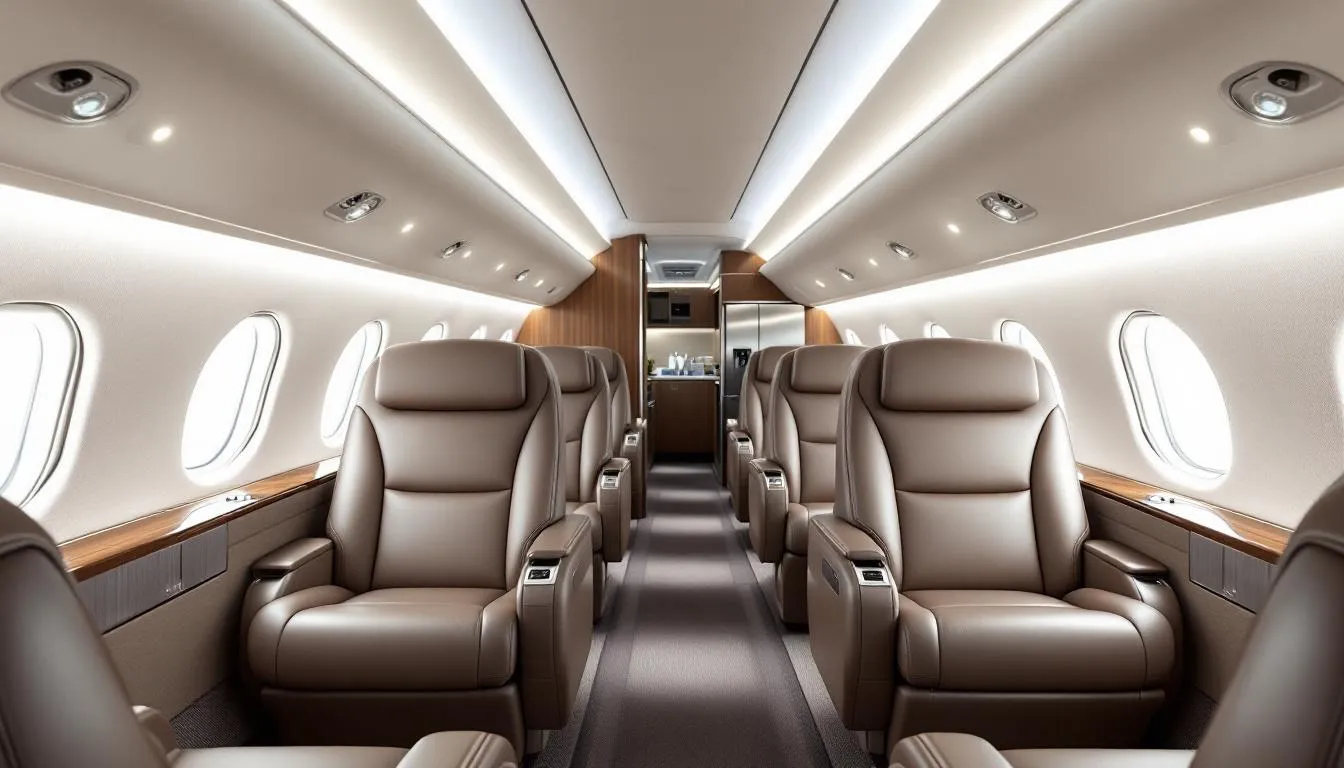
With seating arranged in a 2-1 configuration throughout the spacious cabin, passengers enjoy individual armrests and adequate legroom comparable to commercial business class. The aircraft’s range of 3,250 nautical miles enables coast-to-coast flights within the continental United States without fuel stops, making it ideal for corporate shuttles between major business centers. Maximum cruising speed of 518 mph ensures efficient flight times that often beat commercial airline schedules when factoring in the charter’s direct routing capabilities.
The ERJ-135’s baggage capacity accommodates extended business trips or leisure travel, with sufficient cargo space for multiple suitcases per passenger. The aircraft typically features a galley suitable for catering full meals during longer flights, plus multiple lavatory facilities to serve 30 passengers comfortably. Standard amenities include individual reading lights, adjustable air vents, and power outlets for personal devices.
Embraer ERJ-145
The ERJ-145 extends the proven ERJ platform with enhanced capabilities that make it particularly attractive for longer flights and larger groups. While configurable for 30-50 passengers depending on layout, the 30-passenger configuration provides additional space per person and enhanced amenities compared to the ERJ-135.
An extended range of 3,700 nautical miles opens up international flight possibilities, including routes like New York to London or Los Angeles to Hawaii with full passenger loads. The aircraft’s enhanced systems include Wi-Fi capability that keeps business travelers connected throughout the flight, supporting productivity during travel time. Enhanced cabin amenities may include larger galley facilities for complex catering requirements and additional storage space for extended trips.
The ERJ-145’s larger size makes it the preferred choice for corporate shuttles serving major companies, sports teams requiring equipment transport, and entertainment industry groups traveling with substantial gear requirements. Aircraft operators often configure these aircraft with flexible seating arrangements that can accommodate varying group sizes while maintaining the luxury standards expected from private jet travel.
Benefits of 30-Passenger Private Jets
The unique advantages of 30-passenger private jets extend far beyond simple transportation, creating value through efficiency, flexibility, and an enhanced travel experience that traditional commercial aviation cannot match for large groups. Understanding these benefits helps explain why corporations, sports organizations, and affluent families choose charter solutions despite higher upfront costs.
Cost Efficiency and Economics
The primary benefit of 30-passenger aircraft lies in their superior cost efficiency compared to alternative transportation methods for large groups. Chartering multiple smaller jets to transport 30 passengers would typically require 3-4 aircraft, each with separate positioning costs, crew expenses, and landing fees. The cumulative cost often exceeds 50% more than a single 30-passenger aircraft, while adding coordination complexity and potential scheduling conflicts.
Beyond direct cost savings, the efficiency of keeping large groups together eliminates ground transportation complexity at destinations. Instead of coordinating multiple vehicle pickups for passengers arriving on different aircraft, groups travel together from departure to arrival, streamlining logistics and reducing overall travel time. This coordination benefit becomes particularly valuable for time-sensitive corporate events or sports teams requiring immediate team cohesion upon arrival.
Privacy and Security Advantages
Large group charters provide privacy levels impossible to achieve through commercial flight, allowing corporate executives to discuss confidential business matters during flight time without concern for competitor eavesdropping. This privacy extends to personal matters for family groups, enabling comfortable conversation and interaction without the constraints of public transportation environments.
Security benefits include vetted passenger manifests, controlled access to aircraft, and the ability to maintain group security throughout the travel process. For high-profile individuals, sports teams, or corporate executives, this controlled environment eliminates exposure to public terminals, paparazzi, or potential security threats that accompany commercial aviation.
Schedule Flexibility and Routing Options
The scheduling flexibility of private aircraft becomes exponentially more valuable with larger groups, where coordinating 30 commercial airline tickets across multiple flights often proves impossible during peak travel periods. Private jets operate on client schedules rather than airline timetables, allowing departure times that optimize productivity, minimize overnight stays, and accommodate tight event schedules.
Direct routing capabilities enable access to smaller airports closer to final destinations, often saving hours of ground transportation time compared to commercial flights that serve only major hub airports. For destinations like ski resorts, conference centers, or remote corporate facilities, this routing flexibility can eliminate entire ground transportation segments while providing door-to-door efficiency.

Ideal Use Cases for 30-Passenger Charters
The specific applications for 30-passenger private jets span diverse industries and occasions, each benefiting from the unique combination of group capacity, scheduling flexibility, and premium service that these aircraft provide. Understanding these use cases helps potential clients recognize when charter solutions provide optimal value.
Corporate Executive Transportation
Large corporations increasingly utilize 30-passenger aircraft for executive transportation, particularly for board meetings, company retreats, and major client events, where keeping senior leadership together during travel enhances productivity and maintains confidentiality. These charters often serve as mobile conference rooms, allowing executives to conduct business during flight time while maintaining the privacy required for sensitive discussions.
Corporate shuttles between major business centers represent another growing application, particularly for companies with multiple locations requiring frequent coordination. The ability to transport entire departments or project teams together ensures everyone arrives prepared and briefed, maximizing the effectiveness of business meetings and reducing travel-related downtime.
Sports Teams and Tournament Travel
Professional and collegiate sports teams find 30-passenger aircraft ideal for roster transportation, typically accommodating team members plus coaching staff, trainers, and essential support personnel. The cabin space allows teams to maintain routine meal service, conduct team meetings, and provide medical attention if needed during travel. The scheduling flexibility proves crucial during tournament seasons when game schedules may change with minimal notice.
The charter approach eliminates the complications of booking large groups on commercial flights, where split reservations, baggage restrictions, and potential delays can disrupt team preparation. Direct routing to smaller airports near tournament venues often provides competitive advantages by reducing travel fatigue and ground transportation time.
Entertainment Industry Applications
Film productions, concert tours, and television crews utilize 30-passenger charters to transport cast, crew, and essential equipment between locations. The entertainment industry’s demanding schedules and multiple-destination requirements make charter flexibility essential, while the privacy aspects protect celebrities from unwanted attention during travel.
Large production crews benefit from the ability to continue project discussions during flight time, maintaining creative momentum between locations. The cargo capacity of these aircraft often accommodates specialized equipment, wardrobe items, and other production necessities that would be difficult to transport through commercial aviation.
Large Family Events and Reunions
Affluent families organizing destination weddings, milestone celebrations, or annual reunions find 30-passenger aircraft ideal for keeping extended families together during travel. The charter approach transforms travel time from a logistical challenge into a celebration component, allowing family members to reconnect during the journey while ensuring everyone arrives together and prepared for the event.
Multi-generational family groups particularly benefit from the comfort and amenities available on these aircraft, including accessible lavatory facilities, comfortable seating for elderly passengers, and the ability to accommodate medical requirements or special dietary needs during the flight.
Booking Considerations for Large Group Charters
Successfully coordinating travel for 30 passengers requires advance planning and attention to numerous details that don’t apply to smaller group charters. Understanding these considerations helps ensure smooth travel experiences and optimal pricing for large group movements.
Advance Booking Requirements
The specialized nature of 30-passenger aircraft means limited availability compared to smaller business jets, making advance booking essential for securing preferred travel dates. Booking 60-90 days in advance becomes critical during peak travel seasons, major sporting events, or holiday periods when demand for large aircraft increases significantly. For more insights and tips, explore our private jet travel guide.
Early booking provides several advantages beyond availability, including better aircraft selection options and more favorable pricing. Charter operators often offer preferred rates for confirmed bookings made well in advance, as this allows them to optimize aircraft positioning and crew scheduling. Last-minute bookings frequently result in premium pricing due to positioning requirements and limited aircraft availability.
International Flight Permits and Documentation
International operations with 30 passengers involve complex permit requirements and customs procedures that require careful coordination with charter operators and destination authorities. Overflight permits for transit countries, landing permits for destination airports, and customs arrangements for large groups can take several weeks to arrange, particularly for less common destinations.
Passenger documentation becomes more complex with larger groups, as charter operators must ensure all 30 passengers have appropriate passports, visas, and any required health documentation. The coordination effort increases exponentially with group size, making professional charter operators essential for international group travel. Immigration fees and government taxes for 30 passengers can add thousands of dollars to trip costs, requiring accurate budgeting during initial planning phases.
Catering and Service Coordination
Coordinating catering for 30 passengers requires advance planning to accommodate dietary restrictions, food preferences, and meal timing appropriate for flight duration. The galley facilities on 30-passenger aircraft can support full meal service but require professional catering services experienced with aircraft food safety requirements and equipment limitations.
Special dietary requirements become more common with larger groups, necessitating communication with catering providers well in advance of travel dates. Religious dietary restrictions, food allergies, and personal preferences require individual attention that charter operators must coordinate with specialized aviation catering companies. Custom in-flight catering can range from $600 to $1,000 for lunch for four passengers, with costs scaling up based on group size and meal complexity. The cost of quality catering for 30 passengers can range from $1,500-$4,000, depending on meal complexity and service level.

Ground Transportation and Logistics
Coordinating ground transportation for 30 passengers at both departure and arrival airports requires advance planning and local transportation providers experienced with large group movements. The efficiency gained by keeping groups together during air travel can be lost without proper ground transportation coordination that maintains group cohesion throughout the journey.
Multiple vehicles are typically required for 30-passenger groups, necessitating coordination of departure times, route planning, and arrival sequencing at final destinations. Professional ground transportation companies experienced with charter clients understand the importance of timing coordination and provide dedicated customer service representatives to manage large group logistics.
Charter Flight Logistics
Coordinating a successful charter flight involves much more than simply booking an aircraft. Our dedicated team of charter flight specialists works hand-in-hand with experienced aircraft operators to manage every detail of your journey. From selecting the right aircraft based on passenger capacity and aircraft size to arranging ground transportation at both departure and arrival airports, we ensure that every aspect of your trip is meticulously planned.
We take into account key logistical considerations such as fuel prices, which can impact the overall cost, and handle all necessary paperwork, including landing permits, overflight permits, and immigration fees for international flights. Our team also arranges accommodations for crew members when required, ensuring that your flight operates smoothly and efficiently. The cost of chartering a jet for a week can range from tens of thousands of dollars to several hundred thousand dollars, depending on the aircraft type, route, and additional services required.
By managing these complex logistics, we allow you to focus on your business or leisure objectives, confident that your charter flight will be executed to the highest standards. Whether your group is traveling for a corporate event or a special occasion, our expertise in charter flight logistics ensures a hassle-free, cost-effective, and personalized travel experience every time.
Safety and Certification Requirements
The operation of 30-passenger aircraft for charter service involves stringent safety regulations and certification requirements that exceed those for smaller business jets. Understanding these requirements helps clients evaluate charter operators and make informed decisions about aircraft selection and operator credentials.
Part 135 Certification and Compliance
All charter operations for aircraft with 30-passenger capacity must operate under Part 135 certification from the Federal Aviation Administration, representing the highest level of commercial aviation oversight for charter operations. This certification requires operators to maintain detailed maintenance programs, crew training standards, and operational procedures that exceed Part 91 general aviation requirements.
Part 135 operators undergo regular inspections, audits, and compliance reviews that ensure adherence to strict safety standards. The certification process includes a detailed review of maintenance facilities, crew qualifications, training programs, and operational procedures specific to charter operations. Clients should verify that charter operators maintain current Part 135 certificates and comply with all regulatory requirements.
Crew Requirements and Qualifications
Aircraft with 30-passenger capacity require two pilots with appropriate type ratings and recent experience in the specific aircraft model. Many operations also require a flight attendant due to passenger capacity, adding additional crew training and certification requirements. The crew member qualifications for these aircraft exceed those for smaller jets, reflecting the increased complexity and responsibility of large group operations.
Pilot training requirements include recurrent training every six months, ongoing proficiency checks, and maintenance of medical certificates appropriate for commercial operations. Flight attendant requirements may include emergency medical training, customer service protocols, and specific training for the aircraft type. These enhanced crew requirements contribute to operational costs but ensure the highest safety standards for passengers.
Aircraft Maintenance and Inspection Standards
The maintenance requirements for 30-passenger aircraft operating under Part 135 exceed those for smaller aircraft, with detailed inspection schedules, component replacement requirements, and documentation standards that ensure airworthiness throughout the aircraft’s service life. Charter operators must maintain approved maintenance programs that address all aircraft systems and components. It is also essential to regularly inspect and maintain aircraft surfaces, especially during winter, to prevent the accumulation of ice, snow, or frost, which can impact safety and operational readiness.
Inspection schedules include daily, weekly, monthly, and annual requirements that address different aircraft systems and components. The maintenance records for each aircraft must demonstrate compliance with all manufacturer recommendations, regulatory requirements, and operator-specific procedures. Insurance coverage minimums for large group charters typically exceed $100 million per occurrence, reflecting the increased liability associated with 30-passenger operations.
Safety Ratings and Third-Party Audits
Professional charter operators often pursue third-party safety audits from organizations like ARGUS and Wyvern, which provide independent verification of safety standards beyond minimum regulatory requirements. These audits examine maintenance procedures, crew training, operational standards, and safety management systems to provide clients with additional assurance of operator competence.
ARGUS and Wyvern ratings require operators to demonstrate safety standards that exceed regulatory minimums, including enhanced crew training, maintenance procedures, and operational protocols. These ratings provide clients with independent verification of operator safety performance and help distinguish professional operators from those that meet only minimum requirements. When selecting charter operators for 30-passenger aircraft, these safety ratings serve as important differentiators in operator evaluation.
Frequently Asked Questions
How far in advance should I book a 30-passenger private jet?
Book 60-90 days ahead for best availability and pricing, especially during peak travel seasons like holidays and major sporting events. Last-minute bookings may require positioning fees or result in limited aircraft options. Early booking also allows time to arrange international permits, coordinate complex catering requirements, and secure ground transportation for large groups.
Can a 30-passenger jet fly internationally?
Yes, aircraft like the Embraer ERJ-135 and ERJ-145 have ranges exceeding 3,000 nautical miles, allowing flights from New York to London or Los Angeles to Hawaii. International flights require additional permits, customs arrangements for 30 passengers, and may involve fuel stops depending on the specific route. The booking process for international travel typically takes longer due to permit requirements and customs coordination.
What’s included in the charter price for a 30-passenger jet?
Base pricing includes aircraft, crew, fuel, and standard insurance coverage. Additional costs may include catering for 30 passengers, ground transportation, international fees, crew overnight expenses, and aircraft positioning if the jet isn’t based at your departure airport. Many operators provide detailed cost breakdowns during the booking process to avoid surprises.
How much luggage can 30 passengers bring on a charter jet?
Most 30-passenger jets accommodate 2-3 bags per person in the cargo hold, plus reasonable carry-on items. Total baggage capacity is typically 3,000-4,000 pounds, sufficient for business trips or vacation travel with multiple suitcases per passenger. For equipment-intensive travel like sports teams or film productions, special arrangements may be required.
Are there any weight restrictions for 30-passenger private jet charters?
Yes, total passenger and baggage weight affects fuel capacity and range. Aircraft operators typically plan for 200 pounds per passenger, including luggage. For maximum range flights, some baggage restrictions may apply to ensure adequate fuel load for the planned route. Even frost or deicing costs can affect weight calculations and may require fuel adjustments for winter operations.
How can I avoid deicing costs when chartering a 30-passenger private jet in winter?
To avoid deicing costs, consider arranging for hangar storage at the departure airport to protect the aircraft from ice, snow, or frost. Scheduling flights during times when frost is less likely to accumulate can also help. Deicing costs can be high during winter operations, ranging from $1,500 for smaller aircraft to $10,000 or more for larger aircraft, so these measures can help reduce or eliminate those expenses.
Final Thoughts
Chartering a private jet for 30 passengers offers a unique blend of luxury, efficiency, and cost savings that is difficult to match with other travel options. Whether for corporate events, sports teams, entertainment groups, or large family gatherings, these aircraft provide the best solution for seamless, comfortable group travel. By consolidating a large group into a single spacious cabin, travelers benefit from significant time savings, enhanced privacy, and streamlined logistics.
When planning your trip, consider factors such as advance booking, flight distance, and additional services like catering and ground transportation to ensure a smooth and enjoyable experience. Trusted providers like BlackJet.com specialize in matching clients with the right aircraft and operator, helping to navigate the complexities of private jet charter. Understanding the full scope of costs, including hourly rates, landing fees, fuel surcharges, and crew salaries, helps in budgeting accurately and avoiding surprises.
Ultimately, a private jet for 30 passengers is an excellent choice for those seeking to go the extra mile in group travel, combining the convenience of a private plane with the capacity to accommodate a large group without compromising on comfort or service. With the right aircraft and operator, your group charter flight will deliver both value and an exceptional travel experience.


 Sign up with google
 Sign up with Apple