Private Jet Price in Rupees: Complete 2025 Cost Guide for India’s Elite Aviation Market
September 29, 2025
Imagine soaring above the hustle and bustle of crowded airports, stepping onto a sleek private jet that whisks you away on your schedule, with luxury and privacy tailored just for you. In India’s rapidly growing private aviation market, understanding the true cost of flying privately is key to unlocking this exclusive world. The cost of renting a private jet in India typically starts at ₹1.5 lakh per flight hour for turboprops and can range from ₹ 8 lakh to ₹ 10 lakh or more for larger jets. Prices for renting a private jet in Varanasi can range from INR 5 lakh to INR 30 lakh per hour, depending on aircraft type and travel distance.
Airborne Private Jets provides private jet services in Varanasi, catering to a variety of needs, including medical evacuations and luxury charters. These services also ensure passenger privacy and confidentiality, making them a trusted choice for discerning travelers. Whether you’re a seasoned business traveler or simply curious about what it takes to charter or own a private jet, this comprehensive 2025 guide breaks down everything you need to know about private jet prices in rupees, helping you make informed and confident decisions about your next flight.
Key Takeaways
Private jet charter rates in India range from ₹1.5 lakh to ₹8.5 lakh per hour, depending on aircraft category, with purchase prices starting at ₹22 crore
Charter rates for private jets in India typically range from ₹1.8 lakh to ₹8.5 lakh per hour, reflecting the variety of aircraft and services available
Empty leg flights offer 50-75% discounts on standard charter rates, making luxury aviation accessible at ₹75,000-₹1.5 lakh per hour
Discounted prices are available through special offers such as empty leg flights, bulk booking rates, and off-peak deals, helping travelers reduce overall costs
Jet card programs provide strategic cost advantages for frequent flyers, offering fixed hourly rates and guaranteed availability across multiple aircraft types
Sustainable aviation fuel options add 15-20% to charter costs but position forward-thinking executives ahead of regulatory changes
Transparent pricing ensures clients understand the final cost after all variables—such as aircraft type, distance, fuel, and additional services—are considered
Introduction to Private Jets
Private jets represent the pinnacle of personalized travel, offering unmatched luxury, convenience, and flexibility for discerning flyers. When you choose to fly privately, you bypass the crowds, delays, and rigid schedules of commercial flights, instead enjoying a seamless experience tailored to your unique needs. Whether you’re booking a private jet for urgent business trips, leisurely getaways, or even medical emergencies, private jet travel ensures you arrive refreshed and on your own terms.
Private jet charter pricing in India is influenced by several key factors, including the aircraft type, flight duration, and any additional services you may require, such as gourmet catering or ground transfers. Several key variables, including aircraft type, flight duration, fuel, seasonality, and crew fees, drive the final cost of private jet rentals. Understanding these elements is crucial for making informed decisions when booking a private jet. Private jets can fly to most airports in India, including smaller regional airports, making them convenient for various locations in Varanasi, though some may have operational restrictions.
The Lal Bahadur Shastri International Airport serves as the main airport for Varanasi. Airborne Private Jet emphasizes safety, security, and customer satisfaction in its services, ensuring a seamless experience for its clients. As private jet travel gains popularity across India, a growing number of charter companies now offer a wide range of aircraft and services to suit every requirement and budget. From quick regional hops to international journeys, private jets provide a safe, efficient, and luxurious alternative to commercial flights, making them the preferred choice for business leaders, celebrities, and families alike. Additionally, shorter flights on larger aircraft may incur additional fees, known as short-leg fees, set by the aircraft owner.
The Strategic Advantage of Private Aviation Access in India
Time is the ultimate currency for India’s business elite, and private jet access has evolved from a symbol of affluence to a strategic business necessity. For high-net-worth individuals managing portfolios exceeding ₹500 crore, the ability to bypass commercial aviation’s constraints translates directly into a competitive advantage. Experts recommend owning a private jet if you fly 200–400 hours annually due to high upfront and ongoing costs. Peak travel times lead to higher prices for private jet charters in India, reflecting increased demand and limited availability during these periods.
Private jet access transforms from luxury to business necessity for India’s high-net-worth individuals managing ₹500+ crore portfolios. The Ambani wedding exemplified this perfectly, with over 100 private jets shuttling guests between venues, demonstrating both the scale and strategic importance of private aviation access in India’s elite circles. To ensure efficient, tailored, and time-saving solutions for their private aviation needs, high-profile clients often employ professional aircraft management services.
Time savings of 3-4 hours per domestic trip translates to 150+ productive hours annually for frequent business travelers. When you consider that a typical Mumbai-Delhi commercial journey consumes an entire day with airport transfers, check-in procedures, and potential delays, private jet travel reduces this to a streamlined 2-3 hour door-to-door experience.
Enhanced security protocols protect sensitive business discussions and maintain confidentiality during critical negotiations. Private terminals and dedicated security screening ensure that confidential documents, high-stakes negotiations, and strategic planning sessions remain protected from potential corporate espionage or unwanted attention.
Flexibility to access 450+ airports across India versus 140 commercial destinations expands business opportunities exponentially. This access enables direct flights to smaller airports near industrial hubs, manufacturing facilities, and emerging business centers that commercial airlines simply don’t serve.
Private Jet Pricing Structure in India: 2025 Market Analysis
Understanding private jet prices in rupees requires analyzing the complex cost structure that drives hourly charter rates across India’s aviation market. Current pricing reflects multiple operational factors that justify the premium positioning of private aviation services. Airport fees, which vary by location, are a significant factor influencing the overall cost of private jet services. Large-cabin jets, such as the Embraer Legacy 650E, are priced around ₹197.8 crore, reflecting their advanced features and luxurious offerings.
Hourly charter rates reflect aircraft operating costs, crew certification requirements, and fuel expenses at the current ₹95 per liter aviation turbine fuel. Fluctuations in fuel prices can lead to additional fuel surcharges, which may be included in or added to the quoted price. These base rates incorporate comprehensive insurance coverage, certified crew with regular recurrent training, and aircraft maintenance that exceeds commercial aviation standards.
Base rates include aircraft, crew, insurance, and standard catering, with transparent pricing eliminating hidden surprises. Reputable operators provide detailed cost breakdowns that account for all standard operational expenses, ensuring clients understand exactly what their private jet charter pricing includes. Rental costs are typically calculated on a per-flight-hour basis, with different aircraft types commanding different hourly rates. Most companies provide transparent pricing, but additional fees like landing charges and fuel surcharges tend to vary.
Positioning fees range from ₹50,000-₹2 lakh depending on aircraft relocation requirements and distance. When an aircraft must reposition from its home base to pick up passengers, these costs are typically shared among multiple clients or absorbed into hourly rates for longer flights.
Seasonal pricing fluctuations of 20-30% during peak travel periods (December-January, wedding season) reflect increased demand and limited aircraft availability. The wedding season particularly drives premium pricing as India’s affluent families compete for available aircraft during auspicious dates.
Aircraft Categories and Hourly Rates in Rupees
The diversity of aircraft types in India’s private aviation market ensures options for every mission profile, from quick regional hops to transcontinental business travel. Each category offers distinct advantages that justify its specific pricing structure. Older jets are generally less expensive, while newer or refurbished models command higher prices due to advanced features. The private jet cost in India varies significantly based on aircraft size, with the cost of a private jet purchase or rental increasing for larger and more advanced models.
Light Jets (Cessna Citation CJ3+, Embraer Phenom 300): ₹1.5-₹2.5 lakh per hour for 6-8 passengers
Light jets represent the entry point into private aviation, offering exceptional efficiency for short to medium-range flights. These aircraft excel in accessing smaller airports and provide cost-effective solutions for regional business travel. Their fuel efficiency and lower operational costs make them ideal for frequent flyers seeking to optimize travel budgets without compromising convenience. Entry-level light jets, such as the Cirrus Vision Jet, start at around ₹15 crore, making them an accessible option for those entering the private aviation market. Smaller aircraft, such as light jets, generally incur lower operational costs and fees compared to larger jets.
Midsize jets strike the perfect balance between operational costs and passenger comfort, offering stand-up cabins and enhanced amenities. These aircraft handle the majority of domestic Indian routes efficiently while providing sufficient space for productive business meetings during flight.
Super Midsize Jets (Challenger 350, Citation Sovereign): ₹4-₹6 lakh per hour with transcontinental range
Super midsize jets bridge the gap between domestic convenience and international capability. Their extended range enables non-stop flights from major Indian metros to Middle Eastern business hubs, while spacious cabins accommodate larger executive teams.
Large Jets (Gulfstream G450, Falcon 7X): ₹6-₹8.5 lakh per hour for international travel and maximum luxury
Ultra-long-range jets represent the pinnacle of private aviation, offering intercontinental capability with uncompromising luxury. These aircraft feature dedicated sleeping quarters, conference facilities, and advanced communication systems that enable seamless business operations at 45,000 feet. Larger jets can accommodate more passengers and offer greater luxury, but the cost of a private jet can go upwards of hundreds of crores, depending on the model and customization. Mid-size jets like the Citation XLS cost between ₹30-50 crore, providing a balance of range, comfort, and operational efficiency.
Light Jets for Short Trips
Light jets are the go-to choice for short trips, combining efficiency with cost-effectiveness for those who want to fly privately without compromising on comfort. With seating for 4-6 passengers, a light jet is perfect for small groups or solo travelers looking to maximize their time. The private jet price for a light jet typically ranges from ₹1.5 lakh to ₹3 lakh per hour, depending on the aircraft type and the charter services selected.
For those seeking even greater value, empty leg flights on light jets can offer significant savings—sometimes up to 50% off standard private jet prices. These leg flights are ideal for shorter trips, such as a quick Mumbai to Pune journey, which can cost around ₹2.5 lakh for a one-way flight. This makes light jets an attractive option for business travelers who need to attend meetings in multiple cities in a single day, or for anyone who values the ability to set their own schedule and avoid the hassles of commercial airports. With flexible booking options and the potential for discounted empty leg flights, light jets make private aviation more accessible than ever.
Midsize Jet Options
Midsize jets elevate the private jet experience, offering enhanced comfort, range, and amenities for those who require more space or are planning longer flights. With a typical seating capacity of 6-8 passengers, midsize jets are ideal for business teams, families, or groups traveling together in style. The private jet rental pricing for a midsize jet generally falls between ₹3 lakh and ₹6 lakh per hour, depending on the aircraft type and the level of charter services provided.
What sets midsize jets apart is their ability to accommodate longer flights without sacrificing luxury. Many midsize jets feature a dedicated flight attendant, plush seating, and luxurious interiors designed for both productivity and relaxation. These aircraft are perfect for business meetings in the sky, allowing executives to maximize their time en route to their destination. For example, a one-way charter flight from Delhi to Bangalore in a midsize jet can cost around ₹5 lakh, making it a popular choice for corporate travelers who value privacy, efficiency, and a premium onboard experience.
Large Jets for Luxury Travel
For those seeking the ultimate in luxury and long-range capability, large jets deliver an unparalleled travel experience. With spacious cabins that typically seat 12-16 passengers, large jets are designed for those who demand the very best in comfort, privacy, and service. The private jet price for a large jet ranges from ₹6 lakh to ₹12 lakh per hour, depending on the aircraft type and the charter services selected.r, depending on the aircraft type and the charter services selected.
Large jets are equipped with a host of premium amenities, including fine dining options, state-of-the-art entertainment systems, and opulent interiors that rival five-star hotels. These aircraft are ideal for international flights, special occasions, or corporate events where making an impression matters. For instance, a one-way charter from Mumbai to Dubai in a large jet can cost around ₹10 lakh, offering a seamless and luxurious alternative to first-class commercial travel. With the ability to customize every aspect of your journey, large jets ensure that every flight is a memorable experience, whether you’re traveling for business or leisure.
Purchase vs Charter: Strategic Cost Analysis
The decision between aircraft ownership and charter services represents one of the most critical strategic choices for private aviation users. Chartering a private jet offers flexibility and access to a range of aircraft without the long-term commitment of ownership. Chartering a private jet is often more practical for less frequent travelers due to its lower financial commitment. Private jet ownership provides ultimate control over travel schedules but comes with substantial responsibilities, including maintenance, crew management, and operational logistics. Understanding the financial implications of each option enables informed decision-making based on actual utilization patterns.
Aircraft ownership is justified only above 250 flight hours annually, considering ₹22-₹500 crore initial investment. For light jets, the entry point begins around ₹22 crore for certified pre-owned aircraft, while new large jets can exceed ₹500 crore. In India, the purchase price for a light jet starts at approximately ₹15 crore and can exceed ₹250 crore for heavy jets. Importing a jet into India incurs significant costs, including import duties and GST, which may vary based on usage.
Ongoing ownership costs for private jets include fuel, maintenance, crew salaries, hangar fees, and insurance. The costs of owning a private jet in India can range from ₹20 crore for smaller models to ₹600 crore for larger jets. This substantial capital requirement must be evaluated against alternative investment opportunities and tax implications. Private charters allow clients to avoid the operational restrictions that may apply to certain airports or aircraft modifications, offering greater convenience and flexibility.
Annual operating costs average 15-20% of aircraft value, including crew salaries (₹25-50 lakh), maintenance, and hangar fees. A ₹100 crore aircraft typically incurs ₹15-20 crore in annual operating expenses, encompassing insurance, maintenance reserves, crew training, hangar rental, and administrative costs.
Charter provides access to the latest technology and safety features without depreciation concerns. Aircraft depreciation typically consumes 5-8% of value annually, representing a significant hidden cost of ownership that charter users avoid while accessing newer, more technologically advanced aircraft. Large jets and high-end options, such as VIP airliners like Boeing Business Jets, represent the most luxurious and spacious private jet options, but may face additional operational restrictions and higher costs.
Fractional ownership through programs like NetJets India offers a middle-ground solution for 100-200-hour flyers. These programs provide proportional ownership benefits with professional management, enabling access to multiple aircraft types while sharing operational costs among multiple owners.
How Jet Cards Differ from Traditional Charter
Jet card programs have revolutionized private aviation access by providing predictable pricing and guaranteed availability for frequent travelers. Understanding these differences enables strategic selection of the most appropriate private aviation model.
Jet cards offer fixed hourly rates, protecting against market price volatility and seasonal surcharges. This pricing stability enables accurate travel budgeting and eliminates surprise costs during peak demand periods when traditional charter rates can increase substantially. Travelers can secure empty leg flights by signing up for notifications from charter operators, allowing them to take advantage of last-minute deals and significant cost savings.
Guaranteed aircraft availability within 10-24 hours versus traditional charter’s availability-dependent pricing represents a critical advantage for business travelers. Jet card holders receive priority access to available aircraft, even during high-demand periods when traditional charter customers might face extended lead times or premium pricing.
Interchange privileges allow access to different aircraft categories based on trip requirements. A jet card purchased for light jets might provide upgrade options to midsize jets for longer flights or larger groups, optimizing aircraft selection for each mission.
Simplified billing eliminates individual trip quotes and streamlines corporate expense management. Instead of processing multiple invoices with varying rates and fees, jet card users receive consolidated monthly statements that simplify accounting and expense reporting.
Sustainability in Private Aviation
Environmental consciousness is increasingly influencing private aviation decisions as India’s business leaders recognize their responsibility to address climate change while maintaining operational efficiency.
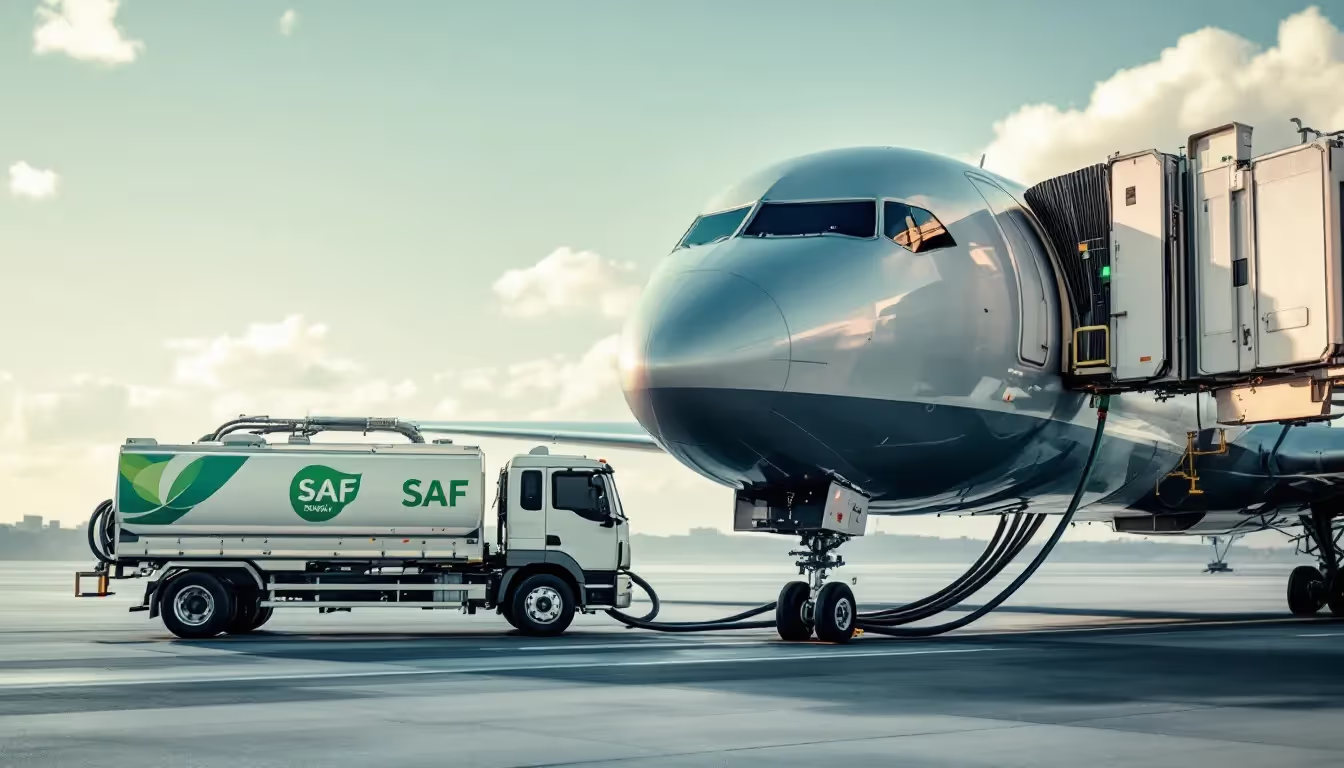
Sustainable Aviation Fuel (SAF) adoption adds ₹15,000-₹25,000 per hour but reduces carbon emissions by 80%. While this represents a significant cost increase, forward-thinking executives view SAF as an investment in environmental stewardship and regulatory compliance ahead of potential mandates.
Carbon offset programs cost approximately 0.5% of total charter expense, averaging ₹2,000-₹5,000 per trip. These programs fund verified environmental projects that neutralize flight emissions, enabling executives to maintain private aviation access while achieving carbon-neutral flights.
Electric and hybrid aircraft development promises a 40% cost reduction by 2030, revolutionizing short-haul pricing. JetSetGo’s recent order for 280 hybrid-electric aircraft signals India’s commitment to sustainable private aviation, with these aircraft expected to dramatically reduce operating costs for regional flights.
Environmental compliance positioning executives ahead of upcoming regulatory requirements and corporate sustainability mandates. As Environmental, Social, and Governance (ESG) criteria become increasingly important for corporate reputation, sustainable private aviation choices demonstrate leadership and responsibility.
Why Safety Protocols Matter
Safety represents the foundation of the private aviation value proposition, with certification requirements and operational standards justifying premium pricing through comprehensive risk mitigation.
DGCA IS-BAO certification ensures operators meet international safety standards, justifying premium pricing through demonstrated operational excellence. This certification requires comprehensive safety management systems, regular audits, and continuous improvement protocols that significantly exceed basic regulatory requirements.
Advanced weather radar, TCAS, and EGPWS systems standard on certified aircraft protect passenger investment through enhanced situational awareness. These technologies provide pilots with real-time information about weather conditions, traffic conflicts, and terrain hazards, enabling proactive risk management.
Dual pilot requirements on larger aircraft add ₹20,000-₹40,000 per trip but eliminate single-point-of-failure risks. While this increases operational costs, the redundancy ensures safe flight operations even if one pilot becomes incapacitated, particularly important for long-range international flights.
Rigorous maintenance protocols, including 100-hour, annual, and progressive inspections, maintain aircraft value and safety. These inspection requirements exceed commercial aviation standards, ensuring that private jets maintain peak performance and safety throughout their operational life.
Hidden Costs and Additional Fees Breakdown
Understanding the complete cost structure beyond base hourly rates enables accurate budgeting and prevents unexpected expenses during private jet travel. Most companies provide transparent pricing, but additional fees like landing charges and fuel surcharges may lead to higher overall costs. These factors should be carefully considered to avoid surprises and ensure a seamless private aviation experience.
Landing Fees: ₹15,000 - ₹85,000, varying by airport size and location.
Crew Overnight: ₹8,000 - ₹15,000 per crew member, required for multi-day trips.
Custom Catering: ₹2,000 - ₹8,000 per passenger, for specialized dietary requirements.
International Permits: ₹50,000 - ₹3 lakh, dependent on destination country.
Landing fees vary from ₹15,000 at smaller airports to ₹85,000 at major international hubs like Delhi and Mumbai. Major international airports typically charge higher landing fees, which can significantly impact the final cost of a private jet trip. These fees reflect airport infrastructure costs and are typically charged per landing regardless of aircraft size, though larger aircraft may incur higher rates.
Crew overnight expenses range ₹8,000-₹15,000 per crew member for multi-day trips. When flights require crew rest periods exceeding daily duty limits, overnight accommodations and meals must be provided according to regulatory requirements.
Custom catering costs ₹2,000-₹8,000 per passenger for specialized dietary requirements or premium service. While basic catering is included in hourly rates, specialized menus, dietary restrictions, or premium beverage service incur additional charges.
International permits and handling fees add ₹50,000-₹3 lakh, depending on the destination country requirements. These costs cover overflight permissions, landing rights, customs processing, and ground handling services required for international operations.
All these additional fees must be considered to accurately determine the final cost of private jet travel.
Empty Leg Opportunities: Strategic Cost Savings
Empty leg flights represent one of private aviation’s best-kept secrets, offering substantial cost savings for flexible travelers willing to adapt their schedules to aircraft positioning requirements. An empty leg flight is a discounted, one-way private jet trip that occurs when an aircraft needs to reposition or return to base without passengers. Fleets often publish available empty leg flights on their websites, enabling travelers to find suitable options.
Empty leg availability peaks during Monday mornings and Friday evenings when aircraft reposition after weekend trips. Business aircraft often deadhead back to their home bases or reposition for subsequent charters, creating opportunities for significant savings. These empty leg flights are often available at significantly discounted prices compared to standard charter rates.
Delhi-Mumbai empty legs are frequently available at ₹1.2-₹1.8 lakh versus standard ₹3-₹4 lakh rates. This popular route sees regular empty leg availability due to high one-way demand and aircraft repositioning requirements.
JetSetGo’s JetSteals and similar programs offer real-time empty leg notifications via mobile applications. These platforms alert subscribers to available empty leg flights, enabling last-minute bookings at substantially reduced rates.
Flexible scheduling within 48-72 hours maximizes empty leg availability and cost savings. Travelers who can adjust their departure times and dates by a few days often access premium aircraft at economy charter prices.
Technology’s Impact on Pricing and Value
Modern aircraft technology justifies premium pricing through enhanced safety, productivity, and passenger experience that translates directly into business value.
Advanced avionics, including synthetic vision and enhanced flight vision systems, command a 10-15% premium but significantly improve safety margins. These systems provide pilots with enhanced situational awareness during challenging weather conditions or complex airport approaches.
High-speed Wi-Fi connectivity costs ₹500-₹1,500 per hour but enables productive flight time equivalent to office environments. This connectivity enables video conferencing, document collaboration, and real-time communication that transforms flight time into productive business hours.
Real-time flight tracking and communication systems provide transparency and peace of mind for passengers and ground teams. These systems enable continuous monitoring of flight progress and immediate communication of any schedule changes or operational updates.
Digital booking platforms reduce transaction costs and enable dynamic pricing optimization. Online platforms streamline the booking process while providing real-time aircraft availability and transparent pricing that eliminates traditional broker markups.
Regional Pricing Variations Across India
Geographic and infrastructure factors create significant pricing variations across India’s private aviation market, reflecting operational complexities and market dynamics.
Delhi-Mumbai corridor offers competitive pricing due to high demand and multiple operator presence. This route benefits from infrastructure competition and high utilization rates that enable operators to offer more competitive hourly rates.
Tier-2 city access (Pune, Coimbatore, Kochi) adds a 15-25% premium due to limited infrastructure and positioning requirements. Smaller airports often lack comprehensive ground support services, requiring operators to position specialized equipment and personnel.
Northeast India routes command 30-40% higher rates due to complex airspace and weather challenges. Special permits, limited alternate airports, and challenging weather patterns increase operational complexity and associated costs.
International departures from Indian metros match global rates but benefit from favorable currency exchange rates for rupee-based clients. While international flights are typically priced in USD, local operators often offer competitive INR-based pricing.
Frequently Asked Questions
What is the most cost-effective way to access private jets regularly in India?
Jet card programs offer the best value for travelers flying 25-100 hours annually, providing fixed rates and guaranteed availability. These programs eliminate positioning fees and provide predictable costs that simplify budgeting. Private charters also offer flexibility and can be a cost-effective solution for travelers who do not require frequent access, with rental costs varying based on aircraft type and usage. Empty leg subscriptions through providers like JetSetGo can reduce costs by 50-70% for flexible travelers willing to adjust their schedules. Fractional ownership becomes economical above 100 hours with programs offering 1/16th to 1/4 aircraft shares, providing professional management and access to multiple aircraft types.
How do safety certifications affect private jet pricing in India?
DGCA IS-BAO certified operators command a 15-20% premium but provide comprehensive safety management systems that significantly reduce operational risks. These certifications require extensive documentation, regular audits, and continuous improvement programs that increase operational costs but provide superior safety outcomes. International safety audits (ARG/US, Wyvern) add operational costs reflected in hourly rates but provide independent verification of safety standards. Advanced pilot training requirements increase crew costs but significantly reduce operational risks through enhanced competency and recurrent training programs.
What sustainability options are available, and how do they impact costs?
Sustainable Aviation Fuel availability is limited but growing, adding ₹15,000-₹25,000 per hour to operating costs while reducing carbon emissions by up to 80%. Carbon offset programs cost 0.3-0.8% of total charter expense, typically ₹2,000-₹8,000 per trip, and fund verified environmental projects that neutralize flight emissions. Electric aircraft development promises significant cost reductions for short-haul flights by 2028-2030, with JetSetGo’s hybrid-electric aircraft order leading India’s sustainable aviation transformation.
How do international private jet flights from India compare cost-wise?
International flights typically cost 20-30% more due to permits, customs handling, and positioning requirements. These additional costs cover overflight permissions, international insurance requirements, and specialized ground handling services. Middle East destinations (Dubai, Doha) offer competitive rates starting ₹12-18 lakh for midsize jets due to high demand and established routes. Long-range flights to Europe or the US require large-cabin aircraft costing ₹25-45 lakh one-way, but provide non-stop capability that eliminates connection delays and enhances privacy.
What financing options exist for private jet access in India?
Aircraft loans are available through specialized lenders at 8-12% interest for qualified buyers with substantial collateral and demonstrated income. Operating leases provide tax advantages for corporate ownership with 3-7 year terms that preserve capital while providing access to newer aircraft. Jet card financing allows spreading costs over 12-24 months for frequent charter users, enabling access to private aviation while managing cash flow. Some operators offer corporate credit facilities that enable monthly billing for charter services, simplifying expense management for regular users.
Exclusive Access to India’s Premier Aviation Network
The strategic advantage of private aviation access extends beyond mere convenience to encompass competitive positioning, time optimization, and operational flexibility that define success in India’s rapidly evolving business landscape. International flights on private jets typically cost more due to additional regulatory, operational, and logistical factors. Whether through charter services, jet card programs, or fractional ownership, the key lies in selecting the approach that aligns with your specific travel patterns and business objectives.
Partner with certified operators offering transparent pricing and uncompromising safety standards that protect your most valuable asset – time. Access exclusive jet card programs with guaranteed availability and fixed pricing protection that eliminates the uncertainty of traditional charter markets.
Experience the strategic advantage of private aviation tailored to your business and lifestyle requirements, from sustainable fuel options that demonstrate environmental leadership to advanced technology that transforms flight time into productive business hours.
Contact our aviation specialists for personalized consultation and access to India’s most prestigious fleet network, where every detail is orchestrated to deliver not just transportation, but a competitive advantage that propels your business forward.
Conclusion: Navigating Private Jet Price in Rupees with Confidence
Understanding the private jet price in rupees is essential for making informed decisions in India’s dynamic private aviation market. Whether opting to charter a light jet for a quick business trip or investing in a large ultra-long-range jet for international travel, knowing the factors that influence flight cost—from aircraft type and flight distance to crew expenses and repositioning fees—empowers travelers to optimize their private flight experience and budget.
For business travellers and leisure seekers alike, leveraging options such as empty leg flights, jet card programs, and professional aircraft management can unlock significant savings and convenience. As the market continues to evolve, sustainable aviation initiatives and advanced technology promise to reshape cost structures and elevate the private aviation experience. Airborne Private Jet also offers helicopter services in Varanasi for leisure and business travel, providing an additional layer of flexibility and convenience for clients.
For those ready to embrace the exclusive world of private jet travel, understanding the complete pricing landscape and partnering with reputable providers like BlackJet is the key to unlocking unparalleled convenience and prestige in the skies.


 Sign up with google
 Sign up with Apple