In today’s fast-paced world, owning a private plane for sale luxury is more than a symbol of status—it is a strategic investment in time, comfort, and efficiency. Private aviation offers unparalleled convenience, allowing discerning travelers to bypass the hassles of commercial airports and enjoy personalized travel experiences tailored to their unique needs. Private plane ownership epitomizes luxury travel, offering an exclusive and elevated experience that sets a new standard in comfort and prestige. Whether for business or leisure, luxury private jets provide an unmatched combination of privacy, speed, and global accessibility that transforms every flight into a seamless journey.
This guide explores the dynamic market of luxury private aircraft, highlighting key advantages, market trends, and investment insights. From cutting-edge technology and safety standards to customization options and sustainability initiatives, we delve into what makes private jets the ultimate choice for high-net-worth individuals and corporate clients seeking to elevate their travel experience. For those not ready to commit to ownership, private jet charter is an excellent option, offering the luxury and convenience of private aviation without the long-term commitment. Many private jet charter companies provide personalized services, including customized itineraries and concierge services.
Online marketplaces like Controller, AvBuyer, and JetNet provide extensive listings of used aircraft for sale, making it easier for buyers to explore available options. Avjet Global offers advanced features to filter listings by manufacturer and model. Discover how to navigate the market, understand aircraft categories, and make informed purchasing decisions with the help of expert aircraft brokers. Prepare to embark on a journey through the world of private aviation where sophistication meets performance and every detail is designed to exceed expectations.
Key Takeaways
Luxury private jets for sale range from $9.5 million to over $75 million, offering strategic time-saving advantages that can generate an ROI of 300-500% for high net worth individuals
Modern private aircraft feature advanced safety certifications, including TCAS II, WAAS/LPV navigation, and undergo over 100 rigorous inspections by expert technicians and aircraft engineers before delivery, ensuring the highest standards of safety and reliability
Pre-owned luxury jets like the Gulfstream G650ER and Bombardier Global 7500 retain 60-70% of their value after 5 years, making them sound investment assets
Carbon-neutral flight options and sustainable aviation fuel compatibility are now standard features in 2024 luxury aircraft acquisitions
Private jet ownership eliminates 4-6 hours of commercial travel inefficiencies per trip while providing complete schedule control and privacy
Curated luxury private jet listings offer buyers a wide range of thoroughly vetted options, with quality checks and filtering tools to help find the ideal aircraft quickly and efficiently, including cryptocurrency as a payment method.
Jet card programs offer prepaid access to luxury private jets, providing buyers with flexible flight hours and private aviation benefits without the commitment of full ownership
In 2025, luxury private jets represent far more than symbols of wealth—they constitute strategic business tools generating measurable ROI through time efficiency and operational flexibility. For high-net-worth individuals and corporate executives managing global operations, private aircraft eliminate the inefficiencies that plague commercial aviation while providing unprecedented control over travel schedules and confidential business environments.
The market for private planes for sale in the luxury segments spans from entry-level options like the Cirrus Vision Jet at $3.5 million to ultra-luxury aircraft exceeding $80 million, with mainstream luxury jets clustering between $30-80 million. Prices for used jets are stabilizing rather than declining as new models become more available, despite high prices persisting due to scarcity. Private jets for sale are often listed with detailed specifications, including maintenance history and upgrades. The range of private jets for sale can vary significantly, from 531 nautical miles to over 17,566 nautical miles. This comprehensive guide examines the strategic advantages, investment potential, and technical specifications that define today’s private aviation marketplace.
Strategic Advantages of Luxury Private Jet Ownership
Private aviation transforms travel from a necessary business expense into a strategic competitive advantage. The quantifiable benefits extend far beyond comfort, delivering measurable productivity gains and operational flexibility impossible to achieve through commercial carriers. The demand for private aircraft has increased as global travel becomes more important, driven by the need for efficiency and flexibility in a rapidly evolving world.
Time efficiency analysis reveals that private jets save 4-6 hours per trip compared to commercial aviation. Where commercial travel requires 90-120 minutes for check-in and security procedures, private aviation reduces this to 30 minutes of pre-flight preparation. The elimination of connection delays, boarding queues, and baggage claim procedures compounds these savings across multiple annual trips—an executive conducting 24 annual flights recovers 96-144 hours annually, equivalent to 12-18 full working days. Buyers can efficiently identify and select the ideal private jet for their needs by using advanced search and filtering tools, streamlining the process of finding the best aircraft options.
Business productivity gains multiply when travel time converts into productive work sessions. Modern luxury aircraft feature high-speed satellite connectivity enabling video conferencing, secure communications, and data streaming at 45,000 feet. The cabin environment supports confidential discussions impossible in commercial settings, where material non-public information discussions create regulatory exposure risks.
Privacy and confidentiality benefits prove essential for high-profile executives managing sensitive corporate activities. Private aircraft provide controlled environments for merger discussions, competitive strategy sessions, and personnel matters without exposure to commercial aviation’s recorded announcements or proximity to third-party observers. Each jet in luxury collections boasts lavish interiors that seamlessly blend functionality with luxury. Private jet ownership is also a hallmark of the luxury lifestyle, offering exclusivity and status that go beyond practical advantages.
Access to 5,000+ airports globally versus approximately 500 served by commercial airlines enables direct routing to secondary markets and exclusive destinations. This airport access creates scheduling flexibility that commercial carriers cannot replicate, enabling same-day meetings across multiple cities or access to recreational destinations during limited timeframes.
Emergency travel capabilities and last-minute scheduling flexibility address unpredictable business requirements. Private jets can launch within hours of request, accommodating crisis management, family emergencies, or time-sensitive business opportunities that commercial aviation’s advance booking requirements cannot support.

Categories of Luxury Private Aircraft for Sale
In the luxury private aviation market, brand reputation plays a crucial role, with well-known brands such as Gulfstream, Bombardier, Dassault, Embraer, and Airbus being highly sought after for their prestige, quality, and luxurious travel experiences. Bombardier produces some of the most luxurious and comfortable private jets on the market. Top manufacturers like Gulfstream, Bombardier, Dassault Falcon, Cessna, and Embraer offer highly customizable jets that feature the latest technology and warranties, ensuring buyers receive both performance and peace of mind.
The luxury aircraft market segments into distinct categories, each addressing specific range requirements, passenger capacity, and operational profiles. Understanding these classifications enables strategic selection aligned with individual travel patterns and business requirements. The luxury private aviation market is supported by a robust aircraft sales industry, connecting buyers with the latest and most prestigious models.
Ultra-Long-Range Jets ($45-75 Million)
Ultra-long-range jets dominate the luxury market through their ability to connect major financial centers nonstop while providing spacious cabin environments for extended flights. The Gulfstream G650ER is one of the most luxurious and technologically advanced private jets available, setting a benchmark in the ultra-long-range category.
Gulfstream G650ER ($65 million) establishes the benchmark for ultra-long-range capability with 7,500 nautical miles range, enabling New York-Hong Kong and London-Singapore connectivity. The aircraft accommodates 19 passengers in four distinct living zones, featuring advanced flight deck technology including Enhanced Flight Vision Systems and Synthetic Vision-Primary Flight Display. The cabin maintains 6,000-foot altitude while cruising at 51,000 feet, reducing physiological stress during ultra-long flights.
Bombardier Global 7500 ($75 million) features a 7,700 nautical mile range with industry-leading cabin architecture spanning four distinct living spaces. The Nuage seats provide ergonomic comfort during extended flights, while circadian lighting systems synchronize passengers with destination time zones. The cabin accommodates a dedicated bedroom with a full-size bed, a stand-up shower, and a conference area with video connectivity. Ultra-long-range jets like the Global 7500 are equipped with luxury amenities such as spa-like bathrooms, gourmet kitchens, and advanced entertainment systems, setting a new standard for comfort and convenience.
Dassault Falcon 8X ($58 million) offers a 6,450 nautical miles range with three-engine reliability, providing enhanced safety margins over water. The aircraft demonstrates exceptional runway performance, accessing airports with shorter runways unavailable to twin-engine competitors. The cabin features the widest cross-section in the Falcon family, enabling comfortable movement during long flights. Dassault Aviation is also renowned for its exceptional private jets, including the Falcon 7X and Falcon 8X, which are celebrated for their advanced technology and luxurious features.
Boeing is also recognized as a leading manufacturer in the ultra-long-range jet category, offering premium models known for their rigorous quality standards and luxury features.
Super-Mid and Heavy Jets ($15-45 Million)
This category balances range capability with operating efficiency, serving transcontinental routes while maintaining reasonable acquisition and operational costs.
Challenger 350 ($27 million) represents proven reliability with over 300 aircraft delivered globally. The spacious cabin accommodates 10 passengers in a double-club seating configuration, while a 3,200 nautical mile range enables coast-to-coast travel with fuel reserves. Advanced Pro Line Fusion avionics include synthetic vision technology and enhanced weather detection systems. Passengers enjoy a true luxury experience with personalized service and premium onboard features.
Gulfstream G280 ($25 million) provides an optimal balance of range and operating costs for international business travel. The 3,600 nautical mile range connects New York and London while maintaining transcontinental capability. The cabin features advanced air circulation systems and large windows providing natural light exposure during extended flights.
Citation X+ ($23 million) holds the distinction as the fastest civilian aircraft at Mach 0.935, reducing flight times for time-critical executives. The 3,460 nautical mile range serves transcontinental markets, while the speed advantage creates significant time savings on long routes.
Light and Mid-Size Options ($9.5-20 Million)
Entry-level luxury aircraft provide access to private aviation benefits while maintaining manageable acquisition and operating costs for regional travel patterns. Light and mid-size jets are increasingly popular among new entrants to the luxury market seeking private aviation benefits. Alternative ownership models such as fractional ownership and jet cards are gaining popularity, especially among younger professionals who value flexibility and cost efficiency. The HondaJet Elite, a small yet luxurious private jet with a range of up to 1,437 nautical miles, exemplifies the appeal of entry-level options for regional travel.
Cirrus Vision Jet ($3.5 million) represents the entry point into jet ownership with single-engine efficiency and innovative safety systems. The whole-aircraft parachute system provides additional safety margins, while modern avionics rival those found in larger jets. The aircraft is ideal for regional business travel and family transportation.
Embraer Phenom 300E ($9.5 million) claims best-selling status in the light jet category through a combination of performance, efficiency, and advanced avionics. The 2,010 nautical mile range serves regional markets while maintaining transcontinental capability with fuel stops. The spacious cabin accommodates seven passengers in a club seating configuration. Embraer also offers a diverse range of private jets, including the Phenom 100EV and Praetor 600, catering to various travel needs and preferences.
Citation CJ4 ($10.5 million) provides versatile mid-size performance with excellent short-field capabilities, enabling access to challenging airports. The 2,165 nautical mile range serves most domestic markets non-stop, while advanced systems include weather radar and traffic collision avoidance systems.
Cessna is a leading brand in the light and mid-size jet category, known for its reliability and versatility. The Cessna Citation XLS+ is a popular example, offering affordable luxury and efficient performance for both private owners and charter services.
Investment Value and Market Analysis
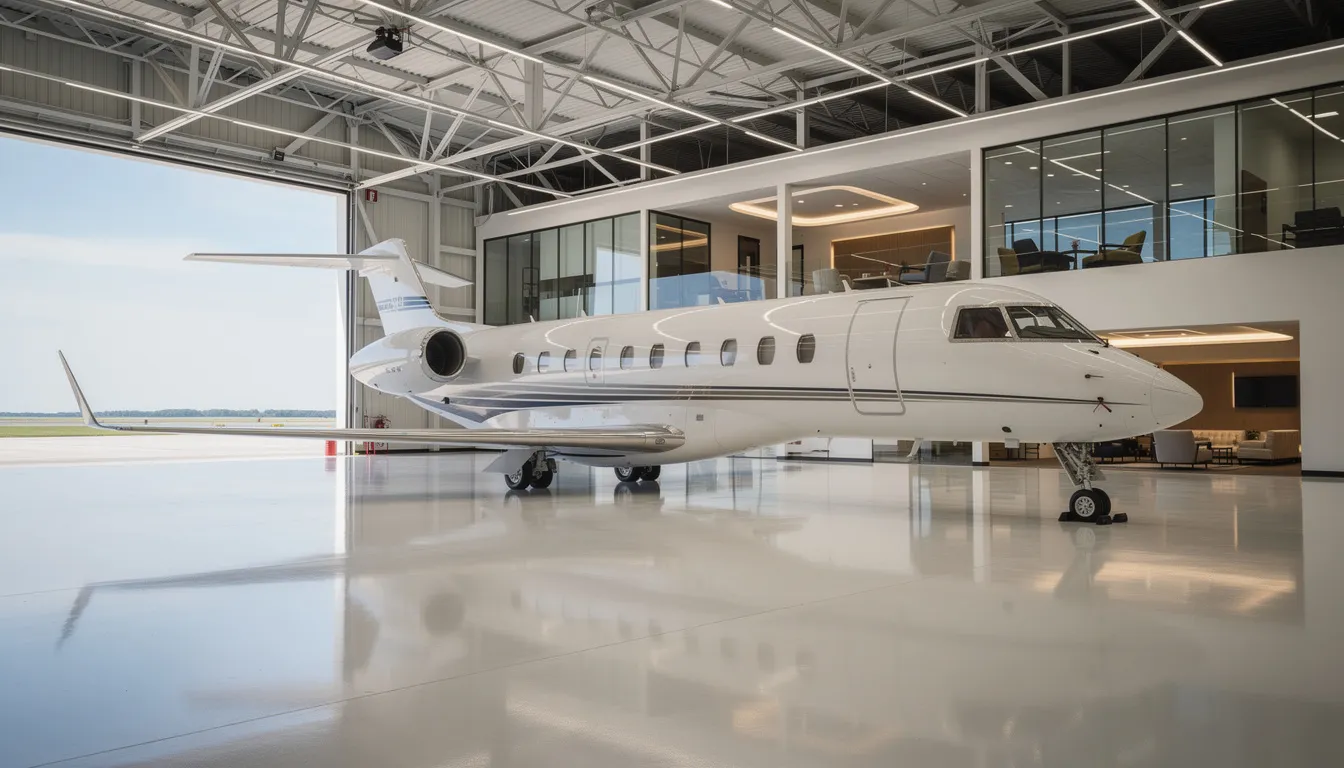
Private aircraft ownership represents substantial capital deployment requiring sophisticated analysis of market trends, depreciation patterns, and operational economics. Obtaining a professional valuation is crucial to ensure the aircraft is priced fairly for its age and condition. Reviewing the aircraft's complete maintenance history is important to identify any recurring problems, ensuring buyers make informed decisions. Understanding these financial dynamics enables strategic acquisition decisions aligned with long-term wealth preservation objectives.
Pre-owned luxury jet market trends demonstrate 15-20% price appreciation in the ultra-long-range category since 2022, reflecting supply constraints and robust demand from high-net-worth populations. A shortage of desirable, low-time used jets persists, keeping prices elevated compared to historical averages. The Global 7500 and G650ER have maintained particularly strong residual values, with well-maintained examples commanding premiums above initial market projections.
Depreciation curves follow predictable patterns where new jets lose 20-30% of value during the first three years, then stabilize at 5-8% annual depreciation. Ultra-long-range aircraft demonstrate superior value retention, with 10-year-old Global series and Gulfstream aircraft maintaining 45-55% of original purchase price when properly maintained with complete logbooks.
Operating cost analysis ranges from $3,000 to $8,000 per flight hour, depending on aircraft class and utilization patterns. Light jets average $2,500-4,000 hourly, mid-size aircraft cost $3,500-5,500 per hour, while ultra-long-range jets require $6,000-8,500 hourly, including fuel, maintenance, crew, insurance, and hangar costs. These figures exclude financing costs but include all operational expenses.
Fractional ownership alternatives provide middle-ground access for clients requiring 50-200 annual flight hours. NetJets and similar providers offer guaranteed availability through fractional shares typically ranging from 1/16th to 1/2 aircraft ownership, with corresponding access hours and management fees. For utilization exceeding 400 hours annually, direct ownership demonstrates superior economics versus fractional programs.
Tax advantages include Section 179 deduction opportunities, enabling full aircraft cost deduction in the year of purchase for qualifying business use exceeding 50%. Additionally, bonus depreciation provisions allow accelerated write-offs for new aircraft acquisitions, creating substantial tax optimization opportunities for profitable enterprises.
Safety Standards and Certification Requirements
Safety infrastructure in private aviation exceeds commercial aviation standards in multiple dimensions, with rigorous certification processes and advanced technology systems providing multiple layers of protection. Safety infrastructure is particularly stringent for luxury private jet operations, ensuring peace of mind for discerning owners.
FAA Part 91 vs Part 135 operational standards create different regulatory frameworks affecting aircraft operations and resale values. Part 135 charter operations require enhanced pilot training, crew rest limitations, and mandatory safety management systems, while Part 91 owner-operated aircraft provide operational flexibility with voluntary safety programs often exceeding regulatory minimums.
Mandatory inspection protocols include 100-hour inspections for commercial operations, annual inspections for all aircraft, and progressive maintenance programs spreading major inspections across calendar intervals. Phase inspections typically occur every 12-18 months, while major overhauls address airframe and engine components at predetermined intervals based on flight hours and calendar time. These inspection protocols ensure the highest levels of safety and reliability for luxury private aircraft.
Advanced safety systems integrated in modern luxury aircraft include Terrain Awareness Warning Systems (TAWS), Traffic Collision Avoidance Systems (TCAS II), and Enhanced Ground Proximity Warning Systems, providing multiple layers of collision avoidance. Synthetic Vision Technology creates artificial visual references during low-visibility approaches, while Enhanced Flight Vision Systems combine infrared cameras with cockpit displays for improved situational awareness.
Pilot training requirements mandate type ratings specific to each aircraft model, with initial training requiring 2-4 weeks of ground school and simulator instruction. Recurrent training occurs every 12 months for commercial operators and every 24 months for private operations, ensuring currency with systems updates and emergency procedures.
Third-party safety auditing through organizations like ARGUS, Wyvern, and IS-BAO provides independent verification of safety management systems, pilot qualifications, and maintenance standards. These certifications ensure the highest safety and reliability standards, enhance insurance positioning, and provide objective safety metrics for aircraft evaluation.
Technology and Customization Features
Contemporary luxury aircraft integrate sophisticated technology systems that extend the executive office environment into flight operations while providing extensive customization options reflecting personal preferences and corporate identity.
Avionics suites available in modern private jets include Garmin G5000 systems featuring touchscreen controls and synthetic vision displays, Honeywell Pro Line Fusion with integrated weather radar and traffic systems, and Collins Pro Line 21 providing glass cockpit functionality with advanced navigation capabilities. These systems enhance safety through situational awareness while reducing pilot workload during complex operations.
Connectivity options enable real-time business operations at altitude through providers like Starlink, Viasat, and Inmarsat, offering global high-speed internet coverage. Modern installations support video conferencing, large file transfers, and secure communications, maintaining ground-based productivity levels throughout flight operations.
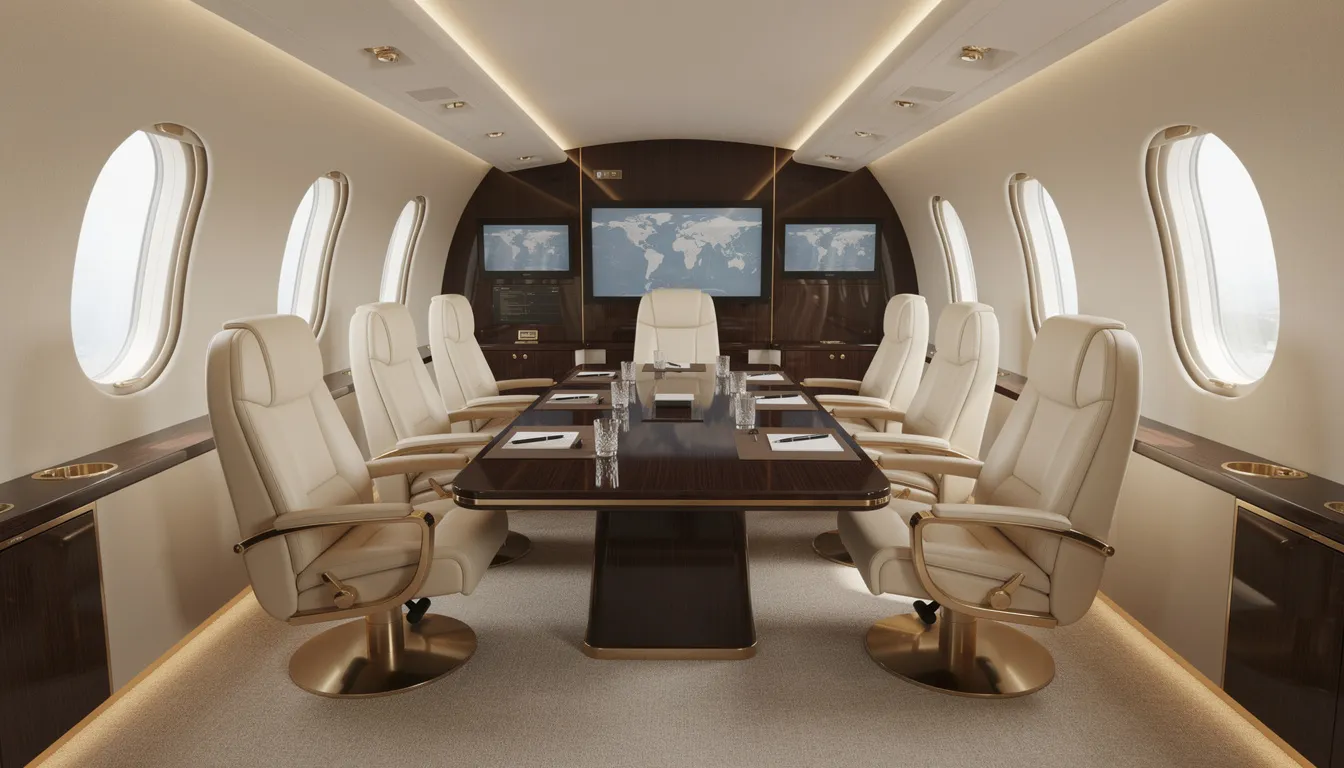
Interior customization possibilities extend from bespoke furniture crafted by luxury automotive suppliers to entertainment systems exceeding residential luxury standards. Cabin configurations can include private bedrooms with full-size beds, conference facilities with video connectivity, spa areas with shower systems designed for altitude environments, and galley equipment enabling five-star culinary services at 45,000 feet. Passengers enjoy a seamless luxury experience from takeoff to landing, with every detail tailored for comfort and personalized service. Cabin amenities should also include customizable interiors, reliable technology for internet access, and comfort features like climate control and soundproofing to enhance the overall travel experience.
Cabin management systems provide touchscreen and mobile app control over lighting, temperature, entertainment, and communication systems. Circadian lighting systems automatically adjust color temperature and intensity to minimize jet lag effects, while advanced air filtration systems provide 100% fresh air circulation with medical-grade HEPA filtering.
Conference capabilities transform aircraft into mobile boardrooms with satellite phone systems, secure communication channels, and presentation equipment, enabling business continuity during travel. Video conferencing systems with global connectivity allow participation in meetings and decision-making processes without interruption for travel requirements.
Sustainability in Private Aviation
Environmental stewardship increasingly influences luxury aircraft acquisition decisions, with manufacturers integrating advanced efficiency technologies and sustainable fuel compatibility as standard features rather than optional equipment.
Sustainable Aviation Fuel (SAF) compatibility enables immediate emissions reduction without infrastructure modifications. Current SAF blends (typically 50% SAF, 50% conventional Jet A fuel) reduce lifecycle carbon emissions by 40-50% compared to conventional fuels, with 100% SAF capability anticipated by 2030 for most business aircraft platforms.
Carbon offset programs integrate directly with flight planning software, automatically calculating emissions and purchasing verified offsets through forestry, renewable energy, and direct air capture projects. Leading providers offer real-time carbon accounting, enabling immediate neutrality for each flight operation.
The electric and hybrid propulsion timeline for commercial availability extends to 2030-2035 for regional aircraft, with manufacturers like Eviation and Wright Electric developing electric powertrains for short-haul applications. Current hybrid systems under development promise 30-50% fuel reduction for typical business aviation missions.
Efficiency improvements in contemporary aircraft reduce fuel consumption by 15-25% versus previous generation engines through advanced materials, aerodynamic refinements, and digital engine controls. The Pratt & Whitney PW800 series and Rolls-Royce Pearl engines incorporate these technologies in current production aircraft.
Environmental reporting capabilities provide detailed flight tracking and carbon footprint documentation supporting ESG compliance requirements for corporate aircraft operations. Advanced flight management systems calculate optimal routing for fuel efficiency while maintaining schedule requirements.
Luxury jet charter providers are also adopting sustainable aviation fuel and carbon offset programs to meet the demands of environmentally conscious travelers.
Purchase Process and Professional Guidance
Acquiring luxury private aircraft requires sophisticated professional coordination addressing technical evaluation, financial structuring, and regulatory compliance across multiple jurisdictions. Our expert brokers assist clients at every stage, offering personalized guidance and support to ensure a seamless experience. A luxury jet broker provides expert market insight and negotiation skills to ensure clients secure the best aircraft for their needs.
Pre-purchase inspection requirements involve comprehensive 100+ point technical evaluations conducted by qualified maintenance facilities with specific aircraft expertise. Inspections address airframe condition, engine performance, avionics functionality, and a complete logbook review, verifying compliance with manufacturer service bulletins and airworthiness directives.
Financing options for qualified buyers include asset-based lending at current rates of 6-8% with loan-to-value ratios reaching 80-90% for well-maintained aircraft. Specialized aviation lenders understand aircraft values and provide terms from 5-20 years, with some offering lease-to-own structures, optimizing tax positioning for business use.
Insurance considerations require hull coverage protecting aircraft value, liability coverage addressing third-party claims, and passenger coverage for occupants during operations. Premiums vary based on pilot experience, aircraft type, and operational profile, typically ranging from 0.5-2.0% of aircraft value annually for qualified operators.
Registration and delivery timeline typically spans 30-90 days from purchase agreement execution, including title research, financing approval, pre-purchase inspection completion, and delivery preparation. International transactions require additional time for import documentation and customs clearance procedures. It is recommended to have a thorough inspection done by a qualified technician before purchasing a luxury private jet. You can buy a luxury private jet through a streamlined process designed to make the acquisition efficient and straightforward.
Professional team assembly includes qualified aircraft brokers with specific market expertise, aviation attorneys familiar with regulatory requirements, insurance specialists understanding aviation risks, and maintenance facilities providing ongoing support. Selecting experienced professionals familiar with luxury aircraft transactions ensures efficient purchase processes and optimal long-term ownership experience. Learn about each step involved in acquiring a luxury private jet—our team is here to educate and guide you throughout the journey.
To arrange a personalized consultation or jet tour, simply fill out our contact form and a specialist will reach out to you directly.
Featured Aircraft Example: 2024 Market Highlight
The 2018 Bombardier Challenger 350 is a luxury jet for sale in the super-mid category, combining proven reliability with modern avionics and spacious cabin accommodation.
Aircraft specifications include 64 total flight hours since major inspection, Pro Line Fusion avionics with synthetic vision technology, WAAS/LPV approach capability, and enhanced weather radar systems. The maintenance status shows complete compliance with manufacturer service bulletins and calendar-based inspections current through 2025.
Interior configuration features executive seating for 10 passengers in a double-club arrangement with high-speed Wi-Fi connectivity, satellite phone capability, and advanced cabin management systems. Recent interior refurbishment includes new leather appointments and updated entertainment systems throughout the cabin.
Value proposition analysis demonstrates significant savings versus commercial first-class travel for executives conducting regular transcontinental flights. At 200 annual flight hours, the time savings alone justify operational costs through recovered productivity and schedule flexibility.
Operating cost advantages include fuel efficiency averaging 261 gallons per hour and maintenance costs substantially below manufacturer projections due to low utilization and excellent care. Insurance rates reflect the aircraft’s exemplary safety record and the owner’s conservative operation profile.
ROI calculation for frequent business travelers shows break-even versus commercial first-class plus hotels at approximately 150 annual flight hours, with substantial productivity gains and schedule control providing additional value beyond quantifiable cost comparisons.

Frequently Asked Questions
What financing options are available for luxury private jet purchases?
Asset-based financing typically offers 80-90% loan-to-value ratios at 6-8% interest rates for qualified buyers. Many lenders specialize in aircraft financing with terms from 5-20 years, and some offer lease-to-own structures for tax optimization. Down payments usually range from 10-20% of aircraft value, with monthly payments structured around anticipated utilization and tax benefits.
Luxury jet financing solutions are tailored to the unique needs of high-net-worth buyers, offering flexible terms and competitive rates.
How do operating costs compare between different aircraft categories?
Light jets average $2,500-4,000 per flight hour, mid-size jets range $3,500-5,500, while ultra-long-range jets cost $6,000-8,500 per hour. These figures include fuel, maintenance, crew, insurance, and hangar costs but exclude financing. Actual costs vary significantly based on utilization patterns, with fixed costs spreading more favorably across higher annual flight hours.
Understanding the full luxury jet cost is essential for buyers to make informed decisions about ownership and operation.
What are the key differences between buying new and pre-owned luxury aircraft?
New aircraft offer the latest technology and full warranties, but depreciate 20-30% in the first three years. Pre-owned jets (3-10 years old) provide 60-70% of original performance at 40-50% of the new price, with proven maintenance history and immediate availability. Pre-owned aircraft require thorough pre-purchase inspections but often represent superior value for experienced buyers.
Luxury jet ownership offers unique benefits and considerations compared to other forms of private aviation access.
How long does the typical aircraft purchase process take from initial inquiry to delivery?
For pre-owned aircraft, expect 30-90 days, including pre-purchase inspection, financing approval, and delivery preparation. New aircraft orders typically require 18-36 months, depending on the manufacturer and customization requirements. International purchases may require additional time for import procedures and customs documentation.
Luxury jet delivery is coordinated to ensure a seamless transition from purchase to ownership, with personalized support provided throughout the process.
What ongoing management services are essential for private jet ownership?
Professional aircraft management includes maintenance scheduling, crew hiring and training, insurance management, flight planning, and regulatory compliance. These services typically cost $50,000-150,000 annually, depending on aircraft size and utilization. Many owners find professional management essential for optimizing operational efficiency and ensuring regulatory compliance. Luxury jet management services provide comprehensive support, from maintenance to crew scheduling, ensuring optimal performance and peace of mind for owners.
The luxury private aviation market in 2025 offers unprecedented opportunities for strategic aircraft acquisition, combining advanced technology, superior safety standards, and compelling investment characteristics. For qualified buyers seeking to eliminate travel inefficiencies while gaining operational flexibility, private planes for sale represent sophisticated business tools rather than mere transportation assets. Fluctuations in fuel prices and operational regulations can significantly affect the market value of private jets, making it essential for buyers to stay informed about these variables when considering an investment.
Professional guidance through qualified aircraft brokers ensures optimal aircraft selection aligned with individual requirements and market conditions. The best options for purchasing a luxury private plane include working with a private jet broker or using an online marketplace for new or used jets. Contact experienced aviation professionals to discover luxury private jets for sale that transform travel from a necessary expense into a strategic competitive advantage.
Conclusion
Investing in a private plane for sale luxury is more than acquiring a mode of transportation—it’s embracing a lifestyle of unparalleled convenience, efficiency, and prestige. The strategic advantages of private aviation, from significant time savings and enhanced productivity to exceptional privacy and global accessibility, make luxury aircraft an invaluable asset for high-net-worth individuals and business leaders alike. The demand for luxury private jets remains strong, supported by new customer segments, particularly younger buyers from the tech and crypto sectors. Technological features, aircraft age, and engine hours are key factors that affect private jet pricing, making it essential for buyers to evaluate them carefully.
The luxury private jet market is currently experiencing a healthy equilibrium after a post-pandemic surge, with strong demand continuing from both traditional and new buyers. With a diverse range of aircraft options tailored to various travel needs and budgets, buyers can find the perfect balance of performance, comfort, and innovation. By partnering with experienced aircraft brokers like those at BlackJet.com and leveraging advanced technology and sustainability features, owners can enjoy a seamless ownership experience that meets the highest expectations. Whether for business or leisure, owning a luxury private jet transforms every journey into an exclusive destination, soaring beyond the ordinary to redefine what it means to fly in style.
To explore our exclusive fleet and learn more about our luxury private jets for sale, visit BlackJet.com today.


 Sign up with google
 Sign up with Apple