Building your own aircraft used to mean a decade of weekends hunched over rivet guns and jig tables. Today, a quick build airplane kit compresses that timeline dramatically, letting you go from crate to first flight in a fraction of the traditional build time. This guide covers what these kits include, what they demand from you, and when a different kind of aviation access makes more strategic sense.
Why Quick Build Aircraft Kits Appeal to Modern Builders
A generation ago, starting a homebuilt aircraft project in your garage meant committing to 1,500–2,500 hours of fabrication, commonly referred to as a multi-year marathon that tested patience as much as skill. Many projects started in the 1980s and 1990s never reached the airport. Builders lost motivation, ran out of budget, or simply ran out of time.
Modern quick build kits change that equation. Quick Build Kits reduce construction time significantly, often by 35–50%, because the factory handles the most complex and time-intensive structural tasks before the crate reaches your shop. Van's Aircraft reports their QuickBuild versions of the RV-7, RV-9, RV-10, and RV-14 cut build time by roughly 35–40%. The Sonex-B standard kit takes about 1,000 hours; the quick build version drops that to approximately 500.
Quick build kits are popular among aviation enthusiasts and recreational pilots who want their own aircraft for weekend cross-country trips, backcountry flying, or IFR-capable travel without waiting years. Factory handling of complex tasks reduces the intimidation factor for amateur builders, making the world of experimental aviation accessible to professionals who can dedicate 10–15 hours per week rather than 40.
Quick Build vs Standard Aircraft Kits
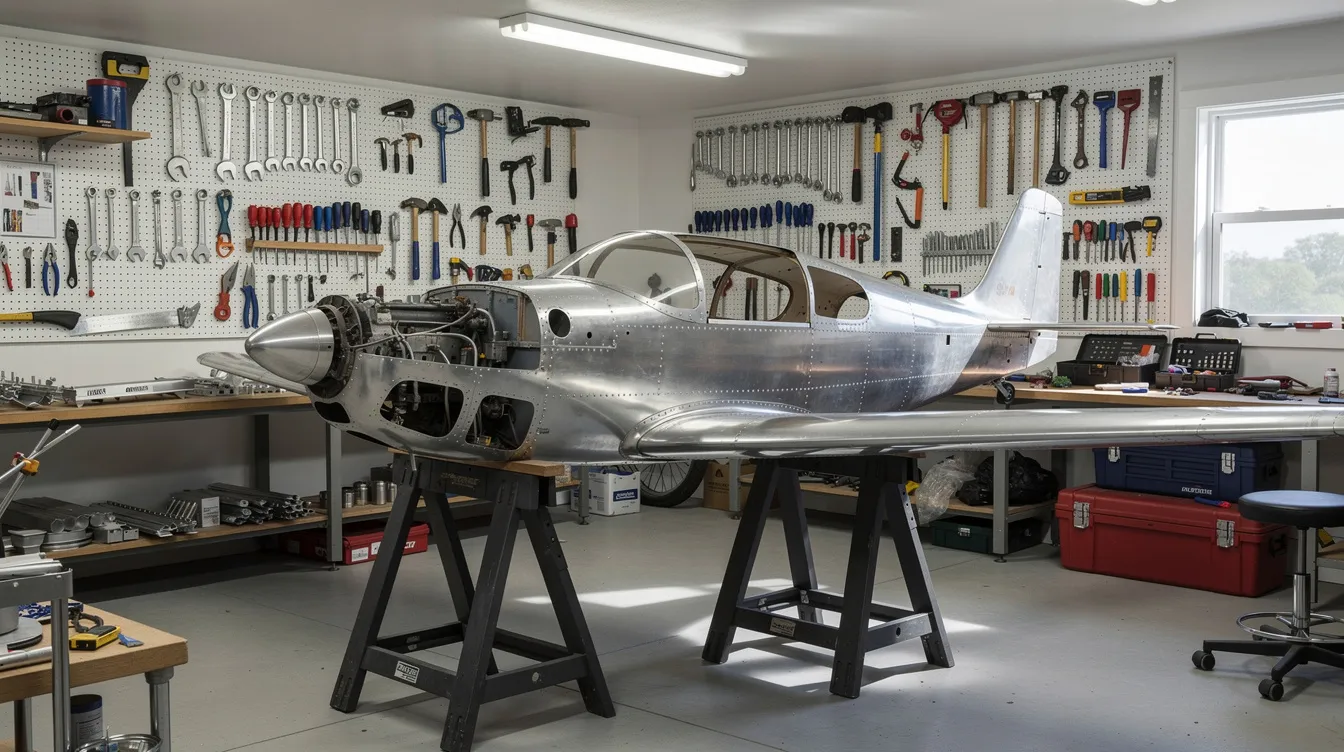
The aircraft you fly at the end is the same design with all the parts and the same plans. The difference is how much assembly the factory completes before shipping.
Standard kit:
You receive raw or minimally processed components: skins, spars, ribs, fuselage pieces
Typical build time ranges from 1,000 to 2,200 hours for metal kits
Tasks include rivet drilling, jig setup, skin fitting, fuel tank sealing, and structural alignment
Lower kit purchase price
Quick build kit:
Factory delivers a pre-riveted fuselage, matched-hole wings, pre-fitted canopy, and often sealed fuel tanks
Build time drops 35–50%, meaning a 2,000-hour project becomes roughly 1,000–1,300 hours
Difficult structural work is completed with factory tooling and quality control
Quick-build kits generally have a higher initial cost due to factory pre-assembly
The tradeoff is price versus time. Sonex's Highwing standard complete airframe kit runs approximately $39,000; the quick-build fuselage and wings option costs around $55,000. But when you factor in saved years of workshop overhead, reduced tooling costs, and fewer build mistakes, the total project cost often narrows.
Critically, quick build kits still comply with the FAA "51% Rule." The FAA requires builders to perform 51% of the fabrication for certification under the Experimental/Amateur-Built category. Homebuilt aircraft must comply with the 51 Percent Rule, and manufacturers like Van's and Sonex submit their kits for FAA NKET (National Kit Evaluation Team) review to confirm eligibility.
What "Quick Build Kit" Usually Includes
Every manufacturer defines "quick build" differently. Before you spend, read the inclusions list line by line. Here is what you can generally expect.
Typical pre-assembled components:
Largely riveted fuselage shell with firewall, gear mounting points, and most skins installed
Wings with rib assemblies completed, leading edges attached, and fuel tanks sealed and pressure tested
Pre-hung control surfaces (ailerons, flaps, rudder, elevator) or at least pre-fitted hinges
Installed landing gear attachment points and basic version structural brackets
Pre-drilled skins and matched-hole tooling for remaining assembly
Quick Build Kits include pre-assembled wings and fuselage as their core value proposition. For composite homebuilt aircraft, you may receive premolded cowlings and fiberglass fairings. Metal kits often ship with pre-welded engine mount hardware.
What is usually excluded:
Engines (Rotax 912 series, AeroVee, Jabiru 3300, ULPower, or other engines)
Propellers
Avionics and electrical harnesses
Upholstery, paint, and interior finishing
Shipping charges, which can be significant for large pre-assembled components
Quick-build kits provide customization opportunities for avionics and interior configurations, meaning you choose and install equipment that matches your mission and budget rather than accepting a factory-standard setup.
What's Left for the Builder to Do
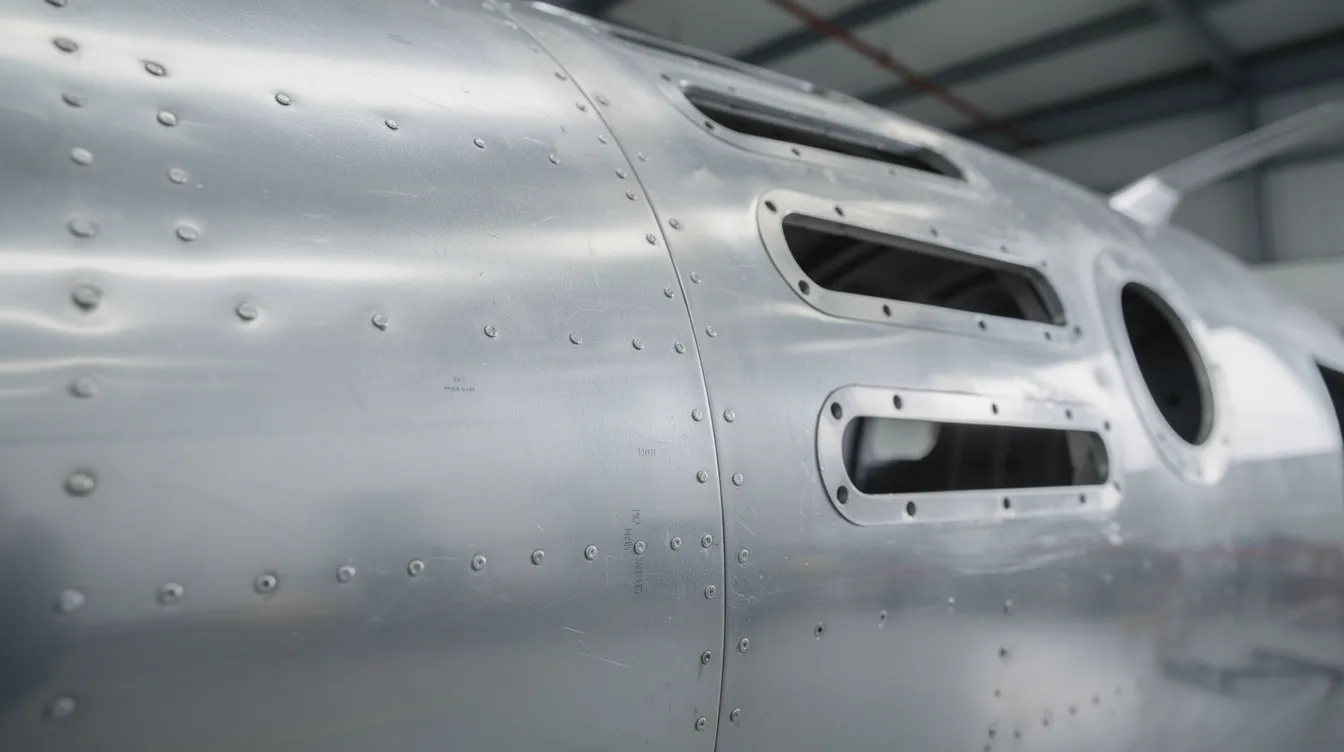
A quick build kit is not a complete airplane in a box. Quick Build Kits require builders to complete some assembly tasks that are substantial and demand real skill and decision-making.
Structural Tasks
Structural tasks:
Bolt wings to fuselage and verify alignment
Install tail surfaces, fairings, and canopy
Fit interior panels, floors, seats, and baggage compartments
Final skin attachment on areas left open for inspection access
Systems Integration
Systems integration:
Route and connect control linkages, pushrods, and cables
Fuel system plumbing: lines, valves, fuel selector, fuel pump
Complete wiring harnesses, lighting, battery installation, and avionics
Engine installation and all firewall-forward components, including exhaust, cooling, and propeller
Finishing and Testing
Finishing and testing:
Fairings, painting or wrapping, and interior upholstery
Weight-and-balance computation using certified scales
Ground testing: engine runs, taxi tests, systems checks
Logbook entries documenting every construction stage
The flight-test phase is non-negotiable. The FAA typically imposes an initial test period of 25 hours if using an approved engine and propeller assembly, or 40 hours otherwise, during which no passengers may be carried, and airspace restrictions apply. These flight hours are logged before the amateur-built aircraft enters normal service.
Homebuilt Aircraft Categories Suited to Quick Build Kits
Quick build solutions now exist across a wide spectrum of aircraft types and missions, offering many options for builders with different goals.
Light-sport and ultralight designs:
Simple, low-power aircraft aimed at first-time builders and cost-sensitive pilots
The Aeromarine-LSA Merlin has a max-gross weight of 715 pounds, fitting the ultralight end of the spectrum
The Aventura HP has a max-gross weight of 750 pounds, offering amphibious fun at minimal empty weight
The Baby Ace has a gross weight of 950 pounds, a classic open cockpit design with wood and fabric construction
Cross-country cruisers:
Higher cruise speed aircraft in the 150–200 mph range for pilots who want to cover ground
The Sonex-B can cruise at 150 mph with an AeroVee engine, making it an efficient example of better performance on a budget
The KR-2S can achieve a cruise speed of 150–180 mph, a developed design with a strong builder following
Van's RV-series models remain the market leaders, with roughly 7,645 flying in the world
STOL and bush aircraft:
Kits like the Highlander and Kitfox prioritize short takeoff and landing performance
The Kitfox Series 7 has a max gross weight of 1,550 pounds with the ability to handle rough ground strips
Larger tires, high wing configurations, and robust landing gear define this category
Specialty kits:
Amphibious aircraft and warbird replicas benefit from quick build options that tame construction complexity
Pre-built subassemblies for engine mount, canopy, and control surfaces let builders focus on finishing rather than fabricating from scratch.

Key Design Choices: Landing Gear, Powerplant, and Materials
Choosing between landing gear types, engine options, and materials has a direct impact on your build experience, flight performance, and useful load. These decisions shape the airplane you will ultimately fly.
Landing Gear
Landing gear:
Taildragger (conventional gear) is lighter and suits rough fields, but demands more pilot skill on the ground
Tri gear (tricycle) is easier for most pilots and better for paved airport operations
Some kits, like Kitfox-style designs, offer convertible landing gear so you can switch between configurations
Engine Options
Engines (80–180 HP range):
Rotax 912iS (100 HP): fuel-efficient, light, popular for light sport aircraft
Rotax 915iS (141 HP turbocharged): delivers higher cruise speed and climb rate but adds weight and costs
A 100 HP Rotax 912iS versus a 141 HP Rotax 915iS can mean the difference between 140 mph and 175 mph cruise, plus meaningful changes in useful load and fuel burn
Jabiru 3300 (120 HP), AeroVee (Volkswagen-based, ~80 HP), and Lycoming O-320 (150–160 HP) round out common choices
Materials
Materials:
Metal aircraft often utilize sheet aluminum and welded steel tube for the airframe and structure, offering durability and ease of maintenance
Composite aircraft use fiberglass or carbon fiber with epoxy, enabling smooth aerodynamic shape but requiring more finishing work in foam and layup.
Wooden aircraft commonly use Sitka spruce and Douglas fir, a combination that yields a light, strong structure with traditional craftsmanship appeal.l
Aircraft fabric covering is typically made from polyester, applied over wood or steel tube frames.
The development of CNC-machined, pre-punched aluminum components has made metal quick build kits particularly builder-friendly, reducing the equipment and shop tooling needed.
Safety, Testing, and Regulatory Compliance
Safety in homebuilt aviation has improved steadily, but the data demands respect. Homebuilt aircraft had a 21.6 accident rate per 100,000 flight hours in 2003. Homebuilt aircraft account for 10% of the GA fleet but 27% of accidents. Accident rates for homebuilt aircraft are 3–4 times higher than certified aircraft. And 10% of homebuilt aircraft accidents occur on the first flight, underscoring the critical importance of testing, training, and mentoring.
Regulatory framework:
The FAA's Experimental/Amateur-Built category governs these aircraft under 14 CFR Part 21
The FAA audits Quick Build Kits for compliance with regulations through the NKET checklist process
Most nations require amateur-built aircraft to be marked as such, ensuring transparency for inspectors and future owners
Manufacturer testing practices:
Static load tests, flutter testing, and flight envelope validation are typically completed before any kit reaches the market
Fuel tanks in quick build wings are pressure tested at the factory
Structural testing across thousands of fleet hours (manufacturers like Kitfox have logged over a million) validates long-term durability
Mitigating risk:
Type-specific transition training before first flight is essential
Joining EAA chapters provides access to mentors for homebuilt aircraft construction, including technical counselors and flight advisors who have built and flown the same model you are constructing. ing
Following the manufacturer's assembly manual precisely, maintaining detailed logbook entries, and scheduling a thorough condition inspection before first flight are non-negotiable steps.
Despite the higher statistical risk, the gap between experimental and certified aircraft accident rates has been narrowing as builder education and community support improve.
Timeline, Budget, and Project Planning
Even with a quick build kit promising a 35–50% time reduction, disciplined planning separates projects that fly from those that gather dust.
Build-Hour Estimates
Realistic build-hour ranges:
Metal two-seat quick build (e.g., Van's RV-14): ~800–1,000 hours remaining after kit arrival
Simple LSA-type quick build: ~400–600 hours
Very light or ultralight designs: potentially less, depending on builder experience
Budget Categories
Cost categories to budget for:
Kit base price (airframe plus quick build premium)
Engine and propeller: often $15,000–$40,000+ depending on model
Avionics (glass panel, radios, transponder, autopilot): $5,000–$25,000+
Paint, interior, and finishing materials
Tools, workshop or hangar space, climate control
Inspection fees, registration, insurance
Contingency buffer: plan for 10–20% above your line-item total
Sonex Quick Build Kits save builders $3,000 to $8,000 compared to sourcing equivalent pre-assembly independently, but expect total project costs (kit, engine, avionics, finish) to range from $50,000 to well over $150,000 depending on the model and equipment choices.
Scheduling Strategies
Scheduling strategies:
Set weekly build-hour targets (10–15 hours is common for working professionals)
Use milestone planning: fuselage complete by date X, first engine start by date Y, first taxi by date Z.
Account for manufacturer lead times; Van's QB components can take 26–39 weeks to ship
From Personal Project to Premium Travel: When to Use Private Jet Access Instead
A homebuilt aircraft is a passion project that delivers unmatched fun and personal satisfaction. But when travel is time-critical, weather-dependent, or involves multiple passengers and long distances, the limitations of a typical two-seat experimental airplane become clear.
Where homebuilt aircraft fall short for business travel:
Limited range and payload; most carry one or two people with modest baggage
Single-engine, VFR-primary operations in many cases; icing and hard IFR are challenging
No cabin amenities, pressurization, or speed comparable to business jets
Maintenance, annual inspections, and insurance are the pilot's responsibility
Where private jet charter wins:
All-weather, multi-passenger capability with cabin classes from light to large
Speed: cover New York to Los Angeles in under five hours versus days of VFR legs in a kit airplane
No build time, no hangar, no personal maintenance burden
Consider the builder who flies a homebuilt aircraft locally on weekends but uses a 25-Hour Jet Card informed by a comprehensive guide to 25-hour jet cards to travel New York–Los Angeles or London–Geneva on a tight schedule. One aircraft serves the soul; the other serves the calendar.
How BlackJet Enhances Travel Beyond Your Own Aircraft
BlackJet's premium private jet card programs serve travelers who value flexibility and safety beyond what a single homebuilt aircraft can offer, providing a strategic advantage for those who refuse to compromise on either passion or performance.
Jet Card model:
Prepaid 25- or 50-hour blocks across multiple aircraft categories: light jets, midsize, and large-cabin
Predictable hourly rates with transparent pricing, eliminating the guesswork of ad-hoc charter
Safety:
Technology:
24/7 digital and mobile booking with real-time flight support
A seamless experience compared to managing flight planning, weather briefings, and NOTAMs alone in a kit aircraft
Sustainability:
Frequently Asked Questions About Quick Build Airplane Kits
What is a quick build airplane kit?
A quick build airplane kit is a homebuilt aircraft package with major components—typically the wings and fuselage—partially assembled by the manufacturer. Builders complete the remaining assembly, systems installation, and finishing while retaining meaningful hands-on involvement.
How much time can a quick build kit save?
Build time varies by aircraft and builder experience, but quick build kits can reduce construction time by roughly 35–50% compared with standard kits. Factory pre-assembly takes on complex structural work, though wiring, engine installation, interior finishing, inspections, and flight testing still require substantial time.
Does a quick build kit meet the FAA 51% Rule?
It can, provided the kit is evaluated, and the builder completes the required major portion of the fabrication and assembly. The FAA’s National Kit Evaluation Team audits quick build kits for regulatory compliance; confirm the model’s current checklist and follow its documentation requirements before purchasing.
What is usually included in a quick build aircraft kit?
Most include pre-assembled wings and fuselage, with the exact level of completion varying by manufacturer. Engines, propellers, avionics, wiring, paint, upholstery, and shipping are often separate costs, so review the kit’s inclusions and exclusions carefully.
Are quick build kits safer than standard kits?
A quick build kit is not inherently safer simply because the factory completes some assembly. Safety depends on design and manufacturing quality, correct builder workmanship, thorough inspections, transition training, and disciplined flight testing. Work with experienced mentors and follow the aircraft’s manuals and applicable FAA requirements.
Is a quick build kit better than using a Jet Card?
They serve different missions. Building a kit aircraft suits pilots who value hands-on ownership and local or regional flying; a Jet Card offers on-demand access to professionally operated aircraft for longer, time-sensitive, or multi-passenger trips. Some aviation enthusiasts use both: a homebuilt aircraft for recreation and a BlackJet Jet Card for demanding travel.
Choosing Your Path: Quick Build Kit, Jet Card, or Both
The emotional satisfaction of assembling an airplane with your own hands and hearing that engine roar to life for the first time is irreplaceable. So is arriving at a critical business meeting refreshed, on time, and without a six-hour weather delay.
Choose a quick build aircraft kit when:
Hands-on construction is part of the appeal
Your mission is local or regional VFR flying
You want an aircraft you have personally assembled, inspected, and understand completely
Choose a Jet Card with BlackJet when: readers who want to understand membership economics in depth can review this guide to jet card costs and pricing.
International travel, multi-city itineraries, or winter weather demand professional operations
Time and safety margins are critical to your business or family
You need max flexibility across cabin sizes without ownership overhead
Choose both when:
Elevate your travel on your terms. Whether you are riveting wing skins in your shop or stepping onto a private jet — after weighing whether chartering a private jet is worth it for your missions — aviation rewards those who plan with precision. Explore BlackJet's Jet Card programs to complement your aviation ambitions with seamless, safe, and sustainable private flight.


 Sign up with google
 Sign up with Apple