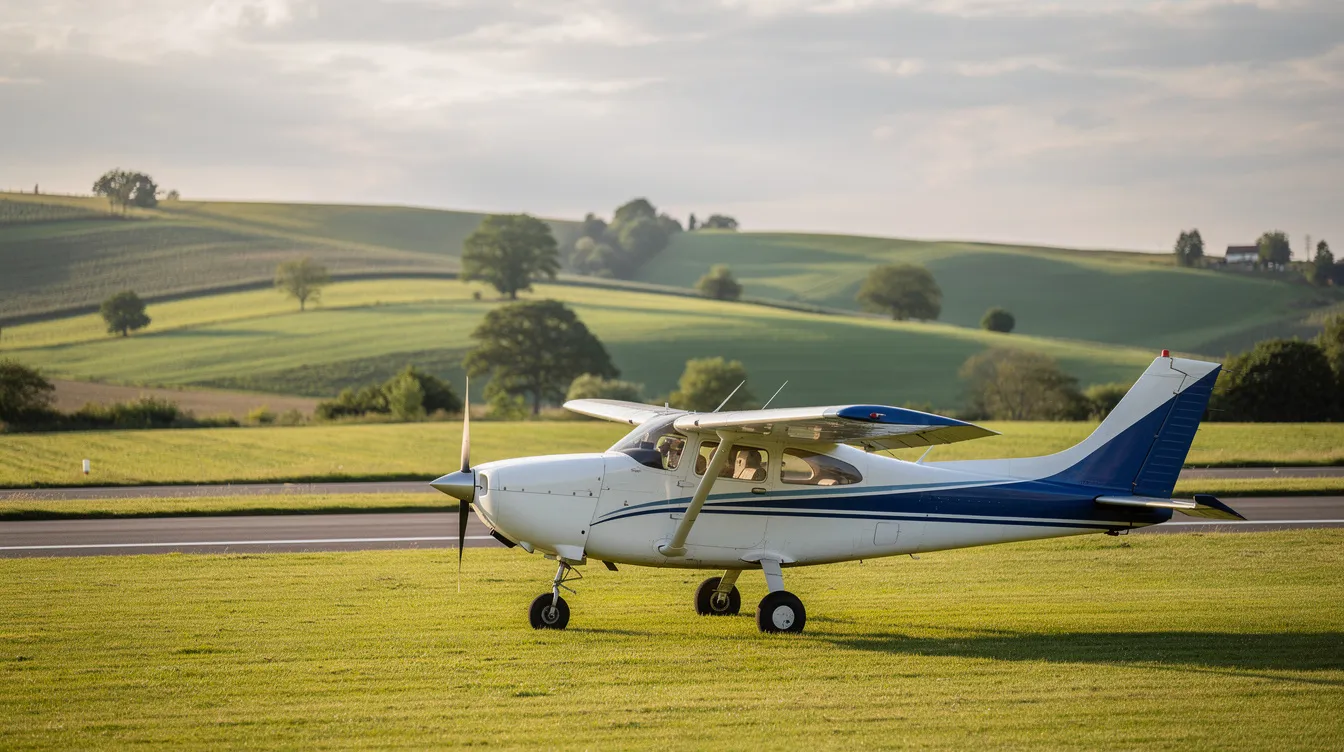
A single-engine plane is an aircraft powered by one engine—typically a piston or turboprop model—and it remains a foundational tool in private aviation for training, regional flying, and access to smaller airfields that many jets cannot use. This guide is intended for private aviation travelers, business professionals, and aviation enthusiasts considering single-engine aircraft for training, travel, or ownership. For discerning business and high-net-worth leisure travelers who use or are considering jet card access, knowing where these aircraft fit—and where they do not—can sharpen private travel planning, improve trip efficiency, and clarify when a single-engine aircraft, a twin, or a jet is the right choice.
This guide looks at the single engine plane’s role across aircraft types, performance, safety technology, pilot training, sustainability, and operating economics, including how ownership compares with on-demand access and how these aircraft integrate with broader private jet itineraries. In a layered aviation ecosystem, that understanding gives frequent travelers a more strategic view of the options behind every itinerary.
Why Single-Engine Aircraft Still Matter in a Private Jet World
The private aviation pyramid doesn't begin at 40,000 feet. Single-engine aircraft form the training, feeder, and regional layer beneath the midsize and large cabin jets that BlackJet Jet Card members rely on for business travel and personal travel. They are the planes where professional captains first learned to read weather, manage fuel burn, and make critical go/no-go decisions-skills that translate directly into the cockpit of a Citation or Phenom.
Single-engine planes offer access to smaller airfields with shorter runways, limited infrastructure, or challenging terrain that jet aircraft simply cannot serve. For short regional hops—New York to Martha's Vineyard, Dallas to Santa Fe—a high-performance piston single can land closer to the origin and destination than a typical jet, reducing ground transfer time to minutes.
Scheduling flexibility is higher with singles: fewer slot restrictions, simpler ground support, and no need for large ramp space or international handling. For missions under 300–800 nm, they can get passengers where they need to go faster door-to-door than a commercial flight plus transfers.
While BlackJet focuses on multi-engine jets for speed, cabin comfort, and weather tolerance, many professional captains in our approved operator network began their first flight in single engine piston airplanes like the Cessna 172 or Piper Archer.
Understanding single engine capabilities helps high-net-worth travelers decide when a jet, turboprop, or piston single is the right tool for a specific mission—and when a BlackJet Jet Card delivers the real advantage.
What Is a Single-Engine Plane?
A single-engine plane is an aircraft powered by one engine.
A single-engine plane is an aircraft powered by only one engine-either a piston or turboprop-driving a single propeller. The FAA treats single-engine aircraft as a distinct aircraft class for pilot certification, and these planes form the most common category in general aviation worldwide.
Single-engine piston aircraft use conventional gasoline engines (typically Avgas 100LL), while single engine turboprops run on Jet A fuel with substantially more power. Concrete examples: the Cessna 172S Skyhawk is a classic piston single; the Pilatus PC-12 is a single-engine turboprop. Single-engine aircraft have simpler cockpit workload for pilots compared to their multi-engine counterparts.
Typical cruise speed for piston singles ranges from 110 to 220 knots true airspeed, with ranges of 400 to 1,200 nautical miles depending on power, payload, and altitude. Their flight performance is often characterized by slower speeds and lower climb rates than multi-engine aircraft, but they are ideal for short- to medium-range trips.
Single engine aircraft can seat between two to six people and serve as the backbone of general aviation-especially for flight schools, owner-pilots, and utility operators. Single-engine aircraft usage is common in general aviation, from training to agricultural aviation and crop dusting.
These planes can land on short or grass runways, opening access to thousands of airfields that jets cannot reach. Their mission profile contrasts with the light and midsize jets BlackJet offers, which are built for longer, higher-speed, and weather-tolerant missions at higher altitudes.
Key Types ofSingle-Enginee Aircraft
The taxonomy breaks into four groups: basic trainers, high-performance piston singles, utility and backcountry aircraft, and pressurized aircraft. Each serves a different segment of the broader aircraft category spectrum.
Piston singles are the most common category, with iconic models like the Cessna 172, Piper Archer, and Cirrus SR22. Single engine planes generally have fewer mechanical systems to maintain, which translates into operational simplicity and lower maintenance costs than twins.
High-performance models such as the Cirrus SR22T, Beechcraft Bonanza G36, and Diamond DA50 RG approach turboprop speeds with modern avionics sophistication, retractable gear, and efficient performance. These aircraft deliver a unique blend of speed, range, and cutting edge features that turn heads among experienced owner-pilots.
Pressurized single-engine piston aircraft like the Piper M350 offer near light-jet comfort and enhanced comfort for four to six passengers, with the ability to fly at higher altitudes above weather. The Piper M350 is the only pressurized aircraft on this list, making it a standout for pilots who want cabin features typically found in turboprops.
While BlackJet clients typically step into light jets for similar ranges, many ex-owner-pilots started with these piston singles and understand their strengths firsthand. Single engine piston aircraft are cost-effective for ownership and versatile for various missions like training and travel.
Popular Single-Engine Planes in 2025–2026
Models with long production runs and strong parts support dominate the 2025–2026 market. Manufacturers like Cessna, Piper, Cirrus Aircraft, and Diamond sustain resale value and operational reliability through steady production, frequent updates, and global parts networks. This matters for aircraft purchases at every level.
Cirrus SR20 / SR22 / SR22T: Favored by tech-focused owner-pilots and advanced flight schools, the Cirrus SR22T achieves cruise speeds up to 213 knots with a ceiling near FL250. The SR series features Garmin Perspective+ avionics, whole-aircraft parachute (CAPS), and Global Connect satellite datalink. These single engine piston airplanes redefine what a single piston can deliver.
Cessna 172S Skyhawk: The Cessna 172 is the most produced airplane in history and remains the global standard for flight training. Cruise speed sits around 120–125 knots with range of roughly 500–640 nm, making it suitable for personal travel and recreational flying.
Piper Archer: A low-wing design counterpart to the Skyhawk, the Piper Archer is widely used in structured flight training programs. This four-seat aircraft offers a cruise of around 120–130 knots and a 700–900 nm range.
Diamond DA40 NG and DA50 RG: Modern composite options with efficient diesel or Jet-A engines. The Diamond DA50 RG entered the U.S. market in 2024, offering five seats, a cruise speed of approximately 181 knots, a service ceiling of 20,000 feet, and a useful load of roughly 1,210–1,232 lbs. Its Jet-A diesel piston engine delivers impressive fuel efficiency for longer flights.
Spotlight: Cirrus Aircraft and the Modern Piston Single
Since the late 1990s, Cirrus Aircraft has reshaped what owner-pilots expect from single-engine piston design. The SR20 and SR22 series introduced composite airframes, integrated glass cockpits, and a safety-first philosophy that now influences every tier of the flying experience.
The Cirrus SR22T (2023 G6 example) features Cirrus Perspective+ avionics with synthetic vision, Global Connect satellite communication, touchscreen controllers, and the whole-aircraft parachute system known as CAPS. Many single-engine models now feature advanced safety technologies, but Cirrus pioneered them at scale.
Safety milestones are significant: CAPS parachute systems on Cirrus aircraft have over 90% success rates in deployments, with the system credited with saving over 120 lives. This demonstrates how safety technologies have materially changed the single-engine risk profile.
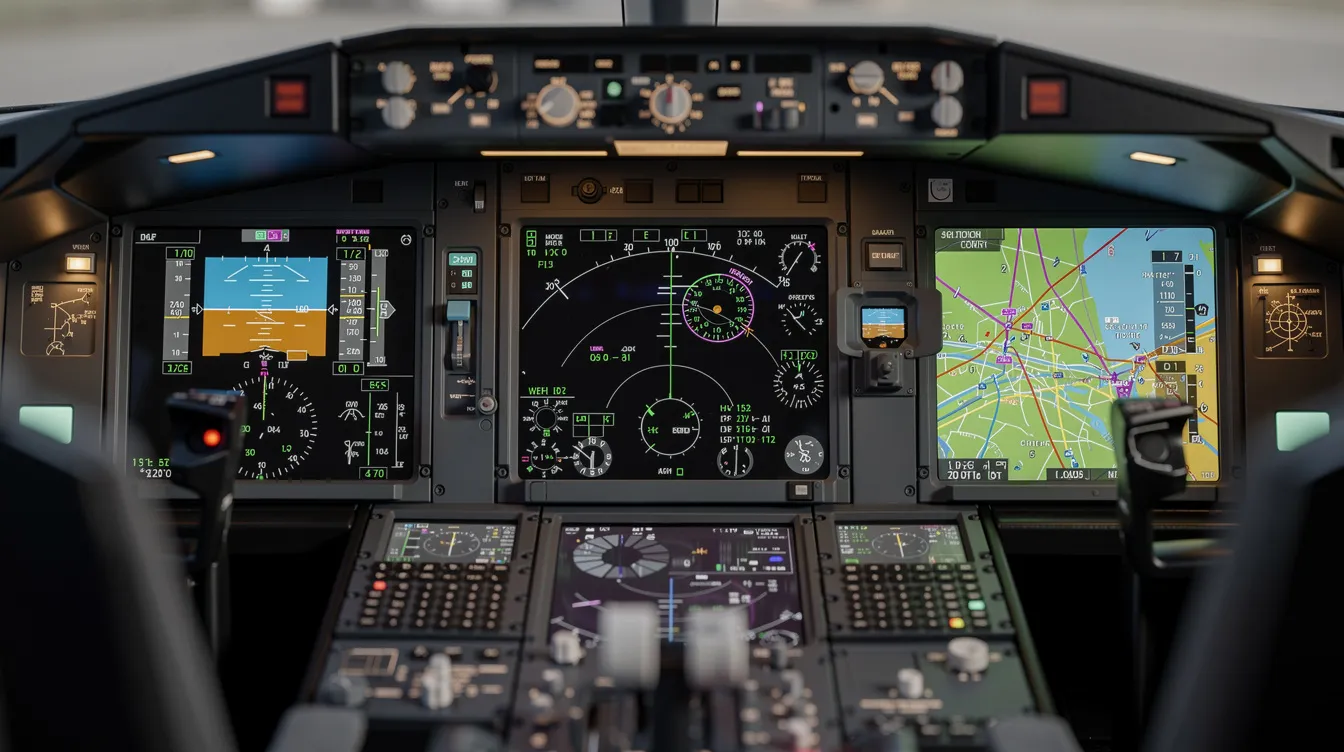
Modern avionics bring airline-like situational awareness to a piston single cockpit. ADS-B traffic, datalink weather, envelope-protected autopilots, and active traffic displays give pilots tools that were exclusive to jet aircraft a decade ago. The Garmin G1000 NXi suite, standard in many high-end singles, provides the same interface architecture used in turboprops and light jets.
For BlackJet members, this matters: Cirrus-level glass cockpits are now baseline for many of the jets and turboprops accessible via Jet Card membership. The innovations born in piston singles have raised the standard across private aviation.
Piper Archer, Piper M350, and Other Piper Single-Engine Icons
Piper's PA-28 family-Warrior, Archer, Arrow—represents foundational low-wing, single-engine aircraft for both training and personal travel. Their legendary durability and low-wing design have made them fixtures at flight schools and on owner-pilot ramps worldwide.
The Piper Archer II/III is a four seat, 180 hp Lycoming-powered aircraft with a cruise of around 120–130 knots and 700–900 nm range. Flight schools favor it for structured training because its low-wing configuration offers excellent ground handling and predictable flight characteristics, making it ideal for student pilots and new pilots alike.
The Piper M350 (evolved from the Malibu Mirage) is a pressurized single-engine piston with club seating for six, cruise near 213 knots, and high-altitude comfort comparable to light jets. In 2025–2026, the aircraft offers glass-cockpit avionics, weather radar, and safety technologies once reserved for turboprops and small jets, offering enhanced comfort and situational awareness at altitude.
Owning a Piper M350 involves significant capital and ongoing costs—insurance, pressurization maintenance, engine reserves. For missions of 800–1,000 nm, a BlackJet light jet accessed via a 25- or 50-hour Jet Card delivers double the speed, greater weather tolerance, and zero ownership headaches. The comparison illustrates when stepping up to a jet makes strategic sense.
How Single Engine Aircraft Are Used: Training, Business, and Cross-Country Travel
Flight schools worldwide rely on single-engine aircraft like the Cessna 152/172, Piper Archer, and Diamond DA20/DA40 for initial pilot training. Flight training typically occurs in forgiving single engine aircraft where student pilots build judgment, cross-country navigation, and instrument flying skills. They are also used for emergency medical and search and rescue operations in remote areas.
Common cross-country missions range from 300–800 nm: Los Angeles to Sedona, New York to Cape Cod, or similar regional routes flown by owner-pilots in high-performance piston singles. These aircraft are suitable for personal travel and recreational flying, and they provide the flexibility to access small airports that commercial airlines ignore.
Utility and backcountry flying rely on rugged models. The Cessna T206 Turbo Stationair HD has a useful load of 1,623 pounds-significant payload capacity for gear, freight, or passengers. The Cessna 206 Stationair has a useful load of over 1,500 lbs, and models like the Aviat Husky and CubCrafters XCub serve remote strips with STOL performance. Single-engine planes are also commonly used for agricultural aviation or crop dusting across rural regions.
Small businesses and families use single engine planes for regional commuting to secondary airports that larger jets cannot easily access. The cargo capacity for light freight or business supplies adds practical value on these shorter legs.
Pilots often build time and experience in single-engine aircraft before transitioning to turbine and jet cockpits. The average total time for single engine piston aircraft is about 2,039 hours, representing the depth of experience many pilots accumulate before moving into the turbine world that powers BlackJet's fleet.
Safety Technologies and Avionics in Modern Single-Engine Aircraft
Modern single engine aircraft carry avionics and safety systems that would have been unthinkable a generation ago—and many of these innovations now form the baseline in the jets BlackJet members fly.
Accident data from agencies like the NTSB consistently shows pilot decision-making as the dominant risk factor: approximately 70% of general aviation accidents stem from pilot-induced factors, not mechanical failure. Engine failures occur roughly once per 10,000 flight hours, and single engine aircraft can glide to a suitable landing area if the engine fails-a core training maneuver for every pilot.
Integrated glass cockpits are standard in modern single-engine aircraft. Systems like the Garmin G1000 and Cirrus Perspective+ provide WAAS GPS, synthetic vision, terrain and traffic alerting, and IFR certification. These platforms deliver the same situational awareness architecture used in twin-engine planes and jet aircraft.
ADS-B Out compliance became mandatory in U.S. controlled airspace in 2020, and ADS-B In provides traffic and weather data directly on pilot displays-an extra layer of awareness that benefits every flight.
Envelope-protected autopilots prevent dangerous attitudes, while whole-aircraft parachute systems like Cirrus CAPS add a final safety net. Many advanced safety technologies now common in singles, including terrain awareness (TAWS) and datalink weather, originated in the general aviation segment before migrating to business jets.
BlackJet-approved operators use multi-layered safety protocols, advanced avionics, and third-party audits that build directly on these single-engine innovations. The discipline of safe operations starts in the single-pilot cockpit.
Single-Engine Ownership Economics vs Jet Card and Charter Access
The economics of owning a single engine aircraft versus accessing jets through a structured program like a BlackJet Jet Card reveal different value propositions depending on flight hours, mission profile, and appetite for asset risk.
Annual costs for a Cessna 172 range from $3,000 to $8,000 in basic fixed expenses (tie-down or hangar, insurance). Annual inspections for single-engine planes typically cost $2,000 to $6,000, depending on aircraft condition and maintenance history. Total annual ownership costs can exceed $25,000 for single-engine planes when factoring in insurance, hangar, fuel reserves, and maintenance costs.
Engine overhauls for single-engine planes cost $30,000 to $60,000 every 1,800–2,200 hours—a major infrequent expense that prudent owners reserve for through hourly set-asides. Single-engine planes offer lower operating costs than multi-engine aircraft, but hidden issues during inspections can spike annual spend unpredictably.
For individuals flying 20–60 hours per year, chartering is more economical than owning. Chartering eliminates maintenance and storage responsibilities entirely. Chartering offers predictable trip costs without annual fixed expenses, and chartering provides access to a variety of aircraft types-from piston singles to light jets-matched precisely to each mission.
A BlackJet Jet Card converts all those fixed costs-hangar, crew, insurance, depreciation-into predictable hourly access to jets, without capital outlay or asset risk. There are no surprise overhaul invoices, no annual inspection anxieties, and no depreciation curve to manage.
Sample scenario: A client flying New York–Boston, Miami–Nassau, and Dallas–Aspen multiple times a year (roughly 50 hours total). Owning a high performance piston single runs $25,000–$40,000+ annually in fixed and variable costs, with weather delays and payload limitations. A BlackJet 25- or 50-hour Jet Card provides faster door-to-door times, pressurized cabins, weather penetration capability, and overall utilization that justifies the hourly premium for those who value schedule certainty.
Single Engine vs Twin Engine vs Jet: Matching Aircraft to Mission
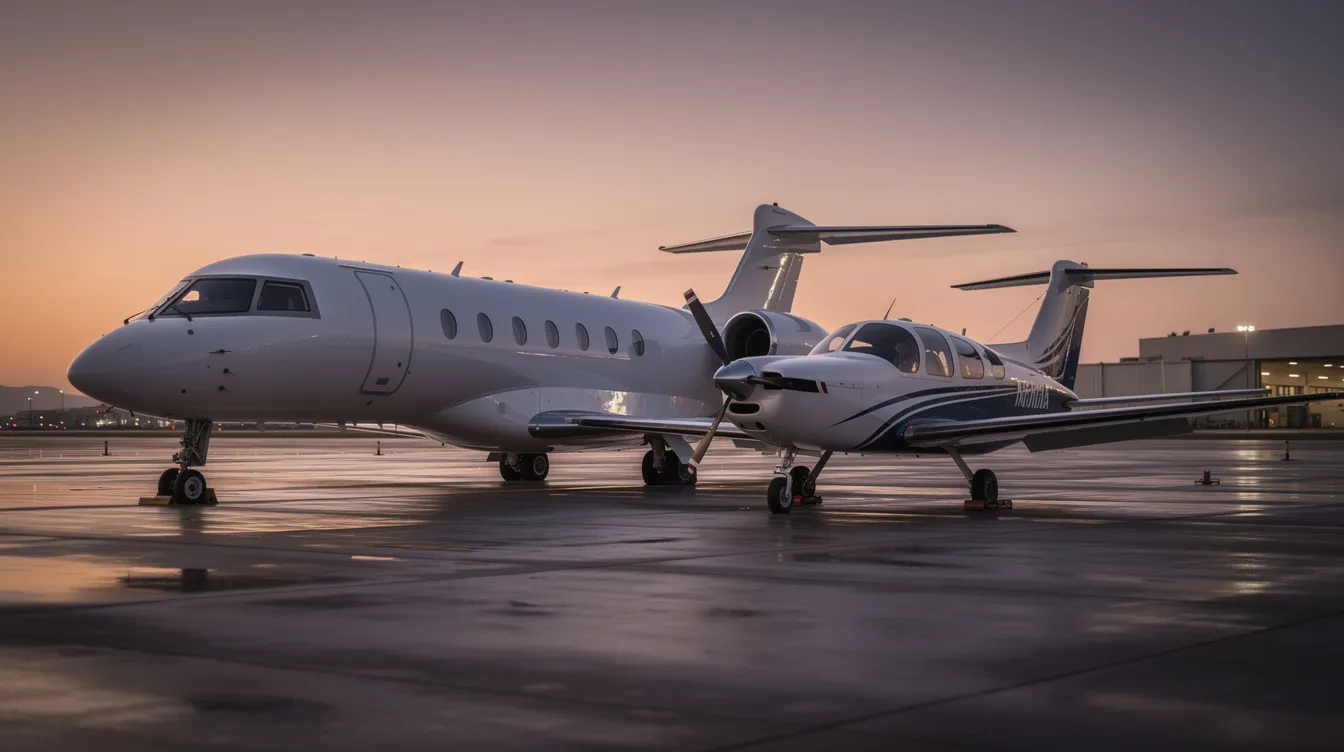
Fast single engine piston aircraft like the Diamond DA50 RG and Beechcraft Bonanza G36 can rival small turboprops for cruise speed on 500–800 nm legs, but their performance is typically lower than multi-engine counterparts in altitude capability and redundancy. A piston single cruises at 130–200 knots; a light jet cruises at 380–450 knots.
Twin-engine planes offer engine redundancy and somewhat greater speed, but complexity, maintenance costs, and operating costs climb substantially. Single-engine turboprops like the PC-12 split the difference between simplicity and utility.
Altitude tells the story of weather tolerance: piston singles typically operate at FL180 or below, while jets cruise at FL350–FL410-above nearly all weather. For long-distance travel, night over-water routes, winter IFR in mountainous terrain, or tight corporate schedules, jet aircraft are the clear choice.
BlackJet's advisory role is to help members decide when a single engine piston makes sense for a feeder leg and when our jet fleet is the better strategic choice. Not every mission demands a jet-but when it does, there is no substitute.
Sustainability: Single-Engine Efficiency and BlackJet's Carbon-Neutral Promise
Many single-engine piston aircraft, especially diesel-powered models like the Diamond DA40 NG and DA50 RG, achieve impressive fuel efficiency on regional trips. Lower fuel burn per seat-mile on short sectors makes them among the most efficient fixed-wing aircraft in operation.
While single-engine planes are inherently efficient for short sectors, they are not the only sustainable option. Modern jets paired with carbon offset programs and Sustainable Aviation Fuel (SAF) strategies can achieve net carbon-neutral status. BlackJet ensures every Jet Card journey is carbon neutral through verified offset programs and optional SAF availability where markets support it.
Contrasting a 300 nm business trip: a piston single burns minimal fuel but offers limited speed and weather capability; a light jet burns more fuel but offsets that narrow gap while preserving schedule and comfort advantages. Route optimization and payload planning further reduce emissions across both categories.
Environmentally conscious travelers should view single-engine and jet options as complementary tools within a holistic, sustainability-aware travel strategy. BlackJet's green aviation commitment demonstrates that premium access and environmental responsibility are not mutually exclusive.
How Pilots Transition from Single-Engine to Jets (and Why That Matters to Passengers)
The typical training path starts with a student pilot in a Cessna 172 or Piper Archer, building hours and earning a private pilot license. From there, pilots add an instrument rating, embark on transition training to complex and high-performance aircraft, then progress to multi-engine ratings and eventually turboprop or jet-type ratings.
Many captains flying BlackJet missions began in single-engine aircraft, building decision-making discipline and stick-and-rudder skills in demanding conditions. A representative journey: a pilot logs 1,500 hours in piston singles, earns multi-engine and instrument ratings, completes simulator-based type ratings for a Citation or Phenom-class jet, and enters the FAA Part 135 charter world.
Additional certification layers—type ratings, recurrent simulator checks, crew resource management training—build on single-engine foundations. The FAA treats single-engine aircraft as a distinct aircraft class, meaning each step up requires demonstrated proficiency in progressively more complex aircraft powered by more capable engines.
BlackJet-approved crews operate under rigorous safety standards and proprietary vetting that far exceed the requirements for a private pilot flying a piston single. Passengers can feel confident knowing their captain's flying experience was built from the ground up, starting with the discipline of managing a plane equipped with only one engine.
Frequently Asked Questions About Single-Engine Planes and Private Jet Access
Are single-engine planes safe for night, IFR, and limited over-water flights?
Yes, when properly equipped and flown by experienced pilots. Many modern singles are IFR-certified with de-icing systems, oxygen, and advanced avionics. However, when risks rise—night mountainous terrain, extended over-water legs, or heavy weather systems—BlackJet recommends upgrading to a twin-engine or jet platform for additional redundancy and safety margin. Understanding private jet safety standards helps frame the comparison.
How far can a typical single-engine piston fly without refueling?
Range varies widely by model. A Cessna 172 covers approximately 500 640 nm under ideal conditions with reserves. The Cirrus SR22T can reach 900 1,100 nm at economy cruise. The Piper M350 can exceed 1,300 nm under optimal conditions. Payload, wind, and altitude all influence real-world range, so mission planning is essential.
Can BlackJet members integrate single engine feeder segments with jet itineraries?
Typically, yes, through coordination with partner operators. A feeder flight from a small airfield in a piston single can connect to a jet at a hub airport, extending reach for clients near remote airports or in areas where jets are impractical. Scheduling, safety certification, and seamless handoffs are managed as part of the travel strategy.
How do flight schools fit into the ecosystem relative to private travel?
Most initial training is done in single engine aircraft owned or leased by flight schools—not chartered. These schools produce the next generation of professional pilots, many of whom eventually fly for charter operators or serve BlackJet members. The training ecosystem also produces new pilots who later become jet card clients themselves, understanding the value of a private pilot license from firsthand experience.
When does a jet become necessary over a single engine?
Consider distance, altitude requirements, weather penetration, schedule urgency, cabin comfort, and passenger count. If the mission involves heavy IFR conditions, payload beyond what a single engine can reliably carry, or range requiring multiple fuel stops, a jet is the strategic choice. BlackJet advisors are available to help you match every mission to the right aircraft class-blending single engine practicality with jet-level comfort and safety.
Conclusion
Single-engine planes remain an essential and strategic component of private aviation, offering unmatched access, efficiency, and training value for pilots and travelers alike. Their ability to serve smaller airports, combined with lower operating costs and advanced safety technologies, makes them ideal for short to medium-range missions where jets may not be practical. While ownership offers autonomy and flexibility, chartering or jet card access provides a compelling alternative for those seeking predictable costs and hassle-free travel.
For discerning travelers and business professionals, understanding the strengths and limitations of single-engine aircraft enhances trip planning and optimizes travel outcomes. Whether building pilot experience, conducting regional business flights, or integrating with jet itineraries, these aircraft deliver a unique blend of performance, safety, and cost-effectiveness.
BlackJet’s expertise and network ensure seamless access to the full spectrum of private aviation, from single-engine piston planes to light jets, all supported by rigorous safety protocols and sustainability commitments. Explore how BlackJet can elevate your travel experience by offering tailored solutions that combine the best of single-engine efficiency with the luxury and speed of private jets. Discover the freedom to fly on your terms and the confidence that comes with premier private aviation service. Learn more about our private jet safety standards that underpin every journey.


 Sign up with google
 Sign up with Apple