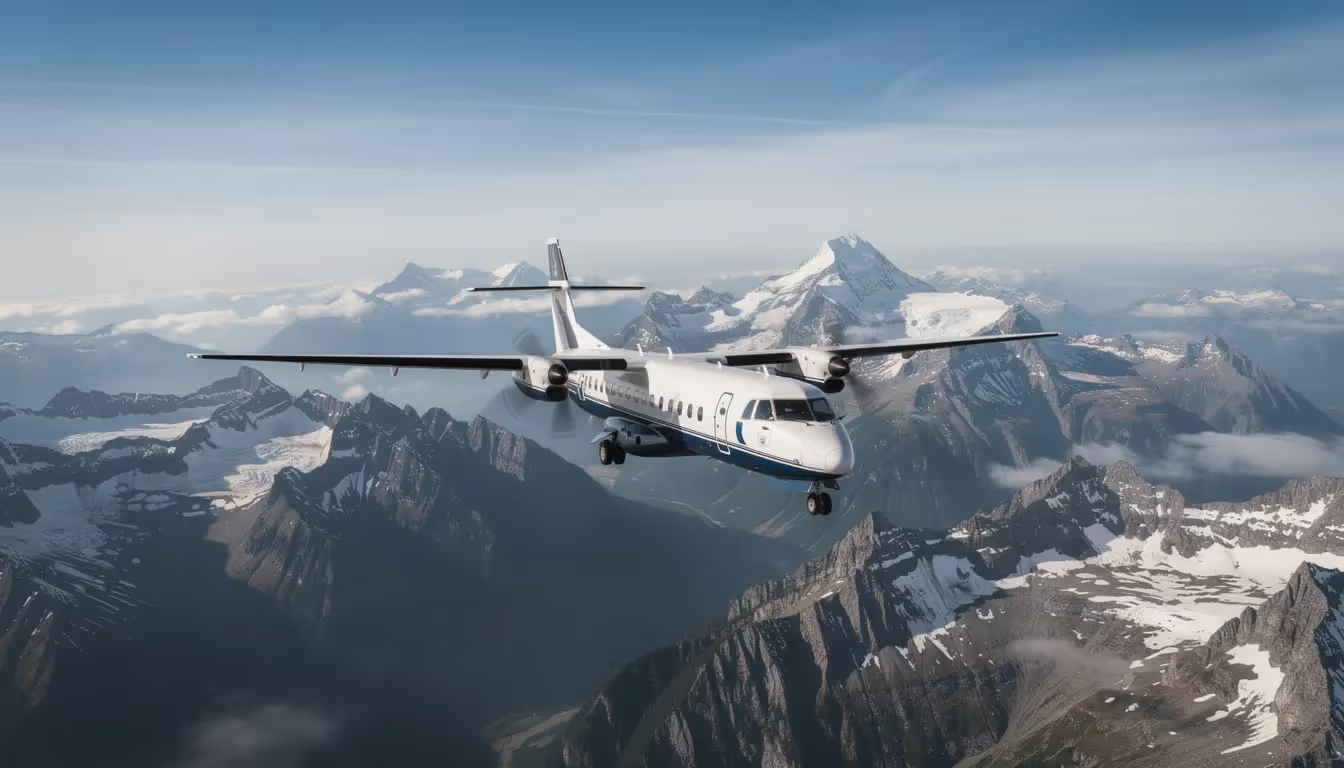
In the world of private aviation, speed and luxury often steal the spotlight. But what if the smartest choice isn’t the fastest jet, but a versatile, fuel-efficient turboprop? Perfectly suited for regional trips and hard-to-reach destinations, turboprop private planes combine comfort, cost-effectiveness, and access to thousands of smaller airports. Whether you’re a seasoned traveler or exploring private aviation for the first time, understanding the unique advantages of turboprops could transform how you fly. Dive in to discover why these aircraft are becoming the preferred option for savvy travelers seeking efficiency without compromise.
Key Takeaways
For executives and ultra-high-net-worth travelers flying routes under 800–1,000 miles, the turboprop private plane represents a strategic asset rather than a compromise. While commercial first class on a New York to Aspen route consumes 8+ hours door-to-door with connections, security lines, and ground transfers, a turboprop cuts that journey to under 5 hours with direct routing and minimal ground time. The mathematics of travel efficiency increasingly favors these aircraft for regional missions.
Modern turboprops like the Pilatus PC-12, King Air 350, and Piaggio Avanti P180 deliver business-class comfort with capabilities that jets simply cannot match: access to over 7,000 smaller airfields, operation from runways under 800 meters, and 10–40% better fuel efficiency than comparable jets on short legs. The key advantages of turboprops over jets include these operational flexibilities, superior fuel efficiency, and the ability to reach remote destinations—benefits that translate directly into time saved and destinations unlocked.
For those considering their entry point into private aviation, turboprops often represent the most economical option, with charter rates commonly starting around $2,000–$2,500 per flight hour in 2024, depending on model and region. Chartering a private flight is charged by the hour, with rates influenced by aircraft type, fuel surcharges, concierge services, and destination costs. Operating costs run 30–50% lower than light jets, making them ideal for frequent regional travel without the $1–2 million annual fixed costs of aircraft ownership.
Safety in this category is exceptional: twin-engine options provide redundancy, while high-certification single-engine models like the PC-12 meet strict reliability and icing standards. Turboprop safety protocols often meet or exceed industry standards, with many operators participating in recognized safety programs and implementing best practices. Modern avionics rival those in any jet, and engines like the Pratt & Whitney PT6A series are renowned for their reliability, durability, and compatibility with Sustainable Aviation Fuel blends, positioning turboprops as a smart, lower-impact choice. This article will compare turboprops vs. jets, outline top use cases, name specific aircraft, and finish with a concise FAQ to address common buyer questions.
What Is a Turboprop Private Plane?
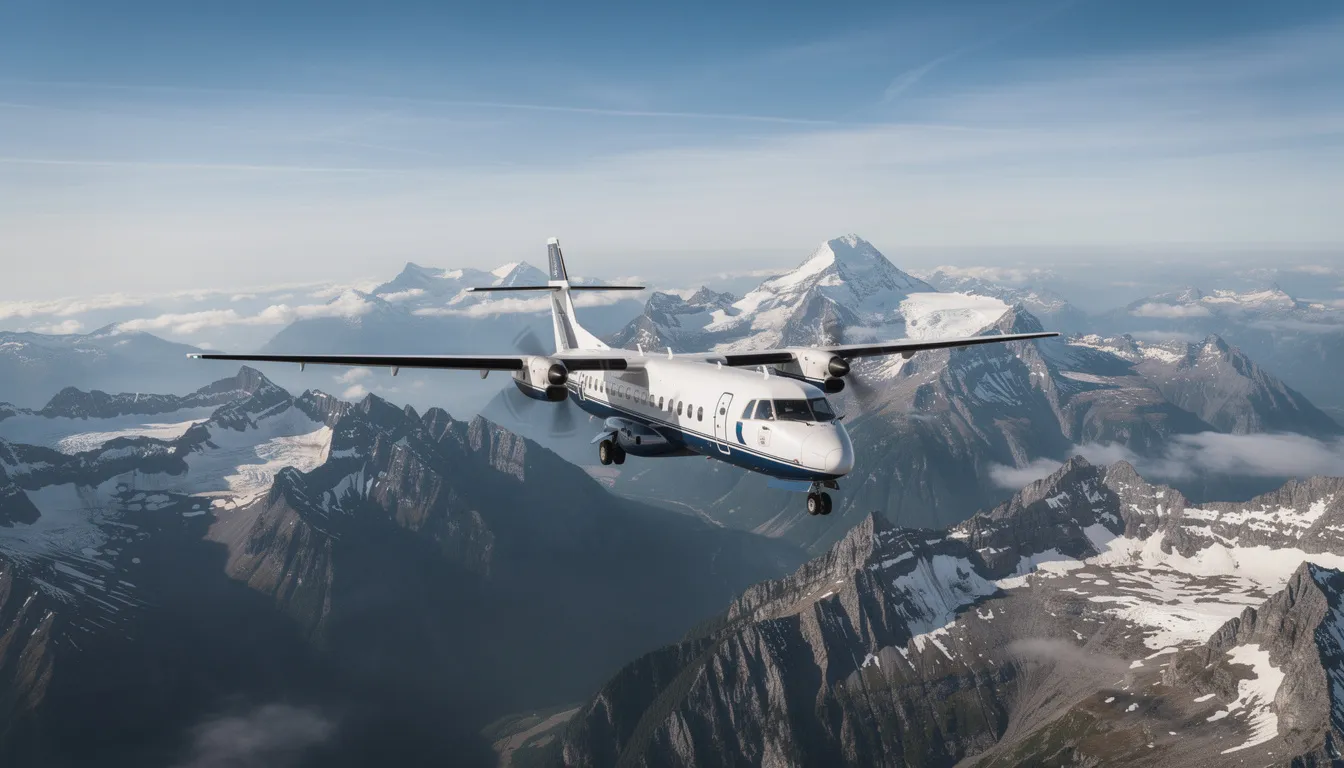
A turboprop private plane is a turbine-powered aircraft where a gas turbine generates power to drive a propeller, bridging the gap between piston aircraft and jets for private missions. In turboprop engines, turbines are used to spin the propellers by extracting energy from the turbine and transferring it through a reduction gearbox. This is different from jet engines, which produce thrust directly from exhaust gases. Turboprops combine the reliability of turbines with the efficiency of propellers, making them ideal for low-speed, short-to-medium haul operations.
Cabin Size Range
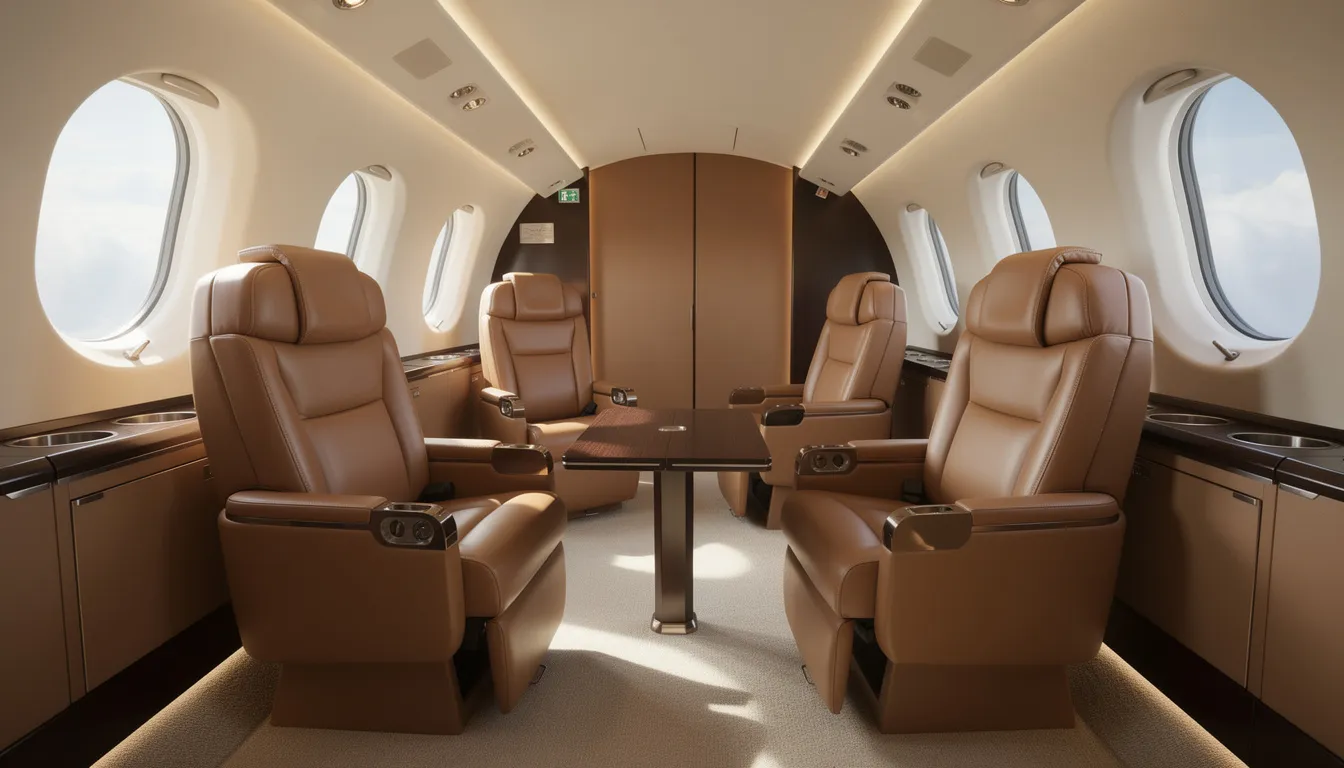
Private turboprops typically comfortably seat 4–9 passengers for executive aircraft (e.g., Pilatus PC-12, King Air 250), emphasizing the comfort and spaciousness of the cabin, while commuter-style models like the Beechcraft 1900D or Dornier 228 accommodate 19–30 seats for larger group movements. Many turboprop models offer modern, spacious interiors designed to keep passengers comfortable on longer flights, with cabin layouts featuring club seating, work tables, and advanced connectivity.
Common Mission Profiles
Regional business hops, access to remote estates or islands, connecting flights to major hubs, air ambulance operations, and special surveillance or government missions where versatility matters more than raw speed.
Leading Manufacturers
Pilatus, Beechcraft (Textron Aviation), Cessna, Piaggio, and ATR dominate this space, with most models certified by the FAA in the United States and EASA in Europe.
Operational Flexibility
These aircraft operate efficiently at cruising altitude ranges where most jets falter, achieving high propulsive efficiency at speeds below 400 knots—the sweet spot for regional travel. Turboprops typically fly at service ceilings of about 25,000 to 30,000 feet, with some models like the King Air 350 certified up to approximately 35,000 feet. Flying often below the turbulence band, turboprops can offer a smoother ride at lower altitudes compared to jets. Additionally, turboprop planes are generally quieter than jets during takeoff and landing, enhancing passenger comfort.
Performance, Range & Operating Profile of Turboprops
When comparing turboprops to light jets on similar routes, the performance differences become nuanced rather than absolute. Modern turboprops deliver realistic cruise speeds between 250–330 knots (290–380 mph / 470–610 km/h), with ranges typically spanning 800–1,800 nm (1,500–3,300 km). The Pilatus PC-12 NGX, for example, cruises at 285 ktas with a range of 1,845 nm—sufficient to fly Miami to New York in under 2 hours versus 3+ commercial. By contrast, jets generally fly faster, often exceeding cruising speeds of 400 knots.
These aircraft excel where climb and descent phases dominate the flight profile, making them optimized for medium haul flights between 150–800 miles. On such routes, their fuel efficiency advantage over jets becomes decisive.
Short-Field Performance & Runway Requirements
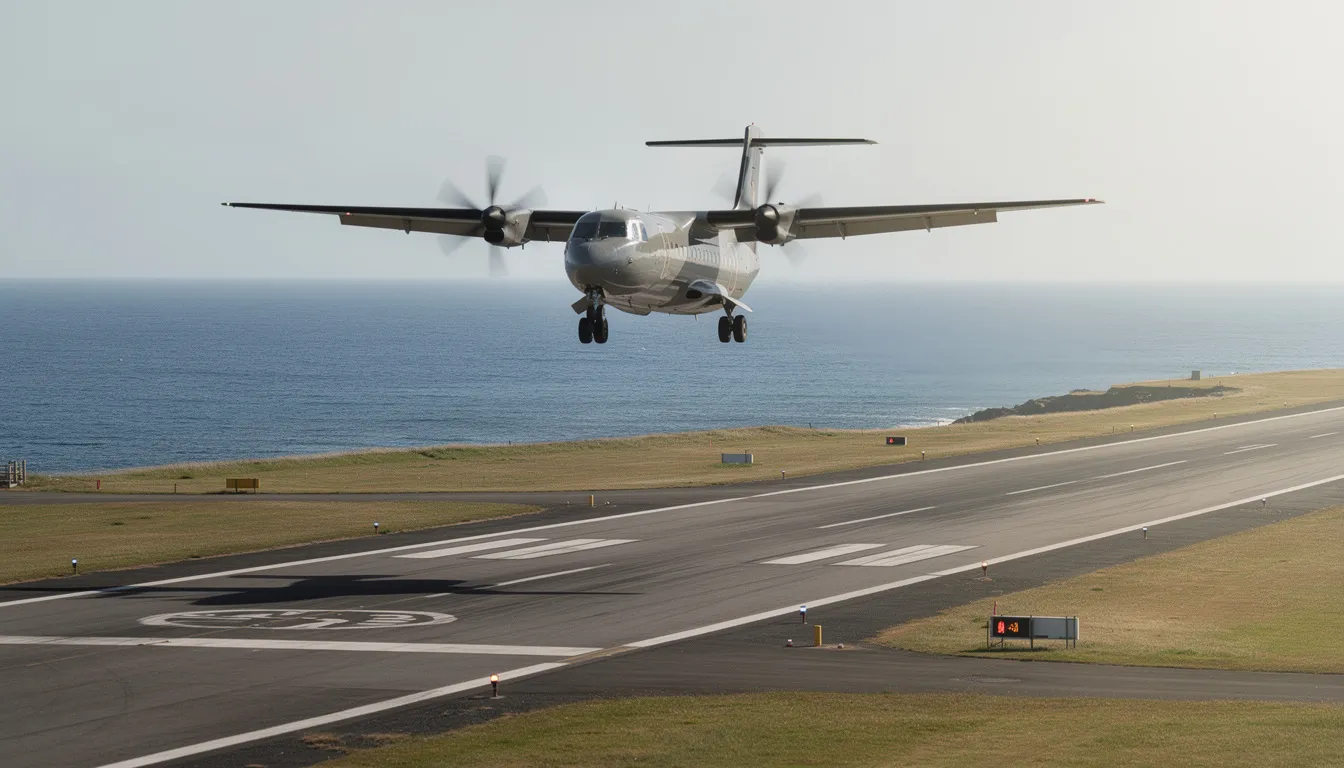
Takeoff and landing speeds are lower than most jets, improving performance on shorter runways and enhancing safety margins on constrained airfields. Turboprops can operate on runways as short as 3,200 feet, while most jets require at least 5,000 feet. The PC-12 achieves takeoff over 50 ft in just 793m and landing in 661m, opening access to thousands of additional small airports, including remote islands and mountainous ski resorts inaccessible to most jets.
Cabin Environment & Payload
Cabin noise and vibration in 2020s-generation turboprops are significantly reduced thanks to active noise cancellation, advanced propeller designs like the Hartzell Raptor five-blade composite, and improved insulation. The payload capacity of turboprops often accommodates bulky items like golf clubs or skis that might not fit in comparable light jets, adding to their versatility for leisure and business travelers alike.
Why Turboprops Are a Strategic Advantage vs. Jets
The turboprop plane isn’t a consolation prize for those who can’t afford jets—it’s a deliberate, strategic choice for particular mission types where door-to-door time and destination access trump raw airspeed. Turboprops are particularly well-suited for regional missions and specific travel needs, making them an ideal option when matching the aircraft to the requirements of your trip. Smart travelers understand that the aircraft cabin you fly in matters less than when you actually arrive at your destination.
Block Time Reality
On a 350-mile business trip, a turboprop’s ability to use a closer regional airport can make total travel time equal or better than a jet using a distant hub. A private jet charter departing Teterboro for Vail must use Eagle County Airport—a King Air or PC-12 can land directly at smaller strips, eliminating hour-long ground transfers.
Fuel Efficiency Advantage
On sectors under 500–600 nm, turboprops can be 10–60% more fuel efficient than similar-size jets due to superior performance at lower altitudes and speeds. This translates directly to lower operating costs and reduced emissions.
Destination Access
Turboprops land at smaller coastal strips, island runways, and alpine airfields that many jets cannot use due to length, slope, or surface constraints. This capability opens access to 40% more airports than typical jet operations.
Cabin Comfort Comparison
While jets are quieter at high altitude, modern turboprops offer pressurized, near stand-up cabins (e.g., Piaggio Avanti P180, King Air 350) with club seating, work tables, and Wi-Fi. The Piaggio Avanti P180 is regarded as the fastest turboprop jet and offers a highly comfortable and spacious cabin. The Pilatus PC-12 is known for its advanced avionics, improved noise reduction, and customizable cabin to suit passenger needs. The King Air 350 is a twin-engine turboprop that offers one of the best-in-class luxuries in the turboprop category. The difference in flight comfort has narrowed considerably.
Cost Structure Advantages
Lower fuel burn, reduced maintenance complexity, and slower depreciation translate into lower hourly charter rates and more predictable ownership costs—often 30–50% below comparable light jets.
Turboprop Charter Pricing & Economics
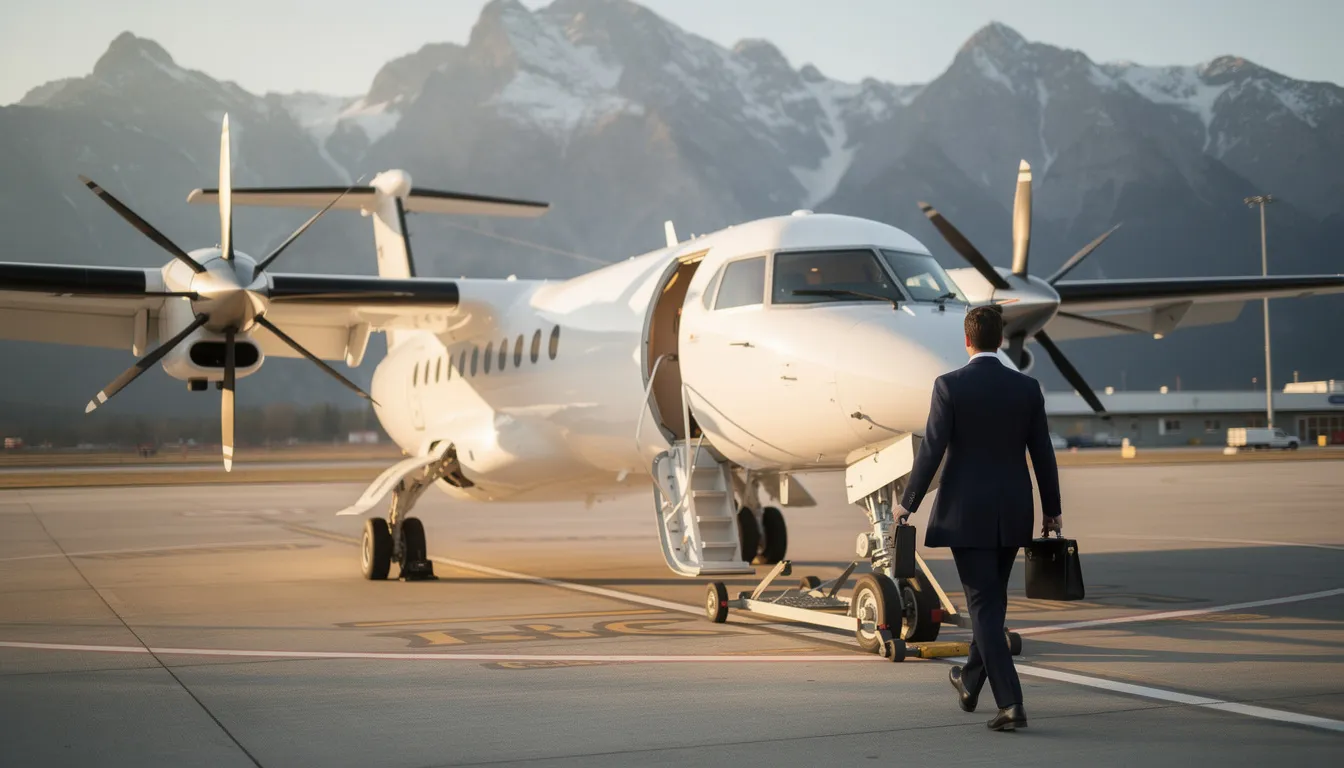
Turboprops represent the most economical option in private aviation for groups of 4–9 people on short to medium routes, delivering the private experience without the premium pricing that excludes all but the ultra-wealthy.
2024 Charter Price Ranges
Typical US and European hourly rates for popular turboprops start around $2,000–$2,500 per flight hour, reaching $3,500+ for larger or newer models. Compare this to light jets at $4,000–$6,000+ per hour.
Pricing Factors
Aircraft age, model generation (e.g., Pilatus PC-12 NGX vs. older PC-12), region, repositioning needs, and peak demand periods (Christmas–New Year, major sporting events) all influence final pricing. Book strategically for affordable rates.
Per-Passenger Economics
A full turboprop carrying 6–8 passengers can bring per-seat cost close to or below last-minute business class on busy routes—while delivering an incomparably superior experience in privacy, time savings, and flexibility.
Jet Card Advantages
Membership programs can lock in preferred rates for turboprop categories, including typical minimum booking times of 24–72 hours and defined cancellation windows. This provides cost predictability for frequent travelers.
Special Mission Economics
Operating economics support high-frequency use cases—such as daily shuttle flights between corporate locations—where a turboprop can fly multiple legs per day at sustainable cost, making it ideal for companies with geographically distributed operations.
Safety, Certification & Technology in Modern Turboprops
For discerning travelers, the operator’s safety culture and certifications—such as ARGUS Platinum, Wyvern Wingman, or IS-BAO Stage 2/3—matter more than aircraft type. Within that framework, turboprops demonstrate exceptional safety credentials.
Proven Track Record
Established models like the Beechcraft King Air series and Pilatus PC-12 carry decades of operational history, strong safety records, and extensive global fleets in airline, corporate, and medical service. The PT6 engine family has accumulated over 10 million flight hours.
Twin vs. Single Engine Considerations
Business-class twin models (King Air 200/350, Piaggio Avanti P180) provide engine redundancy. High-certification single-engine models like the PC-12 meet strict reliability and icing standards—matching twin safety through 1,900+ fpm climb capability and off-airport landing ability.
Modern Avionics
Contemporary turboprops feature glass cockpits (Garmin G1000/G3000, Collins Pro Line), synthetic vision, terrain awareness, and advanced autopilots comparable to modern jets. The TBM 960 includes HomeSafe emergency autoland that detects pilot incapacity and executes runway touchdown autonomously.
Operator Practices
Chartered turboprops operate with two pilots on most flights, even when aircraft are certified for single-pilot operation, aligning with premium safety standards. Recurrent training, mandatory rest periods, and Part 135 commercial rules govern operations.
Technology Integration
Predictive maintenance, engine trend monitoring (like the TBM 960’s EPECS digital engine control), and digital flight ops platforms enhance reliability and dispatch availability.
Sustainability & Fuel Efficiency Advantages
Turboprops are inherently more efficient machines for short missions, reducing fuel burn and emissions per passenger-mile compared to jets flying similar routes. This efficiency positions them as the aircraft of choice for environmentally conscious travelers.
Quantified Advantage
On 250–400 nm routes, a turboprop can burn significantly less fuel than a light jets equivalent—often cutting CO₂ emissions by 15–20% or more per seat-mile. A PC-12 burns 50–100 gph versus 200+ gph for many jets.
Sustainable Aviation Fuel Compatibility
Engines like the Pratt & Whitney Canada PT6A family are cleared to operate with up to 50% SAF blends, with test flights on higher blends underway. This pathway to lower lifecycle emissions is built into the platform.
Carbon Offset Integration
Operators can combine turboprop usage with verified carbon offset programs, enabling carbon-neutral or climate-positive travel frameworks. BlackJet, for example, ensures every journey is carbon neutral at no extra cost to passengers. As SAF availability expands and offset programs mature, turboprops position environmentally conscious travelers to minimize their aviation impact while maintaining the efficiency advantages of private flight.
Reduced Noise Footprint
Lower thrust requirements and modern propeller designs reduce community noise impact around smaller regional airports, maintaining good relationships with communities that make regional access possible.
ESG Alignment
Sustainability-minded companies can position turboprops as a key part of their internal environmental, social, and governance stories—particularly for recurring regional corporate shuttles where the efficiency advantage compounds over hundreds of annual flights.
Top Turboprop Private Planes to Know
Several concrete models dominate the private turboprop segment, each optimized for specific mission profiles. Understanding their capabilities helps match the right airplane to your travel patterns.
Pilatus PC-12 / PC-12 NGX
The single-engine benchmark, seating 6–9 passengers in a 5.16m-long, 1.47m-high, up to 1.52m-wide aircraft cabin. Delivers approximately 285 ktas cruise speed with up to 1,845 nm range. Known for Swiss engineering precision, versatility, and the ability to carry everything from executive teams to medical equipment through its large cargo door. Ideal for those who need to fly to remote destinations with limited runway infrastructure.
Beechcraft King Air 250 / 350
The twin-engine workhorse of corporate aviation worldwide, offering 8–9 passenger double-club seating with cruise around 310–320 ktas and range roughly 1,500–1,800 nm. The King Air 350 features three 14-inch touchscreen displays, synthetic vision, and graphical flight planning. Extensive global fleets in corporate, charter, and government service underscore its proven reliability.
Piaggio Avanti P180/Evo
Italian engineering meets jet-like performance in this distinctive canard-design twin-turboprop. Often cruising around 400 ktas—faster than many midsize jets on short legs—it offers a stand-up-height cabin with turboprop efficiency. The unconventional design delivers both visual distinction and functional advantage.
Cessna 208B Grand Caravan
The single-engine workhorse of utility aviation, seating up to 9–12 passengers in commuter layouts. Renowned for short and rough field performance, it’s the go-to choice for island hopping, lodge access, and cargo operations where runway conditions would ground lesser aircraft.
Beechcraft 1900D
A 19-seat twin turboprop with a stand-up cabin, utilized by regional airlines and for corporate shuttle missions when groups exceed typical light jet capacity. Offers the ability to move larger teams in a single aircraft rather than splitting across multiple flights.
Typical Routes, Use Cases & Sample Itineraries
Turboprops serve as the ideal tool for regional connectivity—inter-European hops, intra-US East Coast routes, and dense intra-Asia business corridors where commercial connections waste hours and light jets offer marginal time savings at significantly higher cost. The world of efficient regional travel belongs to the turboprop.
Business Example
A finance team needs to visit clients in Jersey for a same-day meeting. Flying a King Air 250 from London City (EGLC) to Jersey (EGJJ) takes under an hour, with the aircraft waiting on the tarmac for the return flight. Commercial alternatives via Heathrow or Gatwick would consume the entire day in connections and ground transfers.
Leisure Scenario
A family flies from Dallas Love Field (DAL) to a short-runway ranch strip in West Texas on a Pilatus PC-12, carrying sports gear, pets, and luggage without the two-hour drive that would follow a commercial flight to the nearest major airport.
Island and Resort Access
Grand Caravan and PC-12 services excel at reaching smaller Caribbean or Greek island airports with limited infrastructure and short runways. These destinations simply aren’t accessible by jet.
Corporate Shuttles
Companies run weekly turboprop routes between headquarters and satellite offices or factories—Milan–Toulouse, Frankfurt–Prague, or Chicago–Dallas—moving key staff efficiently without the productivity drain of commercial connections. A corporate team of six flying from Chicago to Dallas (880 nm) direct saves 3+ hours per meeting daily versus first-class connections.
Special Missions
Medevac, humanitarian flights, and government surveillance operations frequently choose turboprops where low operating cost, rugged performance, and access to austere airfields prove decisive.
Turboprop vs. Jet: Which Is Right for Your Mission?
The “right” choice depends on distance, passenger count, runway length, schedule flexibility, and budget—not simply on the desire for speed. Sophisticated travelers understand that headline cruise speed rarely tells the complete story.
Choose a Turboprop When
Routes fall under 700–800 nm, you need access to short or unimproved runways, travel patterns involve high frequency, or sustainability and fuel burn are priorities. For a New York executive flying to Aspen regularly, the turboprop’s ability to land closer to the destination often delivers faster door-to-door times than a jet.
Choose a Jet When
You’re flying non-stop coast-to-coast or transcontinental, missions exceed 1,000–1,200 nm, or cruising above 40,000 ft and minimizing flight time is paramount. Jets make sense for the distance where their speed advantage overcomes the time lost at larger, more distant airports.
Comfort Comparison
Cabin experience for top turboprops overlaps with light jets and some midsize jets—club seating, connectivity, catering, and professional service are comparable. Jets often win on noise levels at altitude and overall ride smoothness on longer sectors.
Safety Reality
Both categories achieve exceptional safety when operated under high-standard commercial rules with professional crews. Accident statistics vary heavily by operation type (commercial vs. private, two pilots vs. single-pilot operations) rather than by aircraft category.
Mission Profile Thinking
Focus on total door-to-door journey time and cost rather than headline cruise speed. A slower aircraft that lands 30 miles from your destination beats a faster one that lands 90 miles away.
How Private Pilots and Owners Use Turboprops
Many turboprop models serve both the charter market and owner-pilot community, offering a step up from piston aircraft without the complexity of larger jets. For pilots seeking turbine operations, these aircraft represent an accessible pathway.
Owner-Pilot Favorites
High-performance single-engine turboprops like the Daher TBM 960 or Pilatus PC-12 are popular among experienced private pilots transitioning into turbine operations. These aircraft offer jet-like performance with more forgiving handling characteristics.
Training Requirements
Obtaining type-specific training, turbine transition instruction, and often crew resource management (CRM) courses is standard for safe operation. This investment in training pays dividends in safety and insurance costs.
Charter Operations
When these aircraft are rented for charter service, operators typically deploy two professional pilots even when the aircraft is certified for single-pilot operations—aligning with premium safety standards that discerning passengers expect.
Ownership Economics
Higher acquisition costs than piston aircraft, but lower entry point and operating costs than many jets. The sweet spot often falls for owners flying 150–300 hours per year, where the numbers justify ownership over charter.
Charter Management Programs
Some owners mitigate costs by placing aircraft on charter management when not in personal use, allowing third-party charter revenue to offset fixed costs like hangar fees ($50k/year typical) and insurance.
Frequently Asked Questions About Turboprop Private Planes
Are turboprop private planes noisy compared with jets?
Cabin noise in older turboprop models was notably higher than that of jets, contributing to outdated perceptions about the category. Modern turboprops tell a different story. Aircraft like the King Air 350i, TBM 960, and PC-12 NGX use advanced propeller designs (including the Hartzell Raptor five-blade composite), sophisticated vibration dampening, and active noise cancellation systems to keep cabin sound levels close to those in many light jets. The TBM 960’s reduced-speed propeller operation at 1,925 rpm specifically targets quieter cruise flight. Passengers regularly express surprise at how comfortable extended flights have become.
Can turboprops fly in bad weather and icing conditions?
Most commercial-grade turboprops carry full FAA certification for flight into known icing conditions. Standard equipment includes de-icing boots on wing and tail surfaces, heated propellers, and modern weather radar that allows pilots to navigate around the worst conditions. Aircraft like the PC-12 NGX feature sophisticated avionics, including synthetic vision for low-visibility approaches. That said, reputable operators always make conservative go/no-go decisions based on real-time conditions—the first flight of the morning might be delayed if conditions require it, prioritizing safety over schedule pressure.
How many bags can we bring on a turboprop charter?
Baggage capacity varies by model and mission parameters. As a general guideline, for a 6–8 passenger flight on aircraft like the PC-12 or King Air, expect capacity for 6–8 medium suitcases plus hand luggage. The PC-12’s cargo door and generous baggage hold accommodate skiing equipment, golf bags, and bulky items that would pose challenges on smaller jets. However, exact limits depend on weight, balance calculations, fuel load, and runway length at your destination. Your operator will confirm specific allowances when you request your flight details.
Do turboprops feel less “luxurious” than jets?
Some travelers associate propeller aircraft with smaller regional airlines and cramped commuter experiences. The private turboprop experience couldn’t be more different. You’ll find a fully private cabin configured with leather club seating, custom catering tailored to your preferences, in-flight Wi-Fi on many aircraft, and tailored ground handling comparable to jet charters. The Piaggio Avanti offers a stand-up cabin height, while the King Air 350’s double-club configuration rivals many light jets. The service experience—from departure lounge to arrival—matches the premier standards of private jet travel.
Is there a carbon-neutral turboprop option?
While no aircraft achieves zero emissions today, turboprops represent a lower-burn platform that makes carbon neutrality achievable. Travelers can choose operators that use Sustainable Aviation Fuel where available—PT6 engines support up to 50% SAF blends currently—and automatically offset remaining emissions through verified programs. BlackJet, for example, ensures every journey is carbon neutral at no extra cost to passengers. As SAF availability expands and offset programs mature, turboprops position environmentally conscious travelers to minimize their aviation impact while maintaining the efficiency advantages of private flight.
Elevate Your Regional Travel
The turboprop private plane isn’t a stepping stone to “real” private aviation—it’s a sophisticated tool optimized for missions where efficiency, access, and sustainability matter. For routes under 1,000 miles, destinations with shorter runways, and travelers who measure success by door-to-door journey time rather than cruise speed, these aircraft deliver unmatched value.
Whether you’re evaluating your first private aviation experience or optimizing an existing travel program, turboprops deserve serious consideration. With charter rates starting around $2,000 per flight hour, modern safety systems rivaling any jet, and carbon-neutral options available through forward-thinking operators, the category offers accessible luxury with substance.
**Discover how BlackJet’s jet card programs can reshape your regional travel—with rigorous safety standards, carbon-neutral performance, and the flexibility to match your schedule. Explore our turboprop offerings and experience refined, meaningful travel on your terms.


 Sign up with google
 Sign up with Apple