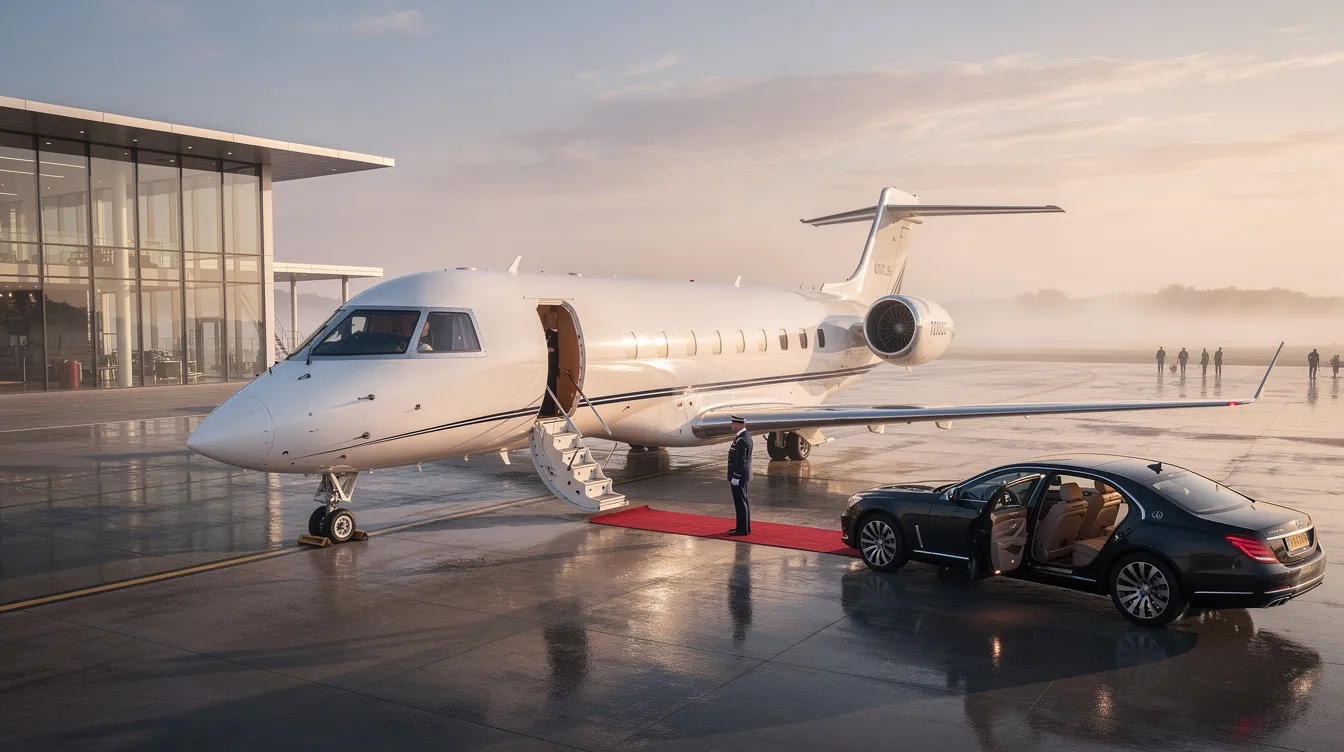
Private aviation has long symbolized exclusivity, but its true value lies in efficiency, flexibility, and control over time. For executives managing global operations, entrepreneurs navigating multiple cities in a single day, or families seeking privacy and convenience, flying private offers advantages that commercial aviation cannot easily match.
A private jet, also known as a business jet or corporate aircraft, is designed for non-scheduled, point-to-point travel. Instead of adhering to fixed airline schedules and crowded terminals, private aviation allows passengers to depart on their own timeline, choose their destination airport, and travel with a level of discretion rarely found in commercial aviation. Flying privately also helps travelers avoid common issues with commercial airlines, such as lost luggage, long security queues, and delays.
Compared with airline travel, private flights provide:
Significant time savings by eliminating long security lines and connections; passengers can typically arrive just 15 to 30 minutes before departure, avoiding complex boarding processes.
Direct access to thousands of smaller airports worldwide—private jets can access over 5,000 smaller regional airports in the U.S., while commercial airlines are limited to approximately 500 major public airports.
Greater privacy and productivity in a quiet, secure environment ideal for confidential business discussions.
Avoidance of lost luggage and baggage mishandling.
Ability to access airports with short runways, reaching remote or less congested destinations not served by commercial airlines.
Faster travel times with significantly less waiting at smaller terminals compared to commercial flights.
Higher cruising altitudes, often above 40,000 feet, allow faster travel and the ability to avoid weather disruptions.
A personalized in-flight experience, including customized catering and the ability to travel with pets in the cabin.
The people who rely on private jets span several sectors. Corporate executives often use them to maximize productivity between meetings across multiple cities. Governments deploy private aircraft for diplomatic or security-sensitive missions. Medical teams use private jets for organ transport or emergency evacuation. High-net-worth travelers and families rely on them for seamless leisure travel.
While the image of private aviation often focuses on luxury, its core function is strategic mobility. Private jets offer exclusive use, flexible scheduling, and access to more airports than commercial airlines. Flying privately provides a more personalized and efficient experience compared to commercial flying.
Overview: Private Jet vs. Private Aircraft and Business Jet Definitions
Although the terms are often used interchangeably, private jet, private aircraft, and business jet describe slightly different concepts within aviation.
A private aircraft is the broadest term. It includes any aircraft that is not used for scheduled commercial airline service. This category encompasses propeller planes, turboprops, helicopters, and jets. Private aircraft include both jet aircraft and turboprop aircraft, which are commonly used in private aviation for their efficiency, range, and ability to access airports with shorter runways.
A private jet, by contrast, specifically refers to jet-powered aircraft designed for private or corporate travel. These aircraft emphasize speed, cabin comfort, and operational range.
A business jet typically refers to jets configured for corporate missions—transporting executives, teams, or clients for business purposes.
Private jets operate in several ways:
On-Demand Charter
Travelers book individual flights through operators or charter brokers. Charter operators oversee private jets on behalf of multiple clients, managing every aspect of aircraft operation and maintenance. The aircraft, crew, and route are arranged for a specific trip.
Owner-Flown Aircraft
Individuals or corporations own their aircraft outright and operate them with a hired crew.
Managed Aircraft
Owners place their jets under a professional management company that oversees crew, maintenance, and charter availability.
Operational regulations also differ. In the United States, charter operations fall under FAA Part 135, which requires stricter oversight than privately operated aircraft under Part 91 rules. These distinctions influence pilot qualifications, maintenance schedules, and operational procedures.
History of Private Jets: Milestones and Evolution
The private jet charter industry has roots dating back to 1939, primarily serving business executives and high-ranking associates. The first small, jet-powered civilian aircraft was the Morane-Saulnier MS.760 Paris, developed in the early 1950s. This pioneering aircraft laid the groundwork for future business jets.
Following this, the Lockheed JetStar, designed to meet USAF requirements, first flew on September 4, 1957. The Learjet 23, the first light jet, took to the skies on October 7, 1963, introducing a new era of fast, efficient private air travel.
The first large business jet, the Grumman Gulfstream II, flew on October 2, 1966, setting standards for long-range corporate travel. The introduction of the Eclipse 500 in 2006 marked the beginning of the very light jet (VLJ) category, expanding private jet accessibility.
The Bombardier Challenger, which first flew on November 8, 1978, became the basis for the long-range Bombardier Global Express family, further enhancing intercontinental travel capabilities.
The 1980s saw the introduction of fractional ownership for business jets, allowing multiple parties to share the costs and benefits of ownership, making private aviation more accessible.
By April 1, 2017, there were 22,368 business jets in the worldwide fleet, reflecting the growing demand and diversity in private aviation.
Private Aircraft Categories: From Light Jets to Executive Airliners

Private jets are typically classified by several factors:
Range capability
Cabin size and layout
Passenger capacity
Runway performance
Operating cost
There are several types of private jets, each optimized for different travel needs. Resources that outline the types of private jets for every traveler can help you compare categories based on capacity, range, and budget. Choosing the right type is important for comfort, range, and cost-effectiveness.
These characteristics define the aircraft’s mission envelope—the distance and type of travel it can efficiently perform.
At one end of the spectrum are small jets optimized for regional travel. At the other are aircraft capable of nonstop intercontinental flights spanning over 6,000 nautical miles.
Choosing the right private jet involves considering passenger count, luggage needs, and trip distance.
Very Light Jets and Light Jets
Very Light Jets (VLJs)
Very light jets are the smallest type of private jet, accommodating four to seven passengers. They are designed for short regional routes, and small private jets luxury travel options make them attractive for both business and leisure flyers seeking efficiency and comfort.
Due to their small size, VLJs typically do not have a cabin attendant. VLJs can operate from shorter runways and smaller airports, allowing passengers to reach destinations closer to their final stop. Compared to turboprop aircraft and commercial airlines, VLJs can access airports with limited infrastructure that are underserved by commercial airlines. The typical flight time for VLJs is around 1.5 to 3 hours, which aligns with their range and is an important factor in operational planning.
These aircraft are commonly used for:
Light Jets
Light jets are the next step up, typically accommodating six to eight passengers. Small Light Jets can comfortably seat up to eight people and have a higher average flight distance than VLJs, making them suitable for longer trips. Their range generally falls between 1,400 and 2,500 nautical miles, making them suitable for multi-hour flights between major cities.
Amenities on light jets may include:
An enclosed lavatory, which is a key comfort and convenience feature typically found on light jets and super mid-size cabin jets
Club seating arrangements
Limited baggage storage
Most light jets do not carry flight attendants, and onboard amenities are simpler than those found on larger aircraft.
Mid Size Jets and Super Mid-Size Jets
Mid size jets introduce a significant step up in comfort and capability.
Mid Size Jets
These aircraft typically offer stand-up cabins and seating for eight passengers. Midsize Cabin Jets are ideal for travelers requiring longer flight capacity, accommodating five to ten passengers. With ranges approaching 2,000 to 3,500 nautical miles, they can comfortably complete many cross-country flights.
Mid size jets are popular for corporate travel because they balance range, speed, and operating cost. They typically include an on-board lavatory for passenger comfort.
Super Mid-Size Jets
Super midsize jets extend the range and comfort further. These aircraft often feature:
A top-tier example is the Cessna Citation Sovereign, a super midsize jet known for its spacious interior, long-range capabilities, and advanced avionics. Super midsize cabin jets can fly up to seven hours and cover an average of 3,500 miles, featuring a spacious cabin that enhances passenger comfort and allows for increased luggage capacity.
They are a cost-efficient option for travelers seeking a balance of range, comfort, and operational efficiency. Super midsize jets are ideal for coast-to-coast flights and mid-length international trips that do not require the operating cost of a heavy jet.
Large Jets, Heavy Jets and Ultra-Long-Range Heavy Jets
As aircraft grow larger, their mission capabilities expand dramatically.
Large and Heavy Jets
Heavy jets typically seat 10 or more passengers, can accommodate ten passengers or more, and offer a high level of comfort and amenities, with ranges exceeding 4,000 nautical miles.
Cabin amenities usually include:
These aircraft are well suited for long domestic flights or international travel.
Ultra-Long-Range Jets
Ultra-long-range jets represent the pinnacle of private aviation capability. These ultra long range aircraft can travel over 6,000 nautical miles nonstop, enabling flights such as New York to Tokyo or Los Angeles to Sydney. Ultra-Long-Range Heavy Jets can fly distances of 6,000 to 6,500 miles and typically accommodate 14 to 17 passengers.
Cabins may include:
Private bedrooms
Conference areas
Shower facilities
Multi-zone layouts for work, dining, and rest
Lie-flat beds for maximum comfort on extended flights
Advanced entertainment facilities, such as premium audio-visual systems and dedicated entertainment zones
Executive Airliners (Bizliners) and Business Jet Conversions

At the highest end of private aviation are executive airliners, often referred to as bizliners. These are commercial aircraft modified for private use, offering high levels of customization and luxury.
These aircraft begin as commercial airframes—such as Boeing or Airbus models—that are converted into private executive aircraft.
Unlike traditional business jets, bizliners feature:
Seating configurations typically range from 19 to 48 passengers, making them ideal for:
Heads of state
Corporate delegations
Ultra-high-net-worth families traveling together
Transporting sports teams and VIPs, thanks to their large capacity and operational flexibility
However, the acquisition and operating costs are significantly higher than standard business jets.
Private Charters, Charter Flights, and Booking Options
There are several ways travelers can access private jets.
On-Demand Charter Flights
Charter flights allow passengers to book a single trip without long-term commitments. Understanding private jet charter pricing is essential, as costs depend on aircraft type, distance, and services included. Private jet charter flights help travelers avoid issues like lost luggage and delays commonly experienced with commercial airlines. Operators provide the aircraft, crew, and operational support.
Jet Cards
Jet card programs provide prepaid flight hours on a defined fleet of aircraft. Membership options such as the BlackJet 25+ Hour Jet Card offer fixed-rate access to mid, super-mid, and large cabin jets. Members typically receive fixed hourly pricing and guaranteed availability windows.
Brokered Charters vs Direct Operators
Charter brokers arrange flights through third-party operators. While they provide flexibility and access to a broad network, travelers should confirm the aircraft operator’s credentials and safety records.
Direct operators control their own fleets and crews, offering greater operational transparency.
Fractional Ownership, Leasing, and Full Ownership Models
Private aviation access can also come through ownership structures.
Fractional Ownership
Fractional ownership allows multiple clients to purchase a share of an aircraft, typically entitling them to a specific number of flight hours annually. Travelers looking to reduce costs can also explore strategies to fly private cheaply with memberships and shared options.
Full Ownership
Owning an aircraft provides maximum control and customization but involves substantial responsibilities, including:
Leasing and Management
Leasing or management arrangements allow owners to offset operating costs by placing their aircraft into charter service under professional oversight.
Costs and Pricing: How Private Flights Are Priced
Private flight costs are composed of several components.
Typical pricing factors include:
Private jet charter pricing varies based on the type of aircraft, distance, and additional services required.
Additional expenses may include:
Hourly costs vary significantly depending on aircraft size. Very light jets sit at the lower end of the pricing spectrum, while heavy jets and executive airliners command premium rates due to their range and cabin capacity. Mid-size and super-mid-size jets are often considered cost-efficient options for travelers, offering a balance of affordability and performance.
Chartering a private jet typically costs between $1,200 and $20,000 per hour, depending on aircraft size. For a deeper breakdown of how much it costs to rent a private jet, it’s important to consider aircraft category, route, and add-on services. Private jet charter companies often offer different pricing structures, including jet card memberships that provide better deals and access to aircraft. The cost of chartering a private jet can be significantly higher for larger jets, which offer more functionality and better amenities.
Private jet charters typically allow for more flexible travel arrangements compared to commercial flights, including point-to-point routes. Contrary to popular belief, private jet charter flights can be an excellent fit for various budgets.
How to Choose the Right Private Jet for Your Trip
Selecting the right aircraft begins with understanding the distance of the trip and passenger requirements. Consulting a guide to understanding private jet sizes can clarify which cabin category best fits your mission profile. Choosing the right size of private jet is important to ensure it meets your budget and specific travel requirements.
Range is a critical factor. Aircraft must have sufficient fuel capacity to complete the journey while accounting for headwinds and passenger payload. Published jet ranges often assume minimal passenger loads and no headwinds, so real-world conditions should be considered.
Passenger count also matters. Larger groups may require larger cabins to maintain comfort and meeting space.
Airport accessibility is another important consideration. Smaller jets can land at airports closer to final destinations, avoiding long ground transfers.
You don't want to overspend on a private jet that is too large and filled with amenities you won't use.
Cabin Features, Connectivity, and In-Flight Services
Modern business jets increasingly resemble mobile offices.
Passengers often evaluate aircraft based on:
High-speed Wi-Fi capability
Onboard Wi-Fi for connectivity and productivity
Cabin altitude and pressurization comfort
Noise reduction and interior design
Spacious cabin for enhanced comfort and increased luggage capacity
Enclosed bathrooms for privacy and convenience
Features like noise reduction, a spacious cabin, and enclosed bathrooms all contribute to a comfortable flight, ensuring a more relaxed and enjoyable experience.
Galley capabilities are particularly important on long flights. Some aircraft can support multi-course dining prepared onboard.
Private jets can also be tailored for luxury with high-end leather seating, bespoke catering, and advanced entertainment systems.
Travelers may also require:
Dedicated flight attendants
Crew rest areas for long-haul flights
Pet-friendly accommodations, allowing pets to travel comfortably in the cabin alongside their owners.
Safety, Regulation, and Operator Credentials for Private Flights
Safety is the foundation of reputable private aviation operations.
Travelers should verify the operator’s certification status and regulatory compliance. Learning more about how safe private jets are can provide context on industry safety records, pilot training, and maintenance standards. In the United States, most charter flights operate under FAA Part 135 regulations, which impose strict maintenance and training standards.
Other safety indicators include:
Pilot flight hours and type ratings
Recurrent training programs
Third-party safety audits
Independent organizations such as ARGUS and Wyvern provide safety ratings for operators based on operational performance and compliance.
Private Jet Maintenance and Operation
Ensuring the safety, reliability, and efficiency of private jets hinges on rigorous maintenance and expert operation—cornerstones of the premium private air travel experience. Whether you own a jet, invest in fractional ownership, or use private jet charter services, the behind-the-scenes commitment to maintenance and operational excellence is what makes flying private both luxurious and dependable.
What to Expect When Flying Private
Flying private dramatically simplifies the airport experience.
Passengers typically arrive 15 to 30 minutes before departure at a private terminal or Fixed Base Operator (FBO), bypassing long security lines and complex boarding procedures. Some travelers further optimize flexibility and cost by buying a seat on a private jet through shared and semi-private services.
Baggage policies vary by aircraft size. Heavy jets accommodate more luggage, while smaller jets may have limited cargo space.
The onboard experience also varies. On smaller jets, passengers may enjoy relaxed conversation in club seating. On larger aircraft, cabins may include separate living areas and conference spaces.
Common Pitfalls with Private Charters and How to Avoid Them
Travelers new to private aviation occasionally encounter unexpected challenges.
Hidden repositioning fees can increase trip costs if the aircraft must travel empty to pick up passengers.
Booking through intermediaries without confirming the aircraft operator can lead to last-minute changes.
Another common issue involves aircraft range. Payload and weather conditions can reduce real-world range, requiring additional fuel stops.
Environmental Impact and Emissions Considerations
Private aviation faces increasing scrutiny regarding environmental impact.
Per passenger, private jets can produce higher emissions than commercial flights, particularly when flying short distances with low passenger loads.
Some operators offer carbon offset programs to mitigate emissions. These programs invest in environmental projects designed to reduce greenhouse gases.
The quality of these offsets varies, so travelers should verify certification standards and project transparency.
Trends: Sustainability, Technology, and the Future of Flying Private
The private aviation industry is evolving rapidly.
Sustainable aviation fuels are gradually becoming more available, though supply remains limited. These fuels can reduce lifecycle emissions compared with conventional jet fuel.
Technological advancements are also improving operational efficiency. Aircraft manufacturers continue to design more fuel-efficient jets with improved aerodynamics. Leading companies such as Textron Aviation and Dassault Aviation are driving innovation in the business jet industry, developing advanced aircraft that set new standards for performance and efficiency.
New propulsion technologies and electrification concepts for short regional flights may eventually reshape segments of the industry.
Quick Reference: Best Uses by Jet Category
Very light jets are ideal for short regional trips and small groups.
Super light jets, which fall between very light and mid-size jets, provide increased size, range, and comfort compared to small light jets, typically accommodating around eight passengers. They are well-suited for travelers seeking a balance between size, comfort, and versatility.
Private jets are ideal for transporting small groups efficiently and comfortably.
Mid size and super mid-size jets offer the best balance of range and comfort for coast-to-coast and transcontinental flights.
Large and ultra-long-range jets support intercontinental missions with multiple passengers and extensive cabin amenities.
Executive airliners serve large delegations and government travel where maximum cabin space and customization are required.
Frequently Asked Questions
Can Private Flights Be Cheaper Than First-Class Commercial Travel for Groups?
In certain scenarios, yes. When groups of six or more travelers fly together, the total charter cost can approach or sometimes undercut the combined price of first-class airline tickets.
What Is Fractional Ownership Versus a Jet Card?
Fractional ownership involves purchasing a share of an aircraft and paying ongoing management fees. Jet cards provide prepaid flight hours without the responsibilities of aircraft ownership.
How Far in Advance Should I Book a Private Charter?
Most private flights can be arranged with 24 to 48 hours’ notice. During peak seasons or holidays, booking several days in advance improves aircraft availability.
Discover a Smarter Way to Fly Private
Private aviation offers far more than convenience. It provides strategic mobility, unmatched privacy, and a travel experience built around your schedule.
BlackJet delivers premium private jet cards and jet card programs backed by safety, sustainability, and advanced technology, allowing discerning travelers to reach destinations seamlessly.
Discover how BlackJet can reshape your travel and explore premium jet access tailored to your needs.
Flying private is no longer just a symbol of luxury; it is a strategic choice for those seeking efficiency, flexibility, and control over their travel. Whether through fractional ownership, jet cards, or on-demand charters, private jets offer unparalleled advantages over commercial airline travel, including time savings, access to smaller airports, and personalized service.
Companies like BlackJet are revolutionizing private aviation by combining cutting-edge technology with a commitment to safety and sustainability. Their innovative approach makes private jet access more seamless and tailored to individual needs, ensuring that flying private is not only a smarter way to travel but also a more responsible one.
Embrace the future of private air travel with trusted providers like BlackJet and experience the freedom, comfort, and convenience that only private aviation can deliver.


 Sign up with google
 Sign up with Apple