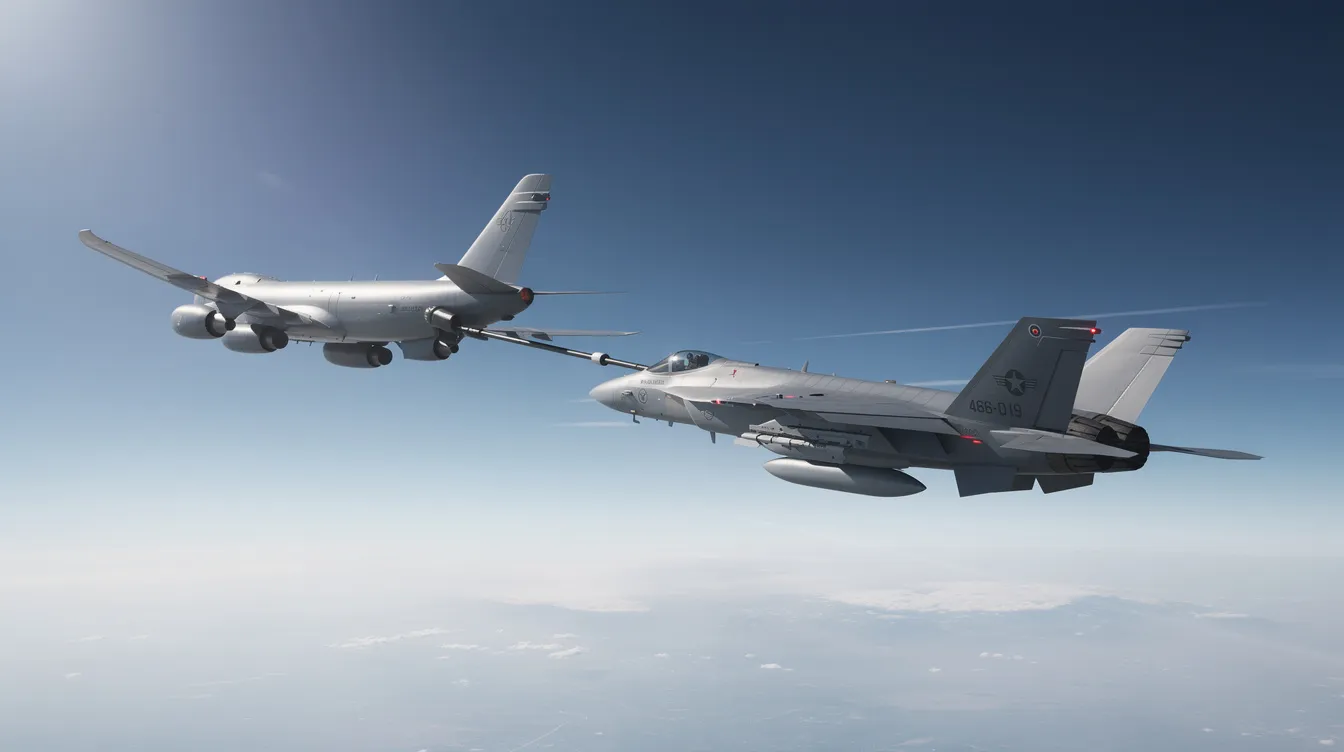
A fighter jet's range determines where an air force can fight, how long it can maintain air superiority, and whether it can execute deep strikes against distant targets. The answer to "what is the range of a fighter jet" depends on which number you use: combat radius, ferry range, or maximum range. Each tells a different story.
The F-35A Lightning II has a combat radius of approximately 670 nautical miles on a strike mission using internal fuel. The F-15E Strike Eagle, one of the longest-legged tactical fighters in active service, reaches about 690 nautical miles in combat radius. The F-22 Raptor, the world's first 5th-generation fighter, achieves a combat radius of 590 nautical miles. Fighter jets generally have shorter unrefueled ranges than heavy bombers or transport planes, but their ability to carry weapons, maneuver at supersonic speeds, and operate in contested skies makes every mile of range a strategic asset.
For air forces worldwide, range translates directly into power projection. A fighter that can fly farther from its base can protect more territory, escort more bombers, and strike more targets without forward deployment. Range shapes whether nations can maintain air dominance over vast oceans, Arctic frontiers, or contested littorals.
Private aviation operates under the same physics but with different priorities. Where a US Air Force mission planner calculates combat radius to determine how far an F-15E can penetrate enemy territory and return to base, a BlackJet client thinks in nonstop city pairs: New York to London, Miami to Los Angeles, Dubai to Singapore. Both care about fuel capacity, altitude efficiency, and payload trade-offs. The difference is what fills the aircraft; one carries ordnance, the other carries passengers in comfort.
This article explores how range is calculated for fighters, which aircraft have the longest range, how stealth and weapons loads reshape the equation, and how these concepts translate into private jet performance available through BlackJet's Jet Card programs.
Aircraft Type | Typical Mission Distance |
|---|
F-16 Fighting Falcon (combat radius) | ~550 nm (~1,000 km) |
F-22 Raptor (combat radius) | ~590 nm (~1,090 km) |
F-35A Lightning II (combat radius) | ~670 nm (~1,240 km) |
F-15E Strike Eagle (combat radius) | ~690 nm (~1,280 km) |
Long-range private jet (max range) | 6,000–8,200 nm (11,100–15,200 km) |
Key Definitions: Range, Combat Radius, and Ferry Range
Published range figures for fighter jets can refer to three distinct measurements, and confusing them leads to misleading comparisons.
Maximum range is the total distance an aircraft can fly in a straight line on internal fuel under optimal conditions: no weapons, ideal cruising altitude, favorable winds. For most fighters, this number appears only in ferry or repositioning scenarios. The F-16 Fighting Falcon, for example, can achieve a ferry range beyond 4,000 km with drop tanks fitted, but this figure has little relevance to combat operations.
Combat radius is the operationally meaningful number. It describes how far a jet can fly into enemy territory, execute its mission (air-to-air combat, ground attack, or patrol), and return to base with required fuel reserves. A combat radius includes fuel needed for the outbound flight and reserves for return. The F-35A's combat radius is approximately 670 nautical miles in an interdiction profile with internal fuel. Military analysts calculate an aircraft's true combat radius is about one-third of its maximum range, because the mission demands maneuvering, weapons delivery, and reserve fuel that ferry flights do not.
Ferry range refers to the maximum distance a jet can travel flying clean. The maximum ferry range is typically measured without weapons and under optimal conditions. The F-15E's ferry range exceeds 3,800 km with conformal fuel tanks and three external tanks, according to Air Combat Command. This configuration is used for repositioning between bases, not for missions where the airplane must carry weapons.
Think of combat radius as a circle drawn around a base. Every target within that circle is reachable. Every target outside it requires tanker support, forward basing, or a different aircraft. Payload, altitude, speed, and mission profile are all assumed in official figures, so comparing numbers between aircraft requires matching those assumptions.
What Determines Fighter Jet Range? The Main Technical Factors
Range is a trade-off between fuel, performance, weapons, and survivability. No single design choice sets it; the interaction of six factors does.
Fuel capacity and placement. Internal tanks are the baseline. Conformal fuel tanks, like those on the F-15E and F-15EX, hug the fuselage and add fuel without the drag penalty of pylons. External drop tanks bolt onto hardpoints and extend range but add both weight and drag until jettisoned. Utilizing drop tanks extends range but adds weight and drag until emptied. Each approach affects radar cross-section differently; external stores increase an aircraft's signature, while internal fuel preserves stealth.
Engine efficiency and afterburner use. Modern turbofan engines on fighters like the F-35 consume less fuel in cruise than older turbojets. Using afterburners burns fuel at an exponential rate, shrinking distance capabilities. A fighter in full afterburner may consume fuel five to eight times faster than in military (dry) thrust, which is why afterburner use is reserved for brief engagements or takeoff.
Aerodynamics. Wing design, air inlet shape, and external stores all influence drag. Carrying heavy munitions drastically reduces range due to increased drag and weight. Weight and payload affect an aircraft's range by increasing aerodynamic drag. Internal weapon bays reduce drag compared to using external weapon pylons, which is why fifth-generation designs favor internal carriage despite the space cost.
Mission profile. A heavily armed F-15E flying a hi-lo-hi ground attack sortie burns far more fuel than the same jet cruising at altitude for a ferry flight. Loiter time over a target, high-speed ingress at low altitude, and evasive maneuvering all consume fuel that would otherwise extend distance.
Altitude and speed. Cruising at high altitudes is more fuel-efficient compared to low-altitude flight because thinner air reduces drag. Flying at higher altitudes reduces drag and improves fuel efficiency, which is why transit legs are planned at 35,000 feet or above whenever threat conditions allow. Ambient temperature and wind patterns impact engine efficiency during flights as well; headwinds at altitude can reduce effective range by 10% or more.
Aerial refueling. Tanker support removes the hard ceiling on range. The US Air Force operates the world's largest tanker fleet; Russian and Chinese forces, with fewer tankers, design fighters with larger internal fuel volumes to compensate.
How Air Forces Use Range: Strategy, Air Superiority, and Global Reach
Range shapes whether a country can project air power beyond its borders or is limited to territorial defense. The answer determines national air doctrine.
The US Air Force uses a network of overseas bases, allied nations' airfields, and a fleet of KC-135 and KC-46 tankers to extend the effective reach of fighters like the F-16, F-22, F-35, and F-15E. This model means American fighters do not need to carry extreme internal fuel; instead, they can operate from secure bases and refuel en route to distant areas of operation.
Russia and China face a different calculus. With fewer overseas bases and a more constrained tanker fleet, both countries prioritize long range in their fighter designs. The Su-35 carries enough internal fuel for a combat radius around 1,600 km. The Su-57, Russia's fifth-generation stealth aircraft, was designed from the outset for extended missions, with a combat range around 1,250 km on internal fuel and a ferry range of approximately 4,500 km with external tanks.
The link between range and air superiority is direct. Long-range air patrols allow fighters to maintain presence over contested regions, from the Arctic to the South China Sea. Escort missions for bombers and tankers require fighters to fly alongside their charges for hundreds of miles, then return. Presence missions over vast territories demand that fighters stay airborne for hours without returning to base.
Consider two scenarios. A US F-35 departing from a NATO base uses tanker tracks over the Baltic Sea to maintain a persistent air combat patrol, cycling through refueling arcs to sustain coverage. A Su-57, departing from a distant Russian base without tanker support, relies on its 1,250 km combat range to reach the patrol area, spend limited time on station, and return. The American approach trades aircraft fuel capacity for infrastructure; the Russian approach trades infrastructure for fuel capacity.
From First Generation to Fifth: How Fighter Jet Range Has Evolved
Each fighter generation reflects different assumptions about what pilots need to do and how far they need to fly to do it.
First generation (1940s to 1950s). Subsonic early jets like the Me 262 and Gloster Meteor carried limited fuel in primitive jet engines with poor specific fuel consumption. Many first-generation jet fighters had shorter range than the WWII piston fighters they replaced. Speed was the breakthrough; endurance was the sacrifice.
Second generation (1950s to 1960s). Supersonic interceptors like the F-104 Starfighter prioritized high speed and rapid climb to intercept Soviet bombers carrying nuclear weapons. Range was secondary; the mission was to scramble, climb, intercept, and land. These aircraft were originally intended for short, violent engagements, not extended patrols.
Third generation (1960s to 1970s). Multirole capability emerged. The F-4 Phantom II could fly interception, ground attack, and reconnaissance missions, and its fuel capacity reflected these broader demands. Range improved, but the real change was versatility.
Fourth generation (1970s to 2000s). The true multirole fighter jet arrived. The F-15E Strike Eagle, F-16 Fighting Falcon, Su-27 family, and Rafale combined agility, sensor capability, and extended range. Drop tanks, conformal fuel tanks, and aerial refueling compatibility became standard. The F-15E's combination of conformal tanks and external tanks gave it transcontinental ferry range. The F-16, a compact, multi-role fighter aircraft, became the most widely used fighter jet globally, serving over 25 countries.
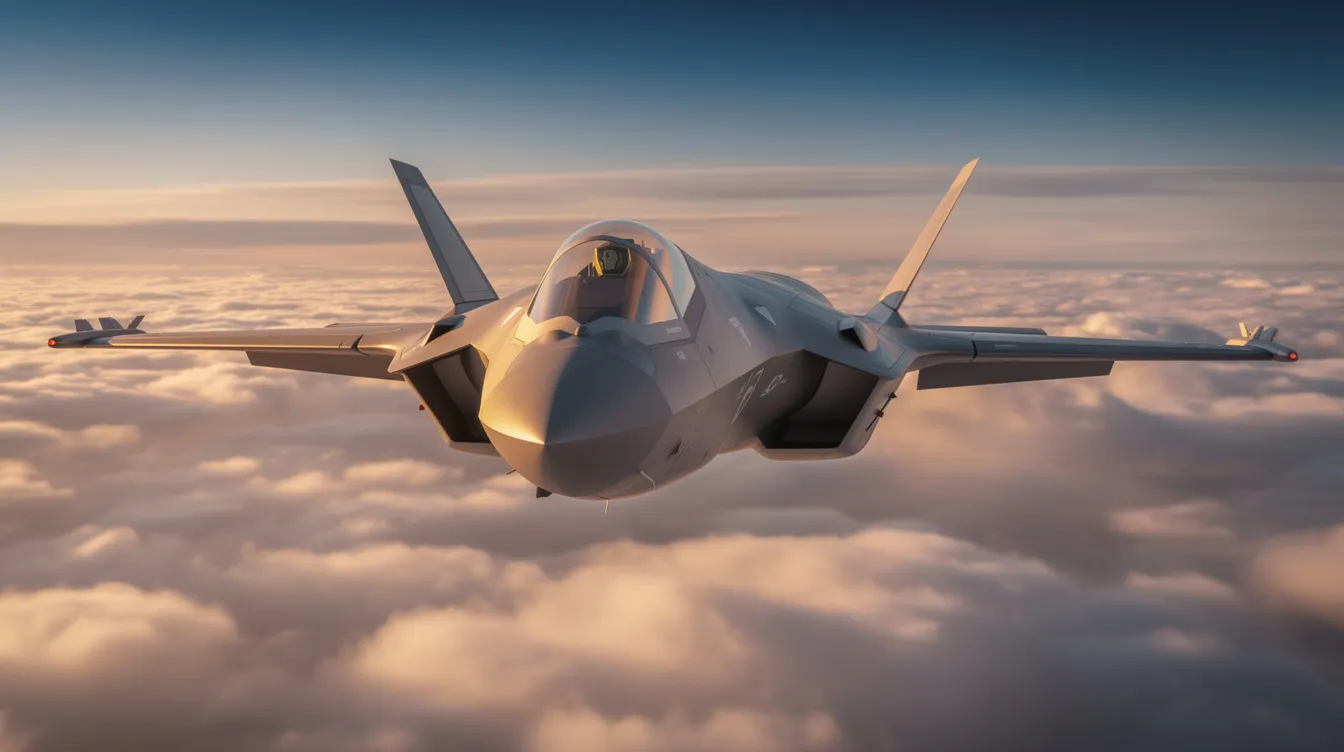
Fifth generation (2000s to present). Stealth designs like the F-22, F-35, J-20, and Su-57 introduced internal weapon bays, advanced sensor fusion, and low-observable shaping. Fifth-generation fighters feature advanced stealth technology and AESA radars. These production aircraft trade some internal fuel volume for survivability, offsetting the loss with efficient engines and networked tanker support.
The trend across all five generations: range alone is no longer the sole metric. Sensor reach, network connectivity, and the ability to operate unseen now multiply the effective value of every nautical mile of combat radius.
Combat Radius vs Longest Range: Why the Numbers Look So Different
Lists ranking the "longest range fighter jet" almost always use ferry range, which inflates the numbers beyond what any fighter achieves in combat.
The gap between combat radius and ferry range is vast. The F-15E Strike Eagle has a combat radius of 690 nautical miles on a strike mission, loaded with weapons and flying a hi-lo-hi profile. Its ferry range, with conformal and external tanks but no weapons, exceeds 2,000 nautical miles. Same airplane, same engines, same wings; the difference is payload, profile, and reserves.
Older aircraft illustrate this even more sharply. The F-111 Aardvark achieved a maximum range approaching 5,940 km, but this was a specialized strike platform, not an agile air superiority fighter. In combat operations during Operation Desert Storm, its actual mission radii were a fraction of that figure.
Modern stealth fighters like the F-22 and F-35 publish conservative combat radius figures because those numbers reflect realistic payload and stealth constraints. Adding external tanks can extend range but compromises the low radar cross-section that defines their survivability.
Aircraft | Combat Radius | Ferry Range |
|---|
F-15E Strike Eagle | ~690 nm (~1,280 km) | ~2,070 nm (~3,840 km) |
F-22 Raptor | ~590 nm (~1,090 km) | ~1,600 nm (~2,960 km) |
F-35A Lightning II | ~670 nm (~1,240 km) | ~1,200 nm (~2,220 km) |
Su-57 | ~675 nm (~1,250 km) | ~2,430 nm (~4,500 km) |
American Fighter Jets: Range Profiles of F-16, F-15E, F-22, and F-35
US fighters balance global reach with multirole flexibility. The combination of onboard fuel and the world's largest tanker fleet gives American aircraft effective range that exceeds what their specifications alone suggest.
F-16 Fighting Falcon. The F-16 can fly over 500 miles (860 kilometers) in combat, delivering weapons and returning to base. Its combat radius sits around 550 to 600 nautical miles depending on the mission profile. Drop tanks extend its ferry range beyond 4,000 km. The F-16 can withstand up to nine G's in combat, giving pilots the ability to execute aggressive maneuvering without structural concern. It remains the backbone of allied nations' air forces across more than 25 countries.
F-15E Strike Eagle. The F-15E has a combat radius of 690 nautical miles, making it one of the longest-range tactical fighters in active service. Its conformal fuel tanks add roughly 750 gallons each without occupying hardpoints, leaving room for weapons. The F-15EX, its newer variant, can carry nearly 30,000 lbs of weapons and over 20 air-to-air missiles in a single sortie, making it one of the most heavily armed fighters ever built. Ferry range with full tank configuration reaches approximately 3,840 km.
F-22 Raptor. The F-22 Raptor has a combat radius of 590 nautical miles. Internal fuel is constrained by stealth shaping; every surface angle and panel joint is designed to deflect radar rather than maximize volume. Adding 600-gallon external tanks can push its radius beyond 900 nautical miles, but this compromises its low-observable profile. The F-22 entered service in 2005 and remains the benchmark for air dominance, with supercruise capability allowing sustained flight at supersonic speeds without afterburner.
F-35A Lightning II. The F-35A Lightning II has a combat radius of 670 nautical miles. Built by Lockheed Martin, the F-35 has a radar cross section equivalent to a golf ball, making it nearly invisible to enemy radar at operationally relevant distances. Ongoing Block 4 upgrades include work on stealthy or low-observable drop tanks (460 to 600 gallon capacity) to extend its long-range strike capability without sacrificing stealth. For more on how the best fighter planes in the world compare, BlackJet has covered this topic in depth.
Future programs like the F-47/NGAD aim for combat radii exceeding 1,000 nautical miles, designed to penetrate deep into contested airspace across the Pacific.
Russian and Chinese Fighter Jets: Long-Range Design Philosophy
Russian and Chinese air forces design fighters to operate far from bases with limited tanker support. The result: naturally larger internal fuel volumes and longer unrefueled range.
The Su-35 carries enough internal fuel for a combat radius around 1,600 km, suitable for patrolling Russia's vast northern and eastern frontiers. The Su-57 pushes this further with a combat range around 1,250 km on internal fuel alone. The Sukhoi Su-57 features 3D thrust-vectoring nozzles for agility, allowing precise, accurate control during air-to-air combat and at high angles of attack. Its ferry range reaches approximately 4,500 km with external tanks.
China's Chengdu J-20 is a stealth aircraft designed for long-range missions over the South China Sea and Western Pacific. The Chengdu J-20 has a weapons payload of 24,000 lbs, carried internally to preserve its low-observable profile. It can supercruise, allowing efficient transit at high speed without afterburner, and its large airframe provides volume for substantial internal fuel.
On paper, these aircraft appear to outrange their American counterparts. In practice, the US tanker and base network changes operational reality. American fighters may carry less fuel internally but can refuel repeatedly, maintaining persistent presence. Russian and Chinese fighters must carry their range with them, which limits loiter time and mission flexibility once fuel reserves drop.
European Fighter Jets: Balancing Agility, Modularity, and Range
European fighters are designed for flexible missions across compact but diverse theaters, from European air defense to Middle Eastern and Indo-Pacific deployments.
Eurofighter Typhoon. The Eurofighter Typhoon has an air-to-air range of 1,390 km and an air-to-ground combat radius of approximately 1,400 km with drop tanks. Its maximum ferry range approaches 3,790 km with three external tanks. In 2026, RAF Typhoons operated up to 1,300 miles from base to provide defensive air cover over the Red Sea, relying on in-flight refueling to sustain the mission.
Dassault Rafale. France's Rafale achieves a combat radius of approximately 1,850 km with three external tanks and a ground attack load. It operates from both carriers and land bases, giving France independent strike capability across multiple theaters. Its balanced design makes it a true multirole fighter jet capable of air superiority, deep strikes, and nuclear deterrence.
Saab JAS-39 Gripen E. Sweden's Gripen prioritizes dispersed basing and rapid turnaround over extreme range. Its moderate combat radius is optimized for operating from short road strips and austere airfields, with lower operating cost and unit cost than its European peers.
All three designs use modular external tanks to trade agility for range as missions demand, similar in principle to how the F-16 and F/A-18 families operate.
Historical Perspective: How WWII and the Cold War Shaped Range Requirements
Range has been a decisive factor in air warfare since fighters first had to escort bombers deep into enemy territory.
During World War II, escort fighters like the P-51D Mustang used drop tanks to fly alongside US bombers all the way to Berlin and back. Before the Mustang's arrival, shorter-ranged fighters had to turn back partway, leaving bombers vulnerable to enemy aircraft. The lesson was clear: a fighter that cannot reach the fight is irrelevant.
The early Cold War shifted priorities. Strategic bombers carrying nuclear weapons became the primary threat, and interceptors were designed for speed and climb rate rather than endurance. Aircraft like the F-106 Delta Dart needed to scramble, reach altitude, intercept a bomber, and land. Range beyond that mission was unnecessary; the interim measure was ground-based radar and quick-reaction alert.
Vietnam changed the calculus again. Multirole aircraft like the F-4 Phantom II conducted both long-range interception and strike missions, supported by aerial refueling. Pilots had to fly hundreds of miles into hostile airspace, deliver ordnance, and return, often while dodging surface-to-air missiles and engaging in air combat.
The late Cold War saw the F-15C maintaining long-range air superiority patrols over Europe and the Pacific, while the F-111's exceptional strike range (approximately 5,940 km maximum) represented an extreme example of a new aircraft designed specifically for deep penetration. Today's fifth-generation fighters pool lessons from all these eras, using networks and tankers to multiply range rather than simply adding fuel tanks in various forms.
Stealth vs Range: Why F-22 and F-35 Don't Maximize Fuel Volume
Stealth designs must hide engines, inlets, weapons, and fuel inside radar-deflecting shapes. Every cubic foot of airframe volume serves multiple masters, and fuel often loses the competition.
Internal weapon bays in the F-22 and F-35 displace volume that could otherwise hold fuel, forcing designers to make precise trade-offs. The F-22's weapon bays occupy space along the lower fuselage that, in a non-stealth design, could house additional tanks. The F-35 Lightning II has a radar cross section equivalent to a golf ball, but achieving that signature requires panel alignment, edge treatment, and internal carriage that constrain fuel volume.
Non-stealth jets like the F-15E and F-15EX face no such constraint. They can hang large external tanks and weapons on multiple hardpoints without concern for radar signature, achieving comparable or longer range in low-to-medium threat environments where stealth is not the key factor.
Ongoing development of stealthy external tanks for the F-22 and F-35 Block 4 seeks to blend low observability with extended range, especially for Pacific operations where distances between bases and targets exceed 1,000 nautical miles.
In many scenarios, the optimal approach pairs stealthy short-to-medium-range fighters with long-range non-stealth escorts, bombers, and tankers. The stealth aircraft penetrates defended airspace; other aircraft provide fuel, weapons, and sensors from safer distances.
How In-Flight Refueling Transforms Fighter Jet Range
Aerial refueling breaks the traditional limits of combat radius. Tanker support can theoretically extend a fighter's mission duration and reach indefinitely, turning range from a fixed number into a planning variable.
The US Air Force operates hundreds of tanker aircraft (KC-135, KC-46, KC-10) that allow F-16, F-22, F-35, and F-15E fighters to maintain persistent air superiority thousands of miles from US or NATO bases. Aerial refueling can theoretically extend a fighter jet's operational range indefinitely, limited only by pilot fatigue, maintenance intervals, and tanker availability.
"Tanker tracks" are pre-planned refueling arcs where fighters cycle through to top off fuel before returning to their patrol stations. Over the Persian Gulf, Eastern Europe, and the Western Pacific, these tracks allow air forces to keep fighters airborne for eight or more hours per sortie.
Russian and Chinese forces, with fewer tankers, rely on larger internal fuel to maintain mission endurance. This is a fundamental doctrinal difference: the US buys range through infrastructure; Russia and China buy it through airframe design.
The concept translates to private aviation. Long-range private jets plan fuel stops or nonstop routes based on winds, payload, and runway constraints. The difference: private operators optimize for passenger comfort and schedule efficiency rather than combat survivability.
Comparing Fighter Jet Range to Long-Range Private Jets
Many modern fighters have combat radii of 600 to 1,000 nautical miles. Long-range business jets can cover 6,000 to 8,200 nautical miles nonstop. The gap is vast but logical.
Fighters devote airframe volume to weapons, sensors, armor, ejection seats, and the structural reinforcement needed for nine-G maneuvering. Private jets devote that same volume to fuel, cabin space, lie-flat seating, and passenger comfort. A Gulfstream G800 carries roughly 8,200 nautical miles of fuel because it has no weapon bays, no radar-absorbing coatings consuming internal space, and no requirement to sustain supersonic flight.
Consider a concrete comparison. The F-35A can fly approximately 670 nautical miles from base, complete a mission, and return. A private jet with the longest range in its class can fly New York to London (approximately 3,000 nautical miles) nonstop with reserves and still have fuel remaining. BlackJet clients access these long-range aircraft through Jet Card programs, treating transcontinental and transatlantic missions as single flights rather than multi-stop itineraries.
Category | Typical Mission Distance |
|---|
Fighter jet (combat radius) | 500–1,000 nm |
Light private jet (max range) | 1,500–2,200 nm |
Super-midsize private jet | 3,000–4,000 nm |
Ultra-long-range private jet | 6,000–8,200 nm |
Use Cases: When Range Becomes the Decisive Advantage
In both military and private aviation, range equals options.
Long-range strike. An F-15E launches from an allied base in the Gulf, flies 690 nautical miles to a high-priority target, delivers precision ordnance, and returns. Without its combat radius and tanker support, that strike requires forward basing in more vulnerable locations, increasing risk and cost.
Air superiority patrol. F-22s operate from secure rear bases and use tanker tracks to maintain air dominance over distant airspace. Their 590-nautical-mile combat radius, extended by refueling, allows them to fight at a distance while keeping pilots and aircraft safer between sorties.
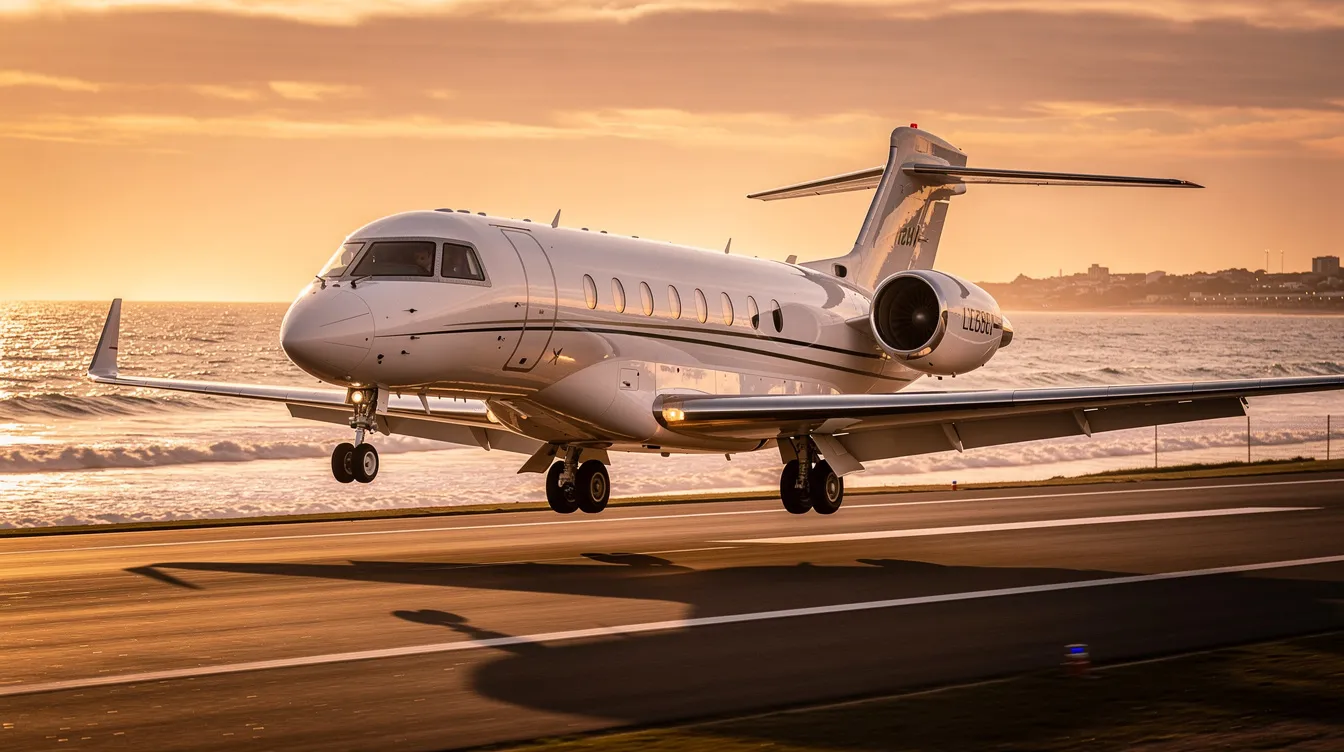
Private domestic travel. A BlackJet Jet Card member flies New York to Los Angeles nonstop on a super-midsize aircraft, covering approximately 2,150 nautical miles in under five hours. No connections, no overnight stays, no security lines.
Private international travel. The same member flies London to Dubai nonstop, roughly 2,990 nautical miles, on a large-cabin aircraft, turning what would be a full day of commercial travel into a single six-hour private flight.
Range is a strategic asset for nations conducting combat operations and for individuals whose time and flexibility carry real economic and personal value.
BlackJet Perspective: Translating Fighter Jet Performance into Private Jet Expectations
BlackJet operates across the full spectrum of aircraft categories, from light jets for regional hops to large-cabin aircraft built for intercontinental missions. Each category represents a different answer to the same question fighters face: how far can this aircraft go, and what trade-offs does the mission demand?
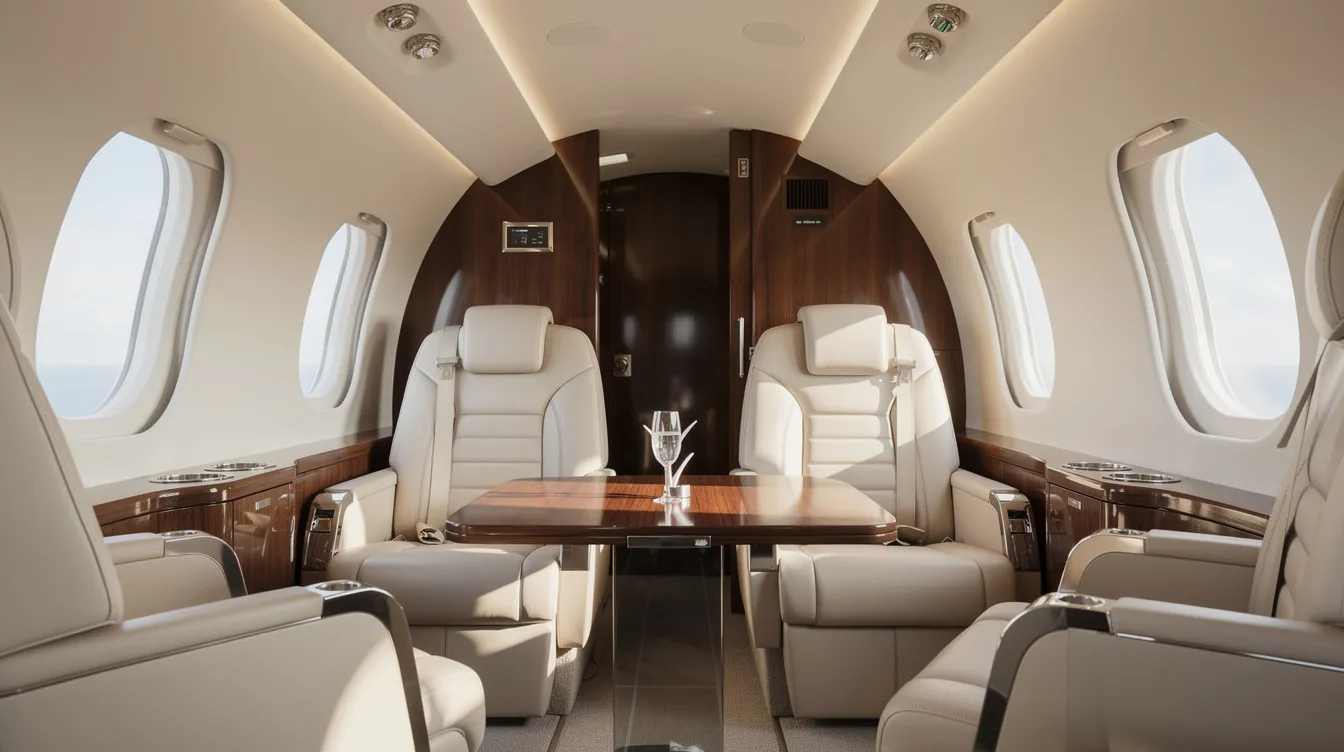
Unlike fighters, BlackJet-curated aircraft optimize for range plus comfort. Pressurized cabins, lie-flat seating, onboard connectivity, and full-service amenities replace weapon bays and sensor suites. The physics are the same; the priorities are different.
BlackJet's Jet Card structure, including 25-hour and 50-hour programs informed by our detailed guide to 50-hour jet card cost, allows members to select the ideal aircraft for each trip's range requirement. A 300-nautical-mile hop from Miami to the Bahamas calls for a light jet. A 3,000-nautical-mile transatlantic crossing requires a long-range, large-cabin aircraft. The booking platform and real-time support team factor in range, winds, payload, and runway performance to propose the right aircraft automatically.
Where fighters trade fuel and weapons for survivability, BlackJet aircraft balance cabin space, baggage capacity, and performance to deliver efficient nonstop journeys. The trade-offs are parallel; the outcomes serve different missions.
Safety and Certification: Why Range Is Only Valuable If the Flight Is Secure
Range is meaningless without the infrastructure to execute long flights safely.
For air forces, long-range sorties demand rigorous maintenance cycles, crew duty limits, tanker coordination training, and redundant communication systems. A fighter that can fly 690 nautical miles is only effective if its engines, avionics, and airframe are maintained to standards that guarantee the return leg.
For BlackJet, every partner operator meets or exceeds premier safety and certification standards. Aircraft undergo audited maintenance programs. Flight crews hold current ratings and recurrent training. BlackJet's operational team monitors weather, NOTAMs, and airspace restrictions on long-range flights, making proactive routing adjustments to keep missions safe and on schedule.
Clients benefit from the same operational rigor that keeps fighter pilots alive, translated into a private, discreet travel environment.
Sustainability and Long-Range Flying: From Fighters to Carbon-Neutral Private Jets
Long-range flights carry an environmental footprint, whether the aircraft delivers ordnance or passengers.
Military fighters experiment with alternative fuels and efficiency improvements, but combat requirements constrain how far emissions reduction can go. A fighter burning afterburner fuel at maximum rate to evade a threat cannot optimize for carbon output.
BlackJet takes a different approach. Every member journey is carbon-neutral, with offsets and sustainable aviation fuel credits integrated at no extra cost to the client. Route optimization, aircraft selection matched to passenger count, and efficient cruise profiles reduce fuel burn per passenger, especially on long-range segments where altitude and speed planning yield the largest efficiency gains.
The result: clients fly transcontinental and intercontinental routes knowing their travel footprint has been addressed without compromise to service, schedule, or comfort.
Jet Cards, Range, and Aircraft Categories: Matching the Jet to the Mission
Jet Cards are prepaid access to flight hours, allowing members to reserve range and aircraft capability ahead of need.
BlackJet's ecosystem spans multiple aircraft categories:
Light jets: 1,500 to 2,200 nm range, ideal for regional flights under 500 nm
Midsize jets: 2,500 to 3,500 nm range, covering US domestic routes
Super-midsize jets: 3,000 to 4,000 nm range, handling coast-to-coast and Caribbean routes
Large-cabin / ultra-long-range jets: 5,500 to 8,200 nm range, serving intercontinental missions like New York to London or Los Angeles to Tokyo
Range is a key factor in aircraft selection. A light jet handles a 300 nm hop with ease but cannot fly New York to London. A large-cabin aircraft can, but using it for a 200 nm shuttle wastes capacity and cost.
BlackJet's digital platform presents options with clearly displayed range and cabin layouts, allowing members to match aircraft to mission profile. A Jet Card member planning Miami to Houston to Los Angeles to New York in a single week can switch among categories based on each leg's distance and passenger count.
Technology and Real-Time Support: Planning Around Range in Practice
Range on paper is the starting point. Real flights must account for winds, alternates, runway length, and maximum takeoff weight constraints, which is why sophisticated private jet flight time calculators are essential for accurate planning.
BlackJet uses technology similar in spirit to mission-planning systems used by air forces. Up-to-date weather, aircraft performance data, and NOTAMs feed into routing and fuel planning. Members see realistic flight times and aircraft options for each requested route through the mobile or web platform, with BlackJet support refining details as conditions change.
When headwinds or airport limitations would compromise nonstop range, BlackJet's real-time support team can suggest schedule or routing adjustments to keep the trip smooth. This planning capability is the civilian equivalent of how fighters and tankers coordinate complex long-range operations, but dedicated to client convenience and discretion.
Frequently Asked Questions About Fighter Jet Range (And What It Means for Private Flyers)
These questions address common misunderstandings about fighter jet range and connect them to private aviation.
What is the average range of a modern fighter jet?
Most modern fighters have combat radii between 500 and 1,000 nautical miles, depending on mission profile and weapons load. This is less than a long-range private jet because fighters allocate airframe space to weapons, sensors, and performance rather than fuel and cabin volume. Fighter jets generally have shorter unrefueled ranges than heavy bombers or large transport aircraft, just as different private jet sizes offer varying combinations of range and cabin comfort.
Which fighter jet has the longest range?
Historically, the F-111 Aardvark achieved a maximum range approaching 5,940 km. Among current fighters, the F-15E Strike Eagle and Su-57 rank among the longest-ranged, with the F-15E reaching a ferry range of approximately 3,840 km. Future platforms like the F-47/NGAD aim for combat radii exceeding 1,000 nautical miles.
Can fighter jets fly across the Atlantic without refueling?
In ferry configuration with multiple external tanks and no weapons, some fighters can cross the Atlantic. The F-15E's 3,840 km ferry range covers the distance from the US East Coast to Western Europe (approximately 5,500 km) only with favorable routing and a fuel stop in Iceland or the Azores. Most transatlantic military deployments use tanker support.
How far can a private jet fly compared to a fighter jet? Long-range private jets routinely exceed 6,000 nautical miles nonstop. The Gulfstream G800 reaches approximately 8,200 nautical miles. BlackJet members access aircraft in this class through Jet Card programs, covering city pairs that would require multiple tanker refuelings for a fighter.
How do BlackJet Jet Cards factor in range? Members do not need to calculate range themselves. When a trip is requested, BlackJet's platform and operations team automatically match the route distance, passenger count, and conditions to the right aircraft category, ensuring nonstop service wherever the mission distance allows.
Conclusion: Range as a Strategic Lever for Nations and BlackJet Clients
Fighter jet range, whether measured as combat radius, ferry range, or tanker-supported endurance, underpins every air force's ability to maintain air superiority, execute deep strikes, and project deterrence across the world. From the P-51 Mustang escorting bombers to Berlin to the F-35 patrolling contested skies over the Pacific, range has always determined who controls the fight.
Private aviation operates under the same physics. Fuel capacity, aerodynamic efficiency, altitude optimization, and payload trade-offs shape how far any aircraft can fly. BlackJet distills these complex variables into simple, confident choices for members: request a trip, receive the right aircraft for the distance, and travel nonstop with safety, sustainability, and comfort built into every flight.
Elevate your travel on your terms. With BlackJet, private flight is accessible through Jet Card programs that deliver rigorous safety standards, carbon-neutral performance, and the flexibility to match any mission, from a 300-mile regional hop to a 7,000-mile intercontinental crossing, all outlined in detail on our premium private Jet Card programs. Explore BlackJet's offerings and discover how refined, purposeful travel becomes your new standard.


 Sign up with google
 Sign up with Apple