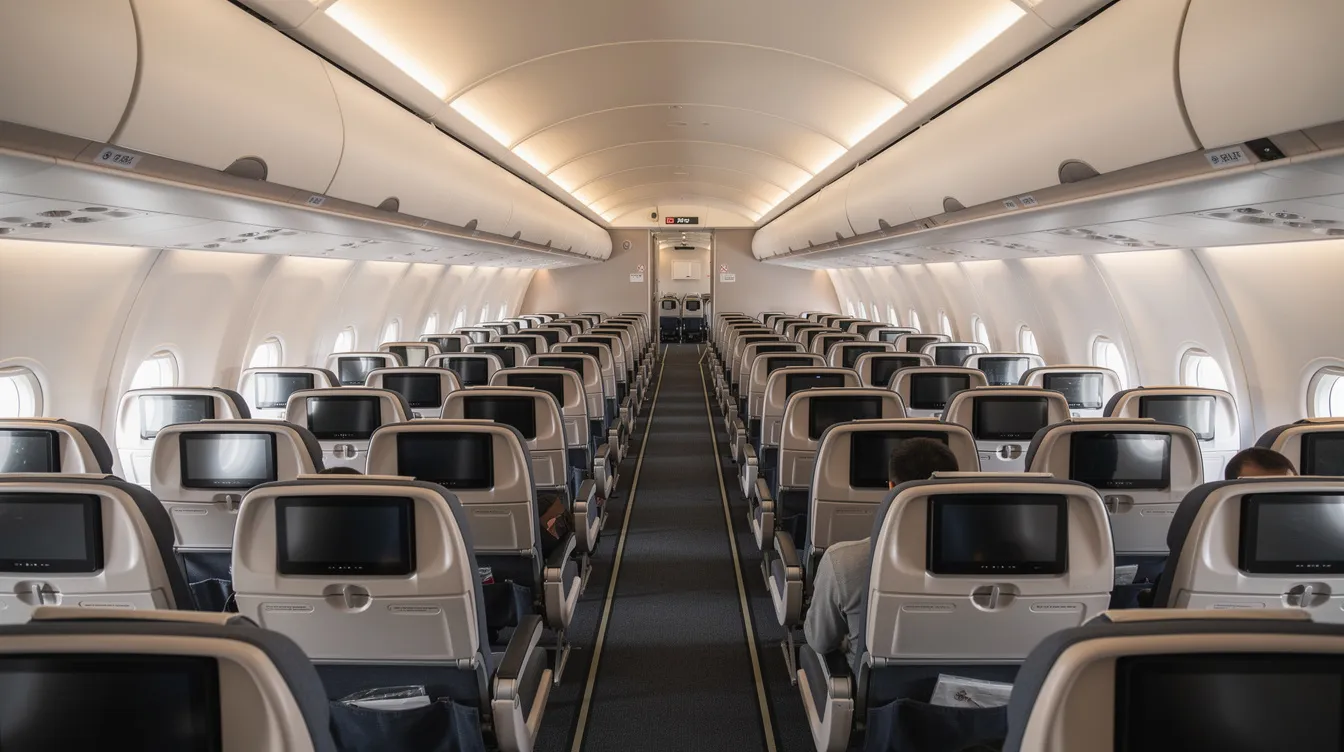
If you have ever found yourself staring at a boarding pass wondering what seat is J on a plane, you are not alone. The letter can refer to a physical seat position, a fare class, or both - and the answer changes depending on the aircraft you are flying. This guide breaks down exactly where seat J sits in commercial cabin layouts, why the same letter doubles as a Business Class code, and how private jet travel eliminates the guesswork entirely.
Quick Answer: What Seat J Usually Means On A Plane
Seat J typically indicates a Business Class seat in airline inventory systems, but as a physical seat label - like 21J - it simply marks a specific position in that row, usually toward the right-hand side of the cabin when facing the front.
On many widebodies such as the Boeing 777 or Airbus A350, the letter J appears in economy and premium rows alike. On large twin-aisle aircraft, J usually designates either an aisle or window seat, though in a standard 3-4-3 layout, J is typically a middle seat in the outer right block. According to industry standards, the letter J on airplane seat maps typically indicates an aisle seat, but on some aircraft configurations, a J seat could also be a window seat. In a standard 3-4-3 layout, J is typically a middle seat.
It is worth noting that in airline booking systems, "J" is also the common fare-class code for full-fare Business Class - a completely separate concept from seat label 21J. The letter J is commonly used for Business Class in IATA codes, which govern how airlines distribute and price tickets globally.
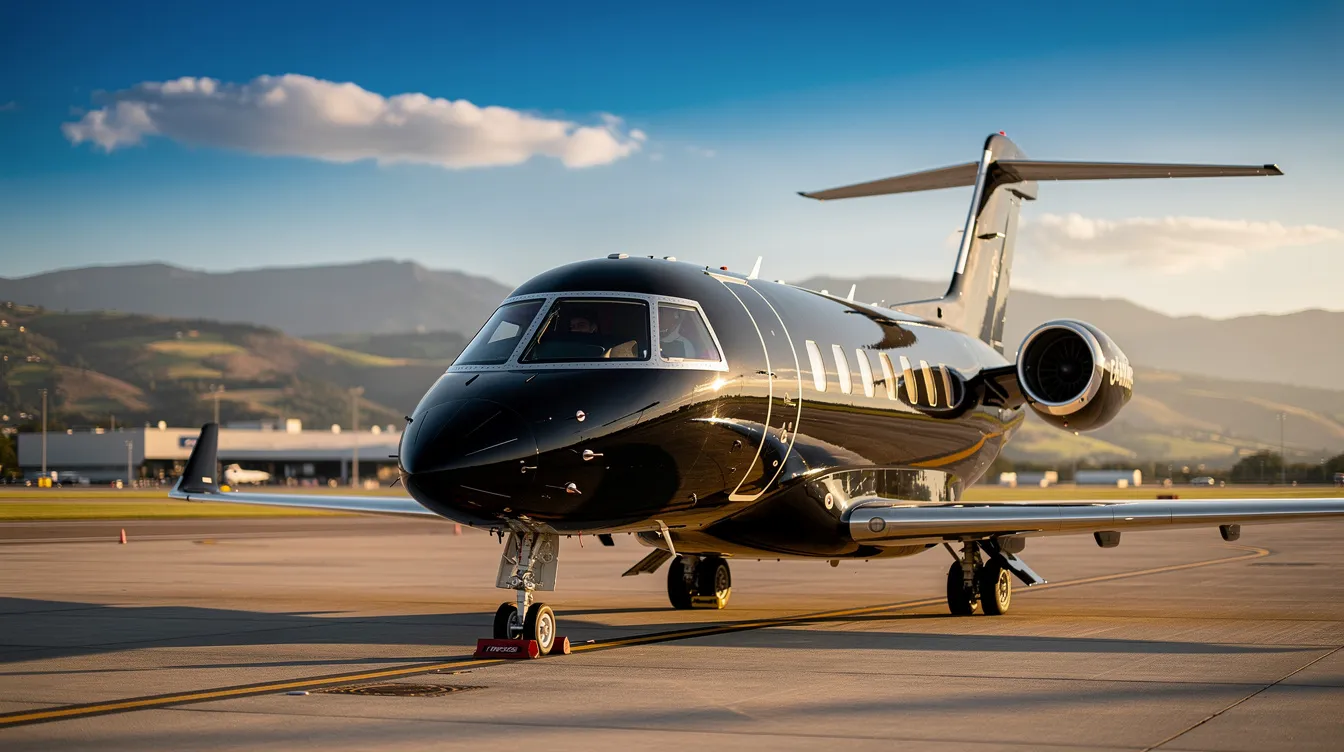
On private jets arranged through BlackJet, rigid row-and-letter seat maps rarely apply. Seating is typically open and lounge-style, with every primary seat offering direct aisle access - no hunting for the right letter required.
How Airline Seat Maps And Letters Actually Work
Commercial airlines rely on standardized seat maps to display cabin layouts, emergency exits, lavatories, and class divisions. Seat maps show seat layout and configuration on aircraft, helping people understand exactly where they will sit before they board.
The system is straightforward: seat rows are numbered from front to rear, and seats in a row are labeled with letters. The first known instance of seat numbering dates to 1919. Seat numbering starts from the left side of the aisle, producing designations like 4A, 12C, or 21J. Seat maps vary based on aircraft type and airline seat designations, but the row-and-letter format has become a long-standing convention, so no two carriers are guaranteed to use the same lettering.
Most airlines skip the letter I to avoid confusion with the number 1, a practice that became common as the labeling system spread across airline service. Similarly, the letter O is often omitted because it resembles zero. This is why J shows up as roughly the eighth or ninth letter in a row - it follows H directly, with I skipped entirely.
On narrowbody aircraft like the Boeing 737 or Airbus A320 with a 3-3 cabin layout, seats typically run A through F, and J does not appear at all. On wider aircraft such as the Boeing 777 in a 3-4-3 layout, the sequence runs A through K with gaps, and J commonly appears near the right-hand side.
On private jets in the BlackJet fleet, published layouts describe zones - club seating, divans, conference tables - rather than rigid row-and-letter combinations.
Why "J" Also Means Business Class And First Class In Airline Systems
In global airline inventory managed through IATA-style booking classes, single letters serve as fare codes. IATA cabin codes standardize cabin class designations across airlines, and J represents Business Class in IATA cabin codes - specifically, full-fare premium Business.
The distinction matters: "Seat 21J" is a physical seat label, while "booking class J" refers to a cabin class and fare bucket that is not tied to any specific seat number. Airlines like Finnair explicitly list J as full-fare Business in their customer-facing FAQs.
The standard IATA cabin codes include:
F - F stands for First Class in IATA cabin codes
J - Business Class (full fare)
W - W denotes Premium Economy in IATA cabin codes
Y / M - Economy Class
Seat configurations are expressed in formats like 12J/15W/82M. When you see "32J / 24W / 241M" on a fleet chart for a 777-300ER, it means 32 Business Class seats, 24 Premium Economy seats, and 241 Economy seats - not 32 seats physically labeled "J." Cabin configurations are expressed as numbers per class, and IATA cabin codes standardize seat map configurations to keep this information consistent worldwide.
While other airlines use J as a Business indicator, BlackJet Jet Card members access aircraft by category - light, midsize, super-midsize, or large-cabin - rather than navigating traditional economy, business, or first class divisions.
Where Seat J Is Located In Different Cabin Layouts
The physical location of seat J - whether it is a window seat, aisle seat, or one of the dreaded middle seats - depends entirely on the aircraft type and the airline's chosen cabin layout.
Here are a few concrete cases:
Boeing 777-300ER in 3-4-3 Economy: Rows use letters A through K, with I skipped. The right block reads H-J-K. In this instance, J is the middle seat of that three-seat block - between an aisle and the K window seat.
Airbus A330 in 2-4-2 Economy: Some airlines use letters like A-C, D-E-F-G, H-K with J absent entirely. A standard wide-body layout might omit J altogether in certain configurations.
Older 747 Economy (3-4-3 or 3-3-3): J may appear only in specific sections, distributed unevenly depending on how the airline allocated letters to each block.
In some premium cabins - for instance, a staggered 1-2-1 Business Class layout on an A350 - seats might be labeled A, D, G, and K only. There is no J at all in those rows. The number of seats across the row simply does not require it.
Passengers can always confirm whether J is an aisle or window by checking the airline's own seat map tool or a reliable third-party site before selecting a preferred seat.
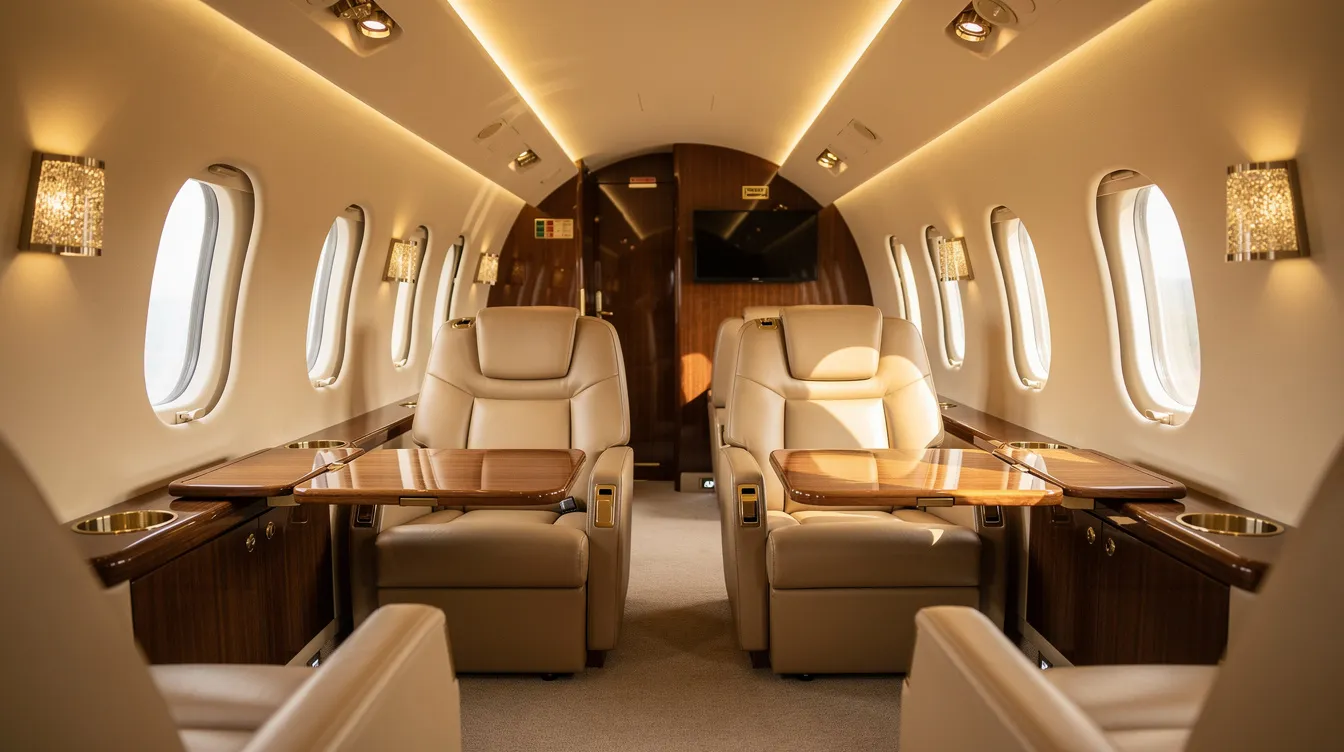
On BlackJet-configured private jets, every passenger seat functions as premium seating with direct aisle access. There are no undesirable middle seats to avoid, and no need to guess what a particular letter means.
J Seat vs Aisle Seat vs Window Seat
A common concern for commercial travelers is whether a specific seat letter like J guarantees a window seat or aisle seat. The short answer: it does not, at least not across all fleets.
On many 10-abreast widebodies in a 3-4-3 layout, J is found in the H-J-K block on the right side. In that case, J sits between the aisle and the K window - making it a middle seat. But on other airlines or layouts where the right block is only two seats wide, J could be aisle-adjacent or even window-adjacent. According to industry standards, the letter J on airplane seat maps typically indicates an aisle seat, but on some aircraft configurations, a J seat could also be a window seat. In a standard 3-4-3 layout, J is typically a middle seat.
Classic window seat letters on widebodies tend to be A on the left and K on the right. Aisle seat letters vary by airline and configuration - C, D, G, H, or even J can be an aisle seat depending on the way the cabin is arranged.
Serious travelers review airline seat maps before selecting a seat to verify:
Whether J in that specific row is aisle, window-adjacent, or center
Proximity to lavatories, galleys, and emergency exits that affect noise and privacy
Whether the seat has reduced recline due to a bulkhead behind it
On BlackJet-operated private jets, every primary passenger seat functions like an ideal combination of aisle and window - open view, direct access, and personal space. The aisle vs window debate largely disappears.
How Seat Maps Show J Seats Across Cabin Classes
Digital seat maps on airline websites and apps provide the most reliable way to understand where J seats fall relative to aisles, windows, and cabin divisions. Seat maps help passengers identify available and unavailable seats, and seat maps include details on galleys and lavatories - information that is easy to overlook but critical for comfort.
A typical airline seat map visually distinguishes cabin classes:
First class at the front, sometimes in a 1-2-1 or 1-1 arrangement with the most space - learn more about how many seats in first class
Business Class (J) shown in a different color, often 1-2-1 or 2-2-2
Premium Economy (W) and Economy (M/Y) in denser layouts like 2-4-2 or 3-3-3
Legends on these maps use cabin codes and may show special icons - extra legroom, bassinet positions, blocked seats, and emergency exit rows. Airlines such as Qantas, Air France, and Delta display layouts where J appears both as a seat letter (e.g., 21J) and as a cabin count (e.g., "30J / 28W / 220M").
BlackJet's digital booking platform works like a premium-level seat map for private jets, showing aircraft categories, cabin layouts, and range information rather than dense row-letter grids.
From Commercial Cabins To Private Jets: Rethinking Seat Letters
There is a meaningful difference between optimizing a J seat in commercial Business Class and booking a private flight through a Jet Card program. On commercial international routes, passengers hunt for a specific window seat or aisle seat, avoid middle seats, and scrutinize seat configurations row by row. With BlackJet, clients book the entire aircraft category, and every primary seat offers premium space, privacy, and direct aisle access.
Consider a concrete scenario: a New York to London overnight business trip. A traveler on a commercial 777 might aim for seat 9J in Business, hoping it is aisle-adjacent with a lie-flat bed. A BlackJet member would instead reserve a large-cabin or ultra-long-range jet with lie-flat seating, choose a bespoke departure time, and skip the terminal entirely.
Private travel changes priorities. Instead of decoding what J means on a seat map, clients focus on departure airport, schedule control, in-flight productivity, and privacy for board-level discussions - details that matter more than any seat letter.
Safety, Sustainability, And Technology Behind Modern Seat Planning
Both commercial airlines and private operators design cabin layouts around strict safety and performance regulations. These rules determine exit row spacing, maximum seat counts per section, and evacuation times - which in turn affect whether a seat like J ends up close to an emergency exit or a galley wall. BlackJet only partners with operators meeting or exceeding leading safety and maintenance standards.
Sustainability also plays a role. Denser commercial seat configurations reduce per-passenger fuel burn but sacrifice comfort. BlackJet takes a different approach: all flights are carbon-neutral by default, with verified offsets calculated per leg at no extra cost to Jet Card members.
Modern technology underpins both worlds. Airlines now offer dynamic seat map updates in their apps, showing blocked or reassigned J seats in real time. BlackJet's mobile and web platforms display aircraft availability, routing options, and cabin layouts tailored to trip length and passenger count.
For discerning travelers, the strategic choice is not just about picking seat 21J - it is about choosing an aviation model that aligns with safety, environmental, and efficiency priorities.
Frequently Asked Questions About Seat J And Private Jet Alternatives
Is seat J always an aisle seat?
No. Whether J is an aisle seat depends on the aircraft's seat configuration and airline. In a 3-4-3 layout, J is often a middle seat. In a 2-3-2 arrangement, it might not exist at all. Always check the specific seat map before confirming your booking.
Why do some rows not have J at all?
Airlines use different numbers of letters depending on how many seats fit across each row. In premium cabins with only four or six seats per row, letters like J are simply skipped because they are not needed. The convention of omitting I to avoid confusion with the number 1 also shifts where J falls in the sequence.
Is J better than A or K for comfort?
Comfort depends far more on cabin class, seat pitch, width, and proximity to galleys or lavatories than on the letter itself. A seat labeled J in Business Class will be a dramatically different experience from J in economy, even on the same plane.
How does BlackJet handle seating if there are no seat letters?
Private jet seating is open-plan. Every primary seat is effectively a premium aisle-and-window seat. The crew may allocate specific seats for weight balance, but from a passenger perspective, every position offers generous space, a view, and direct access - no letter-hunting required.
How To Decide: Chase The Perfect J Seat Or Fly Private With BlackJet?
Here is what to remember: J serves double duty as both a physical seat letter and a Business Class fare code. Its exact location - aisle, window, or middle - depends entirely on the specific seat map for your aircraft and airline. There is no universal answer, and the details change from one flight to the next.
If you are flying commercial:
Always check the airline's seat map for the specific aircraft before locking in a J seat
Prioritize cabin class first (Economy vs Premium Economy vs Business vs First), then fine-tune the exact seat letter
Note that what works on one airline's Boeing 777 may be a completely different experience on another's
If you are ready for something easier, BlackJet Jet Card members bypass per-seat concerns entirely. You reserve an entire aircraft category that guarantees space, quiet, and direct aisle access from every primary seat - plus time saved at private terminals, bespoke departure schedules, and predictable prepaid flight hours.
If you find yourself spending another week researching whether 14J on a Netherlands-bound 787 is left or right of the aisle, it might be time to change the question altogether. Explore whether flying private is worth it and discover how BlackJet can reshape your travel.
Modern high-net-worth travelers increasingly view private jet access not as an indulgence, but as a strategic upgrade from competing over seat 21J in a crowded cabin. The information is clear: when every seat is the best seat, the letter on it stops mattering.


 Sign up with google
 Sign up with Apple