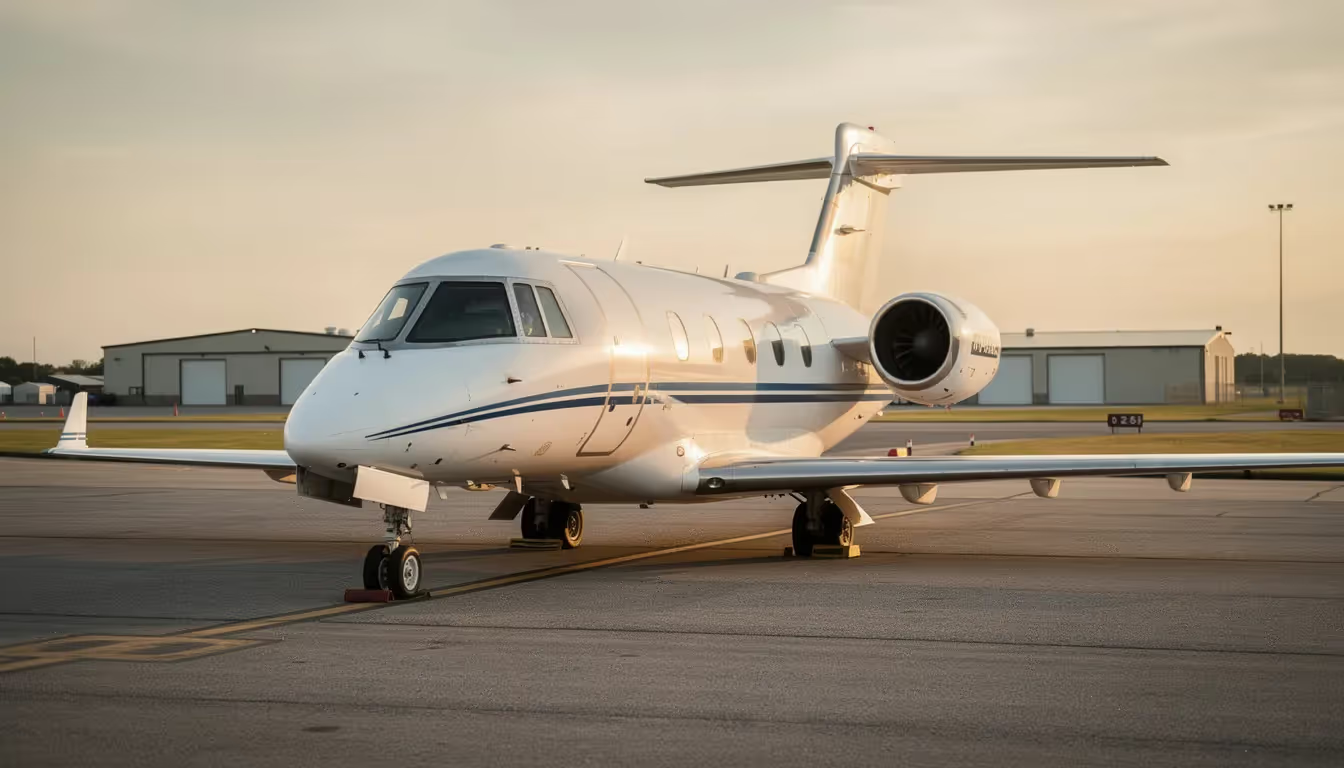
For today’s high-performing executives, fast-scaling entrepreneurs, and discerning global travelers, private jet access is no longer reserved for the ultra-elite—it’s a strategic asset.
The private jet market has rapidly evolved, making private aviation more accessible than ever before. From very light jets (VLJs) to pre-owned aircraft and fractional ownership, affordable private aviation options now exist—without compromising the core advantages: time saved, stress avoided, and destinations unlocked.
As more travelers recognize the high cost of wasted time on commercial routes, demand for efficient, flexible, and increasingly affordable private options has surged. This surge is largely driven by market demand, which influences both the availability and pricing of entry-level jets. As of July 2024, the total number of private jets in operation worldwide is approximately 24,270.
So, what is the cheapest private jet—and does “cheapest” mean giving up the BlackJet-standard experience? Not necessarily.
Let’s explore.
The Rise of Affordable Private Jets
Private Jet Access, Redefined
Over the past decade, the private aviation landscape has shifted. No longer the exclusive domain of billionaires and celebrities, private jet access is now attainable for a wider spectrum of travelers.
Driven by technology, competition, and innovative models like jet cards and fractional ownership, affordability and access are expanding. Pre-owned models offer an especially affordable way to access private jet travel, with a range of options available to suit different budgets.
Whether flying for business across state lines or escaping to a weekend retreat, cost-conscious ways to experience private aviation exist—without the burden of full ownership. Older models of private jets can depreciate to below $2 million, making them a viable option for budget-conscious buyers.
What Are Very Light Jets (VLJs)?
Entry-Level Luxury Without Compromise
If you’re asking, “What’s the cheapest private jet?”—the answer likely starts here.
Very Light Jets (VLJs) are the most budget-friendly jets on the market, designed for efficiency and affordability. Compact and efficient, these aircraft typically seat 2–5 passengers and are ideal for regional flights under approximately 1,200 nautical miles. Their appeal lies in low acquisition cost, reduced operating expenses, and runway flexibility, allowing access to thousands of smaller airports.
One standout model? The Cirrus Vision Jet SF50.
Price Range: $1.85 million to $3.6 million, depending on condition and year
Cabin: Spacious for its class, seats up to 5
Range: ~1,200 nautical miles
Highlights: Advanced avionics, single-pilot operation, parachute safety system, excellent fuel efficiency
The Cirrus Vision Jet is often cited as one of the most affordable private jets available, combining advanced technology with low fuel burn and a spacious cabin for its category.
Other notable VLJs include the HondaJet HA-420, a high-performance very light jet typically priced between $3.7 million and $5.9 million, depending on age and configuration. The HondaJet is one of the most well-known VLJs on the market, offering a refined cabin experience and excellent fuel efficiency.
The Embraer Phenom 100 is another popular choice in the very light jet category. Known for its reliability and affordability, new models have a purchase price of around $4.5 million, reflecting its premium yet accessible position in the VLJ segment. It offers a greater range and cabin space compared to some VLJs, seating up to 6 passengers comfortably.
The discontinued Cessna Citation Mustang remains notable as an affordable light jet option on the used market, typically priced between $1.5 million and $2.7 million. It is known for its affordability without compromising performance, making it a favorite among budget-conscious buyers seeking light jets.
Turboprops: The Most Economical Option for Shorter Flights
Turboprop planes, often overlooked in the private jet conversation, are frequently the most economical option for private travel, especially on short trips. Used turboprop planes from the 1960s and 1970s can sell for as little as $50,000, making them an accessible entry point for private aviation enthusiasts.
These smaller aircraft offer excellent fuel efficiency and the ability to operate from shorter runways, increasing access to regional airports. Models like the Beechcraft King Air 100 Turbo are popular choices for those seeking cost-effective, reliable turboprop options.
Light Jets and Midsize Alternatives
Versatility Without Heavy Costs
Looking for a step up from VLJs? Light jets and midsize jets offer more cabin space, longer maximum range, and enhanced comfort—without the high costs of large-cabin aircraft.
Popular light jets include:
Cessna Citation Mustang (used): ~$1.5M–$2.7M, range ~1,150 miles, ideal for 2–4 passengers
HondaJet Elite: $2 million to $6 million depending on age and configuration, range ~1,400 miles
Embraer Phenom 100: New at ~$4.5M, range ~1,178 miles, premium VLJ with proven reliability
Cessna Citation XLS+ (Midsize): $10–13M new, range ~2,100 miles, cabin for 6–8 passengers
These aircraft strike a balance between luxury and economic value, making them favored choices for executives, startup founders, and families who want flexibility without the footprint of a large jet.
Understanding the True Cost of Private Jet Ownership

When considering what's the cheapest private jet, it's important to look beyond just the initial purchase price. Owning a private jet offers unmatched freedom, comfort, and efficiency, but it also comes with significant responsibilities and ongoing costs.
Typical ongoing expenses include:
Fuel (ranging from $300 to $700 per flight hour)
Maintenance (annual costs from $50,000 to $200,000)
Insurance (typically $15,000 to $30,000 annually)
Hangar fees ($1,000 to $3,000 per month)
Pilot and crew salaries ($60,000 to $200,000 per year)
Other expenses, such as catering, landing fees, and miscellaneous operational costs
Understanding both the initial purchase price and these ongoing costs is essential for anyone evaluating the true cost of private jet ownership.
Acquisition Is Just the Beginning
While the purchase price grabs headlines, ownership entails a much broader cost spectrum.
Fixed Costs (Annual):
Variable Costs (Per Flight Hour):
Estimated Operating Costs:
VLJ: ~$500–$1,000 per hour
Light Jet: ~$1,000–$2,000 per hour
Midsize Jet: ~$2,000–$3,500 per hour
Many of these costs are calculated based on flight hours, which directly impact overall expenses and operational planning. Annual operating costs for a midsize jet can total hundreds of thousands of dollars.
Even at the entry level, true affordability means thinking beyond the sticker price.
Hidden Fees: What to Watch Out For
When exploring private jet ownership or booking a private jet charter, it’s crucial to look beyond the headline price and consider the hidden fees that can impact your total cost. Common hidden fees include:
Landing fees ($150 to $500 per visit, depending on airport)
Hangar fees (varying by region and aircraft size)
Fuel surcharges (fluctuate with fuel prices)
Crew overnight charges for multi-day trips
Repositioning fees if your jet needs to be moved to your departure airport
Being aware of all associated costs ensures a smoother, more predictable private aviation experience.
Private Jet Rental Costs and Chartering Options
Chartering is the most cost-effective way to fly privately without bearing long-term maintenance or crew costs. Renting via on-demand charter for turboprops and Very Light Jets (VLJs) offers flexibility with hourly charter rates starting from approximately $2,000 to $4,000.
VJLs and turboprops are the most economical options for on-demand charter, costing between $1,800 and $3,500 per flight hour.
Chartering a small private jet typically costs between $2,000 and $6,000 per hour.
Midsize or Super Midsize Jets cost between $4,000 and $8,000 per hour.
Large and Ultra Long Range Jets typically cost between $8,000 and $14,000 per hour within the US.
Billable flight time includes positioning time, airborne time, and a standard two-hour per day minimum charge.
Additional costs such as Federal Excise Tax (7.5% on US domestic flight legs), repositioning, crew overnights, handling, and taxes may apply when renting a private jet.
Empty Leg Flights: The Hidden Gem
Empty leg flights—return trips or repositioning legs flown without passengers—are often sold at a steep discount (up to 75% off standard charter rates). While schedules are fixed and destinations limited, for those with flexible timing, this is one of the most cost-effective ways to fly private.
Empty leg flights can reduce costs to roughly $1,000–$2,000 for the entire aircraft on specific routes, offering luxury travel at a fraction of the usual price.
Planning a Private Jet Trip: Tips for First-Timers
If you’re new to private jet travel, planning your first trip can feel overwhelming—but with the right approach, it’s a seamless and rewarding experience. Start by working with a reputable private jet charter or private jet rental company that offers a range of economical private jets and affordable aircraft options. Consider your flight duration, passenger capacity, and desired cabin size to select the best jet for your needs, whether it’s a light jet for short regional flights or a midsize jet for longer journeys.
For frequent flyers and private aviation enthusiasts, exploring empty leg flights can unlock significant cost savings. Don’t hesitate to ask your jet charter provider about available deals or flexible scheduling options. By understanding your options and planning ahead, first-time jet owners can experience the comfort, convenience, and exclusivity of private aviation—without the hefty price tag.
FAQs About the Cheapest Private Jets
What is the cheapest private jet to buy?
The Cirrus Vision Jet SF50 is among the most affordable new private jets, priced from $1.85 million to $3.6 million depending on condition and year. Pre-owned VLJs and light jets like the Cessna Citation Mustang are available for approximately $1.5 million to $2.7 million.
Are empty leg flights worth it?
Yes—if your schedule is flexible. They can offer 50–75% discounts on luxury flights with minimal trade-offs.
What’s cheaper: jet card or charter?
Jet Cards are more economical for frequent flyers. Charter is best for infrequent or last-minute needs. Ownership becomes cost-effective at 200+ hours per year.
What’s the cheapest way to fly private?
A combination of empty leg flights, Jet Cards, and shared chartering can dramatically lower the cost per flight.
Can I own a private jet under $2M?
Yes, especially pre-owned VLJs or light jets. Just be mindful of ongoing operating and maintenance costs.
A Strategic, Smart Way to Fly
The world of private aviation is evolving—and affordability no longer excludes excellence. Whether you’re seeking the efficiency of a VLJ, the flexibility of a Jet Card, or the opportunity of an empty leg flight, there’s a private jet solution for nearly every serious traveler.
BlackJet’s mission is to make this access seamless, safe, and sustainable—whether you’re chartering your first flight or logging your hundredth.
Discover Smarter Private Jet Access
Explore how BlackJet’s Jet Card program delivers strategic flexibility, concierge service, and carbon-neutral flights—without compromising exclusivity.
Discover Jet Card Options


 Sign up with google
 Sign up with Apple