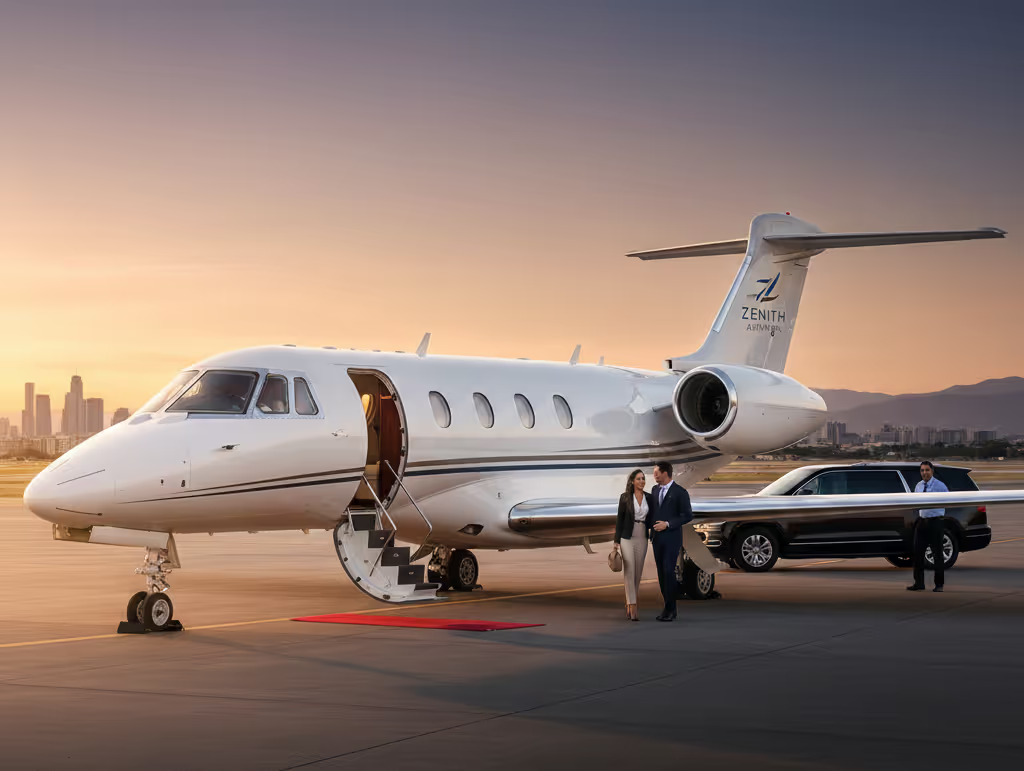
A 15-million-dollar private jet represents far more than a luxury purchase. For the high-net-worth executive, entrepreneur, or family office, it functions as a strategic asset—one with an estimated value that can deliver 4-6 hours of time savings on a single transcontinental flight by bypassing crowded terminals, eliminating layovers, and accessing thousands of airports that commercial carriers simply cannot reach.
Consider the math: a New York-based executive flying commercially to London, even in first class, spends 10+ hours door-to-door, including security queues, boarding procedures, and ground transportation at both ends. That same journey in a properly equipped private plane? Under 7 hours, with the ability to work, rest, or conduct confidential meetings throughout. Over a decade of frequent travel, those hours compound into weeks—perhaps months—of reclaimed productivity.
At the 15 million mark, you enter a segment of the market that balances performance, comfort, and efficiency without the stratospheric costs of ultra-long-range heavy jets. This price point opens the door to brand-new light and super-light jets from world-class manufacturers, or to young pre-owned mid-size aircraft with thousands of flight hours remaining. Buyers typically find high-performance light jets or versatile midsize jets designed for regional travel, offering a blend of speed, range, and cabin comfort suited to a variety of mission profiles.
The way these jets are designed allows them to meet the needs of discerning clients, offering a lot of space, customizable interiors, and advanced features. Customization of a private jet’s interior could include high-end finishes like wood veneers and premium fabrics, and luxury private jets often feature interiors that can include lounges, dining rooms, and bedrooms. The cabin environment is designed to be whisper-quiet and tranquil, providing a serene atmosphere for work or relaxation.
The choice between these options—and whether outright ownership makes sense versus accessing similar aircraft through a Jet Card—depends entirely on your mission profile, annual flying hours, and appetite for capital deployment.
Buyers should seek information, including legal, tax, and maintenance considerations, as well as operational costs, resale value, and available support services. The purchase price for a $15 million private jet is only the beginning of ownership costs, which can be substantial. The overall purchasing process involves considering legal, tax, and maintenance concerns.
Key Takeaways
A 15 million dollar private jet typically secures a brand-new light or super light jet (like the Embraer Phenom 300E or Cessna Citation CJ4 Gen2) or an excellent pre-owned mid-size aircraft from manufacturers like Bombardier and Gulfstream.
Beyond acquisition price, safety standards, maintenance programs, and pilot qualifications matter more to long-term value and peace of mind than cabin aesthetics alone.
Be sure to consider all the important things involved in private jet ownership, such as range, payload, and current market conditions, to make an informed decision.
For executives flying under 200-250 hours per year, a premium Jet Card program often delivers the same aircraft quality and experience without tying up capital in a depreciating asset.
Operating costs vary dramatically by aircraft class—from roughly $2,500/hour for efficient light jets to over $5,000/hour for older large cabin aircraft at similar purchase prices.
Sustainability is now built into premium private aviation through carbon offsets and Sustainable Aviation Fuel, enabling travelers to fly carbon-neutral with no additional effort.
It is advisable to work with an expert or broker when purchasing a private jet to ensure you address all key considerations and secure the best value.
What Does $15 Million Actually Buy You in a Private Jet?
Understanding precisely what 15 million dollars secures in today’s market requires separating marketing claims from aircraft-on-the-ramp reality. The private jet industry ranges from single-engine personal aircraft to intercontinental heavy jets priced at over $75 million. Your 15 million falls into a sweet spot that serious buyers should understand thoroughly before making any purchase decision, with the estimated value of jets in this range reflecting both the aircraft's age and level of customization.
In 2025-2026, this budget typically delivers one of two categories:
Brand-New Light or Super Light Jets ($8-$14 million)
Embraer Phenom 300E: Typical price range of $11-$13 million, cruise speed of 465 mph, maximum range of 2,010 nautical miles, and seating for 6-8 passengers.
Cessna Citation CJ4 Gen2: Priced around $13 million, with a cruise speed of 475 mph, maximum range of 2,165 nautical miles, and capacity for 8-10 passengers.
Pilatus PC-24: Costs between $13-$14 million, cruises at 440 mph, has a maximum range of 2,000 nautical miles, and seats 8-10 passengers.
Pre-Owned Mid-Size Jets (3-7 Years Old, $10-$15 million)
Cessna Citation Sovereign+: Typical price range of $10-$14 million, cruise speed of 460 mph, maximum range of 3,000 nautical miles, and seating for 9-12 passengers.
Bombardier Challenger 350: Priced between $12-$16 million, with a cruise speed of 470 mph, maximum range of 3,200 nautical miles, and capacity for 8-10 passengers.
Embraer Legacy 450/500: Available in the $11-$15 million range, cruising at 465 mph, with a maximum range between 2,900 and 3,100 nautical miles, and seating for 8-9 passengers.
For comparison, the Citation Longitude is a larger jet with an estimated cost of around $27 million and a range of up to 3,500 nautical miles, illustrating the price jump for longer-range, newer aircraft.
The factory-new 2025 Phenom 300E typically lists in the $11-$13 million range before options, while a well-equipped Pilatus PC-24 approaches $13-$14 million. The PC-24 stands apart with its ability to access over 20,000 additional unpaved runways worldwide—a capability that opens destinations impossible for most business jets.
Customization is a key part of private jet ownership. Interiors can be tailored to the buyer’s preferences, from bespoke layouts and materials to unique amenities, allowing owners to create a truly personalized flying experience.
It’s important to note that private jets typically lose an estimated 10-15% of their value annually, often losing over half their value within 10 years. This depreciation should be factored into any purchase decision.
Now consider the comparison to commercial travel. A frequent flyer spending $15,000-$25,000 per round-trip in first class (New York to London, for example) and making 20+ international trips annually invests $300,000-$500,000 per year on airfare alone. Over a decade, that approaches or exceeds the cost of aircraft ownership—without the time savings, privacy, or schedule control that private aviation delivers. For high-frequency flyers logging more than 150-200 hours annually, the estimated per-hour cost of ownership may be more favorable than chartering.
For those who fly fewer hours or prefer not to commit capital, similar comfort and aircraft types can be accessed via high-end Jet Card programs, often for a fraction of the capital outlay while maintaining the same cabin experience and safety standards.
Best Types of Private Jets Around $15 Million
The $15 million threshold spans multiple plane categories, each designed for distinct mission profiles. These planes offer a range of features and customization options, with some models having added upgrades like Auto Throttle, Safe Return, and Garmin Auto Radar to enhance safety and performance. Luxury private jets in this price range often come equipped with high-speed Wi-Fi and advanced cabin management systems, ensuring comfort and connectivity. Rather than chasing the longest range or largest cabin your budget can technically afford, the wisest way is to match the plane's capability to your actual travel patterns, ensuring the jet meets your specific needs.
Light and Super Light Jets ($8-$14 Million New)
These aircraft dominate the 15 million dollar segment for good reason. They deliver the performance most business travelers actually need—coast-to-coast US capability, transatlantic with one fuel stop, or seamless European coverage—while operating at 30% lower fuel burn than mid-size alternatives. You get a lot of features and a lot of space for the price, with interiors that can be customized to suit a variety of needs.
Key models include:
Learjet 75 Liberty — Priced at $9.9 million, with a maximum range of 2,080 nautical miles, offering high performance and a comfortable cabin for up to 9 passengers.
Phenom 100EV — Available for $4.95 million, with a range of up to 1,178 nautical miles and modular seating for up to 5 passengers, ideal for short regional trips.
Pilatus PC-12 NGX — Priced at $4.39 million, featuring a maximum range of 1,803 nautical miles and renowned for its versatility and ability to access smaller airports.
Vision SF50 G2 — Around $2.4 million, this single-engine jet offers modular seating for five, blending efficiency with style for personal or small group travel.
Bombardier Learjet 60XR — Known for a maximum cruise speed of 466 knots and a range of 2,450 nautical miles, this jet blends speed and efficiency in a light jet category.
These jets typically seat up to 10 passengers and offer multiple distinct living zones, with luxurious interiors featuring high-end materials, plush seating, and whisper-quiet cabins.
Pre-Owned Mid-Size Jets ($10-$15 Million)
Young pre-owned mid-size jets offer more people stand-up cabin height (approximately 6 feet), larger galleys, and extended range—often reaching 3,000-3,500 nautical miles for routes like Los Angeles to Honolulu or London to Dubai with one technical stop.
Notable models include:
Citation Sovereign — Priced at $18.79 million, with a range of 3,200 nautical miles, this jet offers a spacious cabin and excellent short-field performance.
Bombardier Challenger 350 — With a range of approximately 3,200 nautical miles and cruising speeds around Mach 0.80, this jet is a popular choice for regional and transcontinental flights.
Embraer Legacy 450/500 — Offering ranges between 2,900 and 3,100 nautical miles, these jets provide a balance of comfort, performance, and parts availability.
Praetor 600 — Priced around $21 million, with a range of 4,018 nautical miles, this jet extends the reach of mid-size aircraft into longer missions.
These jets typically accommodate 8-12 passengers and feature multiple living zones, including lounges, dining areas, and private lavatories, delivering the luxury and space expected in this price range.
Larger and Ultra-Long-Range Aircraft (Above $15 Million)
While $15 million is below the entry point for brand-new large cabin jets, older or higher-hour models like the 2000 Falcon 50EX (priced at about $5.45 million after recent upgrades) or older Gulfstream IV/V models can sometimes be found in this range. However, operating costs for these larger, older aircraft tend to be higher.
For perspective, the Gulfstream G550, priced around $62 million, offers a maximum range of 6,750 nautical miles, illustrating the premium for ultra-long-range capabilities.
Luxury Features at the $15 Million Level
A $15 million private jet offers luxury features such as spacious cabins with plush seating, fully equipped galleys, private lavatories, advanced Wi-Fi and entertainment systems, sophisticated cockpit avionics, and interiors finished with premium materials. These aircraft are designed to deliver an exceptional flight experience with comfort, privacy, and style.
Operating Costs of a $15 Million Private Jet
The purchase price of a private jet represents roughly 40-60% of total ownership cost over a 10-year period. Understanding operating expenses before signing any purchase agreement separates sophisticated buyers from those facing unpleasant surprises.
Owning a private jet incurs high ongoing costs, including crew, hangar, maintenance, insurance, and fuel. Annual fixed costs for owning a jet can range from approximately $400,000 to $600,000, while variable costs can be estimated at $2,500 to $4,000 per flight hour.
For a typical owner flying 200-300 hours annually in 2025-2026, costs break into two categories:
Fixed Annual Costs (Regardless of Flying Hours)
Crew Salaries & Benefits: $250,000-$350,000 for light jets; $350,000-$500,000 for mid-size jets; $400,000-$600,000 for older large cabin jets.
Hangar Rental: $30,000-$80,000 for light jets; $50,000-$120,000 for mid-size jets; $80,000-$150,000 for older large cabin jets.
Insurance: $30,000-$50,000 for light jets; $50,000-$80,000 for mid-size jets; $80,000-$150,000 for older large cabin jets.
Recurrent Training: $40,000-$60,000 for light jets; $50,000-$80,000 for mid-size jets; $60,000-$100,000 for older large cabin jets.
Management Fees: $30,000-$60,000 for light jets; $50,000-$100,000 for mid-size jets; $75,000-$150,000 for older large cabin jets.
Total Fixed Costs: Approximately $380,000-$600,000 for light jets; $550,000-$880,000 for mid-size jets; $695,000-$1,150,000 for older large cabin jets.
Variable Costs (Per Flight Hour)
Fuel costs range from $800 to $1,200 per hour for light jets, $1,200 to $1,800 for mid-size jets, and $2,000 to $3,000 for older large cabin aircraft.
Maintenance reserves are estimated at $600 to $900 per hour for light jets, $800 to $1,200 for mid-size jets, and $1,500 to $2,500 for older large cabin jets.
Landing and handling fees typically range from $150 to $300 per hour for light jets, $200 to $400 for mid-size jets, and $300 to $600 for older large cabin jets.
Catering and miscellaneous expenses fall between $100 and $200 per hour for light jets, $150 to $300 for mid-size jets, and $200 to $400 for older large cabin jets.
The total hourly operating cost is approximately $1,650 to $2,600 for light jets, $2,350 to $3,700 for mid-size jets, and $4,000 to $6,500 for older large cabin aircraft.
All-In Hourly Cost Estimates (at 250 hours/year):
Modern light jet (Phenom 300E): approximately $2,500-$3,000/hour
Mid-size jet (Challenger 350): approximately $3,500-$4,500/hour
Older large cabin (Gulfstream V): approximately $5,000-$7,000+/hour
Engine and Airframe Maintenance Programs
Enrollment in programs like Rolls-Royce CorporateCare, JSSI, or MSP (for applicable engines) helps stabilize costs and protect asset value on resale. These programs spread major inspection costs across monthly payments, avoiding six-figure surprise invoices when hot section inspections or overhauls come due.
The Jet Card Alternative
For many high-net-worth individuals flying under 200 hours per year, a premium Jet Card delivers a similar experience—same aircraft categories, equivalent safety standards, comparable cabin comfort—without the financial and operational burden of outright ownership. Fixed hourly rates, no crew management, hangar negotiations, or maintenance surprises.
Safety, Certification, and Technology at the $15 Million Level
At this investment level, safety, certification, and avionics sophistication should be non-negotiable. A 15 million dollar aircraft represents a significant asset, but its primary purpose is transporting people you care about—yourself, your family, your colleagues—at 500 mph and 45,000 feet. The technology and protocols ensuring safe arrival matter more than any cabin amenity, especially with added features like Auto Throttle, Safe Return, and Garmin Auto Radar that enhance both safety and operational capability.
Modern Safety and Avionics Features (Standard on 2015+ Aircraft)
Aircraft manufactured or upgraded in the past decade typically include:
Enhanced Vision Systems (EVS) — Infrared cameras displaying runway environments in low visibility
Synthetic Vision — Terrain and obstacle awareness rendered on primary flight displays
Head-Up Displays (HUD) — Critical flight data projected at eye level for reduced pilot workload
Advanced Autopilot Functions — Autothrottles, auto-brakes, and envelope protection systems
Modern Flight Decks — Garmin G3000/G5000 suites or manufacturer-specific systems (Gulfstream Symmetry, Bombardier Vision) designed to enhance situational awareness
Operator Standards Matter as Much as Aircraft
When accessing jets through charter or Jet Card programs, the operator’s safety culture and certifications deserve intense scrutiny. Look for:
ARGUS Platinum or Wyvern Wingman ratings (third-party safety audits)
IS-BAO Stage II/III certification (International Standard for Business Aircraft Operations)
Two highly experienced, type-rated pilots on every flight
Rigorous maintenance oversight with electronic tracking (e.g., CAMP systems)
Part 91 vs. Part 135: Understanding the Difference
Regulatory Oversight: Owner/operator responsibility under Part 91 (Private) vs. FAA-audited operations under Part 135 (Commercial)
Pilot Rest Requirements: Owner discretion for Part 91, mandatory duty time limits for Part 135
Maintenance Standards: Owner discretion within airworthiness for Part 91, specified inspection intervals for Part 135
Drug/Alcohol Testing: Not required under Part 91, mandatory random testing under Part 135
Best For: Full ownership and personal use under Part 91; charter, Jet Card, and managed aircraft under Part 135
When flying via Jet Card or charter, you typically access aircraft operating under Part 135 (US) or EASA equivalents—additional compliance frameworks that provide extra layers of oversight.
Connectivity and Technology Expectations
Modern executives expect to remain productive at altitude. In 2025-2026, premium aircraft offer:
High-Speed Wi-Fi — Ku/Ka-band satellite or Starlink-class connectivity on larger jets; Gogo AVANCE systems on smaller aircraft
Secure VPN Capability — Essential for corporate travelers handling sensitive information
Cabin Management Systems — Control lighting, temperature, entertainment, and window shades via personal devices
Sustainability and Carbon Footprint of a $15 Million Private Jet
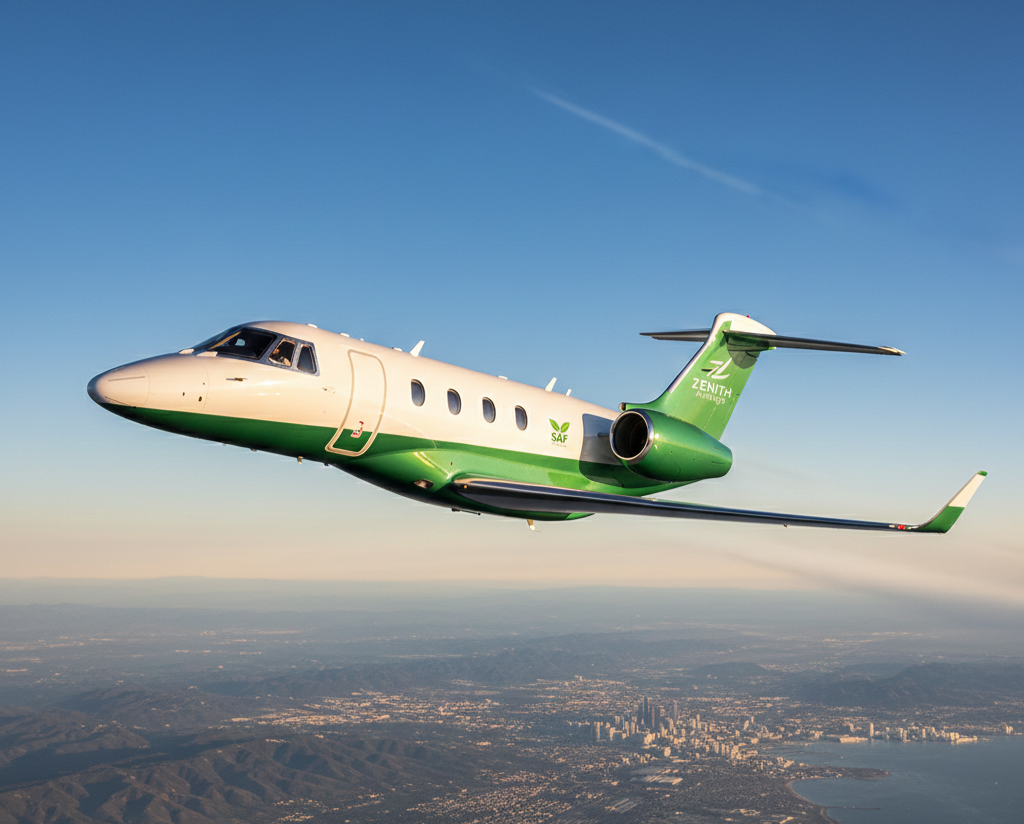
Private aviation’s environmental impact cannot be ignored. A single transatlantic private jet flight produces more carbon per passenger than the average person’s annual car emissions. However, the industry is evolving rapidly, and responsible operators now offer meaningful pathways to reduce or neutralize that footprint.
Newer Aircraft Efficiency Gains
Jets in the 15 million dollar segment often feature next-generation engines and aerodynamic enhancements:
Winglets and Advanced Wing Designs — Reducing drag and fuel consumption by 5-10%
Composite Materials — Lighter airframes requiring less fuel per mile
Modern Engine Technology — The Phenom 300E’s Pratt & Whitney PW535E1 engines, for example, offer superior fuel efficiency compared to previous generations
Overall, a new-production light jet may burn 10-20% less fuel per nautical mile than an equivalent aircraft from 15 years ago.
Sustainable Aviation Fuel (SAF)
SAF represents the most promising near-term solution for reducing aviation’s lifecycle carbon emissions:
What It Is: Fuel produced from sustainable feedstocks (used cooking oils, agricultural waste, synthetic processes) that can reduce lifecycle CO₂ emissions by 50-80%
Current Availability: 30-50% blends available at major hubs, including Van Nuys, Teterboro, London Farnborough, and select European airports
How to Access: Owners and Jet Card members can request SAF for eligible flights, often at a modest premium over conventional jet fuel
Carbon Offset Programs
Premium aviation providers now integrate carbon neutrality directly into their service:
How Offsets Work: Investments in verified climate projects (reforestation, renewable energy, carbon capture) that counterbalance flight emissions
Quality Matters: Look for offsets verified by Gold Standard, Verra VCS, or equivalent certifications
Seamless Integration: BlackJet and similar premium providers build offsetting into every leg automatically—no extra effort, no extra cost to the traveler
For clients accessing jets through curated fleets, this model allows flying on the newest, most efficient aircraft without owning an older, less-efficient jet outright.
Ownership vs Jet Card vs Charter at the $15 Million Mark
The decision to purchase a 15-million-dollar private jet versus accessing equivalent aircraft through alternative models deserves careful analysis. Ownership allows you to tailor the jet’s interiors, layout, and amenities to your exact preferences, ensuring a truly personalized flying experience. It also provides the freedom to design its interiors and employ trusted aircrew. Each approach suits different usage patterns, risk tolerances, and lifestyle preferences.
Full Ownership
Best Suited For: Flyers regularly exceeding 250-300 hours annually who need guaranteed availability, customized interiors, and a dedicated crew.
Advantages:
For a comprehensive overview of the advantages and trends of private jet ownership worldwide, see our in-depth article.
Complete control over aircraft configuration, scheduling, and crew selection
Potential tax benefits depending on structure and use case
Asset on the balance sheet with residual value (though depreciation is real)
No availability concerns during peak travel periods
Considerations:
Ties up significant capital in a depreciating asset
Exposure to market swings, maintenance events, and operational complexity
Requires ongoing management attention or professional oversight
Jet Card Programs (25-50+ Hour Programs)
Best Suited For: Flyers between 50-200 hours annually who value consistent service levels and safety standards without aircraft ownership.
Advantages:
Access to light, mid-size, and large cabin aircraft as missions require
Fixed hourly rates and transparent pricing
No crew management, hangar negotiations, or maintenance surprises
Safety ensured through vetted operators with top-tier certifications
Sustainability integrated (carbon-neutral flights as standard with premium providers)
Considerations:
Hourly rates exceed the marginal operating costs of ownership at high utilization
Less customization of specific aircraft and crew
Some programs require 6 months or more advance purchase of hours
On-Demand Charter
Best Suited For: Occasional flyers, ad-hoc trips, or those testing aircraft sizes before commitment.
Advantages:
No long-term financial commitment
Access to virtually any aircraft class based on availability
Useful for trying different aircraft types and cabin configurations
Considerations:
Pricing fluctuates based on demand, positioning, and market conditions
Availability not guaranteed during peak periods
Service consistency varies between operators
A Practical Comparison
Consider a New York-based executive flying 120 hours annually—primarily London, Chicago, and Miami routes:
Annual Cost (Estimated): $400,000-$500,000+
Capital Required: $11-$13 million
Guaranteed Availability: Yes
Aircraft Customization: Yes
Operational Burden: Significant
For this profile, a premium Jet Card proves more financially efficient while still delivering carbon-neutral, rigorously audited flights with top-tier crews.
A well-designed Jet Card program can also serve as an on-ramp to ownership—providing data on actual usage patterns, preferred aircraft class, and most-traveled routes before committing capital.
How to Choose the Right $15 Million Private Jet
Selecting the right aircraft—or access model—requires honest assessment of your travel patterns rather than aspirational thinking. Here’s a practical framework to guide your decision, with information including range requirements, passenger capacity, onboard amenities, operating costs, maintenance considerations, and current market conditions.
Step 1: Define Your Mission
Before visiting a single aircraft or speaking with a broker, document your actual travel needs:
Primary Routes: Where do you fly most frequently? New York to Miami? London to Dubai? Los Angeles to Honolulu?
Average Passenger Count: Traveling solo, with family, or moving teams of 6-8?
Cabin Requirements: Do you need overnight rest capability? Conference-style seating for working meetings? Simple point-to-point efficiency?
Step 2: Match Range and Airport Access
Your aircraft’s range must accommodate typical stage lengths with appropriate reserves:
Light Jets (1,800-2,200 nm): Excellent for US domestic, intra-Europe, or Caribbean operations
Mid-Size Jets (2,800-3,500 nm): Required for transatlantic, coast-to-coast without stops, or Middle East connections
Large Cabin (4,000+ nm): Necessary for true non-stop intercontinental (New York-London, Los Angeles-Tokyo with stops)
Also consider runway performance. Destinations like Aspen, Teterboro, or smaller Mediterranean islands require aircraft certified for shorter runways and challenging approaches. The Pilatus PC-24 excels here; some mid-size jets do not.
Step 3: Prioritize Cabin Experience
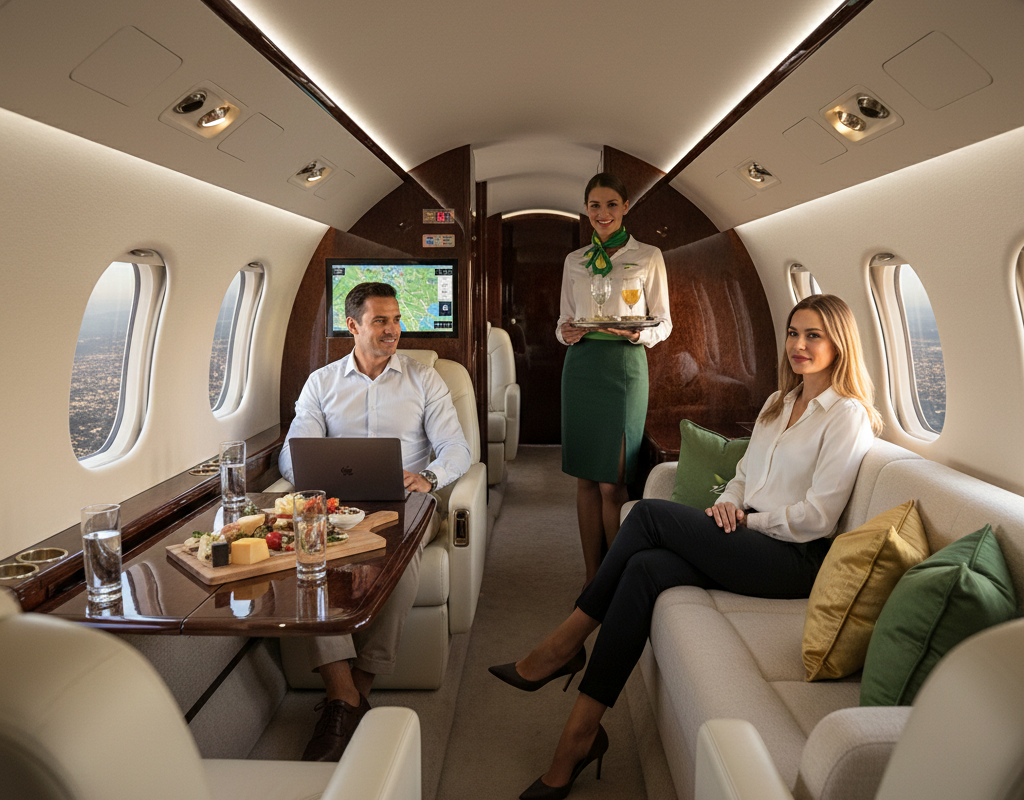
Decide what matters most:
True stand-up cabin height vs. slightly lower headroom
Lie-flat club seating for rest
Full galley capability for gourmet catering
High-speed Wi-Fi and connectivity for productivity
Quiet cabin zones for focused work or sleep
Step 4: Verify Safety and Operator Standards
Whether buying or accessing aircraft through a Jet Card:
Prioritize aircraft with current-generation avionics and safety systems
Ensure that any operator uses ARGUS Platinum or Wyvern Wingman-rated companies
Verify meticulous maintenance tracking through systems like CAMP
Confirm two qualified, type-rated pilots on every flight
Step 5: Structure the Financial Decision
Work with aviation-specialized advisors to compare:
Outright purchase vs. co-ownership arrangements
Premium Jet Card solutions (often more cost-effective below 250 hours/year)
Proper ownership entities (LLCs, trusts) for liability and tax optimization
Financing options and their impact on the total cost of ownership
BlackJet-Style Premium Access: An Alternative to Buying a $15 Million Jet
For many discerning travelers, the goal isn’t aircraft ownership itself—it’s the experience that ownership provides: time savings, privacy, safety, and seamless travel tailored to your schedule. A curated Jet Card program delivers value in a way that often surpasses traditional ownership, offering flexibility and convenience that meet the unique needs of each client.
What Premium Jet Card Access Provides
Guaranteed Access to light, mid-size, and large cabin jets—aircraft that typically cost $8-$60 million when purchased new
Transparent Hourly Rates locked in for 12+ months, with no peak-day surcharges or repositioning fees
Hub Coverage in key markets: New York, London, Los Angeles, Dubai, Miami, and beyond
Seamless Booking through digital platforms with real-time availability
Integrated Pillars: Safety, Sustainability, Technology
The best Jet Card programs build non-negotiables into every flight:
Safety: Flights only on operators with top-tier certifications and proven safety records
Sustainability: Every flight is carbon-neutral through verified offsets and/or SAF, managed automatically at no extra cost
Technology: Modern booking platforms, real-time trip management, and in-flight connectivity standards matching owned aircraft
A Practical Example
A global executive based in New York uses a 25+ hour Jet Card to fly:
New York to London (mid-size jet, lie-flat seating, 7-hour productive journey)
New York to Chicago (light jet, quick 2-hour hop between meetings)
New York to Miami (light jet, family weekend trip with 6 passengers)
Each mission flies on the aircraft class optimized for that specific trip—without ever dealing with crew scheduling, hangar logistics, or maintenance coordination. Total annual cost: a fraction of ownership, with equivalent experience.
Elevate your travel—effortlessly. With premium jet access, private flight isn’t reserved for those willing to tie up $15 million in a depreciating asset. It’s accessible on your terms through Jet Card programs that deliver rigorous safety, carbon-neutral performance, and unmatched flexibility. Explore how refined, meaningful travel becomes your new standard.
FAQs About 15 Million Dollar Private Jets
Is $15 million enough to buy a brand-new private jet in 2025-2026?
Yes—$15 million comfortably covers most new light and super light jets, including popular models like the Embraer Phenom 300E ($11-$13 million), Cessna Citation CJ4 Gen2 ($13 million), and Pilatus PC-24 ($13-$14 million). Depending on options and configuration, some entry-level mid-size jets may also fit. However, ultra-long-range and large cabin jets at this price will almost always be pre-owned and typically 10+ years old.
How many hours per year justify owning a $15 million jet instead of using a Jet Card?
The common industry threshold sits around 250-300 hours annually. Below this level, fixed costs (crew, hangar, insurance, management) spread across fewer flight hours, making per-hour economics unfavorable compared to Jet Card alternatives. However, variables like preferred aircraft size, international flying requirements, need for cabin customization, and branding considerations can shift this threshold in either direction.
What is the typical lifespan of a $15 million private jet?
Well-maintained business jets can economically operate for 25- 30+ years and accumulate many thousands of flight hours. Major inspections, avionics upgrades, and engine overhauls extend useful life considerably. Cabin refurbishments are typically performed every 7-10 years to maintain comfort standards and protect resale value.
How long does it take to close on a $15 million jet purchase?
Expect 45-90 days to complete the process, including pre-purchase inspection, technical review, legal due diligence, financing arrangements, and aircraft registration. Complex international transactions or significant maintenance findings can extend this timeline. By comparison, initiating flights via charter or Jet Card can happen within hours to days.
Can I make my $15 million private jet carbon neutral?
Absolutely. By utilizing Sustainable Aviation Fuel where available (increasingly common at major FBOs), purchasing high-quality verified carbon offsets, or working with providers who integrate sustainability into every flight automatically, owners and Jet Card members can effectively neutralize flight emissions. Premium programs like those offered by leading Jet Card providers build carbon neutrality into every leg by default—at no additional cost or effort to the traveler.
Conclusion
Investing in a 15-million-dollar private jet offers a unique blend of luxury, performance, and operational flexibility tailored to the discerning traveler. Whether opting for a brand-new light jet or a well-maintained pre-owned mid-size aircraft, buyers gain unparalleled freedom to fly on their own schedule, access a wide range of airports, and enjoy a personalized cabin experience. However, owning such an aircraft also entails high ongoing costs and operational responsibilities that require careful consideration.
For many, alternative options like premium Jet Card programs provide comparable comfort, safety, and access without the capital commitment and complexities of ownership. Ultimately, the right choice depends on your travel needs, flight hours, and lifestyle preferences.
By thoroughly assessing your mission profile, prioritizing safety and technology, and working with experienced aviation professionals, you can make an informed decision that maximizes the benefits of private aviation while aligning with your financial and operational goals. Whether flying aboard your own 15-million-dollar private jet or accessing one through a curated program, the freedom to travel efficiently and comfortably remains the ultimate reward.


 Sign up with google
 Sign up with Apple