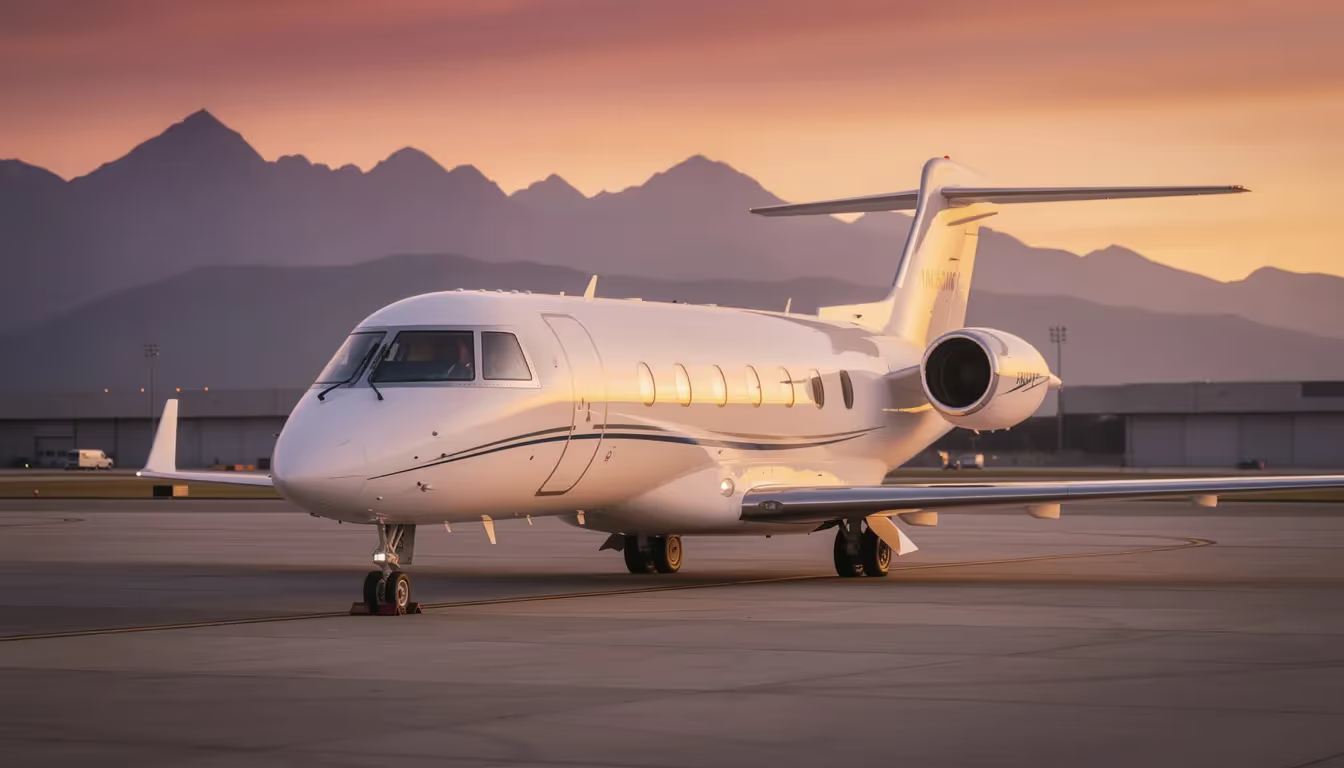
Luxury travel has reached new heights in recent years, with the private jet market experiencing unprecedented growth as more individuals and companies seek the ultimate in comfort, flexibility, and prestige. The appeal of stepping aboard a private jet—skipping crowded terminals, customizing your schedule, and enjoying a spacious cabin tailored to your needs—has made private aviation the gold standard for discerning travelers around the world.
For those considering the leap into fractional jet ownership, the market offers a dazzling array of options. Aircraft range from nimble light jets perfect for quick regional hops to intercontinental models that can connect global capitals nonstop. The price spectrum is equally broad, but the $20 million mark represents a sweet spot where luxury, performance, and value converge. At this level, buyers can expect not only a world-class jet but also a host of amenities and features that redefine what it means to fly in style.
Investing in a $20 million private jet is about more than just the aircraft itself—it’s about gaining access to a lifestyle where time, privacy, and peace of mind are paramount. Whether you’re searching for a jet with extended range, advanced technology, or a brand that commands respect in the industry, understanding the market and the true cost of ownership is essential. In this article, we’ll take you closer to the world of private jets, exploring the different models available, the benefits of ownership, and the key things to consider when buying an aircraft in this elite segment.
Key Takeaways
A 20 million dollar private jet in 2026 typically buys a brand-new top-tier light or midsize aircraft (Embraer Phenom 300E, Pilatus PC-24) or a well-maintained pre-owned large-cabin jet (Gulfstream G550, Challenger 605) with ranges from 1,800 to 6,000+ nautical miles.
At this price point, expect concrete performance: cruise speeds up to Mach 0.90, seating for 6–14 passengers, and the ability to fly New York to London direct—saving 5–10 hours compared to commercial first class when you account for security lines, connections, and ground time.
Safety and certification are foundational, not optional: Part 91 vs. Part 135 operations, enrollment in maintenance programs like Rolls-Royce CorporateCare or JSSI, and modern avionics with synthetic vision systems that reduce pilot workload and enhance reliability.
Acquisition represents less than half the lifetime cost—annual operating expenses for a large-cabin jet can run $4–6 million when you factor crew salaries, hangar fees, insurance, fuel, and maintenance reserves.
For travelers flying fewer than 200–300 hours annually, a premium jet card or charter program often delivers similar large-cabin access with less capital lock-up, built-in safety vetting, and carbon-neutral performance at no extra cost.
What Does a $20 Million Private Jet Actually Buy in 2026?
Consider the New York to London route. Flying commercial first class, even on the best carriers, means arriving at JFK two hours early, navigating security and lounges, enduring a 7-hour flight, then clearing customs at Heathrow before finally reaching your hotel. Door-to-door: 12–14 hours on a good day.
Now consider the same trip in a $20 million private jet. You arrive at a private terminal 15 minutes before departure, board immediately, fly direct at 51,000 feet while holding strategy sessions with your team, and clear customs through a dedicated facility. Door-to-door: 8–9 hours. That’s not just luxury—it’s a strategic asset that protects your most valuable resource: time.
In 2026, a $20M budget opens three distinct doors in the market:
Brand-new best-in-class light or super-light jet: The 2025+ Embraer Phenom 300E or Pilatus PC-24, offering 6–9 passenger layouts, ~2,000 NM range, and the ability to access airports that larger aircraft simply cannot reach.
Late-model midsize jet: A 2022 Citation Latitude or Challenger 350 with stand-up cabins, 2,700–3,200 NM range, and configurations optimized for transcontinental productivity.
Well-maintained pre-owned large-cabin aircraft: A 2010–2014 Gulfstream G550 or 2008 Bombardier Challenger 605 with intercontinental range (4,000–6,000+ NM) and 12–16 passenger capacity.
Published asking prices rarely tell the full story. Depending on aircraft condition, avionics upgrades, and cabin refurbishment status, a full “out-the-door” budget typically runs 10–15% higher than the initial price once taxes, import duties, and customization are factored in. This is information, including the reality of the industry—transparency matters when buying assets of this magnitude.
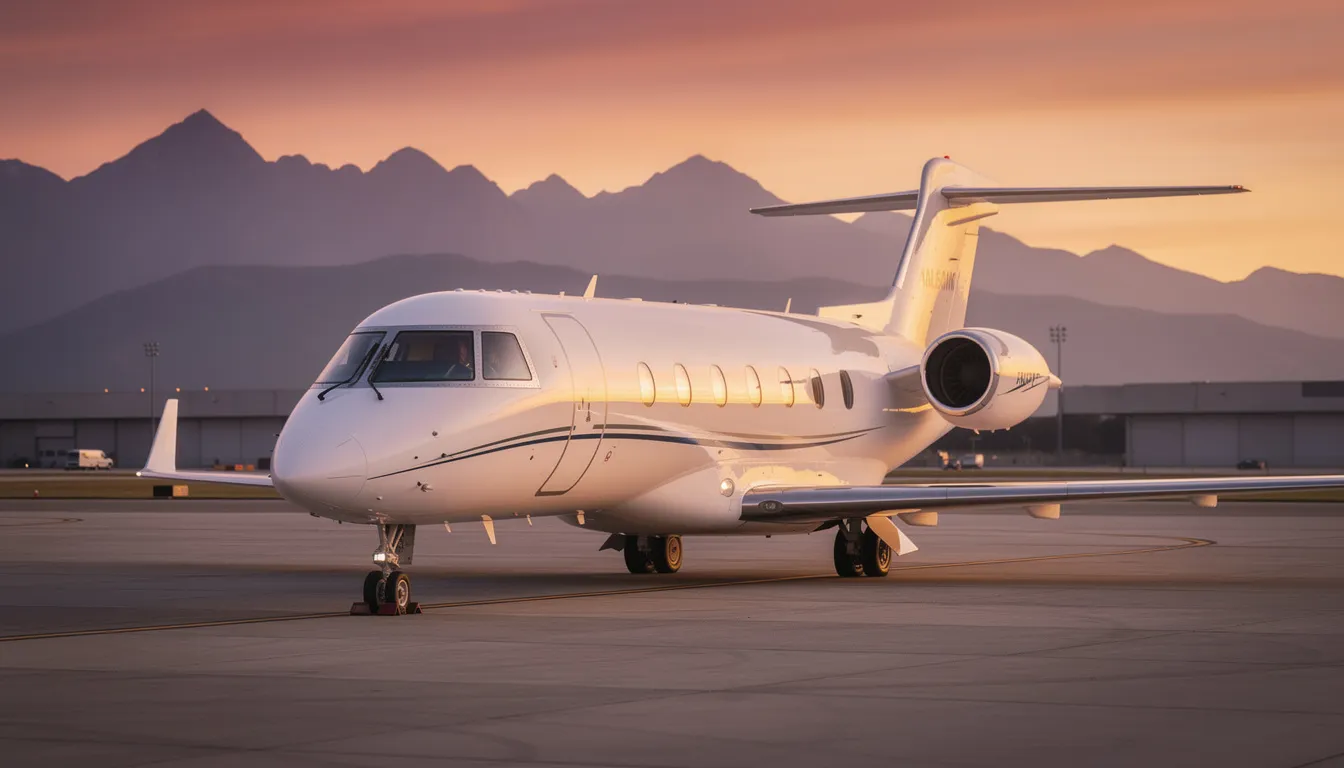
Types of 20 Million Dollar Private Jets: Light, Mid, and Large Cabin
Cabin class drives experience. The same $20 million buys vastly different capabilities depending on whether you prioritize efficiency for frequent domestic hops or true intercontinental reach with separate living zones.
Light & Super-Light Jets (New Around or Below $20M)
2025 Embraer Phenom 300E: 6–9 passenger layout, ~1,971 NM range, Mach 0.80 cruise speed, best-selling light jet in its class with a forward galley and full lavatory
2025 Pilatus PC-24: 6–8 passengers, ~2,000 NM range, Swiss precision engineering with rough-field capability (grass, gravel, short runways under 3,000 feet)
2024 Cessna Citation CJ4 Gen2: 7–9 passengers, ~2,165 NM range, added Garmin G3000 avionics suite enhances the aircraft's capabilities, ideal for owner-operators
These aircraft excel at accessing smaller airports—the ones 15 minutes from your actual destination rather than major hubs an hour away.
Mid-Size & Super-Mid Jets (High-Spec Pre-Owned at $20M)
2020–2022 Citation Latitude: 8–9 passengers, ~2,700 NM range, flat-floor cabin with 6-foot headroom, Garmin G5000 flight deck
2018–2021 Challenger 350: 8–10 passengers, ~3,200 NM range, stand-up cabin, transcontinental capability
2019 Embraer Praetor 500: 8–9 passengers, ~3,340 NM range, fly-by-wire controls, hourly operating costs around $1,900
The sound of a spacious cabin with a flat floor and stand-up headroom transforms a 4-hour flight from endurance test to productive work session.
Large-Cabin Jets (Pre-Owned at $20M)
2010–2014 Gulfstream G550: 12–16 passengers, ~6,750 NM range, Mach 0.85 cruise, the pinnacle of large-cabin versatility
2008–2012 Bombardier Challenger 605: 10–12 passengers, ~4,000 NM range, wide-body comfort for transatlantic routes
2005–2012 Dassault Falcon 900LX: 12–14 passengers, ~4,750 NM range, tri-engine reliability for challenging approaches
Mission Profile Comparison
U.S. domestic shuttle (NY–LA, CHI–MIA): Light or midsize jets offer optimal efficiency with 2,000–2,500 NM range
New York to London: Large-cabin jets like the G550 fly direct at 3,400 NM; midsize options may require a tech stop
Dubai to London: The 2,900 NM route suits super-midsize or large-cabin aircraft, depending on passenger count and payload requirements
Real-World $20M Jet Examples and Use Cases
Here is what a $20M decision looks like in 2026 for real buyers—not theoretical specifications, but actual aircraft solving specific travel problems.
Example 1: New Pilatus PC-24 (2025 Build)
Configuration: 6–8 passenger executive interior with Swiss craftsmanship, full stand-up cabin, enclosed lavatory
Performance: ~2,000 NM range, Mach 0.74 cruise, ability to operate from grass, gravel, and short runways
Use Case: A European family based in Zurich flying Zurich–Ibiza–Mykonos direct throughout the summer. The PC-24’s rough-field capability means landing at secondary airports closer to vacation homes rather than congested commercial hubs. December through March, the same aircraft handles ski trips to St. Moritz and Courchevel with ease.
Why It Works: Access to 21,000+ airports worldwide versus ~500 for commercial carriers
Example 2: 2014 Gulfstream G550 (Pre-Owned)
Configuration: 14–16 passenger layout with forward galley, private stateroom, full lavatory with shower capability
Performance: ~6,750 NM range, Mach 0.85 cruise, Rolls-Royce CorporateCare enrollment, Starlink Ka-band internet
Use Case: A multinational CEO flying New York–Geneva nonstop for board meetings, continuing to Dubai for regional operations, then returning to New York—all within a single week without commercial connections. The aircraft becomes a mobile office with an encrypted VPN for secure communications.
Why It Works: One aircraft handles intercontinental missions that would require three commercial itineraries and two hotel stays
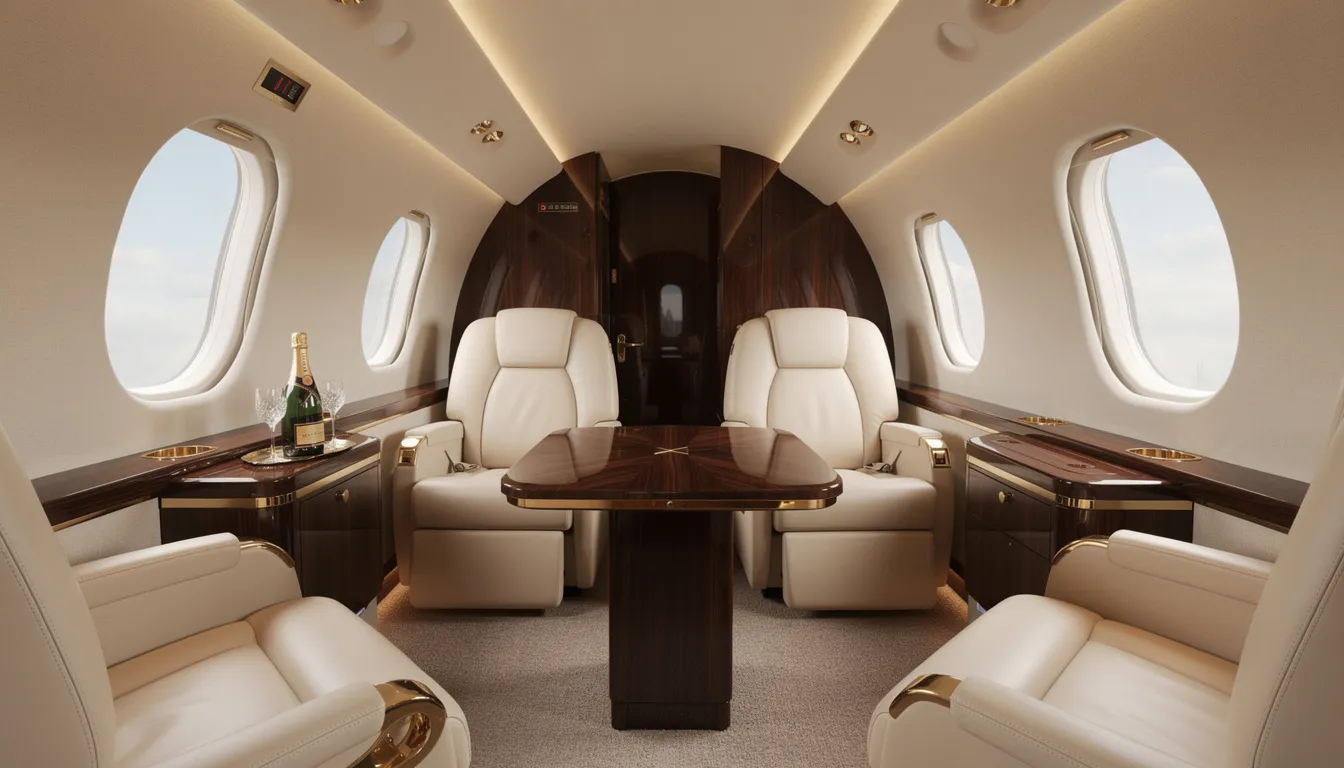
Example 3: 2008 Bombardier Challenger 605 (Pre-Owned)
Configuration: 10–12 passengers, conference seating for 6, dedicated crew rest area, Gogo L5 Wi-Fi
Performance: ~4,000 NM range, wide-body cabin, Mach 0.82 cruise
Use Case: A regional private equity firm running North America–South America routes—Miami to São Paulo, New York to Buenos Aires—for portfolio company visits. The wide cabin allows deal teams to work together en route, while the range eliminates fuel stops. For organizations considering this model, it's worth learning about the tax benefits of fractional jet ownership.
Why It Works: A 3-day commercial trip (with connections in Panama City and overnight stays) becomes a continuous 10–12-hour private itinerary with the team arriving rested and prepared
The Time Equation
Please try to calculate the true value of a $20M jet against commercial alternatives. For a 100-flight annual schedule, private aviation saves 400+ hours—equivalent to 50 full workdays. At executive productivity valuations of $500/hour, that translates to $200,000 in recaptured capacity annually.
Performance, Cabin Comfort, and Technology at the $20M Level
At this investment level, owners expect Gulfstream-style performance, a quiet cabin that enables productive work or genuine rest, and flight-deck technology that rivals new commercial airliners. The $20 million segment delivers on all three.
Performance Specifications
Cruise Speed: Mach 0.78–0.90, depending on aircraft class (large-cabin jets like the G550 cruise at Mach 0.85, saving 1–2 hours on routes like Los Angeles–New York compared to slower aircraft)
Range: 1,800 NM for light jets to 6,750+ NM for large-cabin aircraft—the difference between a fuel stop in Greenland and flying New York to Dubai direct
Service Ceiling: 45,000–51,000 feet, above commercial traffic and weather, enabling smoother flights and optimized routing
Takeoff Performance: Light jets like the PC-24 require under 3,000 feet of runway; large-cabin jets typically need 5,000–6,000 feet
Cabin Comfort
Pressurization: Cabin altitudes of 4,000–6,000 feet at 41,000+ feet cruise versus 8,000 feet on commercial aircraft—reducing hypoxia, jet lag, and fatigue by 20% or more
Noise Levels: Modern sound-dampening technology creates cabin environments quiet enough for conference calls at cruise altitude
Seating: Lie-flat divans or dedicated bedrooms in large-cabin jets; flat floors and stand-up headroom in midsize options
Climate Control: Individual zone controls, humidity management systems, and circadian-rhythm lighting in premium configurations
Technology
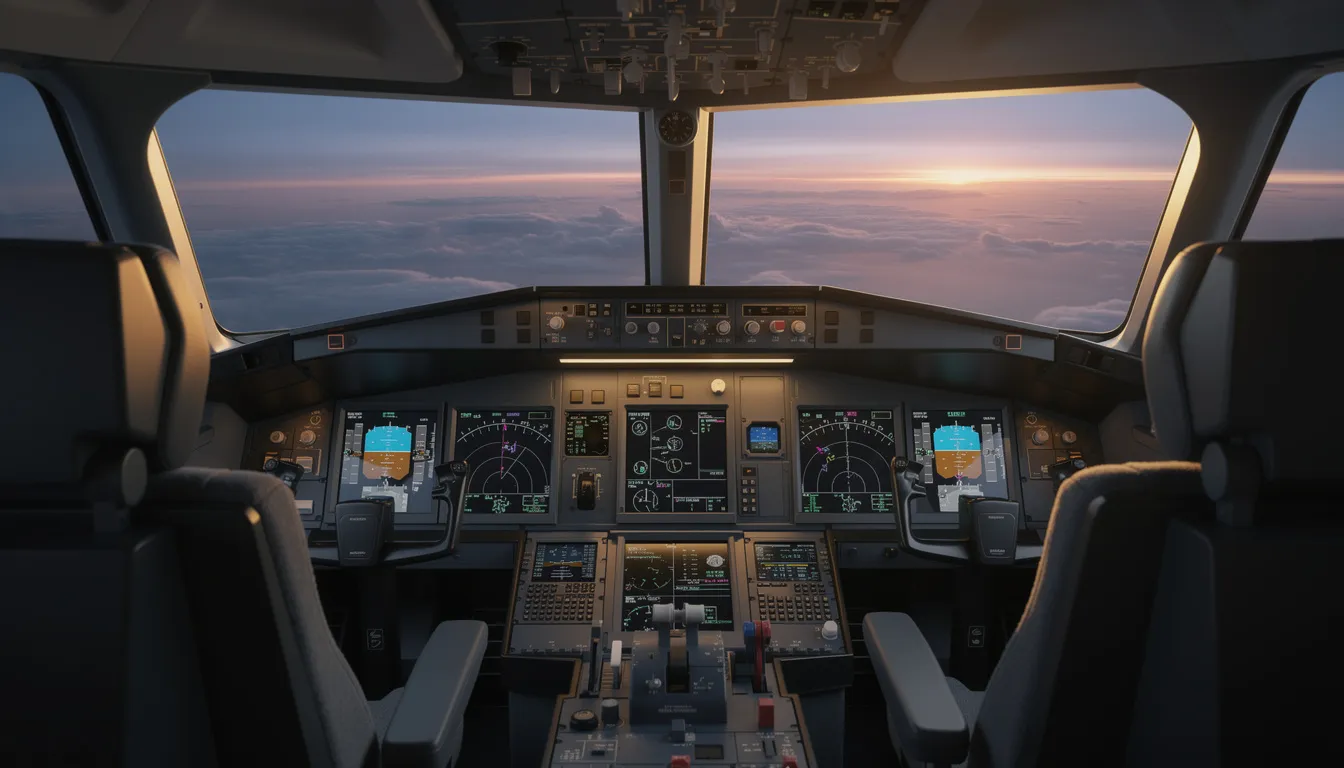
Avionics Suites: Gulfstream Symmetry Flight Deck, Bombardier Vision, Collins Pro Line Fusion, or Garmin G5000, depending on model and upgrade status
Vision Systems: Enhanced Vision Systems (EVS) and Synthetic Vision Systems (SVS) reduce runway excursions by 50% in low visibility conditions
Connectivity: Ka-band Starlink or ViaSat offering speeds comparable to home broadband—enough for video conferences, cloud-based work, and real-time market access
Safety Features: Dual HUDs, predictive landing performance systems, advanced autothrottles, and, in some newer models, emergency autoland capabilities
Crew & Productivity
The world’s most productive executives treat flight time as an extension of the office. A $20M jet typically offers:
Dedicated workspaces with conference table seating for 4–6
4G/Ka-band Wi-Fi with 20+ Mbps download speeds
Encrypted VPN compatibility for secure communications
Like video conferencing capabilities rivaling ground-based systems
Power outlets at every seat position
Safety, Certification, and Maintenance for a 20 Million Dollar Jet
Safety and regulatory compliance are foundational at this level of ownership—not options to consider, but requirements that protect your investment, your passengers, and your peace of mind.
Certification and Operations
FAA/EASA Type Certification: Every aircraft in this segment carries full type certification with documented airworthiness
Part 91 Operations: Private, non-commercial use with owner oversight of maintenance and crew
Part 135 Operations: Commercial charter certification requiring enhanced maintenance tracking, crew training standards, and operational oversight—many owners maintain Part 135 capability to generate charter revenue when not using the aircraft
International Operations: RVSM certification for high-altitude flight, ETOPS for extended overwater operations, FANS/CPDLC for oceanic routing
Maintenance Programs
Rolls-Royce CorporateCare (RRCC): Engine coverage by the hour, smoothing cash flow and protecting against major repair events
JSSI Engine/APU Programs: Third-party hourly coverage for engines and auxiliary power units across brands
Manufacturer Programs: Bombardier Smart Parts, Gulfstream FAST, Embraer Executive Care—brand-specific coverage that enhances resale value
Budget Impact: Proper program enrollment adds predictability ($500–$1,000/hour reserves) while protecting against six-figure unplanned events
Avionics and Safety Enhancements
ADS-B Out: Required for all U.S. operations since 2020
FANS/CPDLC: Data-link communication for oceanic routes, reducing voice relay delays
Combined Vision Systems: EVS and SVS overlays providing terrain awareness and approach guidance in challenging conditions
Safe Return Autoland: Available on newer models, enabling the aircraft to land itself in pilot incapacitation scenarios
Operator Standards
For those considering managed ownership or jet card access, third-party auditing matters:
IS-BAO Stage 3: International Standard for Business Aircraft Operations
ARGUS Platinum/Gold: Third-party safety ratings based on historical performance and operational protocols
Wyvern Wingman/Registered: Additional safety vetting with ongoing oversight
BlackJet-style programs curate operators meeting these standards, ensuring every flight reflects rigorous safety protocols—whether you own the aircraft or access it through a jet card.
Operating Costs: Beyond the 20 Million Dollar Purchase Price
Acquisition represents less than 50% of the lifetime cost of owning a jet. Before signing the purchase agreement, understand the ongoing investment required to keep a $20M aircraft flying safely and maintaining value.
Fixed Annual Costs
Fixed Annual Costs
Crew Salaries & Training: $150,000–$250,000 for Light Jets; $400,000–$600,000 for Large Cabin Jets
Hangar Fees: $30,000–$75,000 for Light Jets; $75,000–$200,000 for Large Cabin Jets
Insurance: $40,000–$80,000 for Light Jets; $100,000–$200,000 for Large Cabin Jets
Management Fees: $30,000–$60,000 for Light Jets; $60,000–$120,000 for Large Cabin Jets
Subscriptions & Data: $15,000–$25,000 for Light Jets; $25,000–$40,000 for Large Cabin Jets
Annual Fixed Total: $265,000–$490,000 for Light Jets; $660,000–$1,160,000 for Large Cabin Jets
Variable Costs Per Flight Hour
Light Jets (Phenom 300E, PC-24): $2,000–$3,000/hour including fuel, maintenance reserves, engine programs
Midsize Jets (Citation Latitude, Challenger 350): $3,000–$4,500/hour
Large-Cabin Jets (G550, Challenger 605): $4,500–$7,000/hour
Fuel Cost: Currently $5–7 per gallon at most airports, with consumption ranging from 150 gallons/hour (light) to 350+ gallons/hour (large cabin)
Depreciation and Residual Value
First 5 Years: New jets typically depreciate 5–10% annually; a $20M purchase or jet card investment may be worth $12–15M after five years
Years 6–15: Depreciation slows to 3–5% annually with proper maintenance
Value Protection: Enrollment in engine/APU programs, documented maintenance history, and timely cabin/avionics upgrades preserve resale
Brand Impact: Gulfstream and Bombardier historically hold value better than lesser-known brands based on market demand and support infrastructure
Ownership vs. Jet Card Scenario
Consider a traveler flying 250 hours annually:
Full Ownership (G550): 5-year total cost of $8–12M+ (operating costs) plus depreciation; offers complete control and potential charter revenue.
Premium Jet Card (Large Cabin): Estimated 5-year cost of $5–8M (based on 250 hours per year at $4,000–6,000 per hour); provides guaranteed availability without capital lock-up.
On-Demand Charter: Variable rates totaling $6–10M over 5 years; offers flexibility but comes with availability risk.
The sign of sophisticated aviation strategy isn’t always ownership—it’s matching access model to actual flying patterns while protecting liquidity.
Ownership vs. Jet Cards and Charter: Is Buying a $20M Jet Right for You?
Ownership makes sense when annual flying exceeds 200–300 hours on similar aircraft. Below that threshold, premium access programs often deliver superior economics with an identical cabin experience.
Full Ownership: Benefits and Responsibilities
Benefits:
Complete control of schedule, configuration, and branding
Guaranteed availability—no competing for peak-day slots
Potential charter revenue when not in personal use
Asset appreciation is possible in strong markets
Responsibilities:
$20M+ capital locked in a depreciating asset
Management complexity (or management company fees of $5,000–$10,000/month)
Crew hiring, training, and retention
Regulatory compliance and ongoing airworthiness
Jet Card Programs: Structured Access
Premium jet card programs like BlackJet’s offer structured access without ownership complexity:
Deposit-based access: Typical 25–100 hour blocks with fixed hourly pricing
Aircraft class flexibility: Move between light, mid, and heavy jets based on mission
Guaranteed availability: 10–24-hour call-out windows, even during peak periods
Bundled benefits: Safety vetting (ARGUS, Wyvern), carbon-neutral offsets at no extra cost, real-time flight tracking
No depreciation risk: Capital remains invested in core business activities
On-Demand Charter: Maximum Flexibility
For travelers flying 25–50 hours annually, on-demand charter offers:
Pay-per-trip flexibility with no upfront commitment
Ability to upsize for group trips, downsize for solo hops
Access to diverse aircraft types based on specific mission requirements
Potential for peak-day surcharges ($10,000+ during holidays, major events) and availability constraints
Head-to-Head Comparison
Capital Required: $20M+ for ownership; $100K–$500K deposit for jet card; pay-per-trip for charter
Annual Hours Sweet Spot: 200+ hours for ownership; 50–200 hours for jet card; under 50 hours for charter
Schedule Control: Complete control with ownership; guaranteed windows with jet card; market-dependent with charter
Depreciation Risk: Yes for ownership; none for jet card and charter
Customization: Full customization available with ownership; limited with jet card; none with charter
Crew Management: Owner responsible for crew management; provider handles crew for jet card and charter
Explore how a BlackJet Jet Card can deliver a large-cabin-level experience without a $20M commitment. The account setup is straightforward, the options are flexible, and the experience rivals ownership.
Sustainability and Carbon-Neutral Options Around the $20M Segment
Many 2026 buyers—particularly those building generational wealth or leading publicly accountable organizations—care about environmental impact as much as comfort and prestige. The industry has responded.
Fuel Efficiency Gains
Newer Light/Midsize Jets: The Phenom 300E and PC-24 burn 30–40% less fuel per passenger-mile than legacy large-cabin aircraft from the early 2000s
Aerodynamic Improvements: Winglets, composite structures, and optimized engine nacelles deliver 10–15% efficiency gains over previous generations
Weight Management: Carbon-fiber components and advanced materials reduce empty weight, improving both range and fuel economy
Sustainable Aviation Fuel (SAF)
2026 Availability: Major FBOs in North America, Europe, and the Middle East now offer SAF blending at 30–50% ratios
Emissions Reduction: SAF cuts lifecycle emissions by up to 80% compared to conventional jet fuel
Aircraft Compatibility: All jets in the $20M segment are certified for SAF operation without modification
Cost Premium: Currently 2–3x traditional fuel of jet, though purchase agreements and offset credits can close the gap
Carbon Offset Programs
BlackJet-style programs make every journey carbon neutral through:
Verified Projects: Gold Standard-certified reforestation, methane capture, and renewable energy initiatives
Automatic Integration: Offsets calculated via API based on actual flight distance and fuel consumption—no action required from travelers
Zero Extra Cost: Offset expenses absorbed by the program, not passed to members
Transparency: Member dashboards showing cumulative offset impact and project verification
Operational Efficiency
Even without SAF or offsets, operational choices reduce environmental impact:
Optimized Routing: Modern avionics calculate fuel-optimal climb, cruise, and descent profiles
Weight Discipline: Reduced fuel loads when range isn’t required; careful baggage management
Direct Routing: Point-to-point private flights often cover fewer miles than commercial hub-and-spoke alternatives
Fleet Utilization: Charter and jet card models maximize aircraft utilization versus ownership’s potential for idle time
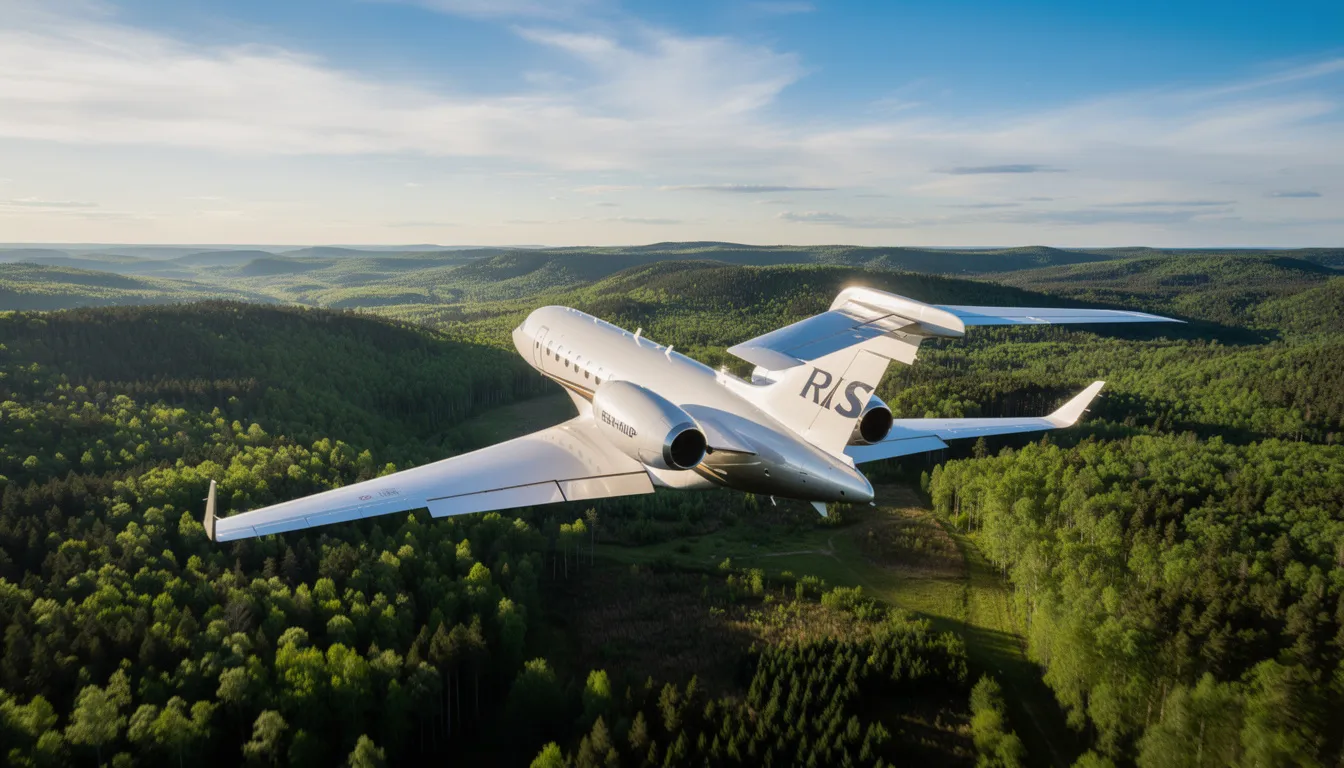
How to Choose the Right 20 Million Dollar Jet for Your Mission
The right aircraft starts with mission analysis, not brand preference. Read this section as a strategic framework rather than a buying checklist.
Mission Profile Questions
Typical Stage Length: 500 NM regional hops versus 3,000 NM transcontinental versus 5,000+ NM intercontinental?
Passenger Count: Average 2–4 travelers or regularly moving 10+ people?
Flight Frequency: 10 trips annually or 10 trips monthly?
Primary Regions: North American domestic, Europe, the Middle East, or genuinely global operations?
Runway and Airport Access
Short Runways (under 4,000 feet): PC-24, Phenom 300E, Citation CJ4 excel; large-cabin jets may be excluded
Mountain Airports: High-altitude performance, steep approach capability, and specific type ratings required
Secondary Cities: Closer to final destinations, often with shorter runways and limited services
Private Terminal Access: Most airports with private FBOs can accommodate $20M jets; confirm parking and handling availability
Cabin Priorities
Private Bedroom: Large-cabin jets only (G550, Challenger 605, Falcon 900LX)
Shower Capability: Select large-cabin configurations; adds weight and complexity
Full Galley vs. Refreshment Center: Full galley enables catered multi-course meals; refreshment centers handle snacks and beverages
Conference Seating: 4–6 person table configurations available in midsize and larger sizes
Baggage Capacity: Ski bags, golf clubs, and extended-trip luggage require external baggage compartments found in super-mid and large-cabin aircraft
Technology and Connectivity Requirements
Ka-Band Internet: Starlink or ViaSat for global coverage at broadband speeds
VPN Compatibility: Verify bandwidth and latency for secure corporate network access
Modern Avionics: G5000, Pro Line Fusion, or Symmetry for flight safety and airport access (required for certain approaches)
Cabin Management: Integrated entertainment, lighting, and climate via touchscreen or mobile app
Resale and Brand Considerations
Value Retention: Gulfstream, Bombardier, and Dassault historically command stronger resale—finding buyers is faster, and pricing is more predictable
Support Infrastructure: Global parts availability, authorized service centers, and manufacturer responsiveness vary by brand
Documentation: Comprehensive maintenance records, modification STCs, and component tracking are critical for exit value
Upgrade Path: Consider how the current investment aligns with future needs—will you continue with this aircraft class or move up?
FAQs About 20 Million Dollar Private Jets
How many hours per year justify buying a $20 million private jet instead of using a jet card?
In 2026, full ownership typically makes financial sense when you or your company flies more than 200–300 hours annually on similar aircraft. Below that threshold, the combined cost of capital, crew, hangar fees, insurance, and maintenance often exceeds the effective hourly rates of a premium jet card—especially once you factor in depreciation. A traveler flying 150 hours per year on a large-cabin jet card spends roughly $750,000–$900,000 annually with no asset risk, versus $1.5M+ in ownership costs plus 5–10% depreciation on the hull.
Can I finance a $20 million private jet, and what are the typical terms?
Specialized aviation lenders and private banks routinely finance 60–80% of the purchase price with terms around 5–10 years, secured by the aircraft and often backed by personal or corporate guarantees. Interest rates depend on credit quality, aircraft age, and residual value projections—expect prime plus 1–3% for well-qualified buyers with newer aircraft. Lease structures (operating and finance) offer alternatives that may provide tax advantages or better align with 6-month or multi-year budget cycles.
How long does it take to complete a $20 million jet purchase?
A straightforward pre-owned transaction can close in 30–60 days, including pre-purchase inspection, legal review, escrow, and registration. New factory orders for aircraft like the Phenom 300E or PC-24 may take 12–24 months, depending on production slots and customization choices. The process accelerates with experienced aviation counsel, a trusted acquisition advisor, and pre-approved financing. Don’t spam multiple brokers—work with one qualified professional who can search the market efficiently.
What insurance coverage is standard for a jet in this price range?
Owners commonly carry $100–300 million in liability coverage plus hull insurance equal to the agreed value (typically the purchase price or current market value). Premiums reflect pilot experience, operating region, claims history, and whether the aircraft is used solely for private flights or also for charter operations. Expect annual premiums of $75,000–$200,000 for a $20M large-cabin jet, with higher rates for owner-pilots or operations in challenging environments.
Is it possible to get the benefits of a large-cabin jet without spending $20 million upfront?
High-end jet card and membership programs deliver guaranteed access to large-cabin, long-range aircraft on a pay-as-you-fly basis. BlackJet-style offerings provide Wyvern-audited safety standards, carbon-neutral performance via verified offsets, and flexible aircraft class options—all without $20M in capital at risk. For travelers flying 50–150 hours annually, a premium jet card can deliver a G550-level experience while keeping capital deployed in core investments. Contact a membership advisor to visit the program options and determine if jet card access matches your mission profile.
Conclusion
Elevate your travel—effortlessly. Whether a $20 million jet represents your next acquisition or you prefer to preserve capital while accessing identical aircraft, the path forward starts with understanding your true flying needs. BlackJet’s Jet Card programs deliver rigorous safety, carbon-neutral performance, and unmatched flexibility for discerning travelers who value mind share over maintenance headaches.
Join BlackJet’s Jet Card program for seamless, premium private travel—safety, sustainability, and flexibility built in.


 Sign up with google
 Sign up with Apple