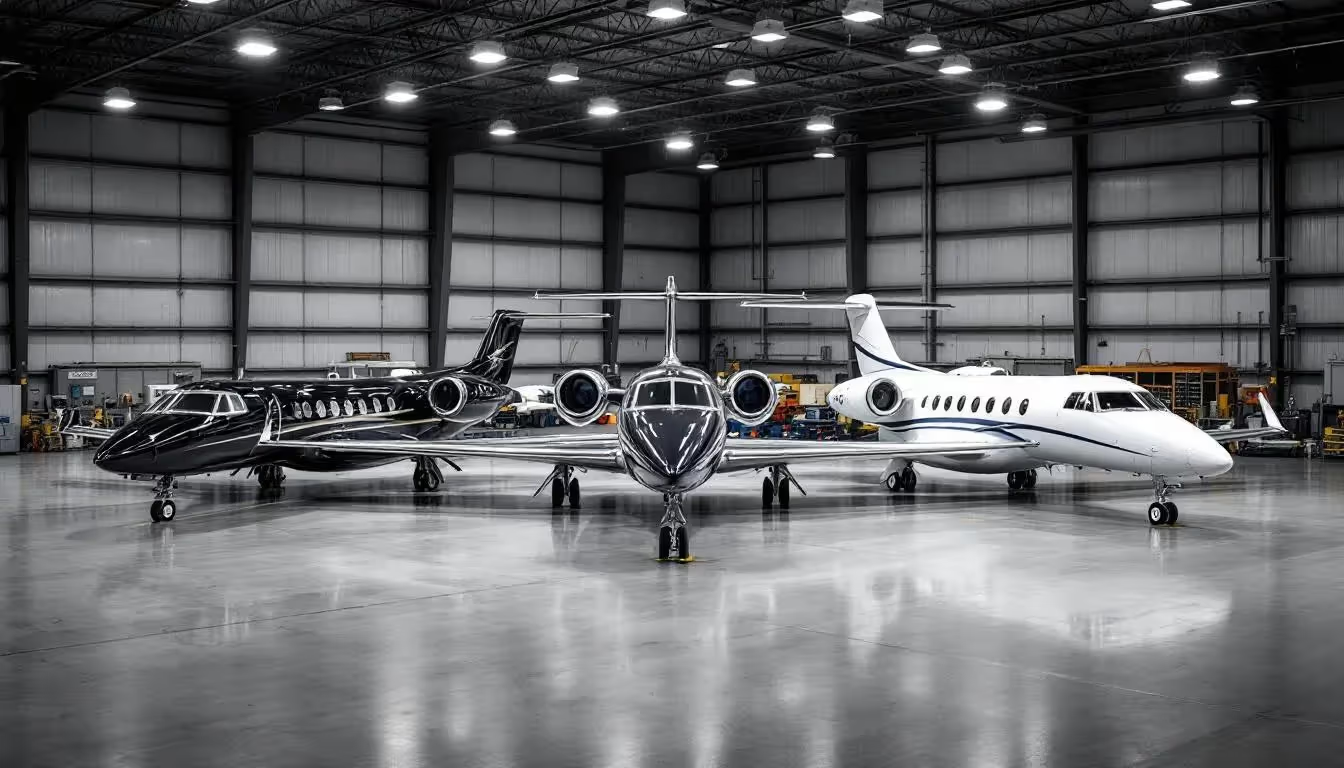
Want to know the best private airplanes? This guide highlights top luxury jets, mid-size planes, light jets, and executive liners, focusing on their key features and benefits. The world's luxury private jets may appear more like flying mansions than traditional aircraft, offering unparalleled opulence and comfort. The best personal aircraft varies widely based on different pilots' needs, as preferences depend on factors like range, speed, and cabin features.
Key Takeaways
Luxury private jets combine opulent features and advanced technology, catering to high-net-worth individuals and ensuring a comfortable, efficient travel experience.
Mid-size jets balance performance and comfort, making them ideal for both business and leisure travel, while light jets provide efficient, agile solutions for shorter trips.
Sustainability initiatives in private aviation, such as the use of sustainable aviation fuel and carbon-neutral flights, are becoming increasingly important for reducing the environmental impact of air travel.
The Global 8000 includes a circadian lighting system and an air filtration system that removes 99.99% of allergens and viruses, enhancing passenger well-being during flights.
The Cessna 206 Turbo Stationair HD is known for its rugged capabilities and is often equipped with floats and other bush kits, making it a versatile choice for challenging environments. The Turbo Stationair HD can seat six adults and is known for extensive use as a backcountry airplane.
The Pinnacle of Private Air Travel
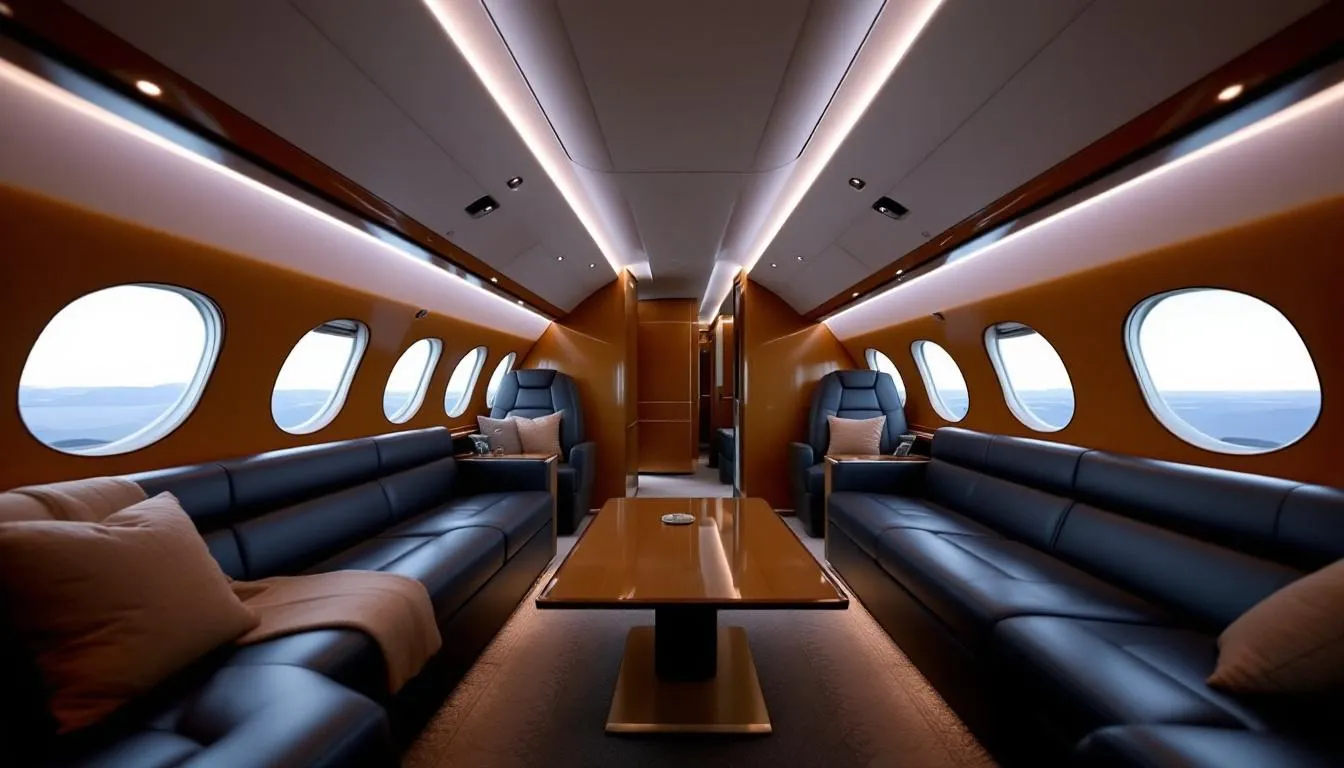
Luxury private jets represent the zenith of air travel, combining high-end materials, custom designs, and opulent features such as gold, cashmere, and fine dining options. These jets transform the journey into an experience of unparalleled luxury and convenience. Equipped with next-gen avionics, fuel-efficient engines, and advanced autonomous systems, they ensure smooth and comfortable flights. Interiors often feature gold, crystal, and cashmere finishes, designated living spaces like master bedrooms, dining rooms, and entertainment rooms, making them akin to flying luxury homes. Many include full-service galleys with gourmet food options, and some even have onboard chefs. Advanced cabin controls allow personalized settings for temperature and lighting. Large windows provide natural light and stunning views, while customized furnishings made from premium materials like hand-stitched leather and exotic woods add a personal touch. Ergonomic seating that converts into beds, full-sized master bedrooms, and bathrooms further elevates comfort.
These prestigious jets cater to royal families, billionaires, and high-performing teams, offering an intimate business travel experience akin to a top-tier hotel. Designed for non-stop international travel exceeding 6,000 nautical miles, ultra-long-range jets provide the highest levels of comfort. Heavy Jets accommodate 12 or more passengers with spacious cabins and elegance. The Boeing 747-200B, Air Force One, showcases pinnacle customization with its 4,000 sq. ft. interior.
Cabins often include full-size bathrooms resembling high-end hotels, advanced noise reduction for a quieter flight, and features like the Global 8000's four-zone cabin with the industry's lowest pressure altitude of 2,900 ft. The Global 8000 boasts the longest, widest, and tallest cabin in business aviation, with up to five living areas, high-speed Wi-Fi, and a 100% fresh air cabin. It reaches speeds of Mach 0.935 and a range of 7,750 nautical miles.
Personal aircraft vary widely in shape, size, and performance to meet diverse needs. The Cessna 172 Skyhawk is a historic favorite for training and personal use, while the Piper Archer LX is recognized for ease and stability. The Pilatus PC-12 offers versatility with a large cabin and lower operating costs. The Cirrus SR22T is favored for performance and innovation. The ICON A5 provides unique versatility for recreational pilots flying on land or water. For aspiring commercial pilots, the Cessna 150 or 152 offers an affordable way to build flight hours.
Gulfstream G700
The Gulfstream G700 is a marvel of modern aviation, boasting:
A maximum range of up to 6,650 nautical miles, making it ideal for transcontinental and intercontinental flights.
A spacious and flexible interior, the most generous in business aviation.
Twenty Gulfstream Panoramic Oval Windows that bathe the cabin in natural light.
This aircraft is not just about space; it’s about luxury and technology. Key features include:
Handcrafted seats that convert into ergonomic beds, ensuring passengers can rest comfortably on long-haul flights.
An advanced flight deck.
State-of-the-art technology, including Jet ConneX Ka-band Wi-Fi, ensures that both connectivity and comfort are maintained at the highest standards. Customizable options in luxury private jets include private bedrooms, boardrooms, cinemas, and spa-like bathrooms. The Gulfstream G700 features the industry's tallest, widest, and longest cabin, setting a new standard for spaciousness and comfort in private aviation.
Powered by Rolls-Royce Pearl 700 engines, the G700 combines performance and efficiency, making it a top choice for those seeking the ultimate flying experience. Gulfstream's G650ER is another popular luxury private jet, initially costing around $95 million but customizable to a final price closer to $150 million, reflecting its premium status. The 10X, on the other hand, boasts the lowest direct operating costs in its category, making it an attractive option for those prioritizing efficiency alongside luxury. Additionally, the 10X has a Digital Flight Control System derived from fighter jet technology, enhancing its performance and safety.
Bombardier Global 7500
The Bombardier Global 7500 stands out with the following features:
Longest range of any purpose-built business jet, allowing for extensive travel without stops
Impressive range of 7,700 nautical miles, perfect for long-haul flights
Priced at $75 million, making it one of the most expensive private jets and reflecting its premier status in the world’s largest private jet sector. This jet's unmatched range makes it a leader in the private aviation market. The Global 8000's Nuage seats offer a zero-gravity position for enhanced relaxation, further elevating the in-flight experience.
What truly sets the Global 7500 apart is its bespoke interior, designed for ultimate comfort. From the spacious cabin to the luxurious seating and personalized amenities, every aspect of this jet is tailored to provide an exceptional flying experience. Whether you’re flying for business or leisure, the Global 7500 ensures that you arrive at your destination refreshed and ready. Additionally, the Bombardier Global 7500 offers the longest range among private jets, making it a leader in the private aviation market.
Dassault Falcon 8X
The Dassault Falcon 8X excels in intercontinental missions with its exceptional long-range capabilities of over 6,000 nautical miles. It features the FalconEye® Combined Vision System, which enhances situational awareness for pilots, ensuring a safer and more comfortable flight.
Inside, the Falcon 8X offers a luxurious and customizable environment. Emphasizing beauty, comfort, and performance, the interiors are designed to meet the specific needs of each traveler. Common onboard amenities in luxury private jets include high-definition entertainment systems and Wi-Fi connectivity, ensuring passengers stay connected and entertained during their journey. Luxury private jets frequently feature surprising amenities such as gyms, full-service bars, and onboard staff to cater to every need, ensuring an unmatched travel experience. Portable relaxation features like gym areas or meditation spaces further enhance the appeal of these jets for discerning travelers.
With advanced aerodynamics and engines, the Falcon 8X not only provides a smooth flight but also improves fuel efficiency, making it a sustainable choice for discerning travelers. Operational costs for larger luxury jets can be significantly high, including staffing multiple crew members and gourmet catering services.
Versatile Mid-Size Jets for Business and Leisure
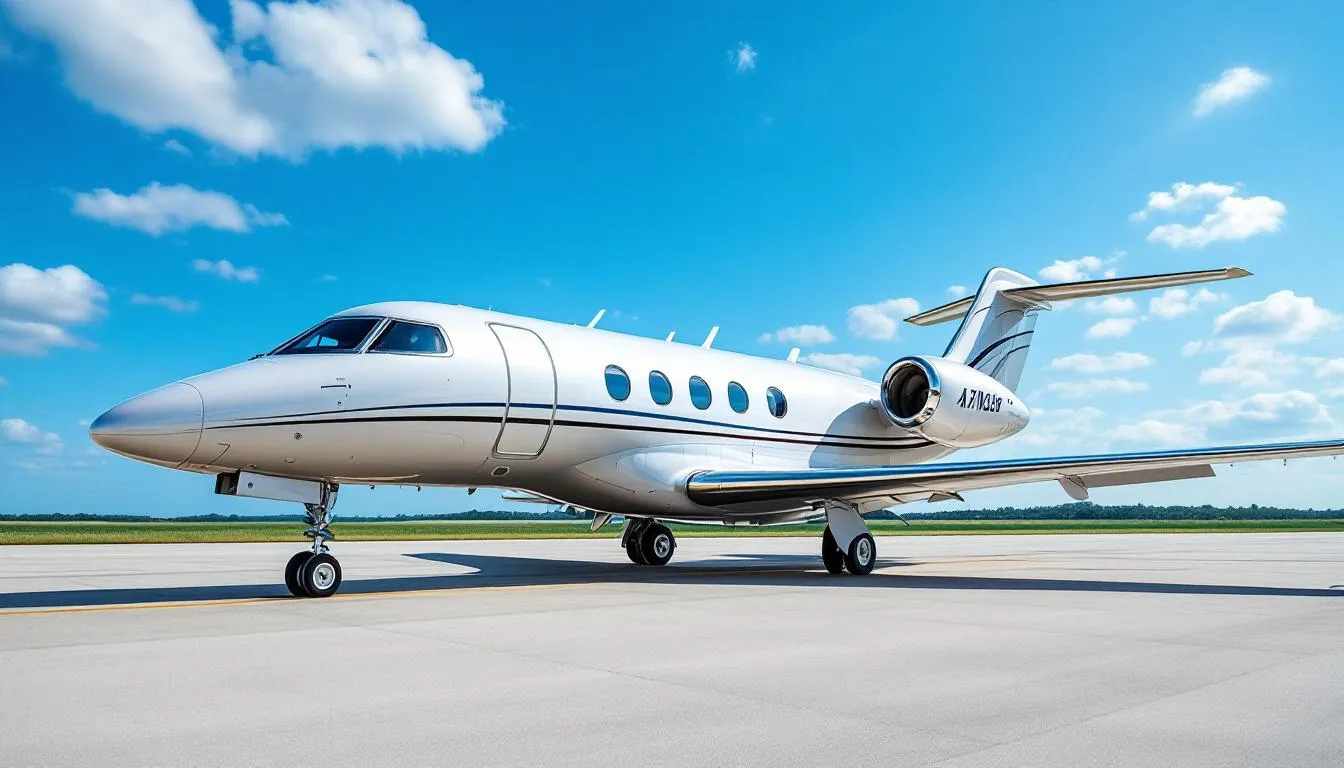
Mid-size jets bridge the gap between long-range luxury and efficient travel, making them ideal for both business and leisure. These jets typically accommodate 5 to 10 passengers, providing a perfect balance of space and performance. The average range of super mid-size jets is approximately 3,500 miles, allowing for long-distance travel without compromising on comfort. Super Midsize jets are capable of flying for up to seven hours and covering an average distance of 3,500 miles. Midsize jets generally have enough room for two pilots, a flight attendant, a service galley, and an on-board lavatory, ensuring a seamless travel experience. Private jet travel provides direct access to more airports, reducing travel time.
Super mid-size jets are appealing due to several features:
Stand-up cabins
Enhanced baggage capacity
Longer nonstop flight capabilities
Advanced avionics for quieter operations
These features ensure a comfortable journey for all passengers.
Here are some of the top choices in this versatile category.
Cessna Citation Latitude
The Cessna Citation Latitude is renowned for its well-appointed living spaces and modern interior design. Its spacious cabin features an open layout and premium materials, providing a quiet, climate-controlled environment for passengers. The Embraer Phenom 300 is a light jet recognized for its spacious cabin and high ceilings, further enhancing the comfort of its passengers. The TBM 960 is known for speed and efficiency within the turboprop category, offering a compelling option for those seeking performance and practicality.
With a range of over 2,700 nautical miles and a stand-up cabin with a flat-floor design, the Latitude offers both comfort and enough space for business travelers. The Cessna 182 Skylane, with a useful load of roughly 1,110 lbs, is capable of carrying multiple passengers and luggage, making it a versatile option for personal and business use.
Embraer Praetor 600
The Embraer Praetor 600 is celebrated for its impressive range, making it suitable for long-distance travel needs. This jet combines performance with luxury, providing a seamless travel experience for those who require both. The Praetor 600 is a highly advanced super-midsize jet with an impressive range for its class, further solidifying its position as a top choice in private aviation. Enhanced winglets and fuel capacity of the Praetor 600 allow for a range of 4,018 nautical miles. The Praetor 600 has a cabin altitude of 5,800 ft to reduce fatigue, ensuring passengers arrive at their destination feeling refreshed. Additionally, the TBM series maintains high value retention in the used aircraft market, making it a practical investment for buyers.
Gulfstream G280
The Gulfstream G280 offers a luxurious, quiet cabin that can comfortably accommodate up to ten passengers. With bespoke design tailored for comfort and elegance, the G280 stands out as a luxurious private jet option that combines style and functionality.
Light Jets: Efficient and Agile Travel Solutions
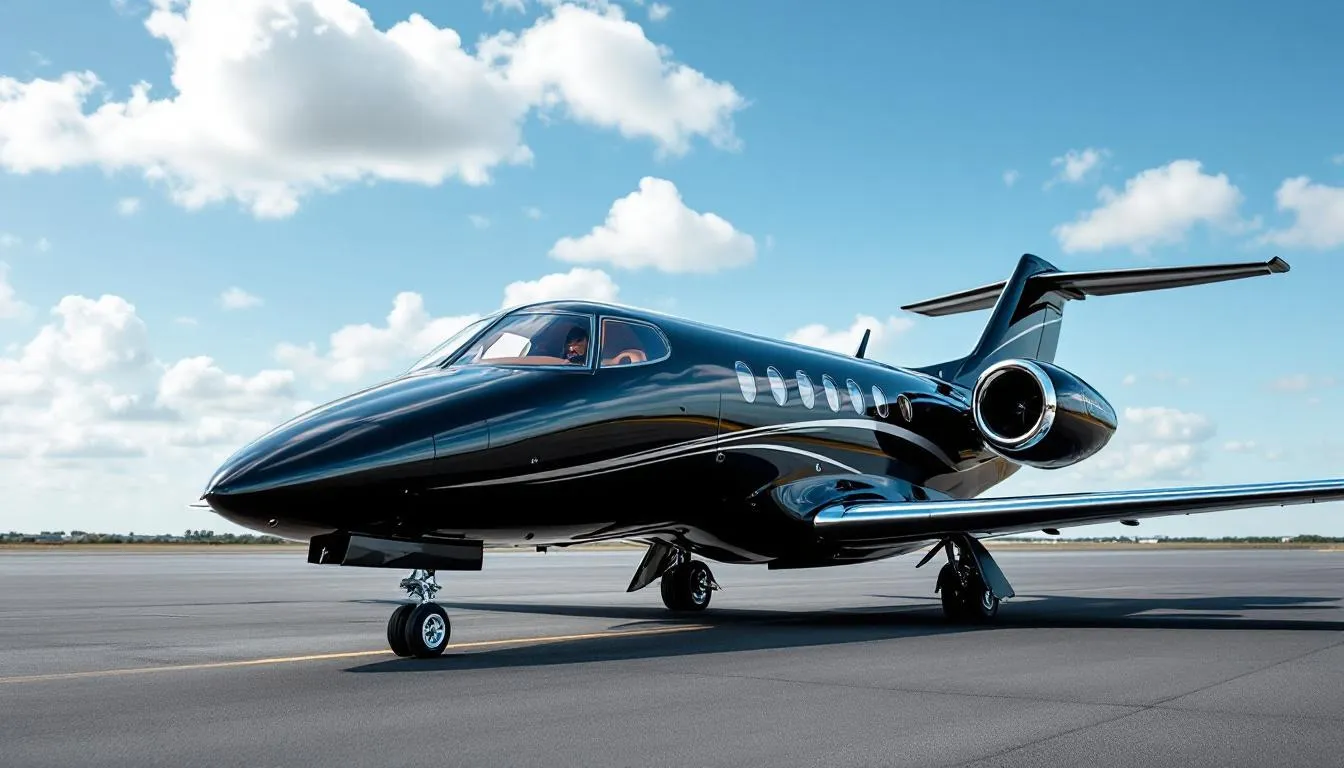
Light jets are known for their efficiency and agility, making them perfect for small groups and short to medium-range trips. With a flight range of 1,400 to 2,500 nautical miles, these jets cater to various travel needs while maintaining a high level of luxury. Small Light Jets comfortably seat up to eight passengers and offer an extended average flight range between 1,400 and 2,500 nautical miles. Very Light Jets (VLJs) are the smallest type of private jet and are ideal for short-haul distances or flights up to three hours. Light jets offer more space, range, and speed than very light jets, making them suitable for longer trips while still being cost-effective. The Texas Aircraft Colt is a light sport aircraft designed for recreational pilots. Private jet travel significantly reduces airport wait times compared to commercial airlines, offering a more streamlined and efficient travel experience.
Very light jets (VLJs) emphasize advanced safety features and comfort, offering an enhanced travel experience for passengers. Here are some of the top models in this category that combine efficiency with elegance.
HondaJet Elite
The HondaJet Elite is a standout in the very light jet category, known for being the highest, farthest, and fastest in its class. Its cabin includes a lavatory and kitchen, providing additional comfort for passengers, which is uncommon in very light jets.
With one of the quietest cabins on the market and over 210 units delivered since its launch, the HondaJet Elite has proven its market success and passenger appeal.
Embraer Phenom 300E
The Embraer Phenom 300E is celebrated for its agility and luxury, making it ideal for short-haul efficiency. With a range of over 2,000 nautical miles and a passenger capacity of up to 11, this jet combines performance with comfort.
The inclusion of a runway overrun awareness and alerting system (ROAAS) enhances safety, ensuring a secure flight experience for all.
Cessna Citation CJ4
The Cessna Citation CJ4 offers:
A maximum range of 2,165 nautical miles
Accommodation for up to 10 passengers
A maximum cruise speed of 451 knots, suitable for efficient travel
Advanced flight management and safety features, including Garmin’s G3000 PRIME avionics and Emergency Autoland
Executive Liners: Ultimate Luxury in the Sky
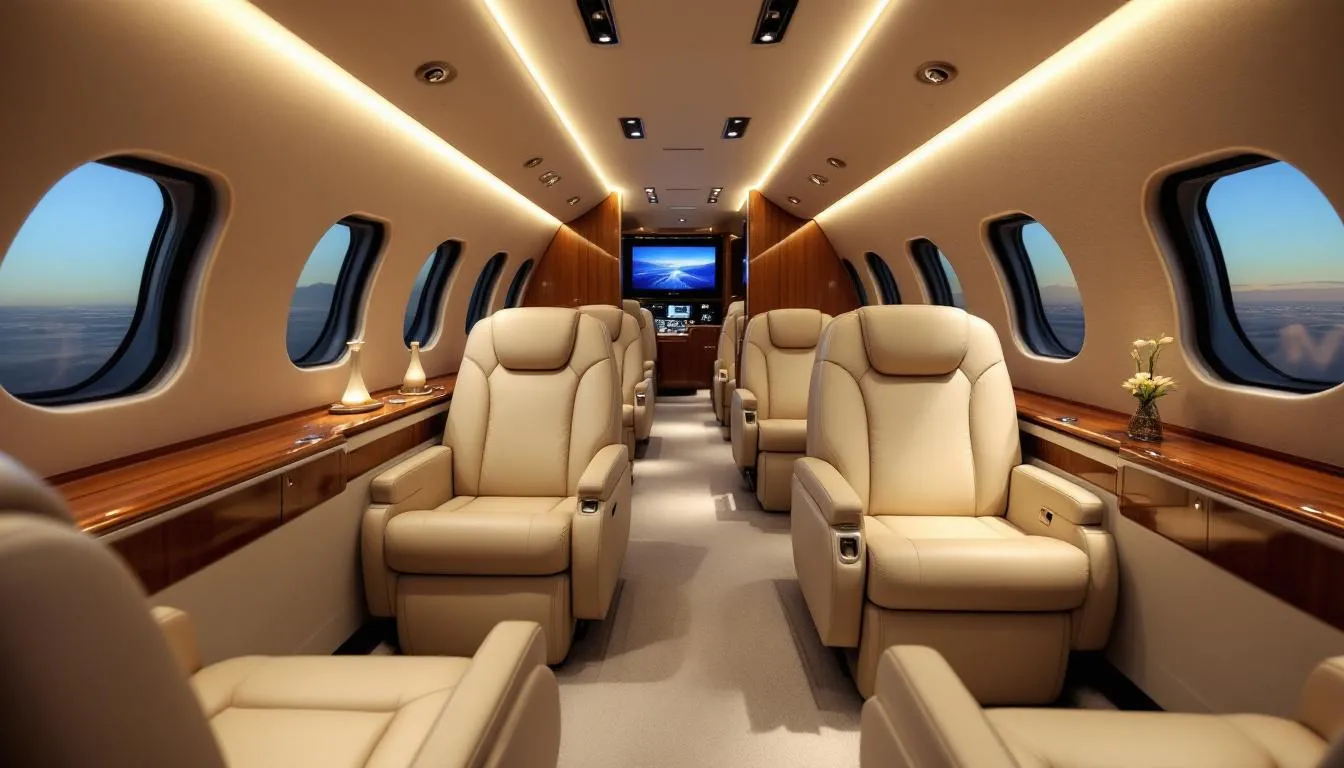
Executive liners redefine luxury in the sky, transforming air travel into a lavish experience. These aircraft feature:
Ultra-luxurious amenities
A high level of customization, including gold, diamonds, and cashmere
Onboard amenities such as full-service bars and gourmet kitchens.
Leading brands like Boeing and Airbus are known for their commitment to luxury and high-quality aviation, offering:
Here are the top executive liners that set the standard for opulence in the sky.
Boeing BBJ 787
The Boeing BBJ 787 is celebrated for its expansive cabin space, which includes private suites, lounges, and offices, offering unparalleled comfort to passengers. With a maximum range of nearly 9,800 nautical miles, it facilitates extensive non-stop flights, making it ideal for long-haul travel. The Boeing 747-8, commonly known as the world's largest private jet, features exquisite interiors and remains a symbol of unmatched luxury in aviation, with an undisclosed owner. The Global 8000, entering service in 2025, will be the fastest civilian aircraft since the Concorde. The Global 8000 has a top speed of Mach 0.94 and an 8,000-nautical-mile range.
Combining luxury, comfort, and technological advancements, the BBJ 787 stands out as a premier choice for discerning travelers seeking an extravagant flying experience.
Airbus ACJ320neo
The Airbus ACJ320neo features advanced technology with a range exceeding 8,000 nautical miles, making it perfect for longer journeys. Custom configurations for this aircraft can exceed costs of $500 million, reflecting its technological sophistication and luxury. Similarly, the Airbus A380, when customized as a private jet, can also exceed $500 million in costs, showcasing its potential for unparalleled opulence.
The spacious cabin allows for various configurations, such as private staterooms and lounges, catering to the needs of royal families and heads of state with a generous cabin space, additional space, a full-service galley, luxury spa-like bathrooms, and other high-end amenities.
Key Considerations When Choosing a Private Jet
When choosing a private jet, several key considerations come into play, including range, cabin space, and safety features. Understanding your travel habits, including routes and frequency, as well as your flight plan, can help guide your choice of aircraft. Prices and specifications for private jets vary by year, condition, and optional features, making it essential to evaluate these factors carefully before making a decision.
Customization options, such as in-flight services, meals, and the ability to bring pets, enhance the overall travel experience. Additionally, private jets provide more luggage flexibility, accommodating special items like sports equipment without strict limits. Here are the key considerations in more detail.
Range and Performance
A private jet’s operational range is crucial for determining how far it can fly without needing to refuel. For small light jets, the average flight distance ranges from 1,400 to 2,500 nautical miles, making them suitable for short to medium-range travel. Cruising speed is important for business travel, while higher speeds generally equate to higher operational costs. Cruising speed also impacts flight time and operating costs, making it a critical consideration when selecting a private jet. Heavier jets, while providing more range and amenities, require longer runways and more fuel, which can affect where they can land and their overall operating costs. Many jets are designed to optimize comfort with low cabin altitude and enhanced air quality systems, ensuring a pleasant journey. Maximum range is an important metric for personal aircraft owners who often conduct cross-country flights.
To extend the maximum range of an aircraft, the following methods are employed:
For instance, the HondaJet Elite features an auxiliary fuel tank that extends its range, making it competitive with other aircraft in its category.
The Cessna Citation CJ4, on the other hand, is capable of operating from shorter airstrips, giving it access to more airports and smaller airports compared to larger jets.
Cabin Space and Comfort
Cabin space and comfort are paramount when choosing a private jet. For example:
The Gulfstream G700 boasts the lowest cabin altitude in the industry, significantly enhancing passenger comfort during flights.
Mid-size jets typically accommodate 5 to 10 passengers.
Small light jets provide seating for up to eight people.
Private jets often include features such as:
Lie-flat seats
Workstations
Cozy sleeping areas
These are all designed to maximize passenger comfort and enhance the overall flying experience. Bespoke amenities include:
Full-service galleys
Entertainment rooms
Panoramic windows
These ensure passengers enjoy every moment of their journey.
The availability of full-sized master bedrooms and conference rooms adds to the luxury and utility of these jets, making them suitable for both relaxation and private use during business meetings, complemented by exclusive amenities. Luxury amenities in private jets often include full-size galleys, lie-flat beds, and high-end entertainment systems, ensuring that passengers experience the highest level of comfort and convenience during their journey.
Safety Features and Avionics
When it comes to private jet travel, safety is the top priority. Ensuring a secure experience is of utmost importance. Modern jets incorporate advanced navigation systems that significantly improve overall flight safety. For instance, the Embraer Phenom 300E is designed with advanced avionics, enhancing its operational efficiency and safety. The Gulfstream G700 features the Predictive Landing Performance System, which improves safety during landing. Emergency oxygen systems are installed for cabin depressurization scenarios, further ensuring passenger safety. Modern private jets are equipped with state-of-the-art safety systems designed to improve pilot situational awareness. The Cirrus Vision SF50 is a single-engine jet that combines impressive speed with advanced safety features. Private jets undergo regular pre-flight and post-flight checks in accordance with safety regulations, ensuring reliability and safety for every journey. Additionally, private jets are subject to rigorous maintenance protocols to ensure safety and reliability during operations.
Additional safety features like the Enhanced Flight Vision System (EFVS) and Terrain Awareness and Warning System (TAWS) further increase pilot situational awareness and visibility in low-light or poor-weather conditions.
The Cirrus Vision Jet, renowned for its safety, includes the Cirrus Airframe Parachute System (CAPS), which has saved over 200 lives. These technologies ensure that private jet travel remains one of the safest modes of transportation available.
The Benefits of Private Jet Ownership
Owning a private jet offers numerous benefits, including:
Unmatched privacy, comfort, and flexibility
The ability to fly on your own schedule
Access to remote locations
Avoidance of hassles associated with commercial travel
Onboard Wi-Fi and meeting spaces that enhance productivity, allowing business leaders to work efficiently while traveling. Jet cards offer prepaid blocks of flight time with guaranteed access and no ownership responsibilities, providing an alternative for those who value flexibility without the commitment of full ownership.
Private jet ownership also provides a unique travel experience, combining luxury, comfort, and convenience tailored to individual needs. Owning a private jet ensures that every journey is conducted in style and comfort, making it a worthwhile investment for private jet owners who value their time and privacy, whether for business or leisure.
Full Ownership vs. Fractional Ownership
Full ownership of a private jet offers complete control and availability, allowing the owner to use the aircraft whenever needed. However, this option entails higher costs due to the purchase price, maintenance, and operational expenses. Private jet owners bear the full costs of purchase, maintenance, and operational expenses, making it a significant financial commitment. For those who fly frequently and require constant access to a private jet, full ownership can be a valuable option. It is particularly ideal for individuals or companies flying over 300 hours per year, as the consistent usage justifies the significant investment and operational costs.
Fractional ownership allows multiple owners to share the cost of a jet, making it a more affordable option while providing some flexibility in access. Key points include:
The smallest share available is typically 1/16th of a jet.
It is ideal for those who want the benefits of a private jet without the full financial commitment.
It reduces the responsibilities associated with full ownership.
Cost Considerations
The purchase price range for private jets can vary significantly, typically between $3 million and over $75 million. The annual operating costs for a private jet can reach up to 10% of the aircraft’s value, covering expenses like fuel, maintenance, and crew salaries. Operational costs for private jet ownership also include hangar fees and insurance, making it essential to budget carefully for these ongoing expenses. Light jets generally start at around $3 million, while ultra-long-range models can exceed $75 million, reflecting their advanced features and capabilities.
Smaller jets generally have lower staffing costs, while larger jets require more staff and amenities, increasing operational costs. Scheduled upkeep and parts replacement are important maintenance considerations. Additionally, there may be potential unscheduled repairs that arise. Regular maintenance and inspections add costs to private jet ownership, ensuring that the aircraft remains safe and reliable for every journey. These ongoing expenses are a critical aspect of managing private jet operations effectively.
Owning a private jet entails a serious financial commitment and management responsibility, but for those who value flexibility and privacy, it can be a cost-effective solution. Private jet owners are often advised to budget approximately 10 to 20% of the aircraft's value each year for maintenance and operating costs, ensuring the jet remains in optimal condition.
Private Jet Charter: Flexibility Without Commitment
For those who prefer flexibility without the commitment of ownership, private jet charter offers a convenient alternative. Charters provide significant time savings by enabling quicker boarding and direct access flights, often avoiding long security lines and overcrowded airports. Using a jet card can provide flexible access for flying without the commitments of ownership, allowing travelers to pay for a specified number of hours in a jet. Chartering a private jet can cost between $1,200 to $10,000 per hour, depending on the type of aircraft and flight distance. Reputable charter services ensure flights comply with safety standards and regulations.
Private jet charters offer luxurious amenities, including:
Gourmet catering
Spacious seating
Onboard Wi-Fi
These features enhance the travel experience. Whether for business or leisure, chartering a jet provides the flexibility to design travel itineraries without being bound to set flight times.
Leading charter services like NetJets and VistaJet are known for their modern fleets and high-quality customer service, ensuring a premium travel experience.
Advantages of Chartering
Chartering a private jet eliminates the burden of managing logistics or maintenance associated with owning an aircraft. Luxury charter jets, such as the HondaJet, feature amenities like:
Cinema rooms
Fully stocked bars
These ensure comfort and class during flights. Jet cards provide:
Travelers can easily request charter quotes, allowing for quick planning and efficient decision-making. The ability to customize in-flight services includes:
Selecting meals
Choosing beverages
Bringing pets
These options further enhance the overall travel experience. Chartering a jet offers a cost-effective and flexible solution for those who value convenience and luxury.
Top Charter Providers
NetJets and VistaJet are leading charter services known for their modern fleets and high-quality customer service. These providers ensure a seamless and luxurious travel experience, making private jet charter a preferred choice for many high-net-worth individuals and corporate clients.
Sustainability in Private Aviation
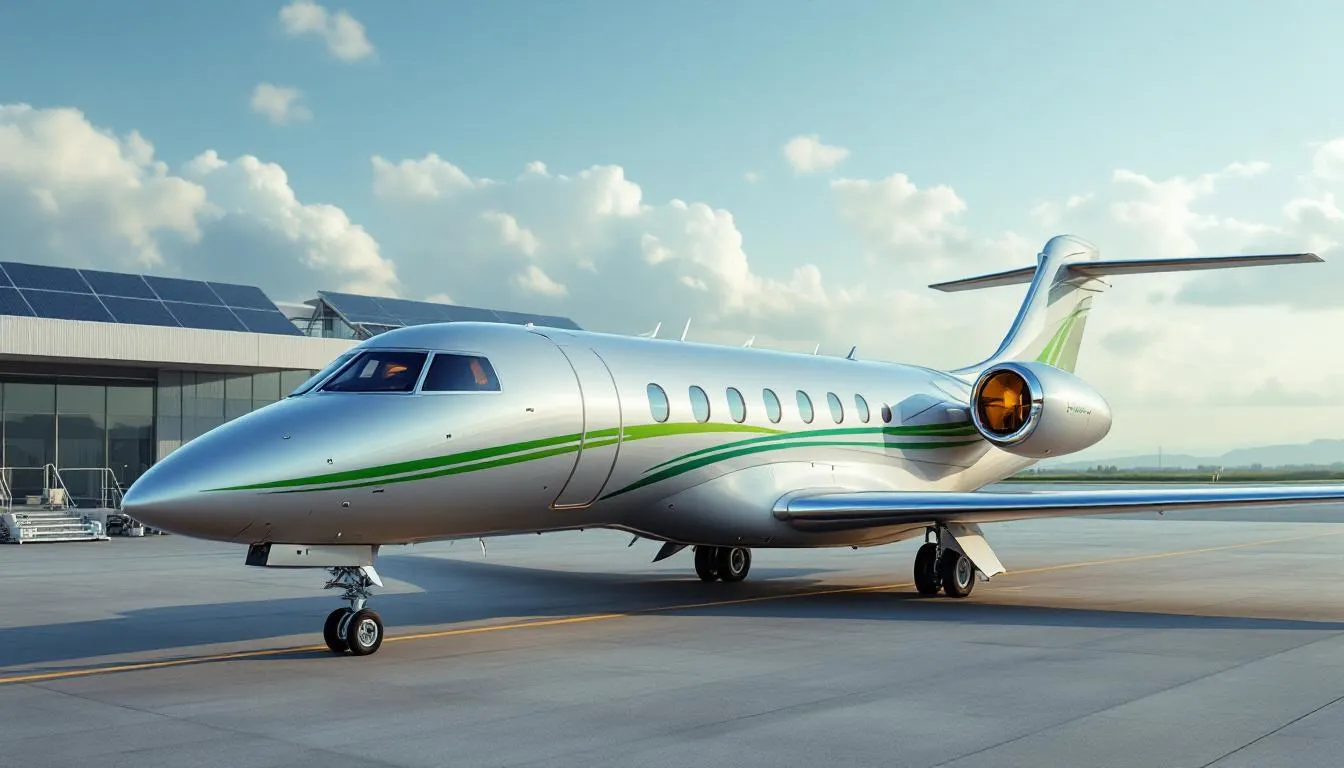
Sustainability is becoming increasingly crucial in private aviation, with the industry embracing eco-friendly practices. The use of sustainable aviation fuel (SAF) can significantly reduce carbon emissions, contributing to a greener future for aviation. For example, the Airbus ACJ320neo is known for its fuel-efficient engines and advanced cabin technology, enhancing the overall flying experience while minimizing environmental impact.
Private aviation companies are increasingly adopting sustainability programs that focus on reducing their overall climate impact. By implementing eco-friendly practices, the private aviation sector is taking significant steps toward a more sustainable future, ensuring that luxury and environmental responsibility go hand in hand.
Carbon-Neutral Flights
Carbon-neutral flights aim to mitigate the environmental impact of aviation by offsetting carbon emissions. PrivateFly, for instance, ensures every flight is carbon-neutral and emissions-neutral by offsetting 300% of carbon emissions, accounting for other harmful aviation emissions as well. These initiatives significantly contribute to lowering the overall greenhouse gas emissions associated with aviation.
Carbon-neutral flights are essential for the sustainable future of the aviation industry, addressing environmental concerns and ensuring that future generations can enjoy the benefits of private air travel without compromising the planet.
Fuel Efficiency Innovations
Technological advancements and strategies helping to reduce fuel consumption and emissions in private jets include:
Geared turbofan engines, which reduce fuel consumption and emissions.
Innovations in aircraft design, such as lightweight materials and improved aerodynamics, are enhancing fuel efficiency and reducing environmental impact.
Sustainable Aviation Fuel (SAF), a key strategy to significantly reduce carbon emissions in private aviation.
Utilizing SAF can lower greenhouse gas emissions by up to 80% compared to traditional jet fuel. Private jet companies are also implementing carbon offset programs, allowing customers to invest in environmental projects that mitigate their flight’s carbon emissions. These fuel efficiency innovations are crucial for enhancing sustainability in private aviation.
Summary
In summary, this guide has explored the pinnacle of private air travel, from the ultra-luxurious Gulfstream G700 and Bombardier Global 7500 to the efficient and agile light jets like the HondaJet Elite and Embraer Phenom 300E. We have highlighted the key considerations when choosing a private jet, including range, cabin space, and safety features, and discussed the benefits of private jet ownership and chartering.
Whether you seek the ultimate in luxury with executive liners like the Boeing BBJ 787 or prioritize sustainability with carbon-neutral flights, private aviation offers something for everyone. Join BlackJet’s Jet Card program for seamless, premium private travel—safety, sustainability, and flexibility built in.
Frequently Asked Questions
What jet does Taylor Swift own?
Taylor Swift owns a Falcon 7X, a high-performance trijet known for its comfort and advanced technology, built by Dassault Aviation. This aircraft symbolizes luxury and cutting-edge innovation in private aviation. Celeb private jets have luxurious features, but personal aircraft typically focus more on function.
What are the main benefits of owning a private jet?
The main benefits of owning a private jet include unparalleled privacy, comfort, and flexibility, allowing travelers to fly on their own schedules, access remote locations, and bypass the inconveniences of commercial travel. Ultimately, private jet ownership significantly enhances the travel experience.
How do fractional ownership and full ownership differ?
Fractional ownership differs from full ownership in that it provides shared usage and costs among multiple owners, offering greater affordability and flexibility, while full ownership grants complete control and availability at a higher expense. Therefore, the choice between the two depends on one's financial capacity and desired level of access.
What are carbon-neutral flights, and why are they important?
Carbon-neutral flights are essential as they offset carbon emissions, reducing the environmental impact of aviation. This approach supports sustainability, allowing for air travel while prioritizing ecological responsibility.
What should I consider when choosing a private jet?
When choosing a private jet, you should consider range and performance, cabin space and comfort, as well as safety features. Evaluating your travel habits and specific needs will help you select the most suitable aircraft.
Conclusion
Private jets are more than just a mode of transportation—they are a statement of luxury, convenience, and strategic advantage. Whether you choose to own a jet or prefer the flexibility of chartering, the benefits are clear: unparalleled comfort, privacy, and the ability to travel on your terms.
Elevate your travel experience effortlessly with BlackJet’s offerings, where safety, carbon-neutral performance, and unmatched flexibility come together to redefine premium private travel. Explore our offerings and discover how refined, meaningful travel becomes your new standard.


 Sign up with google
 Sign up with Apple