For those operating at the highest levels of business and global mobility, the question is no longer whether to fly private—it’s which aircraft delivers the greatest strategic advantage. The best private airplanes are not defined by luxury alone, but by how effectively they compress time, extend reach, and deliver reliability across continents.
Private aircraft play a pivotal role in business aviation, offering a range of options that cater to both corporate and luxury travel needs, especially when accessed through premium private jet card programs from BlackJet.
Compared to commercial aviation, where schedules dictate movement and delays are routine, private aviation offers something fundamentally different: control. A nonstop transcontinental or intercontinental flight, tailored cabin environments, and access to thousands of smaller airports translate directly into productivity and flexibility.
Private jets provide key advantages like flexible scheduling, enhanced privacy, and a strong record of safety in private jet travel compared to commercial options.
This guide explores the best private jets across categories, helping you understand which aircraft truly lead the market based on mission, performance, and real-world capability.
Private jets are categorized into three primary types: Light Jets, Midsize Jets, and Heavy/Long-Range Jets, and understanding the different types of private jets for every traveler helps align aircraft selection with mission profile and budget.
In 2026, the private aviation market is characterized by models that combine ultra-long-range capabilities with passenger wellness features. Travelers are increasingly opting for newer jets with HEPA filtration and lower fuel burn to reduce environmental impact. Additionally, businesses can benefit from 100% bonus depreciation on private aircraft purchases, and many evaluate leasing a private jet with flexible programs alongside outright ownership, making investment in these advanced jets more attractive than ever.
Overview of the Best Private Airplanes by Mission and Capability
The term “best private airplane” is inherently contextual. The ideal aircraft depends on mission profile, passenger count, and operational priorities. Choosing the best private airplane means selecting the ideal choice for your specific mission profile, ensuring the aircraft meets your unique travel needs.
Short regional travel (1–4 hours) → Light jets, including popular aircraft models like the Embraer Phenom 300 and Cessna Citation CJ4, dominate with efficiency and accessibility
Cross-country or multi-stop business travel → Midsize and super-midsize jets, such as popular aircraft like the Bombardier Challenger 350 and Gulfstream G280, balance range and cost
Intercontinental missions → Heavy and ultra-long-range jets, including popular aircraft such as the Gulfstream G700 and Bombardier Global 7500, provide nonstop global reach
Light jets are especially valued for their ability to operate from shorter runways, allowing access to more remote or less equipped airports. Midsize and heavy jets can operate efficiently across various distances and conditions, offering versatility for both domestic and international travel. For a deeper breakdown of capabilities across categories, an in-depth guide to private jet sizes can clarify which class best suits specific trip lengths and passenger counts. Super midsize jets offer extended range and spacious cabins, typically flying up to seven hours and covering around 3,500 nautical miles, making them ideal for medium-distance flights with enhanced comfort.
At the highest tier, aircraft such as the Bombardier Global 7500, Gulfstream G700, and Dassault Falcon 8X consistently rank among the best due to their ability to combine range, cabin comfort, and operational reliability.
Trade-Offs to Consider
Every aircraft class involves trade-offs:
Larger cabins increase comfort but raise operating costs. For example, the standard configuration of certain jets, such as the Pilatus PC-12, balances passenger capacity and comfort by accommodating two crew members and up to nine passengers, especially when the belted lavatory is used as an extra seat.
Longer range reduces fuel stops but requires higher acquisition and charter pricing
Availability varies depending on fleet size and operator network
Understanding these trade-offs is key to selecting the right aircraft—not just the most expensive one.
How We Define “Best”: Key Criteria for Business Jets
Range and Global Reach
Range and flight time, measured in nautical miles and hours, respectively, are often the defining metrics. Aircraft capable of 5,000–7,700 nautical miles enable nonstop global routes, eliminating time lost to fuel stops.
Cabin Configuration and Comfort
Cabin layout directly impacts the onboard experience. The best jets offer:
Spacious cabin with ample room for movement and comfort
Multiple living zones and dedicated living areas for work, dining, entertainment, and relaxation
Lie-flat sleeping configurations and cozy sleeping areas
Quiet cabin environments for work or rest
Advanced onboard entertainment systems and luxury amenities, such as en suite showers, for added comfort and exclusivity
Lavishly appointed board rooms and plush seats with ample legroom
Modern technology integration, such as the Gulfstream G700’s multimedia entertainment system and five distinct living areas
Additionally, newer models like the Gulfstream G800 maintain a cabin altitude of just 2,840 feet at 41,000 feet cruising altitude, significantly minimizing jet lag and fatigue for passengers on long flights.
Operating Economics and Value
Even at the highest level, efficiency and hourly operating costs matter. Charter pricing and operating costs influence long-term value, especially for frequent flyers or corporate flight departments.
The best private airplanes are equipped for maximum efficiency, balancing speed, range, and comfort.
The hourly operating costs of private jets can range from $2,000 to $8,000+, influenced by the size of the jet.
Popular Private Jets: Models Frequently Requested
Certain aircraft consistently lead demand across both charter and ownership markets. As a category, the business jet stands out for its exclusivity, range, and luxury features. Among the best private airplanes, popular jets such as the Gulfstream G650, Bombardier Global 7500, and Cessna Citation XLS+ are renowned for their exceptional reputation, luxury, and long-range capabilities, earning acclaim within the aviation industry.
After the list of models in 3.2,, The Embraer Phenom 300 is the most requested jet of 2025.
In 3.3: High-demand models from Cessna, Gulfstream, and Bombardier retain resale value more effectively and have extensive global service networks.
Heavy and Long-Range Leaders
These large cabin jets dominate due to their intercontinental range and refined cabin experience.
Bombardier Global 7500
The Bombardier Global 7500 stands out for its exceptional range and comfort, making it a top choice for long-haul flights. The maximum range of the Bombardier Global 7500 is 7,700 nautical miles (14,260 km). It features four distinct living spaces and state-of-the-art technology like the Nuage seat. The average charter price for London–Paris is approximately £29,000.
Gulfstream G650 / G700 / G800
The Gulfstream G650ER is recognized for its unmatched nonstop capability in private aviation, covering 7,500 nautical miles at Mach 0.85. The Gulfstream G700 integrates modern technology, including an enhanced flight vision system, and offers five distinct living areas with a multimedia entertainment system. The newer Gulfstream G800 further enhances passenger comfort with a lower cabin altitude of 2,840 feet at cruising altitude, minimizing jet lag. These jets are ideal for nonstop international travel.
Dassault Falcon 8X / 7X
Dassault’s Falcon 8X, with a maximum range of 6,630 nautical miles, and 7X are known for their efficiency and versatility, providing a balance of range and comfort for global travelers. The Falcon 8X is also noted for exceptional fuel efficiency and lower carbon emissions, making it a more eco-friendly choice among private jets.
The Gulfstream G550 is one of the most chartered ultra-long-range jets in the world, with a maximum range of 6,750 nautical miles (12,500 km) and an average charter price of £26,100 for London–Paris.
Light Jet Favorites
Embraer Phenom 300
Cessna Citation CJ4
These aircraft are widely requested for short-haul business travel due to their speed, cost efficiency, and airport flexibility, exemplifying the advantages of small private jets for luxury travel.
Very light jets are the smallest type of private jet, ideal for short-haul distances or up to a maximum of three hours of flight time, with a typical passenger capacity of 4-8 and a range of 1,400-2,500 nautical miles. Light jets permit rapid deployment for executives, allowing multiple city visits in one day.
Small light jets comfortably accommodate up to eight passengers and typically offer an extended flight range between 1,400 and 2,500 nautical miles.
Why These Brands Lead
Manufacturers like Gulfstream, Bombardier, and Dassault have built reputations around:
These brands offer a winning combination of range, comfort, and reliability.
Light Jets: Efficient Short-Range Private Airplanes
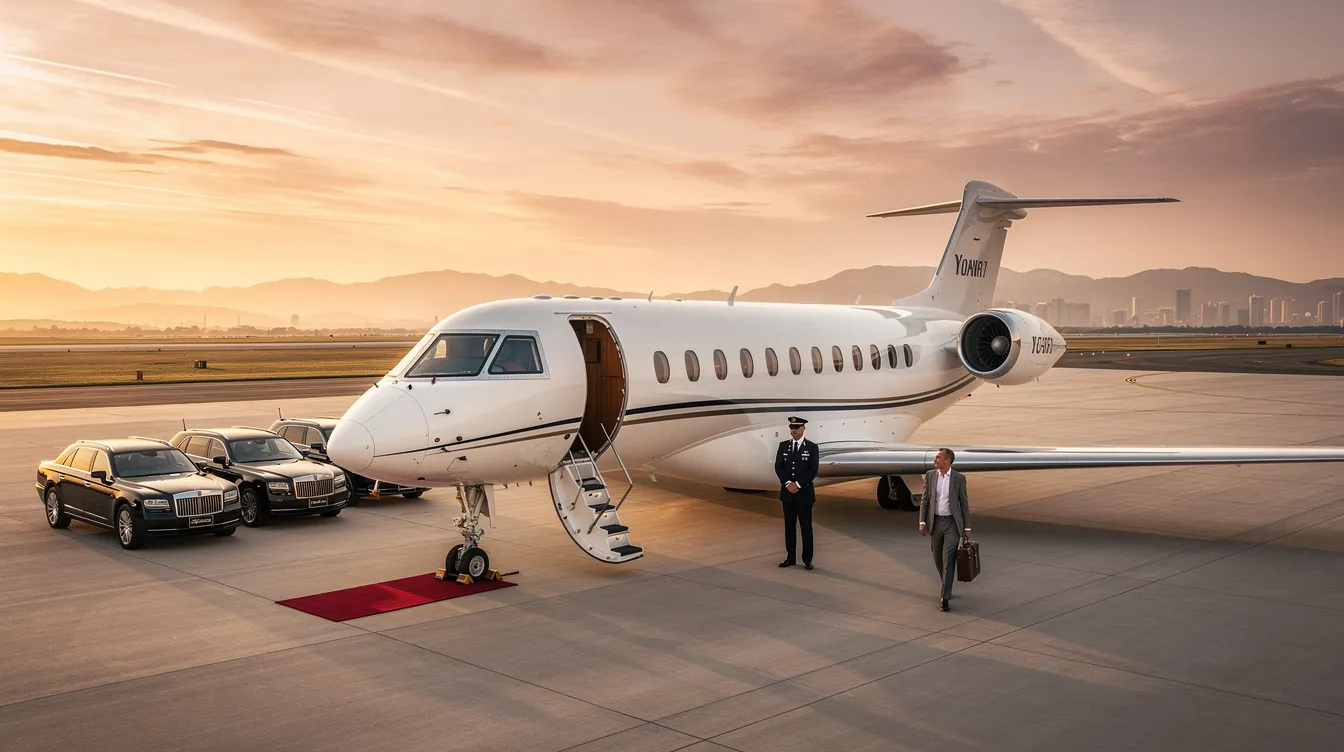
Light jets are the foundation of private aviation efficiency. Compared to mid size jets, light jets offer greater operational efficiency for shorter trips and smaller groups, making them ideal for quick business or leisure travel, especially for travelers looking to fly private cheaply with smart strategies. Light jets also have the ability to operate from shorter runways, providing access to airports that are unavailable to larger aircraft.
Range and Capability
Typically covering 1,200 to 2,500 nautical miles, light jets are ideal for regional missions under four hours.
Key Advantages
Lower hourly operating costs
Access to smaller regional airports
Faster boarding and turnaround times
Example: Phenom 300
The Phenom 300 is widely considered one of the best light jets due to its:
In its standard configuration, the Phenom 300 offers flexible seating arrangements for up to eight passengers, allowing for both comfort and operational versatility on a variety of routes.
For executives traveling between cities like Los Angeles and San Francisco or New York and Chicago, light jets deliver unmatched practicality, and many choose simply to buy a seat on a private jet rather than chartering the entire aircraft.
Heavy Jets and Ultra-Long-Range Business Jets
At the top of private aviation, heavy jets redefine global travel. Ultra long range jets are known for their high performance, allowing them to operate efficiently on global routes and meet the demands of long-distance travel.
Range and Cabin Experience
Heavy jets offer:
These jets feature a spacious cabin with multiple living areas, providing ample room for passengers to work, dine, and relax in comfort.
Passengers can enjoy advanced entertainment systems, including in-flight Wi-Fi and audiovisual equipment, as well as dedicated spaces for relaxation and leisure activities.
Large-cabin jets can also be configured with private bedrooms, on-board showers, and gourmet meal facilities for a truly luxurious in-flight experience.
Passenger Capacity
These aircraft typically seat 10 to 19 passengers, making them ideal for corporate teams or family travel. Heavy jets provide ample room and space, ensuring a comfortable and luxurious experience for all on board. They can accommodate 10 passengers or more and offer larger cabin sizes with significant comfort and elegance.
Strategic Advantage
Ultra-long-range jets eliminate the need for fuel stops, enabling routes like:
New York to Tokyo
London to Los Angeles
Many of the best private airplanes are also recognized for their impressive top speed, with high-speed models like the Cessna Citation X capable of cruising near Mach 0.90, significantly reducing travel time.
This reduces travel time and avoids operational disruptions.
Bombardier Global Family: Long-Range Leadership
The Bombardier Global series consistently ranks among the best private airplanes. As a benchmark for ultra-long-range travel, the Global Express line is renowned for connecting distant destinations with exceptional performance, luxury, and advanced technology.
The Bombardier Global Express XRS stands out for its intercontinental capability, advanced wing design, and a maximum range of 6,000 nautical miles (11,100 km), making it a top choice for demanding long-haul flights. The average charter price for London–Paris is approximately £17,100.
6.1 Bombardier Global 7500
The Bombardier Global 7500 features four distinct living spaces and state-of-the-art technology, including the innovative Nuage seat, which enhances passenger comfort and minimizes fatigue during long journeys.
Global 7500
Range: ~7,700 nautical miles
Features: Four distinct living spaces
Advantage: Industry-leading cabin comfort and range
Global 8000
The upcoming Global 8000 aims to push performance even further, competing directly with Gulfstream’s latest models in the ultra-long-range category. The Global 8000 is equipped with the latest technology and amenities, offering state-of-the-art systems and exceptional comfort. The best private airplanes in 2026 include the Bombardier Global 8000, Gulfstream G650ER, Embraer Phenom 300E, and Pilatus PC-12.
Cabin Experience
The Global family emphasizes:
Dassault Falcon Series: Performance and Innovation
Dassault takes a different approach, focusing on efficiency and flexibility. The Falcon series features a high lift wing design, which enables exceptional short-field takeoff and landing performance, allowing operation from a wide variety of runways, including grass, gravel, dirt, and paved surfaces. These aircraft are engineered for versatile landing capabilities, with the Falcon 6X receiving EASA approval for steep-approach operations, enhancing accessibility to key airports. Dassault Falcons are also equipped to handle diverse weather conditions, offering advanced safety and navigation systems for reliable performance in various climates. The Dassault Falcon 8X stands out for its exceptional fuel efficiency and reduced carbon emissions, making it a more eco-friendly choice among private jets. Additionally, the Dassault Falcon 10X is designed for full Sustainable Aviation Fuel (SAF) capability.
Falcon 8X and 7X
Long-range capability
Exceptional short-field performance
Renowned for their performance and innovation, the Falcon 8X and 7X are acclaimed within the aviation industry for their luxury and advanced technology.
Access to airports unavailable to larger jets
Key Differentiator
Dassault aircraft combine long range with superior runway performance, allowing more direct routing and reduced ground travel time. The Falcon series offers a winning combination of high performance, range, and operational flexibility, making them stand out among the best private airplanes for discerning travelers.
Range Comparisons Measured in Nautical Miles
Understanding range is critical when evaluating aircraft.
Typical Range Benchmarks
Light jets typically cover ranges between 1,200 and 2,500 nautical miles.
Super Light Jets provide enhanced size, extended range, and greater comfort compared to small light jets, accommodating around eight passengers on average.
Midsize jets: 2,500–4,000 nautical miles
Mid size jets combine impressive range and passenger capacity with spacious cabins, making them ideal for both short and long-distance travel while offering superior comfort and amenities.
Heavy jets: 4,000–7,700+ nautical miles
Converting Nautical Miles
1 nautical mile = 1.15078 miles, useful when comparing aviation data to standard distances.
Real-World Considerations
Actual range and flight time vary due to factors such as:
Headwinds
Temperature
Passenger load
Flight time can be affected by these operational factors, meaning the duration of your journey may change depending on wind conditions, outside temperature, and how many passengers are on board.
Range With Four Passengers: Real-World Performance
Manufacturer specifications often assume ideal conditions. Real-world performance is best understood through practical scenarios.
With four passengers and moderate luggage:
Many ultra-long-range jets retain near-maximum range
Aircraft like the Gulfstream G650 can exceed 7,500 nautical miles under optimal conditions
On a typical private jet flight, these aircraft can cover long distances nonstop, depending on passenger load and optimal conditions.
This enables true nonstop intercontinental travel without compromise.
First Flight and New Entrants to Watch
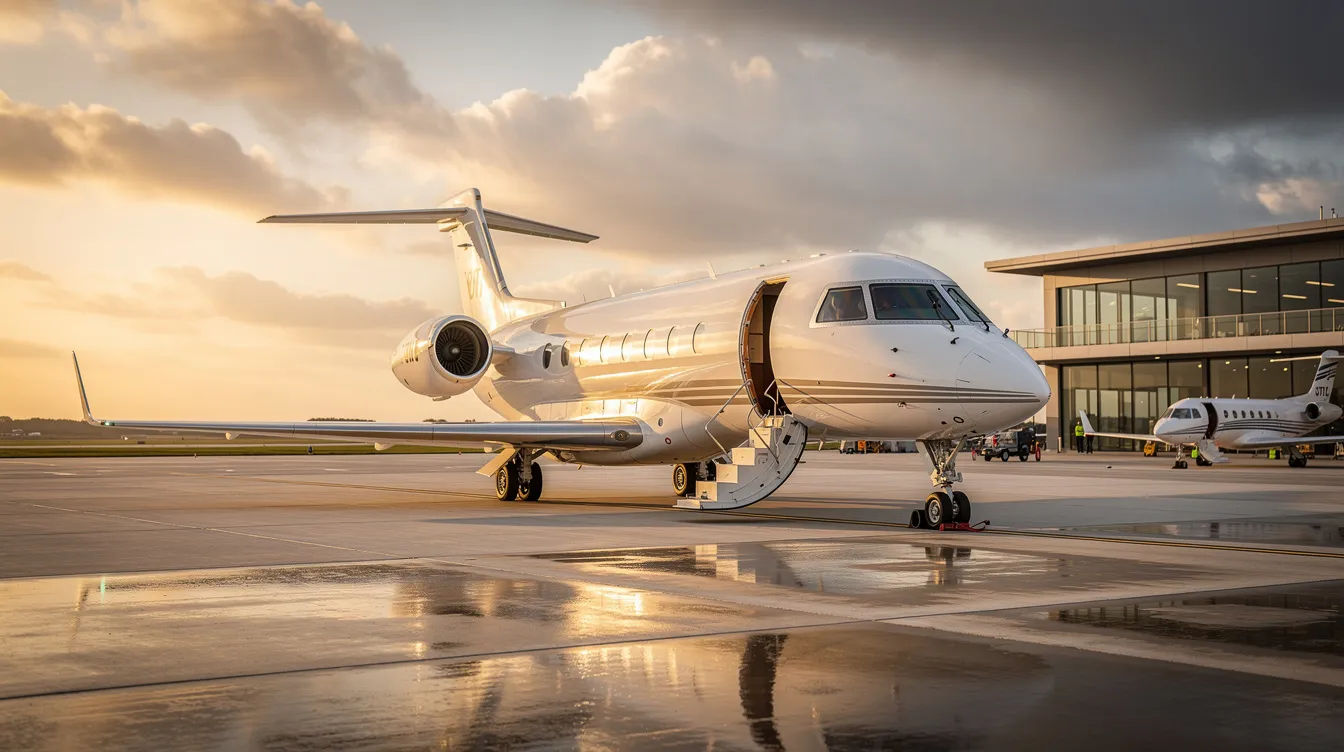
The next generation of business jets is already shaping the future. Major players like Boeing and Airbus are leading the executive and business jet market, offering highly customizable aircraft such as the Boeing BBJ series and Airbus ACJ models for luxury private travel, which feature prominently among the most expensive private jets in the world. Executive liners, also known as bizliners, are commercial aircraft modified for business or private use, featuring a high level of customization to meet the needs of discerning travelers.
Falcon 10X
Dassault’s Falcon 10X is expected to introduce:
Larger cabin dimensions
A spacious cabin with multiple living areas for work, dining, and relaxation
Luxury features such as an en suite shower
Enhanced range
Improved fuel efficiency and full Sustainable Aviation Fuel (SAF) capability
Market Impact
New aircraft typically take years from first flight to certification, but they influence buying decisions well before delivery.
In the business aviation sector, the ongoing demand for efficiency and flexibility continues to drive innovation and shape market trends.
Choosing by Mission: Matching Aircraft to Travel Needs
Four-Passenger Business Travel
Priorities:
Best fit: Super-midsize or long-range jets. Mid size jets are also a suitable choice for missions requiring a balance between comfort and operational cost.
Conclusion: Navigating the Best Private Airplanes for Your Needs
Selecting the best private airplane ultimately hinges on aligning your travel mission with the right aircraft capabilities. Whether prioritizing short regional hops with light jets like the Embraer Phenom 300, or embarking on intercontinental journeys aboard ultra-long-range heavy jets such as the Bombardier Global 7500 or Gulfstream G700, understanding your range, passenger capacity, and cabin comfort needs is essential.
As the private aviation industry evolves, platforms like BlackJet offer innovative solutions to access private jet services more conveniently and cost-effectively, with products like the BlackJet 25+ Hour Jet Card providing curated options that match individual travel preferences and schedules. By leveraging such services alongside expert guidance, travelers and businesses can maximize the strategic advantages of private aviation—enjoying unparalleled flexibility, privacy, and luxury.
In 2026 and beyond, with ongoing advancements in technology, sustainability, and cabin wellness, the best private airplanes will continue to redefine how we experience air travel, making every journey as efficient and enjoyable as possible.


 Sign up with google
 Sign up with Apple