Private aviation has fundamentally changed the landscape of luxury and business travel, offering discerning travelers a level of flexibility, privacy, and comfort that commercial airlines simply can’t match. With a diverse range of aircraft options—from nimble light jets perfect for short hops to long-range jets and ultra-long-range jets designed for intercontinental journeys—private jet charter companies provide tailored solutions for every mission. Whether you’re traveling for business or leisure, private jet travel ensures a stress-free travel experience, allowing you to comfortably accommodate up to six passengers or more, depending on the aircraft type.
The world of private aviation is built around choice and customization. Travelers can select from a comprehensive suite of services, including on-demand charter flights for spontaneous getaways, fractional aircraft ownership for frequent flyers seeking equity and guaranteed access, or jet card programs for predictable, fixed-hour usage. Each aircraft type offers unique advantages, from the efficiency of light jets for regional trips to the expansive cabins and range of ultra-long-range jets for global itineraries. This diverse range of aircraft and access models empowers travelers to create a personalized experience, ensuring every journey is as efficient and enjoyable as possible.
Key Takeaways
This guide ranks and compares the best private charter jet providers and aircraft in 2025, focusing on time savings, safety, and strategic value for HNWIs and corporate travelers. Whether you’re evaluating NetJets, VistaJet, Flexjet, Wheels Up, or boutique operators, you’ll find concrete data to inform your decision.
Top providers dominate different segments: NetJets leads fractional ownership with 1,000+ aircraft globally, VistaJet excels in intercontinental missions with carbon-neutral commitments, Flexjet delivers premium transatlantic service, and Wheels Up and XO provide tech-forward flexibility for regional travel.
“Best” depends entirely on your use case: short-haul U.S. hops differ fundamentally from New York–London nonstops, and a solo executive has different needs than a 10-person deal team or a family heading to Aspen for the holidays.
The guide covers specific aircraft models—from the King Air 350i and Citation CJ4 for regional efficiency to the Gulfstream G600 and Global 6500 for intercontinental missions—with real-world range, seating, and hourly rate examples.
Safety (ARGUS/IS-BAO/Wyvern), sustainability (SAF and carbon offsets), and technology (apps, instant pricing, 24/7 operations) are woven throughout, plus an FAQ addressing cost, booking timelines, and international travel requirements.
Why the Best Private Charter Jets Are a Strategic Advantage (Not Just a Luxury)
Consider a typical New York–Los Angeles business trip on commercial airlines. You arrive at JFK 90 minutes before departure, navigate security lines, wait at the gate, board with 200 other passengers, and land at LAX after a 5.5-hour flight—only to face another 30-45 minutes collecting bags and finding ground transportation. Door-to-door: 8-9 hours on a good day. If you're considering private jets as an alternative, understanding the different sizes available can help you find the perfect match for your travel needs.
Now consider the same trip via private charter. You arrive at Teterboro’s FBO 20 minutes before departure, walk directly to your aircraft, and take off. A Citation X+ or Challenger 350 covers the distance in under 5 hours. You land at Van Nuys, where your car waits on the tarmac. Door-to-door: 5.5 hours. That’s 3+ hours reclaimed—time that compounds across dozens of annual trips into hundreds of productive hours.
During major events such as the Super Bowl or global conferences, private jet demand surges, resulting in frequent flights for executives and celebrities who require maximum flexibility. Destinations like Las Vegas are especially popular for private jet travelers, with high-end clients and business leaders often booking frequent flights to and from the city during high-demand periods.
For executives and families, the core value extends beyond comfort:
Deal-making productivity
Turn flight time into working sessions with full connectivity and privacy
Confidentiality
Discuss sensitive transactions without seatmates or cabin overhear
Airport access
Reach secondary cities (Aspen, Teterboro, Farnborough, Van Nuys) that commercial air travel serves poorly or not at all
Schedule control
Depart when you’re ready, not when the airline schedules
Quick Comparison: Private Charter vs. Commercial vs. Ownership
Time savings per trip: 2-4 hours with private charter, baseline with commercial business/first class, and 2-4 hours with full ownership.
Annual commitment: None to 25+ hours for private charter, none for commercial business/first class, and typically 200-400+ hours for full ownership.
Upfront costs: None or jet card deposit for private charter; ticket price and types of jet engines for commercial business/first class; $3 million to $70 million or more for full ownership.
Flexibility: High for private charter, low (fixed schedules) for commercial business/first class, and highest for full ownership.
Annual cost (moderate use): $100,000 to $500,000 for private charter, $50,000 to $150,000 for commercial business/first class, and $500,000 to $2 million or more in fixed costs for full ownership.
Modern charter providers leverage technology—apps with instant quoting, dynamic scheduling, real-time tracking—and rigorous safety certification to make private travel more predictable and transparent than ever. Later sections will address jet card programs, sustainability commitments such as VistaJet’s carbon-neutrality target, and the safety standards that distinguish excellent operators from average ones.
What Is a Private Charter Jet (and How It Differs from Other Private Aviation Models)?
A private jet charter means renting an entire aircraft—crew included—for a single trip. In the United States, these flights operate under FAA Part 135 commercial operator regulations; Europe and other regions have equivalent standards. Unlike commercial flights, charter flights are unscheduled: you control the departure time, the route, and who boards.
Four Main Access Models Compared:
On-demand charter: Book aircraft per trip through brokers or operators. No long-term commitment. Best for occasional flyers using fewer than 25 hours annually. Services like XO and Wheels Up offer pay-per-trip pricing through apps or brokers, providing flexible access to a diverse fleet.
Jet cards: Pre-purchase flight hours (typically 25-hour minimums) at fixed hourly rates. Guaranteed availability and consistent pricing. Ideal for 25-75+ hours per year.
Fractional ownership: Buy equity in a specific aircraft (e.g., 1/16th share for 50 hours annually). Predictable monthly and hourly costs with ownership benefits. Suits 75-300+ hours per year.
Leasing options: Flexible leasing arrangements, including jet card programs, fractional ownership, and other tailored solutions, allow clients to access private jets without full ownership. These leasing options cater to a range of needs and preferences, offering varying levels of commitment and cost.
Full ownership: Purchase and operate your own aircraft through aircraft management companies. Maximum control and customization. Makes sense above 300-400 hours annually. However, outright purchase involves significant upfront costs ranging from $2 million to over $110 million depending on the aircraft type and features, with ongoing expenses such as maintenance, fuel, crew salaries, and insurance totaling between $500,000 and $5 million annually.
Private flights use private terminals—FBOs like Signature Aviation and Atlantic Aviation—rather than crowded commercial terminals. Pricing is per trip or per hour, not per seat, which means the same cost whether you’re flying solo or with up to six passengers in a light jet.
Many leading brands—NetJets, Flexjet, VistaJet, Wheels Up, XO, and JSX—operate across multiple models. JSX offers a unique "hop-on" model allowing travelers to book individual seats on private jets, blending private jet comfort with seat pricing flexibility. Understanding which program you’re selecting matters as much as choosing the brand itself. The remainder of this guide addresses both the best private jet company options and the specific aircraft types that excel for common routes and missions.
Best Private Charter Jet Companies for 2025
This section profiles the strongest providers across categories: global fleets, North American specialists, tech-forward platforms, and boutique charter services. Leading providers offer a global network of aircraft, enabling seamless international access to a diverse range of destinations. Each excels in different scenarios, and the right choice depends on your travel patterns, budget, and service expectations.
Leading Providers Overview:
NetJets: Operates over 1,000 owned aircraft globally. Ideal for travelers flying 50-200+ hours per year who seek consistent quality.
VistaJet: Owns 80+ aircraft and partners with others to access 1,900 airports in 96% of countries worldwide. Best suited for global families and sustainability-focused travelers. VistaJet specializes in high-end international travel and global sustainability initiatives.
Flexjet: Manages a fleet of 200+ owned aircraft, primarily serving North America and transatlantic routes. Perfect for premium service seekers flying 50-150 hours annually.
Wheels Up: Offers access to a network of 1,500+ aircraft across North America and Europe. Appeals to value-conscious clients flying 25-75 hours per year.
XO: Provides a network of 2,400+ aircraft globally, catering to tech-forward travelers with flexible demand.
Jet Linx: Has 100+ aircraft based at 20+ locations across the U.S. Ideal for frequent flyers with a home-based focus.
Magellan Jets: Operates through a vetted partner network in North America and the Caribbean, offering personalized service to discerning clients. Magellan Jets often ranks highly for safety and transparent pricing, offering flexible jet card programs and on-demand charters. They have a flawless safety record and hundreds of aircraft options in their Preferred Network.
FlyExclusive: Owns 90+ aircraft serving North America, the Caribbean, and parts of Central and South America. Attracts empty-leg hunters and value-focused travelers.
Trilogy Aviation Group: Offers round-the-clock services to more than 6,000 airports, providing extensive availability and flexibility.
Leviate Air Group: Operates a fleet of seven aircraft and has access to a diverse global network of aircraft.
Silver Air: Offers membership options as well as direct charter flights, catering to various traveler needs.
Most charter jet services offer direct charter flight options without requiring a membership. However, charter jet memberships can provide additional perks such as discounted pricing and access to empty legs. It’s advisable to try flying directly with a charter jet service before committing to a membership to assess service quality.
NetJets: The Benchmark for Fractional Ownership and Charter Access
NetJets stands as the world’s largest private aviation company, founded in 1964 and headquartered in Columbus, Ohio. With over 1,000 aircraft spanning light jets to ultra-long-range jets, NetJets offers the most extensive fleet of any single operator globally.
Key offerings include:
Fractional aircraft ownership (1/16th share minimum, approximately 50 hours annually)
Lease programs for those wanting aircraft access without long-term equity
Jet card programs (Marquis-style) for flexible hour blocks
On-demand charter flights through their network
NetJets particularly excels for transatlantic and long-haul missions. A U.S. executive using a NetJets jet card for regular New York–London flights might select a large cabin jet configured for both sleep and productive work—seating 6-7 passengers with full lie-flat capability, Wi-Fi, and catering tailored to the overnight crossing.
The company emphasizes proprietary safety standards, in-house pilot training, and standardized cabins across its fleet—elements that appeal to corporate travel departments requiring consistent, auditable quality. For clients flying 50-200+ hours per year who prioritize uniform aircraft quality and global reach, NetJets remains the benchmark against which others are measured.
VistaJet & Vista Global: Global, Asset-Light Access with a Sustainability Focus
VistaJet, part of Vista Global (founded 2018, headquartered in Dubai), operates a branded fleet of approximately 80+ super-midsize and large cabin jets, with extensive partner access for worldwide coverage. Their model differs fundamentally from fractional ownership: members pay hourly rates for guaranteed access without purchasing equity.
This asset-light approach suits frequent international travelers who want point-to-point global coverage without ownership complexity. A European family flying London–Maldives–Dubai on a VistaJet Global 6500 experiences tailored onboard personalized service, rest-optimized cabin configuration, and the distinctive silver-and-red livery that signals arrival at any FBO worldwide.
VistaJet has pledged carbon-neutral business aircraft operations by 2025, actively utilizing sustainable aviation fuel (SAF) and verified carbon offsets. For sustainability-minded family offices and corporations, this commitment—backed by transparent reporting—positions VistaJet as a leader in addressing the environmental impact of private aviation.
Vista Global also includes XO, their tech-enabled platform for on-demand charter and shared flights, offering app-driven instant pricing for travelers seeking flexible access without long-term commitment.
Flexjet: Premium Fractional and Charter for Transatlantic and North American Travel
Flexjet originated under Bombardier in 1995 and has evolved into a major fractional and charter provider with a modern fleet including the Embraer Praetor 500, Bombardier Challenger 3500, and Gulfstream aircraft. Their operational excellence centers on meticulously maintained cabins and high-touch service standards.
Flexjet’s portfolio includes:
Fractional shares (starting at 1/16th ownership)
Lease programs
Jet card programs with fixed hourly rates
On-demand private charter access
The company operates particularly strong coverage for U.S. domestic and transatlantic routes—New York–London, Chicago–Paris, Miami–Geneva. Their dedicated operations control centers and flight operations teams satisfy corporate clients with rigorous internal travel approval processes.
Consider this scenario: a private equity firm rotates deal teams between Boston, Dallas, and London throughout the quarter. A Flexjet card tied to super midsize jets and large cabin jets provides consistent aircraft quality, guaranteed availability, and the schedule flexibility that roadshow travel demands. For heavy North American and European users flying 50-150+ hours annually, Flexjet delivers premium service with fractional efficiency.
Wheels Up, XO, Jet Linx, and JSX: Best Value and Flexibility for U.S. and Regional Travel
This group leads membership-based and tech-forward private jet access with lower upfront costs compared to full fractional ownership, making private travel accessible to a broader range of discerning travelers.
Wheels Up
Founded in 2013, New York offers access to 1,500+ aircraft through owned and partner fleets. Their strength lies in King Air 350i turboprops and Citation jets for regional and coast-to-coast travel. Jet card-style programs start around $100,000 for approximately 20 flight hours, with membership tiers providing different benefit levels.
XO
Provides an app-driven platform for full charter and shared flights backed by Vista Global’s network of 2,400+ aircraft. Their dynamic pricing model, empty legs marketplace, and seats on shared flights appeal to travelers who don’t need a full aircraft every time—perfect for solo executives on popular routes like New York–South Florida.
Jet Linx
Founded in 1999, Omaha operates a localized base model with 20+ U.S. locations, each featuring private terminals and a dedicated fleet. Their fixed hourly rates via jet card programs and personalized base-level service suit frequent flyers who regularly depart from the same home city.
JSX
JSX offers a unique "hop-on" model allowing travelers to book individual seats on private jets, blending the convenience of commercial airlines with the comfort and privacy of private aviation. This model is ideal for travelers who want the benefits of private jet travel without chartering an entire aircraft.
Example use cases:
Wheels Up King Air 350i for Boston–Nantucket weekend flights
XO shared flights on high-demand routes, reducing per-person costs
Jet Linx for a Midwestern executive shuttling Omaha–Denver–Chicago weekly
JSX for travelers booking individual seats on private jets for regional routes
Magellan Jets, FlyExclusive, and Boutique Charter Specialists
Mid-sized charter specialists offer alternatives to the mega-brands, often providing more personalized experiences and flexible program structures.
Magellan Jets
Founded in 2008, the Boston area company operates through a “Preferred Network” of vetted operators rather than an owned fleet. This approach allows access to a diverse range of aircraft while maintaining rigorous safety and service standards. Their customized jet card programs and dedicated aviation consultants appeal to clients wanting VIP-level attention without locking into a single fleet.
Magellan Jets often ranks highly for safety and transparent pricing, offering flexible jet card programs and on-demand charters. They have a flawless safety record and hundreds of aircraft options in their Preferred Network. High-end charter companies like Magellan Jets also provide concierge support, including airport transfers and specialized catering.
FlyExclusive
Founded in 2015, Kinston, NC, runs a hybrid model combining on-demand charter, jet cards, fractional offerings, and extensive empty leg flight opportunities. With 90+ owned aircraft, they provide particularly strong coverage across North America, the Caribbean, and parts of Central and South America.
These boutique providers typically deliver:
Faster response times and direct advisor relationships
Flexibility in program terms (peak day rules, cancellation windows)
Access to specialized aircraft options and route expertise
Competitive pricing through operational efficiency
When comparing boutique operators against larger brands, evaluate responsiveness, route specialization, and willingness to customize terms to your specific travel patterns.
Best Private Charter Jet Aircraft by Category
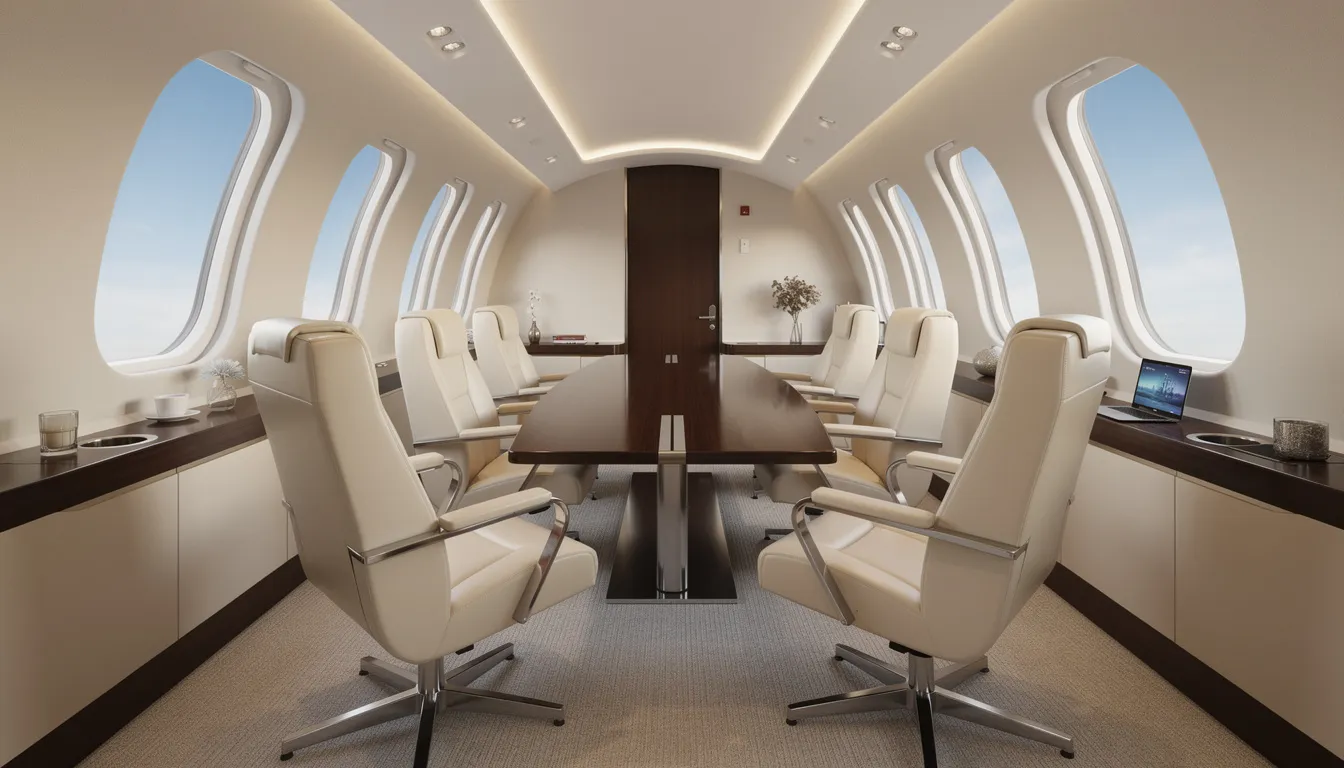
The “best” aircraft is mission-specific. Distance, passenger count, runway length, and onboard work or sleep needs matter more than brand prestige alone. Private jets are categorized by size and maximum range, including light jets, midsize jets, super-midsize jets, heavy jets, and turboprops. Maximum range is a key factor when selecting the right aircraft for long-haul or nonstop flights, as jets with higher maximum range offer greater flexibility and convenience for reaching distant destinations without refueling stops. The average cruising speed of private jets ranges from 400 to 700 mph, depending on the aircraft type. Additionally, private jet charters provide access to thousands of airports, many of which are not served by commercial airlines. A Gulfstream G650 is wasted on a 300-mile hop; a light jet can’t cross the Atlantic.
Aircraft Category Overview:
• Turboprops: Typically seat 6-9 passengers, with a range of 1,000-1,800 nautical miles and an approximate hourly rate of $2,000-$4,000. Turboprop aircraft are cost-effective options for short-haul flights, accommodating up to 8 passengers with a range of about 1,000 miles.
• Light jets: Usually accommodate 6-8 passengers, capable of flying 1,500-2,400 nautical miles, costing around $4,000-$6,000 per hour.
• Midsize jets: Seating for 5-9 passengers, with a range of 2,000-3,500 nautical miles and hourly rates between $5,000-$7,000.
• Super midsize jets: Designed for 8-10 passengers, flying 3,000-4,000 nautical miles, with hourly costs of $7,000-$10,000.
• Heavy jets: Offer seating for 10-16 passengers, a range of 4,000-5,500 nautical miles, and hourly rates from $8,000-$12,000. Heavy jets are designed for long-range travel, typically accommodating 10-16 passengers and capable of flying over 6,000 miles non-stop. The Gulfstream G650 is a prime example of a heavy jet that can fly over 7,000 miles non-stop, making it suitable for international travel.
• Ultra-long-range jets: Accommodate 12-19 passengers, capable of flying 6,000-7,700 nautical miles, with hourly rates starting at $10,000 and going above $20,000.
Match aircraft class to real travel patterns—not to prestige—and you’ll optimize both experience and cost savings.
Best Turboprops and Very Light Jets for Short-Haul Efficiency
Turboprops and very light jets excel for trips under 500-800 miles, particularly to airports with short runways or limited infrastructure where jets can’t operate.
Top aircraft in this category:
Pilatus PC-12: Single-engine turboprop seating up to 9 passengers with approximately 1,800 nm range. Legendary for accessing challenging airports and providing business-class comfort with club seating.
Beechcraft King Air 350i: Twin-engine turboprop found extensively in Wheels Up’s fleet. Seats 8-9 passengers with 1,800 nm range and cruising speed sufficient for 2-3 hour regional missions.
Pilatus PC-24: The “Super Versatile Jet” bridges turboprop airport access with jet speed, seating 8-10 passengers with unpaved runway capability.
Hourly charter rates typically run $2,000-$4,000—significantly lower than jet alternatives while maintaining productivity-friendly cabins.
Example scenarios:
A family flying from Dallas to Santa Fe avoids the 6-hour drive while accessing Santa Fe’s shorter runway
A founder shuttles between Silicon Valley and Lake Tahoe weekly, using Truckee’s mountain airport rather than driving 4+ hours
Very light jets like the Citation Mustang and Phenom 100 offer alternatives for 3-4 passengers needing jet speed on short trips, with smaller cabins but lower costs than midsize options.
Best Light and Midsize Jets for Regional Business Travel
Light jets and midsize jets form the backbone of domestic and short transcontinental business travel across North America and Europe, balancing cost, comfort, and productivity effectively.
Key models to consider:
Cessna Citation CJ4: Light jet seating 7-9 passengers with 2,165 nm range—sufficient for Los Angeles–Dallas or New York–Miami nonstop.
Embraer Phenom 300: Best-selling light jet globally, seating 7-8 passengers with 1,970 nm range and excellent short-field performance.
Citation Latitude: Midsize standout with stand-up cabin, seating 9 passengers with 2,700 nm range covering coast-to-coast U.S. routes.
Hawker 800/900XP series: Proven midsize performers seating 8 passengers with comfortable cabins for 4-5 hour missions.
These aircraft comfortably accommodate routes like New York–Palm Beach, London–Ibiza, Paris–Athens, and Chicago–Denver with non-stop capability. Hourly charter rates typically range $4,000-$7,000, depending on model, age, and region.
Scenario: A CEO and three-person team fly weekly between Chicago and Toronto on a midsize jet. Commercial options require 5+ hours, including connections and ground time. The charter flight takes 1.5 hours, enabling same-day round trips with maximum productive time in meetings.
Best Super-Midsize and Heavy Jets for Transcontinental Comfort
Super midsize jets add meaningful range and cabin volume without the full cost of large-cabin widebodies, making them ideal for U.S. coast-to-coast and shorter transatlantic routes.
Leading aircraft:
Embraer Praetor 500: 3,340 nm range, seating 8-9 passengers with a full stand-up cabin and excellent fuel efficiency for transcontinental missions.
Bombardier Challenger 3500: 3,400 nm range, seating 9 passengers with industry-leading cabin altitude (4,850 ft), reducing fatigue on 5-6 hour flights.
Gulfstream G280: 3,600 nm range, seating 10 passengers with steep-approach capability for challenging airports like London City.
These aircraft feature stand-up cabins, full galleys, enclosed private lavatory facilities, Wi-Fi connectivity, and flat-floor layouts supporting both work and rest during extended legs.
Example: A deal team of eight flies New York–San Francisco overnight for a morning meeting on a Challenger 3500. The 5-hour flight becomes a mobile boardroom—reviewing documents, rehearsing presentations, and arriving rested rather than exhausted.
Heavy jets like the Gulfstream G450, Falcon 900, and older Global Express models push capacity to 10-14 passengers with transatlantic range, serving larger groups or families on longer trips.
Best Ultra Long Range Jets for Intercontinental and Global Missions
Ultra-long-range jets represent the pinnacle of private aviation, designed for nonstop sectors that would otherwise require commercial flights with layovers or positioning stops.
Flagship models:
Gulfstream G600: 6,500 nm range, seating 13 passengers with an award-winning cabin design and low cabin altitude (3,000 ft), minimizing jet lag.
Gulfstream G650/G700: 7,000-7,500 nm range, seating 16-19 passengers with multiple cabin zones for the ultimate intercontinental experience.
Bombardier Global 6500: 6,600 nm range, seating 14 passengers with Bombardier’s smooth-ride technology, reducing turbulence effects by up to 30%.
Bombardier Global 7500: 7,700 nm range—the longest of any purpose-built business jet—seating 19 passengers across four living spaces, including a dedicated bedroom and shower.
Dassault Falcon 7X/8X: 5,950-6,450 nm range with a unique trijet design offering flexibility and efficiency.
These aircraft feature multiple cabin zones (lounge, conference area, bedroom), advanced noise reduction, and full-height cabins optimized for 10-14-hour international flights.
Use case: A family office flying Geneva–Singapore nonstop on a Global 6500 for a week of meetings. The 12-hour flight allows full sleep in an actual bed, arriving refreshed rather than requiring a recovery day—impossible on commercial options requiring connections through hub airports.
VistaJet, NetJets, and select boutique operators maintain fleets of these aircraft, though charters command premium hourly rates of $10,000-$20,000+ depending on specific aircraft type and positioning.

How to Choose the Best Private Charter Jet for Your Trip
Smart selection requires aligning four key variables rather than defaulting to the largest or most prestigious aircraft:
Route length: What’s the nonstop distance required?
Passenger count: How many people, and what’s their relationship (business colleagues vs. family)?
Schedule flexibility: Fixed dates or ability to shift for better aircraft/pricing?
Budget parameters: What’s the acceptable total trip cost, and how does it compare to alternatives?
Key decision factors to evaluate:
Nonstop range needed (add 15% buffer for winds and alternates)
Airport access (runway length, customs capability, FBO availability)
Cabin configuration (work zones vs. sleep capability)
Baggage requirements (ski gear, golf clubs, event equipment)
Special needs (pets, wheelchair access, security requirements)
Simple Decision Framework:
Under 500 miles: Turboprop or very light jet
500-2,000 miles: Light or midsize jet
2,000-3,500 miles: Super-midsize jet
Over 3,500 miles: Heavy or ultra-long-range jet
Consider the time value beyond the ticket price. Calculate effective hourly cost, including saved hotel nights, eliminated layovers, and reclaimed working hours, when comparing against commercial business or first class.
Work with a reputable broker or program advisor who can present 3-5 aircraft options per trip with transparent details: photographs, aircraft age, refurbishment date, safety ratings, and operator credentials. The right aircraft exists—your job is finding the advisor who’ll show it to you.
Safety, Certification, and Operational Excellence in Private Charter
Safety should be your first filter, not an afterthought—especially when flying family, executive teams, or key clients. Serious providers publish their safety standards openly; those that don’t should raise questions.
Key Third-Party Audit Standards:
ARGUS Gold/Platinum: Independent operator evaluation covering pilot experience, maintenance practices, and operational history. Platinum represents the highest rating.
Wyvern Wingman: Rigorous safety audit requiring annual recertification, covering all aspects of flight operations from crew training to aircraft maintenance.
IS-BAO (International Standard for Business Aircraft Operations): Global standard established by IBAC, with stages reflecting progressive safety management system maturity.
Top providers standardize critical elements:
Pilot simulator training 1-2 times annually
Minimum experience thresholds (e.g., 3,000+ flight hours, current type ratings)
Duty and rest rules exceeding regulatory minimums to prevent fatigue
Continuous monitoring through flight data analysis
Questions to always ask:
What’s the pilot-in-command’s total time and time on this aircraft type?
When was the operator’s last safety audit, and what was the result?
What are the insurance coverage levels?
Who maintains the aircraft, and where?
Does the operator own this aircraft or manage it for an owner?
Many corporations maintain travel policies requiring only ARGUS Platinum or Wyvern Wingman operators for all private flights—a standard worth considering for your own travel.
Sustainability and Technology in Modern Private Jet Charter
Private jets carry higher per-passenger carbon footprints than commercial airlines—a reality that leading providers increasingly address through SAF adoption, carbon offsetting, and fleet modernization.
Current Industry Initiatives:
VistaJet’s carbon-neutral commitment: Targeting fully carbon-neutral operations by 2025 through verified offset programs and SAF integration at major hubs
SAF availability: Sustainable aviation fuel blends (currently 5-10% at most locations) reduce lifecycle emissions up to 80% compared to conventional jet fuel. Availability expands monthly at FBOs serving general aviation.
Fleet modernization: Newer aircraft (Praetor 600, Global 7500, G600) burn 15-25% less fuel than predecessors while offering superior range
Carbon offsetting funds verified projects—reforestation, renewable energy, methane capture—to counterbalance flight emissions. Quality providers calculate emissions transparently and offer built-in offset programs rather than treating sustainability as an optional add-on.
Technology Enhancements Transforming Charter:
Mobile apps delivering instant pricing across thousands of aircraft options
Real-time flight tracking shared with family, colleagues, or security teams
Digital contracts and electronic payments are eliminating paper delays
Integrated concierge management: ground transportation, catering, security, and customs coordination through a single platform
For travelers concerned about environmental impact: actively request SAF when available, verify offset program quality, choose efficient aircraft for your mission, and consider whether multiple providers might combine legs to reduce empty leg flights and positioning.
Jet Cards, Memberships, and On-Demand: Which Access Model Is Best?
The optimal private charter experience often depends less on specific aircraft and more on choosing the right access model for your travel patterns.
On-Demand Charter
How it works: Book individual trips through brokers or operators; pay per flight
Best for: Occasional travelers flying fewer than 25 hours annually
Advantages: Maximum flexibility, no long-term commitment, access to a diverse fleet
Drawbacks: Variable pricing, less availability guarantees during peak periods
Jet Cards and Memberships
How it works: Pre-purchase hour blocks (typically 25 hours minimum, $100,000-$250,000+) at fixed hourly rates
Best for: Regular travelers flying 25-75+ hours annually
Advantages: Price predictability, guaranteed availability, consistent service standards
Drawbacks: Capital commitment, unused hours (some programs offer carryover)
Fractional Ownership
How it works: Purchase equity in specific aircraft (1/16th typical minimum, ~50 hours annually)
Best for: Heavy users flying 75-300+ hours annually
Advantages: Ownership benefits, strong service guarantees, predictable monthly costs
Drawbacks: Significant capital commitment, long-term obligation, residual value risk
Example profiles:
A tech CEO flying 40 hours annually across unpredictable destinations → Jet card with multiple providers for flexibility
A family office with 150 hours of predictable transatlantic travel → Fractional ownership in a large-cabin jet
An entrepreneur with 15 hours of annual travel to various destinations → On-demand charter through a trusted broker
Most travelers begin with on-demand to understand their patterns, transition to jet cards once annual hours become predictable, and consider fractional only when usage justifies the capital commitment.
How to Book the Best Private Charter Jet Step by Step
Booking a charter flight now happens in minutes via apps or dedicated advisors, but following a consistent process ensures optimal outcomes.
Step 1: Define the Trip
Dates (specify flexibility windows if any)
Departure and arrival airports (FBO preferences if known)
Passenger count and names
Luggage type and quantity (oversized items like skis or golf bags)
Pets traveling
Special requirements (wheelchair access, specific catering, security needs)
Step 2: Request Quotes
Contact 2-3 providers or brokers with identical trip details
Request 2-3 aircraft options per provider
Ensure quotes include all taxes, fees, landing charges, and positioning costs
Ask for operator safety credentials with each option
Step 3: Compare Options
Price (but not as the only factor)
Operator safety ratings (ARGUS/Wyvern/IS-BAO)
Aircraft age and recent refurbishment
Cabin layout and amenities (Wi-Fi speed, power outlets, sleep capability)
Cancellation and peak-day policies
Step 4: Confirm and Sign
Review contract terms, including weather and mechanical contingencies
Understand substitution policies if the aircraft becomes unavailable
Pay deposit or full amount (wire transfer or card, depending on provider)
Receive confirmed itinerary with FBO addresses and arrival time
Using Websites and Apps for Instant Quotes
Platforms like XO, Wheels Up, and specialized booking tools allow users to input origin, destination, date, and passenger count to receive instant indicative pricing across thousands of aircraft.
Advanced systems handle multi-leg itineraries (e.g., New York–Nassau–Miami–New York) and can recommend different aircraft classes per leg for cost optimization. A turboprop for the short Nassau-Miami hop, for instance, while the longer legs use a midsize jet.
Treat instant quotes as starting points. Before finalizing, verify specific tail numbers, operator credentials, and aircraft condition through your advisor. The app shows what’s available; due diligence confirms it’s right.
Frequent flyers often transition from ad-hoc app bookings to structured jet card programs once annual patterns stabilize—the convenience of guaranteed rates and availability outweighs per-trip shopping at a certain usage threshold.
Selecting Aircraft and Airports Strategically
Choosing smaller, closer airports ranks among the biggest time and stress savers in private aviation:
Instead of flying from major commercial airports, consider these alternatives to save time:
JFK → Teterboro (TEB): saves 30-45 minutes
LAX → Van Nuys (VNY): saves 20-40 minutes
Heathrow → Farnborough (FAB): saves 45-60 minutes
O’Hare → Chicago Executive (PWK): saves 25-40 minutes
Aircraft performance—runway length requirements, climb capability, and approach certification—determines which airports are accessible. Turboprops and light jets often access airports closed to larger aircraft, making them more versatile despite shorter range.
Strategic pairing examples:
London Farnborough → Nice Le Castellet (avoiding busy Nice Côte d’Azur)
Westchester (HPN) → Naples (APF) for direct Florida access
Dallas Love Field → Aspen (requires certified aircraft and crews)
Experienced advisors match aircraft to airport pairs and weather considerations. Mountain destinations like Aspen, Telluride, and Sun Valley require specific pilot certifications and aircraft capabilities—not every operator can access them safely. Learn more about what to consider when evaluating private jet solutions.
Brief your ground transportation teams with exact FBO names and addresses. “Atlantic Aviation at Van Nuys” is more useful than “meet us at the airport.”
Confirming Costs, Policies, and Onboard Experience
Key cost elements to verify before signing:
Hourly rate or fixed trip price (understand which applies)
Fuel surcharges (often separate from base rate)
Landing and handling fees at each airport
De-icing estimates (winter travel)
Overnight crew expenses (multi-day trips)
Catering charges
Wi-Fi fees (some aircraft charge separately)
Clarify cancellation windows: most operators require 24-72 hours' notice without penalty, with shorter windows incurring partial or full charges. Understand mechanical contingency plans—reputable operators guarantee substitution with equivalent or better aircraft class within reasonable timeframes.
For overnight or ultra-long missions, ask specifically about:
Wi-Fi speed and reliability over water
Power outlets at each seat
Sleep arrangements (lie-flat vs. reclining)
Catering options for dietary restrictions
Share passenger lists, dietary requirements, and security preferences (ground transportation arrangements, tarmac access where legally permitted) at least 24-48 hours before departure.
Properly set expectations and confirmed details transform the experience from “just a flight” into a stress-free travel experience that extends your productivity rather than interrupting it.

Comparison to Commercial Airlines: Why Charter Wins for Elite Travelers
For elite travelers, the difference between private jet charter and commercial air travel is night and day. Commercial airlines often mean long security lines, crowded terminals, rigid schedules, and the unpredictability of delays. In contrast, private jet charter services deliver a seamless travel experience, with conveniently located airports, flexible departure times, and a diverse fleet of aircraft to suit any itinerary or group size.
Private jet travel is all about personalized service. From the moment you arrive at a private terminal, you’re greeted by name, your preferences are anticipated, and every detail is tailored to your needs. Gourmet catering, spacious cabins, and attentive crews transform air travel into a luxury experience. For frequent flyers and larger groups, private charter can even offer cost savings compared to purchasing multiple first-class tickets on commercial airlines—especially when factoring in the value of time saved and productivity gained.
With private aviation, you’re not limited by airline schedules or routes. Charter services allow you to fly directly to your destination, often using airports that are more conveniently located and less congested than major commercial hubs. This flexibility, combined with the ability to choose the right aircraft for each trip, makes private jet travel the preferred choice for those who value efficiency, comfort, and control.
Aircraft Management: Behind the Scenes of Elite Jet Operations
Behind every flawless private jet experience is a team of experts dedicated to business aircraft operations and aircraft management. Companies like Solairus Aviation specialize in managing private aircraft for owners, ensuring that every aspect of flight operations meets the highest standards of safety, reliability, and personalized service. From routine maintenance and regulatory compliance to crew selection and training, aircraft management companies handle the complex logistics that keep private aviation running smoothly.
For aircraft owners, partnering with a reputable aircraft management provider means peace of mind. These professionals oversee everything from scheduling and ground handling to in-flight amenities and operational excellence, allowing owners to enjoy the benefits of private aviation without the day-to-day burdens. Solairus Aviation and similar firms are known for their commitment to safety, customer satisfaction, and operational efficiency, making them trusted partners for those who demand the very best in private aviation.
Leg Flights and Scheduling: Maximizing Efficiency and Availability
One of the best-kept secrets in private aviation is the opportunity to take advantage of empty leg flights. These leg flights occur when an aircraft needs to reposition for its next booked trip and would otherwise fly empty. By booking an empty leg flight, travelers can enjoy significant cost savings—sometimes up to 50% off the standard charter rate—while still experiencing the full benefits of private aviation.
Private jet companies make it easy to find and book these empty leg flights, offering flexible scheduling and last-minute availability for those with adaptable travel plans. Understanding how leg flights work and monitoring available routes can help travelers maximize efficiency, reduce costs, and enjoy a seamless travel experience. Whether you’re a frequent flyer or planning a spontaneous getaway, leveraging empty leg flights is a smart way to access private aviation at a fraction of the usual price.
Travel Tips and Advice for a Seamless Private Jet Experience
To make the most of your private jet travel, it’s important to plan ahead and take advantage of the many services available. Start by selecting the right aircraft for your mission—consider factors like cruising speed, range, cabin layout, and amenities to ensure a comfortable and productive journey. Research private jet companies thoroughly, paying attention to their safety record, customer satisfaction ratings, and commitment to minimizing environmental impact.
Standard amenities on private jets now routinely include high-speed Wi-Fi, device charging stations, and climate controls, ensuring comfort and productivity throughout your flight.
Enhance your experience by utilizing ground transportation, in-flight catering, and concierge services, all of which can be arranged through your provider for a truly personalized journey. Don’t hesitate to ask questions about the aircraft, crew qualifications, and available amenities to ensure your expectations are met. By staying informed and working with reputable providers, you can create a travel experience that is not only luxurious but also efficient, safe, and tailored to your unique needs—whether you’re flying for business or leisure.
FAQ: Best Private Charter Jets
How much does it typically cost to charter one of the best private jets for a 3-hour flight?
Costs vary significantly by aircraft type, region, and demand. For a 3-hour flight like New York–Miami:
Turboprop (King Air 350i): $6,000-$12,000
Light jet (Citation CJ4 or Phenom 300): $12,000-$18,000
Midsize jet (Citation Latitude): $15,000-$21,000
Super-midsize jet (Challenger 3500): $21,000-$30,000
Large cabin jet (Gulfstream G550): $24,000-$36,000
These ranges include estimated fuel, crew, landing fees, and basic handling. Peak periods (holidays, major events) and last-minute bookings can add 20-40% premiums. Always request all-inclusive quotes to avoid surprises.
If you are considering ownership instead of charter, keep in mind that ongoing costs such as maintenance, fuel, crew salaries, and insurance can total between $500,000 and $5 million annually, in addition to the purchase price.
Is flying on a private charter jet safer than flying on a commercial airline?
Properly vetted charter operators meet stringent regulatory standards. When ARGUS Platinum, Wyvern Wingman, or IS-BAO audited, operators maintain safety oversight comparable to or exceeding commercial airlines in key areas like pilot training and maintenance procedures. However, safety ultimately depends on individual operator culture, maintenance practices, and crew proficiency—not all charter operators are equal.
Always ask:
What are the pilots’ total flight hours and time on this specific aircraft type?
What safety audits and certifications does the operator hold?
Who performs maintenance, and at what intervals?
Have you considered the tax benefits of fractional jet ownership when evaluating your private aviation options?
The variation between excellent and mediocre operators is far greater in private charter than among major commercial airlines, making due diligence essential.
How does private jet travel compare to flying with major commercial airlines like American Airlines?
Private jet travel offers unmatched privacy, flexibility, and direct routing, but at a higher cost. Major carriers such as American Airlines provide extensive domestic and international networks, frequent daily departures, and robust loyalty programs like AAdvantage. While American Airlines is known for its large route map, multiple hubs, and global partnerships, private jets allow you to bypass commercial terminals, customize your schedule, and access airports not served by airlines. However, you forgo airline loyalty benefits and may pay significantly more per trip.
How far in advance should I book a private charter jet for peak periods like Christmas or major events?
For peak travel periods—Christmas through New Year, Thanksgiving, Super Bowl, major golf tournaments, Davos—book 2-4 weeks in advance for optimal aircraft selection. Some high-demand routes and dates sell out aircraft availability entirely.
Last-minute bookings remain possible during peak periods but come with limitations: fewer aircraft choices, potentially higher prices, and less flexibility on departure times or aircraft type. Jet card holders typically receive priority access during peak periods—one of the program’s key benefits for frequent flyers.
For standard travel dates, 48-72 hours advance booking usually suffices, though 5-7 days provides better options and potentially better pricing.
Can I fly internationally on a private charter jet, and what extra paperwork is required?
Private charters routinely handle international travel—U.S. to Caribbean, North America to Europe, intra-European, and intercontinental routes to Asia, South America, and beyond. The aircraft capability is rarely the constraint; regulatory compliance and customs logistics require attention.
Requirements include:
Valid passports for all passengers (plus visas where applicable)
Advance Passenger Information (API) submitted to the destination country
Customs and immigration coordination (handled by operators through FBOs)
EAPIS filing for U.S. departures/arrivals (operator responsibility)
Quality operators manage flight plans, customs pre-clearance, and immigration logistics as part of their service. You’ll typically clear customs at private aviation facilities (CBP-designated FBOs in the U.S., private terminals abroad) rather than main commercial terminals—faster and more private, but requiring proper advance coordination.
Are there genuinely sustainable options if I am concerned about the environmental impact of private flying?
Yes, though “sustainable private flying” requires understanding what’s currently possible versus aspirational:
Available now:
Carbon offset programs (VistaJet, many operators): Verified projects neutralizing emissions at $20-50 per ton CO2
Sustainable aviation fuel: 5-10% SAF blends at major hubs reduce lifecycle emissions meaningfully; 100% SAF remains limited but growing
Modern efficient aircraft: Praetor 600, G600, Global 7500 burn 15-25% less fuel than predecessors
Practical steps:
Choose efficient aircraft for your mission (don’t fly a Global 7500 for a 500-mile hop)
Opt into offset programs with every flight
Request SAF when available at departure airports
Consolidate trips rather than multiple shorter journeys
Complete elimination of aviation’s carbon footprint awaits new propulsion technologies (electric, hydrogen), still years from commercial viability. Current best practice combines efficiency, SAF, and quality offsets—acknowledging the tradeoff while actively minimizing impact.
What should I know about aircraft sales and the private jet market?
Aircraft sales play a significant role in the private aviation sector. Buying or selling a private jet involves understanding current market trends, aircraft valuation, and investment considerations. The market for aircraft sales can fluctuate based on demand, new model releases, and global economic conditions. Working with experienced brokers or advisors can help you navigate the complexities of aircraft sales, whether you are purchasing your first jet or looking to resell an existing.
Conclusion
Choosing the best private charter jets in 2025 means aligning your travel needs with the right aircraft, provider, and access model. Whether you prioritize flexibility with on-demand charter flights, predictability with jet cards, or ownership benefits through fractional aircraft ownership, the diverse range of luxury options and extensive fleets available today ensure a personalized, seamless travel experience. By selecting reputable private jet


 Sign up with google
 Sign up with Apple