Traveling with family is about more than just reaching a destination—it’s about comfort, convenience, and creating lasting memories together. Private aviation offers families an exceptional way to travel, combining spacious cabins, advanced technology, and personalized service to transform every journey into a seamless and enjoyable experience. Whether planning short regional trips or international adventures, choosing the best private planes for families ensures safety, flexibility, and comfort tailored to your unique needs.
Private jet travel can be customized to your family's specific preferences, with a focus on comfort, safety, and amenities designed to meet your family's needs, such as extra space, privacy, and in-flight features suitable for children and extended family members.
Key Takeaways
Private aviation saves families 2-4 hours per trip compared to commercial flights while providing unmatched safety and comfort
Midsize jets like the Cessna Citation Latitude and Gulfstream G280 offer the optimal balance of range, space, and cost-effectiveness for most families
Modern family jets feature advanced safety systems, carbon-neutral flight options, and customizable cabins designed for multi-generational comfort
Jet card programs provide flexible access to family-appropriate aircraft without the commitment of ownership or limitations of traditional charter
Strategic private jet access enables families to maximize quality time together while maintaining privacy, security, and schedule control
The range of a private jet is essential for evaluating travel plans, as a longer range reduces the need for refueling stops, ensuring a smoother and more efficient journey.

Beyond time savings, private jets provide unmatched privacy and security for high-profile families. The ability to customize flight plans, choose departure times, and access over 5,000 airports worldwide—compared to just 500 served by commercial carriers—gives families unprecedented flexibility. Whether it’s accommodating a child’s school schedule, reaching remote vacation destinations, or ensuring confidential business discussions remain private, private aviation eliminates the compromises inherent in commercial travel. Private aviation provides families the opportunity to travel on their schedule, avoiding long lines and crowded terminals.
Consider a family vacation scenario: commercial flights from New York to Aspen during ski season often require connections through Denver, consuming an entire day with potential weather delays. A private jet completes the same journey in 3.5 hours direct, delivering the family refreshed and ready to enjoy their precious vacation time together.
Understanding Aircraft Categories for Family Travel
The private aviation market offers distinct aircraft categories, each designed to serve different family travel patterns and preferences. Understanding these categories enables families to select the right private jet for their specific needs, whether planning weekend getaways or international adventures. For example, the Cessna Citation Longitude, a super-midsize jet with a flat-floor, stand-up cabin, is suitable for up to 12 passengers, making it an excellent choice for larger family groups. The Embraer Lineage 1000E, often referred to as a 'flying residence,' provides unparalleled luxury and space, making it ideal for families seeking the ultimate in comfort and amenities.
Aircraft categories are primarily defined by cabin space, passenger capacity, range capabilities, and operational characteristics. Light jets excel for regional family trips with 2-6 passengers, while large cabin jets accommodate extended families on intercontinental journeys. Large cabin jets are particularly well-suited for larger families who require additional seating and space for comfortable travel. The sweet spot for most families lies in the midsize category, offering spacious cabins with transcontinental range at reasonable operational costs.
A critical advantage of private aircraft across all categories is airport accessibility. While commercial aviation is restricted to major airports with long runways and extensive infrastructure, private jets can utilize shorter runways and private terminals, accessing destinations impossible for commercial carriers and dramatically reducing ground transportation time.
Very Light Jets: Perfect for Weekend Family Getaways
Very light jets represent the entry point into family-oriented private aviation, offering remarkable efficiency for regional travel. These aircraft are also ideal for short trips, such as day excursions or quick weekend getaways for families. The HondaJet Elite S and Embraer Phenom 100EV lead this category with innovative design features specifically appealing to small families.
The HondaJet Elite S distinguishes itself with an over-the-wing engine configuration that maximizes cabin space while reducing noise levels—a crucial consideration for families with young children. With seating for up to 6 passengers and a range of 1,437 nautical miles, it comfortably handles regional family trips while consuming less fuel than larger aircraft, making it cost-effective for frequent travelers.
The Embraer Phenom 100EV offers a slightly larger cabin with enhanced entertainment systems and a full enclosed lavatory, critical amenities for family comfort. Its 1,178 nautical mile range and single-pilot operation capability reduce operational costs while maintaining the safety standards families demand.
These aircraft shine in scenarios like Austin to Aspen family ski trips, completing the journey in 2.5 hours versus 6+ hours commercial with connections. For families wanting to maximize weekend time at destinations, very light jets eliminate the travel day entirely, transforming two-day weekends into meaningful family experiences.
Light Jets: The Sweet Spot for Most Family Travelers
Light jets occupy the optimal position for families, balancing comfort, capability, and cost. The Cessna Citation CJ4 and Learjet 75 Liberty exemplify this category’s appeal, offering club seating configurations ideal for family interaction during longer flights. Additionally, the Embraer Phenom 300 stands out as a light jet capable of flying for up to four hours, efficiently covering a range of popular routes for family travel.
The Citation CJ4 features a flat-floor cabin design, enhancing safety for children moving about during flight, while its 2,165 nautical mile range covers most domestic family travel needs non-stop. The aircraft’s advanced entertainment systems and high-speed Wi-Fi keep family members engaged during transcontinental journeys, while the full galley enables fresh meal service for extended flights.
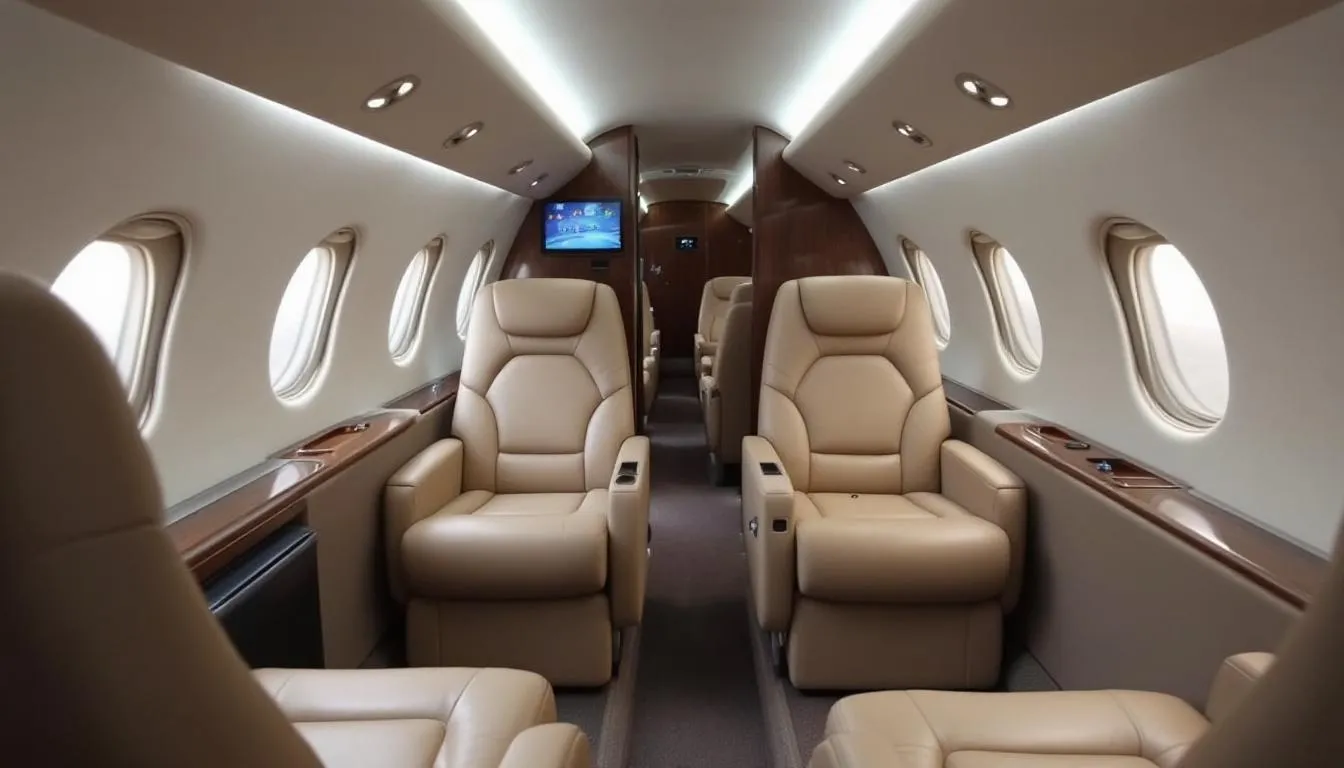
The Learjet 75 Liberty delivers exceptional performance with its 2,040 nautical mile range and impressive climb rate, reducing time to cruise altitude and minimizing turbulence exposure for sensitive passengers. Its spacious cabin accommodates up to 8 passengers with comfortable seating and generous baggage space for family equipment, including strollers and sports gear.
A compelling use case demonstrates light jets’ versatility: a New York to Miami family vacation with stops in Charleston and Key West becomes effortless with private aviation, while commercial flights would require multiple connections and overnight stays, effectively doubling travel time and complexity.
Midsize Jets: Premium Comfort for Transcontinental Family Travel
Midsize jets represent the perfect intersection of cabin comfort, operational efficiency, and transcontinental capability for families seeking premium travel experiences. The Cessna Citation Latitude, Gulfstream G280, and Hawker 4000 lead this category with features specifically designed around family comfort and safety. Super-midsize jets like the Embraer Praetor 600 also offer a great balance of comfort and range, making them an excellent choice for shorter trips while maintaining premium amenities. The Embraer Praetor 600 can seat up to 16 passengers and has a range that allows for nonstop flights across continents.
The Citation Latitude stands out with its 6-foot-tall flat-floor cabin and exceptionally wide design, providing more space for families to move about safely during flight. Its advanced technology includes synthetic vision systems and enhanced flight vision, delivering exceptional safety margins, while its 2,700 nautical mile range enables coast-to-coast non-stop flights with fuel reserves. The aircraft’s spacious cabin features club seating for up to 9 passengers, making it ideal for extended families or those traveling with additional family members. The Cessna Citation Hemisphere is considered an ideal luxury midsize jet, offering impressive speed and range.
The Gulfstream G280 offers three distinct living areas within its cabin, allowing different family generations to enjoy personalized comfort zones. Parents can conduct business calls in the forward cabin while children enjoy entertainment in the aft section. Its 3,600 nautical mile range supports longer flights to destinations like Hawaii or transatlantic travel to Europe, while cutting-edge technology includes Ka-band Wi-Fi and advanced entertainment systems throughout the roomy cabin. The Gulfstream G700 combines unparalleled luxury with state-of-the-art technology for family travel, making it a standout choice for those seeking the ultimate in comfort and innovation.
The Hawker 4000 provides exceptional fuel efficiency without sacrificing comfort, featuring comfortable seating for up to 8 passengers and a master suite configuration option. Its operational costs are notably lower than competitors while maintaining the advanced technology and safety features families require.
For transcontinental family travel, midsize jets eliminate the compromises of commercial aviation. A family traveling from Los Angeles to New York enjoys a comfortable cabin environment with personalized temperature control, gourmet catering, and uninterrupted family time during the 5-hour flight, arriving refreshed rather than exhausted from airport delays and cramped commercial seating. There is added convenience from features such as dedicated flight attendants and privacy amenities, which further enhance the overall travel experience for families.
Large Cabin Jets: Ultimate Luxury for International Family Adventures
Large cabin jets represent the pinnacle of family aviation, offering multiple living zones, intercontinental range, and amenities rivaling luxury hotels. Some larger jets feature five expansive cabin zones, allowing families to enjoy dedicated spaces for relaxation, dining, entertainment, and privacy. Larger private jets, such as the Gulfstream G650ER, provide unmatched luxury, including private suites and full galleys. Spacious cabins allow passengers to spread out comfortably during flights, enhancing the overall travel experience for families.
The Bombardier Global 7500 features four distinct living areas within its 54-foot cabin, essentially creating a flying mansion for extended families. The aircraft’s five distinct living areas include a master suite with a full-size bed, a dining area for family meals, an entertainment zone with large displays, and dedicated crew quarters ensuring privacy. Its 7,700 nautical mile range enables non-stop flights from New York to Hong Kong, eliminating jet lag-inducing connections for families traveling to Asian destinations. The Gulfstream G650 can accommodate up to 19 passengers and can be configured with multiple living areas, making it a versatile option for large family groups.
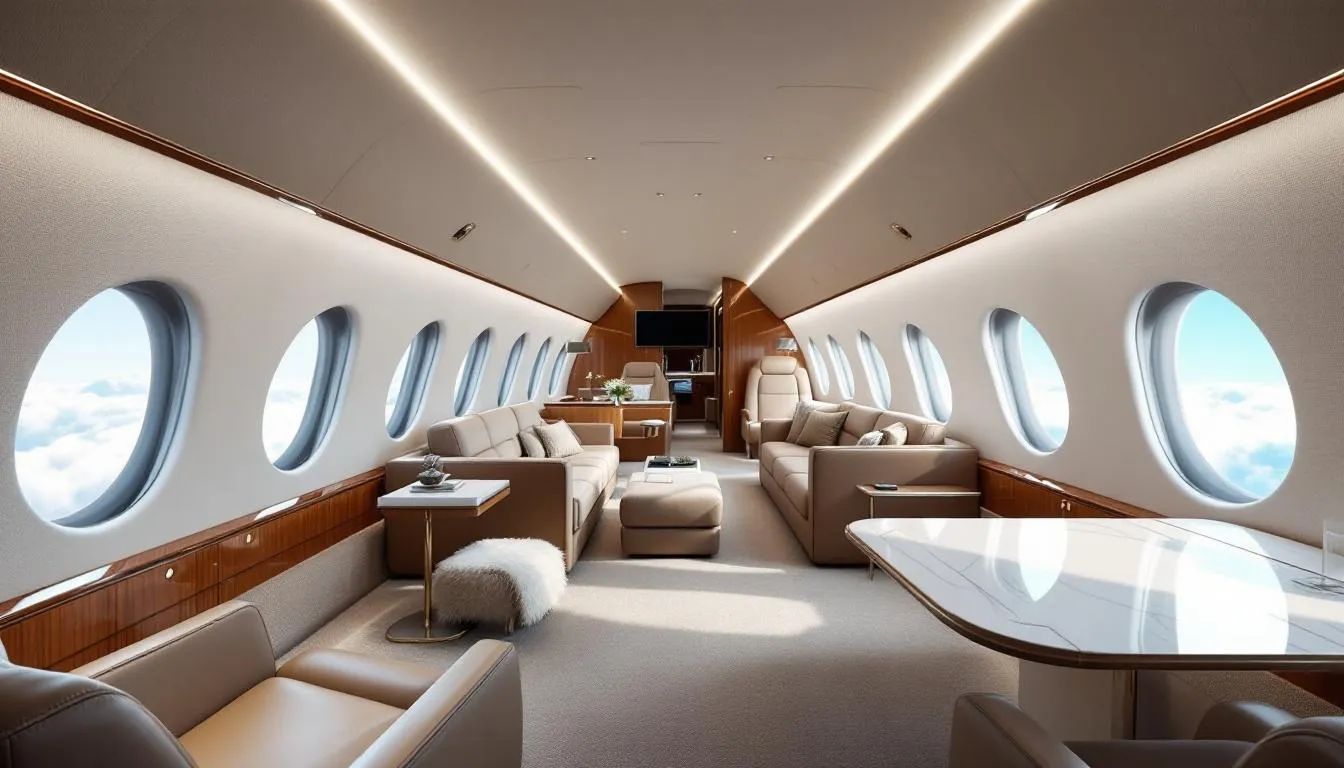
The Gulfstream G650ER offers an exceptional range of 7,500 nautical miles combined with advanced cabin pressurization technology that reduces passenger fatigue on ultra-long range jets. Its customizable interiors allow families to create personalized spaces, while advanced entertainment systems throughout the cabin ensure every family member remains comfortable during longer flights.
The Dassault Falcon 8X provides remarkable fuel efficiency for its size class, reducing operational costs while offering 6,450 nautical miles range and a wide cabin with three distinct zones. Its short runway capability opens access to exclusive destinations worldwide, while experienced pilots appreciate the aircraft’s exceptional handling characteristics and weather radar systems. The Dassault Falcon 8X can be configured with over 30 layouts, making it adaptable for family travel with dedicated play areas or sleeping quarters. The Dassault Falcon 8X is also known for its eco-friendly design, ensuring exceptional fuel efficiency, which appeals to environmentally conscious families. For those interested in comparing with the most expensive private jets, discover how the Falcon 8X stands out in efficiency and versatility.
For international family adventures, large cabin jets transform travel into part of the vacation experience. Larger jets provide the space and flexibility needed for comfortable long-haul travel with extended family groups. A three-generation family trip to Europe becomes an enjoyable journey with comfortable sleeping accommodations, fresh meals prepared in the full galley, and entertainment zones keeping younger family members engaged throughout the flight.
Safety and Certification: The Foundation of Family Aviation
When families choose private aviation, safety represents the paramount consideration, and modern private jets exceed commercial aviation safety standards through rigorous certification requirements and advanced technology integration. Part 135 certification mandates that charter operators maintain the highest operational standards, including comprehensive pilot training, aircraft maintenance protocols, and operational oversight.
Modern avionics in family-appropriate aircraft include Enhanced Flight Vision Systems (EFVS) and synthetic vision technology, providing pilots with unprecedented situational awareness even in challenging weather conditions. These systems effectively eliminate many weather-related delays that plague commercial aviation, ensuring families reach their destinations safely and on schedule.
Dual-pilot requirements for larger family jets provide additional safety margins through crew resource management and redundant decision-making processes. These experienced pilots undergo recurrent training every six months, maintaining proficiency in emergency procedures and aircraft systems far exceeding general aviation standards. Crew salaries represent a significant portion of ongoing operational costs, reflecting the expertise and professionalism required to maintain high safety standards.
Statistical analysis reveals private aviation’s exceptional safety record, with accident rates significantly lower than commercial aviation when comparing similar aircraft categories and operational environments. Reputable operators achieve this through comprehensive safety management systems, regular audits by organizations like ARGUS and Wyvern, and investment in cutting-edge technology.
Families evaluating charter providers should prioritize operators with IS-BAO (International Standard for Business Aircraft Operations) certification, ARGUS Platinum ratings, and Wyvern Wingman approval. These certifications represent industry gold standards for safety protocols, pilot qualifications, and maintenance procedures.
Technology and Sustainability in Modern Family Aviation
Contemporary family jets integrate advanced technology that enhances safety, comfort, and environmental responsibility. Modern amenities include cabin management systems allowing personalized control over lighting, temperature, and entertainment from individual devices, creating customized comfort zones for each family member.
High-speed Ka-band Wi-Fi connectivity enables seamless communication and entertainment throughout flights, allowing parents to remain productive while children access educational content or streaming entertainment. Advanced entertainment systems with large displays and wireless connectivity transform flight time into valuable family interaction or individual relaxation periods. These technological advancements are especially valuable for families traveling long distances, ensuring comfort and connectivity throughout extended flights.
Sustainability represents an increasingly important consideration for environmentally conscious families. Sustainable Aviation Fuel (SAF) reduces carbon emissions by up to 80% compared to traditional jet fuel, and many operators now offer SAF as standard for environmentally aware customers. Carbon offset programs enable families to achieve carbon-neutral flights through verified environmental projects, addressing climate concerns while maintaining travel flexibility.
Electric and hybrid aircraft development promises revolutionary changes in family aviation within the next decade. Companies like Eviation and Heart Aerospace are developing electric aircraft for regional family travel, potentially eliminating fuel costs and dramatically reducing environmental impact for shorter trips.
Smart cabin technology includes air purification systems with HEPA filtration and UV sterilization, ensuring the healthiest possible environment for family travel. These systems became standard following the pandemic and continue providing peace of mind for health-conscious families.
Top Family Aircraft Recommendations by Use Case
Selecting the right private jet requires matching aircraft capabilities to specific family travel patterns, passenger requirements, and budget considerations. Different family compositions and travel preferences demand different aircraft solutions, from efficient light jets for small families to spacious large-cabin aircraft for multi-generational adventures.
For families seeking an affordable and practical family airplane, owning your own plane can be a game-changer for travel flexibility and comfort. The Piper Cherokee Six is a popular choice, offering a versatile six-seat configuration, spacious cabin, ample payload capacity, and excellent flight stability—making it an ideal option for family trips and leisure adventures. A personal aircraft with four seats is usually enough for two adults and two children, providing a cost-effective solution for smaller families. However, six-seater aircraft tend to have higher purchase and fuel costs compared to four-seaters, which is an important consideration for budget-conscious buyers. Many families are opting for personal aircraft to avoid crowded airports and long waits.
The Rockwell Commander 114 is another attractive family airplane, known for its stylish design, comfortable cabin, and suitability for long-distance family travel. Some models, such as the Piper Lance and Saratoga, feature retractable gear, which enhances aerodynamics and gives the aircraft a sleeker appearance. For those just starting out, the Cessna 172 Skyhawk is a great entry-level family airplane, especially for new pilots, thanks to its simplicity, stability, and safety features. The Cessna 182 Skylane is favored by families for its performance and roomier cabin compared to the 172, offering additional comfort for longer trips.
Best for Young Families (2 adults, 2-3 children)
The Cessna Citation Latitude emerges as the optimal choice for young families, combining exceptional safety features with a child-friendly cabin design. Its flat-floor cabin eliminates trip hazards while providing ample space for children to move safely during flight. The aircraft’s 2,700 nautical mile range covers most family vacation destinations non-stop, while operational costs remain reasonable for frequent travel. The Pilatus PC-24 can land on shorter, unpaved runways, providing access to more remote destinations and accommodating up to eight passengers.
Key family-friendly features include:
Child-safe cabin design with rounded edges and secure storage
Advanced entertainment systems with wireless connectivity for tablets and devices
Easy boarding through a low cabin entry door
Spacious lavatory with changing amenities for younger children
Climate-controlled baggage compartment for temperature-sensitive items
Temperature-controlled cabins, which are especially beneficial for sensitive travelers like infants and elderly family members
The Embraer Legacy 450 offers an alternative with slightly more cabin space and enhanced range capabilities. Its 2,904 nautical mile range enables longer family trips while maintaining fuel efficiency, and the aircraft’s low cabin altitude reduces fatigue for all family members during longer flights.
Cost analysis reveals compelling value propositions: chartering a Citation Latitude for a family of five costs approximately $3,500-$4,500 per hour, compared to $8,000-$12,000 for commercial first-class tickets on the same route when factoring in schedule premiums and last-minute booking requirements.
Best for Extended Families (6+ passengers)
Extended families require aircraft with flexible seating arrangements and enhanced passenger capacity without sacrificing comfort or range. The Gulfstream G280 and Bombardier Challenger 350 excel in this category through thoughtful cabin design and operational efficiency.
The Gulfstream G280 accommodates up to 10 passengers in its three-zone cabin configuration, allowing different family groups to enjoy personalized spaces during flight. The forward cabin provides quiet space for adults, while the aft cabin offers entertainment and relaxation for younger family members. Its 3,600 nautical mile range supports transcontinental and international family travel with exceptional fuel efficiency. This greater range allows extended families to travel non-stop to more distant destinations, reducing the need for layovers and maximizing vacation time.
The Bombardier Challenger 350 offers similar passenger capacity with a slightly larger cabin andan enhanced baggage compartment for extended family equipment. Its 3,200 nautical mile range covers most family destinations while operational costs remain competitive for larger passenger groups.
Baggage capacity becomes critical for extended families, and both aircraft provide substantial storage for multiple suitcases, sports equipment, and specialized items like car seats or medical equipment. The wide cabin design accommodates strollers and mobility aids for elderly family members.
A three-generation family trip to Europe exemplifies these aircraft’s capabilities: grandparents enjoy comfortable seating with easy lavatory access, parents utilize Wi-Fi for travel coordination, and grandchildren engage with entertainment systems throughout the 8-hour flight, arriving refreshed rather than exhausted from commercial travel logistics.
Best for International Family Travel
International family adventures demand aircraft with exceptional range, crew rest facilities, and amenities supporting extended flight times. Selecting an aircraft with a longer range is essential for non-stop international flights and minimizing travel disruptions. Ultra-long-range jets like the Bombardier Global series or Gulfstream models are ideal for transatlantic or transpacific travel. The Gulfstream G650ER and Bombardier Global 7500 represent the pinnacle of international family aviation.
The Gulfstream G650ER enables non-stop flights from New York to London with full family comfort, eliminating connections that fragment sleep schedules and increase jet lag. Its advanced cabin pressurization maintains a 4,850-foot cabin altitude even at maximum cruise altitude, reducing passenger fatigue and improving comfort for all family members.
The Bombardier Global 7500’s four living zones create a flying mansion experience for international travel. The master suite provides private sleeping accommodations for parents, while children enjoy dedicated entertainment areas with gaming capabilities. The aircraft’s full galley enables fresh meal preparation during ultra-long flights, maintaining family dining routines even at 41,000 feet. Additionally, the Bombardier Global 7500 features four distinct living spaces, including a separate stateroom, a conference suite, and a relaxation area, ensuring every family member has a comfortable and functional space during the journey.
Crew rest facilities on these aircraft ensure fresh, alert service throughout extended flights. Dedicated crew quarters allow flight attendants to rest during long journeys, maintaining service quality that makes lengthy international flights pleasant rather than endurance tests.
Time zone management becomes effortless with advanced cabin lighting systems that gradually adjust to destination time zones, helping families minimize jet lag and maximize vacation enjoyment from the moment they arrive.
Private Jet Access Options: Ownership vs Charter vs Jet Cards
Understanding different access models enables families to optimize their private aviation strategy based on travel frequency, flexibility requirements, and financial considerations. Each model offers distinct advantages and limitations that align with different family aviation needs.
Alternative Ownership Models for Family Private Jet Access include:
Full Ownership: Requires a $2-5M+ purchase, plus significant recurring expenses such as hangar fees for storing the aircraft in secure facilities. Offers the highest flexibility and cost predictability, but limits you to a single aircraft.
Fractional Ownership: Involves an investment of $200K-1M+, providing high flexibility and cost predictability. Access is limited to a fleet of aircraft shared among owners.
Jet Cards: Typically cost between $100K-500K, offering very high flexibility and high cost predictability. Jet card holders have access to a full fleet of aircraft.
Charter Services: Operate on a pay-per-trip basis, offering medium flexibility and low cost predictability. Families can access a full fleet of aircraft without ownership commitments.
How Jet Cards Differ from Traditional Charter
Jet card programs revolutionize family access to private aviation by combining ownership benefits with charter flexibility. Unlike traditional charter services that require extensive planning and expose families to market pricing volatility, jet cards guarantee aircraft availability with just a 10-hour advance notice at fixed hourly rates.
Key advantages include insights from our guide to jet card cost:
Guaranteed aircraft availability during peak travel periods
Fixed hourly rates protect families from seasonal pricing spikes
No repositioning fees or minimum flight time requirements
Access to vetted operator networks with consistent safety standards
Simplified booking through dedicated account management
Traditional charter requires families to negotiate rates for each trip, research operator safety records, and accept availability limitations during peak periods. Jet cards eliminate these uncertainties through pre-negotiated rates and guaranteed access to appropriate aircraft.
Why Jet Cards Make Sense for Family Travel
Family travel patterns typically involve varying passenger counts, seasonal destinations, and schedule flexibility requirements that align perfectly with jet card programs. Jet card programs allow families to select aircraft and services that best match their family's unique travel preferences and comfort requirements. A family might require a light jet for parents’ weekend getaway, a midsize jet for family vacation, and a large cabin aircraft for extended family reunions—all accessible through a single jet card program.
Benefits specific to family travel include:
Flexibility to choose an appropriate aircraft size based on each trip’s passenger count
No long-term ownership commitments or maintenance responsibilities
Predictable pricing enabling accurate family travel budgeting
Access to a global fleet without geographic limitations
Simplified international travel coordination through experienced operators
Jet cards also provide valuable backup options when family plans change. Weather delays, medical emergencies, or schedule conflicts can be accommodated through alternative aircraft or routing options unavailable with commercial aviation.
Operational Considerations for Family Travel
Successful family private aviation requires attention to operational details that enhance comfort and efficiency while minimizing stress. These considerations transform good flights into exceptional family experiences.
Airport selection strategies maximize convenience by utilizing private terminals (FBOs) with family-friendly amenities, including comfortable lounges, ground transportation coordination, and expedited security procedures. Many FBOs offer children’s areas, flight planning rooms for parents, and concierge services that arrange everything from rental cars to restaurant reservations.
Ground transportation coordination becomes seamless when operators arrange luxury vehicles appropriately sized for family groups and luggage. Many services include car seat installation for younger children and wheelchair accessibility for elderly family members.
Catering options for families require special attention to dietary restrictions, children’s preferences, and meal timing across time zones. Experienced operators coordinate with specialty caterers who understand family dining needs, providing child-friendly options alongside gourmet selections for adults. Having an onboard flight attendant can greatly enhance the family travel experience by providing personalized service and attending to the needs of both children and adults.
Pet travel considerations enable families to include their animals in vacation plans without commercial aviation restrictions. Private jets accommodate pets in the cabin with family members, eliminating cargo hold stress and potential health risks.
International travel documentation and customs procedures become manageable through experienced operators who coordinate advance clearances, customs forms, and ground handling at international destinations. This expertise eliminates bureaucratic delays that can disrupt family vacation schedules.
Cost Analysis: Private Aviation vs Commercial First Class
Understanding the true cost comparison between private aviation and commercial first class requires examining total travel expenses, time value, and qualitative benefits. The analysis reveals scenarios where private aviation delivers superior value even for cost-conscious families.
For a family of four traveling coast-to-coast, commercial first-class tickets during peak periods cost $2,000-$4,000 per person, totaling $8,000-$16,000. Adding hotel costs for overnight connections, ground transportation, and meal expenses brings total costs to $10,000-$20,000 while consuming 12-24 hours, including overnight stays.
A midsize private jet completes the same journey in 5 hours for approximately $20,000-$25,000 total cost, including all fees and catering. The premium appears significant until considering time savings valued at $500-$1,000 per hour for high-net-worth families, effectively reducing the private aviation premium to $5,000-$10,000 for a full day of saved time.
Hidden costs of commercial travel become substantial:
Hotel costs for overnight connections: $500-$1,500
Ground transportation and parking: $200-$500
Meal costs during extended travel days: $200-$400
Productivity losses from schedule disruptions: Difficult to quantify, but substantial
Break-even analysis shows private aviation becomes cost-competitive for families of 4+ travelers on transcontinental routes, especially during peak travel periods when commercial availability is limited and pricing premiums are highest.
The value proposition extends beyond cost considerations to include privacy, schedule control, and family time optimization. These qualitative benefits often justify private aviation premiums for families who prioritize time together and travel convenience.
FAQ
What is the most cost-effective private jet for a family of four traveling domestically?
For domestic family travel, light jets like the Cessna Citation CJ4 or Learjet 75 Liberty offer the best balance of cost-effectiveness and comfort. These aircraft typically cost $2,500-$3,500 per hour to charter, accommodating 6-8 passengers with transcontinental range. For frequent travelers, jet card programs reduce effective hourly costs through fixed pricing and eliminate repositioning fees, making them more economical than ad-hoc charter for families flying 25+ hours annually.
How far in advance should families book private jet travel, and what happens with weather delays?
Jet card holders can book flights with as little as 10 hours’ notice, while charter customers should plan 48-72 hours in advance for optimal aircraft availability. Weather delays with private aviation are typically shorter than commercial flights because private jets can access more airports and utilize advanced weather radar systems to find alternative routing. Operators often provide backup aircraft or ground transportation to ensure families reach their destinations when weather impacts original flight plans.
What safety certifications should families look for when choosing a private aviation provider?
Families should prioritize operators with Part 135 certification, ARGUS Platinum or Gold ratings, Wyvern Wingman approval, and IS-BAO certification. These certifications ensure rigorous pilot training, aircraft maintenance standards, and operational oversight. Additionally, verify that pilots have appropriate experience in the specific aircraft type and that the operator maintains insurance coverage, including hull insurance and passenger liability protection. Operational costs for jets, including fuel, maintenance, and crew salaries, vary based on the jet's size and age, making it important to consider these factors when selecting an operator.
Can private jets accommodate car seats, strollers, and other family travel equipment?
Yes, private jets are specifically designed to accommodate family equipmen,t including car seats, strollers, sports gear, and medical devices. Most aircraft have flexible seating configurations allowing car seat installation, while baggage compartments easily accommodate strollers and larger items. Operators can coordinate ground transportation with pre-installed car seats at destination airports, and many FBOs offer equipment storage during vacation periods.
How do carbon offset programs work for families wanting to minimize their environmental impact?
Carbon offset programs calculate emissions for each flight and purchase verified carbon credits through environmental projects like reforestation, renewable energy development, or methane capture initiatives. Many jet card providers include carbon offsetting as standard, while charter customers can typically add offsetting for 2-3% of flight costs. Some operators also offer Sustainable Aviation Fuel (SAF) options that reduce emissions by up to 80% compared to traditional jet fuel, though availability remains limited and costs are higher.
Family-Friendly Features to Look for in a Private Plane
Selecting the right private jet for your family goes beyond just choosing an aircraft with enough seats. The best private jets for families are thoughtfully designed with key features that prioritize comfort, convenience, and enjoyment for every family member, making each journey as memorable as the destination itself.
One of the most important considerations is cabin space. A spacious cabin allows family members to move freely, stretch out, and enjoy distinct living areas—ideal for longer flights or when traveling with children who need room to play. Look for private jets with wide cabins, flat floors, and flexible seating arrangements such as club seating or divans, which encourage family interaction and provide comfortable sleeping options for overnight trips. Safety features such as advanced avionics systems and crashworthy seats are also essential for ensuring a secure and family-friendly travel experience.
Advanced entertainment systems are another essential feature for family air travel. Modern private jets are equipped with cutting-edge technology, including high-speed Wi-Fi, large HD screens, and wireless streaming capabilities. These systems keep children entertained with movies and games, while adults can stay productive or relax with their favorite shows, ensuring an enjoyable journey for all.
Customizable interiors are a hallmark of family-friendly private aircraft. Many newer models offer the ability to tailor cabin layouts, lighting, and amenities to suit your family’s preferences. Whether you need a quiet master suite for parents, a dedicated play area for kids, or a dining zone for shared meals, customizable interiors make it possible to create the perfect environment for your family’s travel plans.
Safety is always a top priority, especially for families. Look for private jets with advanced safety features such as weather radar, synthetic vision systems, and dual-pilot operations. These enhancements provide peace of mind, allowing you to focus on enjoying your time together. Additionally, collision avoidance systems and other advanced navigation technologies are critical for ensuring safe and smooth flights, even in challenging conditions. Emergency equipment like life vests and oxygen masks further enhances safety during flights, particularly on longer journeys.
Onboard flight attendants add an extra layer of convenience and service, handling everything from meal preparation to assisting with young children, so parents can relax and enjoy the flight. Additional amenities like full galleys, spacious lavatories with changing tables, and generous baggage compartments for strollers and sports equipment further enhance the family travel experience.
When evaluating private jets for your family, prioritize these key features to ensure every trip is safe, comfortable, and tailored to your unique needs. With the right private jet, family vacations become seamless, stress-free, and truly unforgettable.
Affordable Options for Family Private Jet Travel
Private jet travel is often associated with luxury and exclusivity, but it’s more accessible than many families realize. Today, there are several cost-effective ways for families to experience the comfort and convenience of private jet travel without the significant investment of owning an aircraft outright. Modern family plane options are designed with space, privacy, and practicality in mind. For those considering smaller planes, most small planes in the under $100K range cruise at speeds between 110 to 140 knots, offering a balance of efficiency and practicality for family travel. Families should expect to invest around $3,000 to $7,000 annually on maintenance for a used single-engine plane, making it a manageable expense for those seeking ownership.
Charter services are a popular option, allowing families to rent a private jet for a single trip or a specific period. This pay-as-you-go approach means you only pay for the flights you need, making it a practical choice for occasional family vacations or special events. Chartering a private jet also gives families access to a wide variety of aircraft, so you can always select the right size and features for each trip. Used aircraft are prevalent in the under $100K market, especially from manufacturers like Cessna, Piper, and Beechcraft, providing additional options for families exploring ownership. Among these, the Cessna 172 is considered one of the safest family-friendly planes on the used market, making it a reliable choice for those prioritizing safety.
Fractional ownership is another smart solution for families who travel more frequently. By purchasing a share of a private jet, families can enjoy many of the benefits of ownership—such as guaranteed availability and consistent service—while sharing the costs of maintenance, crew salaries, and hangar fees with other owners. This model provides a balance between flexibility and cost efficiency, making private jet travel more attainable for families who want regular access to private aviation.
Additionally, many private jet companies now offer membership programs or subscription services. These programs provide families with access to a fleet of aircraft for a fixed monthly or annual fee, often including perks like priority booking, fixed hourly rates, and no repositioning fees. By exploring these affordable options, families can enjoy the luxury and convenience of private jet travel in a way that fits their budget and lifestyle.
Family Travel Tips for Private Jet Journeys
Traveling by private jet travel is a unique experience, and a little preparation can help families make the most of every journey. Start by selecting the right private jet for your family’s needs—consider the size of the cabin space, the number of seats, and the onboard amenities that will keep everyone comfortable and entertained. Whether you need a spacious cabin for a large family or a cozy light jet for a quick getaway, choosing the right private jet ensures a smooth and enjoyable journey.
When planning your flight, work with your operator to create a flight plan that aligns with your family’s schedule and preferences. Private jet travel offers the flexibility to depart from convenient airports, avoid layovers, and customize your itinerary, so take advantage of these benefits to minimize travel stress. Consider seating arrangements that promote interaction and relaxation, such as club seating or divans, and make sure there’s enough room for everyone to stretch out and enjoy the ride.
Packing for a private jet trip is also different from commercial travel. Bring along your family’s favorite snacks, entertainment options, and comfort items to make the flight more enjoyable. Many private jets are equipped with advanced entertainment systems, so load up tablets or devices with movies, games, and music for the kids. Don’t forget to include any special items your family may need, such as car seats, strollers, or sports equipment—private jets typically offer generous baggage space and can accommodate these essentials with ease.
Finally, embrace the added convenience that private jet travel provides. Enjoy the privacy of exclusive terminals, personalized service from experienced pilots and crew, and the ability to adjust your plans as needed. With thoughtful preparation and the right private jet, your family can look forward to a seamless, comfortable, and truly memorable travel experience every time you fly.
Conclusion: Elevate Your Family Travel Experience with Black Jet
Choosing the best private planes for families means prioritizing comfort, safety, and convenience to transform every journey into a memorable experience. Private aviation offers unparalleled flexibility, spacious cabins, advanced technology, and personalized service that cater specifically to the needs of families seeking comfort and efficiency in their travel plans.
Black Jet stands out as a premier partner for families looking to elevate their private jet travel. With a comprehensive jet card program providing guaranteed access to meticulously maintained aircraft, experienced pilots, and dedicated family aviation specialists, Black Jet ensures seamless, stress-free journeys tailored to your unique requirements. Their commitment to sustainability, including carbon offsetting and access to Sustainable Aviation Fuel, allows environmentally conscious families to minimize their travel impact without compromising on luxury or convenience.
Whether you are planning quick weekend getaways or international family vacations, Black Jet’s flexible offerings and exceptional service make it the ideal choice for discerning families who value quality time, privacy, and safety. Experience the difference of strategic private jet access and turn travel time into precious family moments with Black Jet.


 Sign up with google
 Sign up with Apple