The question “What is the best small airplane?” has no universal answer. A flight instructor building hours in Oklahoma has fundamentally different requirements than a tech executive flying from New York to Chicago for quarterly board meetings. A family heading to a backcountry Idaho strip needs rugged utility; a solo entrepreneur flying Dallas to Denver prioritizes speed and weather capability.
Small private aircraft are generally grouped into four primary classes: high-performance piston singles, small turboprops, Very Light Jets (VLJs), and Light Jets. Passenger capacity typically ranges from 2 to 8, depending on configuration.
This mission-dependent reality shapes everything about small airplane selection. The Cessna 172 Skyhawk remains the most popular training airplane for a reason—stable handling and forgiving flight characteristics that have produced generations of pilots since World War II. The Cirrus SR22T dominates the high-performance personal aircraft segment because it combines high cruising speed with the Cirrus Airframe Parachute System that has saved over 100 lives since 2001. The Pilatus PC-12 NGX appeals to executives who need pressurized cabin comfort and the ability to access 90% of the world’s airfields.
Modern small private jets and turboprops are designed to meet rigorous safety standards and regulations, ensuring high levels of safety, performance, and reliability. Choosing vetted providers with third-party safety audits, such as ARGUS or Wyvern ratings, significantly reduces risk in private aviation compared to ad-hoc arrangements. This layered approach to safety—from aircraft design to operator certification—forms the backbone of confidence for discerning travelers.
Throughout this guide, we’ll examine the best small airplanes for 2026: the Cessna 172, Cirrus SR22T, Diamond DA40 NG, Cessna 206 Turbo Stationair HD, Beechcraft Bonanza G36, Diamond DA50 RG, Pilatus PC-12 NGX, Daher TBM 960, Cirrus Vision Jet, and HondaJet Elite II. We’ll compare what makes each aircraft an attractive option for different mission profiles—from flight training to cross-country flights to executive transport. Modern small aircraft feature advanced safety systems such as emergency autoland, parachutes, and modern glass cockpits, further enhancing safety and ease of operation.
The strategic advantage of small private aircraft versus commercial flights is substantial: saving 4–6 hours per round trip on a typical 600–800 nm business journey while accessing over 5,000 regional airports across the U.S. and Europe that commercial aviation simply cannot reach. At BlackJet, we specialize in Jet Card and charter access, which means we’ll focus on aircraft you can fly in without owning, while still explaining ownership logic for those considering that path.
Key Takeaways: Best Small Airplanes In 2026 At A Glance
Best beginner trainer: Cessna 172 Skyhawk—44,000+ built since 1955, still in production 2026, the gold-standard fixed gear monoplane for pilot training
Best all-round personal piston: Cirrus SR22T—best-selling personal aircraft since 2003, with over 8,000 SR-series delivered; high-performance piston singles like the SR22T typically cruise at speeds of 150-210 KTAS with ranges of 900-1,100 nautical miles, ideal for owner-pilots seeking efficient regional travel
Most efficient & eco-aligned piston: Diamond DA40 NG—advanced composite airframe with smooth skins that reduce drag for higher speeds and improved fuel efficiency, Jet-A diesel engine burning ~5–6 gph, fuel efficient with lower emissions
Best family/backcountry hauler: Cessna 206 Turbo Stationair HD—utility aircraft known for high payload capacity and capability in carrying people or cargo, six seats, rugged utility, float and bush kit capable
Best single-engine turboprop: Pilatus PC-12 NGX—single-engine turboprop offering cruise speeds of 260-330 KTAS with ranges of 1,700-1,800 nautical miles, bridging the gap between piston and jet aircraft; short-field capability, 6–8 passengers, reaches 90% of the world’s airfields
Fastest single-engine turboprop: Daher TBM 960—up to ~330 KTAS, HomeSafe autoland, owner-pilot favorite
Most accessible small jet: Cirrus Vision Jet—single-engine VLJ emphasizing single-pilot operation and accessible jet ownership, typically cruising at speeds of 300-400 KTAS with ranges around 1,100-1,300 nautical miles; equipped with airframe parachute system CAPS and Safe Return autoland
Best premium VLJ: HondaJet Elite II—light jet delivering true jet performance with professional-grade cabins, cruising at speeds of 400-450 KTAS and ranges of 1,500-2,000+ nautical miles; sub-80 dB cabin noise, ~422 KTAS, ~1,500+ nm maximum range
“Best” is evaluated on safety features, operational efficiency, passenger capacity, and access model (ownership vs charter vs Jet Card)—not speed alone
Modern avionics, including synthetic vision, autothrottle, and envelope protection, have transformed what a small plane can safely accomplish
The cost-effective choice depends on your annual flight hours and typical mission profile
Why Small Private Airplanes Are A Strategic Advantage
Time Reclaimed
Airport Density
Runway Access
Technology Parity
Today’s turboprops and light jets feature advanced avionics rivaling airliners—synthetic vision, autothrottle, datalink weather, and autoland capability
Flexibility
With a BlackJet Jet Card, you capture these advantages without aircraft ownership—and every flight is carbon-neutral as standard, addressing sustainability concerns that matter to discerning travelers. Sustainable aviation practices are increasingly important in the private aviation sector, with a focus on reducing carbon emissions and improving fuel efficiency. Many modern aircraft are designed to be compatible with sustainable aviation fuels (SAF), which can significantly reduce their carbon footprint compared to traditional fuels. Carbon offset programs are becoming a standard expectation in private aviation, allowing operators to neutralize the carbon emissions produced during flights.
Classes Of Small Airplanes: From Trainer To Light Jet
“Small airplane” encompasses a wide spectrum of aircraft design, from two-seat trainers to pressurized light jets seating seven. Understanding these categories helps match aircraft to mission rather than chasing specifications that don’t serve your actual travel patterns.
The four primary classes each serve distinct purposes. Single-engine aircraft dominate the trainer and personal segments, while jet aircraft provide the speed and cabin comfort executives require for longer flights. The division between owner-piloted flight and professional crew operations typically occurs at the turboprop and light jet level.
Training & basic personal pistons (Cessna 152/172, Piper Archer LX, Piper Cherokee, Texas Aircraft Colt): 2–4 seats, 90–120 KTAS top speed, 400–800 nm range, ideal for build hours and scenic flying under sport pilot rules or the light sport aircraft category; Light Sport Aircraft (LSA) like the Texas Aircraft Colt are ideal for pilots seeking modern features with lower operating costs and may not require a traditional medical certificate to fly
High-performance personal pistons (Cirrus SR22T, Beechcraft Bonanza G36, Diamond DA50 RG, Piper M350): 4–6 seats, 170–210 KTAS cruising speed, ~900–1,100 nm range, capable of serious cross country flights with advanced safety features; the Piper M350 is recognized for its luxury cabin and advanced safety features, making it suitable for comfortable and fast personal transport
Single-engine turboprops (Pilatus PC-12 NGX, Daher TBM 960): 4–8 seats, 260–330 KTAS, ~1,500–1,800 nm range, pressurized comfort with short-field capability
Very Light & Light Jets (Cirrus Vision Jet, HondaJet Elite II, Phenom 100EV, Citation M2 Gen2): 4–7 seats, ~300–420 KTAS, ~1,100–1,600 nm range, professional cabin environment
Owner-pilots often gravitate toward pistons and turbocharged aircraft like the SR22T or TBM 960 for the flying experience itself. Non-pilots and executives typically access VLJs and light jets through Jet Card programs or charter, benefiting from professional crews without pilot training investment. BlackJet clients usually experience turboprops and light jets through membership rather than personally flying them.
Top 10 Best Small Airplanes You Can Fly Or Charter In 2026
The following aircraft profiles blend “own to fly” favorites with “ride as a passenger” standouts, using current 2024–2026 specifications. Each entry includes range, speed, seating, and approximate purchase price based on manufacturer data and broker ranges—not BlackJet quotes.
Many of these models—SR22T, PC-12 NGX, TBM 960, Vision Jet, HondaJet Elite II, Phenom 100EV, and Citation M2 Gen2—are accessible via BlackJet Jet Card and charter partnerships. Whether you’re an owner-pilot seeking a new aircraft or a business traveler evaluating access options, these represent the most capable small airplanes available today.
Cessna 172 Skyhawk – Best Small Airplane For Beginners
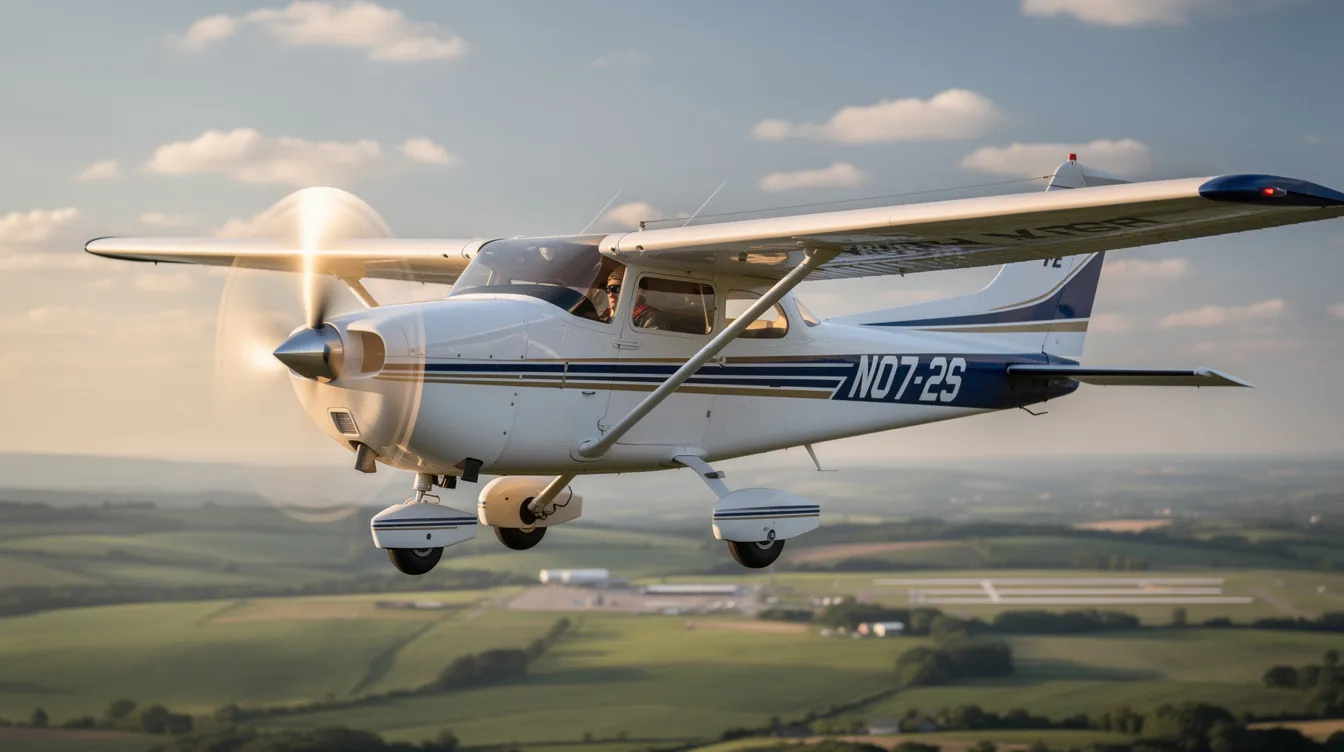
The Cessna 172 remains the world’s most-produced aircraft—44,000+ built since 1955 and still rolling off production lines in 2026. It earned its reputation as the most popular personal aircraft for training through decades of proven reliability.
Engine: 180 hp Lycoming
Cruise: ~120 KTAS
Max range: ~600–700 nm
Seating: four seats (1 pilot + 3 passengers)
Purchase price: $450,000–$550,000 new, depending on avionics package
The 172’s high-wing monoplane design provides excellent visibility and stable handling. Fixed gear and simple systems reduce pilot workload during flight training. The aircraft offers low operating costs relative to more complex types, with a massive training ecosystem and readily available hangar space at virtually any airport.
A realistic progression: learn in a 172, then rely on a BlackJet Jet Card for serious business or longer flights while continuing to build hours and ratings.
Diamond DA40 NG – Efficient, Modern, And Eco-Aligned
The DA40 NG represents the efficiency-focused evolution of light aircraft—a composite airframe with smooth skins that reduce drag for higher speeds and improved fuel efficiency, plus an Austro AE300 Jet-A diesel engine popular in European training fleets and among eco-conscious owners.
Cruise: ~145–150 KTAS
Max range: ~900–940 nm
Fuel burn: ~5–6 gph at economy settings
Seating: 1 pilot + 3 passengers
Purchase price: $520,000–$650,000 new
The Garmin G1000 NXi glass cockpit provides modern avionics with excellent situational awareness. The canopy offers outstanding visibility. Jet-A fuel compatibility enables potential SAF (sustainable aviation fuel) use where available, with lower CO₂ per nautical mile than legacy avgas aircraft.
The DA40 NG serves as a bridge aircraft for pilots who value fuel efficiency and environmental considerations while relying on BlackJet for longer or multi-city missions with carbon-neutral jets.
Cirrus SR22T – Benchmark High-Performance Personal Piston
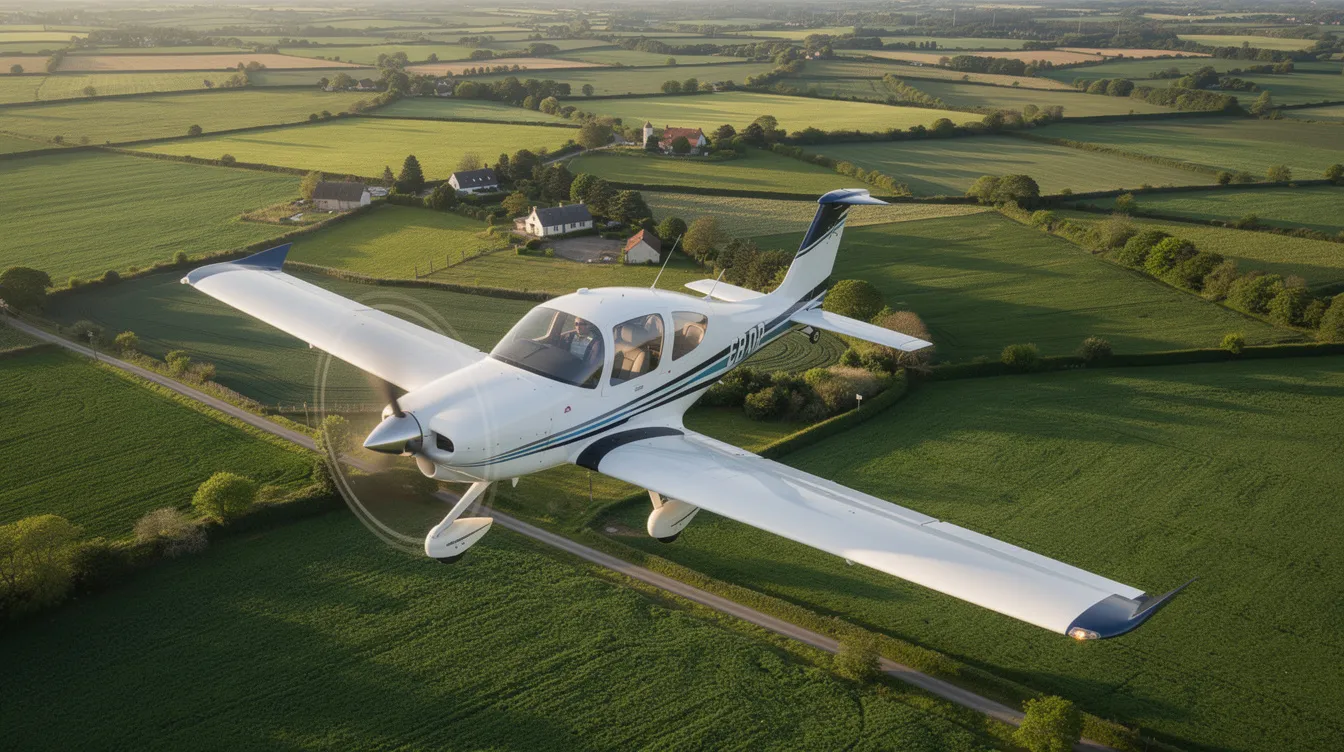
The Cirrus SR series has dominated the high-performance piston market since 2003, with over 8,000 aircraft delivered by the early 2020s. The SR22T remains the most popular personal aircraft for serious owner-pilots who demand performance with integrated safety.
Engine: Turbocharged Continental TSIO-550-K, 315 hp
Cruise: 180–213 KTAS depending on altitude and power setting
Max range: ~1,000–1,100 nm with reserves
Seating: 4 adults plus baggage
Purchase price: $950,000–$1.1 million (G6 generation with full options)
The Cirrus Airframe Parachute System (CAPS) has been deployed successfully over 100 times since 2001—a documented life-saving capability that fundamentally changed single-engine safety calculus for family travel. Many 2024–2026 models offer FIKI (flight into known icing) certification, expanding mission scope. Garmin Perspective+ avionics provide an advanced autopilot with envelope protection.
Scenario: An entrepreneur flying Dallas to Denver (~550 nm) completes the trip in ~3 hours, then uses a BlackJet Jet Card for multi-leg business itineraries beyond the SR22T’s comfort zone—such as cross-country flights requiring more power or passenger capacity.
Cessna 206 Turbo Stationair HD – The SUV Of The Skies
The Turbo Stationair HD earns its “SUV of the skies” reputation through rugged utility that other aircraft can’t match. Six seats, large rear doors, and bush kit options make it the go-anywhere choice.
Engine: Lycoming TIO-540
Max range: ~703 nm
Useful load: ~1,400+ lbs
Cruise: ~150 KTAS
Seating: 6 adults
The 206 operates from grass, gravel, and short runways that would ground most personal aircraft. Float operations extend their reach to water-based destinations. For pilots who occasionally need this capability, chartering a 206 or stepping up to a PC-12 through BlackJet proves more cost-effective than owning a rarely used workhorse.
Beechcraft G36 Bonanza – Premium Cross-Country Piston
The Beechcraft Bonanza has remained essentially unchanged in its mission since the 1940s—a premium single-engine aircraft for affluent pilots who want luxury without moving to turbine power. Textron Aviation continues production through 2026.
Cruise: ~170 KTAS
Max range: ~920 nm
Seating: 1 pilot + 5 passengers
Purchase price: ~$900,000–$1 million, depending on equipment
The G36 offers plush seating in a club configuration, solid IFR capability, and a reputation as a “mini traveling office.” Many Bonanza owners still rely on Jet Cards for transcontinental or international segments that exceed piston comfort or weather margins.
Diamond DA50 RG – Emerging Luxury Single In The U.S.
The DA50 RG received FAA certification in 2024, gaining U.S. market traction through 2024–2026. This modern, retractable-gear single-engine piston targets Cirrus aircraft and Bonanza buyers seeking cutting-edge European design.
The composite materials construction and high-end interior represent Diamond’s premium positioning. Added safety features align with Diamond’s safety-focused design philosophy across their aircraft lineup. Charter availability remains limited initially, so many BlackJet clients may encounter DA50s through demo or fractional programs rather than mainstream charter fleets.
Pilatus PC-12 NGX – Executive Turboprop Powerhouse
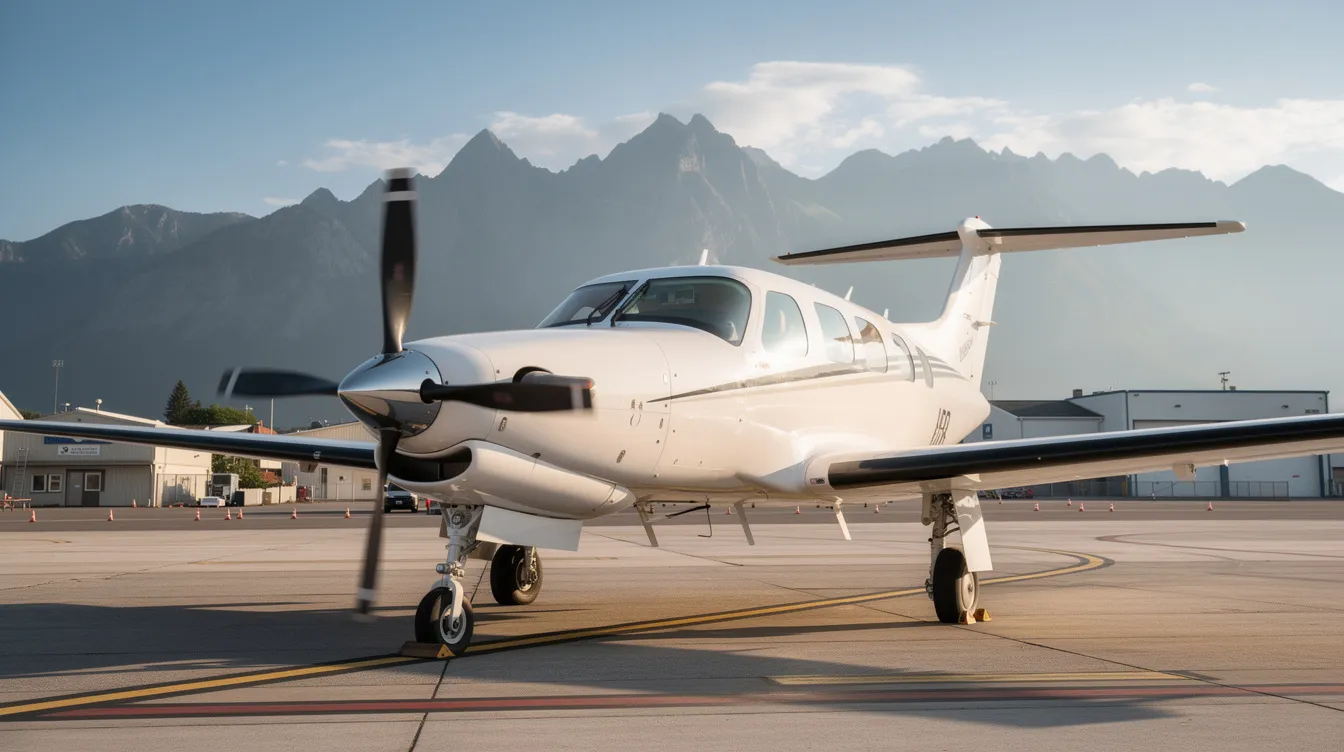
The PC-12 NGX stands as the benchmark single-engine turboprop for premium charter and Jet Card programs—offering efficient performance with short-field capability that jets cannot match.
Engine: Pratt & Whitney PT6E
Cruise: ~285 KTAS
Max range: ~1,700–1,800 nm
Seating: 6–8 passengers plus baggage
Purchase price: ~$5.0–5.2 million
The aircraft reaches 90% of the world’s airfields—a statistic that translates to genuine operational flexibility. The large cargo door accommodates oversized luggage or equipment. Swiss engineering delivers robust build quality with cabin comfort rivaling light jets at a lower total cost.
Typical missions: New York to Miami, London to Marrakech, or multi-stop regional investor days landing on 3,000 ft runways where other aircraft are constrained. BlackJet frequently sources PC-12 NGX for members who need maximum flexibility, safety, and carbon-neutral operation.
Daher TBM 960 – Fastest Single-Engine Turboprop
The TBM 960 (introduced 2022, current through 2026) delivers more power and speed than any other single-engine turboprop—a “personal jet alternative” for owner-pilots who refuse to compromise.
Cruise: Up to ~330 KTAS
Max range: ~1,700–1,730 nm
Seating: 4–6 passengers
Engine: Pratt & Whitney PT6A with digital engine control and autothrottle
Garmin G3000 avionics with HomeSafe autoland system provide advanced safety features that reduce pilot workload on longer flights. High-net-worth entrepreneurs flying 800–1,200 nm legs—Los Angeles to Aspen, Paris to Ibiza—often combine TBM ownership with BlackJet Jet Card for larger party or crewed jet missions requiring more weight capacity.
Cirrus Vision Jet – Most Accessible Personal Jet
The Cirrus Vision Jet (SF50) achieved a milestone as the first certified single-engine personal jet—and remains one of the most affordable new aircraft in the jet aircraft category at ~$3.3–$3.5 million.
Safety features include a CAPS whole-airframe parachute and a Safe Return autoland (Garmin-based), enabling passengers to land the airplane in an emergency. This aircraft offers an attractive option for owner-pilots upgrading from high-performance pistons, though some charter fleets now offer Vision Jet options for short hops. BlackJet typically recommends light twin-engine jets for regular executive missions demanding redundancy and higher cruise speeds.
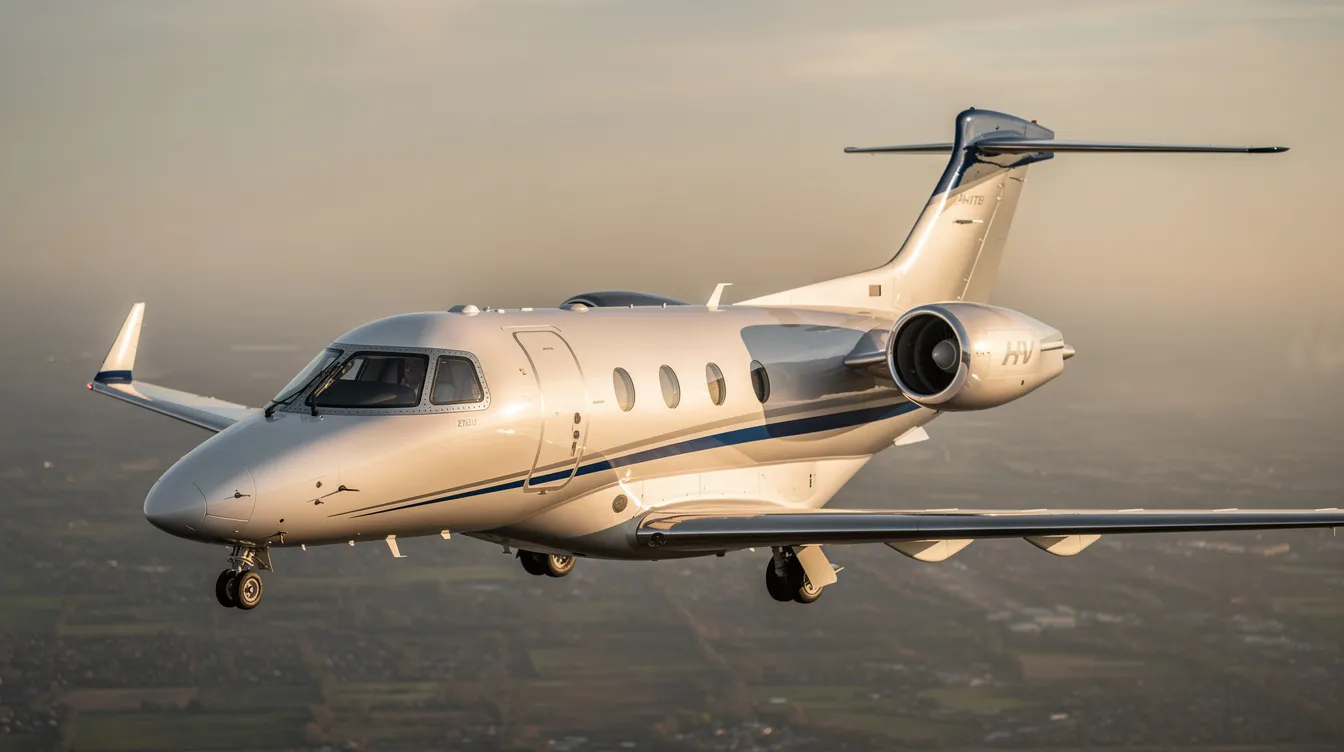
HondaJet Elite II – Quiet, Efficient Very Light Jet
The HondaJet Elite II (refined through 2024–2026) features distinctive over-the-wing engine mounts that deliver remarkable cabin quiet and fuel efficiency.
Engines: Two GE Honda HF120 turbofans
Cruise: ~422 KTAS
Max range: ~1,500+ nm with reserves
Seating: 4 passengers plus an optional belted lavatory seat
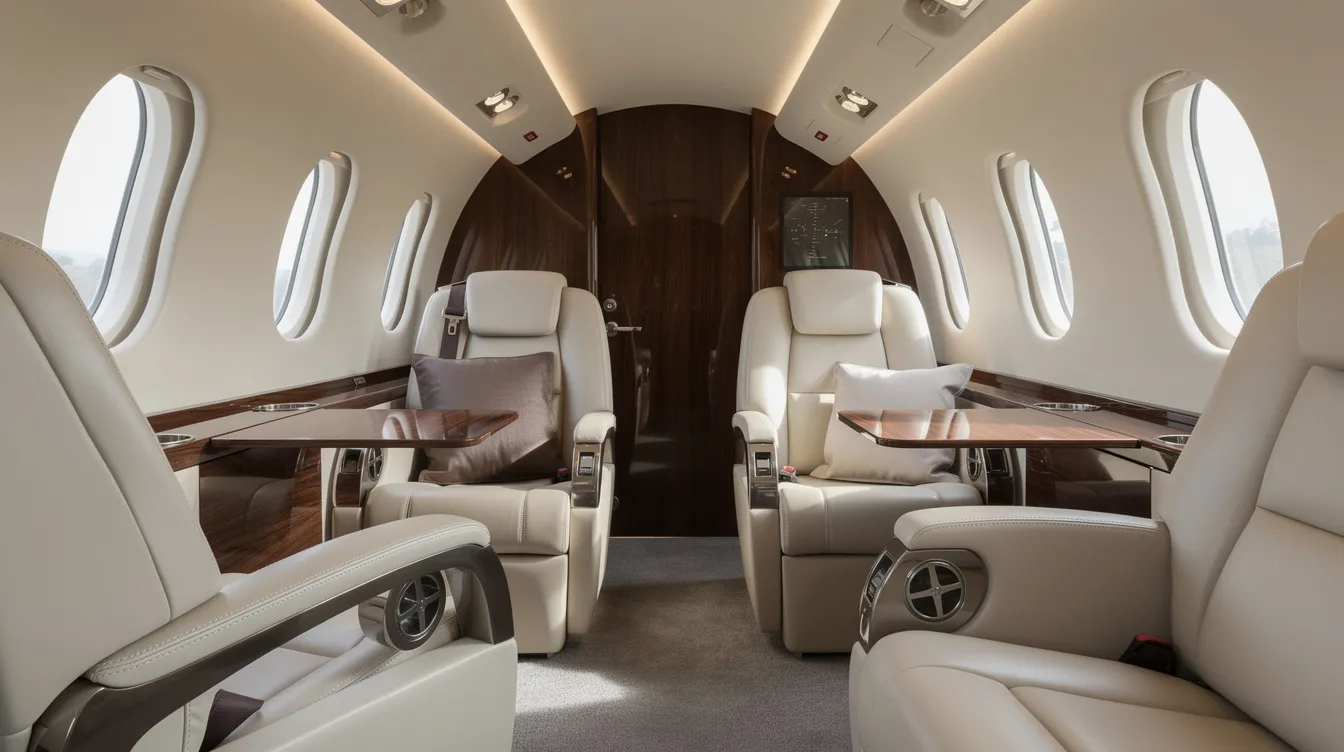
Sub-80 dB cabin noise creates a working environment quieter than most light jets. Fully enclosed lavatory, modern lighting, and a flat-floor feel provide pressurized comfort on routes like Chicago–Boston or London–Barcelona. BlackJet includes HondaJet options in curated light-jet offerings where available, with carbon-neutral flights as baseline.
Embraer Phenom 100EV & Citation M2 Gen2 – Entry-Level Business Jets
These two aircraft dominate charter and membership fleets as the core entry-level twin-engine business jets for 2024–2026.
Embraer Phenom 100EV:
Cruise: ~400 KTAS
Max range: ~1,175–1,200 nm
Seating: 4–6 passengers
Prodigy Touch flight deck, rugged airliner-inspired build
Cessna Citation M2 Gen2:
Cruise: ~404 KTAS
Max range: ~1,550 nm
Seating: Up to 7, including pilot
Garmin G3000 avionics, refined cabin with upgraded lighting and connectivity
Both are certified for single-pilot operation but usually fly with professional crews in charter and Jet Card programs. They top “best small jet” lists for business travel due to reliability, speed, and professional cabins with enclosed lavatories. BlackJet Jet Card members frequently fly these types for 400–1,200 nm regional missions where they outperform commercial first class on time, privacy, and operational efficiency.
How To Choose The Best Small Airplane For Your Needs
Rather than asking “what is the best small airplane?” ask “what is the best small airplane for my most frequent mission?” This informed decision approach prevents buying or accessing aircraft based on rare scenarios rather than actual travel patterns.
Typical Leg Length
Passenger Count and Baggage
Runway Lengths and Destinations
Budget and Ownership Appetite
Map your 5–10 most common trips: city pairs, passenger numbers, dates. Use these as the benchmark for aircraft class rather than focusing on bucket-list routes you might fly once annually.
BlackJet can analyze a year of your travel data and recommend a mix of Jet Card, charter, and—where appropriate—limited ownership to optimize both cost and convenience. Routes like New York–Miami, London–Nice, or LA–Aspen each suggest different optimal aircraft.
Ownership vs Charter vs Jet Card: Smarter Ways To Access The Best Small Airplanes
Access Model | Best For | Pros | Cons |
|---|
Ownership | >200–300 flight hours/year | - Full control, customization, asset appreciation | - High capital outlay, maintenance oversight, hangar, insurance, training, compliance |
On-demand Charter | <50–75 hours/year | - Pay per trip, complete flexibility | - Variable pricing, aircraft availability can vary |
Jet Card (BlackJet’s specialty) | 75–200 hours/year | - Fixed hourly rates, guaranteed aircraft class access (12–24 hrs), safety-screened fleet, carbon-neutral flights, 24/7 digital booking, real-time support, safety certifications | - Prepaid commitment, not full ownership |
Scenario:
A business leader flying 100 hours annually between New York, Chicago, and Florida might admire the TBM 960 but gains more value through a Jet Card providing PC-12 and light-jet access without asset risk or underutilization penalties; understanding the full 100 Hour Jet Card cost and value trade-offs is critical at this utilization level.
Safety and sustainability matter across all access models. BlackJet ensures partner operators meet ARGUS, Wyvern, and IS-BAO certification standards. Every flight includes carbon-neutral operation through verified offsets and, where available, SAF uplift, and programs like the BlackJet 25+ Hour Jet Card extend these benefits with fixed-rate access to larger cabin jets. This represents the operational baseline, not a premium add-on.
Small Airplane Insurance: What Every Owner And Flyer Should Know
Small airplane insurance is an essential safeguard for anyone who owns or operates a light sport aircraft, light aircraft, or even a jet aircraft. Whether you fly a single-engine aircraft for personal use or manage a fleet, the right insurance policy protects you from financial loss due to accidents, damage, or liability claims. Coverage options typically include:
Hull insurance (covering physical damage to the airplane)
Liability insurance (protecting against third-party claims)
Passenger insurance for those on board
When evaluating insurance, factors such as the aircraft’s value, intended usage, and the pilot’s experience level all influence premiums and coverage limits. Notably, advanced safety features like the Cirrus Airframe Parachute System (CAPS) can positively impact insurance rates, as insurers recognize the added safety margin provided by an airframe parachute system. Whether you operate a Cirrus, a classic Cessna, or a modern jet, working with a reputable aviation insurance provider ensures your policy is tailored to your specific aircraft and flying profile. Taking the time to understand your coverage means you can fly with confidence, knowing your investment and passengers are protected.
Small Airplane Maintenance: Keeping Your Aircraft Airworthy And Reliable
Keeping your small airplane in top condition is key to safe, efficient performance and a rewarding flying experience. Regular maintenance isn’t just a regulatory requirement—it’s the foundation of reliability for every light sport aircraft, from the Texas Aircraft Colt to advanced single-engine models. Routine inspections, timely repairs, and adherence to manufacturer guidelines help ensure that advanced safety features remain fully functional and that your aircraft delivers efficient performance on every flight.
Pilots should follow a detailed flight plan for maintenance, including:
Scheduled checks
Oil changes
Part replacements
Staying current with the latest best practices and service bulletins can help minimize operating costs and prevent unexpected downtime. For popular models like the Texas Aircraft Colt, regular maintenance is especially important to preserve both safety and value. By prioritizing proactive care, pilots and owners not only extend the life of their aircraft but also ensure every journey is as safe and enjoyable as possible.
Small Airplane Customization: Personalizing Your Flying Experience
One of the joys of owning a personal aircraft is the ability to tailor it to your unique preferences and flying style. Customization options abound, whether you fly a best-selling personal aircraft like the Cirrus SR22T or another popular personal aircraft. Owners can:
Upgrade to advanced safety features
Install state-of-the-art avionics with synthetic vision
Enhance fuel efficiency for longer, more economical flights
Interior upgrades—such as plush seating, custom lighting, and premium materials—can transform your airplane into a comfortable retreat, while exterior paint schemes and branding make your aircraft stand out on the ramp. Many aircraft offers from manufacturers and specialists allow you to select features that enhance both safety and the overall flying experience. By investing in thoughtful customization, you create a personal aircraft that not only meets your operational needs but also reflects your individual style and priorities.
Small Airplane Community: Connecting With Fellow Aviators
The small airplane community is a dynamic network where pilots, owners, and enthusiasts come together to share their passion for flight. Whether you fly one of the most popular personal aircraft like the Cessna 172 or another beloved model, connecting with fellow aviators can greatly enrich your flying experience. Local flying clubs, airshows, and aviation events offer opportunities to:
Online forums and dedicated user groups for popular personal aircraft provide a platform for discussing maintenance, upgrades, and flight planning. Engaging with the community not only helps pilots stay informed about the latest industry developments but also fosters friendships and mentorships that can last a lifetime. By participating in this vibrant ecosystem, you gain access to a wealth of knowledge and support, making every flight—and every milestone in your aviation journey—even more rewarding.
Safety, Technology, And Sustainability In Modern Small Airplanes
The best small airplane isn’t simply the fastest—it must be demonstrably safe, technologically current, and on a credible sustainability path.
Safety Technology Has Transformed Small Aviation
Whole-airframe parachutes (CAPS on Cirrus SR series and Vision Jet) have saved over 100 lives
Advanced avionics (Garmin Perspective+, G1000 NXi, G3000) with synthetic vision, terrain awareness, and envelope protection
Automation: autothrottle, autoland (TBM 960 HomeSafe, Vision Jet Safe Return), ice protection, stability augmentation
Max takeoff weight management systems prevent departure errors
Modern small private jets and turboprops meet rigorous safety standards and regulations, ensuring high levels of safety, performance, and reliability
Choosing vetted providers with third-party safety audits, such as ARGUS or Wyvern ratings, significantly reduces risk compared to ad-hoc arrangements
Sustainability Considerations
Efficient Jet-A diesel pistons (Diamond DA40 NG, DA50 RG) and modern turboprops deliver lower fuel burn per passenger-mile versus older designs
Growing SAF availability in 2024–2026 among charter fleets in North America and Europe
High-utilization Jet Card fleets lower per-flight emissions versus underused individually-owned aircraft flying only 100–150 hours annually
BlackJet’s position: all flights are carbon-neutral through verified offsets and, where available, SAF uplift. Partner operators must meet rigorous safety and maintenance standards—this represents the operational baseline, not a premium add-on.
Sample Trip Scenarios: Matching Best Small Airplanes To Real Missions
Concrete trip scenarios clarify how different aircraft serve different purposes.
300 nm Weekend Trip (Dallas to Santa Fe)
Cirrus SR22T or DA40 NG works well for owner-pilots—~2 hours flight time, minimal fuel stops required.
Non-pilots seeking crewed comfort might charter a Phenom 100EV via BlackJet, arriving relaxed and ready for the weekend.
Either option beats the 5+ hour commercial alternative involving connections.
600–700 nm Executive Day Trip (New York–Chicago, London–Berlin)
HondaJet Elite II or Citation M2 Gen2 delivers ~1.5–2 hour flight times with a professional cabin environment.
PC-12 NGX serves routes requiring shorter runway access or more baggage.
Time saved versus commercial: 3–4 hours per leg—enabling same-day round-trip flights impossible via airlines.
1,200 nm Non-Stop (Los Angeles–Austin, Madrid–Dublin)
TBM 960 or PC-12 NGX at ~4 hours flight time for owner-pilots prioritizing speed.
Light jet via BlackJet Jet Card for passengers prioritizing productivity and privacy.
Four passengers flying a light jet share costs comparable to first-class tickets while eliminating airport friction entirely.
Remote Leisure Mission (Idaho Backcountry, Scottish Highlands Strips)
Cessna 206 Turbo Stationair HD handles rough-field operations that other aircraft cannot attempt.
PC-12 NGX provides similar capability with pressurized comfort for those accessing luxury backcountry lodges via air taxi operations.
Frequently Asked Questions About The Best Small Airplanes
What is the best small airplane for a first-time owner?
The Cessna 172, Diamond DA40 NG, and Piper Cherokee family offer forgiving flight characteristics, strong training networks, and relatively low operating costs. Choosing the best small private aircraft for your needs starts with recognizing that simplicity matters more than performance for building competence.
What is the cheapest practical small airplane?
The Texas Aircraft Colt and used Cessna 150/152 models offer entry points under $100,000—sometimes significantly less and are among the cheapest practical private aircraft options. However, operating costs, including insurance, maintenance, and regular maintenance reserves, often exceed the purchase price over five years.
What is the best small airplane for a family of four?
The Cessna 182 Skylane, Cirrus SR22, and Piper Cherokee Six/Saratoga provide four seats with a useful load accommodating family baggage. The SR22’s added safety features make it particularly popular for family travel.
What is the best small airplane for business travel?
For owner-pilots: SR22T or TBM 960. For passengers: PC-12 NGX, HondaJet Elite II, or Phenom 100EV via BlackJet Jet Card. Cabin comfort, productive environment, and professional crew matter more than aircraft specifications for serious executives.
Can small jets cross the Atlantic?
Most VLJs and light jets (Vision Jet ~1,200 nm, HondaJet ~1,500 nm, Phenom 100EV ~1,175 nm) cannot cross the Atlantic nonstop. Midsize jets or commercial premium cabin serve Europe–U.S. missions better. BlackJet can arrange appropriate aircraft for intercontinental requirements.
How safe are small airplanes compared with airlines?
Safety depends heavily on operator quality, crew experience, and modern avionics. Charter operators meeting ARGUS, Wyvern, and IS-BAO certifications maintain standards approaching airline rigor. CAPS-equipped Cirrus aircraft offer additional emergency recovery capability unavailable in other aircraft.
How quickly can I access a small jet with a Jet Card?
BlackJet typically provides guaranteed aircraft class availability within 12–24 hours. Same-day bookings for urgent meetings are frequently accommodated, depending on location and aircraft positioning.
Future Of Small Airplanes: Trends Shaping The Next Generation
The next generation of small airplanes is being shaped by exciting trends in technology, regulation, and pilot demographics. The light sport aircraft category continues to expand, offering more accessible and affordable options for new pilots and seasoned aviators alike. Innovations such as electric and hybrid propulsion systems, advanced composite materials, and digital manufacturing are driving improvements in efficiency, safety, and sustainability.
Manufacturers like Textron Aviation and Cirrus Aircraft are at the forefront, integrating modern avionics, enhanced safety features, and eco-friendly designs into their latest models. As pilot preferences evolve and regulatory frameworks adapt, the industry is poised for continued growth and transformation. Staying informed about these trends allows pilots and owners to make smart decisions—whether investing in a new aircraft, upgrading existing fleets, or exploring new ways to fly. The future of small airplanes promises greater accessibility, improved performance, and a renewed focus on safety and environmental responsibility.
Conclusion: The Best Small Airplane—and The Easiest Way To Fly It
There is no single universally “best” small airplane. A Cessna 172 remains the best for learning and recreational flying. The Cirrus SR22T leads for owner-pilots demanding both speed and safety. The PC-12 NGX or HondaJet Elite II serves executives prioritizing time efficiency and a professional environment. The TBM 960 or Vision Jet appeals to speed-focused owner-pilots who want to fly themselves.
Safety, certification, technology, and sustainability should weigh as heavily as speed or purchase price when choosing or chartering aircraft. Modern avionics have transformed what small airplanes can safely accomplish—envelope protection, autoland capability, and whole-airframe parachutes represent genuine safety advances, not marketing features.
Rather than owning multiple aircraft types—or compromising with a single aircraft that doesn’t serve every mission—BlackJet Jet Card members access the best small airplane for each trip. Turboprops for backcountry flexibility, light jets for city-pair speed, all on carbon-neutral flights with safety-screened operators.
Share your typical routes and annual hours with BlackJet. Discover how the right access strategy can reshape your travel—matching aircraft to mission while eliminating ownership complexity and underutilization costs.


 Sign up with google
 Sign up with Apple