In a world where time is money and convenience is king, small private aircraft offer an unbeatable edge. Whether you're a business executive aiming to maximize productivity or a passionate pilot seeking freedom in the skies, choosing the best small private aircraft can transform your travel experience. This guide dives into the top options for 2024-2025, blending performance, safety, and luxury to help you find the perfect fit for your personal or professional journey.
Key Takeaways
Choosing the best small private aircraft offers a strategic advantage over commercial first class, saving 4-6 hours per round trip on routes like New York to Miami while providing schedule control and access to over 5,000 smaller airports unavailable to commercial jets.
The category spans advanced pistons (Cirrus SR22T), turboprops (Pilatus PC-12 NGX), and very light jets through light jet models (HondaJet Elite II, Cirrus Vision Jet, Embraer Phenom 100EV), with the “best” choice depending entirely on your mission profile—regional hops, business shuttles, or family travel.
This guide compares concrete aircraft models with 2024-2025 pricing, ranges, cruise speeds, and typical use cases, providing an actionable shortlist rather than theoretical overviews.
Safety, sustainability, and modern technology (autoland systems, the Cirrus Airframe Parachute System, carbon-neutral initiatives) serve as decision pillars throughout, aligning with the standards expected by discerning private aviation clients.
For those who prefer access without ownership complexity, Jet Card and on-demand charter solutions can place travelers on these aircraft types with rigorous safety oversight, predictable costs, and the flexibility to match the right aircraft to each specific mission.
Why Small Private Aircraft Are A Strategic Advantage
Consider a typical business trip from New York to Chicago—approximately 640 nautical miles. On commercial flights, you’re looking at a minimum of 5-7 hours door-to-door: the drive to a major hub, security screening, potential delays, the flight itself, baggage claim, and ground transportation at your destination. Now contrast that with a small private jet or high-performance piston: 2-3 hours total, departing from a regional airport minutes from your office and landing at a field closer to your actual meeting.
This difference multiplies across a travel calendar. A 500-800 nm business trip that would take an entire day on commercial flights becomes a half-day in private aviation, often allowing access to smaller airports that commercial airlines cannot serve. You eliminate security lines, layovers, and the unpredictability of connecting flights—reclaiming productive hours that compound into meaningful competitive advantage.
“Small” in this context doesn’t mean compromised. Modern small jets and advanced pistons offer glass cockpits with synthetic vision, onboard Wi-Fi, and executive seating configurations for 2-7 passengers. Safety systems in today’s personal aircraft rival airline standards, including autopilot integration, envelope protection, and in some cases, whole-airframe parachutes.
These aircraft are designed and built to meet the aviation industry's rigorous standards and regulations, ensuring safety, performance, and reliability. For high-net-worth individuals and senior executives, these aircraft and premium charter access are strategic tools that compress travel time, protect schedules, and open secondary markets that commercial aviation leaves untouched.
Sustainability is increasingly a factor in how discerning travelers evaluate the “best” aircraft today. Carbon-neutral programs, fuel-efficient, very light jets burning 50-70 gallons per hour versus 200+ for midsize jets, and SAF-compatible engines are no longer afterthoughts—they’re integral to responsible private flying. Small private jets are generally more fuel-efficient than larger jets, enabling them to operate more efficiently and access a broader range of airfields with lower fuel consumption.
Classes Of Small Private Aircraft: From Piston To Light Jet
The small private aircraft category encompasses four primary classes: high-performance piston singles, small turboprops, Very Light Jets (VLJs), and Light Jets. Passenger capacity typically ranges from 2 to 8, depending on configuration, and mission ranges vary from 500 nautical miles for modest piston aircraft to nearly 2,000 nm for capable light jets.
High-Performance Piston Singles (e.g., Cirrus SR22T, Diamond DA40 NG): These aircraft cruise at 150-210 KTAS with ranges of 900-1,100 nm. New purchase price ranges from approximately $520,000 to $1.1 million. Ideal for owner-pilots seeking efficient regional travel and flight training progression.
Single-Engine Turboprops (e.g., Pilatus PC-12 NGX, Daher TBM 960): Cruise speeds of 260-330 KTAS with ranges of 1,700-1,800 nm. New prices typically range from $5.0 to $ 6.0 million. These aircraft bridge the gap between piston and jet aircraft, offering excellent short-field performance and cabin versatility.
Very Light Jets (VLJs) (e.g., Cirrus Vision Jet, Embraer Phenom 100EV): Cruise speeds of 300-400 KTAS with ranges around 1,100-1,300 nm. New prices range from $3.3 to $ 5.0 million. VLJs emphasize single-pilot operation and accessible jet ownership.
Light Jets (e.g., HondaJet Elite II, Cessna Citation M2 Gen2): Cruise speeds of 400-450 KTAS with ranges of 1,500-2,000+ nm. New prices range from $6.3 to $ 7.5 million. These aircraft deliver true jet performance with professional-grade cabins.
Many VLJs and light pistons are optimized for single-pilot operation, which significantly impacts operational costs and appeals to owner-operators seeking maximum operational control without crew complexity.
Jet Card clients often mix these classes based on route requirements: turboprops for shorter regional runs where short-field access matters; light jets for dense business schedules or weather-critical operations that require speed and ceiling.
Top 10 Best Small Private Aircraft In 2024-2025
This section profiles 10 standout small private aircraft, spanning piston, turboprop, and jet models, using real-world 2024-2025 specifications and pricing. The focus is on practical owner and charter utility—not theoretical capabilities that rarely translate to actual operations.
“Best” remains contextual. A Cirrus SR22T may be ideal for an owner-pilot building hours and executing 400-800 nm cross-country flights. A HondaJet Elite II or Phenom 100EV is better suited for a non-pilot executive using crewed charter. Each model below follows a consistent format: a brief introduction, key specifications in bullet form, and a mission-fit summary.
Safety, advanced avionics, and cabin experience receive equal weight with raw performance numbers—aligning with the expectations of a premium, safety-conscious readership. For buyers who prefer access over ownership burdens, many of these models (especially jets and turboprops) populate charter fleets and appear under structured Jet Card programs.
1. Cirrus SR22T: Benchmark High-Performance Piston
The Cirrus SR22T stands as a significant milestone in aviation history, representing a leap forward in personal aircraft design. As part of the Cirrus SR series, it has been the best-selling personal aircraft every year since 2003, with over 8,000 units produced to date. This makes it one of the most popular personal aircraft among private pilots and business travelers alike. The SR22T blends cross-country speed with glass panel sophistication and the revolutionary Cirrus Airframe Parachute System (CAPS), setting the modern benchmark for what a high-performance piston single can deliver.
Engine: Turbocharged Continental TSIO-550-K producing approximately 315 hp
Cruise Speed: 180-213 KTAS, depending on altitude and power setting
Maximum Range: Approximately 1,000-1,100 nm with reserves under light loads
Passenger Capacity: 4 adults plus baggage (typically seat configuration for pilot plus 3)
New Purchase Price: Approximately $950,000-$1.1 million (G6 generation with full options)
Notable Features: Garmin Perspective+ avionics, optional autothrottle, FIKI certification available, integrated autopilot with envelope protection
The SR22T’s safety features make it particularly appealing to owner-pilots and their families. CAPS has deployed successfully in over 100 real-world emergencies since 2001, providing a last-resort whole-aircraft recovery option that fundamentally changes the risk calculus of single-engine flight.
Typical Use Case: An entrepreneur or professional executing 300-800 nm trips between regional cities, often utilizing smaller GA airports closer to home and office, avoiding the congestion and delays of major hubs.
2. Cessna 172 Skyhawk: Easiest On-Ramp To Ownership
The Cessna 172 Skyhawk remains the world’s most-produced aircraft and is in production through 2024, making it the longest-running production model. It is a top choice for recreational pilots due to its ease of use and suitability for leisure flying. As a popular personal aircraft, the Skyhawk is favored by both new and experienced pilots for its durability, reliability, and versatility. As the most popular training airplane globally, it serves equally well as a first personal aircraft for recreational pilots and professionals alike.
Engine: Lycoming IO-360-L2A producing 180 hp
Cruise Speed: Approximately 120 KTAS
Maximum Range: 600-700 nm with standard fuel capacity
Passenger Capacity: 4 seats, comfortable for 2-3 adults plus luggage
New Purchase Price: Approximately $450,000-$550,000 (2024 models)
Configuration: Fixed-gear monoplane with a high-wing design for excellent visibility
Production Fact: The Cessna 172 Skyhawk is the most popular training airplane in the world, with over 44,000 units produced since its introduction in 1955.
The Skyhawk is often considered one of the easiest airplanes to fly solo—benign stall characteristics, forgiving handling, and simple systems make it ideal for occasional pilots who want to build hours without complexity. Many buyers also consider late-model used aircraft for cost efficiency, with well-maintained examples available at significantly lower price points.
Strategic Note: While not luxury by jet standards, pairing a Skyhawk for personal aircraft ownership with Jet Card access for longer or weather-sensitive trips creates a smart hybrid strategy—enjoying the freedom of ownership while accessing capable jets when missions demand them.
3. Diamond DA40 NG: Efficient, Modern, And Sustainable
The Diamond DA40 NG stands apart with its composite airframe and Jet-A-burning Austro AE300 diesel engine. This combination delivers exceptional fuel efficiency and positions it as one of the most sustainable-leaning piston aircraft available today.
Engine: Austro AE300 diesel producing 168 hp, burning Jet-A fuel
Cruise Speed: 145-150 KTAS
Maximum Range: Approximately 900-940 nm
Passenger Capacity: 1 pilot plus 3 passengers
New Purchase Price: $520,000-$650,000
Notable Features: Garmin G1000 NXi glass cockpit, excellent canopy visibility, very low fuel burn compared to gasoline aircraft
The DA40 NG’s relevance to sustainability-conscious private owners is significant. Its Jet-A compatibility enables potential SAF (sustainable aviation fuel) use where available, and its fuel efficiency results in lower CO2 per nautical mile than many legacy aircraft—aligning with the environmental priorities increasingly central to discerning travelers.
Typical Mission: Efficient European or North American regional hops where avgas is costly or scarce, and where responsible fuel consumption is a priority alongside performance.
4. Texas Aircraft Colt: Budget-Friendly Light Sport
The Texas Aircraft Colt is a high-wing monoplane known for its modern avionics and added safety features, making it a great introduction to personal flying. Designed for recreational pilots, the Colt represents modern light-sport aircraft design at an accessible price point. Aimed at recreational pilots and hour-builders, it emphasizes low acquisition and ongoing expenses without sacrificing modern avionics or safety features.
Engine: Rotax 912 ULS producing approximately 100 hp
Cruising Speed: 110-115 KTAS
Maximum Range: 800+ nm under ideal conditions
Passenger Capacity: 2 seats
New Purchase Price: Originally approximately $140,000-$170,000 (early-2020s models)
Notable Features: Garmin G3X Touch avionics, optional whole-aircraft ballistic parachute
The Colt demonstrates how even budget-conscious new aircraft now integrate advanced technology and added safety features. Operating under sport pilot rules, it requires less extensive certification than traditional private pilot licenses—lowering barriers to entry for those new to private flying.
Mission Fit: Ideal for solo or duo leisure flying, flight training progression, or as a low-cost complement to occasional charter access for longer or weather-intensive trips. It won’t replace a light jet, but it can feed flying habits at a fraction of jet operating costs.
5. Pilatus PC-12 NGX: The Executive Turboprop Workhorse
The Pilatus PC-12 NGX often rivals light jets in door-to-door efficiency despite its single-engine turboprop configuration. Its combination of large cabin, oversized cargo door, and remarkable short-field capability makes it a favorite among corporate flight departments and high-net-worth families worldwide.
Engine: Pratt & Whitney PT6E-67XP producing 1,200 shaft horsepower
Cruise Speed: Approximately 285 KTAS
Maximum Range: 1,700-1,800 nm with reserves
Passenger Capacity: 6-8 passengers in executive configuration
New Purchase Price: $5.8-6.0+ million (recent deliveries)
Notable Features: Advanced avionics suite, rough-field gear for unprepared surfaces, large cargo door for flexible loading
The PC-12’s proven PT6 engine reliability and ability to access smaller airports and shorter runways, which many small jets cannot, make it uniquely versatile. It can reach 90% of the world’s airfields—a statistic that translates to genuine operational flexibility.
Charter Relevance: PC-12s are staples in premium charter fleets and frequently appear in Jet Card programs. For regional trips where cabin volume and efficient performance matter more than raw speed, they deliver exceptional value.

6. Daher TBM 960: Fastest Single-Engine Turboprop
The TBM 960 represents the evolution of Daher’s acclaimed TBM line, achieving near-jet speeds while retaining the efficiency and short-field advantages inherent to turboprop design. It bridges the gap between high-performance pistons and light jets more convincingly than any other aircraft in its category.
Engine: Pratt & Whitney Canada PT6A-66D with autothrottle
Cruise Speed: Up to 330 KTAS (max cruise)
Maximum Range: Approximately 1,730 nm
Passenger Capacity: 4-6 passengers
Service Ceiling: FL310 (31,000 feet)
New Purchase Price: Approximately $5.0-5.2 million
Notable Features: Garmin G3000-based avionics, automated engine management, HomeSafe autoland capability
The TBM 960 appeals to owner-pilots and small companies executing frequent 500-1,500 nm trips who want jet-like speed but value lower fuel burn and superior short-field performance. Its performance envelope, combined with ice and envelope protection systems, makes it particularly attractive to seasoned piston-powered owners transitioning to jets.
7. Cirrus Vision Jet SF50: Most Accessible Personal Jet
The Cirrus Vision Jet stands as the first certified single-engine personal jet and the most accessible “true jet” available in 2024. Positioned around $3.3-3.5 million new, it brings jet travel within reach for owner-pilots who previously could only aspire to piston performance.
Engine: Williams FJ33-5A turbofan producing 1,846 lbs thrust
Cruise Speed: Approximately 300 KTAS
Maximum Range: About 1,200 nm under typical loads (up to 1,273 nm max)
Passenger Capacity: Up to 5 adults plus two smaller seats for children
Service Ceiling: 31,000 feet
New Purchase Price: $3.3-3.5 million
Notable Features: CAPS parachute system, Safe Return autoland, Garmin G3000 avionics
The Vision Jet’s safety suite is unmatched in its class. Safe Return allows a passenger to initiate autonomous landing in an emergency with a single button press—the aircraft will find a suitable airport, communicate with ATC, and land itself. When combined with CAPS, it represents the most sophisticated safety technology available on any personal aircraft.
Mission Niche: Ideal for owner-pilots stepping up from a Cirrus SR22T who want a single-pilot operation capable, pressurized jet for North American regional trips under 1,000-1,100 nm. While cabin height and speed are modest compared to larger light jets, its low operating costs and safety systems make it one of the “safest feeling” small jets for families.
8. HondaJet Elite II: Quiet, Efficient, Very Light Jet
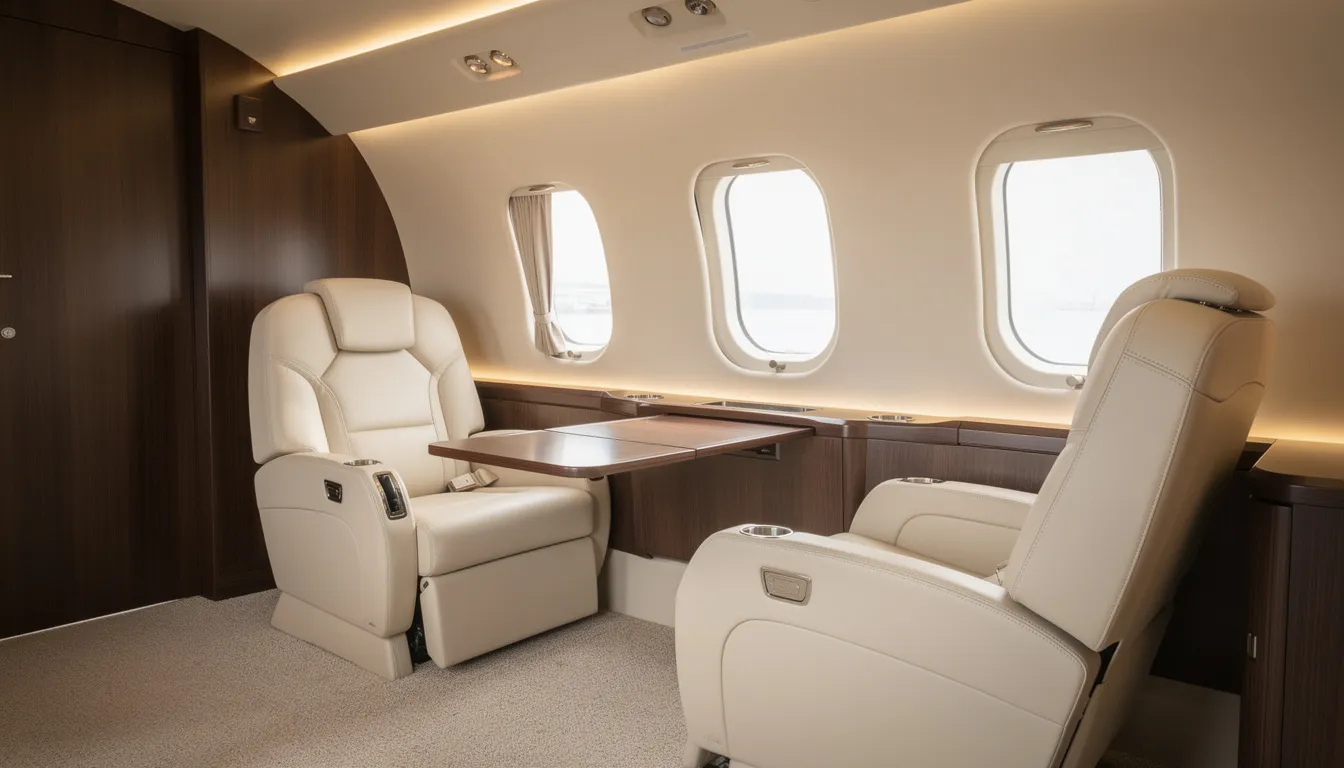
The HondaJet Elite II distinguishes itself through innovative over-the-wing-mounted jet engines—a configuration that reduces cabin noise, improves aerodynamics, and frees interior space. It consistently earns praise for both cabin refinement and operational efficiency, thanks to its advanced jet features such as luxurious interior amenities, state-of-the-art avionics, and comprehensive safety systems.
Engines: Two GE Honda HF120 turbofans (each 2,050 lbs thrust)
Cruise Speed: Approximately 422 KTAS — making it one of the fastest small private jets on the market today
Maximum Range: 1,500+ nm (with 2-4 passengers)
Required Takeoff Distance: Near 3,700 feet
Passenger Capacity: 4 passengers plus an optional belted lavatory
New Purchase Price: Approximately $6.9-7.5 million
Notable Features: Fully enclosed lavatory, Bongiovi audio system, exceptionally quiet cabin (under 80 dB)
The HondaJet’s cabin environment sets it apart. With cabin noise levels significantly below competitors' and interior finishes that rival those of larger aircraft, it converts flight time into productive or restorative hours. Its advanced jet features, including premium interior amenities, cutting-edge avionics, and robust safety systems, enhance both comfort and operational efficiency. Its fuel efficiency—burning 110 gallons per hour versus 150+ for comparable aircraft—results in lower fuel costs, making it more cost-effective and environmentally favorable.
Charter Access: HondaJet Elite II aircraft are frequently found in upscale charter fleets, making them accessible through curated programs without ownership. For executives who value quiet cabins and shorter runway capability, it represents the pinnacle of VLJ refinement.
9. Embraer Phenom 100EV: Entry-Level Business Jet
The Phenom 100EV delivers an enhanced version of Embraer’s popular entry-level jet, optimized for single-pilot operations while providing a distinctly “airliner-grade” build quality and systems philosophy. It represents the threshold where business travel transitions from “small aircraft” to “business jet.”
Engines: Two Pratt & Whitney PW617F1-E turbofans
Cruise Speed: Close to 400 KTAS
Maximum Range: 1,175-1,200 nm
Passenger Capacity: 4 passengers in club layout (up to six passengers with additional seating, though range decreases)
New Purchase Price: $4.5-5.0 million
Notable Features: Prodigy Touch flight deck (Garmin G3000-based), enclosed rear lavatory, robust braking and climb performance
The Phenom 100EV’s appeal lies in its combination of true jet capability with relatively modest operating costs. Its enclosed lavatory and refined cabin make longer flights comfortable, while its powerful climb performance handles challenging airport environments with confidence.
Operator Compatibility: Widely used by corporate users and compatible with Jet Card and charter fleets, the Phenom 100EV provides reliable regional-jet capability for those who need consistent access without complete ownership.
10. Cessna Citation M2 Gen2: Step-Up Light Jet For Business
The Citation M2 Gen2 modernizes Cessna’s proven light jet platform, targeting owner-operators and small corporate flight departments who require more capability than VLJs provide. Building on decades of Citation heritage, it delivers the support infrastructure and reliability that business travel demands.
Engines: Two Williams FJ44-1AP-21 turbofans
Cruise Speed: Approximately 404 KTAS
Maximum Range: Roughly 1,550 nm
Useful Load: Around 3,800+ lbs
Passenger Capacity: Up to 7, including pilot
New Purchase Price: Approximately $6.3-6.7 million
Notable Features: Garmin G3000 avionics with synthetic vision, USB-C power, improved lighting, refined seating
The Gen2 updates emphasize the cabin experience and pilot interface. Optimized for single-pilot IFR operations, it provides synthetic vision, advanced autopilot modes, and Textron Aviation’s robust support network—critical factors for owners who fly frequently and cannot afford extended downtime.
Business Mission Fit: Ideal for frequent regional business missions—New York to Miami, London to Milan—where speed, brand support, and cabin comfort are key factors. Its range enables most North American and European point-to-point flights without fuel stops.
How To Choose The Best Small Private Aircraft For Your Mission
The “right” aircraft is always mission-driven. Your typical trip length, passenger count, whether you’ll pilot yourself, and your tolerance for complexity and cost determine which small private jet or piston represents the optimal solution. There is no universal “best”—only the best for your specific requirements.
This section provides a structured framework: define your mission profile, assess budget and ownership appetite, prioritize safety and technology, and evaluate ownership versus charter or Jet Card access. The goal isn’t to transform you into an aviation technician—it’s to equip you with the right questions for brokers, operators, and programs.
Consider two contrasting profiles: an executive flying 100 hours per year on 300-800 nm business travel legs might find Jet Card access to VLJs and turboprops optimal—no capital commitment, matched aircraft per trip, and zero maintenance burden. Conversely, a pilot-owner flying 250 hours annually on regional routes may justify an SR22T, DA40, or TBM as a personal asset that also builds flying proficiency.
A hybrid approach—modest personal aircraft ownership plus premium charter access for demanding trips—often delivers the highest flexibility and safety margin without overextending capital expenditure.
Define Your Typical Trip Profile
Begin by quantifying your actual travel patterns: average leg length in nautical miles, longest regular leg, typical passenger count versus maximum passenger count, and annual flight hours. These numbers—not aspirations—should drive aircraft selection.
Sub-400 nm with 1-2 passengers: High-performance pistons or VLJs like the Vision Jet typically align well. Operating costs remain manageable, and these aircraft efficiently access remote destinations via smaller airports.
500-1,000 nm with 3-6 passengers: Turboprops (PC-12, TBM 960) or light jets (HondaJet Elite II, Citation M2) become more appropriate. The increase in speed and cabin space justifies the higher fuel costs and added complexity.
Rare but long nonstops (1,200+ nm): May justify a larger light jet or accepting fuel stops/charter-only approach for these specific missions rather than overbuying for everyday use.
Scenario Example: London-Geneva weekend trips (approximately 400 nm) suit a PC-12 or Vision Jet beautifully—short field access at both ends, comfortable for 4-6 passengers, and no need for midsize jet expense. Dallas-Chicago client runs (approximately 700 nm) favor a Citation M2 or Phenom 100EV where speed and schedule reliability outweigh operating costs.
Airport Access Factor: If your home or office airport has runways under 4,000 feet, some jets may be impractical. Turboprops and specific VLJs with strong short-field performance become more appropriate—this single constraint can eliminate entire aircraft categories from consideration.
Budget, Total Cost Of Ownership, And Alternatives
Aircraft acquisition cost—the purchase price—represents only the entry ticket. Ongoing expenses, including fuel costs, regular maintenance, crew (if applicable), hangar fees, insurance, recurrent training, and capital cost of money, determine the actual total cost of ownership.
Used high-performance piston aircraft: Approximate annual cost of $30,000-$80,000
New turboprop aircraft: Approximate annual cost of $150,000-$250,000
New light jet aircraft: Approximate annual cost of $500,000+ for active owners
Below approximately 100 flight hours per year, a charter or a Jet Card is typically more economical than owning a jet. The fixed costs of hangar space, insurance, and maintenance don’t scale down with reduced flying—you pay whether the aircraft flies or sits. For annual hours above 200-300, ownership or fractional arrangements may begin to pencil out, particularly if routes are consistent and utilization is predictable.
Jet Cards smooth pricing through fixed hourly rates and guaranteed access while removing surprises like major maintenance events from your personal balance sheet. You access the right small private jet for each mission without managing the asset yourself.
Prioritizing Safety, Certification, And Technology
In private aviation, safety is a system—aircraft design, maintenance rigor, pilot training, and operator oversight all matter as much as the model you choose. An older aircraft with deferred maintenance and a minimally qualified pilot presents a different risk than a current-production jet with a professional crew and certified operator.
Aircraft-Side Safety Features to Evaluate:
Modern avionics with synthetic vision and advanced autopilot modes
Autothrottle and autoland capabilities were available
Airframe parachutes (Cirrus CAPS, optional on some LSAs)
Certified icing protection for all-weather operations
Envelope protection to prevent loss-of-control scenarios
Operator-Level Safeguards:
ARGUS or Wyvern ratings indicating third-party safety audits
IS-BAO certification demonstrating safety management system implementation
Strict pilot experience minimums (e.g., 3,500+ total hours, type-specific currency)
Premium providers like those behind structured Jet Card programs and small private jets insist on these baselines
Newer aircraft—particularly post-2016 designs and current-production jets—typically integrate better human-factors design and automation that reduce pilot workload and associated risk. Ask any provider to detail their safety management system, recurrent training schedule, and how they vet aircraft maintenance histories.
Sustainability And Fuel Efficiency Considerations
Many private aviation users now factor environmental impact into aircraft choice, particularly in Europe and among ESG-focused corporations. “Best” increasingly means best for both performance and responsibility.
Efficient designs deliver lower fuel burn per passenger-mile than older alternatives. The Diamond DA40 NG, modern VLJs, and turboprops like the PC-12 and TBM 960 can achieve significantly better emissions profiles than legacy light jets—making them “best” for both cost and environmental considerations.
The rise of SAF-ready engines and carbon offsetting programs transforms the sustainability equation. A premium operator can ensure every flight achieves carbon neutrality via verified offsets—at no extra complexity to the client. This increasingly represents a baseline expectation rather than a differentiator.
Jet Cards and charters can pool demand more efficiently than underused private owners’ aircraft. If an aircraft in a fleet flies 600+ hours annually versus an owned aircraft flying 150 hours, the per-flight environmental burden (manufacturing, maintenance infrastructure) is distributed more favorably. Choosing efficient aircraft and carbon-neutral operations signals modern, responsible leadership—sustainability as prestige, not burden.
Ownership vs Charter vs Jet Card Access
Many readers do not need to purchase an aircraft to access the best small private jets. Charter and structured Jet Card programs provide the benefits of private aviation—time savings, schedule control, remote destinations access—without ownership complexity.
Three primary models exist: full ownership, on-demand charter, and Jet Card membership. Each serves different utilization patterns and risk appetites.
Under 50 hours: On-demand charter
50-150 hours: Jet Card or membership
200+ hours: Ownership, fractional, or hybrid
An executive team using a Jet Card for predictable quarterly travel benefits from fixed costs, guaranteed availability, and zero maintenance concerns. An ultra-frequent flyer who flies 350+ hours annually may justify full ownership of a TBM or Phenom 100—plus supplemental charter for peak periods or when their aircraft is in maintenance.
When Buying A Small Private Aircraft Makes Sense
Ownership makes sense when utilization is high, routes are consistent, and the owner values maximum control over cabin configuration, scheduling, and aircraft customization. It also suits those who genuinely enjoy the ownership experience and have the infrastructure to manage it.
Typical Owner Profiles:
Professional pilots or aviation enthusiasts who value flying as integral to their lifestyle
Companies flying 300+ hours annually on repeat city pairs with predictable demand
Families shuttling regularly between fixed homes or vacation properties
Individuals building toward professional ratings or maintaining pilot currency
Capital commitment and depreciation require honest assessment. Business jets often retain around 50-60% of list price after five years, but this varies significantly by model, market conditions, and maintenance history. A used Phenom 100 may offer better value than paying a new aircraft premium for similar capability.
Ownership brings operational responsibilities: regulatory compliance, maintenance oversight, crew hiring and training, insurance management, and safety system administration. These require either significant personal attention or engagement of a management company, which adds cost but removes burden.
Hybrid Reality: Many owners still use Jet Cards or charter to cover peak demand periods, international legs, or maintenance downtime. Access models complement rather than replace ownership for those whose travel patterns exceed what a single aircraft can efficiently serve.
Advantages Of Charter And Jet Card Access
Charter and Jet Cards decouple aircraft choice from ownership. You can select the “best” model per trip—a PC-12 for a short mountain-access leg, a HondaJet Elite II for a business meeting requiring speed—without committing capital to a single airframe that represents a compromise across all missions.
Core Charter Benefits:
Pay-per-trip without capital tied up in a depreciating asset
Match aircraft size to each mission’s actual requirements
Freedom from maintenance management and crew oversight
Access to other aircraft types as needs evolve
Jet Card Advantages Over Ad-Hoc Charter:
Guaranteed availability, often with 12-24 hour lead times
Fixed or capped hourly rates, eliminating pricing uncertainty
Priority service and consistent experience across bookings
Standardized safety and service levels regardless of specific aircraft
Premium Jet Card programs can ensure carbon-neutral flights by default, curate fleets meeting stringent safety certifications, and provide technology-enabled booking that makes access effortless. For many clients, structured access to a fleet of top-tier small jets is more rational and flexible than owning a single aircraft that compromises across all potential missions.
Cabin Experience, Comfort, And Onboard Technology
At the top end of private aviation, time is the primary currency—but comfort, connectivity, and quiet cabins convert that time into productive or restorative hours. The difference between a cramped piston and a refined light jet cabin can determine whether you arrive prepared to perform or merely exhausted from transit.
Cabin experiences vary dramatically across categories. High-performance pistons like the SR22T offer premium interiors with plush seating and entertainment systems, but lack lavatories and stand-up headroom. Turboprops like the PC-12 provide large cabins with optional lavatory and substantial cargo flexibility. Light jets—the HondaJet Elite II, Citation M2, Phenom 100EV—deliver enclosed lavatories, full stand-up capability in some cases, and significantly quieter environments.
Cabin Technology Considerations:
Connectivity: Air-to-ground versus satellite options; satellite provides more consistent coverage over oceans and remote areas, but costs more
Power: USB and 110V outlet availability; critical for business travel productivity
Noise Reduction: Varies significantly; HondaJet’s over-wing design achieves notably lower cabin noise than underwing-mounted competitors
Climate: Heating and cooling effectiveness at cruise altitudes; varies by design and engine bleed air capacity
Premium operators standardize the cabin experience across their fleets—Wi-Fi, refreshments, and amenities—ensuring consistent expectations regardless of the specific tail number assigned to your flight.
Sample Trip Scenarios: Matching Aircraft To Real Missions
Abstract specifications become meaningful when applied to actual travel needs. These scenarios illustrate how different aircraft perform in practice across typical business and leisure missions.
Scenario 1: New York to Chicago Executive Meeting
Distance: Approximately 640 nm
Cirrus SR22T
Phenom 100EV
Citation M2 Gen2
The SR22T serves a pilot-owner well for this mission—no crew required, lower hourly cost—but adds 2+ hours each direction. For an executive with a 2 pm meeting, the Phenom or Citation enables a morning departure, meeting attendance, and same-day return. Time value here dramatically favors jets.
Scenario 2: London to Nice Family Summer Trip
Distance: Approximately 550 nm
A family of four flying commercially faces a minimum of 4-5 hours door-to-door: Heathrow or Gatwick, security, the flight, arrival in Nice, and ground transport. Commercial airlines offer no flexibility if the family wants to depart on Sunday morning rather than Saturday.
A PC-12 or HondaJet Elite II departs from a London-area regional airport, lands at Nice or nearby Cannes, and delivers the family in approximately 2.5 hours total. They access smaller airports closer to their ultimate destination, avoid commercial terminal congestion, and travel on their schedule—not the airline’s.
Scenario 3: Multi-City Texas Investor Day
Mission: Visit three regional sites in one day (e.g., Houston, Austin, Midland)
A TBM 960 or PC-12 enables efficient multi-stop routing that commercial schedules simply cannot match. Depart Houston at 7am, meet in Austin by 9am, fly to Midland for a noon site visit, return to Houston by 4pm. The same itinerary commercially would require two days minimum with overnight stays and multiple connections.
This scenario demonstrates where turboprops’ short-field capability and operational flexibility create a genuine strategic advantage over faster jets that might require longer runways.
Travel Planning and Management: Creating a Flight Plan
Effective travel planning and management are at the heart of a seamless private aviation experience, especially when operating a small private jet. Crafting a detailed flight plan is more than just plotting a route—it’s about optimizing every aspect of the journey for safety, efficiency, and comfort. When preparing for cross-country flights, factors such as passenger capacity, cruising speed, and fuel efficiency become critical in selecting the right aircraft and planning the itinerary.
Take the Cirrus Vision Jet as an example. With its advanced avionics and the renowned Cirrus Airframe Parachute System, the Vision Jet offers a unique blend of safety and operational control. Its efficient performance and modern technology allow pilots and owners to confidently plan longer trips, knowing they have both the range and the safety features to handle unexpected situations. The Vision Jet’s fuel efficiency not only reduces environmental impact but also helps manage operational costs, making it a smart choice for those who value both sustainability and budget-conscious flying.
When creating a flight plan, it’s essential to account for all operational costs, including fuel costs, hangar fees, and regular maintenance. These ongoing expenses can vary significantly depending on the aircraft type and usage patterns. By understanding these factors upfront, private jet owners and charter clients can better budget for each trip and avoid surprises. Additionally, leveraging the advanced avionics found in modern small private jets streamlines navigation, enhances situational awareness, and contributes to a safer, more enjoyable journey.
Ultimately, meticulous flight planning ensures that every aspect of the trip—from departure to arrival—is tailored to the needs of the passengers and the capabilities of the aircraft. Whether you’re flying solo or with a group, a well-crafted flight plan is the foundation of a hassle-free and luxurious private aviation experience.
Comparing Private Aircraft to Commercial Options
When weighing the choice between private aircraft and commercial flights, travelers must consider a range of factors that go beyond simple cost comparisons. Small private jets, very light jets, and light sport aircraft offer a level of flexibility, privacy, and convenience that commercial airlines simply can’t match. With private flying, you can access smaller airports, avoid crowded terminals, and set your own schedule—transforming travel from a chore into a pleasure.
For instance, the Texas Aircraft Colt, a standout in the light sport aircraft category, showcases how modern engine technology and advanced safety features can make private flying both accessible and secure. Its efficient performance and low operating costs make it an attractive option for those who value independence and frequent access to remote destinations. Similarly, the HondaJet Elite II exemplifies the luxury and comfort available in today’s small private jets, with plush seating, quiet cabins, and the ability to land at airports closer to your final destination.
In contrast, commercial flights may be more suitable for those who fly occasionally or need to transport large groups. Commercial airlines benefit from economies of scale, often resulting in lower ticket prices for infrequent flyers. However, they come with trade-offs: longer wait times, rigid schedules, and limited route options. For frequent flyers or those with demanding schedules, the time savings and personalized experience of private aviation often outweigh the higher upfront costs.
Ultimately, the decision comes down to your flying habits, budget, and priorities. If you value privacy, efficiency, and the ability to access smaller airports, a small private jet or light sport aircraft may be the right fit. For those who fly less often or prioritize cost above all else, commercial airlines remain a practical choice. By carefully considering your needs and the unique advantages of each option, you can select the travel solution that best aligns with your lifestyle.
Frequently Asked Questions About Small Private Aircraft
What is the cheapest practical small private jet I can own?
The Cirrus Vision Jet, at approximately $3.3-3.5 million new, represents the most affordable certified jet currently in production. However, “cheapest” rarely equals “best” for most buyers. Used very light jets can reduce acquisition cost significantly—pre-owned Phenom 100s or Citation Mustangs occasionally appear below $2 million—but support infrastructure, maintenance history, and ongoing costs deserve careful evaluation. An attractively priced aircraft with deferred maintenance or obsolete avionics can quickly consume any purchase price savings.
Can small private jets cross the Atlantic?
Most VLJs and light jets—including the Vision Jet, HondaJet Elite II, and Phenom 100EV—are designed for regional operations and lack the fuel capacity for non-stop transatlantic crossings. Technical ferry routes exist via Canada, Greenland, Iceland, and Scotland with multiple fuel stops, but these aren’t practical for regular business travel. Transatlantic missions typically require midsize jets or larger with a 3,000+ nm range. For occasional international requirements, supplementing owned or primary aircraft access with charter on appropriately capable aircraft represents a more practical solution.
How many hours per year justify buying instead of using a Jet Card?
General industry guidance suggests ownership begins to pencil out above 200-300 hours annually, though this varies dramatically by aircraft category, utilization pattern, and how you value the intangibles of ownership versus access. Below 100 hours, a Jet Card or charter almost certainly proves more economical. An aviation finance professional can model scenarios using your actual travel data, comparing the total cost of ownership against structured access programs.
How safe are small private aircraft compared to commercial airlines?
While safety is a key concern, many are also curious about aspects like pilot expertise and compensation in private aviation. If you're interested in understanding more about this profession, learn about private jet pilot salaries and what influences their earnings.
Commercial airline safety statistics are exceptional—fatal accident rates hover near one per several million departures. Modern small jets and turboprops with professional crews, certified operators (Part 135 in the US, similar certifications internationally), advanced avionics, and rigorous maintenance can achieve very high safety levels, though direct statistical comparison is complicated by the different operating environments. The critical variables are operator quality, pilot experience, and maintenance standards rather than aircraft category. Choosing vetted providers with third-party safety audits (ARGUS, Wyvern, IS-BAO) substantially reduces risk compared to ad-hoc arrangements.
Premium Jet Card programs typically guarantee availability with 12-24 hours' notice for standard trips, though many accommodate shorter lead times when fleet positioning allows. This compares favorably to commercial aviation, where last-minute changes often mean premium pricing, limited availability, or routing through congested hubs. For genuinely spontaneous travel, having a Jet Card relationship established means access is a phone call or app interaction away, rather than a complex booking process.
Conclusion
The best small private aircraft is the one that precisely fits your mission, risk tolerance, and budget—whether that’s an owner-flown Cirrus SR22T for weekend adventures, a TBM 960 for high-speed regional connectivity, or structured access to a curated fleet of light jets that matches the right aircraft to each specific trip.
Safety, certification, sustainability, and technology should be non-negotiable pillars in any decision, not afterthoughts evaluated only when convenient. The advances in modern avionics, autoland systems, and carbon-neutral operations represent meaningful progress that discerning travelers should expect as standard.
Translate your travel calendar into hard data—legs, distances, passengers, hours per year—and consult experts who can model the optimal combination of aircraft type and access model. The numbers, not aspirations, should drive the decision.
For those seeking seamless access to aircraft like those profiled here—with rigorous safety oversight, carbon-neutral operations, and the flexibility to match each mission—Jet Card and premium charter solutions offer an elegant alternative to ownership complexity. Elevating your travel standard becomes straightforward when the operational burden falls to professionals who specialize in delivering this experience precisely.


 Sign up with google
 Sign up with Apple