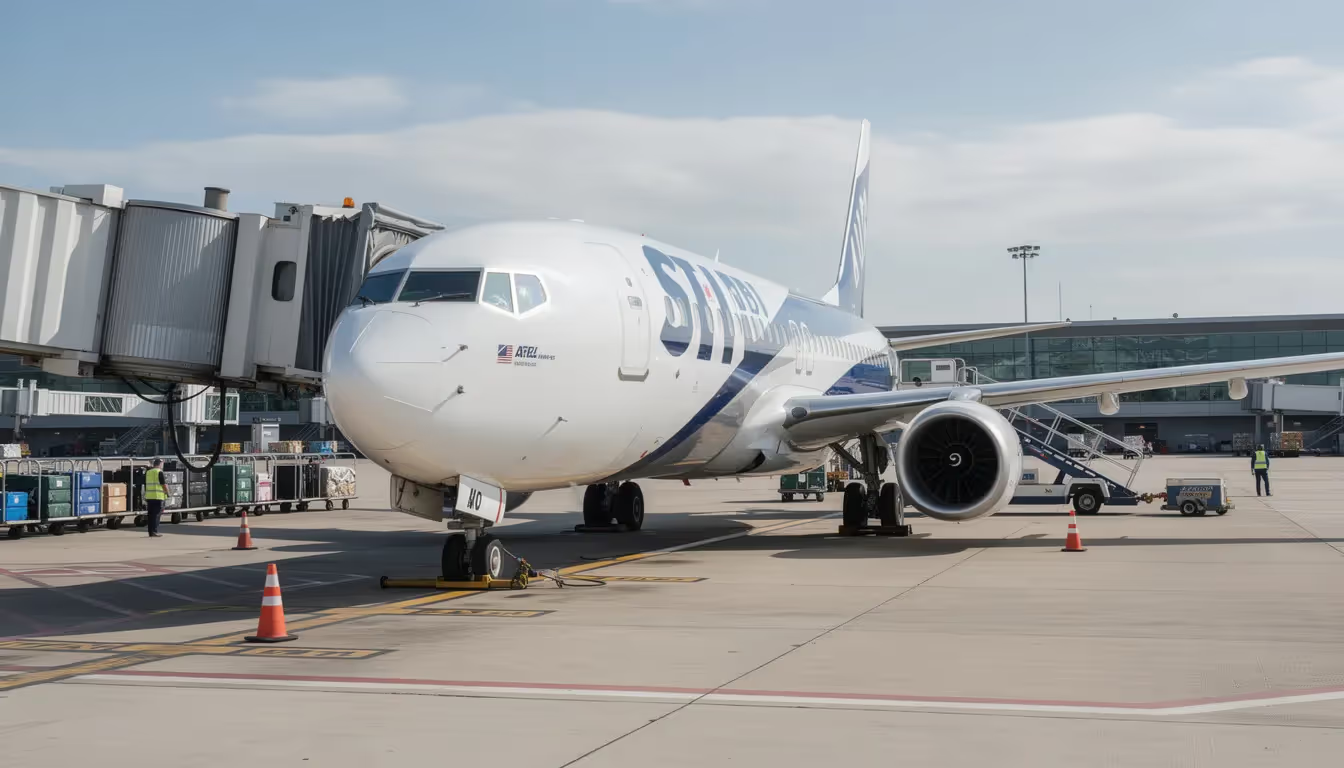
Owning a Boeing 737 as a private aircraft is a bold and transformative decision that redefines the possibilities of private aviation. Unlike conventional business jets, the Boeing 737 offers unmatched passenger capacity, extensive range, and the ability to customize every detail of the aircraft to fit unique operational needs. As the world's best-selling jet airliner, the Boeing 737 has proven its reliability and versatility across various applications.
This guide is designed to provide a comprehensive overview for individuals and organizations interested in buying a Boeing 737, covering everything from technical specifications and regulatory requirements to financing, maintenance, and operational considerations. Whether you are a corporation seeking to streamline global travel, a government entity requiring secure transport, or a high-net-worth individual desiring ultimate freedom and flexibility, understanding the complexities and advantages of Boeing 737 ownership is essential to making an informed investment in your aviation future.
Key Takeaways
Boeing 737 ownership requires Part 125 certification and specialized type rating for pilots, representing a major investment in both aircraft and operational infrastructure
New Boeing 737-800 aircraft cost approximately $106.1 million, with used models varying significantly based on maintenance history and flight hours
Private Boeing 737 operations deliver unmatched capacity (162-189 passengers), transcontinental range (2,845 nautical miles), and complete customization freedom
Global marketplaces like AvPay provide access to Boeing 737 aircraft for sale across Europe, Asia, and other regions, with direct seller communication
Annual operating costs typically range $3-5 million, including fuel consumption, maintenance, insurance, and specialized crew requirements
Set a clear budget that includes the purchase price, financing, insurance, and ongoing operating costs such as maintenance, fuel, and hangarage
When corporate leaders and ultra-high net worth individuals discover the strategic advantages of private aviation, most explore traditional business jets or jet card programs. However, for those requiring frequent transport of large groups or seeking ultimate operational independence, the decision to buy Boeing 737 aircraft represents a paradigm shift in private aviation strategy.
Private Boeing 737 ownership transforms how organizations approach global mobility. Unlike commercial aviation’s rigid schedules and standardized service, or smaller business jets’ capacity limitations, a privately-owned Boeing 737 delivers the perfect fusion of airliner capacity with private aviation’s personalized control. This comprehensive guide explores every aspect of Boeing 737 acquisition, from regulatory requirements to financing structures, empowering informed decisions for this substantial aviation investment.
Why Purchase a Boeing 737 for Private Operations
The strategic advantage of Boeing 737 ownership extends far beyond traditional private aviation benefits. For corporations managing global teams, government entities requiring secure transport, or high-net-worth families with extensive travel requirements, a private Boeing 737 solves mobility challenges that no other aircraft class can address. This paradigm shift in private aviation strategy offers a unique opportunity to own and fly an airplane of the Boeing 737's size and capability for private purposes.
Private Boeing 737 ownership transforms global mobility, but it also requires meeting specific regulatory and operational requirements to legally fly such an airplane for non-commercial use.
Operational Independence and Capacity Supremacy
Commercial airlines operate on fixed schedules serving their revenue optimization, not your strategic priorities. When your organization needs to move 150+ executives to a critical meeting, a Boeing 737 eliminates the complexity of coordinating multiple flights or accepting commercial aviation’s schedule constraints. The aircraft’s 162-189 passenger capacity in standard configuration, or customized layouts for specific operational requirements, provides unmatched flexibility for group transport. Its operational versatility makes it ideal for both short-haul routes and longer journeys, allowing you to efficiently meet a wide range of travel needs.
Cost Efficiency Through Consolidation
While the initial investment appears substantial, Boeing 737 economics become compelling for frequent large-group travel. Chartering multiple business jets for transcontinental routes costs $40,000-60,000 per flight hour across several aircraft. A private Boeing 737 operation consolidates this into a single flight with lower per-passenger costs, especially considering the aircraft’s 2,845 nautical mile range enables non-stop transcontinental operations without fuel stops.
Complete Customization Freedom
Unlike commercial first-class or even luxury charter services, Boeing 737 ownership allows complete interior customization. Corporate configurations might include conference rooms, secure communication facilities, sleeping quarters, and specialized equipment installations. The aircraft’s spacious cabin accommodates luxury seating, entertainment systems, and even specialized mission equipment that commercial operations cannot support.
Enhanced Security and Privacy
High-profile individuals, government officials, and corporations handling sensitive information require security protocols that commercial aviation cannot provide. Private Boeing 737 operations enable complete passenger manifest control, specialized security screening procedures, and route selection based on security rather than commercial considerations.
Boeing 737 Models and Specifications
Understanding the technical specifications and operational capabilities of different Boeing 737 variants is crucial for making an informed purchase decision. Each model offers distinct advantages depending on your operational requirements and route structure. Additionally, loading—specifically payload and weight management—significantly affects the Boeing 737's performance and efficiency, influencing factors such as range, fuel consumption, and overall operational effectiveness.
Boeing 737-800: The Proven Performer
The Boeing 737-800 represents the most popular variant in private operations due to its optimal balance of capacity, range, and operating economics. With a total length of 39.47 meters and wingspan of 35.79 meters featuring blended winglets for improved fuel efficiency, the aircraft accommodates 162 passengers in a two-class configuration or up to 189 in a single-class layout. The 737-800 has a design range of around 2,845 nautical miles with standard tanks and typical payload, making it versatile for various operational needs. Additionally, operators value the 737-800 for its short-field capability and broad airport compatibility, which enhance its operational flexibility.
Performance specifications demonstrate the 737-800’s transcontinental capabilities: cruising speed of Mach 0.79 (approximately 525 mph), range of 2,845 nautical miles, and service ceiling of 41,000 feet. The aircraft’s operating weights include 41,413 kg empty weight and a maximum takeoff weight of 79,016 kg, with a fuel capacity of 26,020 liters, enabling long-range operations without technical stops.
Boeing 737 MAX: Next-Generation Efficiency
The Boeing 737 MAX series introduces advanced LEAP-1B engines delivering approximately 15% improved fuel efficiency compared to previous generation CFM56-7B engines. For private operators focused on sustainability and operating cost reduction, the MAX variants offer compelling advantages despite their higher acquisition costs. Some MAX models are still awaiting final FAA certification, which can affect pricing and delivery times. WestJet's order includes the 737 MAX, which supports the airline's growth strategy and highlights the model's appeal for both commercial and private operations.
Boeing 737 Models and Specifications Overview
737-700
737-800
737-900ER
737 MAX 8
Engine and Performance Considerations
All Boeing 737-800 aircraft utilize twin CFM56-7B turbofan engines producing 27,300 pounds of thrust each. These engines represent proven technology with extensive global maintenance support networks, crucial for private operators requiring reliable service anywhere in the world. The aircraft requires minimum runway lengths of 2,300 meters for takeoff operations, accommodating most international airports while providing access to smaller regional facilities.
Regulatory Requirements and Certification
Private Boeing 737 operations navigate complex regulatory frameworks significantly different from typical business jet operations. The FAA is concerned about the safety of large aircraft operations, which is why it imposes strict regulations on flying a Boeing 737. Understanding these requirements before initiating a purchase prevents costly delays and ensures operational compliance from day one.
Part 125 Operating Certification
Any aircraft operation exceeding 20 passengers or 6,000 pounds payload requires FAA Part 125 certification, making this mandatory for Boeing 737 operations. To fly a Boeing 737 for personal use, you need a private carriage operating certificate if the aircraft is configured for more than 20 passengers or has a maximum payload capacity of 6000 pounds or more. This certification process involves comprehensive documentation of maintenance procedures, flight planning protocols, crew training programs, and operational safety systems. The certification timeline typically requires 6-12 months with substantial documentation and inspection requirements.
Type Rating and Pilot Requirements
Boeing 737 operations require pilots holding a specific type rating certification through approved training programs. Initial type rating typically costs $30,000-50,000 per pilot and requires 3-4 weeks of intensive ground school, simulator training, and checkride completion. Recurrent training occurs annually, with many operators maintaining 4-6 type-rated pilots to ensure schedule flexibility and regulatory compliance.
Maintenance Program Certification
Private Boeing 737 operations must establish approved maintenance programs through FAA-authorized repair stations. This includes scheduling regular inspections, component overhauls, and airworthiness directive compliance. The complexity of these maintenance requirements often drives operators toward service agreements with major maintenance providers like Boeing Business Services or third-party specialists. The cost and time between overhauls (TBO) for the engines are major factors in an aircraft's valuation, making it essential to plan maintenance schedules effectively to preserve the aircraft's operational value.
International Operations Compliance
Boeing 737 operations crossing international boundaries require additional ICAO compliance, foreign registry considerations, and diplomatic clearance procedures. Many private operators register aircraft in jurisdictions offering favorable tax treatment and operational flexibility while maintaining compliance with home country regulations.

Finding Boeing 737 Aircraft for Sale
The global marketplace for Boeing 737 aircraft offers diverse acquisition opportunities, from factory-new orders to well-maintained used aircraft with attractive operating histories. In North America, Canada plays a key role, with WestJet recognized as a major Canadian airline operating a significant Boeing 737 fleet and contributing to the growth of Canada's aviation industry. WestJet operates nearly 150 Boeing 737s, connecting various destinations in Canada. Recently, WestJet announced an order for 67 Boeing jets, bringing its total firm order book to 123 airplanes. WestJet's fleet is among the youngest of established North American carriers, with an average age of approximately 10 years. Boeing develops, manufactures, and services commercial airplanes for customers in more than 150 countries. Older passenger Boeing 737-800s have commonly traded in the high single-digit to teens of millions of US dollars depending on various factors, with a 2018 Boeing 737-800 listed for $38 million. Older variants like the 737-800 are much cheaper than newer models such as the 737 MAX. Conducting a thorough title search to establish a clear chain of ownership and verifying that all registration documents are in order are critical steps when purchasing an aircraft. Placing an order for a new Boeing 737 represents a significant addition to an operator’s fleet, supporting growth and modernization strategies. Understanding where to find quality aircraft and how to evaluate their condition ensures successful acquisition outcomes.
AvPay Global Marketplace Access
AvPay provides comprehensive access to Boeing 737 listings across multiple continents, where each listing is a detailed entry for an aircraft available for sale, including specifications, photos, and seller information. The platform’s advanced filtering options allow users to sort by aircraft age, flight hours, geographic location, and seller type. Potential buyers often work directly with Boeing or specialized aircraft brokers when purchasing a Boeing 737. The platform’s direct communication channels enable immediate contact with sellers through WhatsApp, private messaging, and phone connections, streamlining the initial inquiry and negotiation process.
Aircraft Broker Networks and Specialized Dealers
Professional aircraft brokers specializing in Boeing 737 transactions bring industry expertise, valuation knowledge, and transaction management experience crucial for complex purchases. These specialists understand market pricing trends, maintenance program transfers, and regulatory compliance requirements that individual buyers might overlook during their initial aircraft evaluation.
New Aircraft Through Boeing Business Jets
Boeing Business Jets division offers new Boeing 737 aircraft with custom configurations designed specifically for private operations. These aircraft include luxury interior options, advanced avionics packages, and specialized equipment installations not available in commercial variants. Delivery timelines typically extend 18-36 months, with customization complexity affecting schedule and pricing.
Pre-Purchase Inspection and Aircraft History Verification
Professional pre-purchase inspections become critical for used Boeing 737 acquisitions. These comprehensive evaluations examine engine condition, structural integrity, maintenance records, and compliance history. A pre-purchase inspection (PPI) involves a technical team inspecting the aircraft's condition, including its airframe, engines, and avionics. The physical condition of the airframe, engines, paint, and interior are crucial factors in determining an aircraft's value. Buyers should confirm current LOPA, seat tracks, and monument weights when evaluating a Boeing 737 aircraft. The technical team reviews all maintenance and logbook records to ensure compliance with all directives and to check for any damage history during the final acceptance. The pre-purchase inspection typically results in a list of discrepancies that are subject to negotiation for repair between buyer and seller. Qualified inspection teams typically require 3-5 days for complete evaluation, with costs ranging $25,000 to $50,000 depending on aircraft complexity and inspection scope.
Geographic Market Considerations
Boeing 737 availability varies significantly by region, with European markets offering aircraft previously operated by established carriers with strong maintenance records. Asian markets present opportunities for lower flight-hour aircraft, while North American availability includes both airline conversions and purpose-built private configurations. Canada plays a significant role in the Boeing 737 market, with WestJet recognized as a major Canadian airline operating one of the largest Boeing 737 fleets. WestJet's growth and fleet expansion highlight its contribution to Canada's aviation industry. Each market presents distinct advantages requiring careful evaluation of import regulations, tax implications, and ongoing support availability.
Financing Your Boeing 737 Purchase
Boeing 737 acquisition represents a substantial financial commitment requiring sophisticated financing strategies tailored to aviation assets’ unique characteristics. The initial purchase price of a Boeing 737 is only part of the total ownership cost. Understanding available financing structures enables strategic capital deployment while optimizing cash flow and tax efficiency. A deposit, typically 5-10% of the price, is placed in escrow when securing financing for an aircraft purchase, ensuring financial commitment and facilitating the transaction process.
Operating Lease Structures and Benefits
Operating leases provide access to Boeing 737 aircraft with lower initial capital requirements and enhanced financial flexibility. Monthly lease payments typically range 0.8%-1.2% of aircraft value, with terms extending 7-12 years depending on aircraft age and condition. This structure preserves capital for other investments while providing operational control and customization rights.
Finance Lease Arrangements and Ownership Benefits
Finance leases combine lower initial investment with ultimate ownership transfer, appealing to operators seeking long-term aircraft control. These arrangements typically require 15-25% down payments with structured payment schedules over 10-15 year terms. At lease conclusion, operators gain full aircraft ownership while having managed cash flow throughout the term.
Specialized Aviation Lenders and Credit Requirements
Aviation lenders understand Boeing 737 valuations, operating economics, and market dynamics better than traditional commercial banks. These specialists evaluate applications based on utilization plans, route deployment strategies, operator experience, and aircraft-specific factors like engine maintenance status and landing gear life remaining. Lenders will review engine maintenance status and upcoming checks when setting terms for financing a Boeing 737. Interest rates typically range 4-7% depending on credit quality and structure.
Export Credit Agency Support and International Financing
For international purchases, export credit agencies provide financing support, reducing borrowing costs through government backing. Boeing Capital Partners offers competitive financing for new aircraft purchases, while international lenders provide attractive terms for cross-border transactions with appropriate credit enhancement.

Insurance and Risk Management
Comprehensive risk management for Boeing 737 operations requires specialized insurance coverage addressing the unique exposures of private airliner operations. Aviation insurance brokers can place hull all-risks and liability cover for Boeing 737 aircraft. Understanding coverage requirements and underwriter evaluation criteria ensures adequate protection while managing premium costs effectively.
Hull All-Risks Coverage and Valuation
Hull insurance protects against physical damage during flight operations and ground time, with coverage typically written for agreed value rather than actual cash value. For a $50 million Boeing 737, annual hull premiums range $150,000 to $300,000 depending on operational profile, crew experience, and geographic exposure. Agreed value coverage prevents disputes during claims while providing certainty for lender requirements.
Liability Coverage and Passenger Protection
Passenger liability coverage scales with aircraft capacity, with Boeing 737 operations typically requiring $500 million-1 billion per occurrence coverage. This protection addresses passenger injury claims, third-party property damage, and potential product liability exposures. Premium costs reflect passenger count, operational complexity, and international route exposure.
War Risk and Geographic Considerations
International Boeing 737 operations require specialized war risk coverage protecting against political violence, hijacking, and confiscation. This coverage becomes essential when operating in regions with elevated geopolitical tensions, with premiums varying dramatically based on route structure and destination risk assessments.
Underwriter Evaluation Process and Risk Factors
Insurance underwriters evaluate Boeing 737 operations based on pilot experience, maintenance history, operational procedures, and route structure. Operators with strong safety management systems, experienced crews, and conservative operational profiles receive favorable premium treatment. Recent Boeing 737 MAX certification issues have increased underwriter scrutiny, particularly for MAX variant operations.
Operating Your Private Boeing 737
Successful Boeing 737 operations require comprehensive planning addressing fuel efficiency, maintenance scheduling, crew management, and regulatory compliance. Understanding operational best practices ensures reliable service while managing costs effectively.
Fuel Efficiency Optimization and Route Planning
Boeing 737-800 operations consume approximately 2,500-3,000 liters per hour, depending on altitude, weather conditions, and aircraft configuration. Blended winglet technology improves fuel efficiency by 3-5% compared to non-winglet aircraft, while advanced flight management systems optimize routing for minimum fuel consumption. Strategic fuel planning considers price variations across different airports, enabling cost savings through selective fueling strategies.
Maintenance Program Integration and Global Support
Boeing’s global service network provides maintenance support across six continents, crucial for international operations requiring reliable service anywhere in the world. Major maintenance events occur at 6,000-8,000 flight hour intervals, with typical “C-check” inspections costing $400,000-600,000 depending on aircraft condition and work scope. Operators often establish relationships with multiple certified maintenance providers to ensure geographic coverage and competitive pricing.
Crew Management and Training Requirements
Professional Boeing 737 operations typically employ 8-12 crew members, including pilots, flight engineers, and cabin staff. Annual crew costs, including salaries, benefits, training, and recurrency requirements, range $800,000 to $1.2 million, depending on experience levels and operational complexity. Many operators supplement internal crews with contract personnel during peak periods or specialized missions.
Technology Integration and Avionics Upgrades
Modern Boeing 737 aircraft accommodate advanced connectivity systems enabling high-speed internet, real-time communication, and enhanced entertainment systems. Retrofit installations for cabin management systems, satellite communication, and passenger connectivity typically cost $500,000-1.5 million, depending on complexity and integration requirements.
Sustainability Initiatives and Environmental Responsibility
Sustainable aviation fuel compatibility enables Boeing 737 operations to reduce carbon emissions by up to 80% compared to conventional jet fuel. Many private operators implement carbon offset programs, calculating emissions per flight hour and purchasing verified offset credits. The aircraft’s commonality with commercial operations provides access to established sustainability programs and environmental reporting systems.

Frequently Asked Questions
What are the ongoing operating costs for a private Boeing 737?
Annual operating costs typically range from $3-5 million, including fuel consumption, maintenance, crew salaries, insurance, and hangar fees. These costs vary significantly based on utilization rates, with higher flight hours spreading fixed costs across more operational hours, improving per-hour economics. Pre-owned Boeing 737 models can be purchased for as little as under $2 million, offering a cost-effective entry point for private operators willing to invest in older aircraft with appropriate maintenance and upgrades. The used market offers a wide variety of older-generation 737s at significantly lower prices, varying based on age, maintenance history, and condition. When analyzing needs and budget, it is essential to determine specific operational requirements, such as typical destinations, passenger capacity, and usage frequency, to ensure the aircraft aligns with your objectives.
Can I convert a commercial Boeing 737 for private luxury use?
Yes, commercial aircraft can be reconfigured with custom interiors, reduced seating capacity for luxury layouts, conference rooms, and sleeping quarters. However, this requires Supplemental Type Certificate (STC) approval and significant investment, often costing $5-15 million depending on modification complexity.
How long does the Boeing 737 type rating process take?
Type rating typically requires 3-4 weeks of intensive training, including ground school, simulator sessions, and checkrides, with costs ranging from $30,000 to $50,000 per pilot, depending on previous experience. Airlines transitioning pilots from other Boeing types may require shorter training periods.
What airports can accommodate Boeing 737 operations?
Most commercial airports worldwide can handle Boeing 737 operations, but private use may require advance scheduling and handling arrangements. The aircraft requires minimum runway lengths of 2,300 meters for takeoff and appropriate ground support equipment for passenger boarding and aircraft servicing.
Is Boeing 737 ownership practical for individual private use?
Individual ownership is typically only practical for ultra-high net worth individuals requiring frequent transport of large groups. The operational complexity, regulatory requirements, and substantial costs generally favor corporate or government ownership structures where the private jets’ capacity and capabilities match operational requirements.
Conclusion
Buying a Boeing 737 represents a significant but rewarding commitment to private aviation, offering unparalleled capacity, operational independence, and customization options that smaller business jets cannot match. Whether for corporate, government, or high-net-worth family use, owning this aircraft enables efficient global mobility with the flexibility to tailor every aspect of the operation—from interior design to flight planning and crew management. While the acquisition and ongoing costs are substantial, the strategic advantages in security, privacy, and cost efficiency for large-group travel make the Boeing 737 a compelling choice for those seeking to elevate their aviation capabilities.
Purchasing a Boeing 737 typically involves a detailed, multi-stage process requiring expert assistance and significant due diligence. Resources such as BlackJet.com provide valuable insights and guides to help prospective buyers understand the complexities of private aviation ownership. A Letter of Intent (LOI) is often used to outline the proposed terms before a final purchase agreement is drafted. It is essential to hire professionals with specific aviation experience, including a knowledgeable aircraft broker and an aviation attorney, when purchasing a Boeing 737. Assemble a team of experts, including a qualified aviation attorney and an acquisition professional, to guide you through the purchasing process. Key steps for purchasing a Boeing 737 include analyzing needs and budget, conducting market research, and preparing for the pre-purchase inspection and final agreement. By carefully navigating regulatory requirements, financing options, and maintenance planning, prospective owners can successfully integrate this major investment into their transportation strategy and enjoy the benefits of private airliner ownership worldwide.


 Sign up with google
 Sign up with Apple