
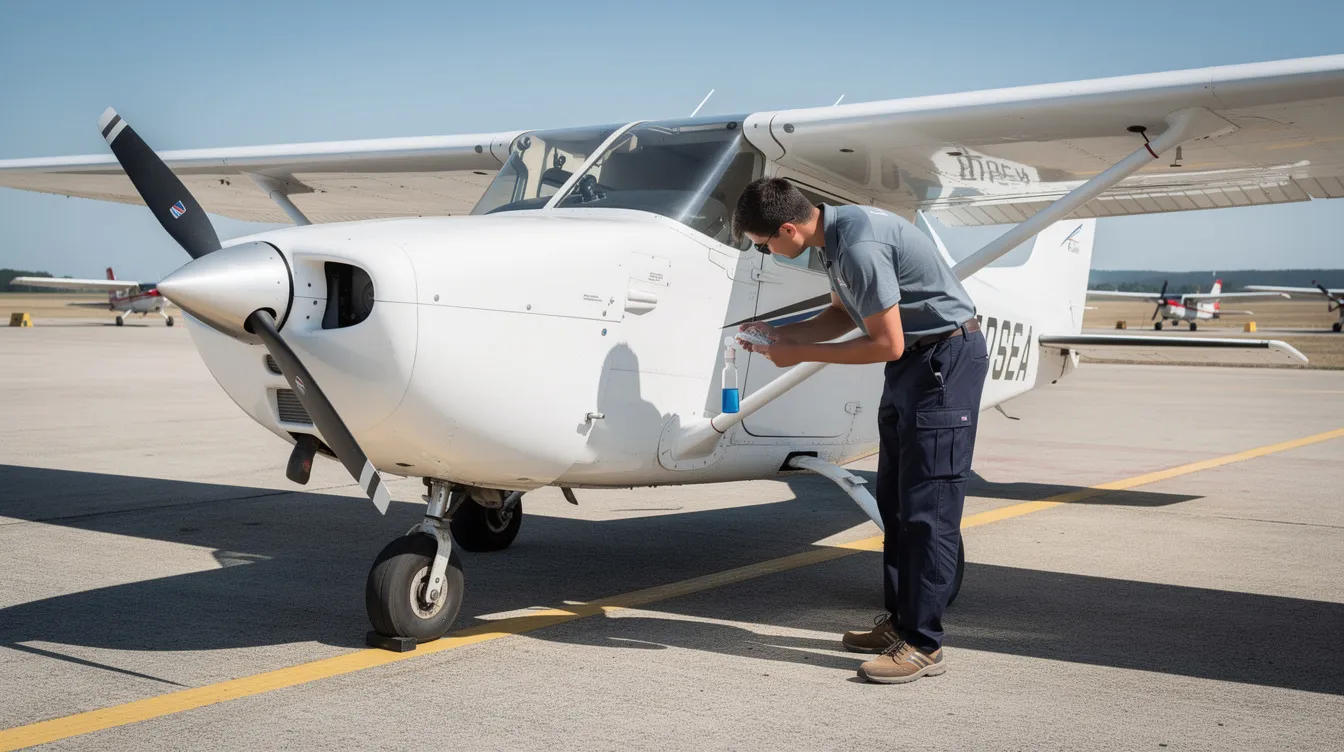
The Cessna 152 remains one of the most widely used two-seat trainer aircraft in the world, and understanding its fuel consumption is essential whether you are a student working toward a private pilot certificate, an owner managing operating costs, or a renter planning a cross-country flight in 2027.
Overview: What Cessna 152 Fuel Consumption Really Looks Like
The Cessna 152 typically burns 5.5 gallons per hour at a standard cruise setting, with a realistic range of 5.3 to 6.1 gallons per hour depending on power and altitude. At 75% power and 8,000 ft, the POH figures show approximately 6.1 gph; pull the throttle back to 55–65% and consumption drops closer to 4.5–5.0 gph. These numbers assume a late-model Cessna 152 built with the Lycoming O-235 engine, burning 100LL under standard atmospheric conditions.
A Cessna 152 typically burns 35% to 40% less fuel than a standard Cessna 172, making it one of the most economical training aircraft still flying. Newer light sport aircraft generally burn less fuel than the Cessna 152, but few match its combination of availability, low operating cost, and training record—paralleling how pilots and owners look for the cheapest private aircraft options when stepping up into private aviation. Proper maintenance affects fuel consumption efficiency considerably-a well-maintained engine with clean plugs and a correctly adjusted carburetor runs leaner and cooler. The Cessna 152 offers endurance of 3 to 5 hours while maintaining legal fuel reserves, depending on tank configuration and power setting. Later sections cover long range tanks, weight and balance, cost per hour, and how this light aircraft's efficiency figures compare with modern private jets.
Cessna 152 Fuel System and Tank Options (Standard vs Long Range Tanks)
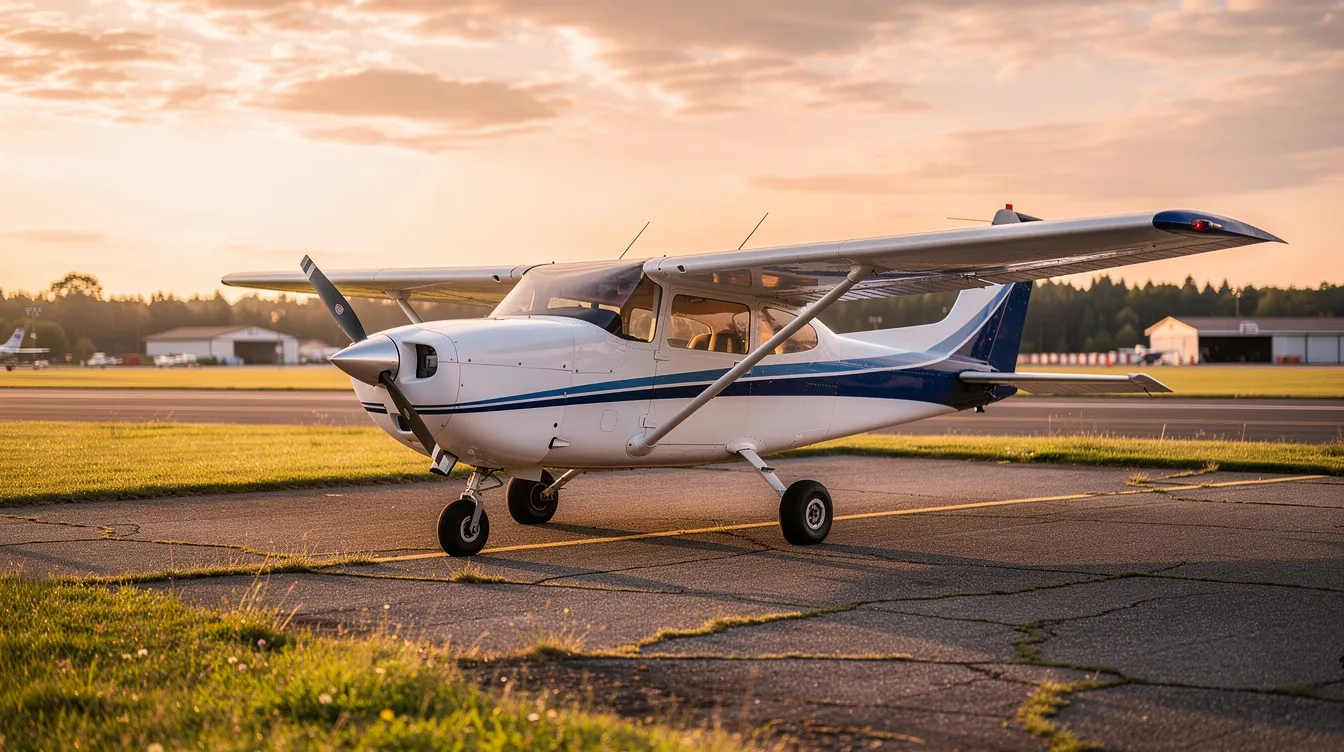
Knowing your tank capacity is the first step in translating fuel burn per hour into safe range and endurance.
Standard tanks hold 26 gallons total, with 24.5 gallons usable. Each wing carries 13 gallons, and both tank configurations share 1.5 gallons of unusable fuel that the engine cannot access in normal flight attitudes. At a cruise burn of roughly 6 gph, standard tanks give you approximately 3.5 to 4 hours of flight time before you must add reserves.
Long-range tanks hold 39 gallons total, with 37.5 gallons usable-19.5 gallons per wing. That extends theoretical endurance to around 5.5 to 6 hours at the same cruise setting. For cross-country flights where airports may be far apart, long-range tanks provide meaningful breathing room.
One operational detail people often overlook: the tanks cross-feed, requiring a second filling pass after refueling. Fuel settles and migrates between wings, so you need to fill both sides, wait, then top up again to reach true full fuel capacity. Approved fuel types in 2027 include 100LL (blue dye) and, where certified, UL avgas alternatives. Always check the color during your preflight sump to guard against misfuelling.
Real-World Fuel Burn: Power Settings, Phases of Flight, and Weather Effects
POH fuel figures are idealized. Real consumption varies with power setting, altitude, temperature, pilot technique, and the aircraft's drag profile in different configurations.
Training flights: Frequent circuits, climbs, and power changes push average burn toward 7–8 gph when you include taxi, run-up, and touch-and-go sequences. Fuel consumption varies significantly depending on the phase of flight—climb segments alone can burn more fuel than cruise at the same time interval.
Cross-country cruise: At 2,300–2,400 RPM, properly leaned above 3,000 ft, expect around 6–6.5 gph and a TAS of roughly 90–95 knots. The Lycoming O-235 engine outputs 110 horsepower, and mixture control influences the fuel efficiency of the Cessna 152 more than almost any other single variable. Burn rates range from 4.0 to 6.5 gph depending on power setting.
Taxi and climb allowance: Add 0.5–1.0 gallons for taxi, run-up, and initial climb on short flights.
Weather: Headwinds and tailwinds don't change gph much but dramatically alter distance covered over the ground. Altitude can influence the engine's performance and fuel efficiency, and density altitude on hot days degrades climb rate, meaning more fuel burned before you reach cruise. Fuel consumption can also vary based on flying conditions like humidity and turbulence. Carburetor heat usage can increase fuel consumption in the Cessna 152 because it enriches the mixture and reduces available power.
Always plan to land with legal reserve fuel-30 minutes VFR day, 45 minutes at night, or IFR in most jurisdictions-and treat POH best-case data as a warning sign, not a target.
Weight and Balance, Long Range Tanks, and How Fuel Load Affects Performance
In a two-seat trainer like the Cessna 152, weight and balance and fuel load are tightly linked to what you can actually carry. The limited seat count means every pound matters.
Maximum gross weight is 1,670 lb. Typical empty weight for a late-1970s model falls between 1,081 and 1,136 lb, leaving a useful load of roughly 534–589 lb for pilot, passenger, baggage, and fuel. Consider this example: two occupants at 180 lb each (360 lb total) plus full standard tanks (24.5 usable gallons × 6 lb/gal ≈ 147 lb) leaves roughly 27–82 lb for baggage, depending on your aircraft's empty weight. With long-range tanks full, fuel weight climbs to about 225 lb, and that leaves almost nothing for luggage.
Fuel consumption in a Cessna 152 can increase with higher aircraft weight-more fuel means a heavier aircraft, a longer takeoff roll, and slightly higher burn during climb. Weight affects fuel consumption in light airplanes more noticeably during takeoff and climb than in cruise, but the trade-off is modest compared to jets. The center of gravity must stay within limits as fuel burns off; most 152s are weight-limited before they are CG-limited, but you must always check both.
A practical tip for every student: run a full weight and balance calculation before every cross-country using modern EFB apps or the POH PDF charts. Never rely on a rule-of-thumb alone.
Cessna 152 Fuel Consumption in Cost and Trip Planning
Average 100LL Avgas in the US runs about $7.26 per gallon as of late 2026. At a typical burn of 6.1 gph, one hour of flight costs roughly $44 in fuel alone. If you are paying a wet-hire rate of $130–$150 per hour, fuel's share of that figure is around 30–35%—a useful comparison point if you are also evaluating 100-hour jet card costs in private aviation.
For a 200 nm cross-country at 100 KTAS, plan approximately two hours of cruise plus taxi, climb, and reserve. Total fuel consumed might be 15–16 gallons (about $110–$120), which provides a useful benchmark when comparing block trip costs to NetJets jet card pricing models. Most pilots split longer trips into 1.5–2.5-hour legs rather than pushing close to maximum endurance, making each leg safer and each landing more comfortable, much like travelers who buy a seat on a private jet to balance cost, convenience, and safety on longer routes.
Carrying full fuel versus partial fuel is a common question. The extra weight from more fuel does slightly increase burn, but additional takeoff and climb cycles from refueling stops usually cost more in time, fuel, and fees than the marginal savings from flying lighter. Pilot techniques-like flying slightly lean of peak at cruise-can influence overall fuel consumption during flight and reduce CO emissions. Cessna 152 fuel efficiency is affected by engine management and flight profile, so disciplined leaning and power-setting records pay off. Compare these figures with how much fuel a private jet uses, and the 152's frugality becomes strikingly clear, especially when you factor in jet card pricing structures and benefits that spread those higher fuel costs across predictable hourly rates.
From Trainers to Private Jets: Fuel Efficiency, Safety, and Sustainability in Perspective
Techniques learned in a Cessna 152-precise fuel planning, respecting reserves, and weight and balance discipline-translate directly into safer, more efficient private jet operations, especially when you understand different private jet sizes and capabilities. A C152 cruising at 90–95 knots on 6 gph delivers roughly 15–20 nautical miles per gallon. A light jet burning 150 gph at 400 knots covers about 2.5–3 nm per gallon. The jet trades per-mile efficiency for speed, capacity, and range, often flying 1,500–3,000 nm nonstop, and larger aircraft can even serve private jet missions for 50 passengers with similarly careful fuel and range planning.
Professional operators like BlackJet’s premium private jet card and charter services use real-time flight support, digital booking tools, and performance data to optimize fuel, routes, and time savings. The strict adherence to POH limits that keeps a Cessna 152 safe mirrors the proprietary safety standards and third-party audits applied across BlackJet's fleet partners, similar to those highlighted among top private jet companies for luxury travel. And while a C152 is inherently frugal, BlackJet complements high-performance jets with carbon-neutral flights through verified offsets-a sign that fuel planning has evolved from "how far can I fly" to "how efficiently and responsibly can I travel" by 2027.
Key Takeaways and FAQs About Cessna 152 Fuel Consumption
Headline numbers
The Cessna 152 typically burns 5.3–6.1 gph at cruise. Standard tanks hold 26 gallons (24.5 usable). Long-range tanks hold 39 gallons (37.5 usable). Safe endurance with reserves runs 3–5 hours depending on configuration and power.
How many hours can a Cessna 152 fly on full standard tanks?
Approximately 3.5–4.0 hours at 75% power before reserves. After deducting 30–45 minutes of reserve fuel, plan on about 3.0–3.5 hours of usable flight time.
Do long-range tanks change the way I plan weight and balance?
Yes. Full long-range tanks add roughly 225 lb of fuel weight, which leaves far less useful load for people and baggage. Always calculate weight and balance for your specific aircraft before boarding.
Is it more efficient to make multiple short legs or one longer leg?
One longer leg is generally more efficient because you avoid repeated climb and taxi fuel. The small weight penalty from carrying more fuel is outweighed by the cost and time of extra stops at additional airports.
How does 152 fuel planning compare to private jet planning?
Both share the same core discipline: accurate fuel figures, legal reserves, weight limits, and contingency for weather. Private jet operations simply scale these principles up, adding dispatch support, route optimization, and prepaid Jet Card programs that bundle fuel, safety, and flexibility; travelers can dive deeper into Jet Card cost and membership pricing to understand how these programs manage hourly rates and reserves.
Conclusion: Applying Cessna 152 Fuel Planning to Every Journey
Understanding Cessna 152 fuel consumption means looking beyond a single gallons-per-hour figure. The aircraft typically burns about 5.3–6.1 gallons per hour in cruise, but power setting, altitude, mixture, aircraft condition, weight, and flight phase all affect the result. Tank capacity matters, too: standard tanks provide 24.5 usable gallons, while long-range tanks provide 37.5. Pilots should use the aircraft’s POH, calculate weight and balance, account for conditions, and preserve legal reserves rather than planning around theoretical maximum endurance. For a broader look at small plane range, compare endurance with practical trip-planning considerations.
Those habits—careful preparation, disciplined operations, and attention to safety—apply at every scale of aviation. For travelers whose priorities are speed, flexibility, and professional support, BlackJet’s Jet Card programs and dedicated 25+ Hour Jet Card options offer private jet access without the responsibilities of ownership, supported by digital booking, real-time assistance, rigorous safety standards, and carbon-neutral flights. Learn more about BlackJet private jet safety standards and explore how carbon-neutral private flights can support more considered travel.
If you have mastered the art of optimizing every gallon in a Cessna 152, you already understand the mindset behind premier private aviation. Explore how BlackJet's Jet Card programs apply that same discipline—with rigorous safety certification, carbon-neutral performance, and seamless 24/7 booking—to regional and intercontinental travel on your terms. Compare private jet fuel use to understand how aircraft size and mission shape efficiency, and consider a broader private jet price list overview to see how operating cost scales alongside fuel burn.