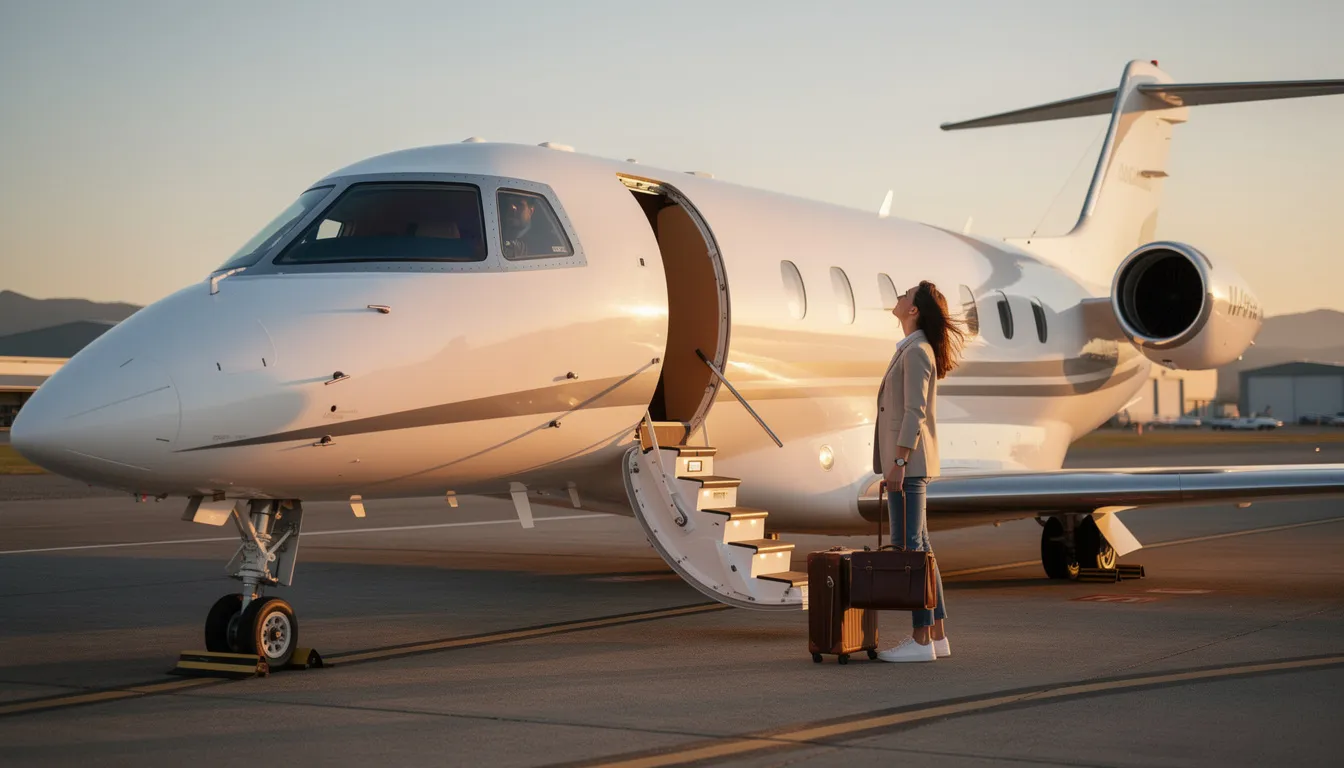
Private jets are often seen as the pinnacle of luxury—but for high-net-worth individuals and corporate leaders, they offer something far more valuable: time. Time saved. Time reclaimed. Time spent on the move, without compromise.
The 1960s laid the foundation for private aviation, marking the beginning of an industry that would continuously reinvent itself.
In today’s high-stakes world, private jet access isn’t just about leather seats and champagne—it’s about efficiency, safety, personalization, and global reach. A typical commercial traveler can spend 2–4 hours navigating terminals, layovers, and delays. A private flyer? They arrive 15 minutes before departure, fly direct, and land closer to their destination.
And it all began with a single revolutionary moment in aviation history: the launch of the first private jet. The beginning of private aviation can be traced back to the Wright brothers' first flight, a historic milestone that marked the first flight in human history and set the stage for the evolution of aviation, ultimately leading to the development of private jets.
Let’s dive into the origins of this exclusive mode of travel—and why it continues to redefine what’s possible in aviation today.
The Early Vision: Birth of the Private Jet Concept
A Natural Evolution Post-Wright Brothers
Shortly after the Wright brothers' first successful flight in 1903, aviation pioneers and wealthy enthusiasts began pushing boundaries—not just for public air travel, but for private exploration. While early flight was experimental and dangerous, it didn’t take long before aviation became a symbol of both innovation and prestige.
By the 1920s and 1930s, private ownership of small aircraft was no longer rare among industrialists, royalty, and aviators. These early private planes were basic, often repurposed military aircraft—but they represented a dream: flight on your own terms. One of the first popular private planes used for business travel was the Beechcraft Model 17 Staggerwing in the 1930s, which set early standards for private aviation.
Post-War Growth: The Rise of Civilian & Private Aviation
The Boom After World War II
After WWII, military aircraft manufacturers pivoted toward civilian aviation. The result? A massive leap in aircraft technology, availability, and infrastructure.
Private aviation flourished:
New airfields emerged across the United States and Europe.
Aircraft became faster, safer, and more accessible.
And most importantly, the idea of jet-powered flight for private use began to crystallize.
The First Private Jet: The Lockheed JetStar
A Groundbreaking Entry into Jet-Powered Luxury
In 1957, Lockheed Martin introduced the JetStar—the first official private jet to be launched. Originally designed for the U.S. Air Force, the JetStar caught the attention of private buyers thanks to its:
Spacious cabin (10 passengers + 2 crew)
Powerful performance for the time
And the ability to skip commercial delays entirely
Famously, Elvis Presley purchased one and named it Hound Dog II. The JetStar had become a cultural icon, and more importantly, the first true proof of concept for private jet travel.
Learjet 23: A New Era of Efficient Jet Travel
The Civilian Jet That Changed Everything
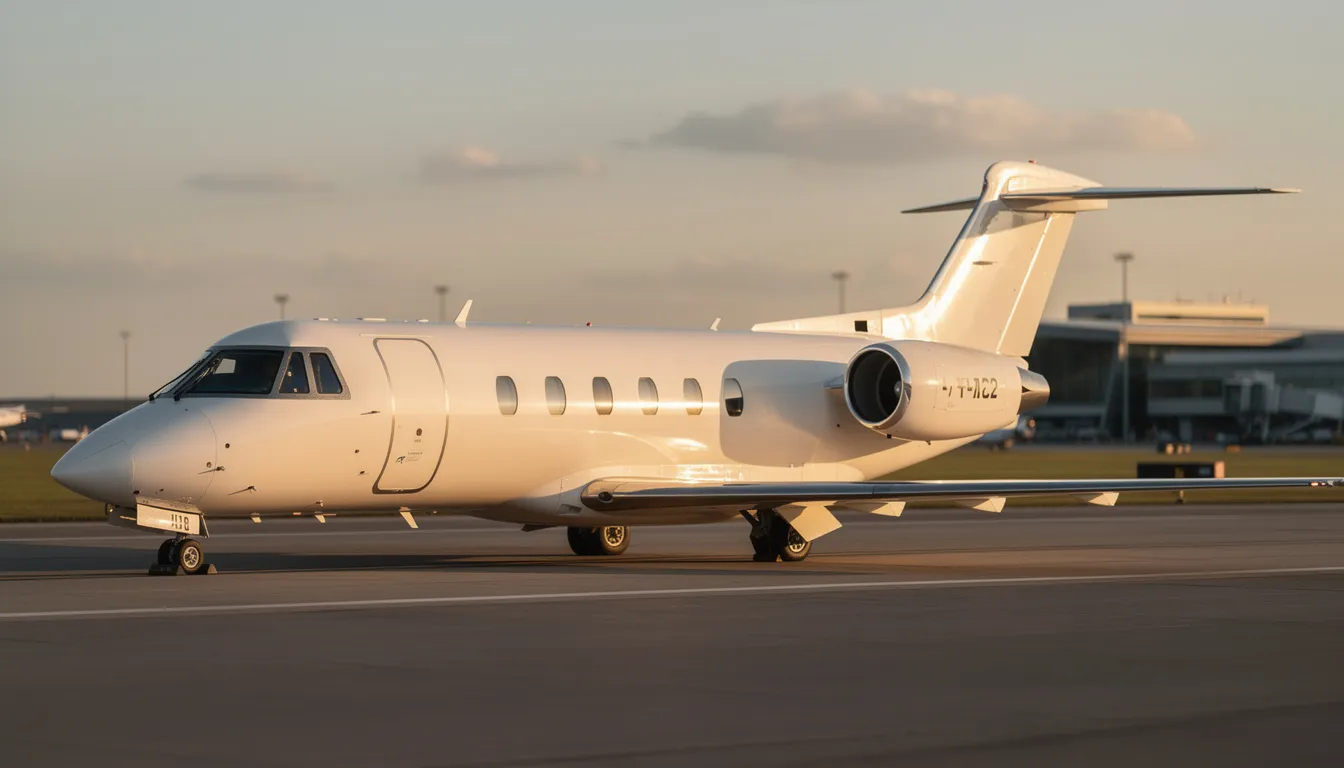
In 1964, the Learjet 23 was introduced as the first purpose-built private jet, designed from the ground up for business travelers. It was sleeker, faster, and more affordable to operate than the JetStar, setting the standard for business jets and marking a new era in private aviation.
The Learjet 23 quickly became the preferred mode of transportation for celebrities, businessmen, and elites. Early adopters included famous personalities like Frank Sinatra and Elvis Presley, further cementing its status as a symbol of luxury and success. However, initial crashes of the Learjet 23 sparked safety concerns, which led to stricter industry standards and improvements in design and operation.
The Learjet brought private aviation into the hands of:
This aircraft helped crystallize what we now recognize as the modern business jet: compact, high-performance, and strategically designed for time-sensitive travel.
The Growth of Jet Charter and Access Models
Chartering: Flexibility Without Ownership
By the 1970s and 80s, private jet charter** companies** began popping up across major cities. They allowed clients to:
Book flights on-demand without owning an aircraft
Avoid capital expenditures and maintenance costs associated with private jet ownership, which involves high initial costs and ongoing expenses
Avoid aircraft depreciation and the challenges of resale
Fly with flexibility, privacy, and prestige
This marked the early foundation of the Jet Card** model**—which today, through platforms like BlackJet, offers all the benefits of private aviation without the complexities of ownership.
Fractional Ownership: Making Jets More Accessible
Emerging in the 1990s, fractional ownership made private jets more affordable and accessible. This model allowed multiple owners to share the costs and usage of an aircraft, bridging the gap between full ownership and chartering.
Dassault Falcon: A Global Leader in Private Jet Innovation
Performance Meets Prestige
Among the most respected manufacturers in the private aviation world is Dassault Falcon. Known for their tri-jet design, advanced avionics, and exceptional range, Dassault aircraft are favorites among:
Their history of innovation includes:
Early use of fly-by-wire technology, with the introduction of the Dassault Falcon 7X in 2005 marking the first business jet to incorporate digital fly-by-wire controls, enhancing safety and performance
Highly fuel-efficient engines
Luxuriously appointed, long-range cabins
The Dassault Falcon 20, introduced in 1965, quickly gained international acclaim for its engineering and performance. The Falcon 2000, launched in 1995, garnered accolades for its efficiency and performance, marking Europe's strong presence in the sector.
BlackJet clients often request Falcon models for intercontinental trips where both comfort and safety certifications are non-negotiable.
Technological Advancements and Luxury in Private Aviation
Innovation Driving Safety and Comfort
Technological advancements have transformed private aviation over the decades. The introduction of turbofan engines in the 1970s offered enhanced fuel efficiency and quieter operations. Later innovations like digital fly-by-wire controls improved safety and performance significantly.
Luxury has also reached unprecedented levels. Bespoke services and tailor-made interiors now include amenities such as gourmet meals and in-flight showers, elevating private jet travel to an experience of unparalleled comfort.
Record-Breaking Jets
The Gulfstream V, introduced in 1997, set new standards for ultra-long-range flights, capable of non-stop travel from New York to Tokyo. The Gulfstream G650, unveiled in 2012, broke records with a maximum speed of Mach 0.925 and a range of nearly 13,000 km, making it the longest-range business jet at the time.
The Benefits of Private Aviation
Why Private Jets Matter for Travelers and Businesses
The world of private aviation has transformed the way people think about air travel, offering a level of freedom, flexibility, and luxury that commercial aircraft simply can’t match. As the private jet market has grown, so too has the demand for tailored experiences—whether for business travel, family getaways, or urgent missions. Today’s private jets are more than just symbols of prestige; they are powerful tools for efficiency and productivity.
One of the standout advantages of private jets is the ability to create your own schedule. Passengers can depart on their own terms, avoid crowded terminals, and fly directly to destinations that may be inaccessible to commercial flights. This flexibility is a game-changer for business leaders and entrepreneurs who need to maximize every minute, as well as for families seeking seamless, stress-free journeys.
Private jets have also seeped into popular culture, symbolising luxury and success, frequently appearing in films, TV shows, and music videos.
The private jet charter market has made private aviation more accessible than ever. Instead of the significant investment required to own an aircraft, clients can now book flights on demand, choosing from a wide range of jets to suit their needs. This model not only lowers costs but also provides access to the latest innovations in aviation, from advanced turbofan engines to state-of-the-art cabin amenities.
Private jets are also a popular choice for business travel, enabling executives to conduct meetings in the air, maintain privacy, and arrive refreshed and ready for action. The private jet industry’s commitment to customer satisfaction is evident in every detail, from gourmet catering to personalized service, ensuring that every flight meets the highest standards of comfort and convenience.
Beyond luxury and business, private aviation plays a vital role in emergency response and humanitarian missions. Such aircraft can be rapidly deployed to deliver medical teams, supplies, and aid to areas in crisis, demonstrating the versatility and importance of private flight in critical situations.
Safety remains at the core of the private jet industry. Operators adhere to rigorous FAA regulations and industry standards, with continuous innovation driving improvements in performance, reliability, and environmental responsibility. The introduction of sustainable aviation fuels and more efficient engines reflects the industry’s commitment to reducing its environmental impact while maintaining exceptional service.
From the pioneering days of the Lockheed JetStar and the revolutionary Learjet to today’s cutting-edge models, the history of private aviation is a story of relentless innovation and dedication to excellence. As the private jet charter market continues to evolve, clients can expect even greater possibilities—whether they seek the ultimate in luxury, the efficiency of business travel, or the peace of mind that comes with world-class safety and service.
Private jet travel isn’t just about flying—it’s about creating new opportunities, saving time, and experiencing the world on your own terms. For those who demand the best, private aviation remains the ultimate way to fly.
Safety and Certification: Why It Matters in Private Aviation
Beyond Just Pilots and Planes
When flying private, safety isn’t assumed—it’s meticulously engineered and audited. At BlackJet, we partner only with operators who meet or exceed rigorous standards, including:
Every aircraft, every flight, every pilot undergoes pre-flight safety checks and third-party audits.
This isn’t luxury. It’s trust.
Sustainability in Private Jet Travel

Looking to the future, private aviation is set to offer even more customisable experiences. Innovations such as AI-driven in-flight service and tailored travel itineraries will allow passengers to personalize every aspect of their journey, reflecting the industry's commitment to both luxury and technological advancement.
Can Private Jets Be Responsible?
Yes. And BlackJet is leading the way.
Private aviation is increasingly adopting:
Carbon offset programs (automatically included with every BlackJet flight)
Next-gen aircraft with better fuel efficiency
Sustainable aviation fuel (SAF) as part of forward-looking commitments
For clients who want global access with a lighter footprint, BlackJet offers carbon-neutral flights—at no extra cost to you.
Real Use Case: The Executive Edge
Example: New York to London, No Compromise
Imagine a portfolio manager managing international markets:
Commercial flight: 9 hours + 2-hour customs + 1-hour security + time lost to delays
Private Jet: Depart Teterboro at 7 PM → Land in London Farnborough by sunrise
Arrival closer to the city center, 15-minute customs, rested and ready for meetings
That’s not just luxury—it’s a strategic business advantage, secured by a Jet Card.
Real Use Case: The Family Escape
Example: Aspen for the Holidays
A family of six avoids packed terminals, cancellations, and delays. With BlackJet’s Jet Card, they:
Choose their preferred aircraft
Fly with ski gear and pets in tow
Land minutes from their chalet, with a concierge transfer waiting
It’s not just a getaway. It’s time together, uninterrupted.
FAQs: Your Questions, Answered
What is a Jet Card?
A Jet Card is a pre-paid membership program that grants you access to a fleet of private jets without the need to own one. BlackJet’s Jet Card provides guaranteed availability, fixed rates, and seamless booking.
Are private jets carbon neutral?
With BlackJet? Yes. We include carbon offsets with every flight—automatically.
How safe are private jets?
All BlackJet flights operate under FAA Part 135 regulations and are run by operators with top-tier safety certifications.
What types of aircraft are available?
From light jets for regional trips to long-range heavy jets like the Falcon 7X, we match aircraft to your mission.
How quickly can I book a flight?
Often within 24–48 hours, depending on location and aircraft type. Jet Card members receive priority scheduling.
Conclusion: The Legacy of Private Jet Travel
From the JetStar’s first civilian flight to the AI-powered, carbon-neutral journeys of today, private aviation has come a long way. The 1970s and 1980s were critical decades for the private jet industry, marked by major technological advancements and the expansion of flight capabilities. The introduction of turbofan engines in the 1970s offered enhanced fuel efficiency and quieter operations, marking a significant technological advancement. The 1980s saw the introduction of long-range jets like the Gulfstream III, transforming the way business was conducted globally. By the end of the 1980s, the private jet had firmly established itself as a tool for global business and diplomacy. The late 1990s and early 2000s were also transformative decades for private aviation, marked by leaps in technology and performance. Over the decades, private jets have also been instrumental in facilitating humanitarian efforts, delivering emergency supplies and medical staff to remote locations swiftly. Looking ahead, the possibility of autonomous flight stands to revolutionize private aviation, while advancements in vertical takeoff and landing (VTOL) technology are set to play a crucial role in the future of urban air mobility. But one thing has remained constant: the promise of freedom, efficiency, and control.
At BlackJet, we’re proud to continue that legacy—elevating every journey with safety, sustainability, and seamless access.
Discover how BlackJet can reshape your travel. Explore Jet Card membership today and gain access to the next evolution in private aviation.
Join the Jet Card program. Explore premium jet access


 Sign up with google
 Sign up with Apple