Introduction: Why the Honda HA-420 Matters for Discerning Travelers
A typical commercial flight from New York to Chicago takes two hours in the air-and five hours door-to-door once you factor in check-in, security, boarding, and transfers. On a Honda HA-420 HondaJet booked through a BlackJet Jet Card, that same trip shrinks to under three hours total: arrive at a private terminal twenty minutes early, board immediately, and land closer to your final destination.
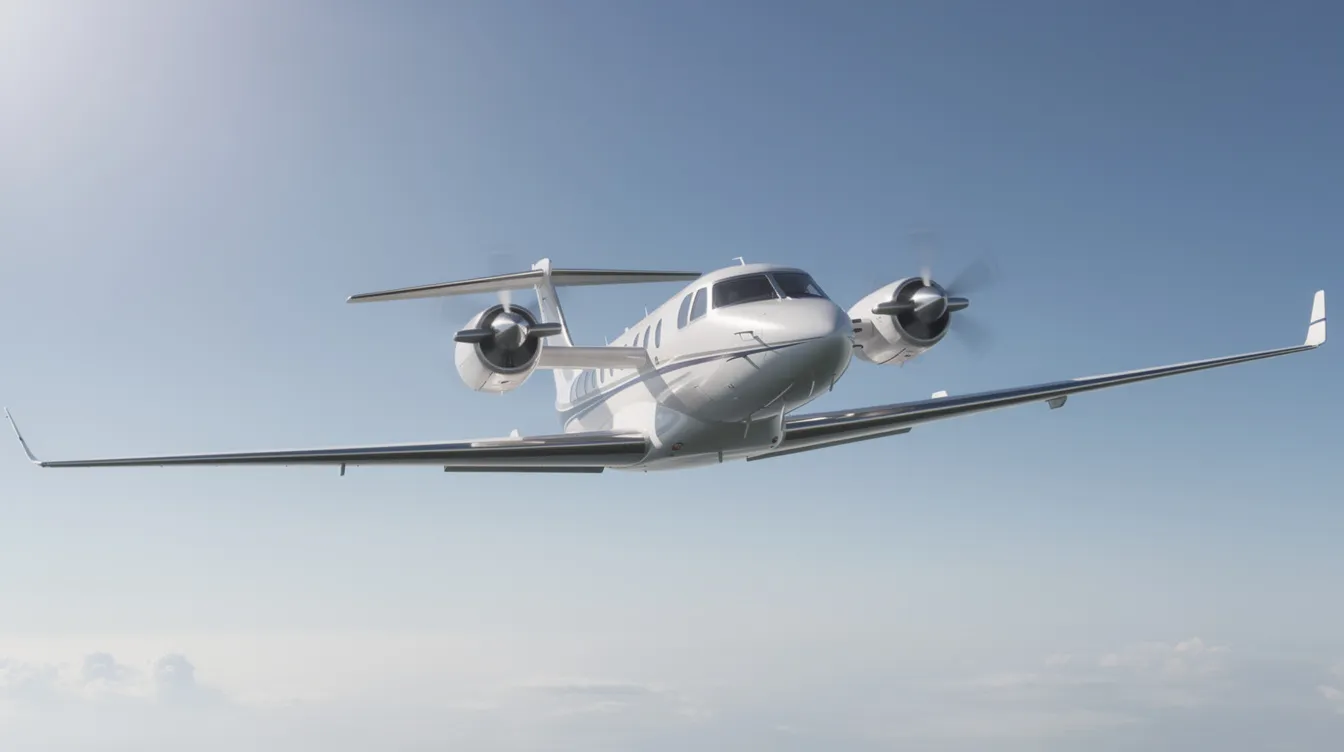
The Honda HA-420 is the first production aircraft from Honda Aircraft Company, a very light jet designed for private and corporate regional travel that has fundamentally shifted what is possible in its category. With over-the-wing engine mounts, a carbon composite fuselage, and fuel-efficient twin turbofans, the aircraft achieves 40% higher fuel efficiency than competitors in the same class.
For executives and high-net-worth travelers flying 25–400 hours per year, access to this aircraft through a Jet Card is a strategic advantage. This article covers the HA-420's history, design, performance, safety record, evolving variants, and how BlackJet makes it accessible without the complexity of ownership.

From Research Project to First Aircraft: History of the Honda HA-420 HondaJet
Honda began researching small business jets in the late 1980s, a surprising pivot for an automaker. Early experimental projects-including the MH02, which flew in 1993-proved that Honda had both the ambition and engineering depth to enter aviation.
Lead designer Michimasa Fujino conceptualized the HA-420 HondaJet in 1997, and the over-the-wing engine mount concept was tested in 1999 through Boeing wind tunnel validation. That testing confirmed reduced wave drag compared to conventional rear-fuselage engine placements, setting the foundation for the production model twin turbine design.
Honda Aircraft Company was founded in August 2006 as a dedicated subsidiary, headquartered at Piedmont Triad International Airport in Greensboro, North Carolina. The prototype HondaJet completed its first flight on December 3, 2003, and was test flown through years of extensive flight testing before certification. After delays, the first production model flew in June 2014, and the Federal Aviation Administration granted FAA certification- specifically type certification- in December 2015.
Deliveries began that same month. The HA-420 HondaJet became Honda's first certified production aircraft, a milestone for both the company and the light jet segment. Honda aircraft ramped production to meet initial order backlogs, delivering dozens of aircraft per year in the following period.
Design & Technology: What Makes the HA-420 HondaJet Different
Three core innovations define the Honda HA-420: over-the-wing engines mounted on pylons, laminar flow aerodynamics, and extensive use of lightweight materials.
The over-the-wing engine mount (OTWEM) configuration is the aircraft's most recognizable feature. By placing the engines above the wings rather than on the aft fuselage, Honda achieved several advantages simultaneously:
Reduced wave drag at high speed cruise
Freed rear fuselage space for a belted lavatory and baggage
Lower cabin noise by physically separating engines from the passenger compartment
The wings use an advanced natural laminar flow airfoil with integrally stiffened aluminum construction, minimizing surface irregularities to cut aerodynamic drag. The fuselage is built from carbon fiber composite materials, reducing weight while maintaining structural integrity. Metal wings and a T-tail provide proven load-carrying capability.
The Honda HA-420 measures 42 ft 7 in in length and 39 ft 9 in in wingspan. Two GE Honda HF120 turbofan engines-each a two-stage compressor, two-stage turbine design producing roughly 2,050 lbf-power the aircraft. These evolved from earlier HF-118 development and are optimized for fuel-efficient operation on short to mid-range missions, giving the HondaJet a measurable edge over similar aircraft in the category.
Specifications & Performance: HA-420 Capabilities in Real-World Use
Here is what the Honda HA-420 delivers in real-world terms, and why these numbers matter to anyone booking a light jet for regional travel.
Specification | Value |
|---|
Maximum cruise speed | 422 knots (486 mph) |
Service ceiling | 43,000 ft |
Maximum range (Elite II) | 1,547 nautical miles |
Maximum takeoff weight (Elite II) | ~11,100 lbs |
Takeoff distance (MTOW, sea level) | ~3,700–4,000 ft |
Landing distance (over 50 ft obstacle) | ~2,717 ft |
Initial climb rate | ~3,990 ft/min |
Fuel burn (600 nm mission, 4 pax) | ~165 gallons Jet-A |
The max range of 1,547 nautical miles on the HondaJet Elite II covers city pairs like New York to Chicago, Dallas to Scottsdale, or Los Angeles to Aspen nonstop with reserves. At long-range cruise, the aircraft can stretch its extended range capability for missions approaching 1,500 nm with lighter loads.
Cabin volume is maximized to 350 cubic feet, and the aircraft accommodates up to five passengers in typical configuration-or up to seven with an optional side facing seat and flexible seating arrangements. A single pilot cockpit configuration is certified, reducing crew costs for operators.
The combination of high-speed cruise at 43,000 ft-above most commercial traffic and weather-and nearly 4,000 ft/min climb performance means the ha 420 reaches its most fuel-efficient altitude quickly, a tangible advantage on routes under 1,000 nm.
Cabin Experience: Comfort, Layout & Technology on Board
The Honda HA-420 HondaJet cabin is a premium, compact business environment that prioritizes smart space usage over sheer size. Four club seats in leather upholstery face each other in the standard configuration, with an additional optional side-facing seat available depending on the variant.
The aft section houses a private belted lavatory separated from the main cabin, and the cockpit is positioned to maximize passenger space. Large windows flood the cabin with natural light, and electrochromic window shades let passengers adjust brightness without mechanical blinds.
The Honda Jet features the Garmin G3000 all-glass avionics system in the cockpit, while later variants added enhanced cabin management systems allowing passengers to control lighting, temperature, and entertainment from their seat.
Luggage capacity spans forward and aft external baggage compartments-roughly 57 cubic feet aft and 9 cubic feet in the nose-accommodating skis, golf bags, or business luggage for four to five passengers comfortably.
For BlackJet Jet Card clients, preferences like catering, Wi-Fi availability, and seating configuration can be specified when booking a honda ha 420 hondajet or comparable light jet through the platform.

Operational History & Safety Record of the Honda HA-420
The ha 420 entered commercial service shortly after its 2015 certification and grew rapidly. As of December 2021, 200 HondaJets had logged 98,000 hours in service, and the HondaJet maintained a 99.7% dispatch reliability rate-an impressive figure for any production aircraft type.
However, the safety record requires honest examination. As of August 2025, six hull-loss accidents occurred involving the ha 420. These accidents resulted in five fatalities total. The first fatal accident occurred on November 5, 2024, when an HA-420 overran the runway at Falcon Field in Mesa, Arizona; four of five onboard died in the November 2024 accident, along with a vehicle driver on the ground.
In May 2023, Jet It grounded its HA-420 fleet after an incident, raising questions about operator training and maintenance support. The FAA issued a Safety Alert in 2026 citing 39 runway excursions and emphasizing strict adherence to Aircraft Flight Manual procedures.
For Jet Card providers and charter operators, these events underscore the importance of rigorous safety protocols. BlackJet partners exclusively with operators that meet top-tier safety ratings, maintain Honda HA-420 training programs on the Garmin flight deck, and comply with all airworthiness directives-ensuring that advanced engineering is matched by operational discipline across both flagship and affordable private planes.
Evolution of the Family: HondaJet Elite, Elite S, Elite II & APMG Upgrades
The "honda ha 420" designation covers the base type certificate, while commercial names represent progressively upgraded aircraft variants.
HondaJet Classic (2015–2017): The originalHondaJet Elitesic delivered approximately 1,065–1,223 nm of range with baseline avionics and cabin finishes. The aircraft started strong in deliveries, though deliveries of the HondaJet slowed in 2018 due to various factors including market absorption and production adjustments.
HondaJet Elite (2018): The HondaJet Elite introduced increased range, refined cabin acoustics, upgraded Garmin G3000 avionics, and an optional galley-a direct response to owner feedback after the first delivery wave.
Elite S (2021): Incremental improvements in takeoff performance, expanded datalink communications, and greater operational flexibility made the upgraded aircraft more versatile for charter and owner-operator use.
HondaJet Elite II (2022+): The hondajet elite ii pushed maximum range to 1,547 nm, raised maximum takeoff weight to ~11,100 lbs, and added ground spoilers, autothrottle (FAA-certified October 2024), and plans for Emergency Autoland. Honda claims this is the fastest, highest, and farthest-flying aircraft in its class. Honda announced SAF compatibility trials with the HF120 engines, aligning with industry sustainability goals.
HondaJet APMG: The advanced performance modification group package allows earlier HondaJets to be retrofitted with aerodynamic and software improvements, giving the upgraded aircraft enhanced range and payload. This hondajet apmg program matters for Jet Card vs. ownership calculations, since APMG-equipped aircraft can handle longer nonstop missions.
Market, Pricing & Access: Buy, Charter, or Use a BlackJet Jet Card?
The Honda HA-420 HondaJet established itself as a top-selling light business jet, earning multiple innovation awards and capturing a significant share of the market in its concept class. But how should you access one?
Acquisition costs:
A new Honda HA-420 model costs from $5.3 million, depending on configuration
A used Honda HA-420 costs around $2.5 million, varying by year, total time, and avionics suite
Ownership economics: Annual fixed costs-crew, hangar, insurance, maintenance, engine reserves-can exceed $300,000 before fuel. Sole ownership makes financial sense only at very high utilization (200+ hours per year).
Charter: Charter rates for the Honda HA-420 vary by journey length, positioning, and season. ACMI wet lease rates depend on aircraft age and lease terms. Ad-hoc charter offers flexibility but no price certainty.
BlackJet Jet Card: Pre-purchasing 25-hour or 50-hour blocks locks in fixed hourly rates with guaranteed access to light jet aircraft, 24/7 digital booking, and real-time support, and serves as a useful reference point if you're also evaluating a larger 1100-hourjet card cost for higher utilization or comparing against NetJets jet card cost.
A client flying 30–60 hours per year on routes like New York to Nashville or Geneva to Barcelona will typically find a Jet Card more cost-effective than ownership while still accessing hHondaJet-levelperformance. BlackJet also delivers carbon-neutral flights by default, offsetting emissions so clients can fly modern light jets without compromising sustainability values.

How the Honda HA-420 Fits into BlackJet's Aircraft Portfolio & Client Use Cases
Within BlackJet's fleet of aircraft types, the hHonda HA-420occupies the very light jet to light jet category-ideal for regional missions where speed, efficiency, and access to smaller airfields matter most.
Typical missions where BlackJet might match clients to this class:
Regional business shuttles under 1,000 nm
Same-day out-and-back meetings
Ski weekends to mountain airports with shorter runways
Coastal leisure trips for two to five passengers
Sample scenario: A CFO uses a 25-hour Jet Card to fly Boston to Toronto and back in a single day. On a HondaJet-class light jet, the flight takes roughly 90 minutes each way at high-speed cruise altitudes above weather. No overnight stay, no lost productivity, no commercial connection risk.
BlackJet's mobile booking platform considers runway length, passenger count, and luggage requirements when proposing an aircraft match. Every Hondajet HA-420 sourced for BlackJet members comes from operators meeting stringent audit criteria, ensuring the aircraft's advanced engineering is backed by robust operational standards.
The combination of the HA-420's aerodynamic efficiency and BlackJet's carbon-neutral policy means clients make a more responsible choice in private aviation-without sacrificing performance or comfort.
Conclusion: Is the Honda HA-420 HondaJet Right for Your Travel Strategy?
The Honda HA-420 HondaJet delivers a rare combination: innovative design, strong regional performance, a premium cabin, and a growing global fleet with evolving variants like the HondaJet Elite II. For the market it serves—300 to 1,500 nm missions with small groups—it remains a compelling first aircraft choice in its class.
For most business leaders and high-net-worth travelers, the practical question is not whether to own a HondaJet but how to access its capabilities. Ownership, charter, and Jet Card models each serve different usage profiles, risk tolerances, and budgets.
BlackJet offers a strategic path: access HondaJet-class aircraft on demand, without capital outlay, while benefiting from safety-first operator sourcing, seamless digital booking, and guaranteed carbon-neutral flight.
Explore BlackJet's Jet Card membership to experience Honda HA-420-level performance on your next regional mission—without committing to aircraft ownership.


 Sign up with google
 Sign up with Apple