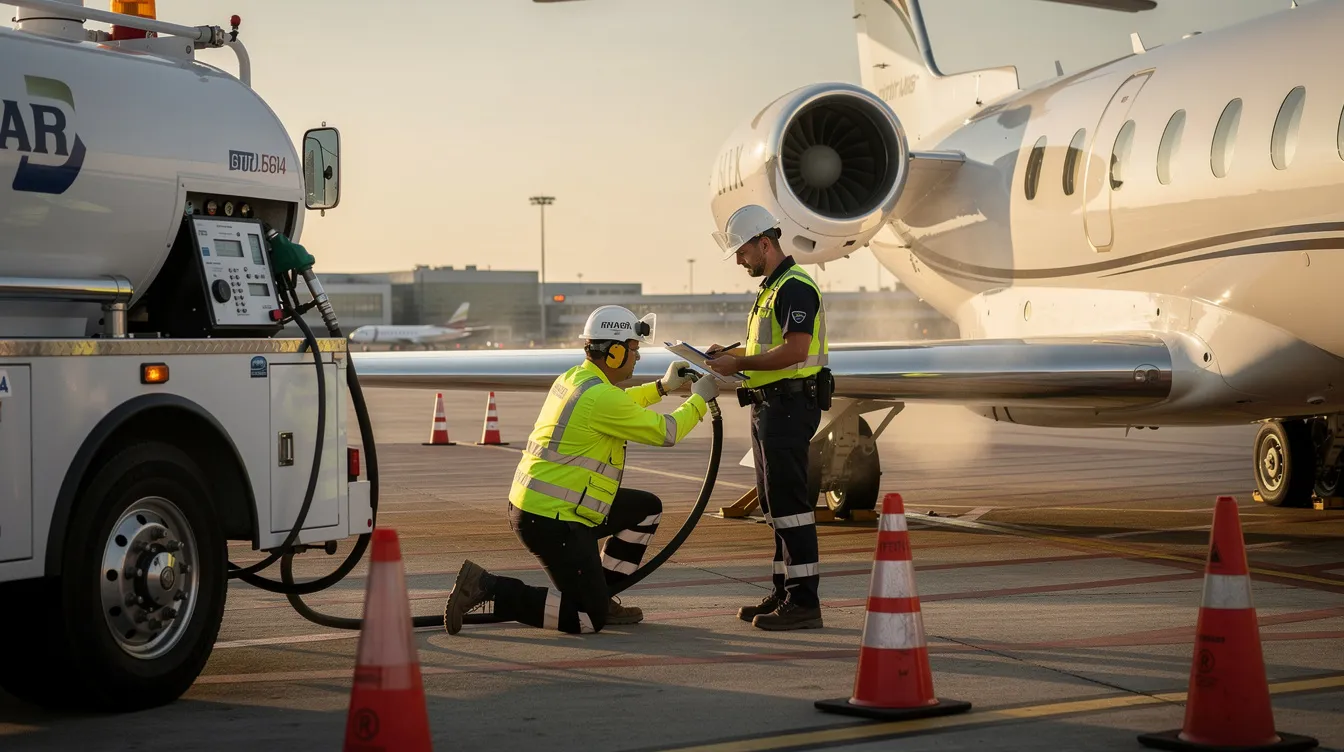
Aviation safety begins long before takeoff. One of the most overlooked factors in flight safety is the fuel loaded into an aircraft's tanks. JP-5, the jet fuel developed for U.S. Navy carrier operations, represents a benchmark in fuel engineering where fire prevention takes priority over cost. This article breaks down what JP 5 fuel is, how it compares to civilian alternatives, and what it reveals about the safety standards that protect private jet travelers.
JP-5 Fuel Explained in 5 Minutes
JP-5 serves as the primary aviation fuel for U.S. Navy aircraft. It is a kerosene-based turbine fuel engineered with one overriding goal: reducing fire risk in environments where a single spark can be catastrophic. Its minimum flash point of 60°C (140°F) makes it harder to ignite than civilian jet fuels like Jet A and Jet A-1, which have flash points around 38°C (100°F).
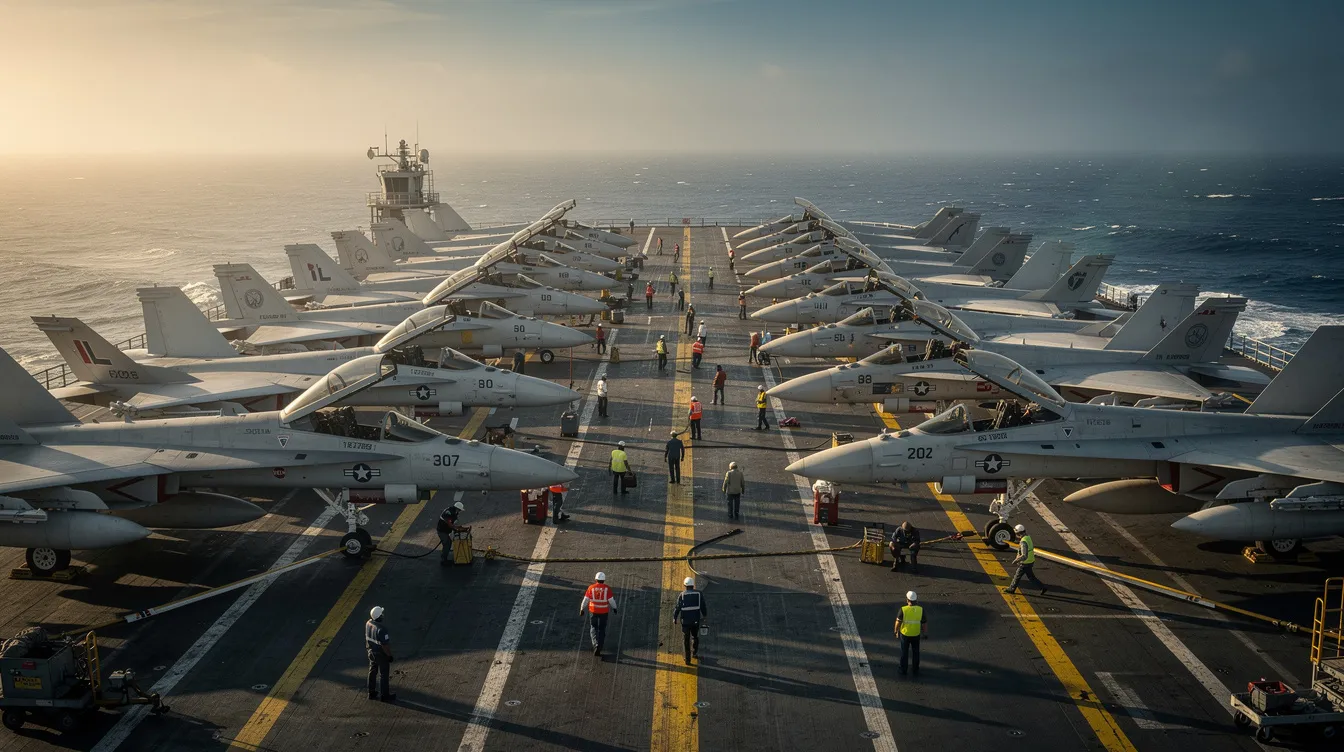
JP-5's design is focused on fire safety rather than energy performance. That trade-off makes sense aboard aircraft carriers, where fuel lines run through steel corridors next to weapons magazines, hot exhaust stacks, and densely packed military aircraft. Civilian fuel types like Jet A and Jet A-1 deliver similar combustion performance at lower cost, which is why they dominate commercial and business aviation.
For BlackJet clients, the fuel loaded into a private jet is almost always Jet A or Jet A-1. But the safety culture that surrounds military fuels like JP-5 filters into every corner of aviation. Fuel testing protocols, additive standards, and handling procedures developed for carrier decks inform the product specifications and safety practices applied at civilian airports worldwide.
What Is JP-5? Chemical Definition and Key Specifications
JP-5 is classified under NATO as F-44 and follows military specification MIL-DTL-5624, with the UK equivalent being DEF STAN 91-86. These performance specification documents define every measurable property the fuel must meet before it reaches an aircraft.
Core specs include a minimum flash point of 60°C (140°F) and a freezing point of -46°C (-51°F), ensuring the liquid flows properly at high altitudes and in cold operations. Density at 15°C falls between roughly 0.79 and 0.845 g/cm³, and viscosity at -20°C must stay below about 8.5 mm²/s.
The actual composition of JP-5 is a complex mixture of hydrocarbons, not a single chemical compound. Its carbon chain range runs roughly from C9 to C16, spanning many compounds in the aliphatic and aromatic families. Because the fuel is derived from crude oil, the exact blend varies with crude source and refining process.
JP-5 includes additives for anti-corrosion and anti-icing characteristics. The standard additive package contains corrosion inhibitors, antioxidants, and static dissipater additives. A fuel system icing inhibitor (FSII), such as DiEGM,E can be added when operations require it. Certain additives like these protect fuel systems in salt-air environments and at temperature extremes, making JP-5 optimized for shipboard safety and reliable engine performance.
JP-5 vs Jet A, Jet A-1, Jet B, and JP-8
JP-5 belongs to a larger family of aviation fuels. Understanding where it sits relative to civilian and other military fuels clarifies why different operations choose different fuel types.
Jet A and Jet A-1 are the dominant fuels in commercial and business aviation. Both meet ASTM D1655. Jet A, used primarily in the United States, has a maximum freezing point of -40°C. Jet A-1 has a lower freezing point than Jet A, at -47°C, making it the global standard for international routes. Both share a flash point minimum near 38°C, well below JP-5's 60°C threshold.
Jet B is a wide-cut fuel blending naphtha and kerosene. Jet B is a blend of 30% kerosene and 70% gasoline, which gives it excellent cold-weather flow properties (freezing point around -58°C) but makes it far more volatile and flammable than kerosene-only fuels. It sees limited use, mostly in extreme Arctic conditions.
JP-8 (NATO F-34) is the military equivalent of Jet A-1. It shares Jet A-1's freezing point and flash point but adds a military additive package: corrosion inhibitors, lubricity improvers, and FSII. JP-8 replaced JP-4 across most NATO ground and Air Force operations. Before retirement, JP-4 was the primary jet fuel for the U.S. Air Force, but it was phased out in the 1990s due to safety issues tied to its high volatility. JP-5 has lower volatility compared to older fuels like JP-4, which is one reason the Navy retained it for carrier use while JP-4 was retired.
Carrier operations favor JP-5's higher flash point because the 22°C gap between JP-5 (60°C) and JP-8 or Jet A-1 (38°C) represents a measurable reduction in fire risk when fuel is stored, pumped, and handled in confined steel spaces. Private jets in BlackJet's network primarily use Jet A or Jet A-1, but many safety and handling principles mirror those developed for military fuels.
Operational Role of JP-5 in Military and Naval Aviation
A Nimitz-class aircraft carrier holds roughly 3 million gallons of JP-5 in tanks distributed below the flight deck. During high-tempo operations, fuel is continuously pumped through miles of piping to flight deck refueling stations where aircraft are armed, launched, and recovered in cycles measured in minutes. JP-5 is primarily used in aircraft carriers, along with amphibious assault ships and forward-deployed naval bases.
JP-5 is designed to operate safely in confined environments like aircraft carriers, where hot exhaust, weapons ordnance, and steel surfaces create constant ignition hazards. The NATO code F-44 ensures interoperability across allied navies; a British or Australian carrier can accept JP-5 under DEF STAN 91-86 without compatibility concerns.
Consider an F/A-18 squadron operating from a carrier in the Persian Gulf. Ambient deck temperature can exceed 45°C. Fuel in supply tanks and pipelines absorbs heat from surrounding machinery and direct sunlight. With JP-5's flash point at 60°C, the vapor pressure remains below the ignition threshold even in these conditions. A fuel with a 38°C flash point would generate flammable vapor concentrations on a hot deck, creating risk during every refueling cycle.
Physical and Combustion Properties of JP-5
The physical properties of JP-5 determine how it behaves in storage, handling, and inside gas turbine engines.
JP-5's high flash point reduces the risk of accidental fires during storage. The flash point (minimum 60°C) is the lowest temperature at which liquid fuel produces enough vapor to ignite near an open flame. Autoignition temperature for kerosene-type fuels sits around 210-250°C, the point where fuel ignites without any external spark. Both numbers matter: flash point governs ground handling risk, while autoignition affects engine hot-section design.
The specific gravity of JP-5 is approximately 0.8, meaning it is less dense than water. Spills float and spread across water surfaces, which shapes firefighting tactics at sea: foam suppression blankets the fuel film, while a direct water jet would scatter burning liquid across the deck. Diesel fuel behaves similarly in spill response because both products float on water.
The boiling range spans roughly 175°C to 288°C, providing stable combustion across throttle settings from idle to full afterburner. This range ensures consistent vapor generation inside the combustion chamber regardless of engine demand.
Flammable limits in air define a narrow band of vapor concentrations where ignition is possible. Below the lower limit, there is too little fuel vapor; above the upper limit, too little air. Good ventilation in hangars, fuel tanks, and below-deck spaces keeps vapor concentrations outside this band.
Health Effects and Human Exposure to JP-5
JP-5, like other jet fuels, can affect the skin, eyes, respiratory, and nervous systems, and symptoms may occur depending on the dose and duration of exposure. Research compiled by ATSDR and the National Academies documents these health effects across military and civilian populations.
Jet fuels contain over 260 hydrocarbon compounds, including toxicants. This complex mixture of chemicals and substances means that exposure involves contact with many compounds simultaneously. Exposure to jet fuels can cause respiratory and gastrointestinal issues; short-term inhalation of vapor produces eye, nose, and throat irritation, headaches, and dizziness. If liquid fuel is aspirated into the lungs (through ingestion or splashing), it can cause chemical pneumonitis.
Skin contact with jet fuels can lead to dermatitis and skin damage. Workers who handle fuel without protective clothing experience redness, cracking, and blistering. NIOSH recommends a limit of 100 mg/m3 for kerosene in air as an occupational safety guideline for exposed personnel.
JP-5, JP-8, and Jet A are classified as Group 3 carcinogens by the International Agency for Research on Cancer, meaning current evidence is insufficient to determine whether these substances are carcinogenic to humans. Research on long-term health effects, including the toxicity of JP-5, JP-8, and Jet A, as well as possible neurological and immune effects, is ongoing. Agencies like the EPA and ATSDR continue to track emerging data, particularly following incidents like the Red Hill JP-5 water contamination near Pearl Harbor.
Typical private jet passengers are not directly exposed to JP-5 or Jet A vapors at hazardous levels. Fueling occurs externally with strict procedures, and cabin environment systems seal passengers from fuel operations. BlackJet-aligned operators rely on certified ground crews, ventilation controls, and safety protocols to minimize health risks from aviation fuels for staff and travelers.
Environmental and Regulatory Considerations for JP-5
JP-5 falls under broader regulatory frameworks governing jet fuel, hazardous substances, and spill prevention. The Environmental Protection Agency regulates it as a petroleum product under clean water and clean air statutes, including when it may be present in soil, surface water, or groundwater after a spill. While JP-5 may not appear by name on certain EPA consolidated lists, it is subject to general flammable liquid and petroleum hydrocarbon rules. The Department of Defense adds its own layer of requirements through MIL-DTL-5624.
Spills pose a direct risk to the environment. Because JP-5 floats, fuel films spread across water surfaces, blocking oxygen exchange and harming marine life. Soil contamination and groundwater infiltration remain concerns near naval installations. The Red Hill incident in Hawaii demonstrated what happens when fuel oil from JP-5 storage tanks reaches drinking water; the resulting water contamination affected thousands of military families.
Storage rules reflect these risks: double-walled tanks, spill containment berms, leak detection systems, and regular inspections. Sulfur content in JP-5 is capped at 0.20% by weight to limit corrosion and pollutant emissions during combustion.
BlackJet ensures all flights are carbon neutral via verified offsets, mitigating emissions from jet fuel combustion. While private jets burn Jet A or Jet A-1 rather than JP-5, the environmental discipline developed around military fuels reinforces the standards applied across aviation.
Safety, Handling, and Emergency Response for JP-5
JP-5 safety depends on three principles: eliminating ignition sources, controlling vapor accumulation, and equipping personnel with proper protective equipment.
Handling guidelines for fuel operations (non-sequential best practices):
Grounding and bonding all equipment during fueling to prevent static discharge
Prohibiting open flames, sparks, and non-intrinsically-safe electrical equipment in fueling zones
Draining water and sediment from tanks before fuel transfer
Inspecting hoses, couplings, and filters before each fueling operation
For JP-5 fires, recommended suppression methods include aqueous film-forming foam (AFFF), dry chemical agents, or CO₂. Water fog can cool surrounding surfaces, but a direct water jet will spread burning fuel across decks or pavement.
Standard first aid for a toxic substance exposure: move the person to fresh air for inhalation cases, rinse eyes with water for at least 15 minutes, wash skin with soap and water after contact, and seek medical care for ingestion without inducing vomiting.
Naval installations maintain detailed emergency response plans with isolation distances, evacuation routes, and HazMat team protocols for large spills or tank fires. This culture of rigorous safety parallels what BlackJet expects from its partner operators, who undergo audits for fuel handling, safety certifications, and emergency preparedness that reflect military-grade discipline.
How Fuel Type Influences Private Jet Travel (and What JP-5 Tells Us)
BlackJet clients rarely need to think about which fuel goes into their aircraft. But understanding fuels like JP-5 clarifies why the aviation industry invests so heavily in fuel quality, testing, and handling standards and why private jets are considered highly safe when operated under rigorous protocols. The same rigor that keeps carrier decks safe protects passengers boarding a private jet at Teterboro or Van Nuys.
Modern business jets burning Jet A or Jet A-1 achieve nonstop ranges that connect city pairs like New York to London or Los Angeles to Tokyo, with total trip cost shaped by the underlying private jet price structures and options. Consistent fuel quality underpins that reliability. Military advancements with JP-5 and JP-8, including cold-weather additives, corrosion inhibitors, and freezing-point standards, directly influenced the ASTM D1655 product specifications used for civilian aviation fuels.
Different aircraft categories in BlackJet's Jet Card programs and broader premium private jet card services have distinct fuel burn profiles. A light jet consumes roughly 150-200 gallons per hour; a large-cabin jet can burn 300+ gallons per hour. BlackJet's operations team factors these fuel costs and jet card costs per hour into routing, range planning, and carbon offset calculations. For example, a Jet Card member flying from Miami to São Paulo on a large-cabin jet (approximately 4,200 km) has fuel planning, contingency reserves, and alternate airports managed entirely by BlackJet's operations partners; the member's only job is to board—factors that shape the overall 100-hour jet card cost profile for frequent flyers.

Sustainability, Alternative Jet Fuels, and JP-5's Future
Global aviation is testing sustainable aviation fuels (SAF) as partial replacements for petroleum-derived jet fuel. Fischer-Tropsch synthetic paraffinic kerosene (FT-SPK) and hydro-processed esters and fatty acids (HEFA) fuels are now certified as blendstocks under ASTM D1655 and certain military specifications.
The U.S. Air Force has tested FT synthetic blends on B-52H bombers and other military aircraft, aiming to reduce dependence on crude oil and lower lifecycle carbon emissions. These blends must still meet flash point, freezing point, and hydrogen content requirements, so they function as drop-in replacements rather than new fuel types.
For military use, SAF adoption in JP-5 applications remains in the early stages; achieving the 60°C flash point with bio-derived components requires careful formulation. In the civilian market, SAF availability is growing but remains a fraction of total supply.
BlackJet's approach is practical: every flight is carbon-neutral today through verified offsets and green aviation initiatives. As SAF scales and costs decrease, BlackJet actively monitors integration opportunities within its partner network to move beyond offsets toward lower-carbon fuel blends.
FAQs about JP-5 Fuel and Private Jet Travel
Q1: Why is JP-5 fuel used primarily on aircraft carriers?
JP-5’s high flash point of 60°C (140°F) significantly reduces fire risk, making it ideal for the confined, high-heat environments of aircraft carriers where safety is paramount.
Q2: How does JP-5 compare to Jet A and Jet A-1 fuels used in private jets?
JP-5 has a higher flash point and lower volatility than Jet A and Jet A-1, prioritizing fire safety over cost and energy performance. Private jets typically use Jet A or Jet A-1, which offer similar combustion performance but at lower cost.
Q3: Are there health risks associated with exposure to JP-5 fuel?
Exposure to JP-5 can cause skin irritation, respiratory issues, and other health effects depending on dose and duration. However, private jet travelers are not typically exposed to hazardous levels due to strict fueling protocols and sealed cabin environments.
Q4: What safety measures are in place when handling JP-5 fuel?
Strict grounding and bonding, prohibition of ignition sources, inspection of fueling equipment, and specialized firefighting agents like AFFF are standard to prevent accidents during JP-5 handling.
Q5: How does JP-5 influence private jet fuel safety standards?
The rigorous testing, additive requirements, and handling procedures developed for JP-5 inform civilian aviation fuel standards, enhancing safety protocols for private jets.
Q6: Is JP-5 fuel environmentally regulated?
Yes, JP-5 is regulated under clean water and air laws, with strict spill prevention and containment measures to minimize environmental impact.
Q7: Can sustainable aviation fuels (SAF) replace JP-5?
SAF blends are being tested for compatibility with JP-5 but must meet the high flash point and other safety specs. Adoption in military carrier operations is in the early stages.
Q8: How does BlackJet ensure fuel safety for its clients?
BlackJet partners with operators who follow military-grade fuel handling protocols, safety certifications, and emergency preparedness standards to ensure safe, reliable private jet travel.
Conclusion: What JP-5 Reveals About Aviation Safety and Private Jet Travel
JP-5 fuel exemplifies the aviation industry's unwavering commitment to safety, especially in the most challenging and high-risk environments like aircraft carriers. Its design prioritizes fire prevention and operational reliability, setting a standard that cascades into civilian aviation practices. While private jets typically use Jet A or Jet A-1, the rigorous safety culture surrounding fuels like JP-5 underscores the meticulous protocols that protect every flight.
For BlackJet clients, this means confidence in a seamless travel experience backed by military-grade safety principles, advanced fuel handling, and certified operators. Understanding JP-5’s role not only highlights the engineering behind aviation fuels but also reassures discerning travelers that every detail—from fuel quality to emergency preparedness—is managed with precision.
As the industry evolves toward sustainability with alternative fuels and carbon-neutral initiatives, the legacy of JP-5’s safety-first philosophy will continue to influence private jet travel, ensuring it remains both luxurious and secure. Discover how BlackJet’s premium Jet Card programs integrate these standards to elevate your travel with unparalleled safety, reliability, and environmental responsibility.


 Sign up with google
 Sign up with Apple