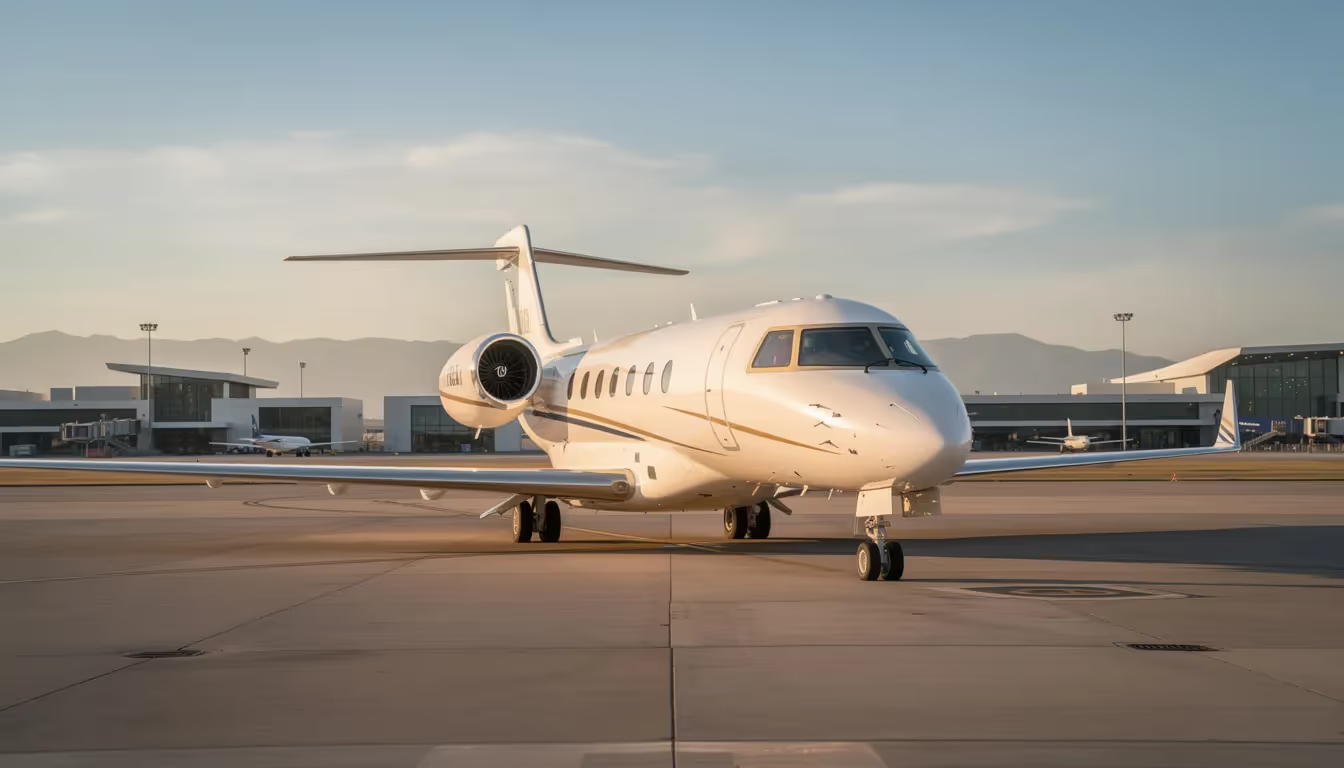
Private jet travel has long been associated with luxury, exclusivity, and wealth. But the landscape of private aviation is evolving. Today, it’s not just billionaires and celebrities stepping onto the tarmac — savvy executives, entrepreneurs, and families are finding strategic, cost-effective ways to access private jet experiences without the burden of full ownership.
Private jet services now cater to a wider audience, including the aviation enthusiast who values the unique experience and meticulous attention to detail that private air travel offers.
Welcome to a new era of affordable private jet travel — one where Jet Cards, fractional ownership, and modern light jets make prestige-level convenience accessible without compromise. Private jets are in operation worldwide, making private aviation accessible on a global scale. Owning your own private jet is now a realistic option for more people than ever before.
Why Private Jet Travel Isn’t Just About Luxury Anymore
The biggest misconception about private aviation is that it’s a status symbol. In reality, it’s a tool for reclaiming time, control, and efficiency — especially for those who value productivity and privacy. The key advantages of private jet travel include privacy, security, flexibility, and comfort, which set it apart from commercial options.
While first-class commercial flights offer comfort, they can’t compete with the direct access, zero-wait boarding, and schedule flexibility that private jets provide. Private travelers can bypass major airports, reduce total travel time by 50% or more, and arrive closer to their final destination. Private jets can access around ten times more airports in the US compared to scheduled airlines, greatly enhancing travel flexibility.
For busy professionals, time is the real currency. And in that light, private jet travel often delivers a higher ROI than expected. Two-thirds of passengers on business jets report that they are more productive in the air than in a traditional office setting. Private jets also offer a higher level of privacy and security, allowing passengers to travel with known colleagues and friends.
The Types of Private Jets That Fit Every Budget
Private jets are not one-size-fits-all. From efficient turboprops to ultra-long-range luxury cabins, here’s how the categories break down for the affordability-minded traveler:
For buyers seeking affordable private jets, the pre-owned market offers significant savings and access to a wider range of budget-friendly options.
Efficient turboprops or VLJs (very light jets) are popular among those looking for lower operating costs and entry-level pricing. These smaller jets are especially suited for short-haul flights and are ideal for budget-conscious buyers or pilots with limited budgets.
The cheapest private jet options are often found among very light jets and turboprops, which will be detailed in the next section.
Very Light Jets (VLJs)
These jets are compact, cost-efficient, and ideal for 2–4 passengers on short-haul flights.
Examples: HondaJet, Cirrus Vision Jet, Cessna Citation Mustang
Range: Up to ~1,200 nautical miles
Use case: LA to San Francisco, Dallas to Miami
VLJs are the most budget-friendly jets on the market.
VLJs are perfect for personal or small business trips under two hours, offering fuel efficiency and lower operating costs. Many VLJs are designed to be operated safely with only one pilot, making them even more accessible and cost-effective.
Light Jets
A step up in size and comfort — still budget-conscious, but with more amenities and range.
Examples: Embraer Phenom 100, Cessna Citation CJ3+
Range: Up to ~2,000 nautical miles
Passengers: Up to 6
The Embraer Phenom 100 is widely recognized as an efficient aircraft, known for its reliability and cost-effectiveness, making it a popular choice for both private and commercial use.
Great for regional hops or cross-country travel with small teams or families.
Turboprops
Efficient and versatile, especially for shorter trips and accessing remote airports.
Example: Pilatus PC-12, Beechcraft King Air 100 Turbo
Cost: ~50% less per hour than a light jet
Advantage: Rugged landing capability, excellent safety reputation
Turboprops combine jet-like comfort with unmatched landing versatility.
Used turboprop planes from the 1960s and 1970s can be found for as little as $50,000, making them an economical choice for budget-conscious buyers seeking private travel.
Low-Cost Private Jets That Deliver Value
A key factor in selecting a low-cost private jet is understanding your usage needs and operational expenses.
Choosing models or dealers with a proven track record can help ensure reliability and value.
Let’s take a closer look at some of the most economical private aircraft currently on the market:
At the end of your search, remember that a pre-purchase inspection by a qualified aircraft mechanic is essential to ensure the jet is in good condition before buying.
Cirrus Vision Jet
The Cirrus Vision Jet is considered one of the cheapest private jets available and redefined entry-level private aviation — it’s safe, sleek, and uniquely practical.
HondaJet
Price: $2M–$6M (new and pre-owned)
Fuel efficiency: One of the best in its class
Cabin design: Quiet, spacious for its size
The HondaJet’s over-the-wing engine mount reduces cabin noise and drag — a standout innovation in its segment.
Embraer Phenom 100
For those who value aesthetics and function, the Phenom 100 delivers both.
Cessna Citation Mustang
An affordable and reliable option in the very light jet category, the Citation Mustang is a favorite among budget-conscious buyers.
Eclipse 500
A very light jet known for low operating costs, making it one of the most economical private jets available.
Beechcraft King Air 100 Turbo
A cost-effective turboprop option with excellent performance and reliability.
Learjet 60
A popular mid-size jet with a proven track record, offering a balance between price and performance.
Exploring Affordable Access Models: Jet Cards, Charter, and Fractional Ownership
Buying a jet isn’t the only way to experience private aviation. In fact, most cost-conscious travelers avoid full ownership altogether. Charter costs for private jets can vary significantly based on factors such as aircraft size, flight distance, and the level of services required, offering travelers flexibility and potential savings compared to the expenses of owning a jet.
Private jet charter costs are influenced by several factors, including aircraft size or type, flight distance, seasonality, fuel costs, and additional fees. In 2026, private jet charter pricing ranges from $1,200 to over $14,000 per flight hour, depending on the size of the aircraft and specific mission requirements.
Booking at secondary or regional airports can lead to substantial savings on fees compared to major hubs. Flying during off-peak times can also reduce charter rates significantly. However, costs typically increase with longer flight durations due to higher fuel consumption.
Jet Cards and Memberships
Jet cards and memberships, such as Wheels Up and XO, offer pre-paid programs that provide discounted rates for private jet travel. Jet card programs provide prepaid blocks of flight hours on a specific type of aircraft at fixed hourly rates, allowing frequent travelers to enjoy fixed hourly rates and better predict availability.
Aggregator apps, like Jettly, provide instant quotes and facilitate comparisons across different service providers for private flights.
Semi-Private Airlines
Semi-private airlines, such as JSX and Aero, allow booking by the seat on smaller jets, starting from around $249 each way, offering an affordable entry point into private aviation.
Fractional Ownership
It’s ideal for flyers who want partial equity and more control over the jet’s availability.
On-Demand Charter and Empty Leg Flights
Chartering remains the go-to for spontaneous or infrequent trips — especially when booked through trusted partners like BlackJet.
Booking empty leg flights can provide significant discounts, often 30-75% off the standard price, making private jet travel even more attainable.
Understanding Private Jet Operating Costs and Considerations
Before you commit to private jet ownership or even frequent charter, it’s essential to understand the full scope of operating costs involved in private aviation. These expenses go beyond the initial purchase price of the aircraft and can significantly impact your overall budget.
Key operating costs include:
Fuel: $300 to $700 per hour, depending on aircraft size and efficiency
Maintenance: $50,000 to $200,000 annually, with regular maintenance essential to keep a private jet in peak condition and prevent major issues
Engine overhaul: A significant recurring expense to budget for
Insurance: Typically $15,000 to $30,000 annually, covering hull and liability to protect your investment
Storage costs: $50 to $100 per month for outside storage, $100 to $500 for hangar fees
Pilot or crew salaries: $60,000 to $200,000 per year
Recurring costs: Navigation fees, fuel surcharges, and crew expenses
Understanding regulatory compliance, including mandatory regular inspections, is essential for hassle-free ownership of a private jet.
Private Jet Ownership: Is It Right for You?
Owning a private jet is a dream for many, but it’s important to weigh the benefits against the responsibilities and costs. Private jet ownership offers unparalleled flexibility, privacy, and the ability to travel on your own schedule—ideal for frequent flyers who value convenience and time savings. With your own aircraft, you can access smaller airports, avoid crowded terminals, and maximize productivity during your journeys.
However, private jet ownership also comes with high operating costs, including maintenance, insurance, and storage. For those who fly less frequently, these recurring expenses may outweigh the benefits. That’s why many private aviation enthusiasts explore alternatives like fractional ownership or jet cards, which provide access to a fleet of jets without the full financial burden of sole ownership.
If you’re considering taking the leap into private jet ownership, start by evaluating your annual travel needs, budget, and preferred aircraft type. Financing options for purchasing a private jet include bank loans and specialized aviation lenders, which can help make ownership more accessible.
Unlocking Savings: Empty Leg Flights and Exclusive Deals
If you’re looking to experience private jet travel without the premium price tag, empty leg flights and exclusive deals are your ticket to affordable luxury. Empty leg flights occur when a private jet needs to reposition for its next scheduled trip, offering savvy travelers the chance to book these flights at a fraction of the standard charter cost. By staying flexible with your travel dates and destinations, you can take advantage of these significant savings and enjoy the perks of private aviation.
Many private jet companies also offer special promotions, last-minute discounts, and seasonal deals on light jets, turboprop aircraft, and other popular models. Exploring these options can help you experience private aviation for less, whether you’re planning a quick business trip or a spontaneous getaway.
For the most budget-friendly private travel, consider booking very light jets or turboprop aircraft, which are known for their low operating costs and efficiency on short regional flights. With a little research and flexibility, you can unlock exclusive deals and enjoy the comfort, privacy, and convenience of flying private—without breaking the bank.
Why Flying Private Is Still the Smarter Investment
Time Saved
Arrive 15 minutes before departure, not 2 hours
Land closer to your destination (smaller airports = less driving)
No connections, no layovers, no lost baggage
For executives and entrepreneurs, this adds up to dozens of hours saved per trip.
Privacy & Productivity
Conduct business in-flight
Hold meetings without interruptions
Disconnect or decompress in total quiet
Safety & Certification
At BlackJet, every flight meets the most stringent FAA and industry standards — from crew training to aircraft inspection and audit protocols. Our proprietary vetting system exceeds ARGUS and Wyvern standards, ensuring peace of mind.
Carbon Neutral Flights
Private jets have historically faced criticism for emissions — but the industry is changing.
BlackJet offsets 100% of flight emissions, partnering with certified carbon programs to deliver carbon-neutral flights at no additional cost. Sustainable aviation fuel (SAF) and hybrid-electric aircraft are also on the horizon.
Technology Is Making Private Aviation More Affordable
Advances in materials, design, and scheduling platforms are lowering costs across the board:
Lighter aircraft = lower fuel burn
Smarter routing = fewer deadhead miles
On-demand apps = better aircraft utilization
Aggregator apps, like Jettly, provide instant quotes and make it easy to compare charter options across different service providers.
BlackJet’s proprietary platform matches travelers with the right aircraft, in the right location, at the right time — reducing waste and improving efficiency for everyone. Efficient aircraft with optimized cruise speed contribute to lower operating costs and improved performance.
Private Jet Market Trends to Watch
Electric aviation: Companies like Lilium and Joby are working on short-range eVTOL aircraft that could reduce private flight costs dramatically.
Subscription-based travel: More jet companies are moving toward monthly memberships with fixed hourly rates.
Pre-owned market: The pre-owned market offers significant opportunities for savings, as pre-owned prices for older jets can depreciate to below $2 million, and even less than $1 million after several years.
Sustainable luxury: Clients now expect luxury experiences that reflect their environmental values.
When considering affordability, it's important to note that older jets might be cheaper upfront but may require more maintenance, impacting overall ownership costs. Additionally, depreciation affects the value of private jets over time, so budgeting for periodic replacements or upgrades is wise.
FAQs About Low-Cost Private Jet Travel
How much does it cost to charter a private jet?
Prices vary, but short-range light jets start around $2,500–$4,000 per flight hour.
Are there affordable ways to fly private?
Yes — Jet Cards, empty leg flights, and fractional ownership are all more affordable than buying a jet outright.
What’s the best jet for budget-minded flyers?
The HondaJet and Cirrus Vision Jet are among the most economical. For shared use, jet card programs offer the best balance of access and cost control.
Are private jets safe?
Absolutely — when flown under strict safety standards. BlackJet only partners with operators who meet or exceed FAA, ARGUS, and Wyvern certification.
Can private jets be eco-friendly?
Yes. All BlackJet flights are carbon neutral, and the industry is actively transitioning toward more sustainable fuels and electric options.
Conclusion: Embrace Affordable Luxury with Low-Cost Private Jets
The world of private aviation is evolving rapidly, making it more accessible and affordable than ever before. Owning your own jet is now possible for well under ten million dollars, with some entry-level models like the Cirrus Vision Jet available for just a few million dollars. Whether you choose to own a private jet, opt for fractional ownership, or take advantage of flexible options like jet cards and on-demand charter, there are economical private jets and affordable aircraft to suit a wide range of budgets and travel needs.
From the efficient and innovative very light jet category, including models like the Cirrus Vision Jet and HondaJet by the Honda Aircraft Company, to versatile turboprop aircraft perfect for accessing smaller airports and shorter runways, the choices are plentiful. Understanding key factors such as purchase price, operating costs, maintenance records, and storage costs, like hangar fees, will empower you to make informed decisions about private jet ownership or charter.
Flying privately offers unmatched flexibility, privacy, and productivity gains compared to commercial airlines, with the added benefit of concierge-level service and access to thousands of airports worldwide. For budget-conscious buyers and aviation enthusiasts alike, the time has never been better to explore the most affordable private jets and discover how private travel can transform your journeys.
Embrace the convenience, efficiency, and prestige of private jet travel—without the traditional sticker price. Whether you want to own a jet or fly privately on your terms, aviation enthusiasts and first-time buyers alike can now access private jet travel at million-dollar price points once thought impossible. The future of affordable luxury in the skies awaits.
Discover Affordable Private Aviation with BlackJet
Private aviation doesn’t have to mean ownership or eight-figure aircraft. Today, the market offers more accessible, flexible, and sustainable options than ever before.
Whether you're flying for business, family, or leisure, BlackJet offers a smarter way to travel — with safety, prestige, and sustainability at the core.
Discover premium private jet access without compromise.
Explore Jet Card options →


 Sign up with google
 Sign up with Apple