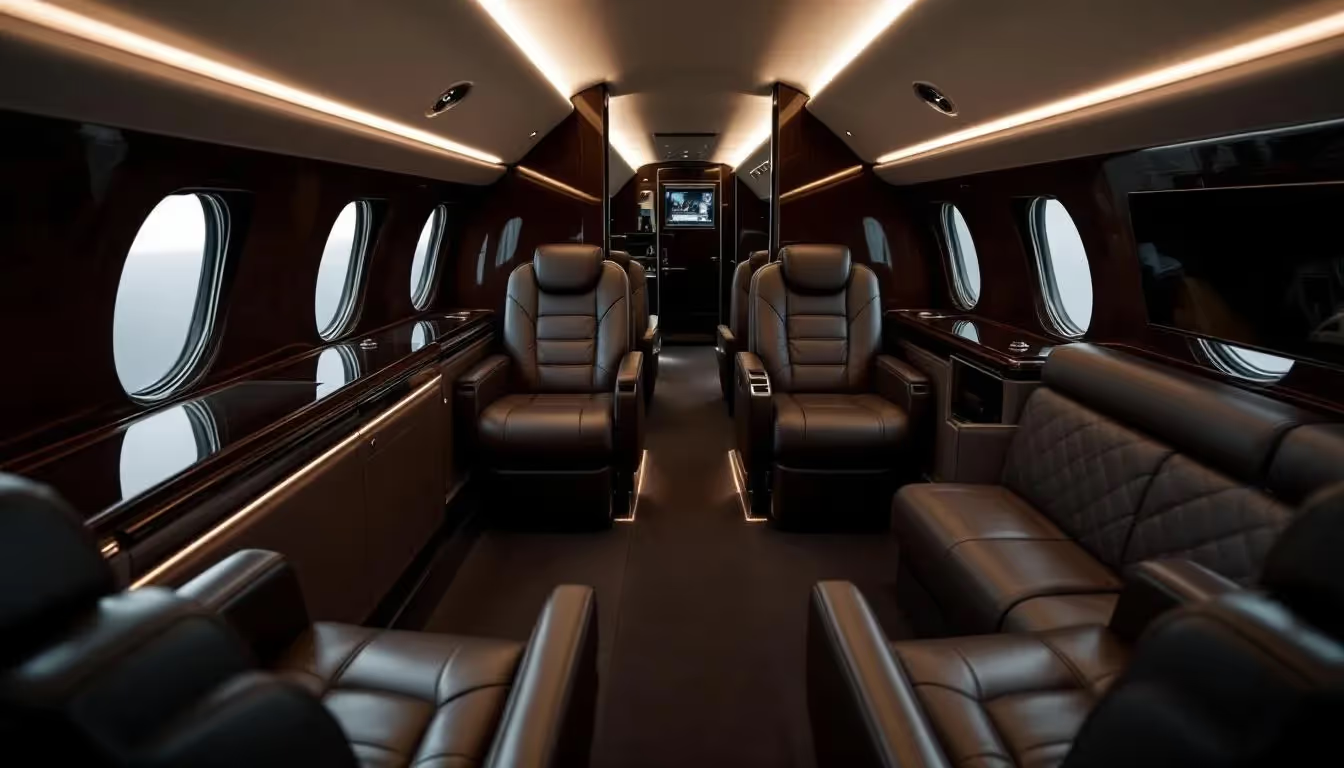
In today’s fast-paced world, private jet charters offer unparalleled convenience, flexibility, and luxury for business executives and high-net-worth individuals. Whether for urgent business trips or exclusive leisure travel, choosing the right private jet charter company can transform your air travel experience. This guide highlights the top 10 private jet charter companies in the USA for 2024, showcasing their strengths, fleet diversity, and innovative services that set them apart in the competitive private aviation industry.
Key Takeaways
NetJets dominates the US private jet market, operating the largest fleet and logging over 600,000 charter hours in 2023—nearly three times more than any competitor
Private jet access saves executives 40+ hours monthly compared to commercial aviation while providing strategic business advantages
Leading companies offer diverse options from jet cards starting at $100,000 to on-demand charters with no membership requirements
Safety certifications, carbon-neutral initiatives, and advanced technology integration distinguish top-tier providers from budget operators
The US private aviation market grew despite a 3.7% overall drop in 2023, with premium providers gaining market share
The top five private jet providers based on hourly usage include NetJets, Flexjet, Vista Global, Wheels Up, and Jet Linx
Trilogy Aviation Group offers round-the-clock services to over 6,000 airports, expanding accessibility for private jet travelers.
Why Private Jet Access is a Strategic Advantage, Not Just Luxury
Private aviation has evolved from a luxury symbol into a strategic necessity for today’s high-performance executives and corporations. When time equals money at the highest levels of business, private jet access transforms from indulgence into competitive advantage. Business jets, specifically designed to meet the needs of corporate clients and high-profile travelers, offer the range, comfort, and amenities required for international and executive travel. The cabin experience in private jets is often superior, featuring spacious interiors and advancements in in-flight technology. Travelers can also enjoy onboard services such as chilled champagne and gourmet catering, enhancing the luxury and exclusivity of private jet travel.

The numbers speak volumes about operational efficiency. Private jets save 2-4 hours per trip compared to commercial aviation by eliminating security lines, connection delays, and ground transportation to distant hub airports. For business executives who value their time at $500-$2,000 per hour, these time savings often provide positive ROI that transforms private aviation from a cost center into a productivity investment. Membership in private jet programs is commonly required for accessing specific pricing and services. Private jet memberships often provide additional perks such as 24-hour concierge services and discounted pricing. Reliable private jet services also include 24/7 customer support for booking and in-flight requests, ensuring seamless travel experiences.
Access to 5,000+ airports versus commercial aviation’s 500 destinations fundamentally changes business strategy. This geographic flexibility enables same-day meetings across multiple cities, direct flights to secondary markets, and rapid response to emerging opportunities. The private aviation industry recorded 1.8 million global departures in the first half of 2025, with North American business jet departures totaling 1,312,317—a 27.4% increase compared to pre-pandemic 2019 levels. Flexibility and access to multiple aircraft types are often highlighted as benefits of private jet membership programs. Vista Global moved to third place in private jet provider rankings in the US for 2023.
Fractional ownership has captured disproportionate growth, with Part 91k departures reaching 300,416 in H1 2025, representing a remarkable 75.5% growth compared to 2019. This surge indicates that sophisticated users have adopted fractional models as the optimal balance between guaranteed access, predictable costs, and operational flexibility. Many private jet membership programs offer clients guaranteed availability of aircraft.
For cost comparison, jet cards typically range from $100,000 to $500,000 in prepaid flight hours, while commercial first-class transcontinental flights cost $5,000-$15,000 per person. However, private jets carrying 4-6 passengers at $5,000-$10,000 per flight hour often deliver superior value when factoring in time savings, productivity gains, and the ability to conduct confidential business discussions. Direct charter flights can start at around $15,000 for popular destinations, like Las Vegas. The cost of chartering a private jet typically ranges from $2,000 per hour to $25,000 per hour or more. Hidden costs may include fees related to fuel surcharges, airport landing fees, and catering services, making it essential for travelers to review all potential charges. Many charter jet services provide estimated costs online based on departure, destination, and travel specifics.
The Complete Guide to America’s Premier Private Jet Charter Companies
Our ranking methodology analyzes fleet size, safety records, 2023-2024 market data from Argus TraqPak, and customer satisfaction ratings. The analysis includes several companies and private jet operators, considering their service offerings and market data. We focus on companies with the strongest US operations, proven track records, and a comprehensive suite of private aviation solutions that serve both corporate clients and high net worth individuals. Reputable private jet companies must hold a Part 135 Air Carrier Certificate from the FAA to legally operate for hire.
The private jet charter industry demonstrates remarkable consolidation at the top, with NetJets commanding nearly three times the market share of its nearest competitor. However, emerging providers like Wheels Up achieved 81.1% year-over-year growth, indicating successful innovation in customer experience and pricing optimization. Rankings are informed by private jet card comparisons and other industry data sources to ensure an accurate assessment of market performance. Wheels Up was founded in 2013 and has quickly become a popular name in the private aviation sector.
1. NetJets - The Undisputed Market Leader
NetJets operates the world’s largest luxury private jet fleet, boasting approximately 780 aircraft across more than 10 different models spanning five jet classes. As a Berkshire Hathaway subsidiary since 1998, the company recorded 196,053 North American departures in H1 2025, representing a 10.4% increase year-over-year and establishing clear market leadership. NetJets owns and operates the largest and most diverse fleet of private jets in the world. VistaJet aims to be carbon-neutral by 2025, reflecting a commitment to sustainability in private aviation.
The company organizes over 1,200 worldwide flights daily, supporting routes to over 5,000 airports across more than 200 countries and territories. NetJets serves over 12,500 fractional owners globally and counts more than 40 Fortune 100 companies among its clientele. Over 40% of their aircraft are less than five years old, demonstrating ongoing fleet modernization. Certain private jet services provide exclusive lifestyle partnerships, allowing access to luxury experiences beyond air travel.
NetJets offers three distinct access models: the NetJets Card Program requires only 25-hour increments over 24 months with access to 6 jet models and up to 320 days of annual availability. The NetJets Lease Program targets frequent users flying over 50 hours annually with guaranteed pricing over 36-month minimum contracts. The NetJets Share Program represents fractional ownership with 25-hour increments, access to 9 jet models, and 365-day annual availability.
Founded in 1964 as the first private jet charter company, NetJets established the fractional ownership model that became the industry standard. Their guarantee structure addresses the central operational risk of fractional ownership—if a client’s designated aircraft is unavailable, they receive a similar model or next-tier aircraft within 10 hours.
2. Flexjet - Premium Service and Rapid Growth
Flexjet emerges as the second-largest operator with 78,322 North American departures in H1 2025, representing a 17.5% increase year-over-year. This growth rate exceeds NetJets’ 10.4%, suggesting competitive pressure and market share gains. Notably, Flexjet’s departures have grown 178.2% compared to 2019 pre-pandemic levels, substantially outpacing NetJets’ 61.8% growth over the same period.
The company’s Red Label service features custom aircraft interiors and dedicated crews for ultra-high-net-worth clients. Flexjet’s fleet includes long-range jets like the Gulfstream G650, Embraer Praetor 600, Bombardier Challenger series, and high-end midsize jets such as the Cessna Citation Latitude, positioning them squarely in the premium market segment.
Founded in 1995 and owned by Directional Aviation since 2013, Flexjet focuses on Fortune 500 corporations and sophisticated individual travelers. Their fractional ownership, leasing, and jet card programs provide flexibility across different commitment levels and usage patterns. Leviate Air Group operates a fleet of seven aircraft with access to a diverse global network, further enhancing options for private aviation clients.
The company’s extraordinary growth trajectory indicates successful differentiation from established incumbents through operational excellence and premium positioning. Their ability to capture disproportionate growth during the recovery period represents serious competitive pressure for NetJets in the ultra-high-net-worth segment.
3. Vista Global (XO/VistaJet) - Technology-Driven Innovation
Vista Global, incorporating XO and VistaJet brands, represents the tech-forward evolution of private aviation. Despite a 10% decrease in flight hours, the company maintains its third-place ranking, demonstrating market consolidation strength and premium positioning resilience.
Vista Global has rapidly expanded its global fleet and service offerings through a series of strategic acquisitions, including Air Hamburg, Apollo Jet, Jet Edge, Red Wing Aviation, and Talon Air. These acquisitions have significantly increased the size and diversity of their global fleet, enabling Vista Global to offer international private jet services to a broader clientele. VistaJet operates a fleet of over 70 business jets, focusing on providing seamless service globally.
The XO app provides real-time pricing and instant booking access to 2,400+ safety-vetted jets globally, including Vista Members’ fleet. Aircraft range from light jets to ultra-long-range options, including specific models like Bombardier Challenger 300 and Cessna Citation X jets. VistaJet’s subscription model offers guaranteed availability at fixed hourly rates with global reach to 1,900 airports in 96% of the world’s countries. XO offers on-demand charters and membership options with a large, transparent marketplace for private jets accessible via an app.
Vista Global’s commitment to carbon-neutral operations by 2025 positions them as sustainability leaders. Founded in 2018 through strategic acquisitions of multiple aviation companies, they represent the consolidation trend reshaping the industry while maintaining an innovation focus through mobile-first customer experiences.
The company’s positioning as “the world’s premiere private aviation network” reflects fundamental shifts toward digital-first customer experiences. Their network-based model provides access without the capital requirements of fleet ownership, appealing to sophisticated users who prioritize flexibility and technology integration.
4. Wheels Up - Membership-Based Accessibility
Wheels Up recorded 20,155 departures in H1 2025 with an extraordinary 81.1% year-over-year growth rate. This dramatic expansion suggests successful market positioning through aggressive membership acquisition and technology-driven customer experience. Charter jet flights are typically booked and reserved directly by an individual or business. Wheels Up provides charter flight services to fit various travel needs with access to over 5,000 airports.

The company operates a fleet of 300+ owned aircraft plus access to 1,500+ partner jets, including King Air 350i turboprops, Citation Excel/XLS, and Gulfstream G500 aircraft. Their fleet includes light jets as well as midsize, super-midsize, and large cabin aircraft, offering options for a variety of travel needs. Their user-friendly mobile app provides instant flight estimates and booking capabilities, eliminating traditional friction points in private aviation access. Wheels Up also offers demand private jet charter services, giving members flexibility and convenience to book flights as needed for any itinerary.
Founded in 2013 in New York with a membership-based model, Wheels Up serves 5,000+ airports across North America and Europe. The company offers empty leg flights and shared flights for cost-effective private aviation access, democratizing the market through innovative pricing approaches.
Wheels Up’s membership program targets frequent flyers who want guaranteed access without the capital commitment of fractional ownership. Their emphasis on shared flights and empty leg pricing creates entry points for users traditionally priced out of private aviation while maintaining operational efficiency.
5. Magellan Jets - Boutique Excellence and Innovation
Magellan Jets operates through a distinct network-based model, accessing thousands of aircraft through its Preferred Network (MJPN) of independent aircraft owners rather than fleet ownership. This approach provides significant operational flexibility and cost advantages.
The company maintains a 12+ year flawless safety record and received Robb Report “Best of the Best” recognition for customer service innovation. Their Private Aviation Advisors provide personalized consultation, distinguishing them from automated booking platforms. Companies like Magellan Jets focus on safety by monitoring and reviewing network operators to ensure safety and operational excellence.
Magellan’s Business Jet Card ensures aircraft availability within six hours every day, with no peak fees or blackout dates, and includes Wi-Fi on all mid-size and larger jets. The elimination of peak fees alone represents substantial cost advantages for corporate users with unpredictable travel patterns.
Personal membership options include Premium Jet Card and Category Jet Card, allowing customization of flight hour blocks from 25 to 200+ hours. Clients can tailor perks and select either specific aircraft or aircraft size ranges, providing modularity that appeals to sophisticated users wanting control over service configuration. For those interested in further insights and tips on private jet travel, be sure to explore our comprehensive guide.
6. Sentient Jet - Jet Card Pioneers
Sentient Jet invented the 25-hour jet card model in 1999, setting industry standards for prepaid private aviation access. With over 25 years of private aviation expertise, the company established many operational protocols now considered industry best practices. Sentient Jet is primarily known for its 25-hour jet card program and has been acquired by Flexjet, further solidifying its position in the private aviation market.
Their jet card programs provide guaranteed access to diverse fleet options without ownership commitments. Fixed hourly rates across multiple aircraft categories eliminate pricing uncertainty, while seamless booking processes and 24/7 customer support ensure operational reliability.
Sentient Jet’s focus on consistent service quality and transparent pricing appeals to corporate users requiring predictable costs and guaranteed availability. Their pioneering role in jet card development provides institutional credibility and operational experience that newer entrants cannot match.
The company’s quarter-century track record demonstrates sustained viability in a competitive market, indicating successful adaptation to evolving customer requirements while maintaining core service excellence.
7. Jet Linx - Localized Premium Service
Jet Linx operates 20+ local base locations across the United States, providing dedicated local teams and private terminals for personalized service. This decentralized approach contrasts with competitors’ hub-based operations, enabling customized regional expertise. Jet Linx combines large company resources with local service across over 20 locations in the US for jet card and charter services, offering a unique blend of scale and personalization.
The company offers aircraft management, co-ownership, and jet card programs with fixed hourly rates and guaranteed availability through Jet Card Membership. Founded in 1999 in Omaha with an emphasis on operational excellence, Jet Linx has grown through disciplined expansion and local market expertise.
Their fleet spans light jets to large-cabin aircraft, accommodating diverse mission requirements while maintaining consistent service standards across locations. The local team approach provides relationship continuity and regional market knowledge that large national operators cannot match.
Jet Linx Aviation represents the premium boutique model, competing on personalized service and local expertise rather than scale. Their 25-year operational history demonstrates successful execution of the localized service strategy. Clay Lacy Aviation operates the first business jet fleet in the Western U.S. and is known for its innovation and carbon-neutral facilities.
8. Clay Lacy Aviation - Sustainability and Innovation Leader
Clay Lacy Aviation brings over 50 years of private aviation experience, founded by legendary aviator Clay Lacy, who established firsts in aircraft speed and operational innovation. The company pioneered environmental leadership as the first private aviation company with carbon offset programs and certified carbon-neutral facilities.

Clay Lacy was first to install high-speed Wi-Fi across private jet fleets and established the first Western U.S. business jet fleet. Their 2025 introduction of the Bombardier Global 6500 for charter demonstrates ongoing fleet modernization toward more efficient aircraft, incorporating advanced engines and aerodynamic improvements.
The company provides comprehensive aircraft management and charter services with a West Coast focus and environmental leadership. Recent expansion includes new facilities in Connecticut (Waterbury-Oxford) serving the New York metropolitan area, plus established operations at Van Nuys Airport and John Wayne Airport.
Clay Lacy’s sustainability initiatives position environmental responsibility as an economic advantage—fuel efficiency directly reduces operating costs while enabling carbon-neutral flight achievement through offset programs.
9. FlyExclusive - Rapid Growth and Value Focus
FlyExclusive operates a fleet of 90+ aircraft, including Embraer Phenom 300 and Citation X models. Founded in 2015 in North Carolina, the company achieved 9% year-over-year growth and 213.4% growth compared to 2019 levels, indicating strong market positioning and operational scaling.
The company offers fractional ownership, jet cards, and on-demand charter flights with in-house maintenance ensuring fleet reliability and safety. Empty leg flights provide cost-effective repositioning options for flexible travelers.
FlyExclusive focuses on cost-effectiveness without compromising luxury or safety, appealing to value-conscious users who want private aviation access without premium pricing. Their aggressive expansion strategy targets underserved markets and price-sensitive segments.
The company’s rapid growth since 2015 demonstrates successful market entry and scaling capabilities in a competitive environment dominated by established players.
10. JSX - Semi-Private Innovation
JSX operates a unique hybrid model using Embraer ERJ-135/140/145 aircraft, accommodating up to 30 passengers. Private FBO terminals avoid commercial airport congestion while maintaining efficiency through shared aircraft utilization.
Founded in 2016 in Dallas, JSX connects major U.S. cities through public charter operations that bridge commercial and fully private aviation. Faster check-ins and smoother boarding than commercial flights provide a private-style travel experience at accessible pricing.
The semi-private model makes private-style air travel accessible to broader markets by sharing aircraft costs across multiple passengers while maintaining FBO terminal access and streamlined procedures.
JSX represents innovation in market accessibility, demonstrating how operational model changes can expand private aviation access beyond traditional high-net-worth demographics.
Safety, Certification, and Technology Standards
Safety represents the fundamental value proposition differentiator among the top 10 private jet charter companies in the USA. Argus Platinum and Gold ratings, along with Wyvern Wingman certification, provide third-party validation of operational safety standards that sophisticated users require.
IS-BAO (International Standard for Business Aircraft Operations) certification establishes international safety management protocols. Part 135 charter operators undergo stricter regulatory oversight, including crew duty time limitations, mandatory crew resource management training, and enhanced maintenance protocols compared to Part 91 operations. Charter clients have the option to book the entire aircraft for exclusive use, ensuring privacy and control, which differs from shared or fractional models that may not offer the same level of exclusivity and operational oversight.
Technology integration distinguishes premium providers from budget operators. Real-time flight tracking, mobile app booking, and predictive maintenance systems optimize availability while providing transparency previously impossible in private aviation. Advanced avionics and modern aircraft systems enhance safety margins while reducing operational costs.
Third-party safety audits and crew training standards provide objective quality measurements. Leading companies publish safety records and maintenance protocols, demonstrating commitment to operational excellence beyond marketing claims.
Sustainability in Private Aviation
Carbon-neutral flight options and offset programs enable environmentally responsible private aviation without operational compromises. Sustainable aviation fuel (SAF) initiatives across leading providers reduce lifecycle carbon emissions while supporting the industry's transition toward renewable energy sources.
Electric and hybrid aircraft development investments by major operators signal commitment to long-term environmental solutions. Companies like Clay Lacy Aviation lead environmental transparency through certified carbon-neutral facilities and comprehensive offset programs.
Modern aircraft efficiency improvements deliver both environmental and economic benefits. Advanced engines and aerodynamic designs reduce fuel consumption per passenger-mile compared to legacy aircraft, enabling cost optimization alongside environmental responsibility.
Environmental impact transparency and reporting become increasingly important for corporate procurement decisions subject to ESG requirements. Leading private aviation companies provide detailed sustainability metrics and offset verification to support client ESG reporting.
How Jet Cards Differ from On-Demand Charters
Jet card programs require prepaid flight hours ranging from 25 to 200+ hours, providing guaranteed availability and fixed pricing benefits. Membership programs eliminate availability uncertainty during peak travel periods while securing predictable hourly rates regardless of market fluctuations. Light jet options are available for short-haul or regional travel, offering an affordable and convenient solution for quick trips.
On-demand charter services offer maximum flexibility with zero capital commitment but higher per-hour costs and availability constraints during holidays and high-demand periods. For travelers with flexible schedules, empty legs are available at discounted rates, providing a cost-effective private jet travel option. Pay-per-flight arrangements suit infrequent users flying under 20 hours annually, where flexibility outweighs cost premium.
Peak day surcharges and blackout dates vary significantly among providers. Premium jet card programs like Magellan Jets eliminate peak fees entirely, while others impose 25-100% surcharges during high-demand periods. Understanding these restrictions is crucial for accurate cost comparison.
Minimum spend requirements typically range from $100,000 to $500,000 annually, with membership perks including guaranteed aircraft categories, enhanced customer service, and preferential booking priority. Fractional jet ownership provides the lowest hourly costs for users flying 50+ hours annually, but requires substantial capital investment.
Private Jet Charter Costs
Private jet charter costs are shaped by a variety of factors, making it essential for travelers to understand the pricing landscape before booking. The type of aircraft, flight duration, destination, and onboard amenities all play a significant role in determining the final price. Leading jet charter companies in the private aviation industry—such as NetJets, Flexjet, and Vista Global—offer a spectrum of solutions, from on-demand charter flights to jet card programs and fractional ownership, each with its own cost structure.
For those considering private jet charters, hourly rates can range widely. Light jets, like the Cessna Citation Latitude, are a popular choice for short regional trips and typically start at around $2,500 per hour. Midsize jets, including the Bombardier Challenger series, generally fall between $4,000 and $7,000 per hour, offering more space and range for longer journeys. For transcontinental or international travel, long-range jets such as the Gulfstream G650 or super midsize jets command premium rates, often from $10,000 to $15,000 per hour or more, reflecting their advanced capabilities and luxury features.
Jet charter companies like Clay Lacy Aviation and Magellan Jets provide tailored solutions to match each client’s unique travel requirements. Their diverse fleet options—spanning light jets, midsize jets, and super midsize jets—allow travelers to select the ideal aircraft for their mission, balancing comfort, speed, and cost. For those seeking ongoing access, private jet operators such as Jet Linx Aviation offer comprehensive aircraft management services, which can help offset the expenses of private jet ownership by maximizing aircraft utilization and reducing maintenance overhead.
Travelers looking for value can take advantage of empty leg flights—discounted charter flights available when a private jet is repositioning without passengers. These leg flights can offer savings of up to 75% off standard charter rates, though availability is limited and routes are fixed. For flexible travelers, empty leg flights present an opportunity to experience private aviation at a fraction of the usual cost.
Jet card programs, offered by industry leaders like Sentient Jet and XO, provide frequent flyers with guaranteed availability and fixed hourly rates in exchange for an upfront commitment of flight hours. These programs are ideal for those who value predictable costs and the convenience of seamless booking, without the long-term obligations of ownership. Jet card holders benefit from priority access to a preferred network of aircraft, ensuring unparalleled convenience even during peak travel periods.
Fractional ownership, pioneered by companies such as NetJets and Flexjet, allows individuals or businesses to purchase a share of an aircraft, granting access to an entire fleet while sharing costs with other owners. This model delivers the benefits of private jet access—such as guaranteed availability and operational flexibility—at a lower entry point than full ownership, though it typically involves multi-year contracts and additional fees for maintenance, insurance, and management.
Ultimately, private jet charter costs are as varied as the needs of the travelers themselves. By understanding the different pricing models—whether on-demand charter flights, jet card programs, or fractional ownership—clients can select the private aviation solution that best aligns with their travel patterns and budget. With options ranging from cost-effective empty leg flights to premium, all-inclusive jet card memberships, the private aviation industry offers tailored solutions for business executives, leisure travelers, and high-net-worth individuals seeking the ultimate in flexibility, privacy, and luxury.
Choosing the Right Private Jet Charter Company
Flight frequency analysis determines optimal access model—infrequent users benefit from on-demand charter flexibility, while frequent flyers achieve cost efficiency through jet cards or fractional ownership. Destination patterns affect provider selection based on fleet positioning and airport access.
When choosing a provider, consider that leading companies offer private aviation solutions encompassing aircraft management, co-ownership, sales, and jet card programs to meet a range of client needs.
Safety record verification requires reviewing Argus ratings, Wyvern certifications, and accident history. Insurance coverage, pilot training standards, and maintenance protocols provide additional safety indicators beyond marketing materials.
Pricing transparency varies dramatically among providers. Hidden fees for fuel surcharges, positioning costs, and peak period premiums can double stated hourly rates. Request comprehensive fee schedules, including worst-case scenarios, for accurate cost comparison.
Customer service quality and 24/7 support availability become critical during irregular operations. Leading providers maintain dedicated customer service teams with real-time aircraft tracking and proactive communication during weather delays or mechanical issues.
Fleet diversity and aircraft availability determine mission capability. Companies maintaining multiple aircraft types accommodate varying passenger loads and range requirements, while single-aircraft operators may force mission compromises or unavailability during maintenance periods.
FAQ
What is the average cost of a private jet charter in the US?
Charter costs range from $2,000 to $25,000+ per hour, depending on aircraft size, with light jets starting around $2,500/hour for short regional flights and ultra-long-range jets reaching $15,000+ per hour for intercontinental missions. Additional costs include fuel surcharges, positioning fees, and overnight charges that can add 20-50% to base hourly rates.
How far in advance should I book a private jet charter?
While same-day bookings are possible for on-demand charter flights, 2-7 days' advance notice ensures better aircraft selection and pricing, especially during peak travel periods and holidays. Jet card members and fractional owners typically receive guaranteed availability with shorter notice periods, while first-time charter customers may need additional lead time for account setup and verification.
Do I need a membership to charter a private jet?
No membership is required for on-demand charters through air charter service providers, but jet card memberships and fractional ownership provide guaranteed availability, fixed pricing, and additional perks for frequent flyers. Membership programs eliminate the uncertainty of aircraft availability during peak periods while securing predictable costs for budgeting purposes.
What safety certifications should I look for in a charter company?
Look for Argus Platinum or Gold ratings, Wyvern Wingman certification, IS-BAO registration, and third-party safety audits conducted by independent organizations. Pilot training records, aircraft maintenance transparency, and insurance coverage verification provide additional safety indicators. Part 135 charter operators undergo more stringent regulatory oversight than Part 91 operations.
Can private jets fly internationally from the US?
Yes, most midsize jets and larger aircraft handle international flights effectively, with ultra-long-range jets capable of non-stop flights to Europe and Asia. However, customs and immigration procedures apply, requiring advance coordination for international travel. Some light jets have range limitations that require fuel stops for longer international routes, while super midsize jets and heavy jets provide non-stop capability to most global destinations.
Why were Nicholas Air and Solairus Aviation excluded from the ranking of private jet companies?
Nicholas Air and Solairus Aviation are both prominent private jet companies recognized for their significant presence in the industry. However, they were excluded from the ranking due to the lack of the latest fleet data, which is necessary for accurate comparison among top private aviation providers.
Conclusion: Elevate Your Travel Experience with Leading Private Jet Charter Companies
Choosing the right private jet charter company is essential for maximizing the strategic advantages of private aviation, whether for business executives, high-net-worth individuals, or leisure travelers seeking unparalleled convenience and luxury. The top 10 private jet charter companies in the USA offer diverse fleets, innovative membership programs, and comprehensive suites of services designed to meet varied travel needs—from fractional ownership and jet cards to on-demand charter flights.
Among these industry leaders, BlackJet stands out as a premium private aviation provider, delivering a seamless Jet Card Program that guarantees aircraft availability with fixed hourly rates. Since 2021, BlackJet has committed to sustainability by offering carbon-neutral private flights, appealing to environmentally conscious travelers without compromising on luxury or flexibility. Their global network of light, midsize, super-midsize, and large cabin jets ensures tailored solutions for every journey, combining safety certification, exceptional service, and a smooth booking experience.
Whether you prioritize operational excellence, fleet diversity, or sustainable travel, partnering with a trusted private jet charter company like BlackJet or others on this list empowers you to transform air travel into a strategic asset—saving time, enhancing productivity, and enjoying the ultimate in comfort and privacy.


 Sign up with google
 Sign up with Apple