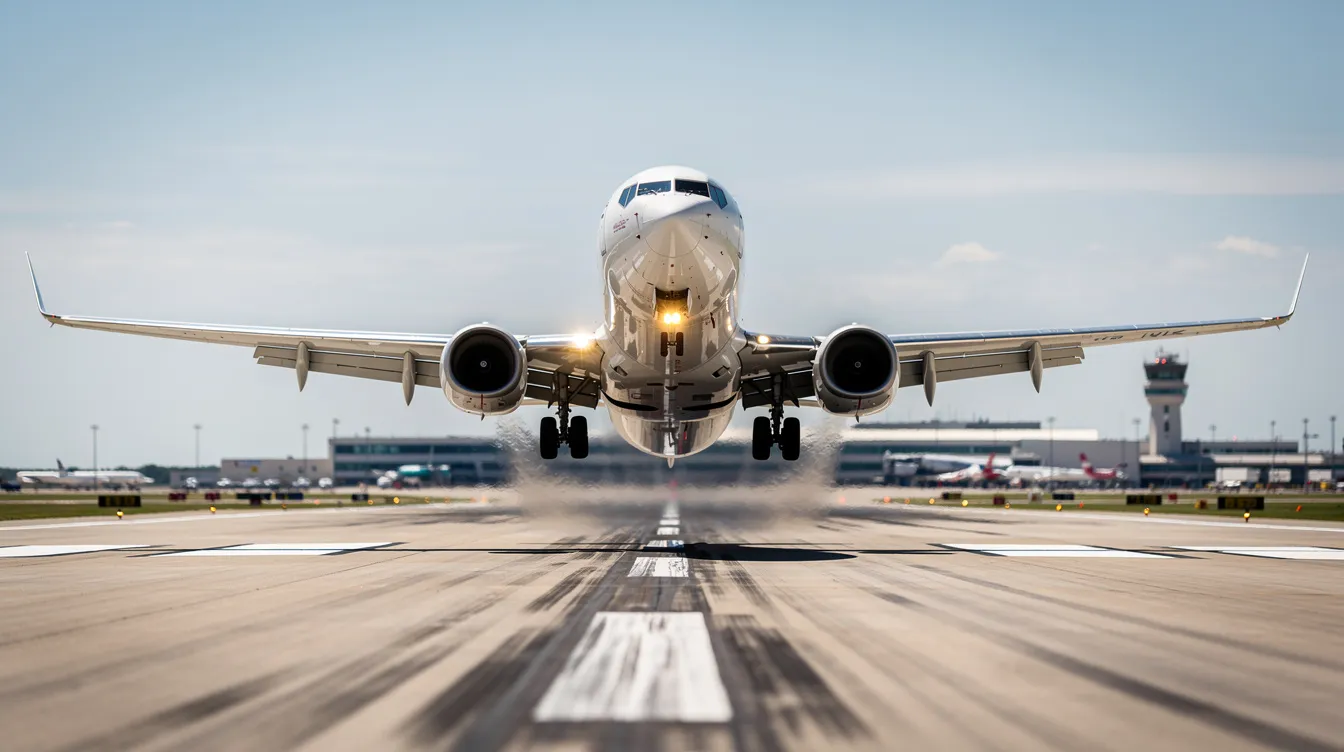
A Boeing 737 is the world's most common narrow-body jet, but it does not fit every runway. For private group charters, corporate roadshows, and sports team travel, runway length determines whether a 737 can reach your preferred airport or whether a different aircraft class is the better choice.
Key Takeaways: Minimum Runway Length for a Boeing 737
The minimum runway length for a Boeing 737 typically ranges from 5,000 to 8,200 feet depending on variant, weight, and conditions. A 737-800 requires about 2,500 meters (roughly 8,200 ft) for takeoff at heavy weight on a dry runway at sea level, while landing distance for the same aircraft is approximately 1,500 meters (about 4,900 ft) in demonstrated certification conditions.
Under light-weight, cool temperatures, some 737 variants can safely operate from 1,600 to 1,800 m (5,250 to 5,900 ft), but this is not standard airline practice. The actual minimum runway length depends on aircraft weight, flap setting, balanced field length calculations, and environmental factors including temperature, elevation, wind direction, and runway conditions. BlackJet's flight planning team uses certified performance data to determine whether a Boeing 737, including VIP or BBJ configurations, or smaller business jets better suit a client's preferred airport.
Introduction: Why Runway Length Matters for Boeing 737 Operations
A commercial Boeing 737 departing London Heathrow uses roughly 10,000 ft of paved runway with room to spare. A private group charter evaluating a 7,000 ft strip at a secondary airport faces a different calculation entirely. Runway length, takeoff distance, and landing distance are not abstract engineering numbers; they dictate whether a flight can depart safely, land on schedule, or operate at all.
The Boeing 737 family has been in service since the late 1960s and is widely used for both airline service and VIP or BBJ private configurations. Private jet charter clients considering large-group travel often ask whether a 737 can use the same regional airport as their smaller business jets. BlackJet translates technical runway requirements into clear go/no-go answers that protect safety, comfort, and trip efficiency.
Quick Reference: Typical Runway Requirements for Popular 737 Variants
The figures below are approximate, based on Boeing's manufacturer data for dry runway, sea level, no-wind conditions. They should not be used as operational limits.
Aircraft variants in the Boeing 737 family have differing performance requirements based on size and configuration:
737-700: The 737-700 typically requires 2,000 to 2,300 meters (6,600 to 7,500 ft) for takeoff. Landing distance runs about 1,500 to 1,700 m (4,900 to 5,600 ft).
737-800: Takeoff distance at or near maximum takeoff weight is 2,300 to 2,500 m (7,500 to 8,200 ft). Landing distance is 1,600 to 1,800 m (5,250 to 5,900 ft).
737-900ER: At maximum weight, takeoff field length climbs to roughly 2,600 to 2,800 m (8,500 to 9,200 ft).
737 MAX 8: Similar or slightly better than the 737-800 thanks to LEAP-1B engines and improved aerodynamics, with lighter operations possible from about 2,030 m (6,660 ft).
The balanced field length, where the distance required to abort a takeoff equals the distance to continue takeoff after an engine failure, typically drives the minimum runway length used in flight planning for 737 departures. Operationally, most scheduled airlines prefer runways of at least 2,200 to 2,400 m for flexibility across seasons and payloads.
How Takeoff Performance Sets the Minimum Runway Length
For Boeing 737 departures, the minimum runway length is usually governed by takeoff performance, not landing distance. Takeoff distances for a Boeing 737 depend on aircraft weight and environmental conditions, and the required distance is always the longer of two calculations: accelerate-stop distance (rejecting the takeoff after engine failure at decision speed V1) and the distance to continue takeoff with one engine inoperative.
Boeing offers airport compatibility documentation that includes performance charts for different 737 variants. The flight deck crew and dispatchers reference these charts or performance software for each specific takeoff scenario.
Balanced Field Length and Safety Margins
Balanced field length is the runway length at which the accelerate-stop distance equals the distance to continue after an engine failure at V1. For a heavily loaded 737-800 at a busy international airport on a hot summer day, this figure can approach or exceed 2,500 m (8,200 ft).
Regulatory safety margins dictate that the required runway length is often longer than the physical minimum. FAA and EASA rules require operators to leave margins and may prohibit using 100% of the declared takeoff run available. Business jet operators and private charter companies often apply even more conservative internal margins for VIP or corporate clients.
Variables That Drive Takeoff Distance
The main inputs affecting 737 takeoff distance include:
Aircraft weight: fuel load, passenger count, luggage, and cargo
Flap setting: configurations such as 1, 5, or 15 degrees for takeoff
Thrust setting: full rated thrust versus assumed temperature or flex takeoff
Pressure altitude: airport elevation and local air pressure
Outside air temperature: high temperatures reduce air density and require longer takeoff distances
Headwind component or tailwind: wind affects takeoff distance; headwinds decrease it while tailwinds increase it
Runway slope and runway surface condition: dry runway versus wet or contaminated runways
A 737-800 departing at 75 t from a 2,400 m sea level runway on a 30°C day may consume almost all available runway. The same aircraft at 60 t on a 15°C day may need several hundred meters less, leaving substantial remaining runway.
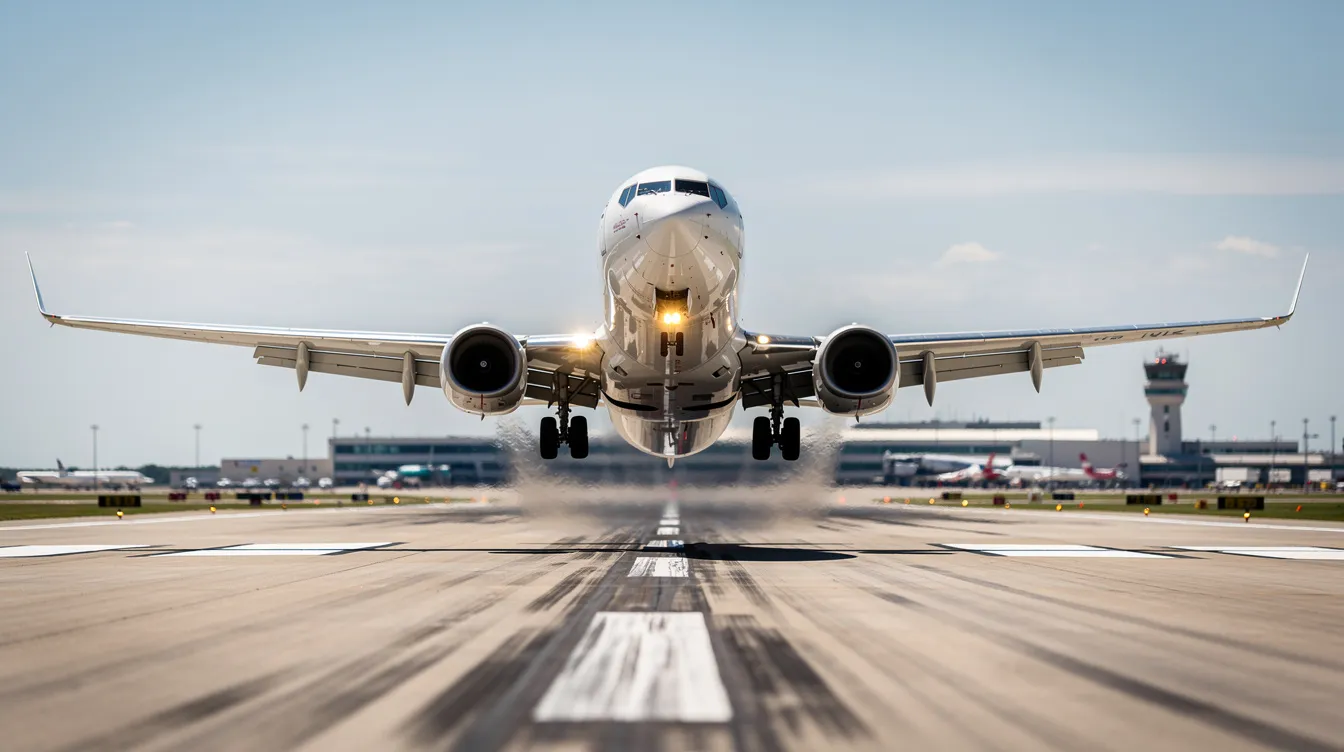
Landing Distance: Why Certification Numbers Don't Tell the Whole Story
Landing distance is the ground distance from crossing the threshold at 50 ft to a full stop using maximum braking. Certification tests do not credit reverse thrust in the landing ground roll. The demonstrated distance for a Boeing 737-800 in ideal, dry runway conditions at reference speed with full flap setting is around 1,400 to 1,500 m (4,600 to 4,900 ft).
Operational landing distances are longer. Under EASA rules, a dry runway demonstrated distance is multiplied by roughly 1.67. Additional factors apply for a wet runway or contaminated runways (standing water, slush, compacted snow), pushing required landing distance toward 1,800 to 2,100 m or more. Runway surface conditions affect landing distances; thrust reversers help in practice but receive no regulatory credit during planning.
Demonstrated vs Operational Landing Distances
Consider a demonstrated distance of 1,300 m. Multiply by the 1.67 regulatory factor: 2,171 m. Apply a wet runway correction of roughly 15%: approximately 2,497 m. An apparently comfortable 1,300 m figure becomes a practical requirement closer to 2,000 m on a dry runway and 2,500 m on a wet surface.
BlackJet and our partner operators always apply these operational factors when assessing whether a Boeing 737 can safely land at a client's preferred airport. Lower landing speeds and conservative calculation methods are part of our broader safety strategy.
Impact of Aircraft Weight: From Light Loads to Maximum Takeoff Weight
Aircraft weight is the largest driver of runway consumption for any Boeing 737. Heavier Boeing 737s require longer distances to both takeoff and land.
Representative maximum weight values for common variants:
737-700: MTOW roughly 70 t, maximum landing weight roughly 58 t
737-800: maximum takeoff weight approximately 79 tons, MLW roughly 66 t
737 MAX 8: MTOW roughly 82 t, MLW roughly 69 t
Reducing weight by 10 to 15% can decrease takeoff distance by several hundred meters, especially at warm temperatures. A corporate charter using a VIP 737 can reduce passenger count and carry less fuel for a short New York to Miami sector, allowing the aircraft to operate safely from a 6,200 ft secondary airport instead of a longer primary field.
Flap Setting and Configuration Choices
A flap setting determines how much additional wing surface extends into the airflow. Higher flap settings increase lift at lower speeds but also increase drag. Boeing 737 crews choose between configurations like Flaps 5 versus 15 for takeoff and Flaps 30 versus 40 for landing based on runway length, surrounding obstacles, and noise abatement procedures. Aircraft configuration settings alter the required runway length for takeoff and landing; higher flaps shorten ground roll but may limit climb performance. For private operations, configuration choices lean toward comfort and safety over fuel savings.
Weather, Elevation, and Runway Condition: Environmental Factors You Cannot Ignore
Density altitude is what matters: hot temperatures and higher elevation reduce air density, cutting engine performance and lift. The thinner air at elevation forces the aircraft to accelerate longer before generating enough lift.
At Denver International (elevation roughly 5,430 ft) on a 30°C summer afternoon, a 737-800 may need more than 3,000 m (roughly 10,000 ft) for comfortable operations at heavy weight. A fully loaded 737 may need up to 10,000 feet at high altitude.
At sea-level airports like Amsterdam at cool temperatures, the same aircraft can safely operate from 2,300 to 2,600 m runways.
Headwinds reduce required distance; tailwinds increase it. Most operators restrict takeoffs and landings with more than 10 to 15 kt tailwind. Runway conditions, from dry to damp to contaminated, feed directly into landing distance calculations. Hot temperatures increase required runway length for takeoff; high airport elevation reduces engine thrust and lift.
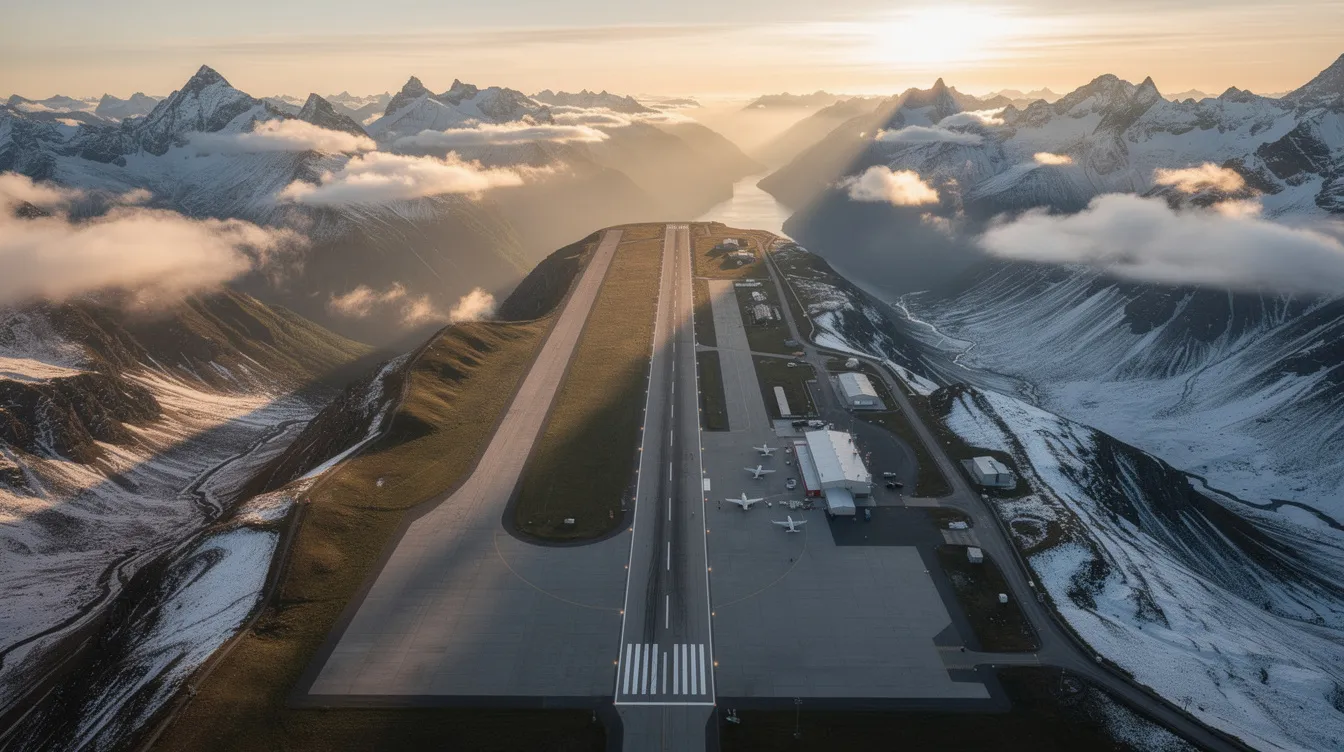
Hot-and-High Examples for the 737
Mexico City sits at roughly 7,343 ft elevation. On a 28 to 30°C day, a nearly full 737-800 faces payload restrictions because the distance required for takeoff and climb gradient exceeds what the runway and surrounding obstacles allow. Addis Ababa (roughly 7,657 ft) presents similar constraints. At 5,000 to 7,000 ft elevation, a 737-800 may need over 3,000 m of runway. BlackJet often recommends alternative aircraft or fuel-stop strategies for hot-and-high missions.
Short Runway Operations: What Is Realistic for a Boeing 737?
Short runways for Boeing 737 operations are under 2,500 meters. While 1,600 to 1,800 m is sometimes possible at light weights, 2,000 to 2,400 m is far more typical for actual conditions. Scheduled airlines favor longer runways for operational resilience.
Destination airports with medium runways illustrate the boundaries: London City's 1,508 m runway excludes the 737 entirely (only specially modified light aircraft and certain business jets operate there). Santorini at 2,125 m can handle 737s under weight restrictions. Aircraft requiring smaller runways, such as turboprops or a light jet like a King Air, serve strips where a 737 cannot. Most modern 737s are intended for paved runways rather than unpaved runways. Some older Boeing 737 variants were fitted with gravel kits for semi-prepared surfaces, but that is not typical of modern charter fleets.
For BlackJet clients, our team flags runways under about 1,900 to 2,000 m as needing individual 737 performance analysis and suggests the right aircraft for very short runways, often directing travelers toward the best small private aircraft for their mission.
737 vs Business Jets: Choosing the Right Aircraft When Runway Length Is Limited
Runway length often favors smaller business jets for high-net-worth travelers heading to compact destination airports, making it essential to understand the main types of private jets for different missions:
A very light or light jet (Citation M2, Phenom 300) operates comfortably from 3,000 to 4,000 ft of paved runways
Super-midsize jets (Challenger 350, Gulfstream G280) commonly use 4,000 to 5,000 ft
Large-cabin jets (Gulfstream G650, Global 6500) need 5,500 to 6,500 ft at long-range weights
Compare those figures with the 737-800's 7,500 to 8,200 ft at maximum weight. Platforms like Jettly suggest alternatives when a 737 cannot operate at a given field. BlackJet uses its Jet Card membership, including the 25+ Hour program, and on-demand private jet charter programs to match clients with aircraft providing both range and the flexibility to use their preferred airport. Right-sizing the aircraft to runway and passenger count also reduces unnecessary fuel burn, supporting BlackJet's carbon-neutral flight program.
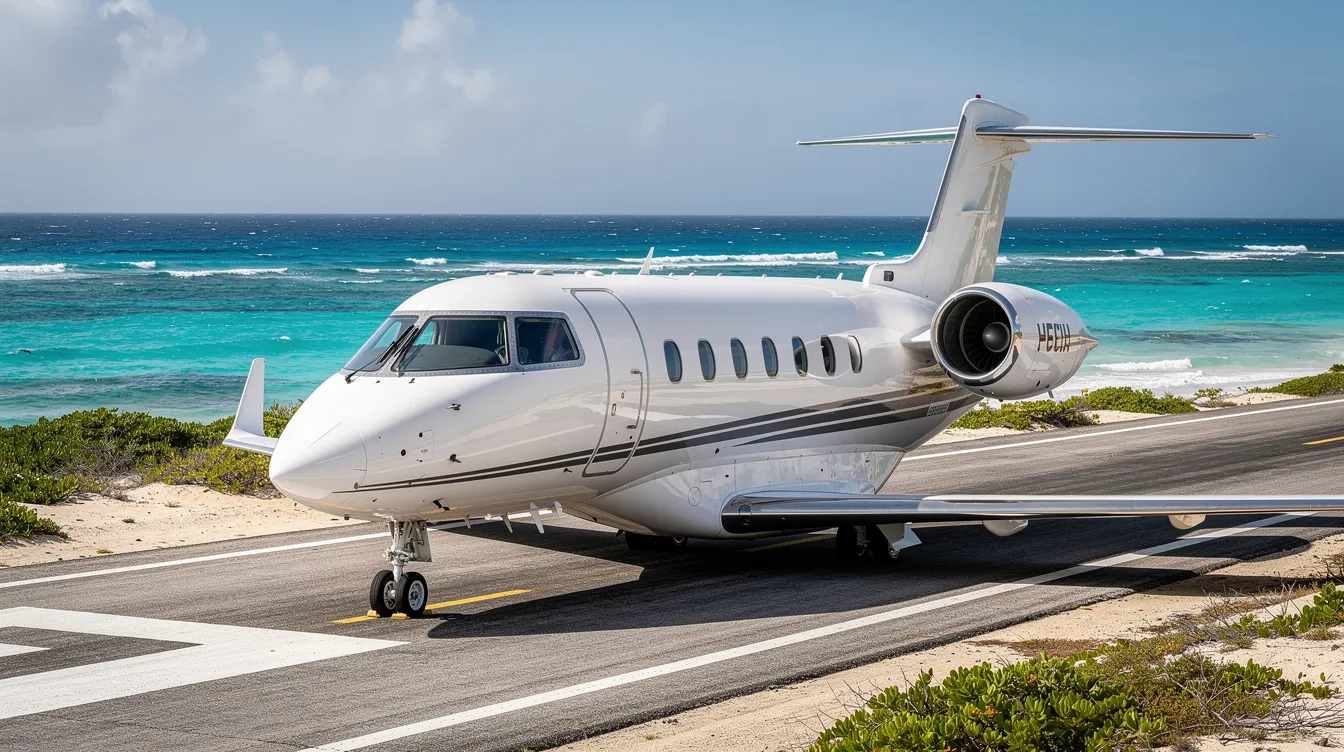
Operational Reality for Private 737 Charters and Group Travel
A European football club or Fortune 500 roadshow plans to fly 80 to 120 passengers on a Boeing 737 from a secondary airport with a 2,200 m runway, though some groups instead opt for private jets tailored for around 30 passengers when airport constraints or cabin layout make them a better fit. Sports teams and corporate groups face this scenario regularly. Charter planners assess runway length versus passengers and fuel, checking load-bearing capacity, analyzing balanced field length at planned takeoff weight, and applying regulatory safety margins and company policies.
Runway length influences whether a Boeing Business Jet, an airline-configured 737, multiple business jets, or another private jet option for up to 50 passengers is the safer option. BlackJet's digital flight planning tools, real-time weather data, and experienced dispatchers advise clients on using their preferred airport versus a longer alternate. We charter only with operators meeting top-tier safety standards when arranging large-aircraft group charters.
FAQ: Minimum Runway Length for Boeing 737 Operations
What is the shortest runway a Boeing 737 can realistically use with passengers? Under light loads and cool temperatures at sea level on a dry runway, some 737 variants can operate from 1,600 to 1,800 m for landing. Takeoff from such short runways requires careful weight management. The minimum runway length for a Boeing 737 is typically 5,000 to 7,000 feet for routine operations.
Is landing distance always shorter than takeoff distance for a 737? Under normal conditions at maximum landing weight versus maximum takeoff weight, yes. But adverse runway conditions or tailwinds can push required landing distance above takeoff distance at lighter weights.
How do temperature and elevation change the minimum runway length? Every 1,000 ft of elevation and every 10 to 15°C above standard temperature increases required takeoff distance by roughly 5 to 15% each. Combined, a hot-and-high airport can demand 25 to 50% more runway than sea level on a cool day.
Can a Boeing 737 operate safely if the runway is under 2,000 m? Sometimes, with reduced fuel, fewer passengers, and favorable weather. A fully loaded 737 may require up to 10,000 feet of runway, so short fields demand weight trade-offs or an alternative aircraft.
Does reverse thrust reduce the required landing distance in planning? Certification rules do not credit reverse thrust in landing distance calculations. Thrust reversers help in practice, but operational limits are set without them.
How does a 737 compare with modern business jets for runway length? A light jet typically needs 3,000 to 4,000 ft. A 737 at maximum weight needs 7,500 ft or more. For runways under 5,000 ft, business jets are the practical choice.
What information does BlackJet need to assess runway suitability? We need the airport identifier, planned passenger count, approximate fuel load or mission range, and travel dates. Our team runs certified performance data against actual conditions to confirm whether a 737 or alternative aircraft fits your operational limits.
Share your typical routes and preferred airports with BlackJet's planning team. We will confirm whether a Boeing 737, a large-cabin business jet, or a different aircraft class is the optimal match for your next mission, drawing on our expertise in private jet sizes and cabin categories. Explore premium jet access at BlackJet.
Conclusion: Strategic Advantages of Understanding Minimum Runway Length for Boeing 737 Operations
For discerning travelers and corporate groups, understanding the minimum runway length for Boeing 737 operations is more than a technical detail—it is a strategic advantage. Runway length dictates airport accessibility, influences aircraft selection, and impacts flight safety and scheduling reliability. BlackJet’s expertise in evaluating runway requirements, environmental conditions, and aircraft performance ensures clients experience seamless private jet travel tailored to their mission needs.
By leveraging BlackJet’s Jet Card programs and digital flight planning tools, travelers gain access to a curated fleet that balances runway compatibility, safety certification, and sustainability. Whether your journey calls for a VIP-configured 737 or a smaller business jet optimized for shorter runways, BlackJet’s team provides precise guidance to stop safely and arrive comfortably at your destination.
Explore how runway length considerations integrate with broader flight planning factors like weight management, weather, and airport infrastructure to elevate your private aviation experience. Discover how BlackJet can unlock premier private jet access to major airports and exclusive destinations worldwide, ensuring your travel is effortless, efficient, and tailored to your exacting standards.
Ready to elevate your travel? Join our Jet Card program or request a personalized consultation to explore aircraft options and runway compatibility for your next trip. With BlackJet, private jet travel is not just luxury—it’s a seamless extension of your lifestyle and business strategy.


 Sign up with google
 Sign up with Apple