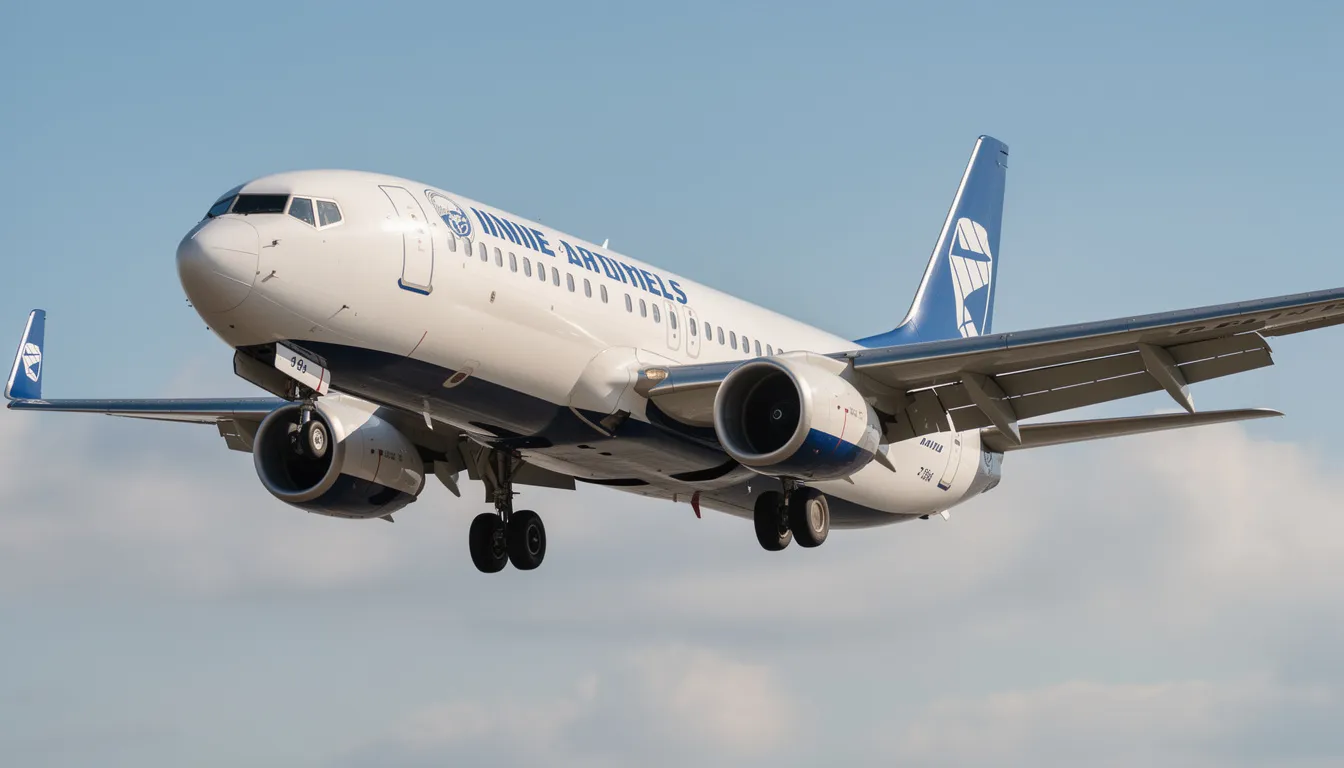
Private aviation and commercial aviation intersect at an important strategic level: aircraft acquisition economics. Whether you are a corporate aviation strategist, an airline executive, or an investor evaluating fleet assets, understanding the price of Boeing 737 family models is essential for making informed decisions.
This guide is written for airline buyers, leasing professionals, corporate aviation decision-makers, and capital allocators who want clarity—not marketing gloss—around Boeing 737 pricing. We focus on how prices are set, what is actually paid, and how advanced technology, safety history, and market forces shape long-term value and performance.
This article covers:
List prices versus real transaction prices
New versus used aircraft economics
Boeing 737 MAX and legacy variants
Leasing, financing, and future pricing outlook
Safety history and impact on pricing
Overview of Boeing Aircraft Pricing
Aircraft pricing is rarely as simple as a published sticker price. For the Boeing 737 family, there are three distinct price concepts that matter.
List Price
The list price is the publicly advertised price published by Boeing Commercial Airplanes. It functions more as a reference anchor than a true market price. Airlines and buyers almost never pay list price, especially for single-aisle aircraft ordered in volume.
List prices are useful for:
Comparing variants on paper
Establishing relative value between models
Signaling technology and capability upgrades
They are not a reliable indicator of real cash outlay.
Transaction Price
The transaction price is the actual price paid after negotiations, volume discounts, concessions, and incentives. This is the most important number for serious buyers.
Transaction prices vary based on:
Order size and firm orders
Delivery timing and entering service schedules
Customer relationship with Boeing
Market demand and competition at the time of order
For large airline customers like United Airlines and American Airlines, transaction prices can be 40–60% below the list price.
Lease Price
Lease pricing reflects monthly or annual payments rather than outright ownership cost. Leasing has become the preferred option for airlines, rising from roughly 10% of the total fleet in the 1970s to 58% at the end of 2023, due to its flexibility and capital efficiency.
Lease prices depend on:
Aircraft age and equipment condition
Residual value assumptions
Interest rates
Demand for specific variants and capacity
As of 2026, leasing a new Boeing 737 MAX 8 averages around $400,000 per month. Aviation Capital Group, a major leasing company, has recently placed an order for 50 Boeing 737 MAX jets, increasing its 737 MAX order book to 121 aircraft. According to their CEO, the typical first lease term for a Boeing 737 is approximately 12 years.
Price Breakdown: Boeing 737 New Versus Used
New and used Boeing 737 aircraft operate in two distinct economic universes.
New Aircraft Pricing Dynamics
New aircraft command premium pricing due to:
New Boeing 737 MAX aircraft typically transact in the high tens of millions of dollars, depending on variant and configuration.
Used Aircraft Pricing Dynamics
Used aircraft pricing is shaped by:
Aircraft age and total flight cycles or hour counts
Maintenance status and fuel use efficiency
Engine condition
Market perception of the variant
Pre-owned Boeing 737 aircraft can range from low tens of millions for older legacy variants to $40–60 million for relatively young MAX aircraft.
Depreciation Patterns for Single-Aisle Jets
Single-aisle aircraft follow a predictable depreciation curve:
Steep depreciation in the first 5–7 years
Stabilization during mid-life
Accelerated value decline approaching heavy maintenance events
The 737 MAX experienced abnormal depreciation volatility due to grounding events and two fatal crashes, which we address later in this guide.
Common Adjustments in Pre-Owned Valuations
Adjustments typically include:
Upcoming heavy maintenance checks
Engine shop visit requirements
Avionics upgrade compliance
Cabin condition and layout relevance
Typical Refurbishment Cost Items
Buyers often budget separately for:
These costs can range from $1 million to $5 million per aircraft, depending on scope.
Price by Variant: Boeing 737 and Boeing 737 MAX Models
Not all 737s are priced equally. Variant selection plays a major role in cost and performance.
Boeing 737 MAX MSRP Examples
Approximate list prices (not transaction prices):
737 MAX 7: low $100 million range (around $99.7 million)
737 MAX 8: mid $120 million range (list price approx. $121.6 million)
737 MAX 9: high $120 million range
737 MAX 10: low $130 million range (up to $134.9 million)
Actual transaction prices are typically $55–75 million, depending on discount levels.
Legacy Boeing 737 Variant Pricing
Older Next Generation (NG) variants such as:
typically trade at substantial discounts due to operating efficiency gaps and regulatory pressure.
Option Costs by Variant
Options that materially affect price include:
Advanced avionics packages
High-density versus premium cabin layouts
Long-range fuel tank options
Satellite connectivity systems
These options can add several million dollars to the effective purchase price.
Price Influencers: Advanced Technology and Configuration
Technology is one of the largest drivers of aircraft price differentiation.
Impact of Advanced Technology on Unit Price
Modern systems increase acquisition cost but reduce operating expense. Buyers evaluate price through a total cost of ownership lens, not just upfront spend.
LEAP Engine Upgrade Cost Impact
The LEAP-1B engines used on the 737 MAX deliver better fuel savings but increase capital cost. Engine technology contributes an estimated $8–12 million per aircraft compared to older powerplants.
Cabin Configuration Effects
Cabin layout decisions influence price through:
High-end configurations increase acquisition costs but support higher revenue per seat.
Market Factors: Single-Aisle Market and Leasing
Single-Aisle Market Demand Trends
The single-aisle market is the backbone of the global fleet, accounting for the majority of airline deliveries worldwide. Demand remains strong due to:
This demand supports pricing resilience and growing demand for new Boeing aircraft.
The Boeing 737 MAX family provides exceptional capability, flexibility, and value for airlines. More than 100 customers worldwide have placed firm orders for approximately 7,000 Boeing 737 MAX airplanes. The family offers substantial efficiency savings through fleet commonality, lowering investment in parts, equipment, and training.
Leasing and Transaction Price Effects
Leasing companies exert pricing pressure by:
Negotiating bulk purchase discounts
Setting residual value benchmarks
Influencing secondary market liquidity
Lease-heavy markets often experience more stable pricing over time.
Leasing has emerged as the preferred option for airlines, rising from roughly 10% of the total fleet in the 1970s to 58% at the end of 2023. This trend reflects airlines' preference for flexibility and capital efficiency.
Safety Incidents and Reputation Impact on Pricing
No discussion of Boeing 737 pricing is complete without addressing the aircraft's safety record and its impact on the global fleet and market.
Boeing 737 MAX Grounding and Crashes
The Boeing 737 MAX was globally grounded from March 2019 to November 2020 following two fatal crashes: Lion Air Flight 610 and Ethiopian Airlines Flight 302. Both accidents were linked to the Maneuvering Characteristics Augmentation System (MCAS), which was erroneously activated due to faulty angle-of-attack sensor data.
Investigations revealed that Boeing had not adequately disclosed the MCAS system to operators and highlighted shortcomings in the FAA's certification process. These events caused significant reputational and financial damage to Boeing, including billions in legal settlements and fines.
Following the crashes, Boeing redesigned the MCAS software to use data from both angle-of-attack sensors instead of just one, improving safety redundancy. The FAA lifted its grounding order in November 2020 after these modifications and revised pilot training protocols were implemented.
As of 2023, the 737 MAX series has experienced 1.48 fatal hull loss accidents per million takeoffs.
Impact on Market and Pricing
The grounding led to short-term price compression, lease rate softening, and financing hesitations. However, after regulatory approval and fixes, the 737 MAX market began recovering, with airlines renegotiating delivery terms and pricing stabilizing.
Boeing 737 MAX Variants and Competition
The 737 MAX series includes four main variants: MAX 7, MAX 8, MAX 9, and MAX 10. Each variant is designed to meet different airline requirements, with seating capacities typically ranging from 138 to 204 passengers in a two-class configuration and ranging between 3,300 and 3,850 nautical miles.
The MAX 10 is the largest and most expensive variant, designed to compete directly with the Airbus A321neo in the narrow-body market. Boeing redesigned the 737 MAX to improve performance and operating efficiency in response to competition from the Airbus A320neo family, which offers better fuel and operating efficiency.
The 737 MAX family incorporates more efficient CFM International LEAP engines and aerodynamic improvements such as split-tip winglets, contributing to a marketed 20% reduction in CO2 emissions and fuel use compared to previous models. The aircraft is also significantly quieter, with a 50% smaller noise footprint.
Production and Orders
Boeing certified the 737 MAX in March 2017 after its first flight in January 2016. The first delivery occurred in May 2017 to Malindo Air. As of December 2025, Boeing has delivered 2,120 737 MAX aircraft and holds 4,853 unfilled orders.
The 737 MAX program is a significant source of profit for Boeing, with airlines ordering in large quantities often receiving discounts of 30% or more off list prices. List prices for the 737 MAX series range generally between $90 million and over $130 million, depending on the variant, with actual transaction prices often lower due to discounts.
Older Boeing 737 Models Pricing
Older Boeing 737 models, including Classic and Original series, are available on the secondary market at prices ranging from as low as $1.3 million to $19.8 million, depending on condition and configuration.
Strategic Perspective for Buyers
Aircraft pricing reflects risk, technology, market confidence, and long-term operational strategy. Understanding these layers creates leverage and opportunity for discerning buyers.
Discover how BlackJet helps decision-makers evaluate aviation assets with precision, safety, and long-term value in mind.
Explore strategic private aviation access at https://www.blackjet.com/


 Sign up with google
 Sign up with Apple