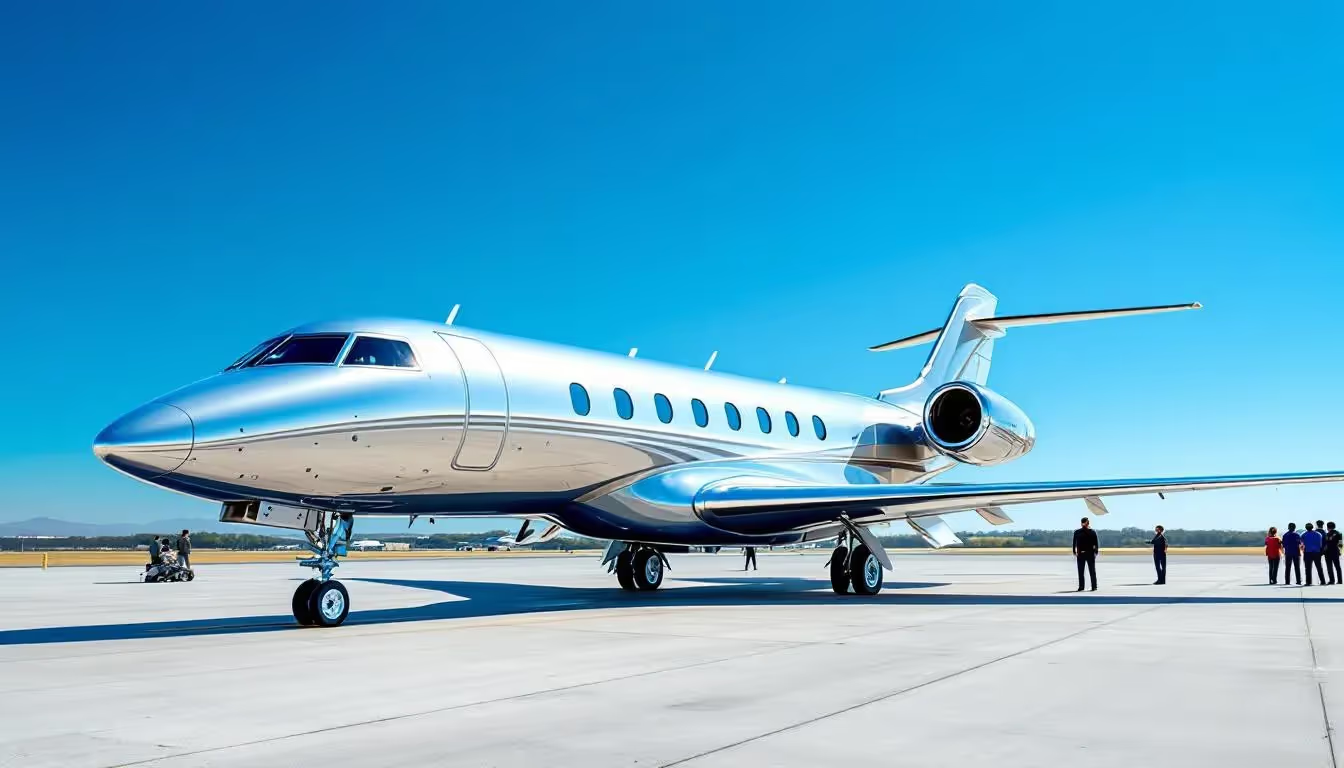
Coordinating travel for 15 people presents unique challenges that commercial flight simply cannot address effectively. Whether you’re planning a corporate retreat, family reunion, or executive business trip, finding the right aircraft becomes critical when your group exceeds the capacity of typical mid-size private jets. The solution lies in heavy jets and ultra-long-range aircraft specifically designed to comfortably accommodate larger groups while delivering the luxury experience and scheduling flexibility that private jet travel provides. Private jets designed for 15 passengers provide unmatched convenience and comfort for complex itineraries and last-minute scheduling.
This comprehensive guide explores the best private jet options for 15 passengers, breaking down everything from aircraft specifications and charter costs to luxury amenities and booking considerations. We’ll examine the leading aircraft models, analyze pricing factors, and highlight the practical benefits these larger aircraft deliver for both business and leisure applications. The demand for private jet charters is increasing as passengers seek alternatives to commercial flying. Private jets for 15 passengers typically accommodate groups such as corporate teams, extended families, or celebrity entourages.
Key Takeaways
Large-cabin private jets like the Gulfstream G650 and Bombardier Global 6000 can comfortably accommodate 15 passengers
Charter costs range from $7,000 to $15,000 per flight hour, depending on aircraft type and route complexity
Popular 15-passenger jets offer ranges of 6,000-8,000 nautical miles, enabling nonstop intercontinental flights
These aircraft feature premium amenities, including multiple cabin zones, full galleys, and sleeping accommodations, as well as spacious and luxurious features like high-speed Wi-Fi and gourmet dining options
Both corporate groups and large families benefit from the privacy, flexibility, and luxury of 15-passenger private jets
Types of Private Jets
Private jets come in a variety of categories, each designed to meet specific travel needs based on group size, distance, and desired amenities. Explore the different private jet categories to discover which options best suit your group size and travel requirements. Understanding these categories is essential for selecting the right aircraft for your journey, whether you’re planning a quick regional trip or a long-haul international flight. The main types of jets—light jets and large jets—differ significantly in terms of range, passenger capacity, and onboard features, allowing travelers to match the right aircraft to their itinerary and expectations for comfort and convenience. Large jets are designed for long-range flights and can accommodate 10 to 19 passengers, offering luxurious amenities. Super midsize jets provide more carrying capacity and range than midsize jets, typically seating 8 to 10 passengers. Ultra-long-range jets are necessary for transcontinental or international flights, while a large heavy jet might suffice for shorter domestic routes.
Light Jets
Light jets represent the entry point to private jet travel, offering an efficient and cost-effective solution for small groups or individuals. Typically seating between 4 and 8 passengers, these jets are ideal for short to medium-haul flights, with a range of approximately 1,000 to 2,000 nautical miles. Their compact size allows them to access smaller airports that are often closer to your final destination, reducing ground travel time and enhancing overall convenience. Midsize jets offer a balance of efficiency, comfort, and performance for medium-length flights, accommodating around 7 to 9 passengers. Light jets are perfect for short to medium-distance trips and usually seat between 6 and 8 passengers.
Popular light jet models, such as the Cessna Citation Mustang and Hawker 400, are favored for their agility and lower operating costs. While they may not provide the same level of luxury or spacious cabin as larger aircraft, light jets still offer a comfortable and private environment for business or leisure trips. Very light jets (VLJs) are efficient for small groups, accommodating 2 to 4 passengers, and are suitable for short trips. Amenities are more limited compared to larger jets, but passengers can still expect essential comforts and a smooth, efficient flight experience. Super light jets are a step up from light jets, offering more cabin space and accommodating 7 to 8 passengers.
For travelers prioritizing cost and flexibility over extensive amenities, light jets are an excellent choice. They provide the freedom to fly on your schedule, avoid crowded terminals, and reach smaller airports that commercial flights can’t access. However, for groups larger than 8 or those seeking a more luxurious experience, upgrading to a larger aircraft may be necessary to ensure everyone travels comfortably.
Large Jets
Large jets, often referred to as ultra-long-range jets, are the gold standard for international flights and group travel. These aircraft are engineered to comfortably accommodate 12 to 19 passengers, making them the preferred option for business teams, extended families, or any group requiring ample space and top-tier amenities. With a range exceeding 4,000 nautical miles, large jets are capable of nonstop transcontinental and intercontinental journeys, connecting major cities across continents without the need for refueling stops. The Gulfstream G650ER, for example, has a maximum range of approximately 7,500 nautical miles and can seat up to 19 passengers, making it a standout choice in this category. Ultra-long-range jets can fly for up to 11 hours non-stop and typically seat between 12 and 19 passengers.
Models like the Gulfstream G650 and Bombardier Global 7500 exemplify the luxury and performance of this category. Passengers enjoy a spacious cabin with multiple living areas, gourmet catering, advanced entertainment systems, and high-speed Wi-Fi, ensuring productivity and relaxation throughout the flight. Advanced connectivity, including high-speed Wi-Fi and satellite phones, is typical on private jets for seamless communication. Dedicated and highly trained flight attendants are included to provide personalized service throughout the journey on large private jets. The Bombardier Global 7500, with a range of approximately 7,700 nautical miles and seating for 14 to 19 passengers, is particularly notable for its ability to combine long-range performance with luxurious accommodations.
While large jets deliver unmatched luxury and convenience, they also come with higher operating costs. Additional fees such as airport landing fees, fuel surcharges, and premium catering can add to the overall price, especially on international routes. However, for those who value time savings, privacy, and the ability to travel long distances with a larger group, large jets offer the best solution—combining range, comfort, and personalized service for an exceptional private jet experience.
Best Private Jet Options for 15 Passengers
When selecting a private jet for 15 passengers, you’re entering the realm of heavy jets and ultra-long-range models that represent the pinnacle of private aviation. These larger aircraft are designed to carry 15 passengers and their luggage comfortably across domestic or international flights, offering the spacious cabin configurations, extended flight range, and premium amenities necessary for such journeys. The Dassault Falcon 8X, for instance, can handle a group of 15 passengers comfortably, offering a balance of range and performance.
The key advantage of aircraft in this category lies in their passenger capacity flexibility. While these jets can accommodate up to 19 passengers in maximum density configurations, the optimal setup for 15 passengers provides enhanced comfort with additional space for amenities, baggage, and relaxation areas. This configuration strikes the perfect balance between group size and luxury experience. As long range jets, these aircraft are especially suitable for nonstop international travel, providing the range and comfort required for long-haul flights. Larger jets often provide seating that converts into lie-flat beds or couches.
Heavy jets excel in several critical areas that make them ideal for 15-passenger operations. Their long-range capabilities enable nonstop flights on most international routes, eliminating the hassle of fuel stops and connection delays. The spacious cabin allows for multiple living areas, creating distinct zones for work, dining, entertainment, and sleep. Advanced avionics and weather systems ensure safer passage through challenging conditions, while large baggage compartments accommodate the substantial luggage requirements of larger groups.
Gulfstream G650 and G650ER
The Gulfstream G650 stands as one of the most capable aircraft for 15-passenger operations, delivering exceptional range and luxury in a proven platform. With a standard range of 7,000 nautical miles, the G650 enables nonstop flights from New York to Tokyo or London to Los Angeles with full passenger and baggage loads. The extended-range G650ER pushes this capability to 7,500 nautical miles, opening additional routing options across the Pacific and extending European coverage. The Gulfstream G550 is also known for its versatility and can seat up to 19 passengers with a range of approximately 6,750 nautical miles.
The aircraft’s four-zone cabin layout provides the perfect environment for 15 passengers, featuring distinct areas optimized for different activities. The forward zone typically serves as a business area with conference seating and work tables, while the midcabin offers comfortable lounge seating for relaxation and socializing. The aft cabin functions as a quiet zone with sleeping accommodations, and many configurations include a separate crew rest area to ensure privacy.
Advanced technology features set the Gulfstream G650 apart in the 15-passenger market. The aircraft offers industry-leading Wi-Fi connectivity through Starlink systems, enabling high-speed internet access throughout most flight routes. Large panoramic windows provide exceptional natural lighting, while advanced cabin pressure management maintains the equivalent of a 4,850-foot altitude even when cruising at 51,000 feet, reducing passenger fatigue on longer flights.
Typical routes that showcase the G650’s capabilities include transcontinental operations like New York to London (3,450 nautical miles completed in under 7 hours) and transpacific flights such as Los Angeles to Tokyo (5,500 nautical miles in approximately 11 hours). These nonstop capabilities eliminate the time penalties and coordination complexities associated with fuel stops, making the aircraft particularly valuable for time-sensitive business travel or international leisure trips.
Bombardier Global 6000
The Bombardier Global 6000 offers another excellent option for 15-passenger private jet travel, combining impressive range with flexible cabin configurations. With seating capacity for up to 19 passengers, the aircraft provides comfortable accommodations for 15 travelers with additional space for enhanced amenities and baggage storage. The 6,750 nautical mile range covers most intercontinental routes, including popular business corridors like London to Singapore or New York to Moscow.
Multiple living areas within the Global 6000 create distinct environments tailored to different passenger needs. The forward cabin typically features executive seating with conference tables, perfect for business meetings or collaborative work during flight. The midcabin offers club seating arrangements ideal for relaxation, dining, or entertainment activities. The aft section can be configured with sleeping accommodations, including divans or full berths for overnight flights.
The aircraft excels on international flights where comfort becomes paramount during extended flight times. Routes such as Milan to Miami (4,500 nautical miles) or Geneva to Singapore (6,200 nautical miles) demonstrate the Global 6000’s ability to connect major business centers without refueling stops. The spacious cabin maintains comfort levels throughout these longer journeys, with advanced climate control systems and noise reduction technology creating a peaceful environment.
Sleeping arrangements represent a particular strength of the Global 6000 for 15-passenger operations. The aircraft can accommodate multiple sleeping positions through berthing configurations, allowing passengers to rest comfortably during overnight flights. This capability proves especially valuable for intercontinental business travel, where arriving refreshed impacts productivity and client satisfaction.
Dassault Falcon 7X
The Dassault Falcon 7X brings unique advantages to 15-passenger operations through its innovative tri-jet design and exceptional airport access capabilities. Accommodating up to 19 passengers with flexible cabin configurations, the aircraft provides comfortable seating for 15 travelers while maintaining fuel efficiency advantages over traditional twin-engine heavy jets. The Falcon 7X offers configurations for both daytime and nighttime use, ensuring versatility for various travel needs.
The Falcon 7X’s 5,950 nautical mile range enables most international routes while offering operational flexibility through its shorter runway requirements. Unlike many aircraft in this category, the Falcon 7X can access smaller airports with runways as short as 5,000 feet, expanding destination options and reducing ground transportation requirements for passengers.
Versatile layout options distinguish the Falcon 7X in the 15-passenger market. Day configurations maximize seating and work areas for business travel, while night setups transform the cabin into sleeping quarters with multiple berth options. This flexibility proves particularly valuable for mixed-use operations where the same flight might serve both business and leisure purposes.
The tri-jet configuration provides additional safety margins and performance benefits that appeal to corporate flight departments and charter operators. The third engine offers redundancy for overwater operations while enabling superior high-altitude performance in challenging weather conditions. These capabilities translate to improved schedule reliability and passenger confidence during complex international routing.
Gulfstream G700
The newest entry in the ultra-long-range category, the Gulfstream G700, represents the cutting edge of 15-passenger private jet technology. With a range of 7,750 nautical miles and seating for up to 25 passengers, the aircraft provides exceptional luxury when configured for 15 travelers. The extended range opens routing possibilities that few other aircraft can match, including nonstop flights from Los Angeles to Sydney or New York to Bangkok.
Five distinct living areas within the G700 create an unprecedented level of space and privacy for 15-passenger operations. The forward zone features executive seating and conference facilities, while multiple midcabin areas can be configured for dining, entertainment, or relaxation. The aft section includes a master suite with dedicated sleeping accommodations and private lavatory facilities. A separate crew rest area ensures complete privacy for passengers throughout the journey. Many seats in large jets convert into fully lie-flat beds, and some models include private bedrooms for overnight flights.
The maximum cruise speed of Mach 0.935 makes the G700 one of the fastest aircraft in its class, providing time savings that compound the benefits of private jet travel. The combination of speed and range enables schedule optimization that proves particularly valuable for international business operations where time zone management and arrival timing impact productivity.
Advanced cabin technology in the G700 sets new standards for 15-passenger private jet travel. The aircraft features next-generation cabin management systems, premium entertainment options, and connectivity solutions that maintain productivity and comfort throughout extended flights. Environmental systems maintain optimal cabin conditions while minimizing passenger fatigue through advanced pressure management and air filtration.
Charter Costs and Pricing Factors
Understanding the financial aspects of chartering a private jet for 15 passengers requires examining both hourly rates and total trip costs across different scenarios. Charter pricing in this aircraft category typically ranges from $7,000 to $15,000 per flight hour, with variations based on specific aircraft models, routing complexity, and market conditions. Shorter flights generally cost less than longer flights due to lower fuel consumption. For 15 passengers, you will need a Large Cabin or Ultra-Long-Range Jet, with top options including the Gulfstream G650/G650ER and Bombardier Global 6000/7500.
Sample trip costs illustrate the real-world expenses associated with a 15-passenger private jet charter. A coast-to-coast flight from New York to Los Angeles, requiring approximately 5.5 flight hours, generates total costs between $70,000 and $120,000, depending on aircraft selection and additional services. International flights command higher rates due to complexity factors, with transcontinental routes like New York to London averaging $90,000 to $140,000 for the complete journey.
Charter pricing typically includes fundamental services necessary for flight operations: fuel costs, crew expenses, aircraft insurance, and basic catering provisions. However, passengers should anticipate additional fees that can significantly impact total costs. Airport landing fees vary by destination, with major international airports charging $1,000 to $3,000 per landing. Overnight costs for extended trips can add $2,000 to $4,000 per night when crew rest requirements necessitate hotel accommodations.
Positioning charges represent another significant cost factor, particularly for flights departing from locations outside major metropolitan areas. When the aircraft must reposition from its home base to the departure airport, passengers typically bear the cost of this deadhead flight. These charges can add 2-4 hours of flight time to the total bill, substantially increasing overall charter expenses. Additionally, aircraft owners may charge short-leg fees to account for increased fuel consumption and maintenance costs associated with shorter flights.
The variables involved in charter pricing create opportunities for cost optimization through strategic planning. Booking flights during off-peak periods, choosing departure airports with lower landing fees, and coordinating schedules to minimize positioning requirements can reduce total expenses by 15-25%. Understanding these factors enables informed decision-making that balances cost considerations with the convenience and luxury benefits of private jet travel.
Factors Affecting 15-Passenger Jet Pricing
Aircraft type and age significantly influence charter rates within the 15-passenger category. Newer models like the Gulfstream G700 command premium rates due to advanced technology, enhanced comfort features, and superior performance capabilities. Established aircraft such as the Global 6000 or Falcon 7X offer more moderate pricing while still delivering the range and amenities necessary for successful large-group operations.
Route complexity creates substantial pricing variations that extend beyond simple distance calculations. Domestic flights within the United States typically offer the most favorable hourly rates, while international flights to regions with limited aviation infrastructure can increase costs by 25-50%. Destinations requiring special permits, extended crew duty times, or complex customs procedures generate additional fees that impact total charter expenses.
Seasonal demand patterns create predictable pricing fluctuations throughout the year. Peak travel periods, including major holidays, summer vacation seasons, and high-profile events like the Super Bowl or World Economic Forum, drive rates higher due to increased demand and limited aircraft availability. Conversely, shoulder seasons often provide opportunities for reduced pricing as operators seek to maximize aircraft utilization.
Trip duration influences pricing through minimum charges and crew scheduling requirements. Short flights may incur daily minimum charges that exceed actual flight time costs, while extended trips can benefit from negotiated rates that reduce average hourly expenses. International flights requiring crew rest periods often involve overnight charges that can exceed the actual flight costs for shorter international routes.
Market positioning also affects pricing strategies among charter operators. Premium operators focusing on ultra-high-net-worth clients may charge rates 20-30% above market averages while providing enhanced service levels, newer aircraft, and additional amenities. Value-focused operators may offer competitive pricing but with fewer included services and potential compromises in aircraft age or condition.
Corporate and Business Travel Applications
Corporate travel represents the primary market for 15-passenger private jets, driven by the unique benefits these aircraft provide for executive teams and business development activities. The privacy advantages prove particularly valuable for confidential discussions, strategic planning sessions, and sensitive client meetings that require discretion impossible to maintain on commercial flights. Private jets provide a high level of privacy for corporate teams and political leaders during travel.
Flying on a private jet offers business teams increased productivity and comfort, especially during long-distance travel, making it easier to stay focused and collaborate effectively throughout the journey.
Executive teams benefit from the ability to conduct productive meetings while traveling, transforming flight time from lost productivity into valuable working sessions. The spacious cabin configurations available in 15-passenger jets enable multiple work areas, allowing different groups to engage in parallel activities without interference. Conference seating arrangements support collaborative discussions, while quiet zones provide space for individual work or confidential phone conversations.
Time savings represent perhaps the most compelling business case for 15-passenger private jet travel. Access to smaller airports eliminates the time penalties associated with major commercial hubs, often reducing total travel time by 2-4 hours per trip. The ability to coordinate departures around business schedules rather than airline timetables enables optimized productivity and improved work-life balance for traveling executives.
Scheduling flexibility becomes particularly valuable for time-sensitive business operations. Last-minute schedule changes, extended meetings, or urgent client demands can be accommodated without the penalties and complications associated with commercial flight modifications. This flexibility often proves essential for maintaining client satisfaction and capturing business opportunities that require rapid response capabilities.

Fortune 500 companies regularly deploy 15-passenger jets for board meetings, client entertainment, and strategic initiatives. These applications demonstrate the aircraft’s value in supporting high-level business objectives where the combination of privacy, productivity, and schedule control justifies the premium costs associated with large-group private aviation.
Family and Group Leisure Travel
Large families and friend groups discover unique advantages in 15-passenger private jet travel that extend far beyond the luxury appeal. Multi-generational family trips benefit from the aircraft’s ability to accommodate varying needs within a single travel experience, providing quiet areas for rest, entertainment zones for younger passengers, and social spaces for group interaction.
The convenience factors associated with private terminals and streamlined security procedures prove particularly valuable for family travel. Reduced waiting times, simplified baggage handling, and the elimination of connection stress create a more enjoyable travel experience for all age groups. The flexibility to arrive at the airport just minutes before departure eliminates the scheduling pressures that often create family travel stress.
Entertainment and comfort features in 15-passenger jets cater to diverse passenger interests and age groups. Large screens support movie viewing and gaming activities, while advanced audio systems enable personalized entertainment without disturbing other passengers. Dining areas accommodate family meals and social interaction, creating shared experiences that enhance the overall travel enjoyment.
Baggage flexibility represents another significant advantage for family groups. Unlike commercial airlines with restrictive weight and size limitations, private jets accommodate sporting equipment, recreational gear, and extended wardrobe requirements without penalty fees or logistical complications. This capability proves particularly valuable for destination activities that require specialized equipment or extended stays.
Popular leisure destinations accessible through 15-passenger jets include exclusive resort locations, private islands, and remote destinations with limited commercial service. The aircraft’s ability to access smaller airports opens travel possibilities that would require multiple connections and ground transportation via commercial airlines, simplifying complex travel logistics for large groups.
Luxury Features and Amenities
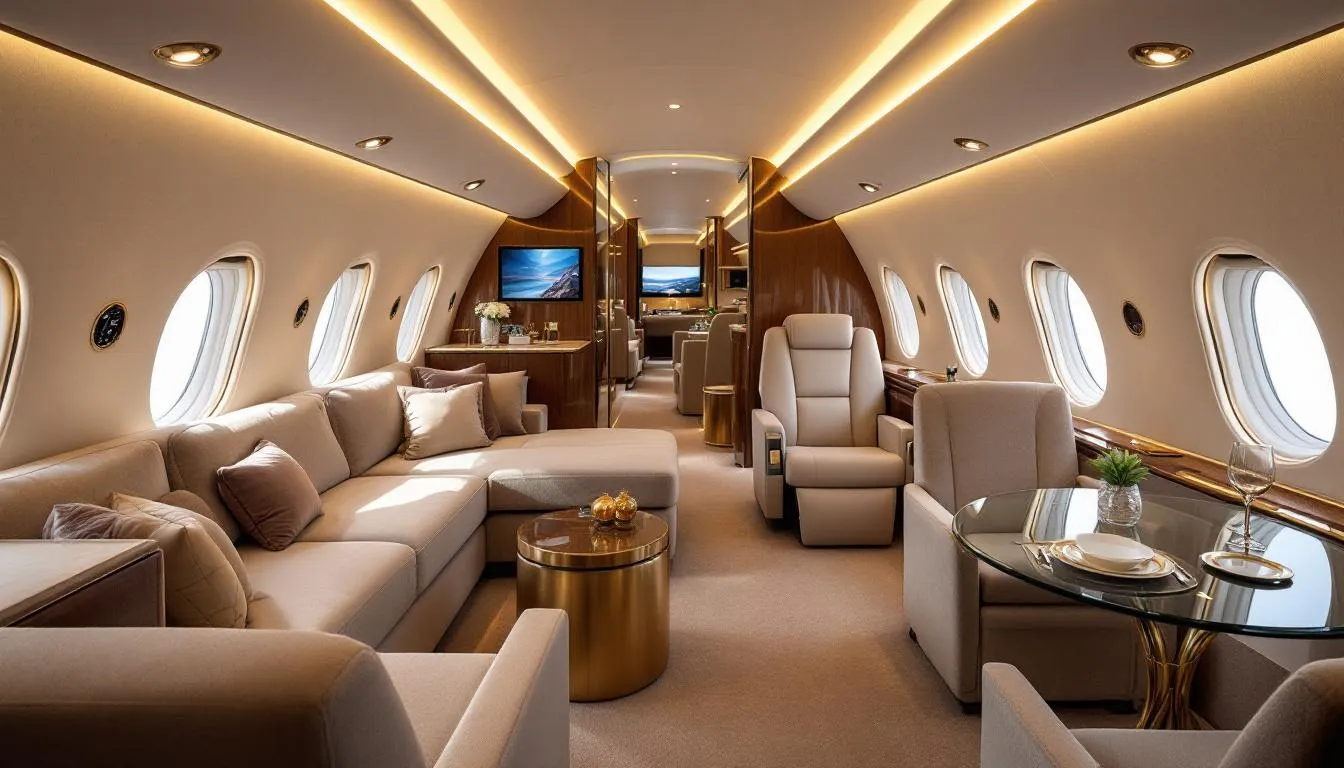
The luxury experience aboard 15-passenger private jets extends far beyond spacious seating, encompassing comprehensive amenities designed to create a premium travel environment. Cabin configurations typically feature separate sleeping areas with full berths, dining zones with proper tables and seating for group meals, and entertainment sections equipped with large displays and advanced audio systems.
Technology integration plays a central role in the modern luxury experience. Satellite Wi-Fi systems provide high-speed internet connectivity throughout most flight routes, enabling business productivity and entertainment streaming. Video conferencing capability supports remote meetings and client communications, while integrated cabin management systems allow passengers to control lighting, temperature, entertainment, and communication features through intuitive interfaces.
Catering options in 15-passenger jets rival fine dining establishments, with full galleys supporting custom meal services tailored to passenger preferences and dietary requirements. Professional catering teams can provide multi-course meals, specialized cuisine, and premium beverage service, including full bar setups with top-shelf liquors and wine selections.
Comfort elements focus on passenger well-being during extended flights. Lie-flat seating converts to sleeping configurations for overnight flights, while premium materials and finishes create an elegant environment throughout the cabin. Advanced noise reduction technology maintains quiet conditions conducive to rest, work, or conversation, while sophisticated climate control systems ensure optimal temperature and humidity levels.
The spacious cabin environment enables amenities impossible in smaller aircraft. Some configurations include shower facilities, private staterooms with master bathrooms, and dedicated crew rest areas that ensure passenger privacy. These features prove particularly valuable for international flights where comfort during extended flight times impacts arrival condition and subsequent productivity.
Safety and Operational Considerations
Safety standards for 15-passenger private jets exceed those applied to smaller aircraft categories, reflecting the complexity and operational demands of large-cabin aviation. Operators must maintain rigorous certifications, including ARGUS Platinum, IS-BAO (International Standard for Business Aircraft Operations), and Wyvern ratings that demonstrate compliance with the highest industry safety standards.
Crew qualifications for heavy jets require extensive training and experience beyond standard private pilot certification. Captains typically possess airline transport pilot licenses with specific type ratings for the aircraft model, while first officers must meet stringent experience requirements, including minimum flight hours and recurrent training protocols. Many operators require crews to complete additional safety training programs focused on emergency procedures specific to large-cabin aircraft operations.
Maintenance requirements for 15-passenger jets follow strict regulatory schedules administered by certified maintenance facilities with specific authorizations for each aircraft model. These requirements include regular inspections, component replacement schedules, and comprehensive documentation protocols that ensure continued airworthiness. Operators typically maintain relationships with multiple service centers to ensure maintenance availability throughout their operational areas.
Weather capabilities in heavy jets provide superior performance in challenging conditions compared to smaller aircraft. Advanced weather radar systems, ice protection equipment, and higher service ceilings enable operations in conditions that might ground smaller aircraft. These capabilities translate to improved schedule reliability and reduced weather-related delays for passengers.
Safety records for the leading 15-passenger aircraft models demonstrate excellent performance across millions of flight hours. Manufacturers like Gulfstream, Bombardier, and Dassault maintain comprehensive safety monitoring programs that track operational data and implement continuous improvements to enhance safety margins throughout their fleets.
Booking and Charter Process
Lead time recommendations for 15-passenger charter operations vary significantly based on destination and complexity factors. Domestic flights within the United States typically require 24-72 hours' notice for confirmation, though peak travel periods may necessitate longer advance booking to ensure aircraft availability. International flights should be booked 7-14 days ahead due to permit requirements, crew scheduling considerations, and customs procedures.
Charter brokers and direct operators offer different advantages for 15-passenger bookings. Direct operators provide consistency in aircraft standards and service levels but may have limited geographic coverage or aircraft availability. Brokers may add significant markups to private jet charter prices, while working directly with an operator can ensure more transparent pricing. Charter brokers access multiple operators and aircraft types, potentially offering better pricing and availability but with varying service standards across their network.
Information requirements for accurate charter quotes include detailed passenger counts, departure and arrival airports, travel dates with flexibility parameters, and any special requirements such as catering preferences, ground transportation needs, or security considerations. Providing comprehensive information enables operators to develop accurate pricing and ensure appropriate aircraft selection for the specific mission requirements.
Contract terms for large group charters typically include detailed provisions covering cancellation policies, weather delays, mechanical issues, and service modifications. Cancellation policies may impose penalties ranging from 10-50% of total charter costs, depending on notice timing, while force majeure provisions address circumstances beyond operator control, such as weather or air traffic control delays.
Empty leg opportunities can provide significant cost savings for flexible travelers, with potential discounts of 25-50% compared to standard charter rates. These flights occur when aircraft must reposition between scheduled charters, creating opportunities for passengers willing to adapt their schedules to available routing and timing.

Additional Fees and Charges
When planning private jet travel for a group of 15 passengers, it’s crucial to look beyond the base charter rate and consider the array of additional fees and charges that can impact your total trip cost. These extra expenses can vary widely depending on the aircraft model, flight range, airport selection, and the specific needs of your group, making it essential to understand the variables involved before booking your next trip. Additional fees for chartering a private jet may include airport landing fees, ramp and handling fees, and federal excise tax.
One of the highest additional costs is the airport landing fee. These fees are charged by airports for each landing and can range from as little as $100 at smaller airports to over $1,500 at major international hubs like New York’s JFK or London Heathrow. The size and weight of your aircraft also play a role—larger jets such as the Gulfstream G650 or Dassault Falcon 7X typically incur higher landing fees than smaller aircraft or light jets. If your itinerary includes multiple stops or international flights, these fees can add up quickly, especially at high-demand airports.
Fuel surcharges are another important consideration. The cost of jet fuel fluctuates with global market prices, and aircraft owners or operators often pass these changes directly to clients. Long-range jets, which are designed to comfortably accommodate larger groups and cover thousands of nautical miles nonstop, naturally consume more fuel than smaller aircraft. For example, a transatlantic flight on a Gulfstream G650 will have a higher fuel cost than a regional trip on a light jet, but it also delivers unmatched range, amenities, and personalized service.
Ground handling and security fees may also apply, particularly at international airports or when special services are required. These can include baggage handling, aircraft cleaning, customs and immigration support, and even expedited security screening for passengers and crew. While these services enhance convenience and efficiency, they represent additional costs that should be factored into your overall budget.
Crew expenses are another variable to keep in mind. For longer flights or overnight stays, you may be responsible for covering pilot and crew accommodations, meals, and transportation. These costs can vary depending on the operator, the length of your trip, and the number of crew members required for your specific aircraft model. Maintenance and insurance fees are typically included in the charter rate, but some operators may itemize these charges, especially for complex or extended itineraries.
The choice of aircraft has a direct impact on these additional fees. While larger jets like the Gulfstream G650 or Dassault Falcon 7X offer superior range, passenger capacity, and luxury amenities—including Wi-Fi, spacious cabins, and advanced entertainment systems—they also come with higher operating costs. In contrast, light jets may offer lower hourly rates and reduced landing fees, but may not comfortably accommodate 15 passengers or provide the same level of onboard features.
Frequently Asked Questions
Can a 15-passenger private jet fly internationally without stops?
Yes, ultra-long-range jets like the Gulfstream G650ER and Global 6000 can fly routes like New York to London or Los Angeles to Tokyo nonstop with 15 passengers aboard. These aircraft have ranges of 7,000+ nautical miles, making most intercontinental routes possible without refueling stops. The combination of large fuel capacity and efficient engines enables these aircraft to complete transcontinental and transoceanic flights while maintaining full passenger loads and baggage requirements.
How much luggage can 15 passengers bring on a private jet?
Large-cabin private jets typically offer 150-200 cubic feet of baggage space, allowing approximately 2-3 pieces of luggage per passenger. Unlike commercial airlines, there are no strict weight restrictions, and passengers can often access their bags during flight in many aircraft configurations. The generous baggage capacity proves particularly valuable for extended trips, sporting equipment, or business travel requiring specialized gear and materials.
What’s the difference between chartering and buying a 15-passenger private jet?
Chartering costs $7,000-$15,000 per flight hour with no upfront investment, while purchasing a 15-passenger jet requires $25-75 million upfront plus $2-4 million annually in operating costs. Private jet charter rates are typically lower than the costs associated with owning a private jet, which include maintenance and crew salaries. Charter makes sense for occasional use (under 100 hours annually), while ownership benefits frequent flyers who value consistent availability and customization. The break-even point typically occurs around 100-150 flight hours per year, depending on specific aircraft costs and usage patterns.
How far in advance should I book a 15-passenger private jet?
For domestic flights, 24-72 hours' notice is typically sufficient, though peak travel periods may require more lead time. International flights should be booked 7-14 days ahead due to permit requirements, crew scheduling, and customs procedures. Last-minute availability depends on aircraft positioning and seasonal demand, with greater flexibility available during off-peak periods.
Are there alternatives if no 15-passenger jets are available?
Yes, you can book two smaller aircraft (7-8 passengers each), upgrade to a larger aircraft like a Boeing Business Jet (20+ passengers), or consider shared charter options where you book individual seats on scheduled private flights. Some operators also offer “group split” pricing for multiple aircraft traveling to the same destination, potentially providing cost advantages while maintaining schedule coordination and group cohesion.
Final Thoughts
Choosing the right private jet for 15 passengers involves balancing multiple factors, including passenger capacity, flight range, comfort, and cost. Heavy jets and ultra-long-range aircraft such as the Gulfstream G650, Bombardier Global 6000, and Dassault Falcon 7X provide the best solution for groups seeking a luxurious and efficient travel experience. These aircraft comfortably accommodate larger groups while offering spacious cabins, advanced amenities, and the flexibility to reach international destinations nonstop.
When planning your next trip, consider your specific needs, including scheduling flexibility, baggage requirements, and onboard services. Working with experienced operators and brokers ensures access to the right aircraft model that aligns with your itinerary and preferences. While charter costs can vary due to the many variables involved, the time savings, privacy, and personalized service make private jet travel an unmatched option for business and leisure groups alike. Traveling by private jet eliminates the hassles of crowded terminals and long security lines.
Ultimately, a private jet for 15 passengers offers unparalleled convenience and luxury, transforming complex group travel into a seamless and enjoyable experience. Whether for corporate travel, family vacations, or special events, investing in the right aircraft ensures your group travels comfortably, efficiently, and in style.


 Sign up with google
 Sign up with Apple