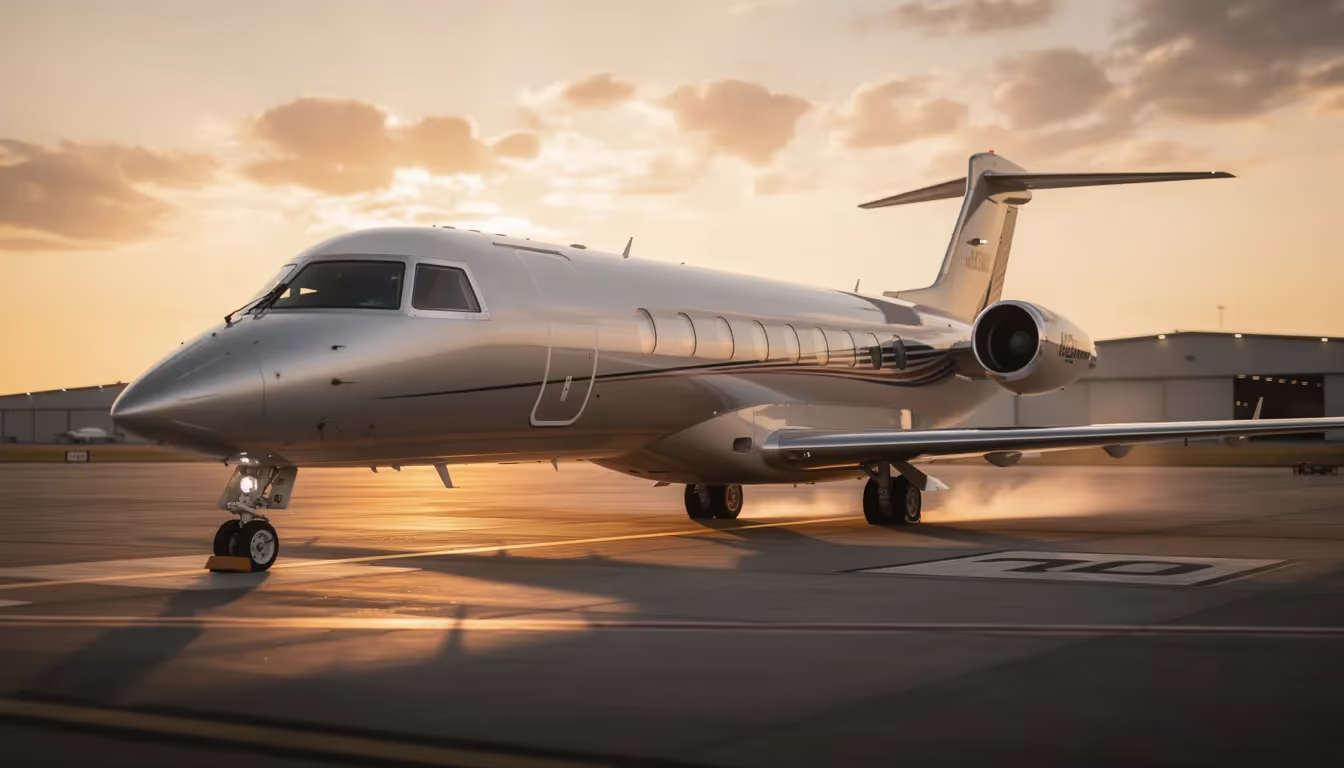
Imagine soaring above the clouds in a private jet, where luxury meets efficiency, and every moment of your journey is tailored to your needs. Whether you're a busy executive sealing deals mid-air or a family escaping for a weekend getaway, flying private transforms travel into an experience of comfort, privacy, and unparalleled convenience. This article dives deep into what it means to be aboard a private jet in flight, exploring the unique advantages, cutting-edge technology, and seamless service that set private aviation apart from commercial air travel. Ready to discover why flying private is the ultimate travel upgrade? Let’s take off.
Key Takeaways
A private jet in flight transforms travel from a time cost into a strategic asset. Consider a New York–London overnight sector: executives depart Teterboro at 22:00, conduct final deal preparations onboard, rest in lie-flat beds, and land at London City Airport by 09:30 local time—ready for a morning meeting without the 3+ hours of security, boarding, and connection delays that define commercial air travel.
Modern private jets cruise between 400–560 mph at altitudes up to 45,000 feet, cutting 1–3 hours off comparable commercial trips while accessing smaller, quieter airports closer to city centers. This performance advantage compounds across multiple trips, recovering dozens of productive hours annually for frequent flyers.
The in-flight experience aboard a private aircraft is defined by privacy, tailored service, and advanced technology—including high-speed Wi-Fi supporting video conferencing, collaboration tools, and real-time route adjustments—all under rigorous safety oversight from standards like ARGUS Platinum, IS-BAO Stage III, and Wyvern Wingman, with dual-pilot crews as standard.
Leading providers pair jet card access with carbon-neutral flights through a strategic mix of Sustainable Aviation Fuel (SAF) and verified offsets. BlackJet, for example, ensures every journey is carbon neutral by default, making a private jet in flight cleaner than legacy charter options without added complexity for the traveler.
Private jet charter services provide access to a wide range of aircraft types, including light jets, midsize jets, and heavy jets, catering to diverse travel needs from quick regional hops to long-haul international flights.
The booking process for private jet charters typically involves a dedicated charter specialist who assists with selecting the appropriate aircraft and managing the itinerary, ensuring a seamless and personalized travel experience.
Private jets can access a larger number of airports compared to commercial airlines, including smaller regional airports, allowing travelers to fly closer to their final destinations and avoid congested hubs.
Passengers on private jets typically experience shorter check-in times, often arriving just minutes before departure at private terminals (FBOs), bypassing the long security lines and crowded terminals common in commercial air travel.
Private jet charters often provide more luggage space compared to commercial flights, accommodating additional baggage and specialized equipment such as skis, golf clubs, or musical instruments.
Many private jet charter services can accommodate pets in the cabin, provided that necessary documentation like pet passports and vaccination records are in order, allowing for stress-free travel with furry companions.
Numerous private jet charter companies offer instant pricing tools online, enabling potential customers to estimate costs based on their travel requirements, aircraft type, and itinerary details.
Private jets offer customized menus curated by professional or Michelin-star chefs, served on fine china, allowing passengers to enjoy gourmet meals tailored to their preferences and dietary needs during the flight.
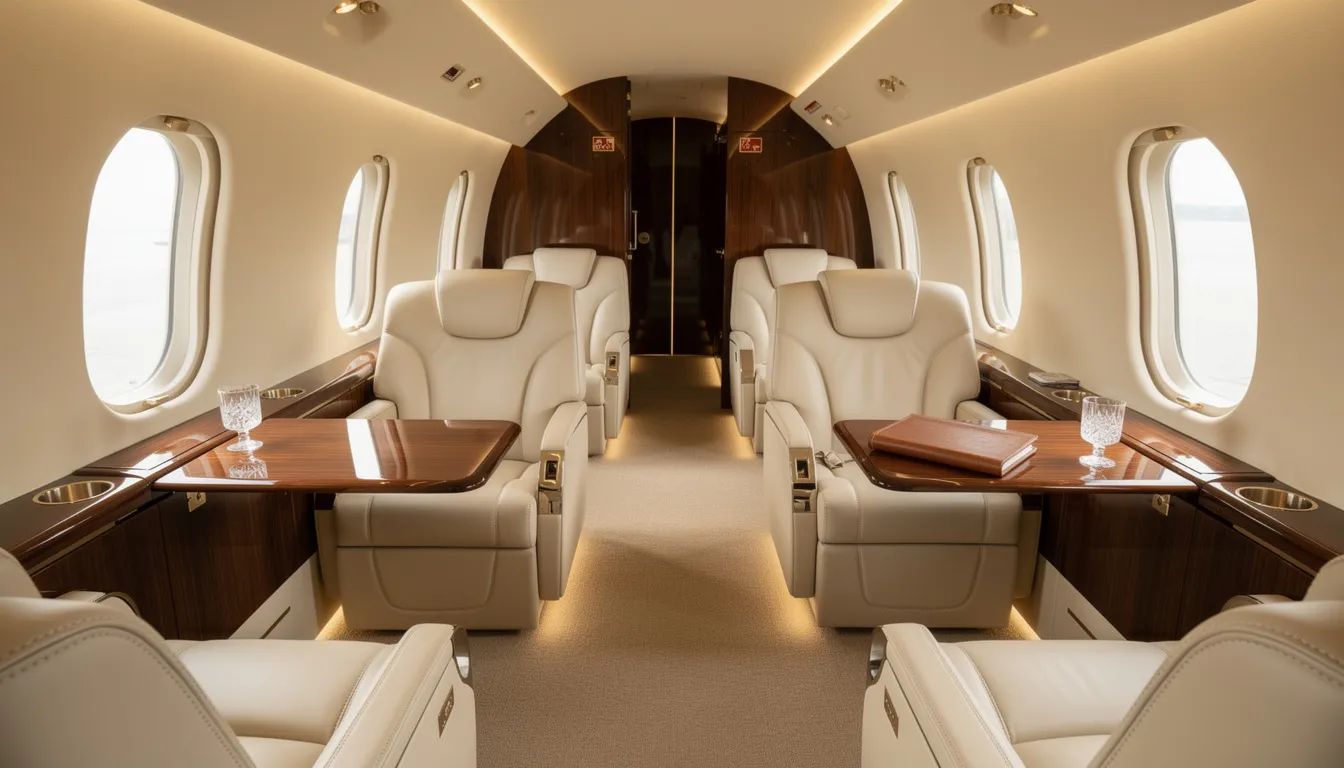
The cabins feature plush, leather seats that often convert into beds with ample legroom, creating a comfortable and restful environment ideal for both work and relaxation.
Private flights have virtually no baggage restrictions compared to commercial flights, which impose strict size and weight limits, giving travelers the freedom to bring more without hassle.
Flying on a private jet offers spacious cabins with personalized climate control, high-speed Wi-Fi, and advanced air purification systems that maintain lower cabin altitudes to reduce fatigue and jet lag.
Private jets provide a quieter cabin environment with lower cabin altitude, contributing to passenger comfort and well-being during and after the flight.
Private jets typically travel faster than commercial aircraft and can fly out of almost any airport, big or small, enabling direct routes that are often unavailable to commercial airlines and shortening travel time significantly.
Private jet rental prices typically range from $2,000 to over $20,000 per hour depending on aircraft type, flight duration, distance, and additional services such as catering or ground transportation.
Factors influencing private jet pricing include aircraft size, flight duration, airport fees, and optional add-ons like catering, special requests, or pet accommodations.
Chartering a 12-seater private jet typically costs between $5,000 and $9,000 per hour, offering a cost-effective option for larger groups or multi-stop trips compared to commercial flights.
Private jet ownership costs can total between $500,000 and $5 million annually, including maintenance, fuel, crew salaries, insurance, and hangar fees, making charter and jet card options attractive alternatives for many travelers.
Private jet rental prices can vary significantly based on demand, especially during peak travel times or major events such as the Super Bowl, Cannes Film Festival, or Art Basel.
Operational costs for private jets can exceed $1 million annually for larger aircraft, encompassing both fixed expenses like crew salaries and hangar fees, and variable costs such as fuel and maintenance.
The average range for heavy jets is about 7,000 miles, allowing for long-distance travel without refueling stops, making them ideal for intercontinental flights.
Private jets are subject to the same safety regulations as commercial jets, as outlined by the Federal Aviation Administration (FAA), ensuring rigorous maintenance, pilot training, and operational protocols.
The Transportation Security Administration (TSA) has specific recommendations for fixed-base operators (FBO) that service private jets, balancing security with efficiency and discretion.
Private jet passengers go through security, but the process is generally faster and less stringent than for commercial flights, often conducted at private terminals with minimal queues.
Private jet operators often have their own vetting processes for pilots and crew to ensure safety and service quality, with many holding ARGUS ratings that assess operator safety standards—higher ratings indicate better practices.
Private jets can land at a wider range of airports compared to commercial airlines, providing more flexible travel options and access to remote or regional destinations.
Private aviation companies must adhere to safety protocols set by the FAA, including emergency procedures, passenger briefings, and crew rest requirements.
In 2025, private jet experiences will prioritize total personalization, high-tech wellness features, and seamless efficiency, enhancing comfort and convenience for travelers.
Private jet charters allow for flexible scheduling, enabling travelers to book flights on short notice or customize their itineraries to fit dynamic travel needs.
Private jet charter companies often provide a range of aircraft options to suit different travel needs, from business to leisure, ensuring the right aircraft for every journey.
Private jet services include seamless ground logistics beginning at a private terminal, allowing passengers to bypass traditional security lines and board quickly.
Private jets allow for direct interaction with flight crew, enhancing service personalization and ensuring every detail of the flight meets passenger expectations.
Private jet travel offers a luxurious flying experience that many people value, combining privacy, comfort, and efficiency unavailable in commercial air travel.
Flying private allows travelers to avoid the frustrating issues associated with commercial air travel, such as long security lines, delays, and crowded cabins.
Private jets provide the freedom to customize the flight experience, including the flight menu, cabin layout, and in-flight amenities.
Passengers on private jets can check in much closer to take-off compared to commercial flights, sometimes just 15 minutes before departure, reducing wait times.
Private jet passengers can enjoy more freedom with luggage weight allowances compared to commercial flights, allowing for greater flexibility in packing.
Food can be served on private flights, and passengers can request almost any meal they want, prepared to their specifications.
Private jets allow for a more productive environment, enabling passengers to work in peace and comfort during the flight, supported by high-speed Wi-Fi and privacy.
Passengers on private jets often know each other, allowing for a more intimate and enjoyable flying experience.
Private jet travel enhances comfort and privacy, making it an increasingly popular choice for a diverse range of travelers, including business executives, families, and leisure travelers.
The cost of a private plane rental depends on the distance traveled and the aircraft chosen, with flexible options available to fit various budgets.
Private jet travel can be more cost-effective for larger groups or multi-stop trips compared to commercial flights, especially when factoring in time savings and convenience.
All private jet operators must ensure their aircraft are well maintained and that pilots are properly trained, maintaining the highest safety standards.
Passengers on private jets can carry more luggage than on commercial flights, with fewer restrictions on liquids and other items, simplifying packing.
Private jet travel allows for more personalized service, including customized in-flight meals and amenities tailored to passenger preferences.
Private jets can accommodate last-minute changes to travel plans, making them ideal for dynamic travel requirements and unpredictable schedules.
Travelers can customize their in-flight experience, including meal options and cabin arrangements, when flying privately, creating a truly bespoke journey.
Private aviation allows for direct routes that are not typically available on commercial flights, enhancing travel efficiency and reducing total travel time.
The cost of chartering a private jet varies based on factors such as aircraft type, distance, and additional services required, offering flexibility for different travel needs.
Why a Private Jet in Flight Is a Strategic Advantage
Picture this scenario unfolding in early 2025: a CEO based in Los Angeles needs to reach Manhattan for a critical board presentation. She departs Van Nuys at 07:00 aboard a super midsize jet cruising at 45,000 feet, well above commercial traffic and weather. During the 4.5-hour flight, she finishes reviewing her board deck on encrypted Wi-Fi, takes two video calls with overseas investors, and shares final edits with her team in real time. By 14:30 Eastern, she’s stepping off at Teterboro—20 minutes from her Midtown meeting room.
Compare that to a commercial first-class itinerary. She arrives at LAX 90 minutes before departure, navigates security and boarding, sits through a 5.5-hour flight with limited connectivity, lands at JFK, waits for bags, and spends another 45 minutes in traffic reaching Manhattan. Door-to-door: nearly 10 hours. The private jet travel option delivered her in under 6 hours, with 3+ hours of work completed mid-flight.
This time differential compounds dramatically on specific routes. New York (Teterboro) to Miami (Opa-Locka) takes approximately 2.5 hours private versus 5+ hours commercial when accounting for ground time. London (Farnborough) to Geneva runs about 1.5 hours versus 4+ hours commercial. The numbers shift based on conditions, but the pattern holds: private flights consistently recover 2–4 hours per trip.
The true value of a private jet in flight lies in “productive hours recovered” and “control over the clock.” No layovers interrupt momentum. Custom departure times—06:30 for an early start or 22:15 for overnight rest—fit around schedules rather than forcing travelers to conform to airline timetables. If a meeting runs long or market conditions shift, departure can slide 30–60 minutes without rebooking fees or missed connections.
Consider concrete use cases that illustrate this flexibility, such as the differences in turbulence experienced on private jets versus commercial flights:
Deal teams on multi-city roadshows: A private equity group flies from New York to Houston to San Francisco in a single day for site visits, using travel time between cities to revise valuation models and prep for each meeting.
Families maximizing peak weekends: A family uses a jet card to fly from Dallas to Aspen–Pitkin County in January 2025, bypassing a 4-hour drive from Denver and landing minutes from the slopes.
Executives navigating time-sensitive transactions: A London-based executive learns of an acquisition opportunity in Milan at 15:00 and is wheels-up by 17:30, arriving in time for an evening dinner with the seller.
Through a jet card model, clients like those served by BlackJet lock in guaranteed aircraft access with fixed hourly rates, carbon-neutral operations, and full-time flight planning support. This curated access transforms private aviation from an ad-hoc luxury into a repeatable strategic tool.
Inside a Private Jet in Flight: The Onboard Experience
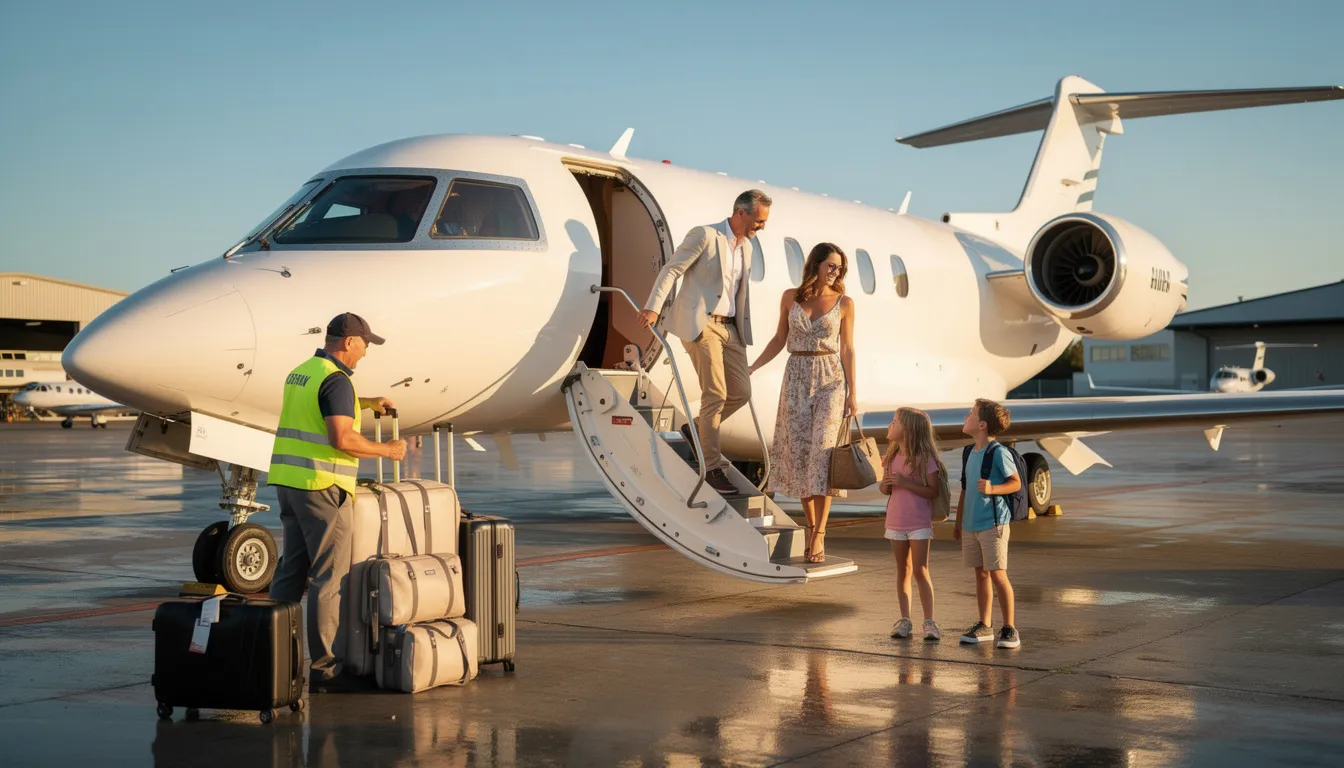
The journey begins not at a crowded terminal but at a private terminal—known in the industry as a Fixed Base Operator, or FBO. You arrive by car 15–20 minutes before departure, step through a discreet entrance, and walk directly onto the aircraft. No long security lines. No boarding groups. No overhead bin competition. Within minutes of arriving at the airport, you’re airborne.
Cabin configuration varies by aircraft class, but the principle remains consistent: space designed around fewer passengers rather than maximum density.
Light jet cabins typically seat 6–8 in a club and forward-facing leather seat arrangement, with headroom around 4.5–5 feet and sufficient width for two passengers to work side by side.
Super midsize jets expand to 8–9 seats, often convertible into 4–6 lie-flat beds, with a separate galley for catering and an enclosed lavatory offering genuine privacy.
Large and ultra-long-range jets feature distinct lounge, dining, and work zones—including divans, conference tables, and enclosed bedrooms with full-size beds for true rest on 10+ hour sectors.
Service touchpoints during flight reflect a level of personalization that commercial airlines cannot replicate. Crew members greet you by name, conduct a brief safety briefing tailored to the specific aircraft, and offer drink service before takeoff. Bespoke catering—selected pre-flight—might include Nobu takeout loaded in Los Angeles, a plant-forward wellness menu, or a specific 1998 Bordeaux chosen for a celebration. Cabin crew manage lighting to match your work or rest preferences, adjust temperature zone by zone, and coordinate meal timing around your schedule rather than a fixed service cart.
Specific amenities transform the spacious cabin into a mobile office or sanctuary:
Ka-band or Viasat Wi-Fi supporting video conferencing at 40,000 feet with speeds exceeding 100 Mbps
Noise-cancelling headsets and 4K cabin monitors with wireless screen casting from laptops or tablets
Storage for skis, golf bags, and garment bags in cargo holds or cabin closets—no overhead bin constraints. For a practical analysis of whether all these amenities justify the price, see our detailed comparison of the true costs of chartering a private jet.
The privacy advantage over commercial first class proves decisive for many travelers. A private jet cabin is legally considered private space, not a public environment. Deals can be discussed openly. Sensitive documents can be reviewed without concern for adjacent passengers. For a midnight New York to London sector, fully reclining seats or dedicated sofas convert to proper beds, allowing arrival rested enough for a 09:00 meeting—a stark contrast to the fatigue common after commercial red-eyes.
Business Productivity at 45,000 Feet
A private jet in flight functions as a flying office with capabilities that rival—and in some ways exceed—ground-based conference rooms. Secure Wi-Fi supports VPN access, satellite phone connectivity enables calls independent of aircraft position, and the enclosed environment eliminates the risk of being overheard during sensitive board or M&A discussions.
Consider a three-partner investment team flying from London to Milan in February 2025. They’re reviewing a €500 million term sheet aboard a Global 6500. Each partner has access to the company’s secure servers via an encrypted connection. They annotate the document in real time, negotiate final terms with counsel in New York via video call, and sign mid-flight digitally using compliant e-signature platforms. When they land at Linate, they’re ready for in-person negotiations with the seller—not scrambling to catch up.
Jet card clients with providers like BlackJet can pre-load cabin preferences before every departure: specific seat layouts, connectivity requirements, printed reports waiting on arrival, even particular pens or stationery for signing ceremonies. The aircraft becomes pre-configured as their office, eliminating setup time upon boarding.
Flight crews coordinate departure times around critical business needs. If an earnings call runs 30 minutes late or markets move unexpectedly, departure slides accordingly. This flexibility proves impossible on commercial flights and often costs charter clients rebooking fees—but becomes standard practice under jet card arrangements with dedicated team support.
Leisure, Family & Wellness in the Air
The private jet experience extends well beyond business applications. Families discover that flying private transforms vacation logistics from stressful to seamless.
A family of four flying from London to Olbia for a Sardinia holiday in July 2025 can depart at 20:00—after children finish their activities—rather than rushing to a morning commercial flight. Children settle into comfortable seats, perhaps watching movies on the cabin entertainment system, while parents enjoy a glass of champagne. Pets travel in the cabin rather than cargo holds. Luggage limits become practical guidelines rather than rigid restrictions.
Couples flying from Miami to St. Barths experience the journey as part of the destination: gourmet catering, curated wines, and privacy that makes the flight itself romantic rather than merely functional.
Wellness-oriented features distinguish modern private aircraft from commercial alternatives:
Advanced cabin pressurization maintains equivalent altitudes of 4,000–6,000 feet even at 45,000 feet cruising altitude—significantly lower than commercial’s 8,000-foot equivalent. This reduces jet lag by minimizing hypoxia effects on the New York to Paris sectors.
Humidification systems maintain cabin humidity at 15–20%, compared to commercial’s 5%, reducing dehydration-related fatigue.
Circadian lighting gradually adjusts cabin lighting temperature across 8–10 hour legs, helping passengers’ bodies adapt to destination time zones.
Seating can be reconfigured mid-flight in under 10 minutes—from “dining for four” to “two lie-flat beds”—something impossible on any commercial airline. Operators like BlackJet capture and store passenger preferences: favorite champagne labels, preferred pillows, dietary restrictions. This allows replication of the same in-flight environment trip after trip, creating continuity that transforms occasional private travel into a consistent personal experience.
Aircraft Classes & How They Perform in Flight
The type of private jet in flight—light jet, super midsize, heavy, or ultra-long-range—determines altitude capability, speed, range, and onboard configuration. Understanding these aircraft types helps travelers select the right aircraft for their most common missions.
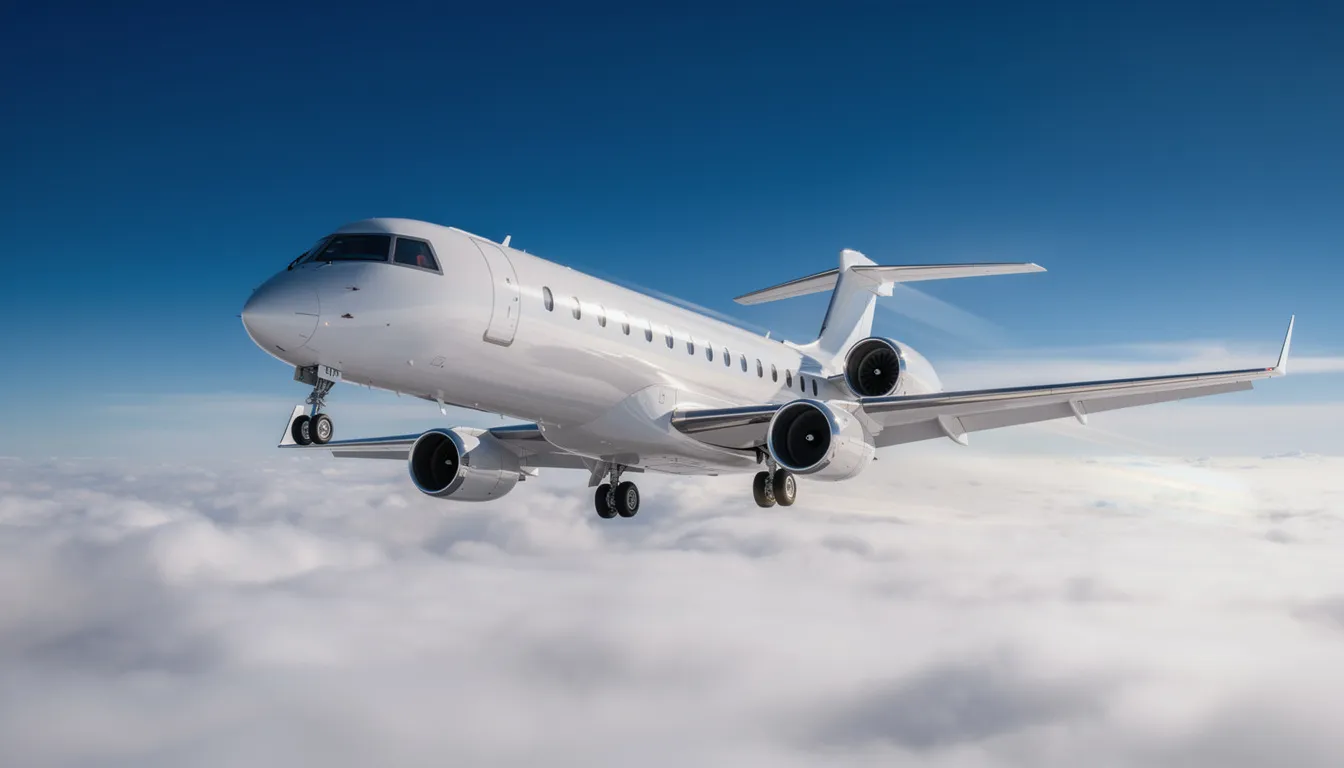
Modern private jets often fly higher than commercial flights—up to Flight Level 450–510 (45,000–51,000 feet)—avoiding congestion, turbulence, and air traffic delays that affect airlines operating at 35,000–40,000 feet. This altitude advantage contributes to smoother rides and more direct routing.
Jet card providers like BlackJet match card hours to aircraft class, allowing clients to select the optimal profile for their travel patterns. Someone flying primarily 2–3-hour regional hops might favor light or super midsize jets, while those regularly crossing oceans would access heavy or ultra-long-range categories.
Light & Very Light Jets (Regional Efficiency)
Light jets carry 4–8 passengers with ranges around 1,200–1,800 nautical miles and typical cruise speeds of 400–450 mph. They’re optimized for sub-3-hour legs where speed and airport access matter more than cabin size.
Specific examples include:
Cessna Citation CJ3+: Up to 2,040 nautical miles range, cruising at 416–430 knots, seating 7–9 passengers in a comfortable but compact cabin
Embraer Phenom 300E: Up to 2,010 nautical miles range, cruising at approximately 453 knots, known for its speed and modern avionics
Typical missions suit regional connectivity: Chicago to New York, London to Zurich, Los Angeles to Sun Valley. Executives use light jets for early-morning out-and-back regional visits completed within a single business day.
During flight, these jets typically cruise below the altitudes of a Global 6500 but still above most commercial turboprops and regional jets, offering smoother rides than regional airlines while accessing shorter runways at smaller airports closer to final destinations.
For 1–2 hour routes with 4–6 passengers, light jets deliver more space than a commercial flight at a lower hourly cost than midsize options, making them highly cost-effective for frequent regional travel. A Boston-based consultant visiting clients throughout the Northeast might find 25 annual hours on a light jet jet card the ideal solution.
Super Midsize & Midsize Jets (The Versatile Core)
Midsize and super midsize jets represent the workhorses of private aviation for executives, typically offering 7–9 seats, ranging from 2,400 to 3,800 nautical miles, and cruise speeds of 450–530 mph.
Key aircraft in this class include:
Embraer Praetor 500: Range around 3,340 nautical miles, typical cruise at Mach 0.80, featuring fly-by-wire technology that provides exceptional ride smoothness
Bombardier Challenger 3500: Range around 3,400 nautical miles, Mach 0.83 cruise, with a wide cabin and advanced environmental systems
These jets enable transcontinental missions: New York to Los Angeles non-stop in under 6 hours at altitudes up to 45,000 feet. London to Riyadh or Dubai becomes feasible with one fuel stop, depending on winds and passenger load.
In-flight, these cabins comfortably support full work sessions and dinners. Enclosed lavatories provide genuine privacy. Galleys support elevated catering—not just cold plates but warmed entrées and fresh-brewed espresso. The Praetor 600, with its best-in-class range of approximately 4,018 nautical miles for 4 passengers, can connect Silicon Valley to Tokyo with a single fuel stop, maintaining productivity throughout.
Many jet card users gravitate to this class because it balances hourly cost, speed, and space effectively. BlackJet can structure card tiers around this cabin class with guaranteed availability on 24–48 hours’ notice—providing the global network access that frequent private travelers require without ownership complexity.
Heavy & Ultra-Long-Range Jets (Global Reach)
Heavy and ultra-long-range jets typically seat 10–19 passengers, offer ranges of 4,000–7,000+ nautical miles, cruise at speeds up to 560 mph (Mach 0.85–0.90), and can remain airborne for 12–15 hours.
Representative aircraft include:
Gulfstream G600: Range around 6,600 nautical miles, maximum cruise Mach 0.90, with a 4,000-foot cabin altitude at 51,000 feet
Bombardier Global 6500: Range around 6,600 nautical miles, Mach 0.90 maximum, featuring three distinct living zones
Dassault Falcon 8X: Range around 6,450 nautical miles with exceptional fuel efficiency and short-field capability
These heavy jets connect continents: New York to Tokyo, London to Buenos Aires, Los Angeles to Sydney, with one stop depending on payload and winds. The Gulfstream G700, with its 7,750 nautical mile range, can fly London to Singapore non-stop in under 13 hours.
The in-flight experience on these aircraft approaches that of a boutique hotel. Multiple living zones separate work from rest. Enclosed sleeping cabins feature full-size beds with genuine mattresses. Full-height stand-up cabins allow comfortable movement throughout 12+ hour sectors. Gourmet galleys equipped with ovens, refrigerators, and espresso machines support restaurant-quality meals. Dedicated flight attendant teams of 2–3 provide personalized service throughout.
Advanced in-flight technology enhances both safety and comfort: real-time turbulence-avoidance software routes around rough air automatically, predictive maintenance systems identify potential issues before they affect flights, and cockpit avionics featuring synthetic vision systems enable precise approaches in challenging weather.
Safety & Certification: What Keeps a Private Jet in Flight Secure
Although private jet cabins feel more relaxed than commercial first class, the underlying regulatory framework is equally rigorous—and often exceeds commercial standards when operators adhere to top-tier voluntary certifications.
All private jet operators in the United States must comply with FAA Part 135 regulations (or Part 91 for owner-operated flights). European operators follow EASA Part-NCC or similar frameworks. These regulations establish baseline safety procedures for maintenance, pilot training, and operational protocols.
Beyond regulatory requirements, elite operators pursue voluntary safety standards that demonstrate commitment to excellence:
ARGUS Platinum: The highest rating from ARGUS International, requiring historical safety performance analysis, operational infrastructure review, and compliance verification
Wyvern Wingman: Certification requiring pilots to meet enhanced training standards, including simulator proficiency checks and recency requirements
IS-BAO Stage III: The International Standard for Business Aircraft Operations, indicating a mature safety management system integrated into daily operations
The crew’s role during flight centers on safe operation and passenger comfort. Dual-pilot operations are standard on most jets above very light class, with each pilot bringing thousands of flight hours. Crew duty and rest limits are strictly observed. Recurrent simulator training—typically at facilities like CAE or FlightSafety International—ensures pilots maintain proficiency across all flight conditions.
Safety works in practical terms through several mechanisms:
Flight risk assessments conducted before each departure evaluate weather, NOTAMs (Notices to Airmen), runway lengths, and operational complexity
Real-time route adjustments mid-flight avoid convective weather or strong turbulence, sometimes adding slightly longer tracks but delivering smoother rides
Predictive landing performance systems on aircraft like the Gulfstream G700 calculate required runway length in real time, preventing runway excursions
Providers like BlackJet only work with vetted operators meeting or exceeding these standards. Background checks on pilots, strict maintenance tracking, and safety management systems embedded in everyday operations become prerequisites rather than differentiators. The private aviation market’s fatal accident rate of 0.04 per 100,000 hours compares favorably with commercial airlines, reflecting this industry-wide commitment to safety.
A private jet in flight remains subject to safety protocols comparable to commercial airlines: seatbelt requirements, standardized emergency equipment, and cabin briefings delivered by trained crew members.
Security & Discreet Handling on the Ground
Private terminals employ lighter but effective security protocols compared to commercial airports:
Identity and manifest verification confirm the passenger's identity against the flight manifest before boarding
Baggage screening ensures compliance with aviation security requirements
Aircraft access control limits access to the aircraft to authorized personnel and confirmed passengers
TSA focuses primary attention on commercial flights with 61+ seats. Most private aircraft fall under different regulatory frameworks, though operators maintain robust security practices appropriate to the private aviation environment.
The practical experience for passengers emphasizes discretion and efficiency. A VIP family arriving at an FBO benefits from a dedicated car-to-jet transfer, with vehicles often parking directly beside the aircraft. No main terminal exposure. Boarding occurs with minimal public visibility—a significant consideration for executives, celebrities, or anyone valuing privacy.
Many operators offer optional additional security layers: off-airport screening locations, coordination with private security teams, or background verification of ground personnel. These services can be arranged through jet card concierge services when warranted by specific circumstances or client preferences.
Sustainability & Technology: How a Private Jet in Flight Is Evolving
Private jets carry a higher per-passenger carbon footprint than commercial airlines—a reality the industry acknowledges openly. However, technology, fuel innovation, and offset programs are rapidly changing this equation, making private jet journeys increasingly sustainable.
Sustainable Aviation Fuel (SAF) represents the most significant technological advancement in aviation sustainability. Produced from feedstocks like used cooking oil, municipal waste, and agricultural residues, SAF can reduce lifecycle CO₂ emissions by 70–80% compared with conventional Jet-A, depending on the certified production pathway.
SAF deployment in private aviation continues expanding:
Blended fuel (typically 30% SAF / 70% Jet-A) is available at major hubs, including Los Angeles, Amsterdam, and Singapore
Book-and-claim models allow SAF to be introduced into the aviation fuel system on a client’s behalf, even when unavailable at their specific departure airport, effectively supporting SAF production and infrastructure development
Carbon offsetting complements fuel innovation through verified credits from projects such as:
Reforestation initiatives in Brazil
Renewable wind farm development in Texas
Clean cookstove programs in Kenya
Credible operators use recognized verification standards—Gold Standard, Verra’s Verified Carbon Standard—rather than generic tree-planting schemes. These standards ensure offsets represent real, additional, and permanent emissions reductions.
BlackJet positions sustainability as a core offering: flights booked through their jet card programs are designed to be carbon neutral by default, with a transparent mix of SAF and high-quality offsets. This approach eliminates added complexity for travelers—carbon neutrality becomes automatic rather than optional.
Onboard & Operational Technology
Cockpit technology continues to advance to improve flight safety and passenger comfort:
Synthetic and enhanced vision systems overlay terrain and runway imagery on pilot displays, enabling approaches in low-visibility conditions
Predictive weather radar and data-linked turbulence mapping identify rough air ahead, allowing crews to request smoother altitudes or adjust routing proactively
Cabin technology for passengers reaches increasingly sophisticated levels:
High-bandwidth satellite communication systems enable 4K streaming and real-time data synchronization with office servers throughout the flight
Cabin management applications allow passengers to adjust lighting, temperature, window shades, and audio directly from smartphones or tablets
Environmental systems maintain optimal humidity and temperature across long sectors, reducing the physical toll of air travel
Operators like BlackJet leverage proprietary booking and fleet-management platforms to:
Match specific missions with the most fuel-efficient available aircraft
Minimize repositioning flights (often called empty legs), reducing both operational costs and environmental impact
Coordinate ground transport, catering, and other logistics through a single interface
These technological advances transform the private jet experience from a series of individual components into an integrated travel solution.
Private Jet in Flight: Charter vs Jet Card vs Ownership
Three primary models provide access to a private jet in flight, each suited to different usage patterns and priorities.
On-demand charter operates as pay-per-trip private aviation. You contact a broker or operator, request aircraft availability for specific dates and routes, and receive quotes based on current market conditions. This model suits occasional travelers who fly private fewer than 15–20 hours annually and don’t require guaranteed availability or fixed pricing.
Charter pricing fluctuates significantly based on demand. Expect premium rates during peak periods: Super Bowl weekend, Art Basel Miami in December, and Davos in January. Availability can be limited on short notice during these windows. Charter also typically involves repositioning fees—costs for positioning an aircraft to your departure airport when returning it to its base—that can add $3,000–$10,000 to trip costs.
Jet card programs offer pre-purchased flight hours—typically in blocks of 25–100+ hours—at fixed hourly rates with guaranteed aircraft category and response times. For someone flying 25–100 hours annually, jet cards provide predictable budgeting, priority access during peak periods, and value-adds that distinguish them from ad-hoc charter flights.
BlackJet’s jet card model illustrates this approach: fixed hourly rates eliminate market-based price surprises, guaranteed availability windows (often as low as 10–24 hours’ notice) ensure aircraft access when needed, and built-in features like carbon-neutral operations and safety curation remove decision-making burden from travelers. A dedicated team manages flight details, ground transfers, and preferences—turning each trip into a seamless journey rather than a logistical project.
Full or fractional ownership makes economic sense above roughly 200–300 flight hours annually. Purchasing a private plane—whether outright or through a fractional share—involves significant capital outlay (millions upfront) and ongoing operating costs (six to seven figures annually for crew, maintenance, hangar, and compliance).
Ownership carries administrative responsibilities many clients prefer to avoid: pilot management, maintenance oversight, regulatory compliance, and insurance administration. For these reasons, even some ultra-high-net-worth individuals choose jet cards over ownership, valuing the simplicity of providing access without the operational burden.
Consider a practical comparison: flying 50 hours annually between New York and Europe on a heavy jet. A jet card provides guaranteed access at predictable rates, complete operational support, and flexibility to adjust travel patterns year-to-year. Purchasing a pre-owned heavy jet involves $15–30 million acquisition cost, $1–2 million annual fixed costs, and the complexity of managing an aviation department, with those costs remaining fixed whether you fly 50 hours or 200.
Sample In-Flight Scenarios: Bringing It All Together
These scenarios illustrate what a private jet in flight looks like for different traveler profiles in 2024–2026.
Scenario 1: Transatlantic Business Mission
An executive team of four flies from New York (Teterboro) to London (Farnborough) aboard a Global 6500. Evening departure at 22:00 Eastern minimizes time away from the office. The team reviews tomorrow’s investor presentation during the first two hours, using secure Wi-Fi to collaborate with colleagues still working in San Francisco.
By midnight, the cabin reconfigures for rest: four lie-flat beds with proper bedding. Circadian lighting shifts to warm, sleep-promoting tones. Six hours later, the crew dims lights and serves breakfast—hot omelets, fresh fruit, espresso—ninety minutes before landing.
The aircraft touches down at 09:30 local time. A car waits on the tarmac. By 10:15, the team enters their meeting room in Mayfair, rested and prepared. The private charter experience eliminated the 3+ hours commercial travel would have added—and provided sleep quality impossible in even the best commercial first class seat.
Scenario 2: Weekend Family Escape
A family of five—two parents, three children, one Labrador—uses a BlackJet-style jet card to fly from Dallas to Jackson Hole in February 2025 for a ski weekend. They depart on Friday at 15:00, immediately after the youngest finishes school.
Skis and gear load directly into the hold. The dog settles comfortably in the cabin, avoiding the stress of commercial cargo transport. Children enjoy the flight, watching movies and snacking on their preferred foods pre-selected during booking.
Three hours later, they land at Jackson Hole Airport—20 minutes from their lodge. Sunday evening, departure time flexes based on how the final day unfolds. If conditions are perfect and the family wants one more run, wheels-up slides to 17:00 instead of 15:00. This flexibility transforms the weekend from rushed to restorative.
Scenario 3: Multi-City Deal Roadshow
Partners at a private equity firm fly Boston to Chicago to Denver to San Francisco over two days aboard a Praetor 500. The jet becomes their mobile conference room.
Between Boston and Chicago, they refine financial models for the afternoon’s management presentation. The meeting runs 45 minutes long—no problem, departure simply slides. En route to Denver, they conduct a debrief call with their investment committee in New York. Morning in San Francisco, they make a final site visit before flying home.
Each segment features dual-pilot crews from vetted operators, catering matched to their preferences, and automatic carbon offsets covering the entire journey. The trip demonstrates private aviation’s core value proposition: control over time, space for focused work, and logistics managed by a dedicated team rather than the principals themselves.
How to Arrange Your Own Private Jet in Flight
Arranging private jet travel follows a straightforward process, though the experience varies significantly based on whether you’re booking a one-off charter or working with a jet card program.
Step 1: Define the mission. Clarify your dates, routes, passenger count, and luggage requirements. Will pets fly with you? Are there time-critical commitments—board meetings, children’s school schedules, flight connections—that constrain your schedule? This information shapes aircraft selection and route planning.
Step 2: Choose your access model. For occasional travelers or those exploring the private jet experience for the first time, a one-off charter flight provides flexibility without commitment. For those flying 25+ hours annually, joining a jet card program like BlackJet delivers predictable pricing, guaranteed availability, and concierge-level service that transforms private flight from a transaction into a lifestyle.
Step 3: Confirm aircraft and safety standards. Review suggested aircraft types for your specific route and passenger count. Ask about operator safety ratings—ARGUS, Wyvern, IS-BAO—and confirm these certifications are current. Request information about pilot experience minimums, maintenance oversight protocols, and insurance coverage. Reputable providers answer these questions transparently; hesitation signals concern.
Step 4: Customize the in-flight experience. Specify seating layout preferences, catering menus, Wi-Fi requirements, and any special needs—child seats, accessibility accommodations, and anniversary celebrations. Coordinate ground transfers at both ends: chauffeured SUVs in New York and London, ski shuttles in Aspen, or yacht transfers in the Mediterranean. These details, managed in advance, create the seamless journey private aviation promises.
Step 5: Day-of-flight flow. Arrive at the FBO 15–30 minutes before departure. Meet your crew, conduct a brief safety review covering emergency procedures and cabin features, and board. The captain confirms flight duration, weather expectations, and any planned routing adjustments. Within minutes, you’re airborne—beginning a journey that respects both your time and your preferences.
For those seeking to make this process a repeatable, concierge-managed experience rather than a one-off exercise, exploring BlackJet’s jet card programs offers a natural next step.
FAQ: Private Jet in Flight
How far in advance do I need to book a private jet?
Many on-demand charters can be arranged within 24–48 hours for domestic routes, though complex international itineraries or travel during peak periods—Christmas through New Year, major sporting events, fashion weeks—may require several days or even weeks of notice. Jet card members with providers like BlackJet often benefit from guaranteed availability windows, sometimes as short as 24 hours’ notice for domestic flights and 48–72 hours for international sectors. This priority access proves particularly valuable during high-demand periods when charter inventory tightens.
Can I work securely on a private jet in flight?
Modern private jets offer encrypted Wi-Fi, VPN compatibility, and satellite phone connectivity that support secure business communications. The private cabin environment eliminates the risk of sensitive conversations being overheard—a genuine concern in commercial first class, where adjacent passengers may include competitors, journalists, or simply curious listeners. Some operators can coordinate with corporate IT teams to pre-test connections before departure and verify compliance with company security policies, ensuring seamless integration with existing enterprise systems.
Are private jets more affected by turbulence than commercial airliners?
Smaller airframes can feel turbulence slightly more than wide-body airliners, but private jets offset this through operational advantages. They often fly higher—up to 45,000–51,000 feet—above weather systems affecting commercial traffic at 35,000–40,000 feet. Crews can adjust altitude or route more flexibly than large commercial flights constrained by air traffic control and fuel efficiency concerns. Advanced weather radar and real-time turbulence data allow crews to minimize uncomfortable segments proactively. Many passengers report that private flights feel smoother than commercial alternatives on the same routes.
What should I wear and bring on my first private flight?
Dress comfortably but appropriately—business casual or better suits most situations. There are no strict dress codes, but the atmosphere on most private aircraft aligns with luxurious settings rather than casual environments. Baggage restrictions focus on aircraft weight and space rather than arbitrary limits; most flights can accommodate significantly more luggage than commercial alternatives. Carry essentials—laptops, chargers, medications, important documents—in the cabin, as access to baggage stored in external holds is limited once airborne.
How does insurance and liability work on a private jet charter?
Reputable private jet operators maintain substantial liability insurance policies covering passengers, crew, and third parties. Standard coverage typically ranges from $100 million to $300 million or higher. When booking through a provider like BlackJet, ask for confirmation of coverage limits and policy details. Sophisticated providers maintain strict due diligence on operator insurance as part of their vetting process, ensuring clients fly on properly insured aircraft without needing to verify coverage independently for each trip.
Final Thoughts
Flying on a private jet offers an unparalleled blend of luxury, efficiency, and flexibility, transforming travel into a strategic advantage. Whether for business or leisure travel, private aviation provides access to smaller airports, personalized service, and the freedom to customize every aspect of your journey—from departure times to in-flight amenities. With safety standards that meet or exceed those of commercial airlines and a growing commitment to sustainability through initiatives like Sustainable Aviation Fuel and carbon offsetting, private jet travel is evolving to meet the demands of modern travelers.
For those seeking the ultimate convenience and privacy, private jet charter services and jet card programs offer flexible options tailored to your travel patterns, enabling last-minute changes and seamless journeys without the complexities of ownership. As the private aviation market continues to innovate and expand, flying private is becoming more accessible and practical, offering all the benefits of personalized, efficient air travel.
Embrace the freedom to fly your way—anywhere, anytime—with confidence, comfort, and style.
Elevate your travel—effortlessly. With BlackJet, private flight isn’t reserved for a few—it’s accessible on your terms through jet card programs that combine rigorous safety standards, carbon-neutral performance, and unmatched flexibility. Whether your next journey takes you across the country for business or around the world with family, explore how refined, meaningful travel becomes your new standard.
Join BlackJet’s Jet Card program for seamless, premium private travel with safety, sustainability, and flexibility built in.


 Sign up with google
 Sign up with Apple